
2027 ABA Code Transition Kit
An 18 page transition kit for the 1 January 2027 restructuring of the adaptive behavior CPT codes, updated with the final code numbers.
18 pages, bookmarked PDF plus an editable Word version
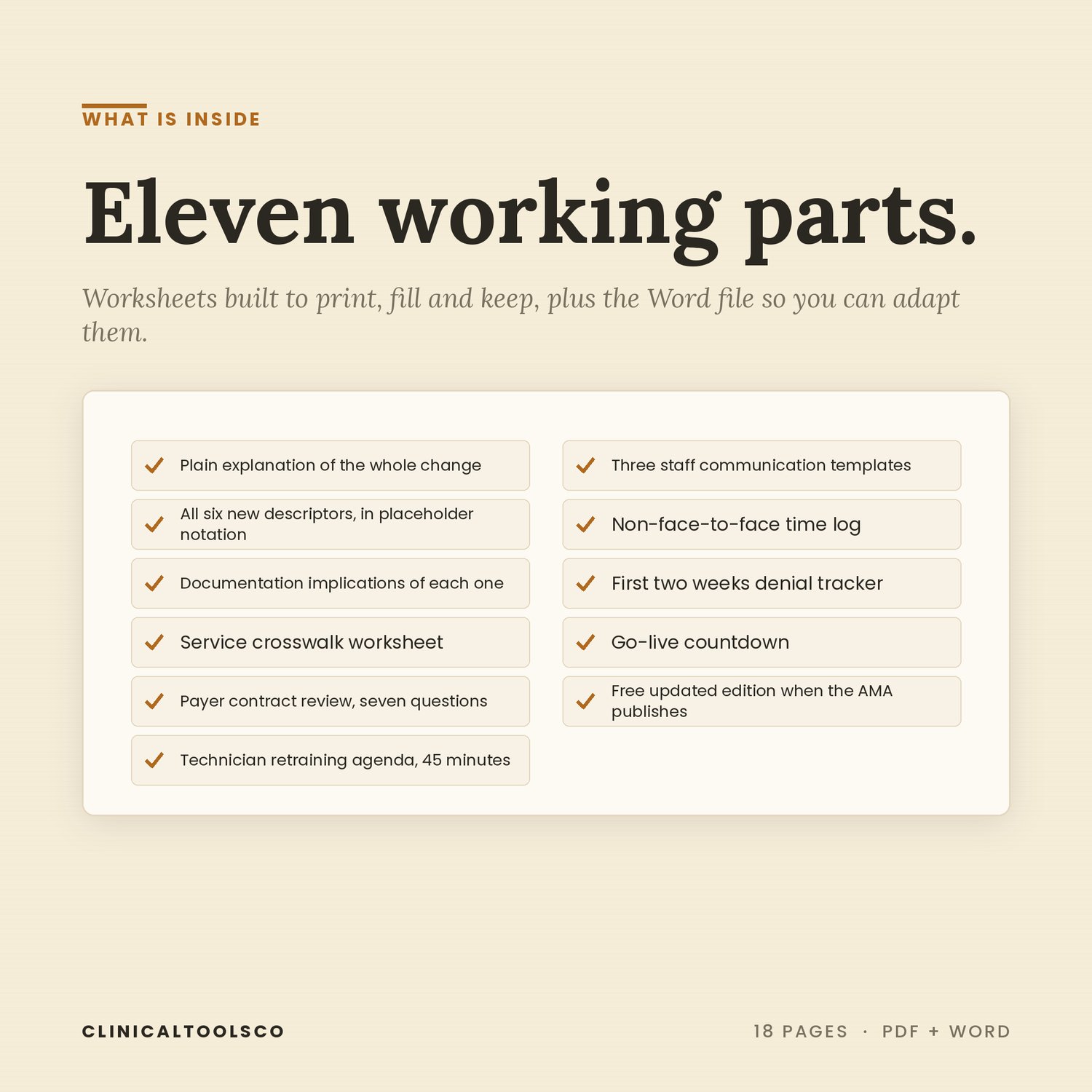
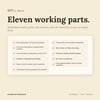
- What changes, what is deleted, and what the move from Category III to Category I means for payment and for audit exposure
- All six new codes with their final numbers and the descriptors as CMS published them, with the documentation implications of each and the reasoning shown
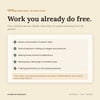
- A service crosswalk worksheet, so you know which note templates actually need rewriting and which do not
- A payer contract review worksheet with the seven questions to put to every payer, and a grid for their answers
- A 45 minute technician retraining agenda built around the four behaviors that have to change
- Three staff communication templates: now, with the crosswalk, and mid December
- A non-face-to-face time log for the new billable caseload work
- A first two weeks denial tracker with review triggers
- A go-live countdown that keeps confirmed dates separate from expected ones
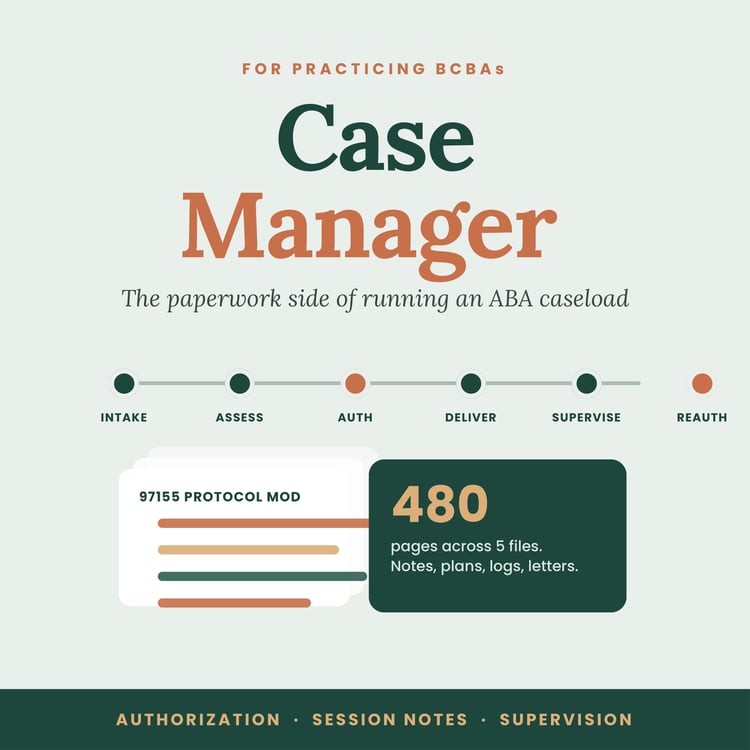
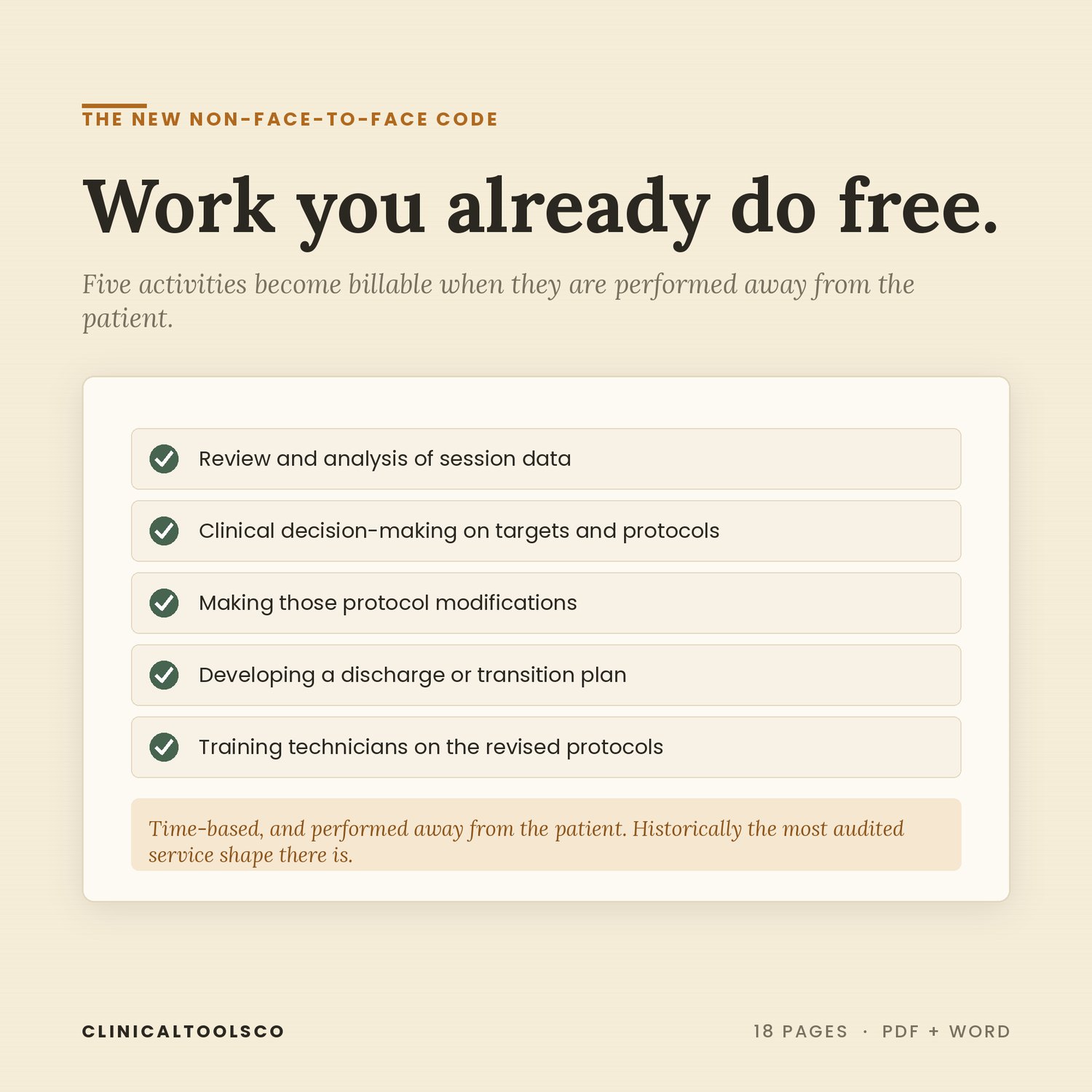
The part most practices miss. One of the six new codes is new in kind: a billable non-face-to-face code covering data review, clinical decision making, protocol modification, technician training and discharge planning. That is caseload work behavior analysts already do in the evenings, unpaid. From January it is billable. It is also a time-based code performed away from the patient, which is historically the most audited service shape there is. The kit includes a time log for it, and the recommendation to start running that log now, unbilled, so the habit exists before the money does.
Who it is for
ABA practice owners, BCBAs and billing staff preparing for the January 2027 code changes.
Why it exists
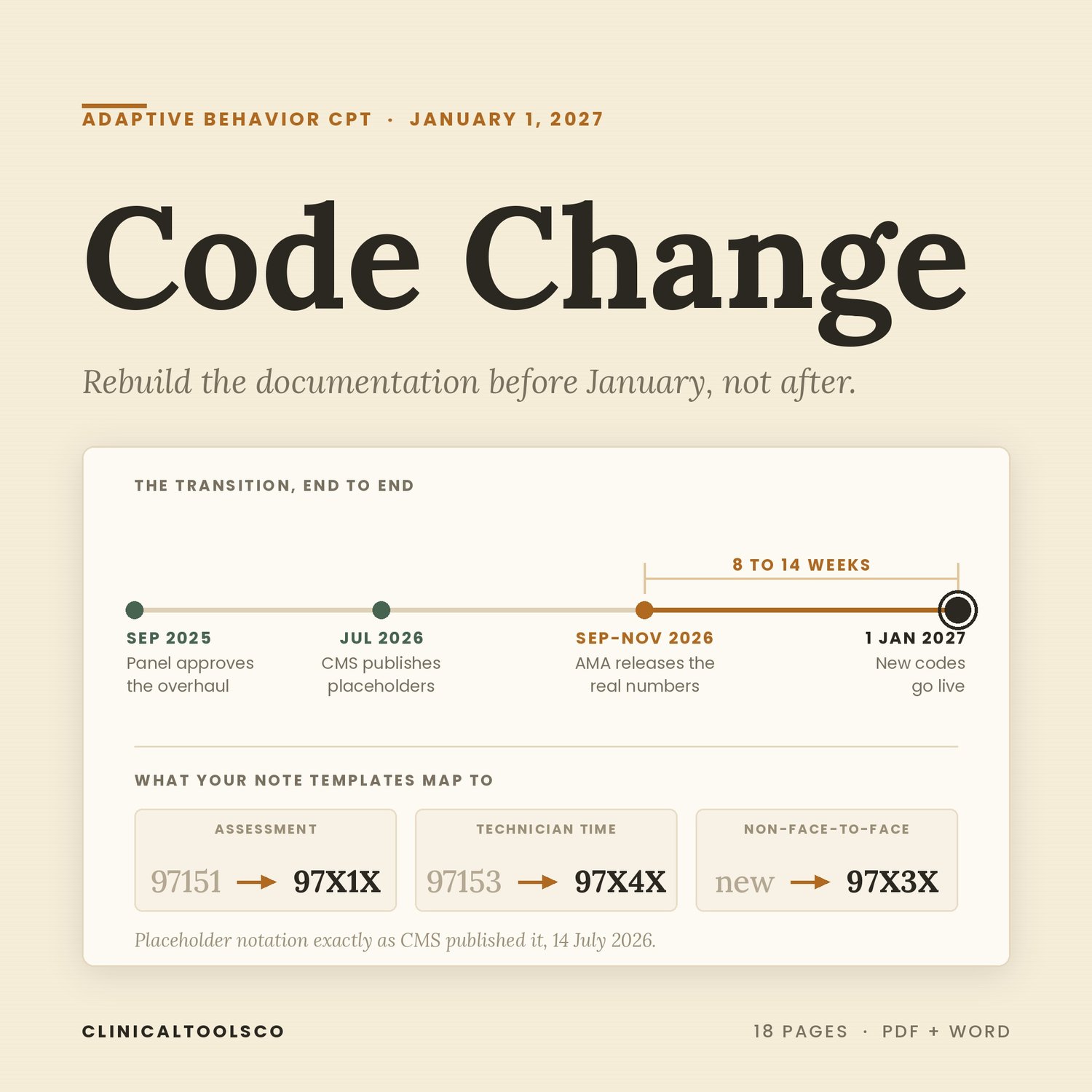
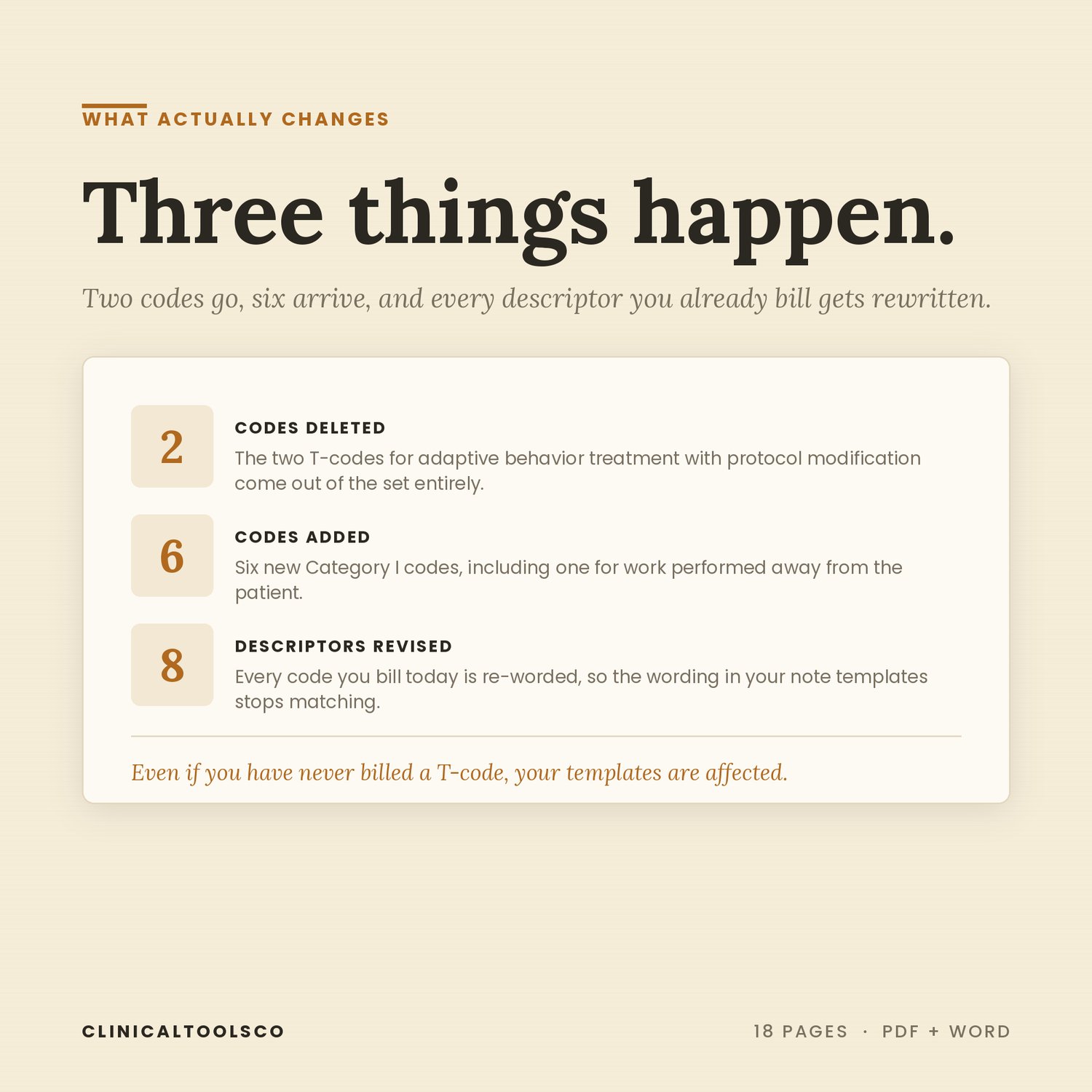
On 1 January 2027 the CPT code set for adaptive behavior services is restructured. Two codes are deleted, six are added, and the descriptors for all eight codes your practice bills every day are rewritten.
The AMA released the final code numbers on 9 September 2026: 97148, +97149, 97159, +97160, 97173 and 97180. This edition uses them throughout, along with the change to 97155 that most practices will miss: from January it needs a technician present, and solo BCBA treatment moves to 97173.
Between now and the 1 January go-live there are about thirteen weeks, and the last few fall across the holidays. In that window every ABA practice in the country is rewriting note templates, retraining technicians, reissuing authorizations and reconfiguring billing at the same time. All of that can be built now.
Final-codes edition. The first edition used the CMS placeholder notation, 97X1X through 97X6X, because the numbers were not yet public. This edition replaces them with the codes the AMA released on 9 September 2026. If you bought the first edition here, open your original download link again and you will get this one.
Every source is named in the kit: the AMA CPT Editorial Panel summaries of panel actions for September 2025 and February 2026, the AMA CPT 2027 code set released 9 September 2026, the ABA Coding Coalition, and the CMS CY2027 Physician Fee Schedule proposed rule. The documentation section is labeled as inference drawn from the published descriptors rather than from the CPT guidelines, because the CPT 2027 guidelines sit in the AMA's licensed code book, which the kit does not reproduce. Payment values taken from the proposed rule stay proposed until the final rule, expected November 2026.
This is not a session note template. Free note templates exist and some are good; the Council of Autism Service Providers publishes a set. This addresses the part those templates do not: which of your services map to which new structure, what your payer contracts say about codes that will not exist in January, how you retrain a team of technicians, and what you do in the first two weeks when claims start denying.
Format
Print-ready PDF, US Letter and A4, plus a fully editable Word file. Instant download, no app and no subscription.
An independent professional resource. Not affiliated with, endorsed by, or sponsored by the AMA, the BACB, CMS, or any payer. This is a transition workbook, not coding advice and not a compliance product. Coding decisions remain yours and your biller's, and a significant payer contract is worth a healthcare attorney's time.
Worth reading first: what happens to the codes on 1 January, and why the six numbers circulating online are not the real ones yet.