





Assessment Battery Selection Guide (2026)
The hardest part of an evaluation is not the writing, it is deciding what to give. This guide walks you from the referral question to a defensible battery, with the principles, the workflow, a referral-question chooser, decision pathways for the hard differentials, named-measure reference tables for every domain, head-to-head comparisons of the instruments people weigh against each other, and a set of fillable tools and per-referral worksheets.
What is inside
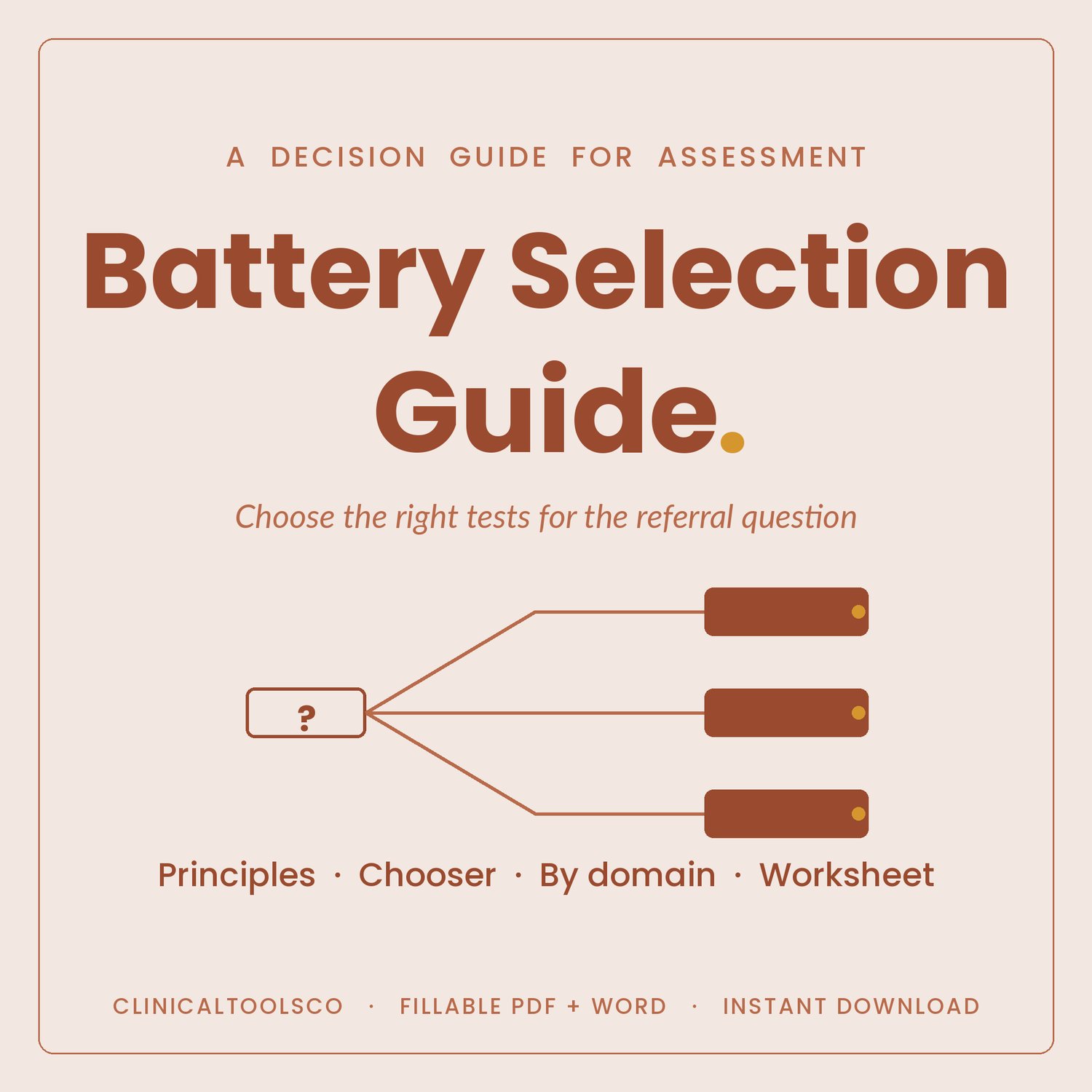
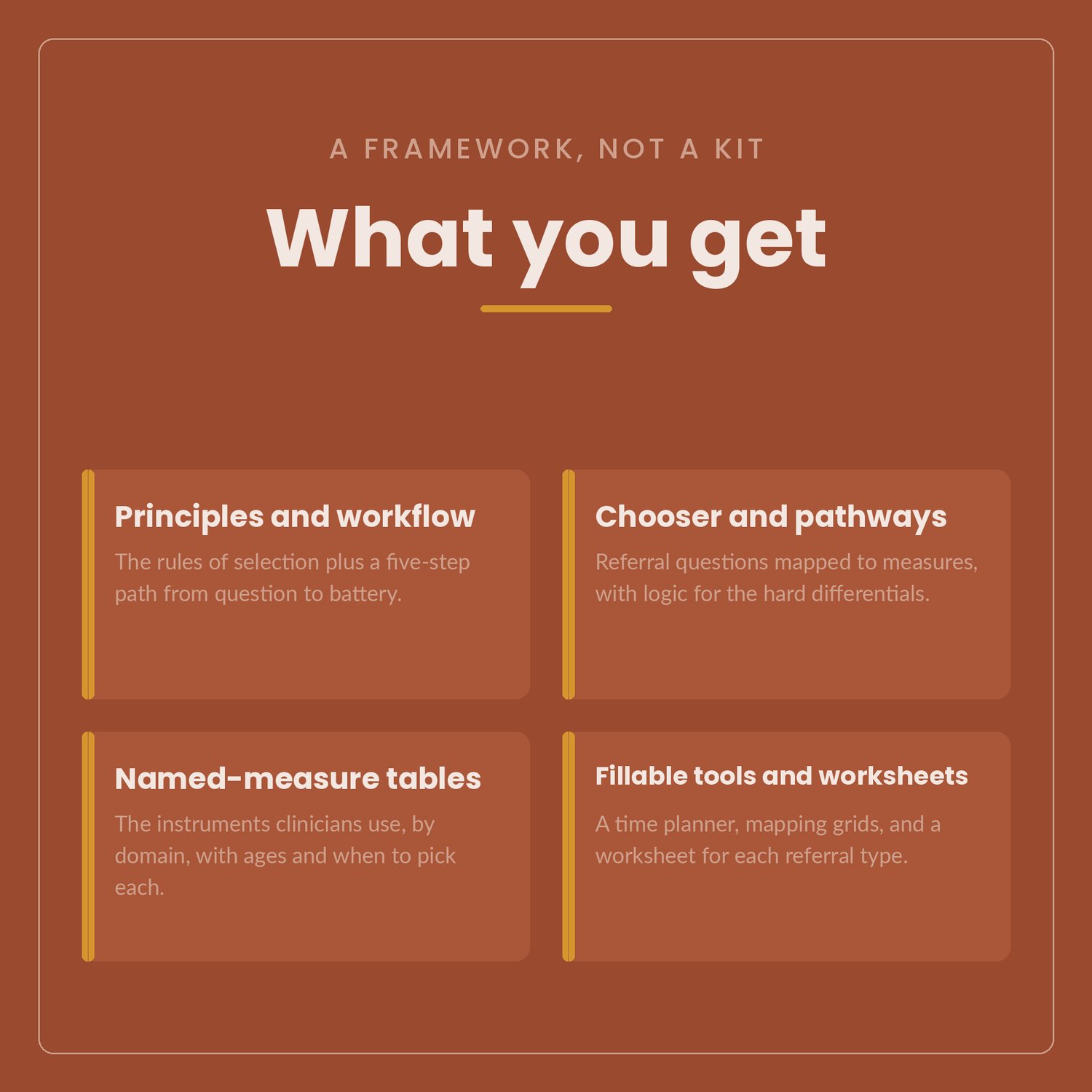
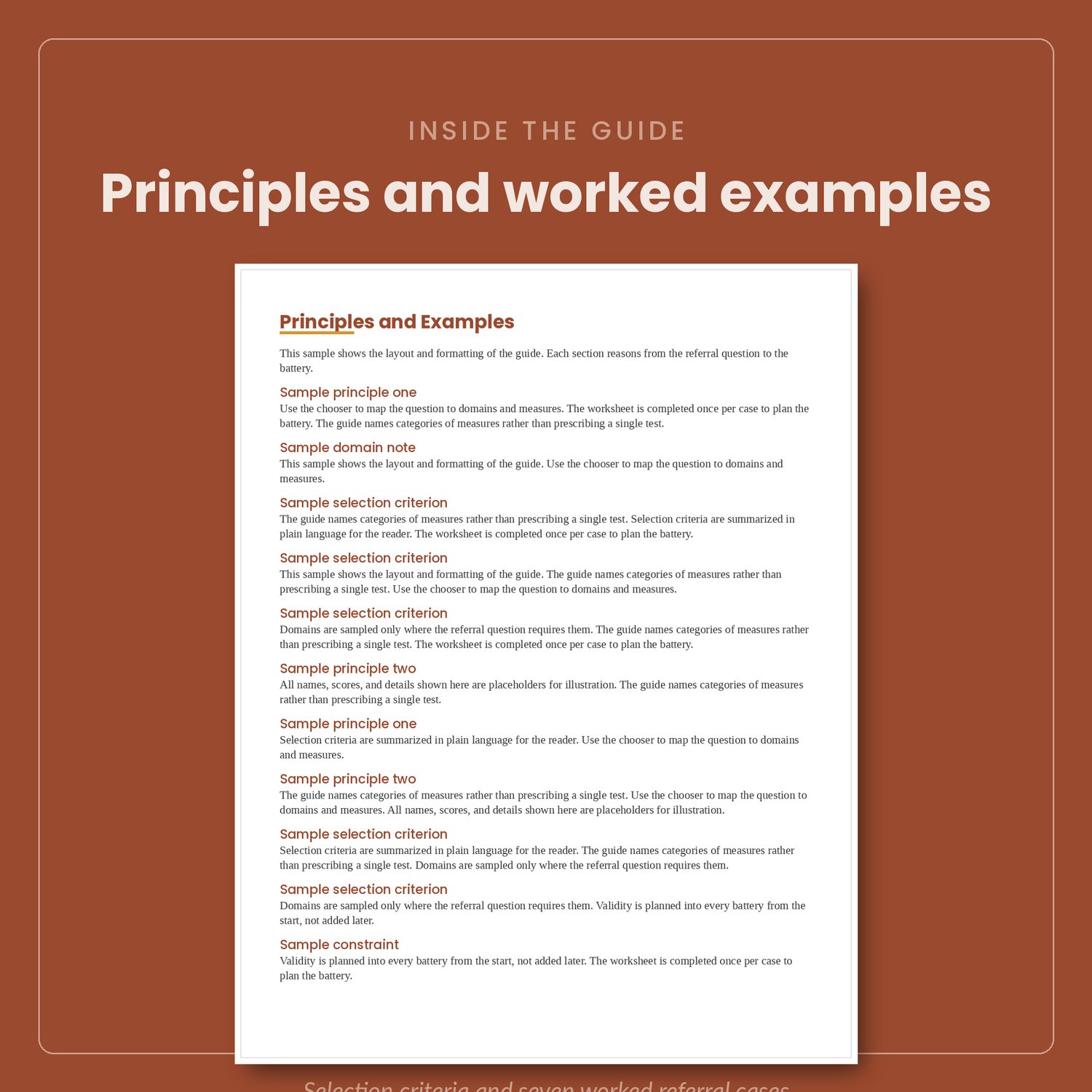
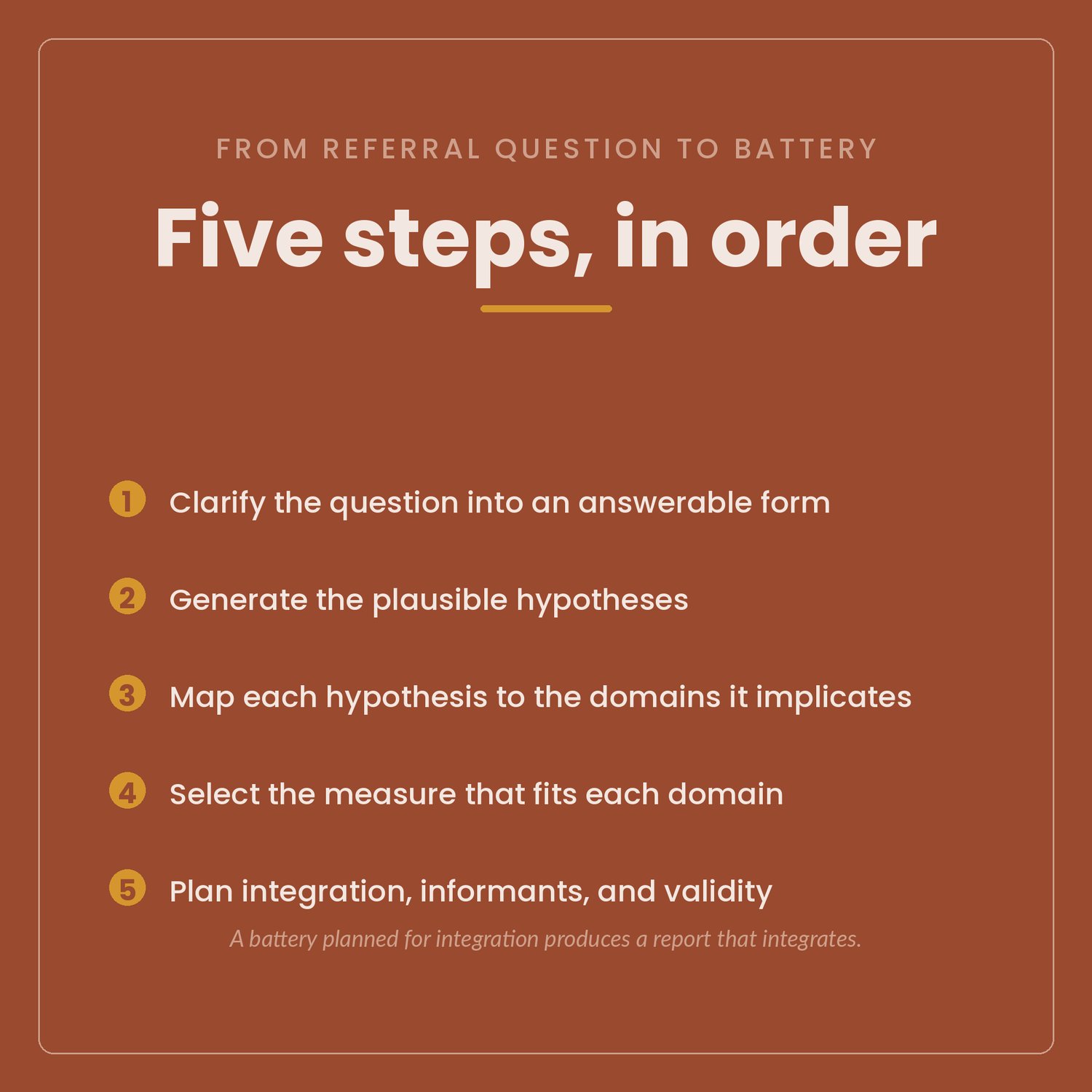
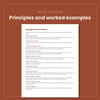
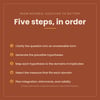
- The principles of selection and a five-step workflow from the referral question to the finished plan
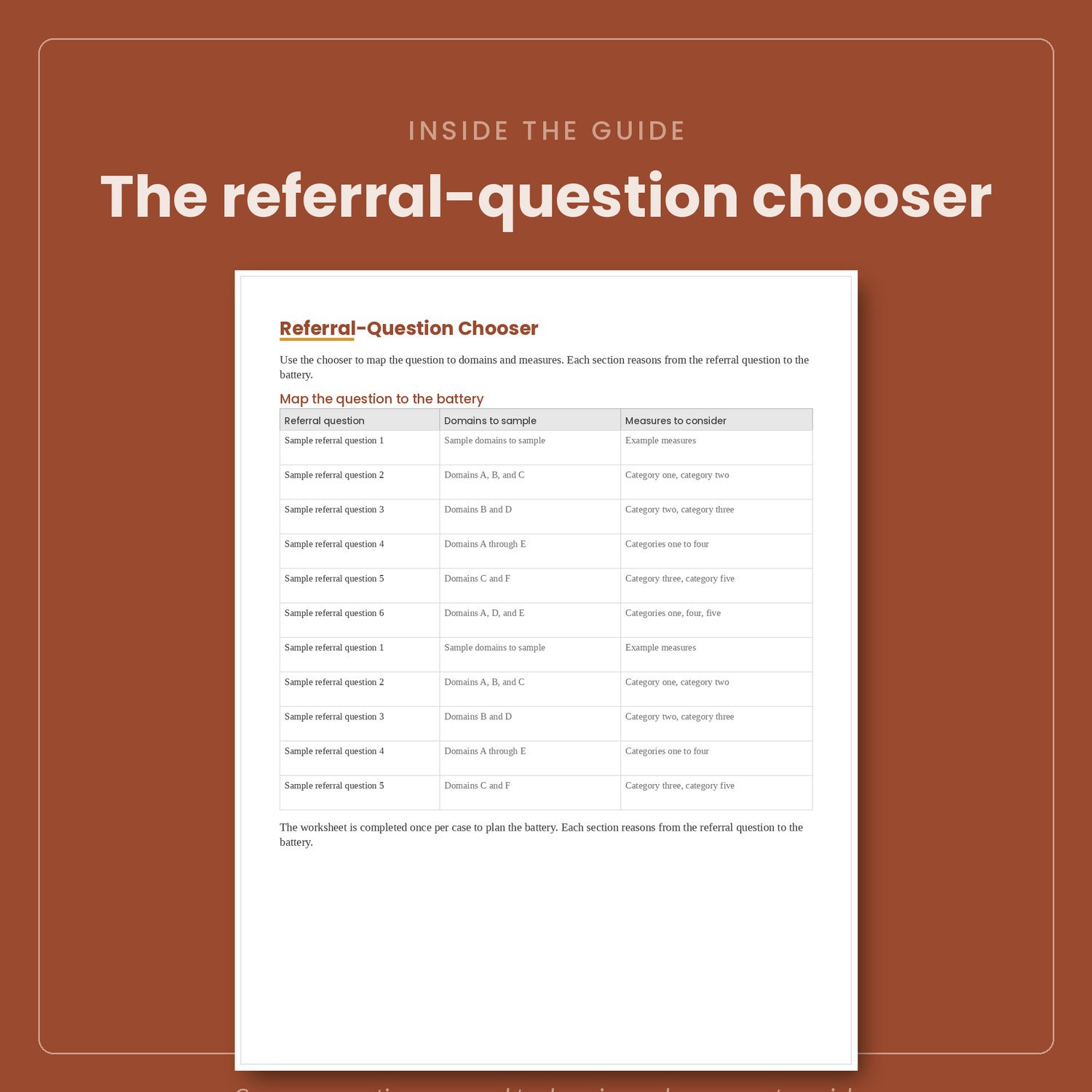
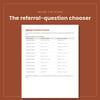
- A referral-question chooser mapping common questions to the domains and measures worth considering
- Decision pathways with branching logic for the differentials that trip people up: learning disorder versus attention disorder versus both, cognitive-decline pattern, autism versus its look-alikes, and effort and credibility
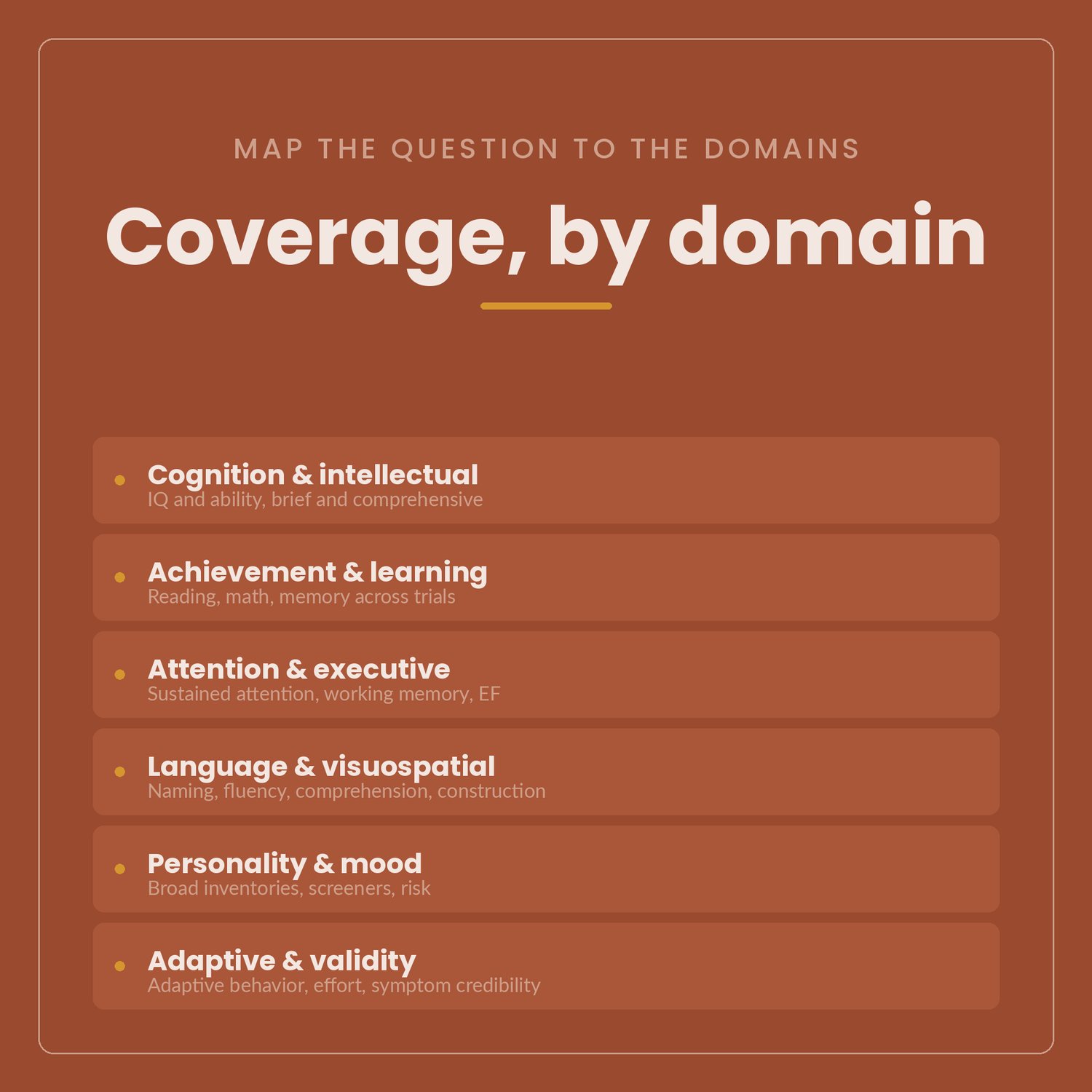
- Named-measure reference tables for every domain (cognition, achievement, phonological and reading, language, memory, attention and executive, visuospatial and motor, personality, mood screeners, adaptive, and validity) with the ages each covers and when to pick it
- Head-to-head comparisons of the instruments clinicians most often choose between, and the criteria that break ties when two measures could fill the same slot
- Sections on validity planning, multimethod and multi-informant design, culture and language, and practical constraints
- A common-pitfalls section and seven worked examples showing the workflow end to end across ages and referral types
- Fillable tools: a hypothesis-to-measure mapping grid, a validity-measure selection table, and a time and battery-length planner
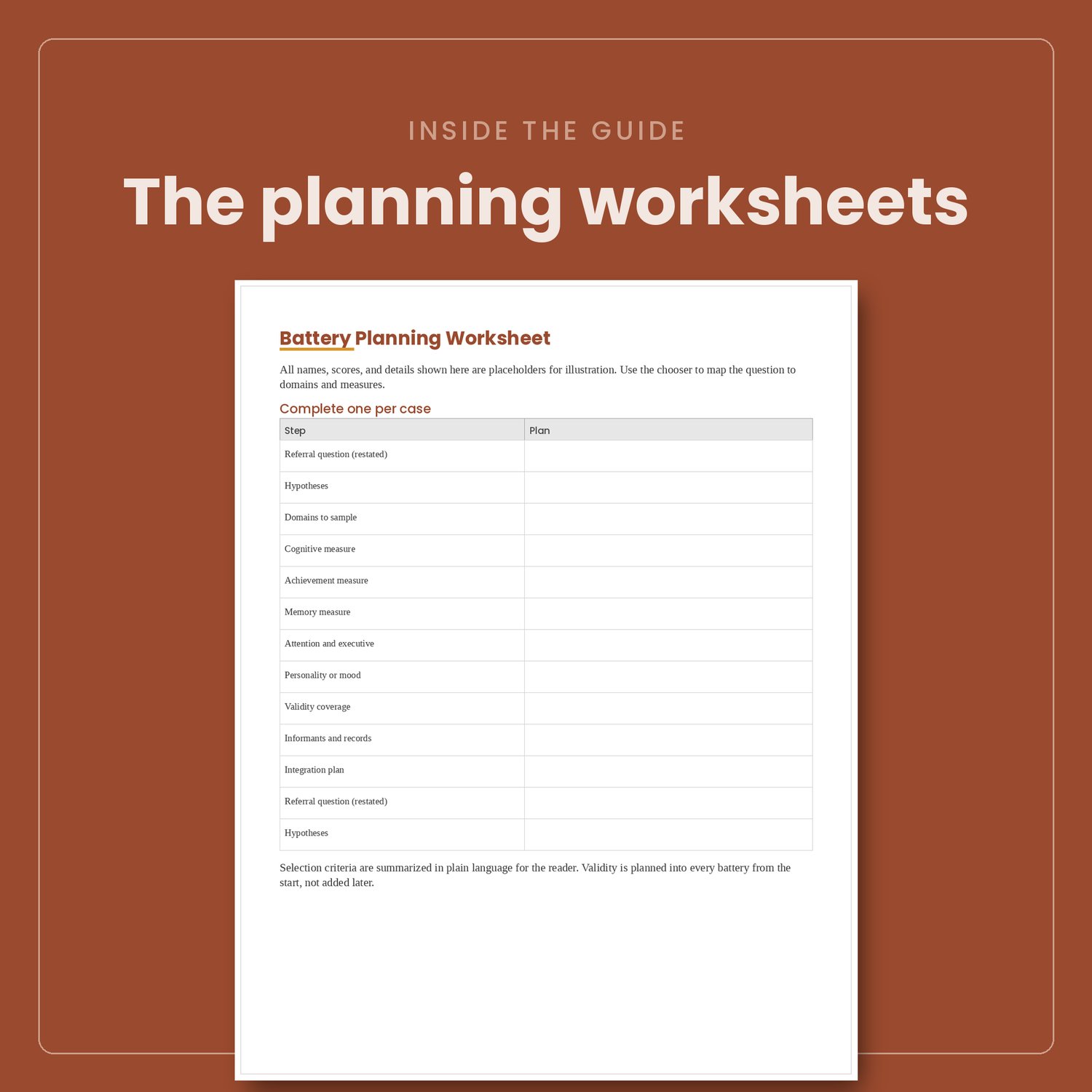
- A master battery-planning worksheet plus a pre-mapped worksheet for each common referral type, covering specific learning disorder, ADHD, mood and personality, cognitive decline and autism
Who it is for
- Clinical and school psychologists who want test selection to follow the referral question rather than habit or whatever kit they happen to own
- Neuropsychologists assembling batteries across mixed referral types
- Graduate trainees learning to plan a battery, and the supervisors teaching them
Why it exists
Built by a practicing clinician for clinical and school psychologists and the trainees learning to assemble a battery. It complements report templates rather than repeating them.
Format
- Fillable PDF plus an editable Word (.docx) version, identical in content
- 25 pages, clean and print-ready
- Works on Mac, Windows, iPad, GoodNotes, Notability
- Lifetime access, unlimited prints
Please note
This is an independent decision guide. It names specific measures as examples of what fits a given purpose, not as prescriptions or endorsements. It does not reproduce any copyrighted test content, and it does not replace the test manuals, the norms or supervision. Editions and norms change, so always confirm the current edition and the appropriateness of the norms for your examinee before you administer anything. It is not affiliated with or endorsed by the developers of any measure.
Digital download. No physical product ships. Reach out by email if anything does not work or if you have questions.
Walkthrough video: a look inside before you buy.