
Biopsychosocial Assessment Template (2026)
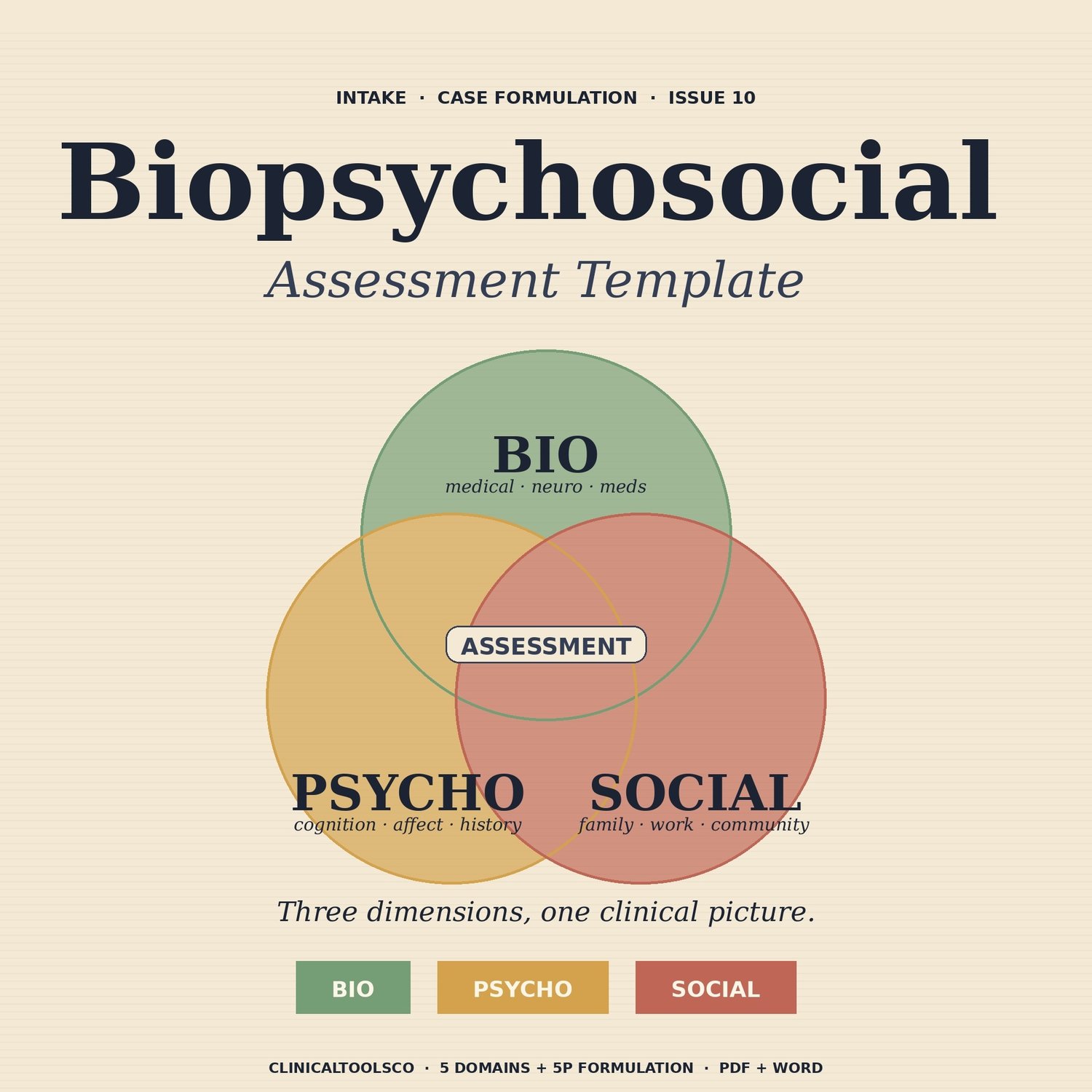
A 49 page biopsychosocial assessment template that collects the full clinical picture in an order a person can actually sit through.
What you get
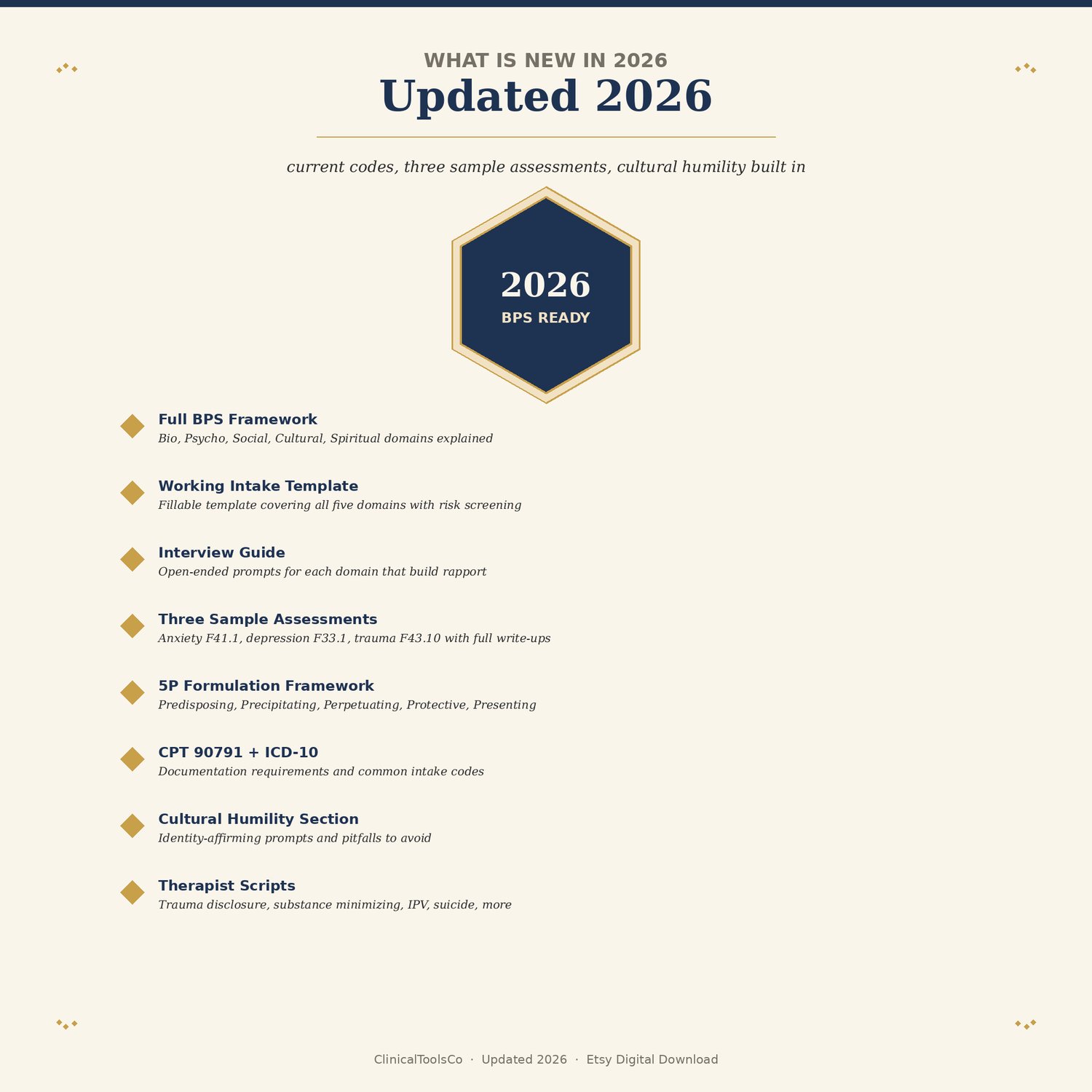
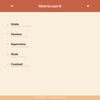
- A fillable biopsychosocial intake template, including the session time fields a time-based code needs
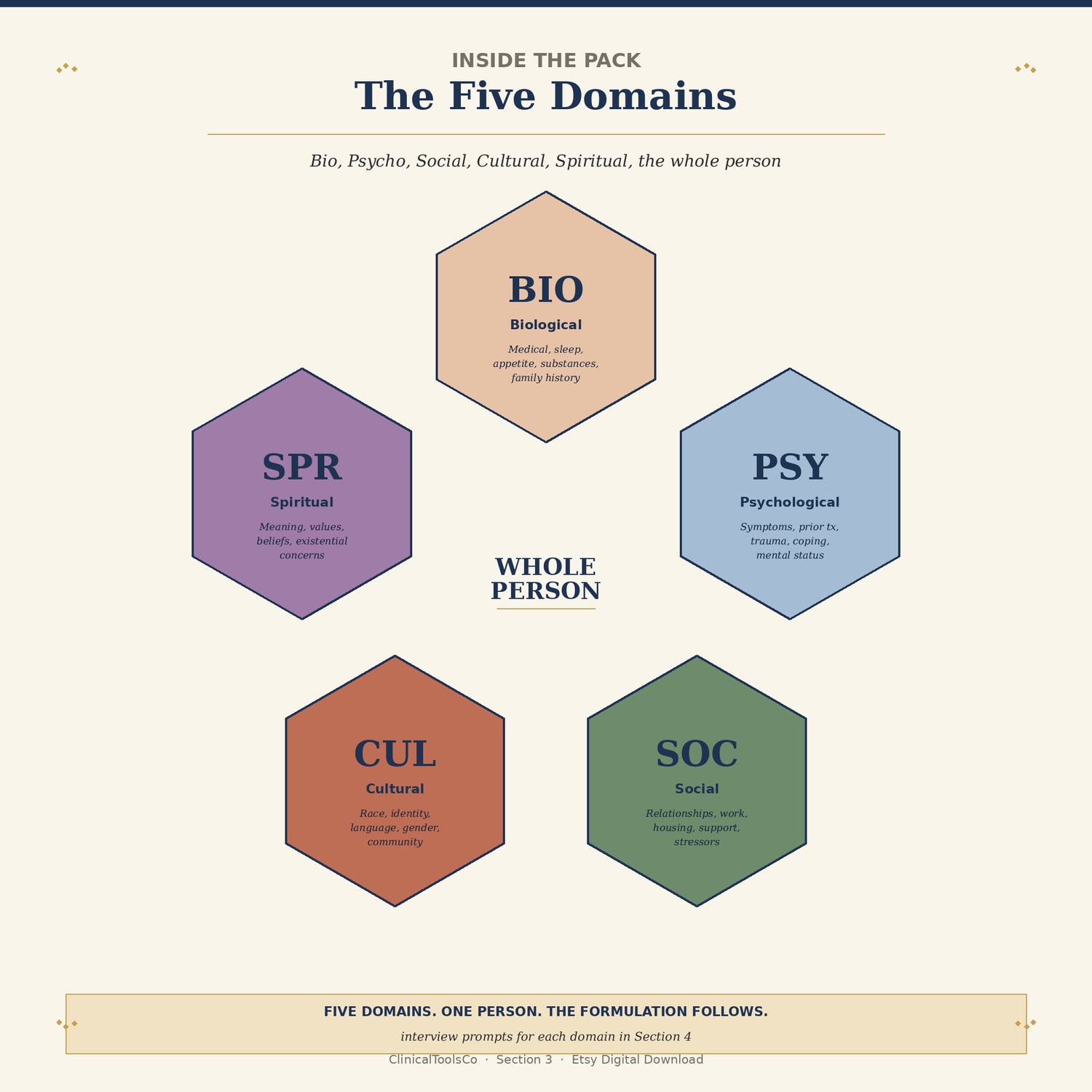
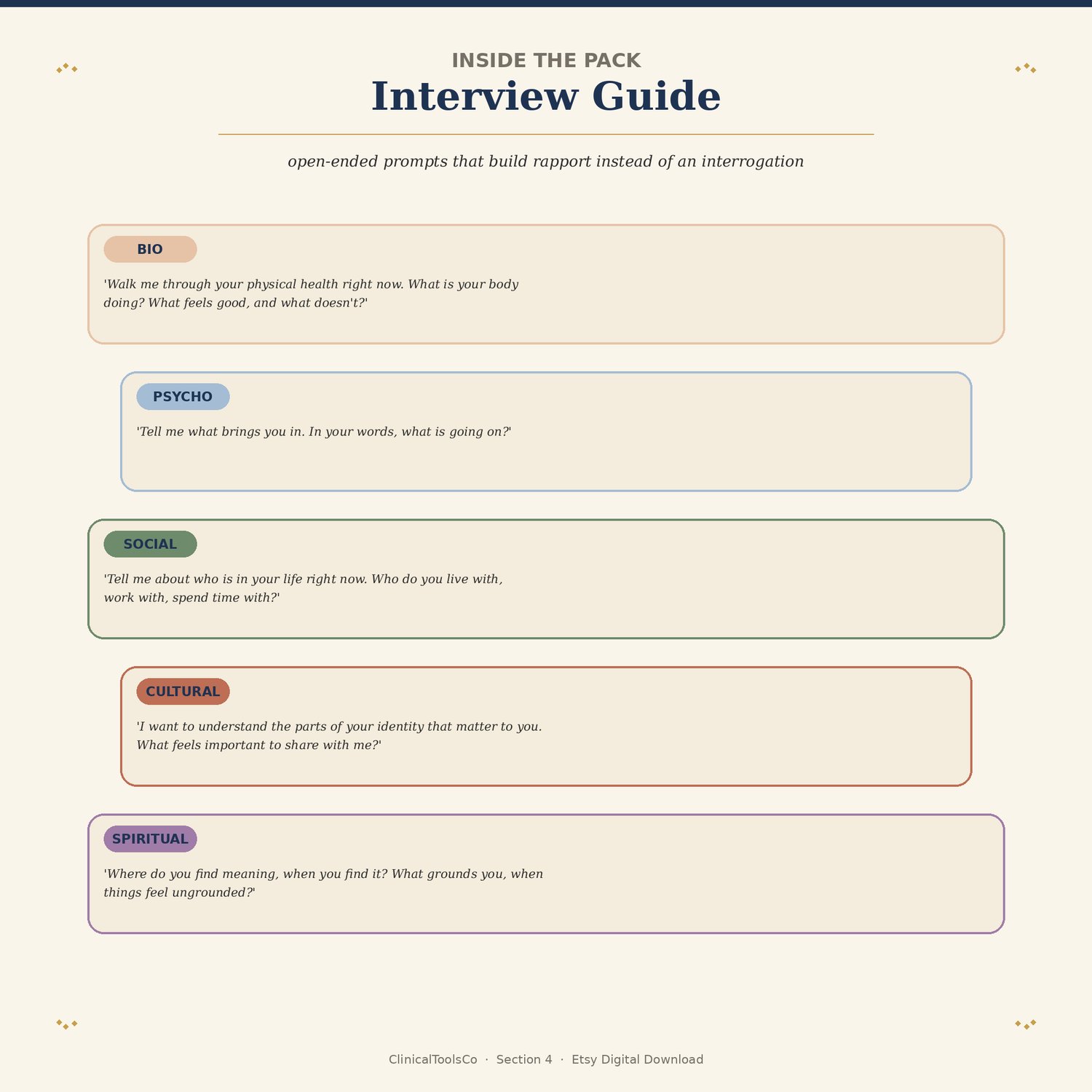
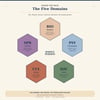
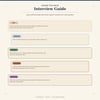
- Open-ended interview prompts for every domain, written to be asked out loud rather than read off a form
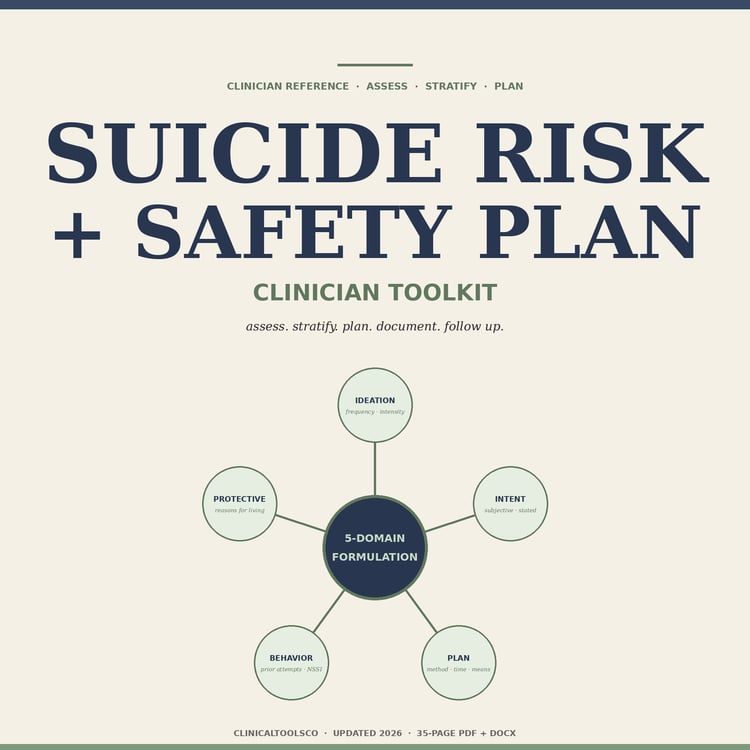
- Risk screening built into the intake, with ideation broken out and yes or no lines for safety plan, means restriction and crisis resources
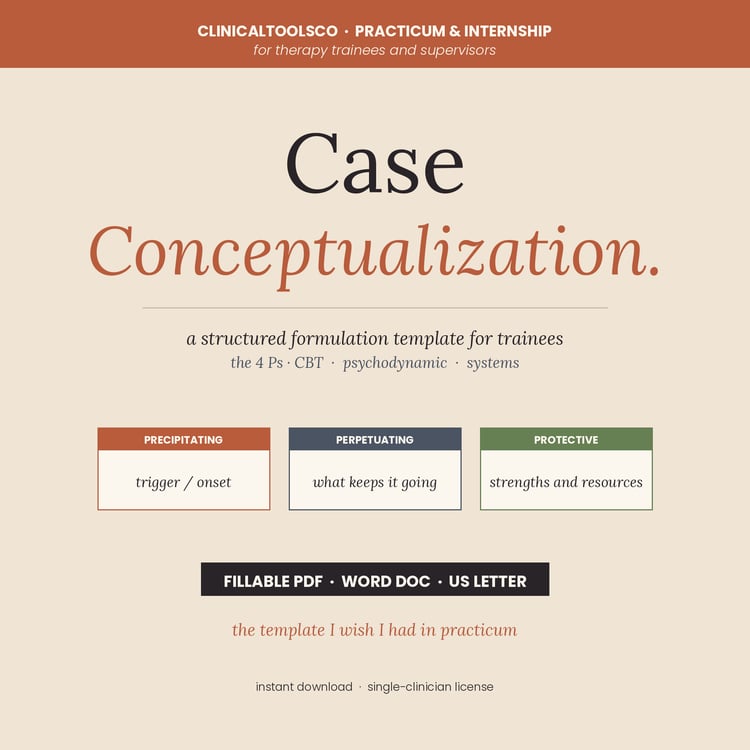
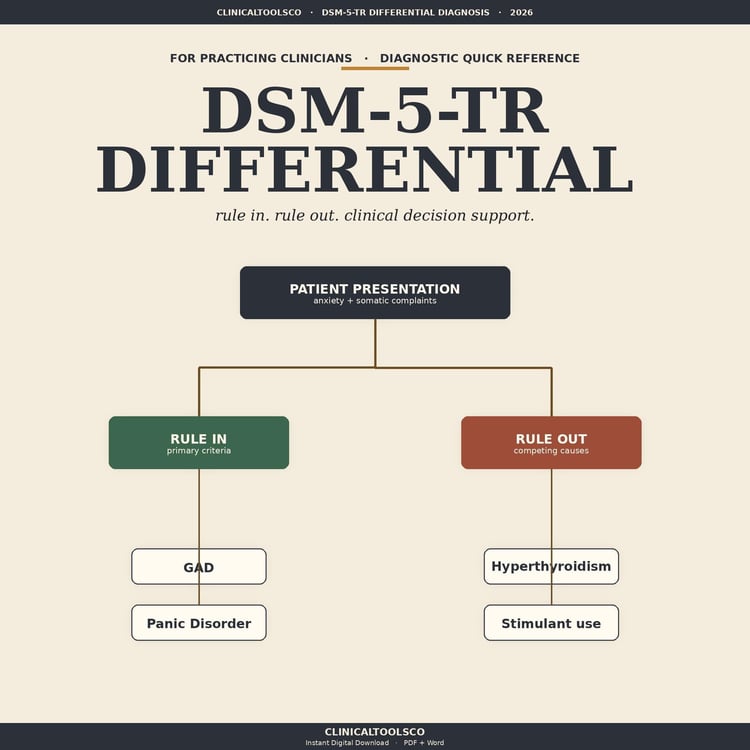
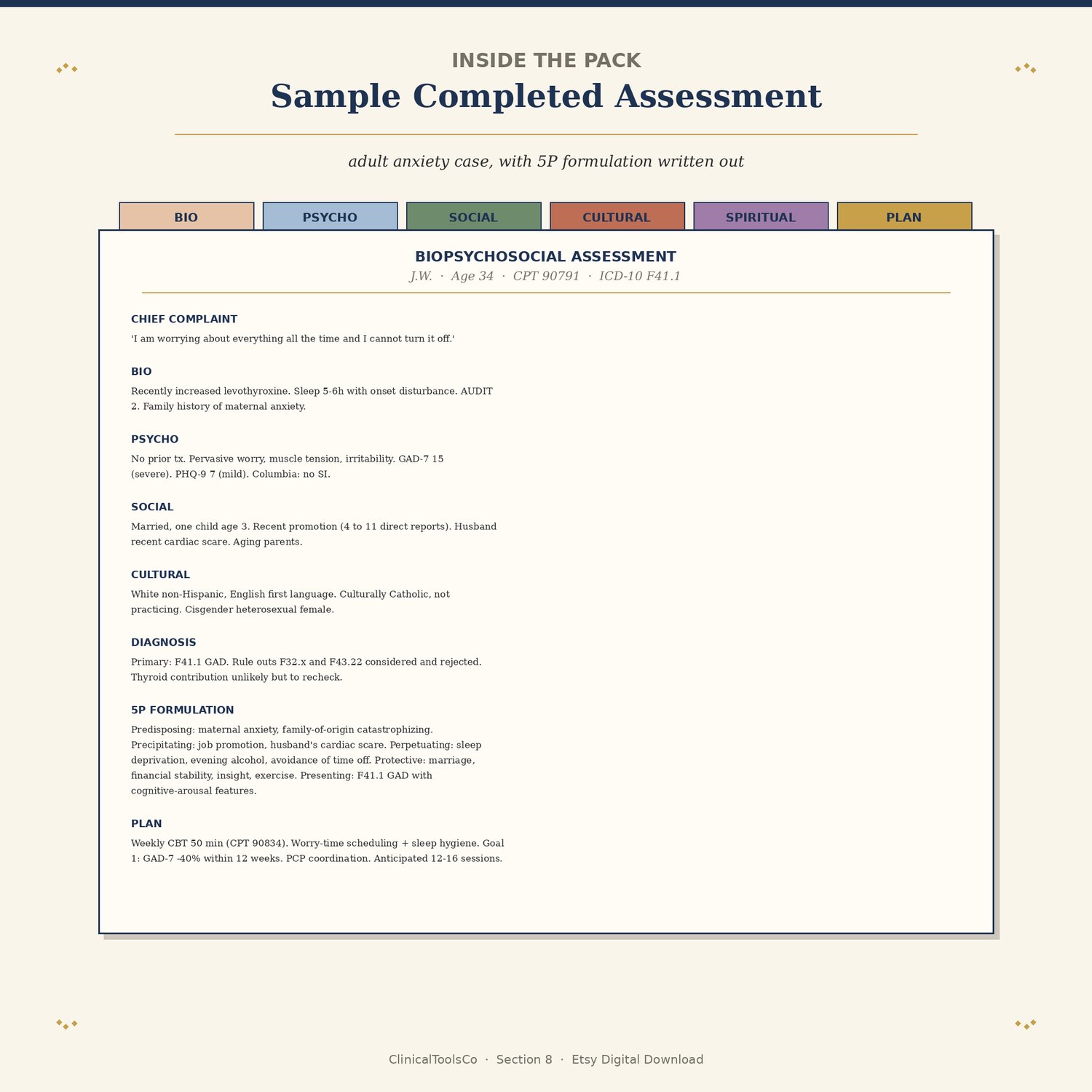
- A mental status exam format, diagnostic impressions, and the 5P formulation framework
- Brief variants for a child intake, a couples intake and a substance use focused one
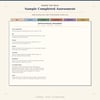
- Three completed sample assessments: adult anxiety, adult depression and adult trauma
- Cultural humility and identity-affirming prompts
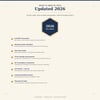
- An ICD-10 reference for common intake diagnoses, and the 90791 documentation requirements
- Audit-protective language for medical necessity
- Telehealth intake adjustments, and scripts for the hard moments in a first session
- A minute by minute 60-minute intake workflow
Who it is for
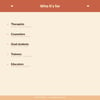
Licensed therapists, clinical social workers, counselors in community settings, pre-licensed associates, practicum students, and supervisors teaching assessment.
Why it exists
The standard intake reads like an interrogation. Question, question, question, with no warmth, no reason given, and no permission asked. You get the information and lose part of the alliance getting it.
This pack collects the same clinical content in an order a person can actually sit through. The prompts matter as much as the fields, particularly in the sections people brace for. It also carries the parts a blank form leaves you to invent: the risk block, the formulation, and three finished intakes to measure your own against.
Format
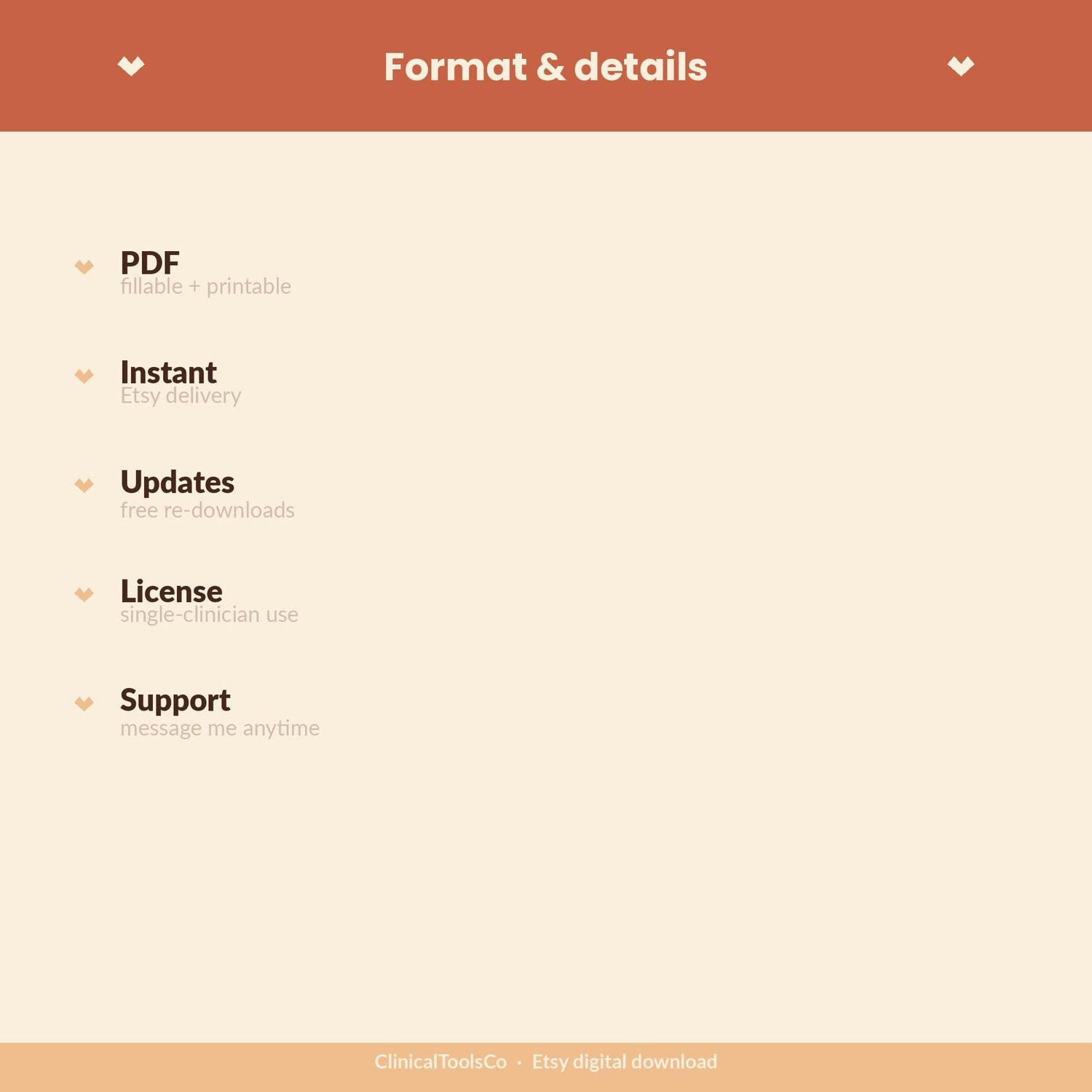
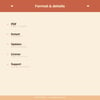
49 pages. Editable fillable PDF and Word, US Letter and A4. Instant download, lifetime access.
There is a five minute walkthrough that shows what is inside the file.
Worth reading first: Biopsychosocial assessment: what to include and how to structure it