


CBT-I Insomnia Protocol (2026)
A six session CBT-I insomnia protocol: intake and differential, the sleep diary, sleep restriction, stimulus control, cognitive therapy and session-by-session guidance.
What is in the manual
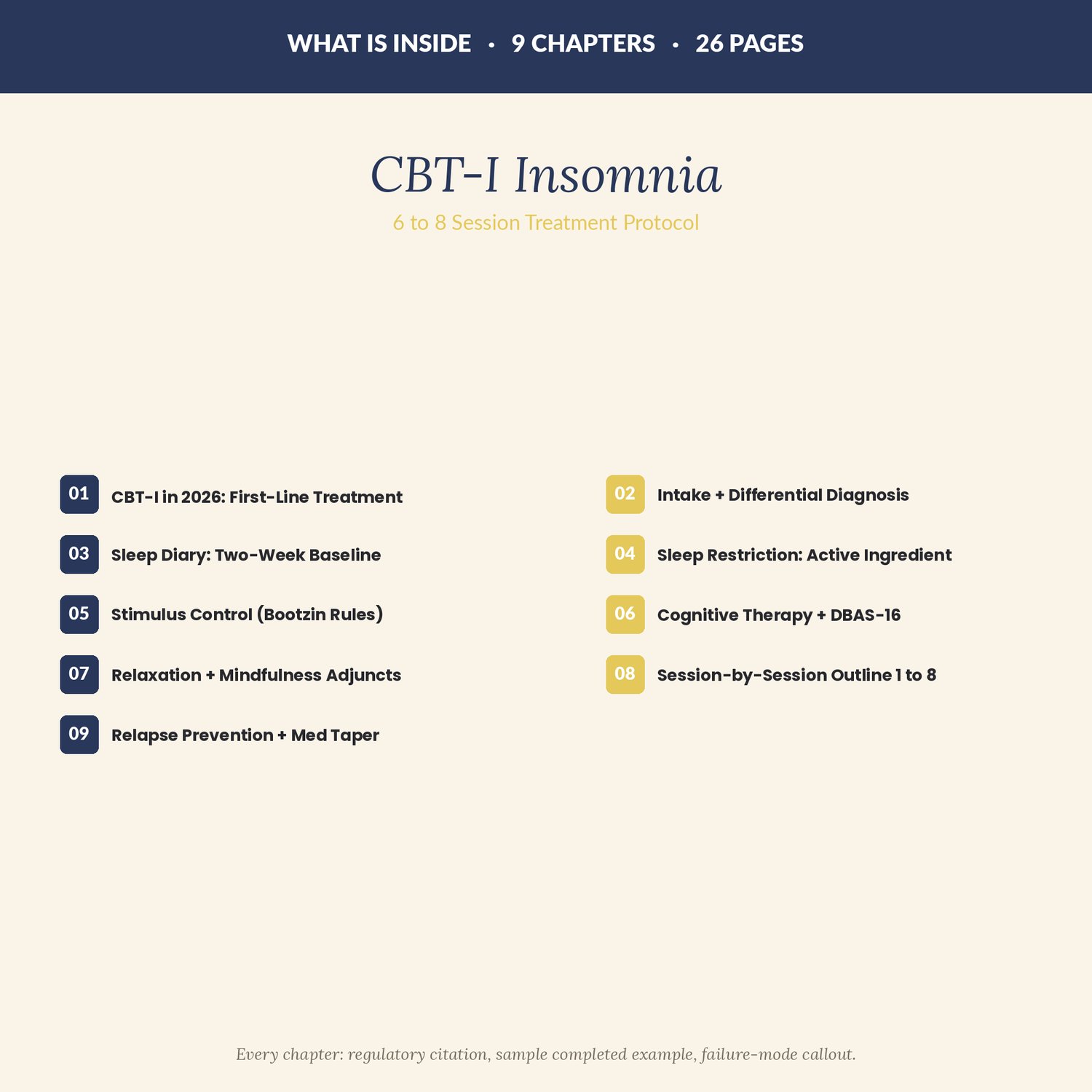
- Chapter 1: CBT-I in 2026. Why CBT-I is the guideline-level first-line treatment, the Trauer 2015 meta-analytic effect sizes, the AHRQ access gap, billing under 90791 and 90834 or 90837, and a practice-line revenue example
- Chapter 2: Intake and differential. Full DSM-5-TR criteria for insomnia disorder, the intake interview structure, the screening battery (ISI, STOP-BANG, Epworth, PHQ-9, GAD-7, MEQ) with all cutoffs, refer-out triggers for OSA, restless legs, depression, bipolar and circadian disorders, and a completed intake summary
- Chapter 3: The sleep diary. Daily variable definitions with a how-to-capture column, two-week versus one-week baseline guidance, mean sleep efficiency calculation, paper versus app diary options, and a completed 14-night baseline summary
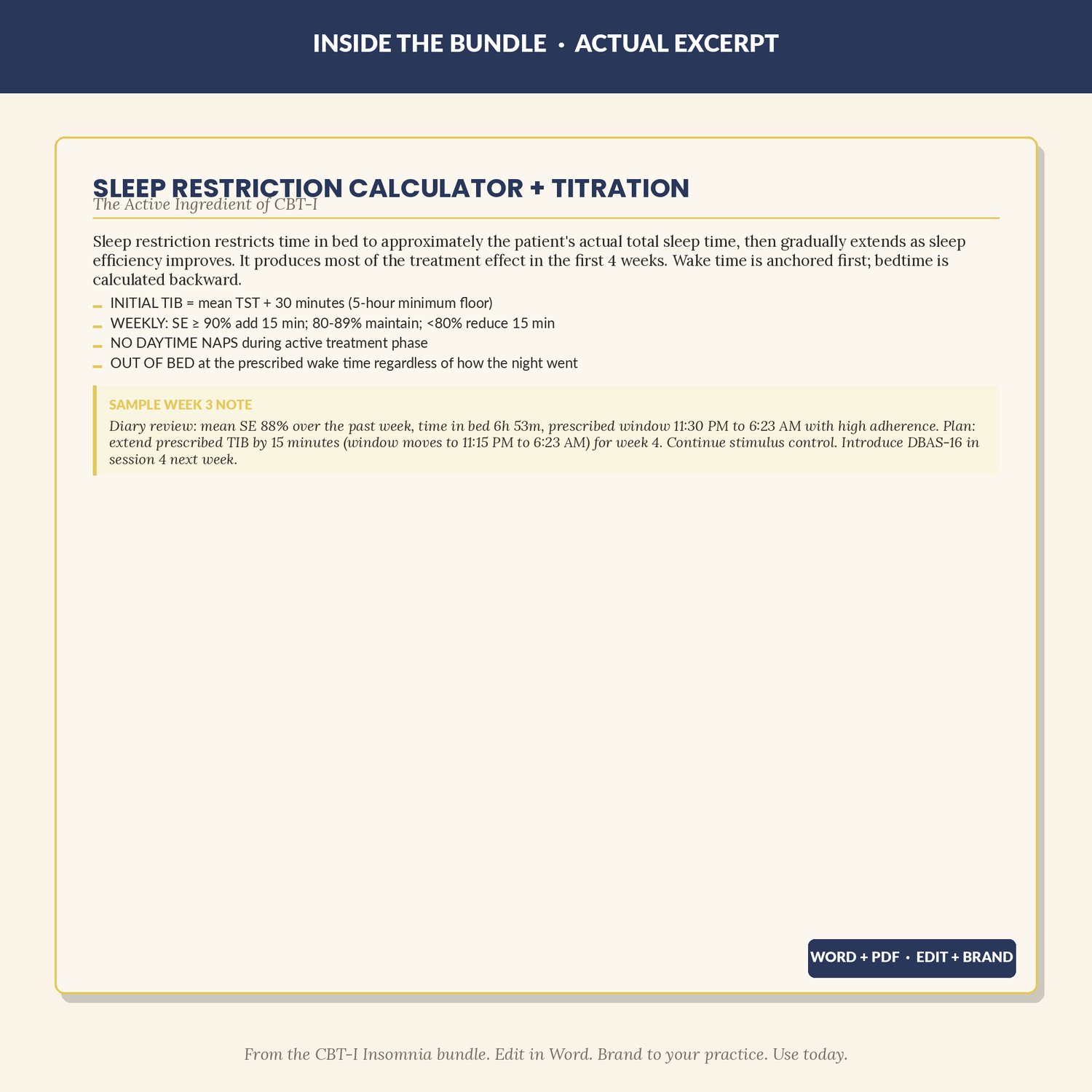
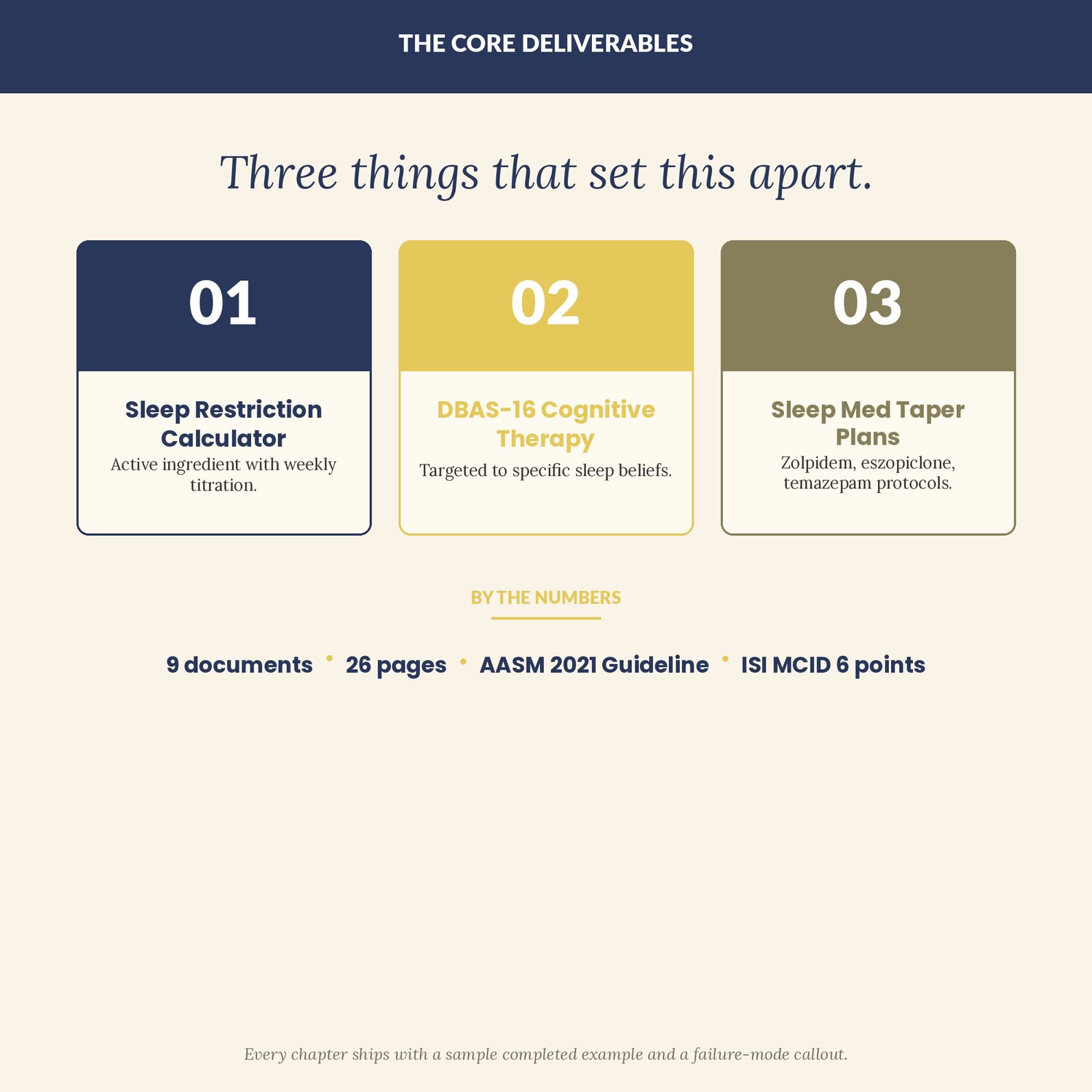
- Chapter 4: Sleep restriction. The mechanism, the initial sleep window calculation with the five-hour floor, wake-time-first anchoring, the weekly titration algorithm with all four efficiency bands, daytime sleepiness counseling, and a completed six-week prescription trajectory
- Chapter 5: Stimulus control. The six Bootzin rules in full, the about-20-minutes rationale, out-of-bed activity guidance, integration with sleep restriction, a completed patient narrative across week 1, and modifications for partner, studio or anxiety constraints
- Chapter 6: Cognitive therapy. The six common dysfunctional sleep beliefs, DBAS-16 administration, the cognitive model of insomnia, the restructuring sequence across sessions 4 through 6, constructive worry, paradoxical intention, and a completed restructuring worksheet with behavioral experiment
- Chapter 7: Relaxation and mindfulness adjuncts. PMR, diaphragmatic breathing, mindfulness-based treatment for insomnia, imagery distraction, the adjunct-to-presentation matching table, and a PMR assignment example
- Chapter 8: Session-by-session outline. Detailed agenda for sessions 1 through 8, what to deliver, what to assign, troubleshooting prompts, and a completed seven-session course outcome example
- Chapter 9: Relapse prevention, sleep medication taper and discharge. The relapse prevention plan structure, the two-week rule, taper plans for zolpidem, eszopiclone, temazepam, trazodone, doxepin, diphenhydramine, melatonin and cannabis-for-sleep, ISI change documentation language for payer review, and a full sample discharge summary
Who it is for
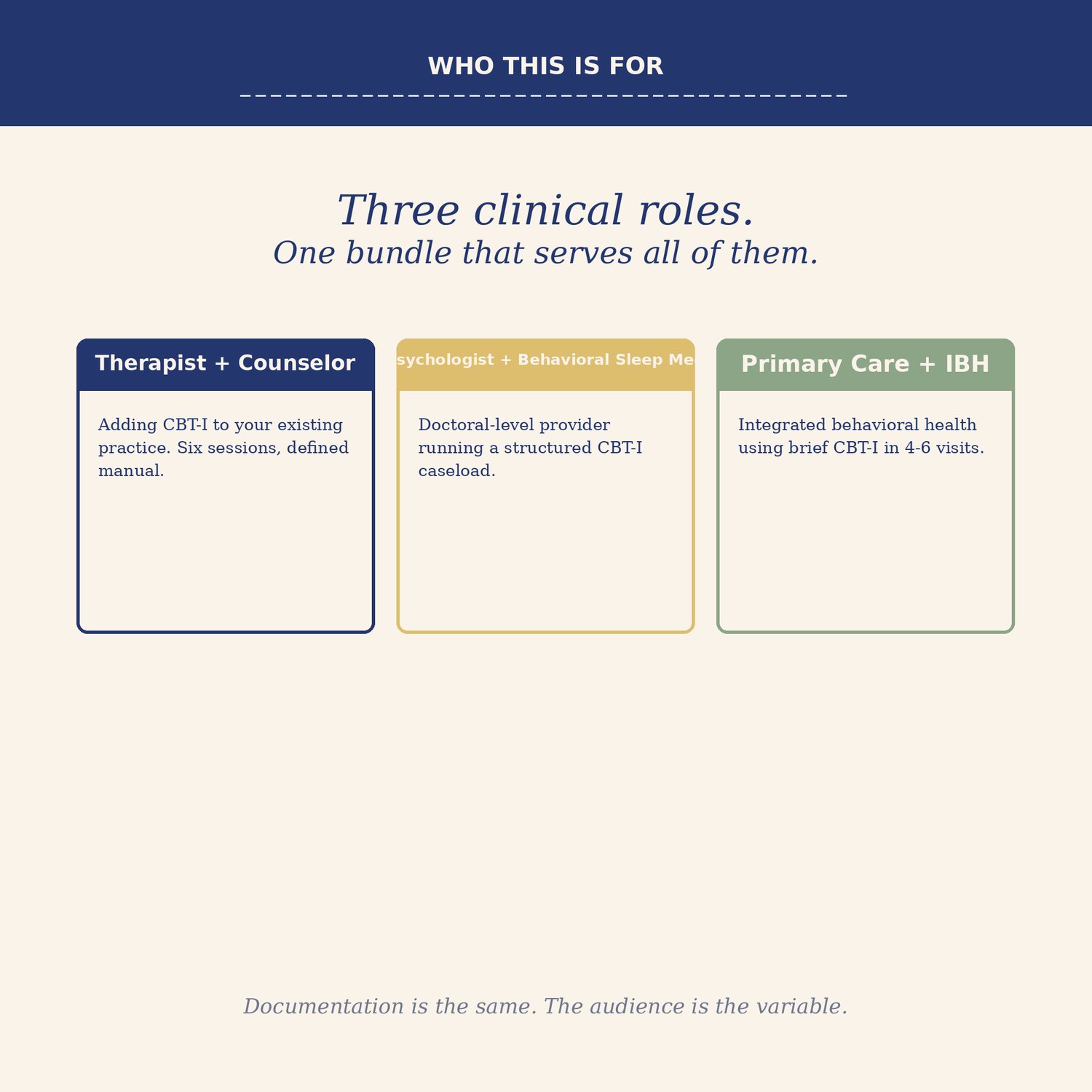
- Licensed psychologists (PhD, PsyD) adding CBT-I as a specialty area in outpatient practice
- Licensed clinical social workers delivering structured behavioral sleep medicine
- LMFTs, LMHCs and LPCs with appropriate CBT-I training
- Behavioral health clinicians embedded in primary care, sleep medicine or integrated care
- Group practice owners building a CBT-I service line
- Postdoctoral fellows and early-career clinicians learning structured insomnia treatment
- Clinical supervisors teaching behavioral sleep medicine to trainees
- Behavioral sleep medicine fellows formalizing the manualized outpatient protocol
Why it exists
A new patient presents: 18 months of broken sleep, an ISI of 19, three failed trials of zolpidem, a primary care doctor who wrote patient requests CBT-I on the referral, and an expectation that she will be sleeping through the night by Thanksgiving. You have 50 minutes for the intake, six to eight sessions to deliver the protocol, a sleep diary you need her to complete for two weeks before the next visit, a STOP-BANG to score, and a defensible discharge ISI to document. Most CBT-I worksheets online give you a sleep hygiene checklist and a quote from Spielman 1987. That is not CBT-I.
I built this after delivering roughly 200 courses of CBT-I in an outpatient practice and watching colleagues assemble the protocol from textbooks, the AASM guideline PDF and a half-finished workbook. The first year I wasted hours each week reinventing the sleep window calculator and the discharge letter. This pack is what I built once I got tired of starting over.
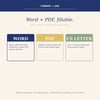
30 pages, 9 chapters, written for the licensed psychologist, LCSW, LMFT, LMHC or LPC adding CBT-I as a service line in outpatient practice. Five files in total: the manual in PDF and Word, a 59-page appendix and worksheet pack in PDF and Word, and a self-calculating Excel sleep diary.
The appendix and worksheet pack
Every blank form the manual refers to, in a separate 59-page companion file, plus a spreadsheet sleep diary that calculates itself.
Appendix A: two printable week-long sleep diary sheets in landscape, plus the weekly summary sheet that works out time in bed, total sleep time and sleep efficiency
Appendix B: the same diary as an Excel workbook. 28 nights, automatic sleep efficiency, weekly means, and a sleep window calculator that applies the floor and counts the window back from the fixed get-up time
Appendix C: the full progressive muscle relaxation script across 16 muscle groups, plus diaphragmatic breathing and imagery distraction scripts
17 blank clinician forms covering intake screening and differential, sleep history, three-factor case formulation, sleep restriction prescription, weekly titration log, stimulus control adherence, sleep belief inventory, cognitive restructuring, behavioral experiment planner, constructive worry, medication taper tracking, relapse prevention plan, discharge summary and a session fidelity checklist
8 client handouts in plain language, and a session-by-session map telling you which form to use and which handout to give at each of the eight sessions
The Word version carries a letterhead placeholder, so you can put your practice name and contact details on the client handouts before you print a batch.
Why this is different
Most CBT-I material on the market is patient-facing: a sleep hygiene worksheet, a list of tips for better sleep, a workbook the patient is supposed to read alone. CBT-I is a clinician-delivered protocol with a sleep restriction calculator, weekly titration and a discharge summary. This manual is the clinician operating system.
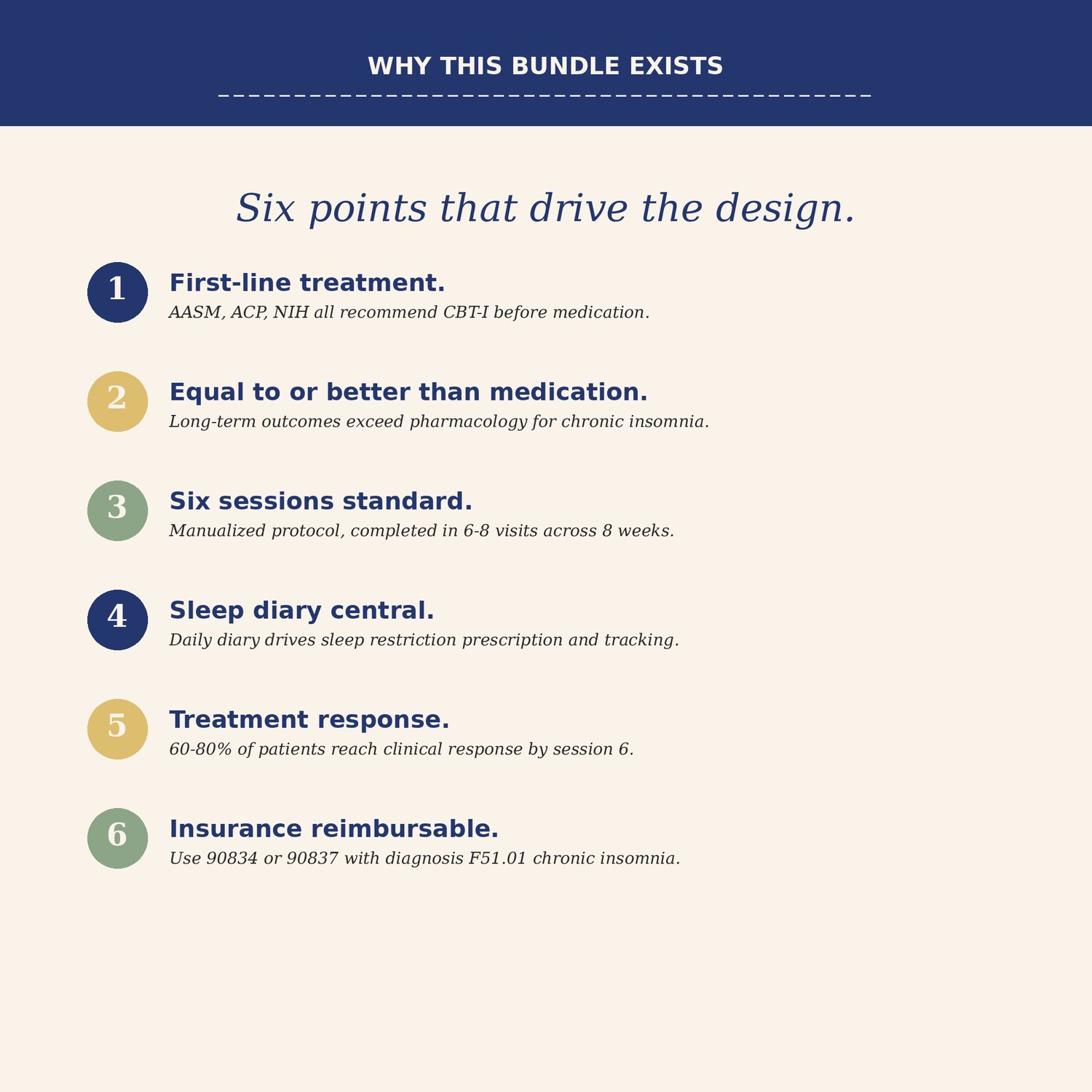
The sleep restriction chapter matters because sleep restriction produces most of the treatment effect in the first four weeks. You get the initial window calculation, the four-band titration algorithm, daytime sleepiness counseling, safety guidance for vigilance-critical occupations, and a six-week sample trajectory you can show a patient.
The differential chapter matters because CBT-I delivered to a patient with untreated OSA, untreated depression or a circadian rhythm disorder will fail. Catching the patient who needs a sleep study before you start the protocol is the most important thing the intake does.
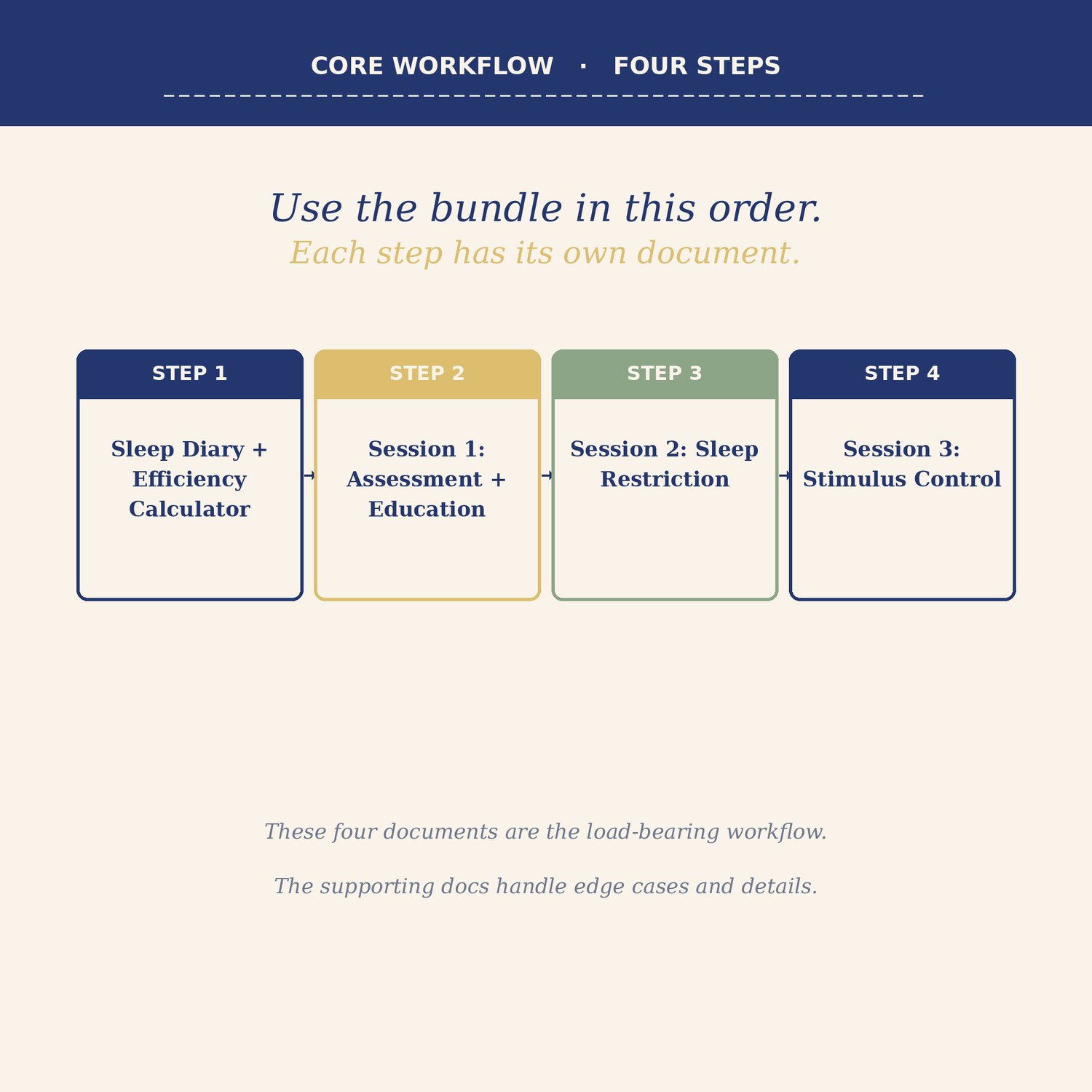
The session-by-session outline matters because the protocol is the protocol. Session 2 is sleep restriction and stimulus control. Session 4 is DBAS-16 and the cognitive model. Session 6 is the medication taper plan. Session 7 is relapse prevention.
The taper plans matter because most of your patients are on something at intake, and zolpidem tapers differently from temazepam, from trazodone, from cannabis.
The discharge summary matters because the ISI change score is the standard quantitative outcome for value-based contracts and payer review. The minimal clinically important difference is 6 points and the remission threshold is under 8.
Format
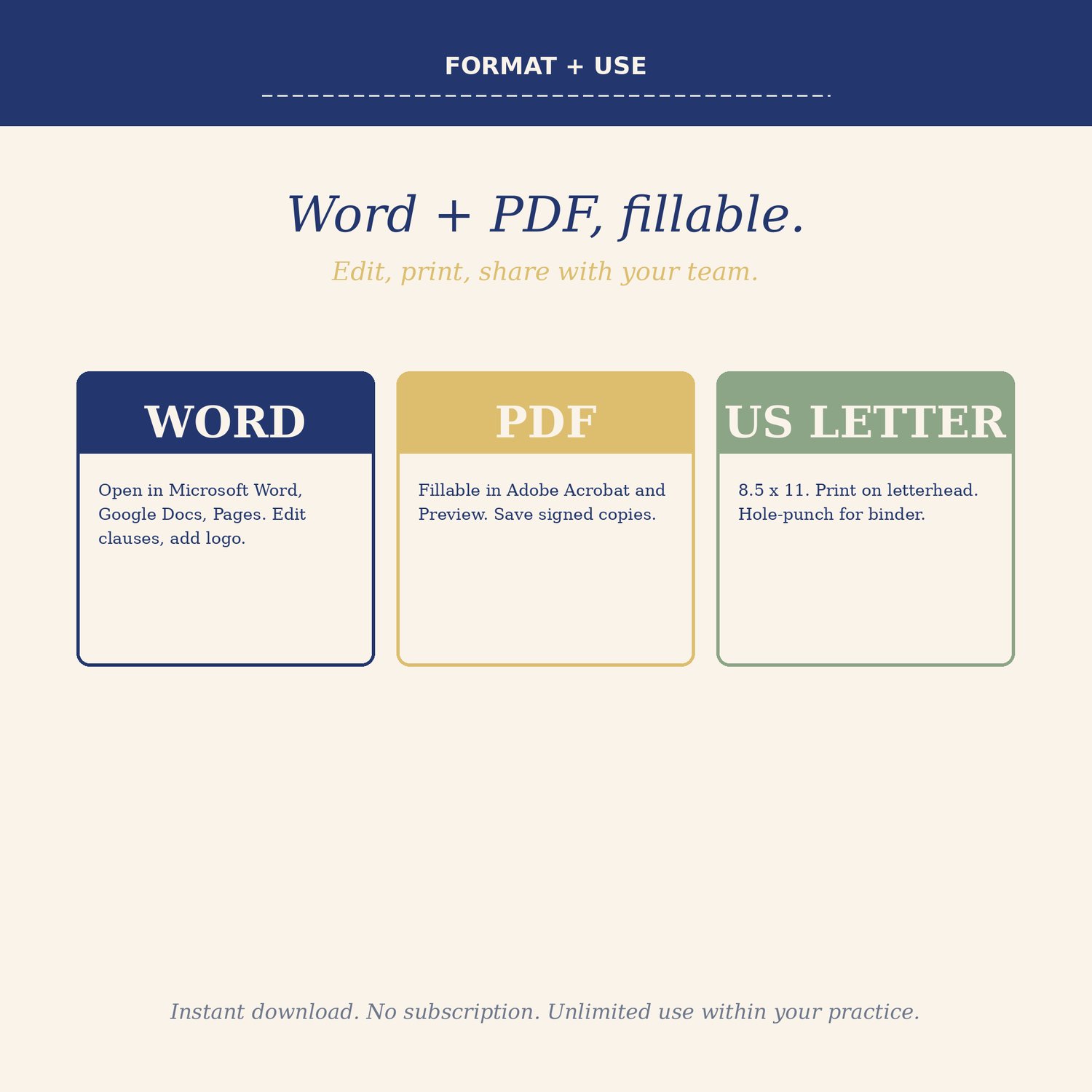
- Treatment manual: fillable PDF (30 pages) and editable Microsoft Word (.docx)
- Appendix and worksheet pack: PDF (59 pages) and editable Microsoft Word (.docx)
- Sleep diary: Microsoft Excel (.xlsx) that calculates sleep efficiency and the sleep window for you
- Five files in total, all included in this one purchase
- US Letter and A4 sizes both included
- Works on Mac, Windows, iPad, GoodNotes, Notability
- Lifetime access, unlimited prints
Updated 2026
The manual reflects the AASM Clinical Practice Guideline on Behavioral and Psychological Treatment of Chronic Insomnia Disorder (Edinger et al., 2021), the American College of Physicians guideline (Qaseem et al., 2016), the European Sleep Research Society Insomnia Guideline (Riemann et al., 2023), the AASM Manual for the Scoring of Sleep (version 2.6, updated 2024), DSM-5-TR criteria, the Carney et al. (2012) Consensus Sleep Diary, the Morin DBAS-16, the Trauer 2015 effect sizes, and the AHRQ Comparative Effectiveness Review. Taper plans align with current APA practice guidance and FDA labeling.
A note from the designer
I am a practicing clinician with formal training in behavioral sleep medicine and roughly 200 completed CBT-I courses in outpatient practice. Chapter 4, the sleep restriction calculator and titration algorithm, is the chapter I print and tape to the inside cover of my notebook. Chapter 9 is what I share with every supervisee starting their first CBT-I course.
This is the complete clinician operating system for a CBT-I practice, not a sleep hygiene worksheet.
Digital download. No physical product ships. Reach out by email if anything does not work or if you have questions.