
CBT Worksheets Bundle (2026)
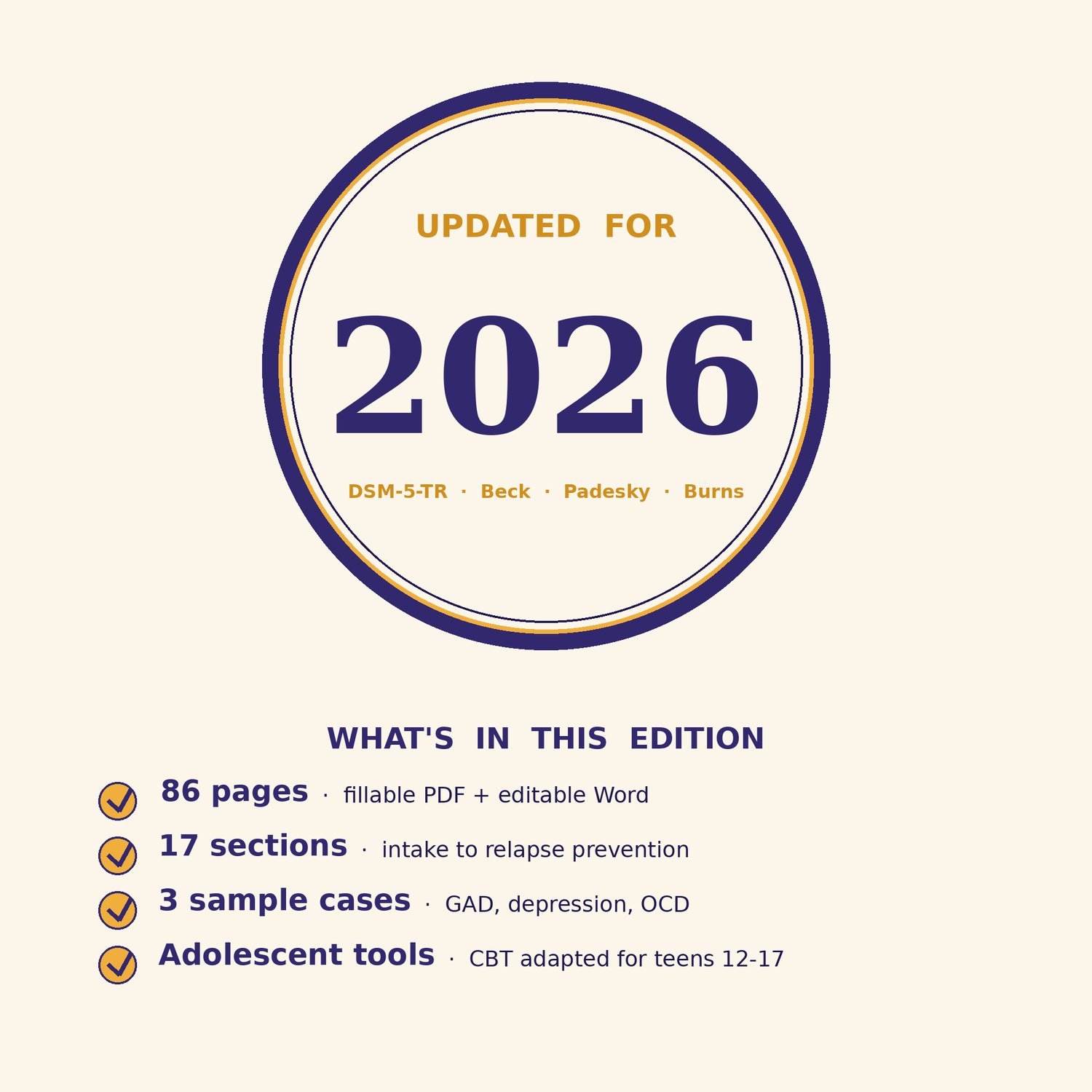
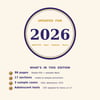
86 pages, 17 sections, written for the licensed clinician delivering CBT in outpatient practice with adolescent, adult, and older adult clients across anxiety, depression, OCD, PTSD, phobia, and schema presentations. Every worksheet has fillable fields, so clients can type into it on screen or print it and write by hand.
What is in the bundle
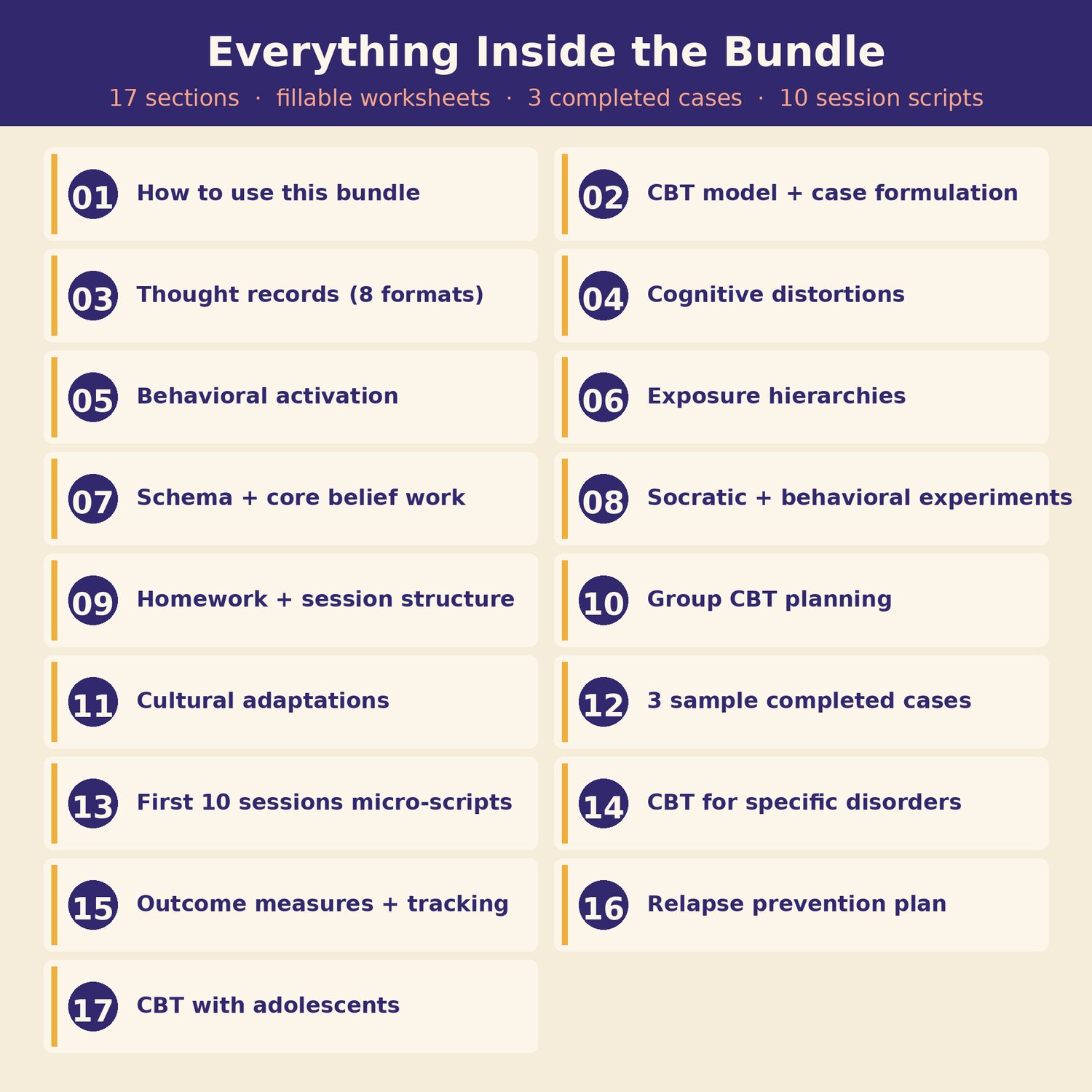
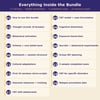
- Section 1: How to use this bundle. Tool sequencing by treatment phase, which tool to start with for each presentation, filling in on screen or on paper, and the client-facing vs therapist-facing page labels
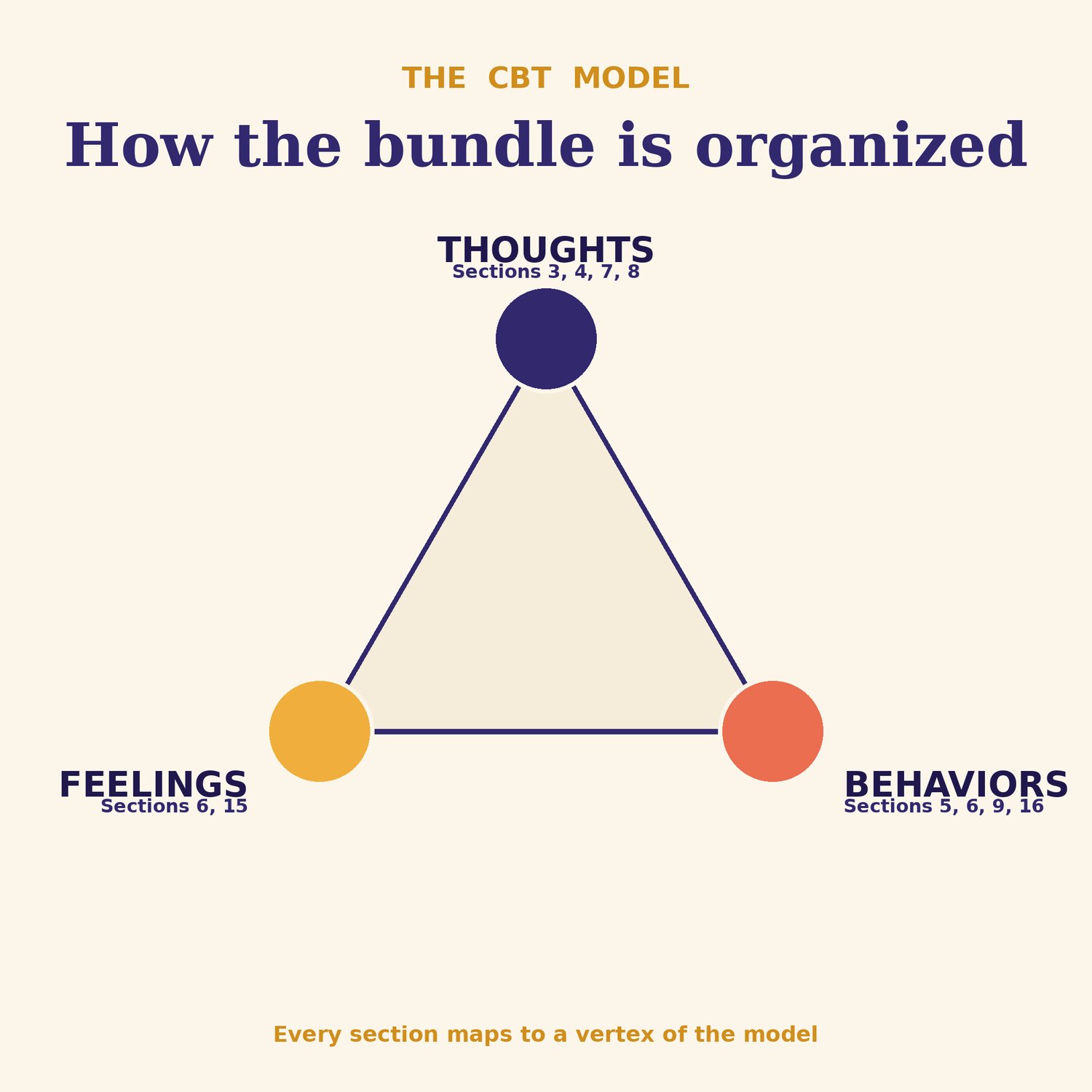
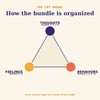
- Section 2: CBT model and case formulation. The five-part CBT model (thoughts, emotions, behavior, body, context), Beck's three levels of cognition, the 5P framework (Presenting, Predisposing, Precipitating, Perpetuating, Protective), and a full case formulation worksheet
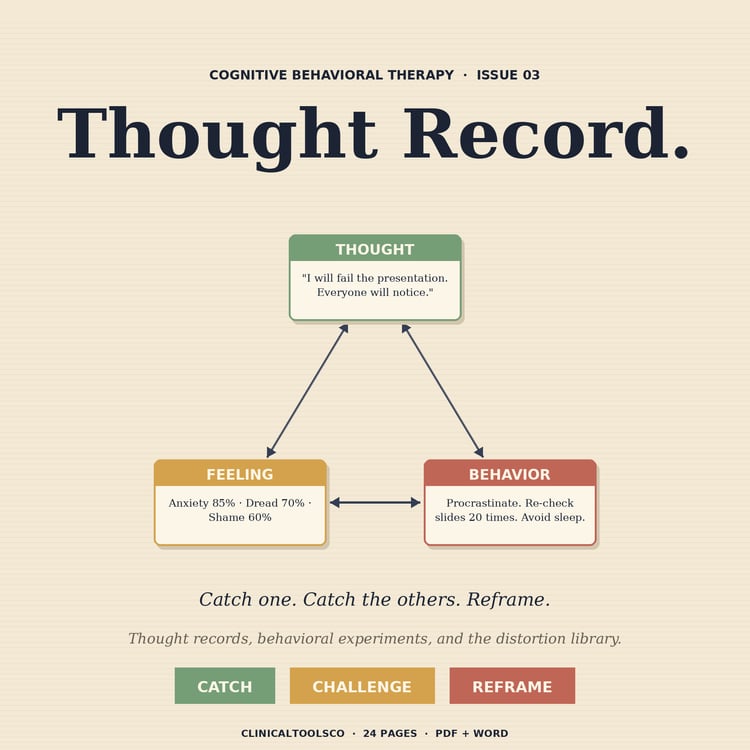
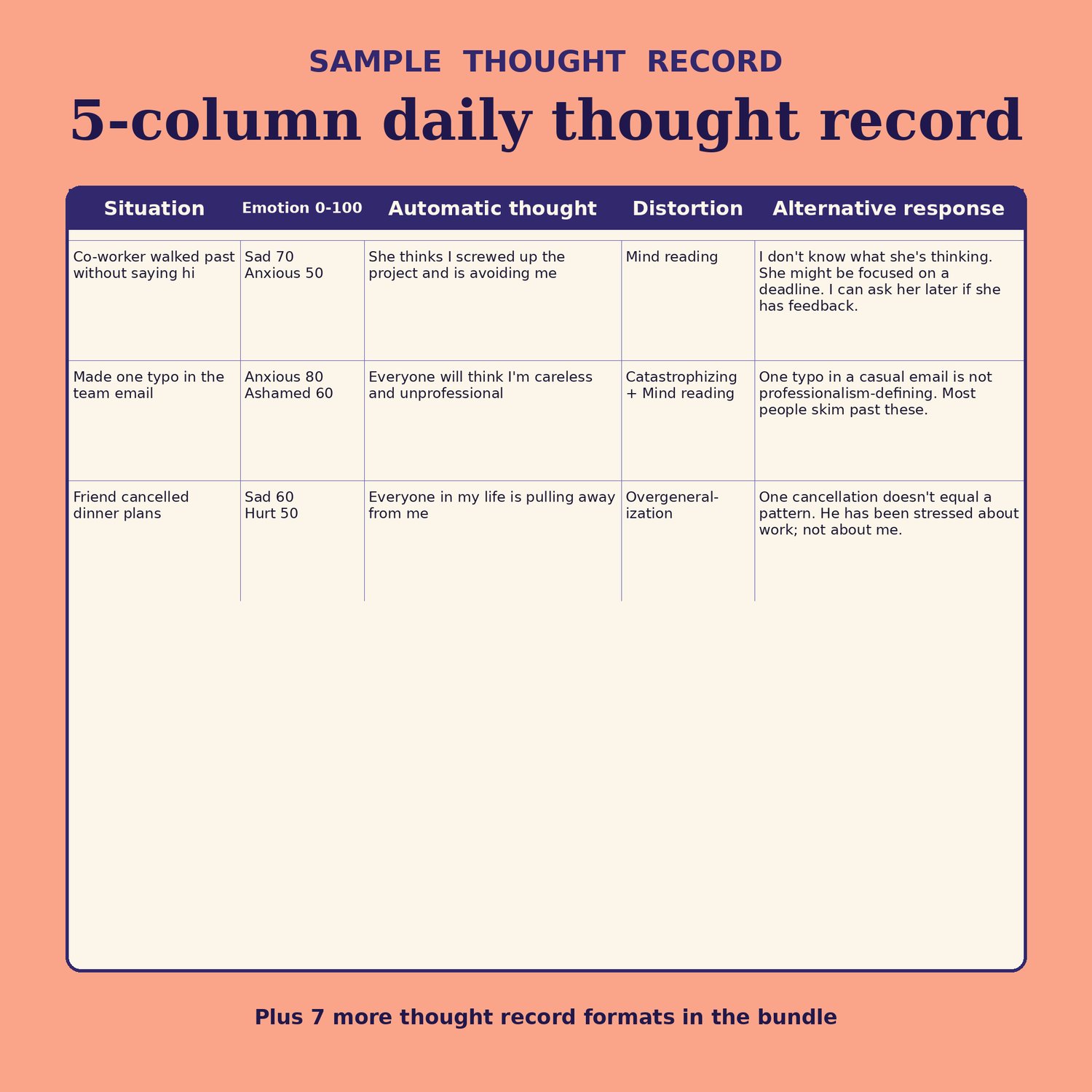
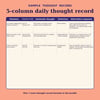
- Section 3: Thought records in 8 formats. The five core variants: the 5-column anxiety record, the 7-column depression record, the trauma-modified record with window-of-tolerance and grounding checks, a 2-minute record for crisis moments that starts with a safety check, and a maintenance-phase self-managed record. Plus a hot thought record, a decentered record, and a weekly pattern tracker
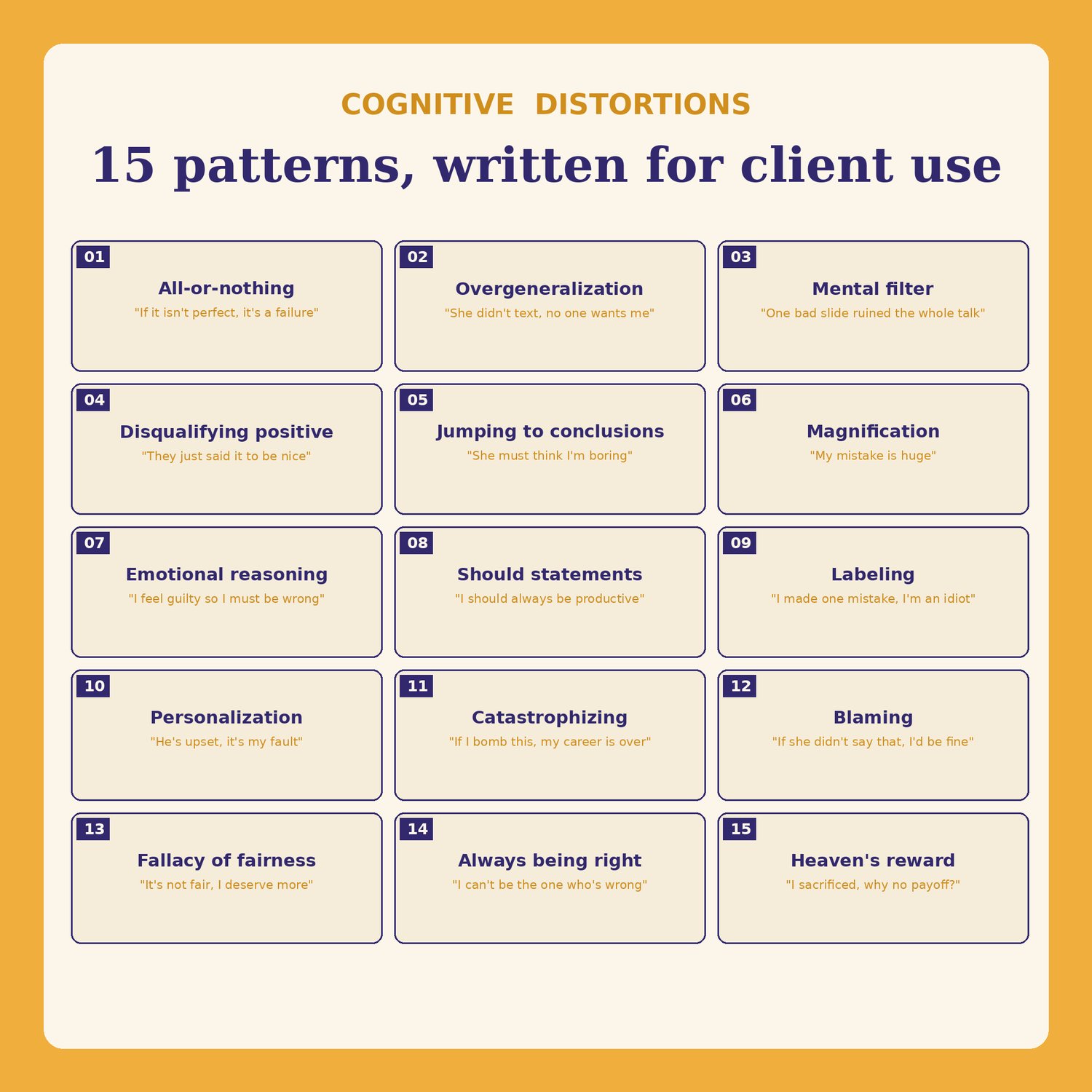
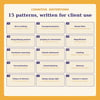
- Section 4: Cognitive distortions. A client handout of 15 thinking traps with plain-language definitions and examples, therapist cues for spotting all 15 in session, and a weekly tracker
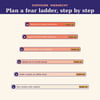
- Section 5: Behavioral activation. Baseline activity log with pleasure and mastery ratings, activity menu, values-to-actions worksheet, avoidance hierarchy with TRAP to TRAC, activity scheduling, a sample completed BA week, and common pitfalls
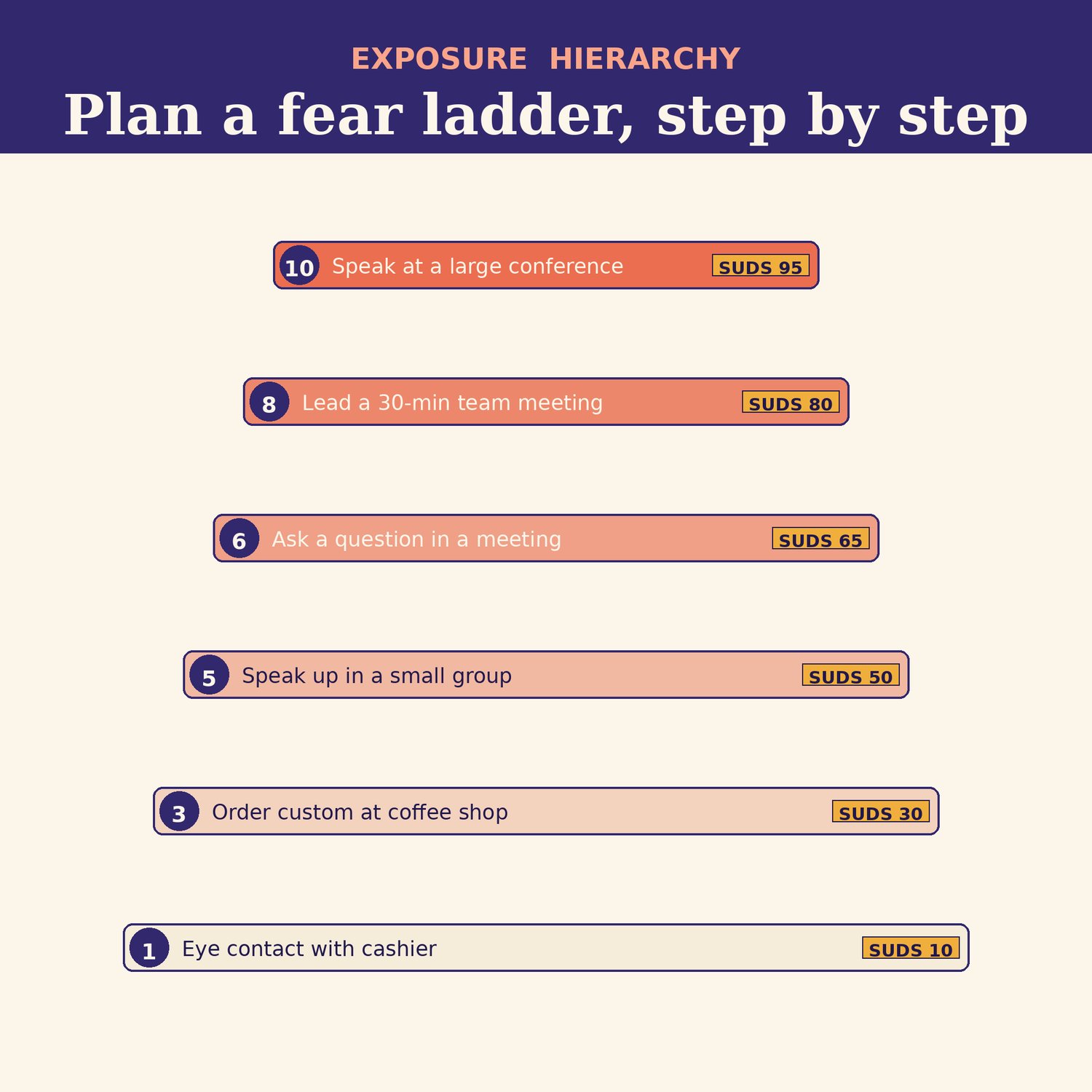
- Section 6: Exposure. The inhibitory learning approach, SUDS-rated hierarchy worksheets for specific phobia, social anxiety, panic and agoraphobia, worry and uncertainty (GAD), OCD with response prevention built into every step, and PTSD trauma reminders with safety considerations; plus in vivo and imaginal planning sheets, an interoceptive exposure menu with medical screening and a practice record, a SUDS log, and a therapist session script
- Section 7: Schema and core belief work. Downward arrow script, core belief categories, a reference to Young's 18 early maladaptive schemas, core belief identification and modification worksheets, the historical test of a core belief, a positive data log, and the continuum technique
- Section 8: Socratic questions and behavioral experiments. A 7-step Socratic sequence, a question bank, a behavioral experiment template (prediction, design, outcome, learning), a worked experiment from start to finish, and sample experiments by presentation
- Section 9: Session structure, homework and risk. The standard CBT session structure (mood check, agenda, update and action-plan review, agenda items, summary and feedback), a 32-assignment homework menu organized by clinical target, homework troubleshooting, and suicide risk screening and safety planning for adults
- Section 10: Group CBT. Choosing an 8, 10 or 12 session format, the 12-session plan, member screening criteria and record, group adaptations of thought records, BA and exposure, a group session note, a group leader manual outline, and a facilitator quick reference
- Section 11: Cultural and contextual adaptations. An adaptation planning sheet to complete before using any worksheet, plus adaptations for collectivist cultures, religious and spiritual clients, autistic and ADHD clients, adolescents, older adults, trauma, and chronic illness and pain
- Section 12: Three sample completed cases (GAD, depression, OCD). Each has the 5P formulation, a thought record or ERP record written in the client's voice, the treatment course as delivered, and a discharge summary
- Section 13: Therapist scripts for the first 10 sessions
- Section 14: CBT for specific disorders: panic, social anxiety, OCD, GAD, depression, body dysmorphic disorder, anger, and PTSD
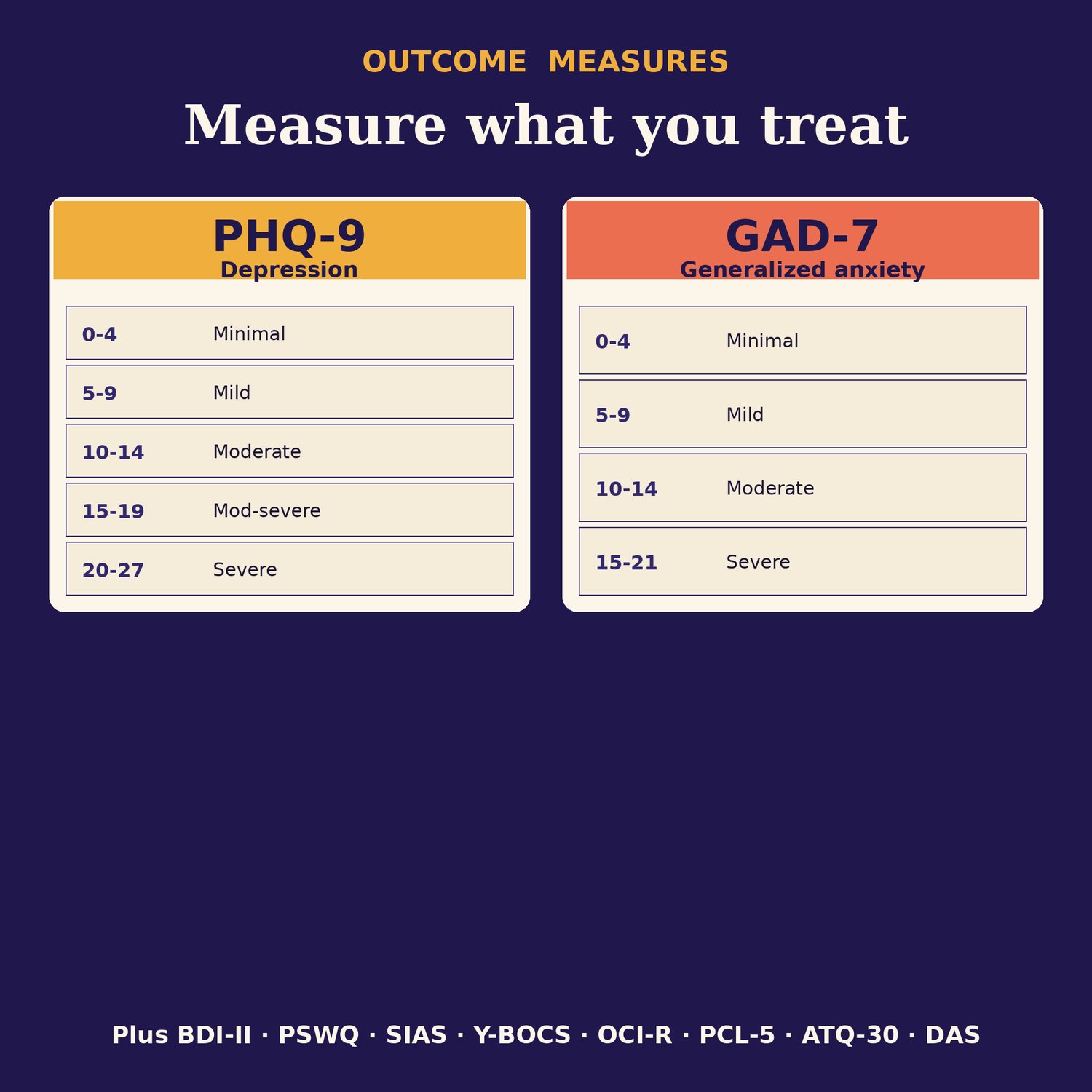
- Section 15: Outcome measures with scoring and cutoffs, a progress tracking worksheet, and what to do when scores plateau
- Section 16: Relapse prevention plan, principles for after therapy, and a booster session schedule
- Section 17: CBT with adolescents (12 to 17): developmental adaptations, a teen thought record, a teen activity menu, working with parents, common presentations, suicide and self-harm assessment, and a sample case
Who it is for
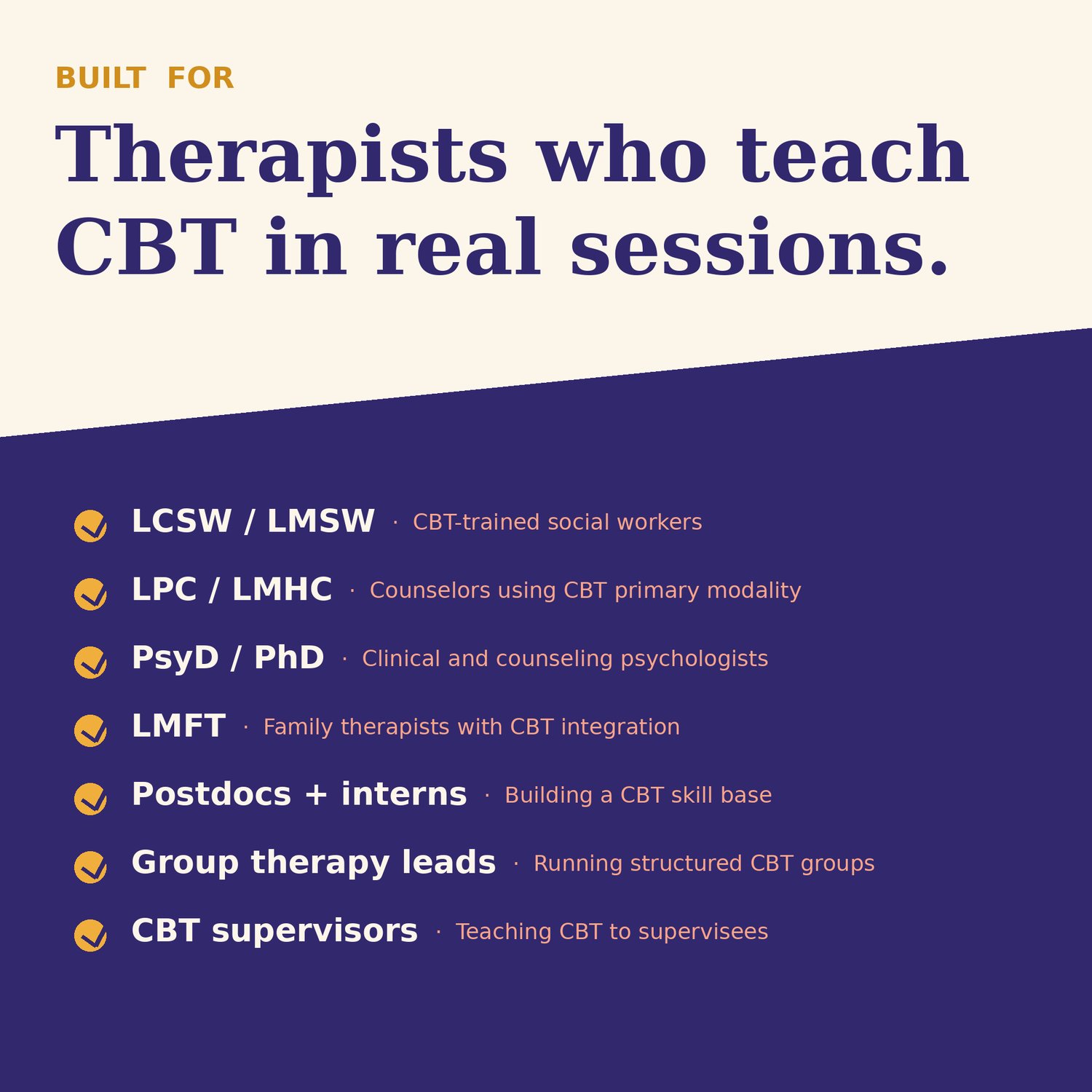
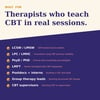
- Licensed psychologists (PhD, PsyD) delivering CBT in outpatient practice
- Licensed clinical social workers (LCSW, LICSW) delivering CBT or CBT-informed work
- Licensed marriage and family therapists (LMFT) and licensed mental health counselors (LMHC, LPC) using CBT as a primary or integrated modality
- Behavioral health clinicians in primary care, integrated care, and community mental health
- Postdoctoral fellows and early-career clinicians building a CBT toolkit
- Clinical supervisors teaching CBT methodology to trainees
- Group practice owners standardizing CBT documentation across their team
- Clinicians delivering CBT groups in outpatient, IOP, or PHP settings
Why it exists
You have a new client who reads CBT books, knows the language, and has tried "thought records" online. She comes in with a folder of Beck Diary forms downloaded from a PDF she found in 2019, plus three different versions of a Hot Cross Bun worksheet she has been alternating between because none of them have helped her. You have 50 minutes. You need a structured thought record she can actually complete at home, a cognitive distortion reference she can recognize her own patterns in, a behavioral activation tracker if mood is the driver, an exposure hierarchy if anxiety is the driver, and a working homework menu so she leaves each session knowing what she is doing this week and why.
Most "CBT worksheet" bundles ship 80 PDF pages of recycled thought records and call it done. That is not CBT. CBT is a structured 12-to-20-session treatment with case formulation, thought records, behavioral activation, exposure, schema work, behavioral experiments, and a relapse-prevention plan, delivered with cultural and developmental adaptation. This bundle is the toolkit for that work.
I built this after carrying a 25-couple CBT caseload for four years and watching myself reinvent the thought record template every Thursday afternoon because no single version covered the 5-column anxiety variant AND the 7-column depression variant AND the trauma-modified version with windowing built in. This is the toolkit that ended the reinvention.
Why this is different
Most CBT worksheet packs are decorative: the same 5-column thought record, the same generic distortion handout, no case formulation, no exposure hierarchy, no schema work, no group adaptation. This bundle is operational. Every worksheet is something a real clinician fills in or hands to a real client this week.
The thought record formats matter because one format cannot fit every clinical presentation. The 5-column anxiety record is fast. The 7-column depression record is slower and weighs evidence for and against. The trauma-modified record has grounding checks built in for use inside a trauma-focused protocol. The crisis version takes two minutes and starts with safety.
The exposure section matters because exposure is a core active ingredient in treating anxiety, OCD and PTSD, and most worksheet packs ship a generic SUDS form. Here each presentation has its own hierarchy: OCD steps pair every exposure with the ritual to resist, social anxiety steps list the safety behaviors to drop, and the PTSD hierarchy is limited to objectively safe reminders.
The case formulation section matters because clinicians who skip it end up with a stack of thought records and no plan. The 5P worksheet walks you through it at session 2 or 3.
The cultural and contextual adaptations section matters because CBT applied without adaptation often fails with adolescents, older adults, religious clients, neurodivergent clients, and clients from collectivist cultures. It starts with a planning sheet you complete with the client.
The three sample completed cases are the chapter most clinicians read first. They show the formulation, the records as the client would actually write them, the treatment as delivered, and the discharge summary as written.
Format
- Fillable PDF, US Letter (86 pages): type into the worksheets in Adobe Acrobat Reader, Preview on Mac, or another PDF app that supports forms, or print and write by hand
- Fillable PDF, A4 edition with the same content
- Editable Microsoft Word file (.docx) with the same content and a header where you can add your practice name and logo
- Works on Mac, Windows, and iPad (GoodNotes and Notability let you write over the pages by hand)
- Lifetime access, unlimited prints for your own clients
Updated 2026
The bundle reflects the Beck Institute cognitive model and J. S. Beck's Cognitive Behavior Therapy: Basics and Beyond (3rd edition), the 5P case formulation framework, the inhibitory learning approach to exposure (Craske and colleagues), behavioral activation (Martell, Addis and Jacobson; Lejuez and Hopko's BATD-R), Young's schema therapy model, Padesky's guided discovery and core belief methods, current PTSD treatment guidelines (VA/DoD 2023, ISTSS 2019), suicide risk guidance (VA/DoD 2024, Stanley-Brown safety planning), and DSM-5-TR diagnostic categories. The bundle supports evidence-based CBT practice and does not replace clinical judgment, supervision, or licensure-specific scope of practice.
How to use it
Use Section 2 in session 2 or 3 of every new case to anchor the formulation in the 5P framework. Pick the thought record format from Section 3 based on the client's presentation (anxiety, depression, trauma, crisis, maintenance). Hand the Section 4 thinking traps handout to the client at session 3 or 4 so they can label their own patterns between sessions. Use Section 5 behavioral activation where mood and avoidance are the drivers, and Section 6 exposure where anxiety, OCD, or PTSD is the driver. Bring Section 7 schema and core belief work into the middle and later sessions once thought records have surfaced recurring patterns. Use the Section 8 Socratic sequence when a client gets stuck in a thought. Build each session around the Section 9 structure, and screen for suicide risk at intake. Read Section 11 before using any worksheet with a client outside the population it was designed for. Use the Section 12 sample cases to recalibrate when you are early-career or supervising a trainee.
A note from the designer
I am a practicing clinician with formal CBT training and roughly six years of CBT-primary practice across adolescent, adult, and older adult clients with anxiety, depression, OCD, PTSD, and schema presentations. I built this after watching myself reinvent the same thought record variants every few months and after my second supervisee asked me for "the worksheet pack you use" and I realized I did not have one to hand her. Section 3 (the thought record formats) is the chapter I use most often. Section 6 (exposure hierarchies) is the section I print and bring into every anxiety or OCD case start. Section 12 (the three sample completed cases) is what I share with every new supervisee in their first month so they can see what completed CBT documentation looks like before they have to produce it themselves.
This is the working CBT toolkit for an outpatient practice, not a substitute for formal CBT training, supervision, or licensure-specific scope of practice.
Digital download. No physical product ships. Reach out by email if anything does not work or if you have questions.