






Child and Adolescent Therapy Toolkit (2026)
A child and adolescent therapy toolkit: a developmental staging matrix, pre-intake phone screen, parent and adolescent intake structures, evidence-based treatment matching and a play therapy decision tree.
What is in the toolkit
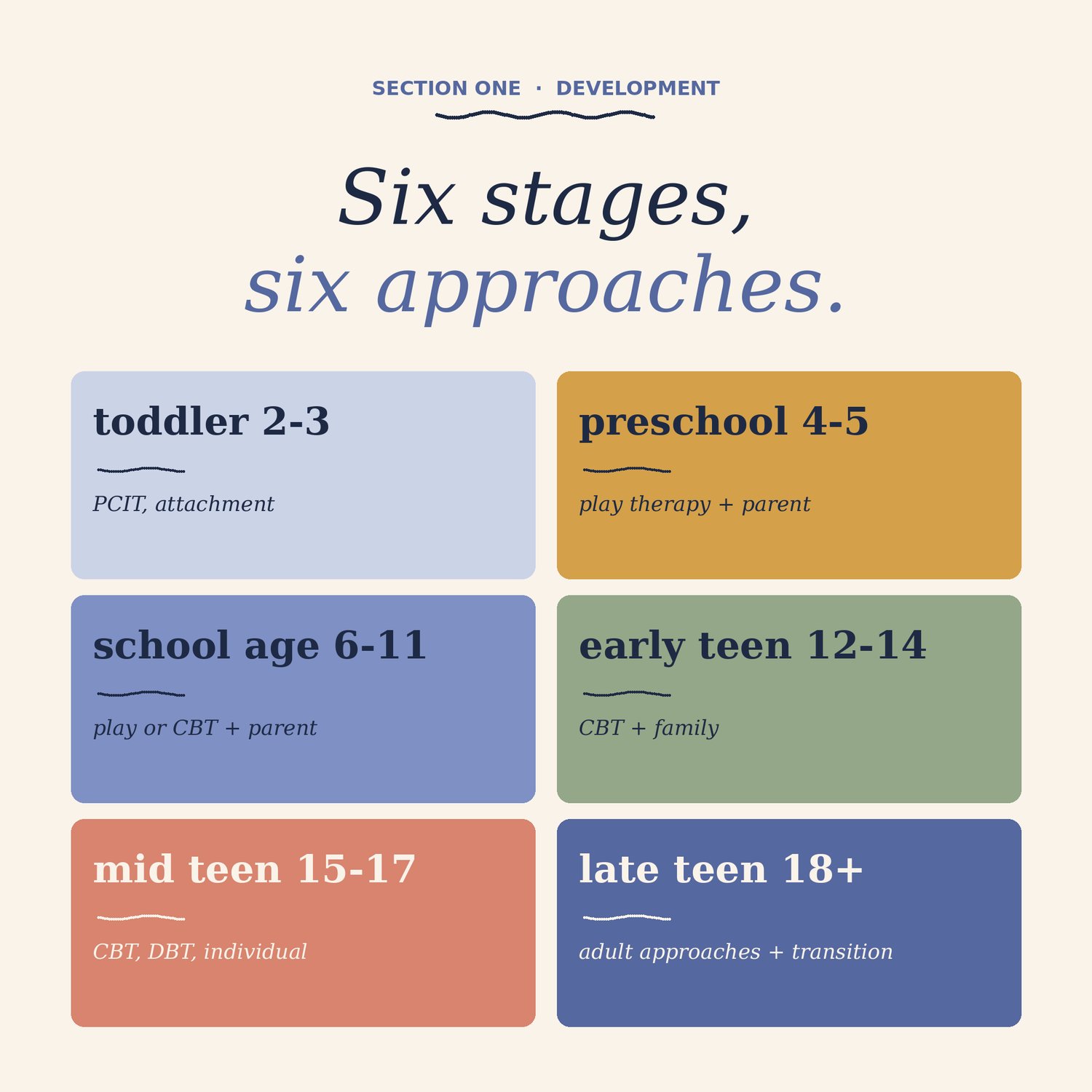
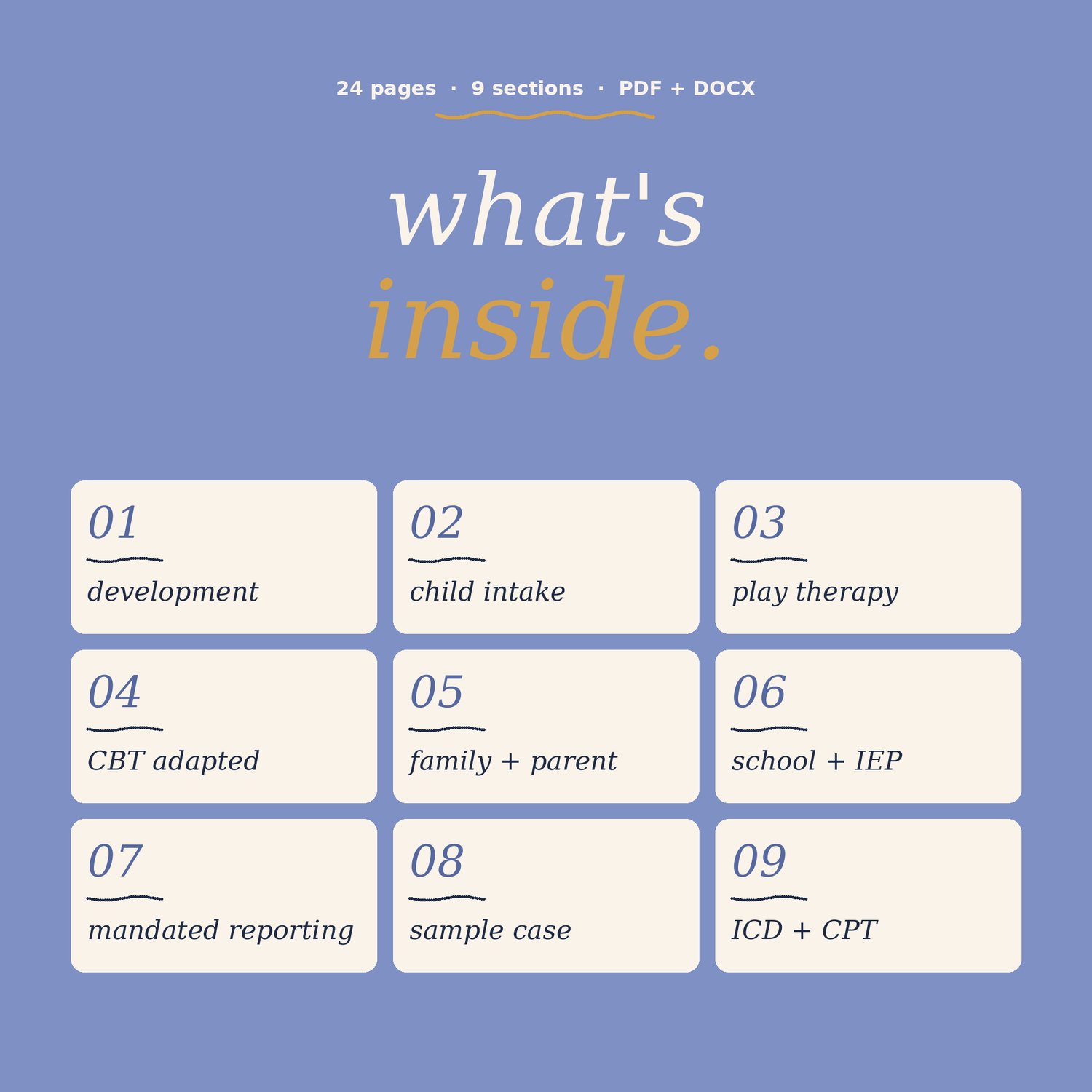
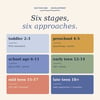
- Developmental staging matrix combining Piaget cognitive stages, Erikson psychosocial stages, and attachment system status, with modality defaults and parent role for each age band (3-5, 6-10, 11-13, 14-18)
- Three operational rules that drop out of the matrix: the parent is the mechanism under 7, cognitive scaffolding for 6-10, adolescent as client of record from 14 up
- Pre-intake phone screen with the question that prevents the worst surprises (court, child welfare, custody)
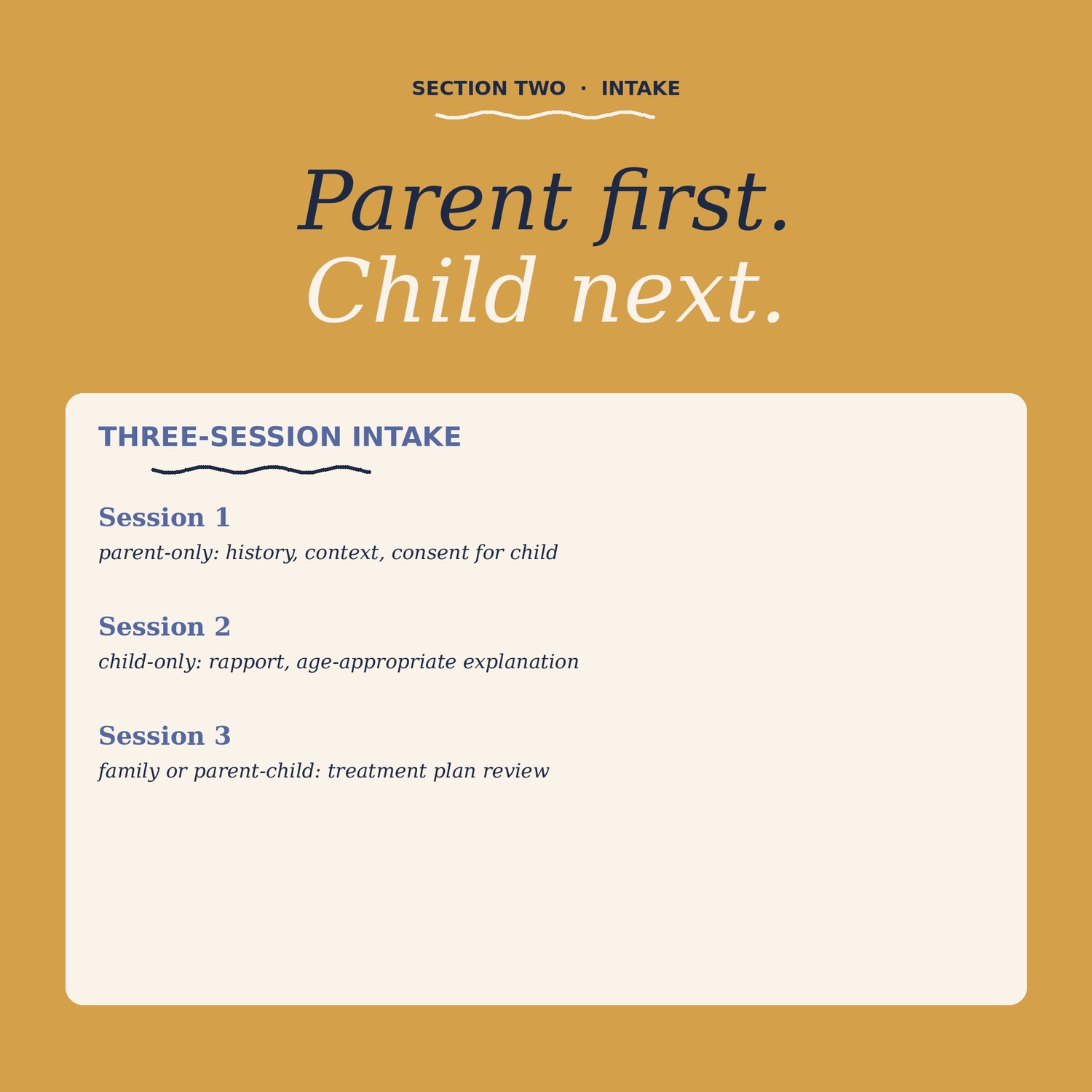
- Parent-only first session script for ages 3-12, developmental history through six-month goal
- Adolescent-first intake structure for ages 13-17 with the joint frame that earns alliance on day one
- Evidence-based treatment matching table by presenting problem with effect sizes and minimum dose: TF-CBT, PCIT, SPACE, child-engaged CBT, CBT-AD, IPT-A, DBT-A, ERP for pediatric OCD, school refusal protocols, escitalopram-augmented CBT for treatment-resistant anxiety, PCIT-SM for selective mutism, MATCH-ADTC for mixed presentations
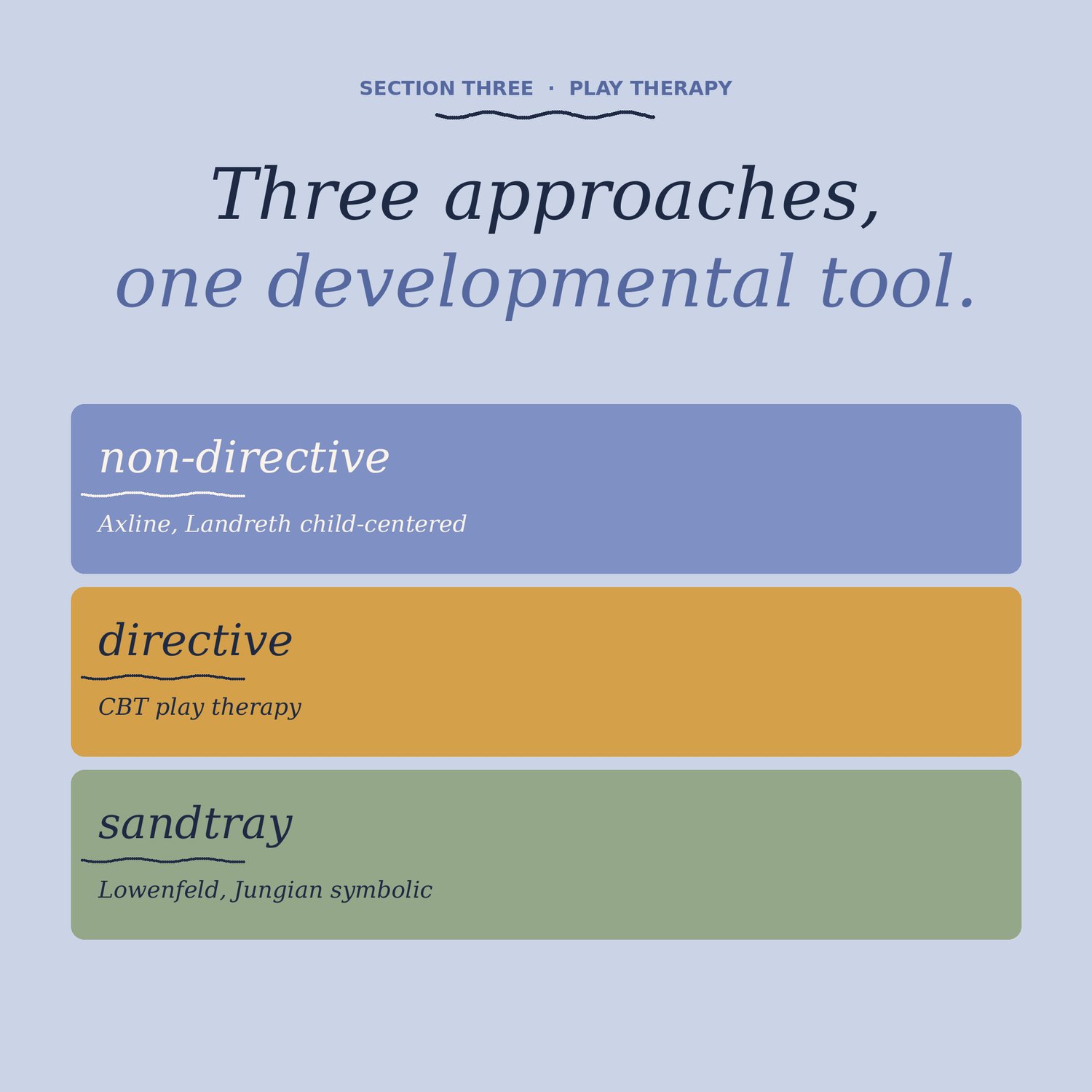
- Play therapy decision tree: CCPT, directive play, Theraplay, sand tray, TF-CBT trauma narrative with best-fit indicators, parent role, and mechanism for each
- Standard play therapy materials list and play session documentation with the four questions every play note should answer
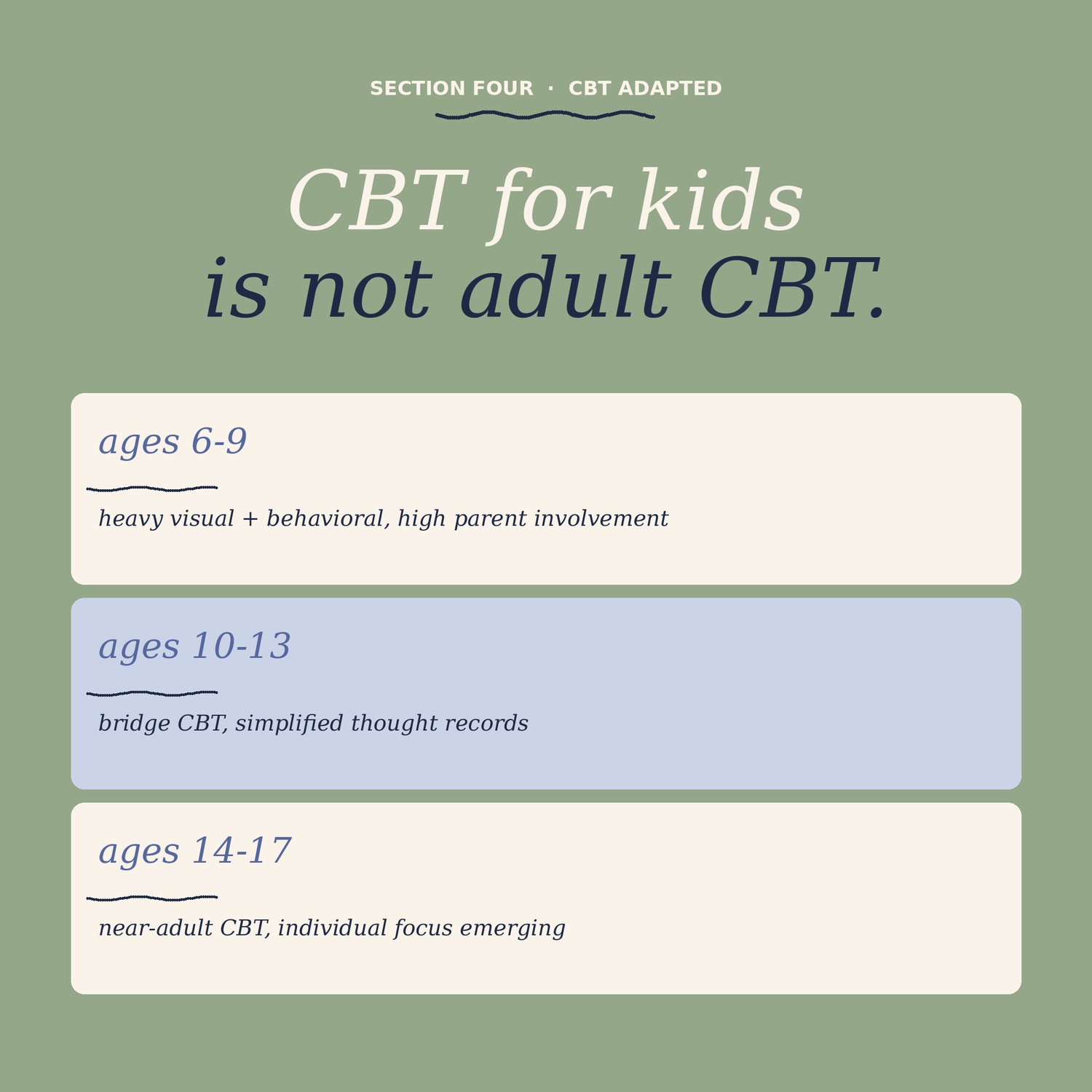
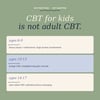
- CBT for children: behavioral activation before cognitive work, exposure hierarchy construction with fear thermometers, parent-led between-session exposure, OCD plus family accommodation reduction
- Adolescent CBT adjustments: collaborative case formulation, MI framing for homework, the TADS combination guidance
- TF-CBT PRACTICE phases with credential and fidelity guidance
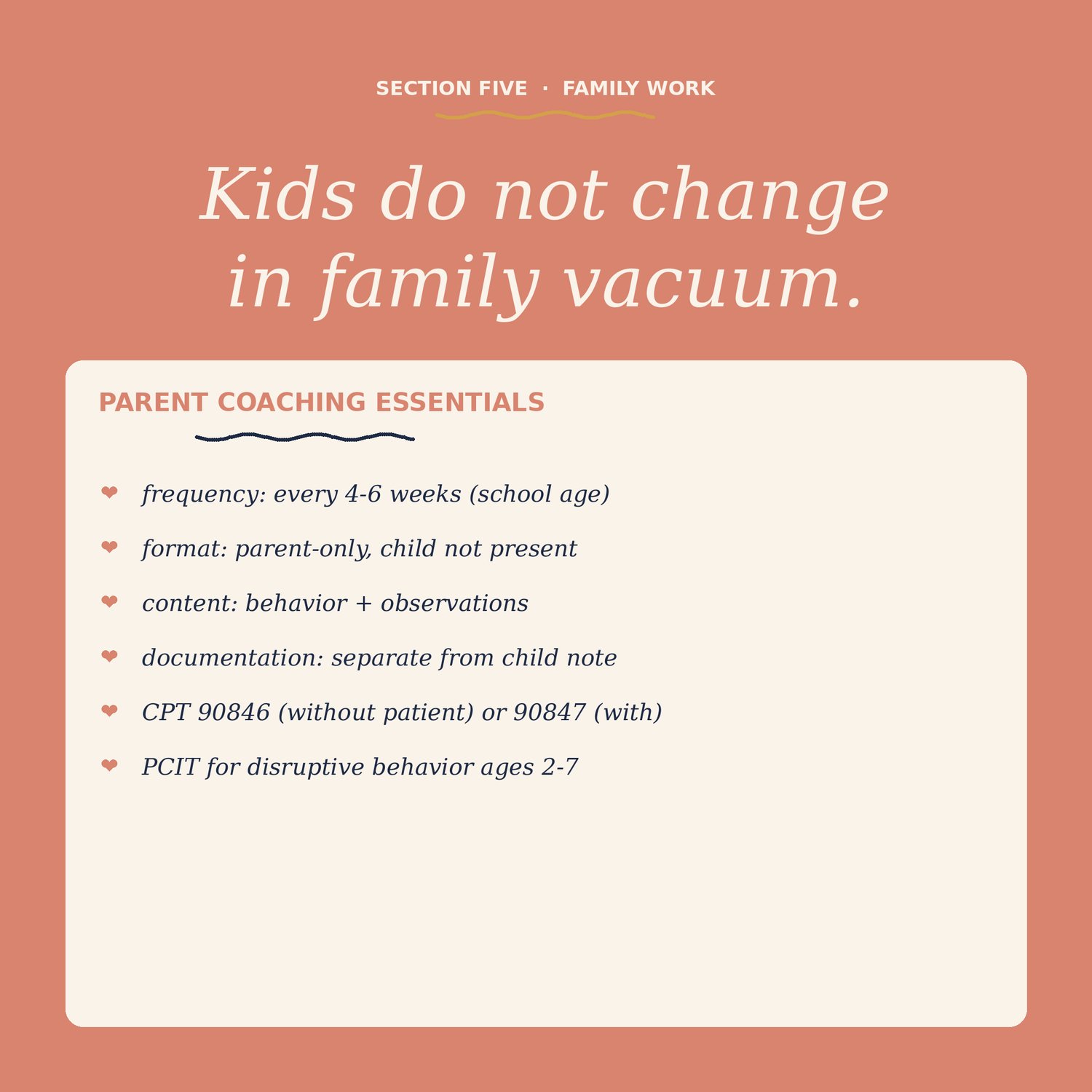
- Parent training and family work: PCIT CDI and PDI phases with mastery criteria, SPACE protocol indications, Parent Management Training (Kazdin), structural family therapy (Minuchin), Bowen multigenerational framing
- When the parent is the problem: framework for referring parent treatment and the case-viability decision
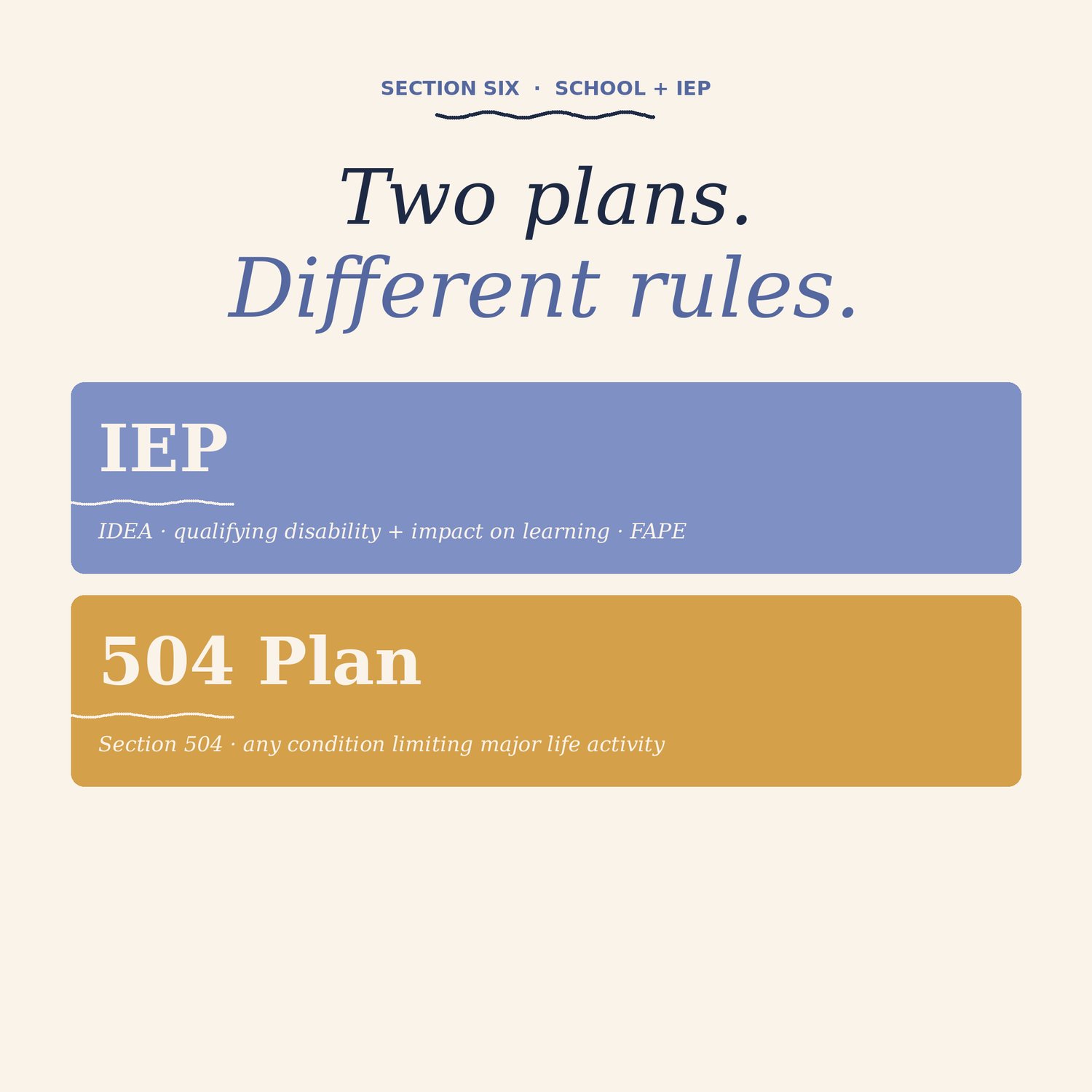
- School coordination: IEP versus 504 decision tree, the 13 IDEA disability categories, FERPA versus HIPAA at the school boundary, sample brief consultation letter, release scope rules
- Adolescent confidentiality contract: three-tier disclosure framework, state variation primer, conversation script for the joint session
- Mandated reporting protocol: triggers, verbatim state hotline call script, chart language afterward, DCS interaction rules
- Youth suicidality: pediatric C-SSRS structure, youth-specific risk factors, Stanley-Brown safety plan modified for youth, lethal means counseling protocol with parent
- Custody, divorce, and the forensic line: three roles one clinician per case rule, custody consent for treatment in joint custody states, what to say when asked for a custody opinion, AFCC guidance
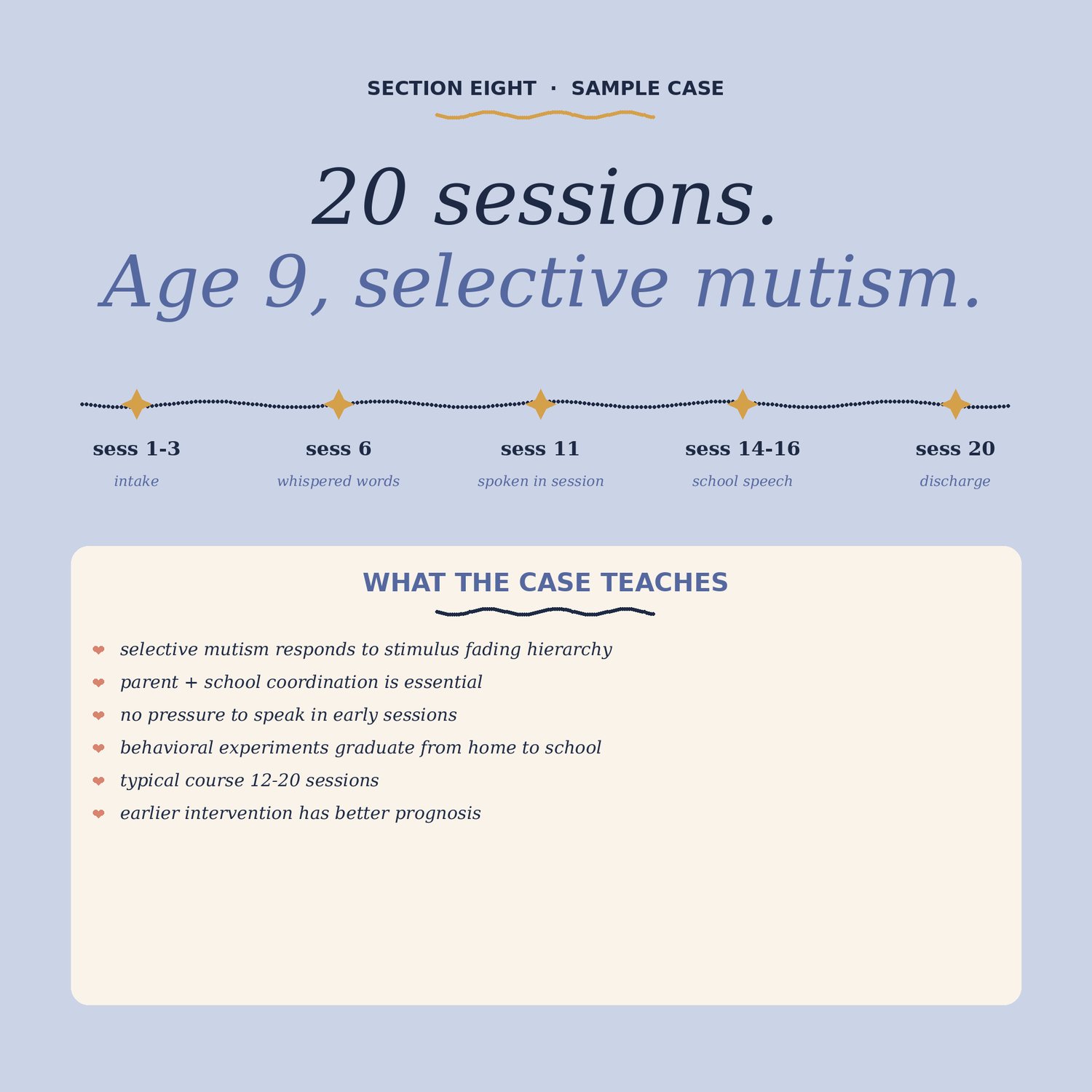
- Worked 10-session case: selective mutism, age 9, with sliding-in technique, school coordination meeting, in vivo exposure progression, and sample progress note
- Chart language templates by age band and a phrase library for diagnostic, treatment plan, safety, confidentiality and custody language
- ICD-10 code reference for pediatric outpatient, 40+ codes with when-to-use guidance
- Crisis resources, provider directories, and training pathways for TF-CBT, PCIT, DBT-LBC, Theraplay, SPACE and MATCH-ADTC
Who it is for
- Licensed therapists, counselors, social workers and psychologists adding child or adolescent work to an adult practice
- Pediatric outpatient clinicians who want a unified reference across diagnoses, modalities and procedural questions
- Graduate trainees in school psychology, counseling psychology, MFT or clinical social work programs
- Group practice owners and clinical directors building or refining a pediatric service line
- School counselors and school-based mental health clinicians coordinating with outpatient care
- Foster care and child welfare clinicians working under court oversight
- Clinical supervisors of pre-licensed therapists treating youth
- Telehealth pediatric clinicians needing chart language that survives payer audit
Why it exists
You took on a 9-year-old with selective mutism, mid-acculturation, custody dispute brewing in the background. The school counselor wants a letter, the mother wants a session report, the father has just called asking whether you would write something for court. The child has not made eye contact in three sessions and the parent intake covered everything except the questions you actually needed to ask. Pediatric outpatient is the field where the child is the client and three other parties, the parent, the school, sometimes the court, all want a say.
This is the toolkit I wish someone had handed me before my first pediatric intake. Developmental staging matrix, evidence-based treatment matching with effect sizes, the parent versus child confidentiality contract, school IEP and 504 coordination, mandated reporting with the verbatim hotline script, the modified Stanley-Brown safety plan for youth, the line that protects you from being subpoenaed as an expert witness, and a worked 10-session selective-mutism case.
26 pages. Fillable PDF plus editable Word. Aligned with AACAP Clinical Practice Guidelines for Anxiety (2020) and Major and Persistent Depressive Disorders (2022), TF-CBT International Consensus, PCIT International Training Standards, the Linehan and Miller/Rathus DBT-A protocols, and AFCC Guidelines for Court-Involved Therapy. 30+ peer-reviewed references including PubMed citations through 2025.
Why this is different
Most pediatric clinical references are either a parenting book, which is the wrong audience, or a manualized protocol covering one diagnosis and one modality. This toolkit is built for the clinician who already does therapy, sees a mixed pediatric caseload, and needs a single decision tool for which treatment, by whose consent, documented how, and what to do when the parent system itself is part of the problem.
The developmental staging matrix matters because clinical decisions hinge on developmental capacity, not chronological age. A bright 7-year-old with trauma may regulate like a 4-year-old. A 12-year-old with autism may need 8-year-old cognitive scaffolding. The matrix gives you the modality default, the parent role, and the limit of what the child can do with a thought record.
The evidence-based treatment matching table matters because the post-degree clinician knows the names of the protocols but reaches for the wrong one. SPACE is noninferior to child CBT for anxiety when the parent is accommodating. PCIT mastery criteria predict treatment success. The table tells you which protocol matches which presentation with the effect size and the minimum dose.
The adolescent confidentiality contract matters because adolescent therapy fails most often not from poor technique but because confidentiality was never explicitly contracted at the beginning. The three-tier framework and the conversation script protect the alliance, satisfy the parent, and stay within state law.
The custody and divorce section matters because forty percent of pediatric outpatient children come from divorced or separated families, and the single most important professional protection is the role boundary between treating therapist and forensic evaluator.
Format
- Editable, fillable PDF (26 pages)
- Editable Microsoft Word (.docx, 26 pages)
- Chart-language templates copy directly into EHR text fields
- US Letter and A4 sizes both included
- Works on Mac, Windows, iPad, GoodNotes, Notability
- Lifetime access, unlimited prints
Updated 2026
Treatment matching reflects the AACAP Clinical Practice Guideline for Anxiety (2020) and for Major and Persistent Depressive Disorders (2022). PCIT criteria reflect PCIT International standards. DBT-A reflects Miller, Rathus and Linehan (2007) plus recent meta-analyses. SPACE reflects Lebowitz et al. 2019 and 2020. TF-CBT reflects Cohen, Mannarino and Deblinger second edition (2017) plus the group TF-CBT meta-analysis (Xie et al. 2024). DSM-5-TR criteria current. ICD-10 codes reflect the 2026 schedule. School coordination reflects IDEA 2004 and Section 504. Custody guidance reflects AFCC Guidelines for Court-Involved Therapy.
A note from the designer
I am a practicing clinician with pediatric outpatient experience. I built this after spending too many evenings searching for the right SPACE protocol citation, the verbatim hotline script my state expects, and the chart language that does not get me subpoenaed. The section I refer back to most is the developmental staging matrix. The section I share with every new pediatric clinician I supervise is the adolescent confidentiality contract, because adolescent therapy lives or dies on that single conversation.
Pediatric outpatient work is the field where the child is the client and three other parties want a say. The clinician who has the framework for each conversation is the one whose cases hold together.
Digital download. No physical product ships. Reach out by email if anything does not work or if you have questions.