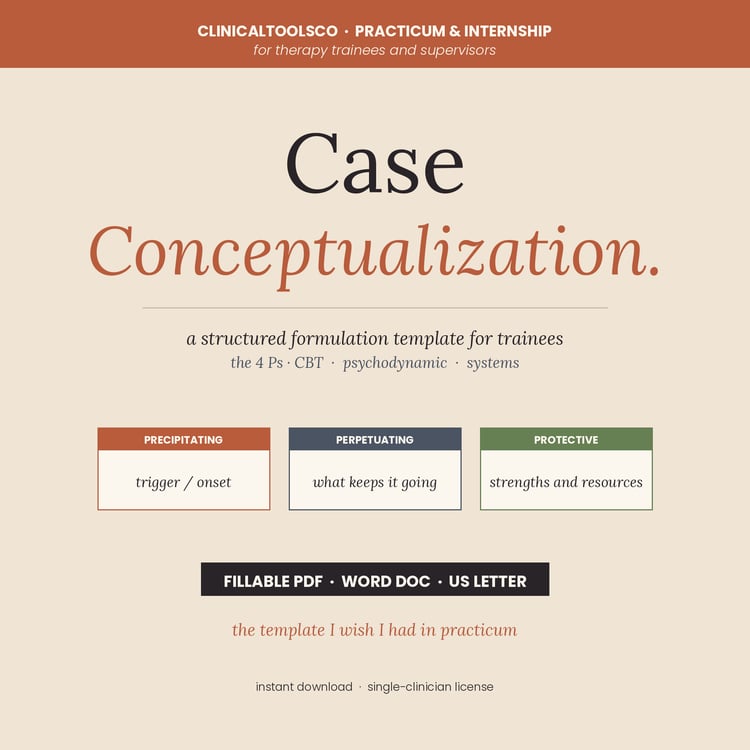




Child and Adolescent Case Conceptualization Template (2026)
A case conceptualization template built for children and adolescents: developmental history by stage, a family system map, educational context, trauma history and theoretical formulation prompts.
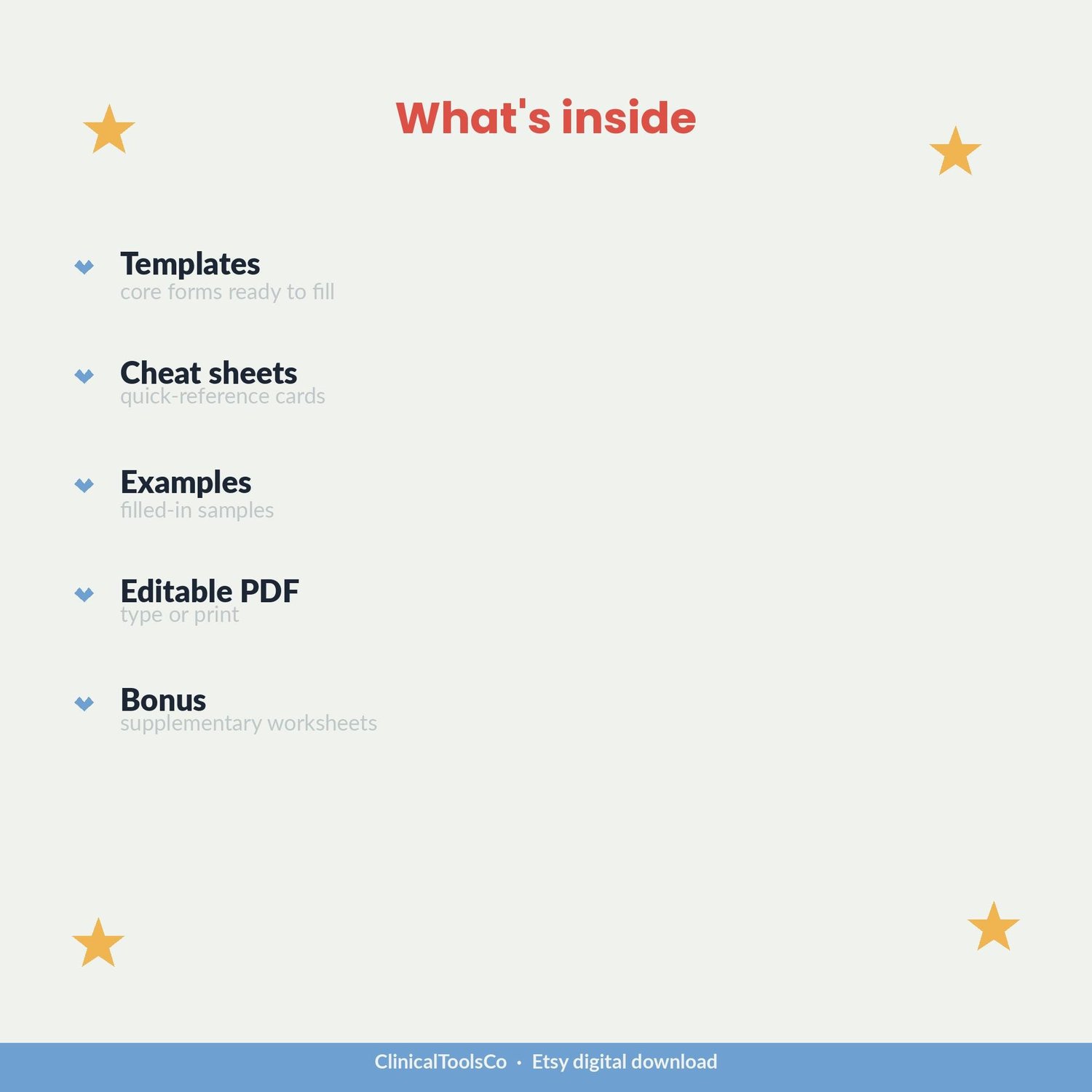
What is in the template
- Child-specific presenting problem prompts that separate the parent's framing from the child's experience, across school, peers, home, and online.
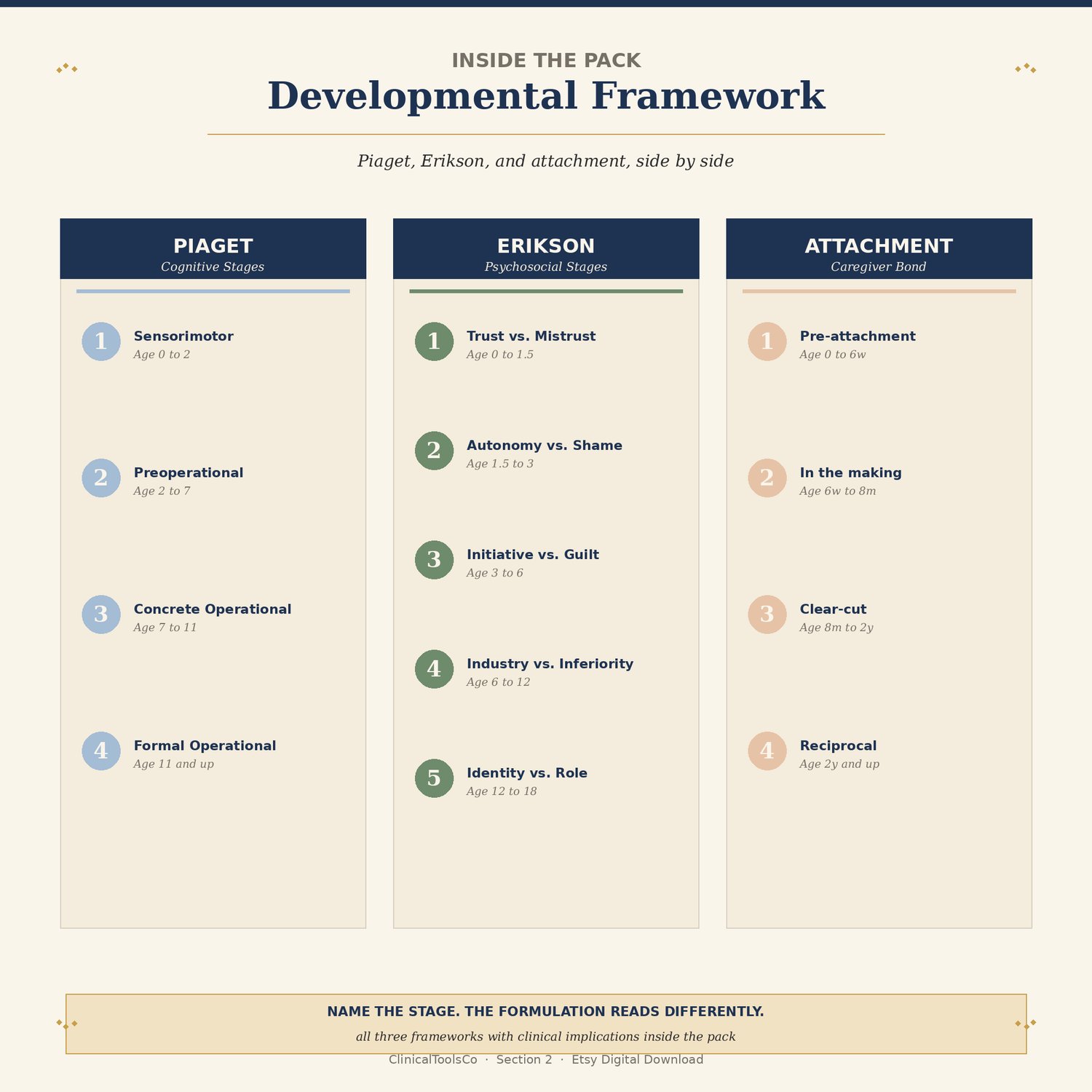
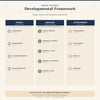
- Developmental history by stage, prenatal through adolescence, with what to cover at each, plus a special-consideration list covering ACEs, loss and grief, identity development, adoption and foster placement, and medical history.
- A family system map: three-generation genogram, parent assessment, and family dynamics prompts.
- Educational and academic context: school functioning, IEP and 504 status, a bullying screen, online life, and a school coordination protocol.
- Trauma and adversity history covering the ten standard ACEs plus seven contemporary adversities.
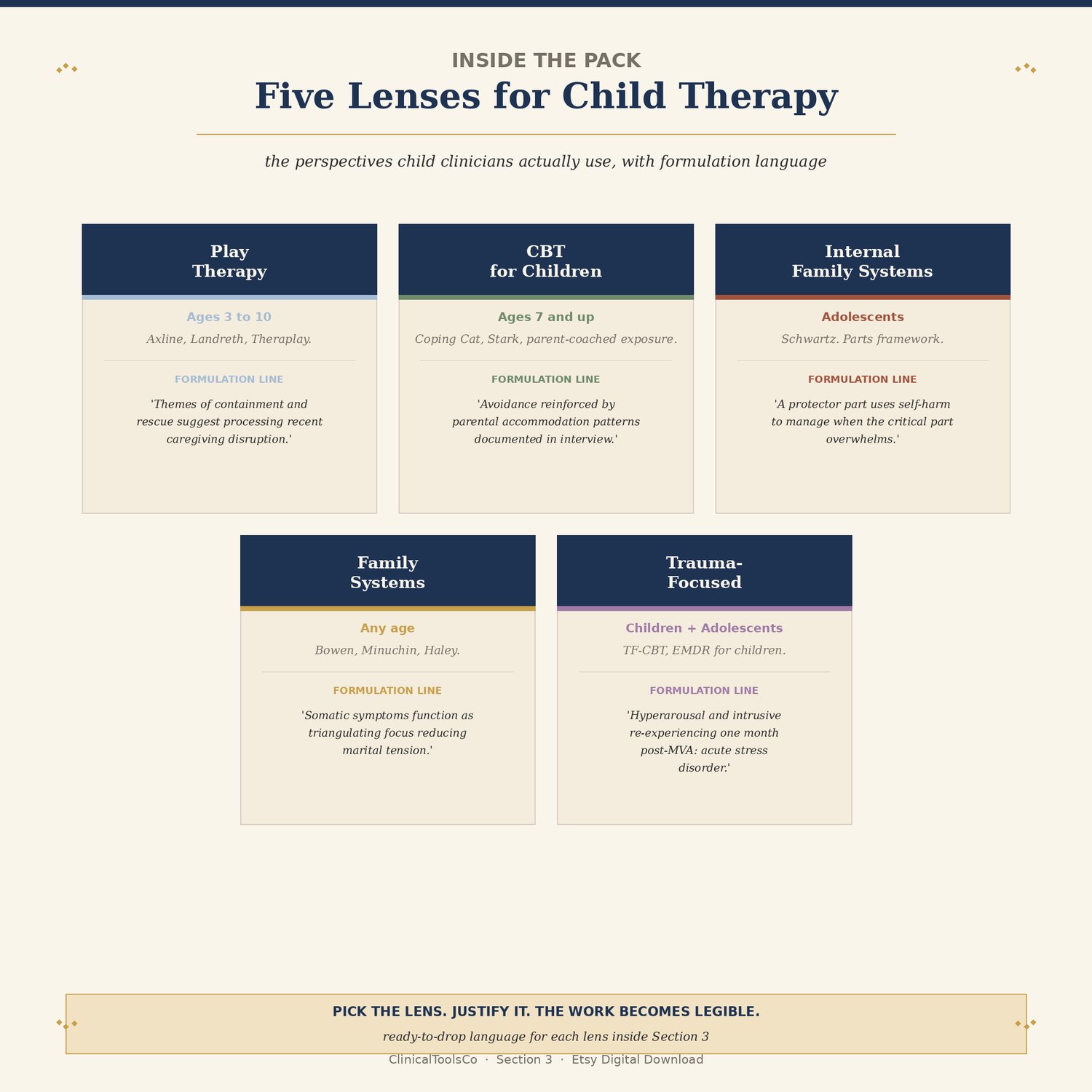
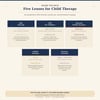
- Theoretical formulation prompts for five frameworks: attachment, family systems, CBT for kids, play therapy, and IFS for adolescents.
- Treatment goals and outcome measures across the standard child battery (CBCL, YSR, BASC-3, SCARED, MASC, CDI-2, PHQ-A, Conners, Vanderbilt, TSCC and more), with sample goals for an 8 year old with separation anxiety as a model of the format.
- Child-specific risk assessment across ten domains: suicidal ideation, self-harm, homicidal ideation, aggression, eating disorders, substance use, online risks, abuse, intimate partner violence in the home, and animal cruelty. With mandated reporting language and documentation.
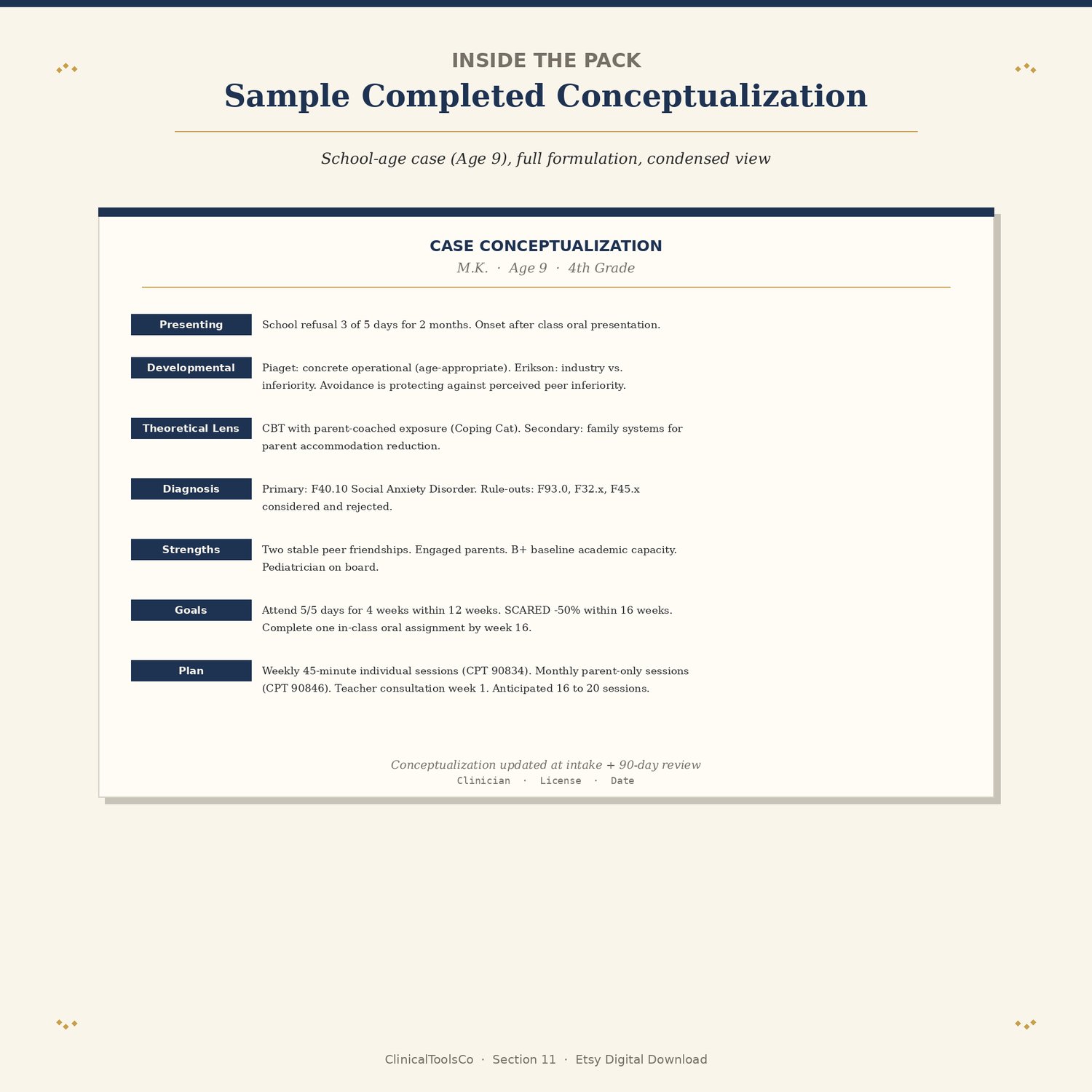
- A complete sample conceptualization, a 10 year old with school anxiety, somatic complaints, and restricted eating, run end to end. Plus the 60 second child case checklist.
Who it is for
Child and adolescent therapists (LCSW, LMFT, LPC, LMHC, LPCC, psychologists). Play therapists, including RPT and RPT-S. School-based mental health clinicians. Pediatric and child psychiatry-affiliated therapists. Family therapists working child-identified-patient cases. Predoctoral interns and postdoctoral fellows on child tracks. Practicum students rotating through child clinics. Supervisors training clinicians new to child work.
Why it exists
An adult conceptualization template misses what makes a child case a child case. Developmental stage. The family as the active system. Parents as co-clients. School as a primary context. Limited self-report. Run a 9 year old through an adult template and the formulation comes out as a diagnosis plus a few interventions, with the thing the case actually turns on left off the page.
43 pages, plus a Worked Case Examples companion carrying a fully worked child case and adolescent case through the developmental, family, school, and treatment-planning layers.
Why it is built this way
Most child conceptualization templates are repurposed adult tools built around individual psychopathology. This one is built around the variables child cases actually turn on.
The same symptom means different things at different ages. A 5 year old distressed at preschool drop-off is developmentally typical. A 13 year old with that pattern is not. The template forces the developmental anchor before the formulation, so you are not generating recommendations against the wrong baseline.
Most child cases are family system cases in disguise, and treatment that ignores the system tends not to hold. The genogram, parent assessment, and dynamics prompts surface the multigenerational pattern, the co-parenting alliance, and the identified-patient question.
Experienced child clinicians integrate across frameworks rather than forcing every case into one model, so the formulation prompts let you pull from whichever fits.
Adult risk screens miss the domains that drive child safety: eating disorders, online predation, animal cruelty as an indicator. The risk section covers all ten with the reporting framework any clinician working with minors needs.
And the template is hardest to apply on the first complex case, which is what the worked examples are for.
Format
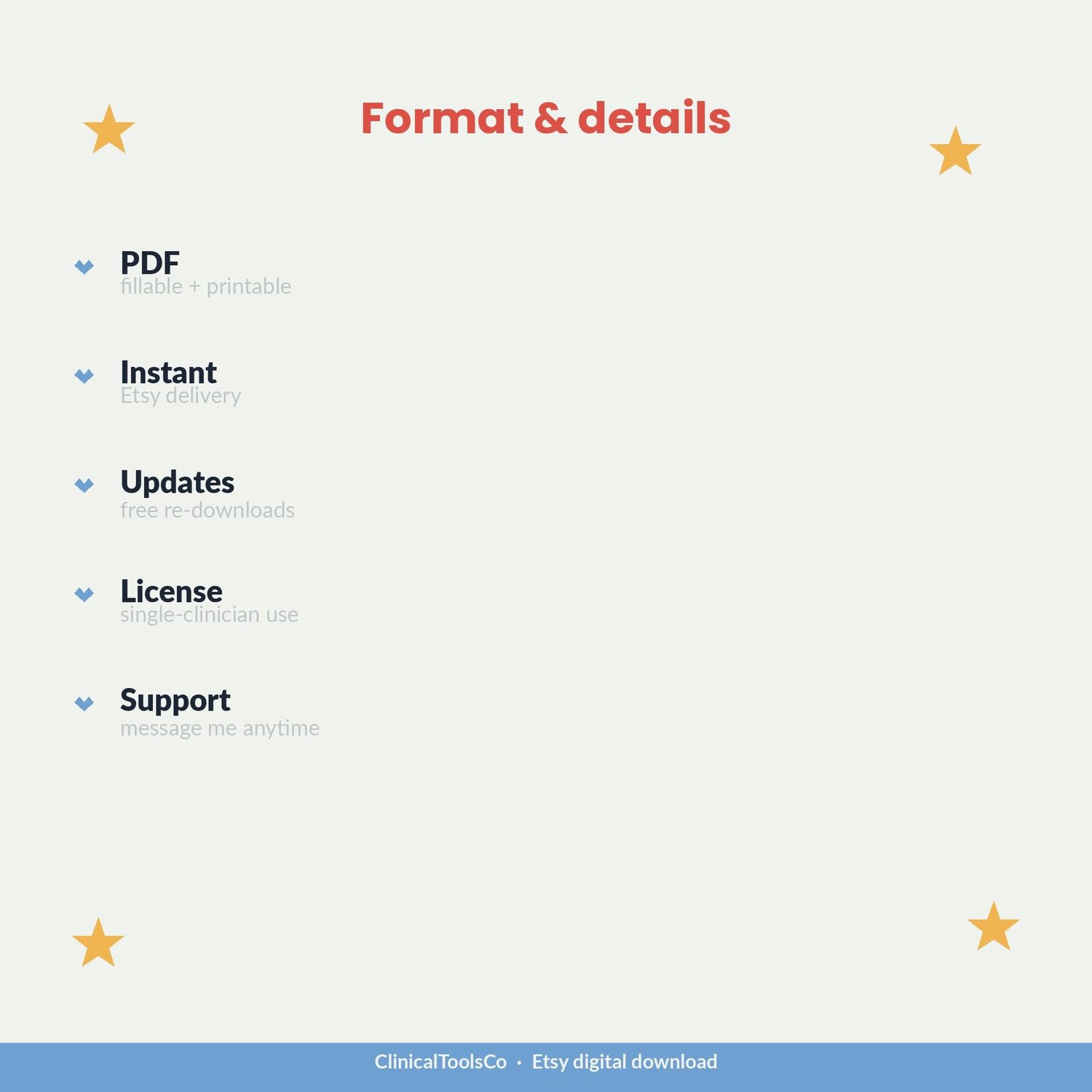
Editable, fillable PDF. Editable Microsoft Word (.docx). Both files include the Worked Case Examples companion. Designed for completion at intake or across the first three sessions, then revisited. US Letter (8.5 x 11) and A4 (8.3 x 11.7) both included. Works on Mac, Windows, iPad, GoodNotes, and Notability. Lifetime access, unlimited prints.
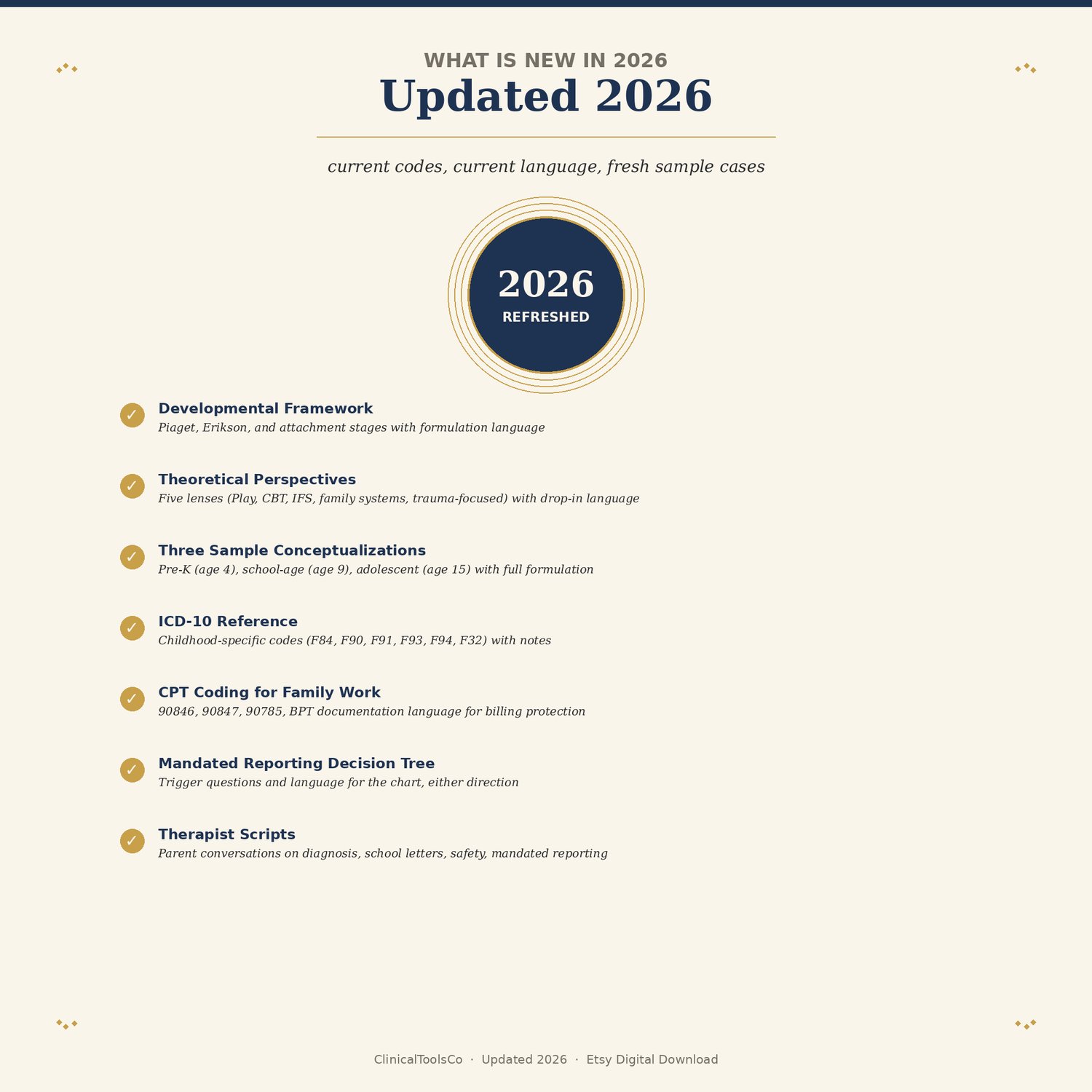
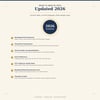
Updated 2026
ACEs framework current to the most recent CDC-Kaiser scoring. Outcome measures current to the standard child assessment battery. The contemporary adversities list reflects current pediatric literature on climate anxiety, online harassment, active shooter drills, and refugee experience. Mandated reporting language reflects the most-states standard.
How to use it
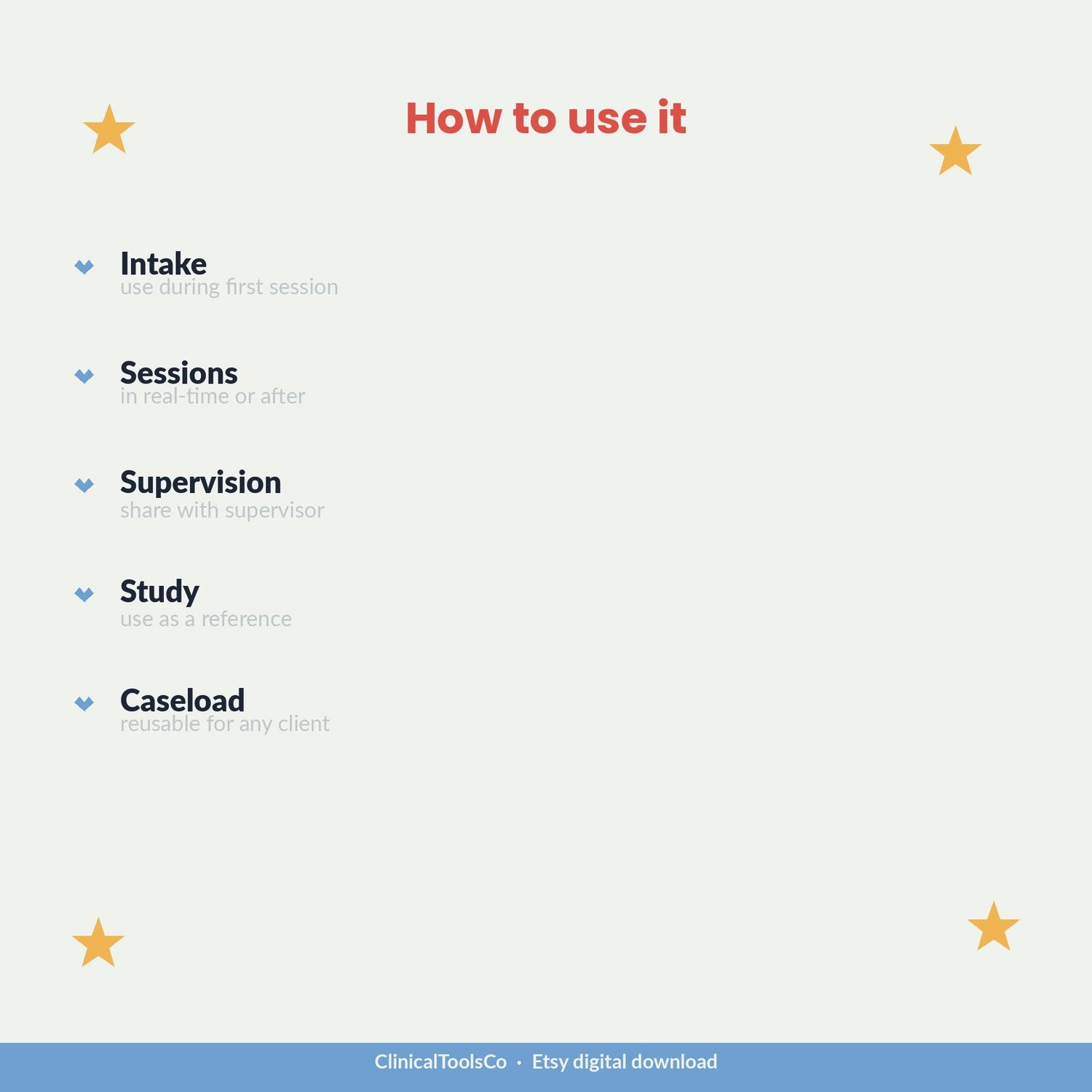
Start at intake by capturing the presenting problem from parent and child separately. Complete the developmental history in session one or two. Build the family system map by session three, genogram included. Gather school data within the first month, with consent. Screen for ACEs and contemporary adversities directly rather than waiting for disclosure. Pick one or two frameworks and write the formulation. Set goals with both parent and child input. Reassess at every clinical milestone.
Child therapy is a system intervention. The template assumes that.
Instant digital download. No physical product ships. Message us if anything does not work.