

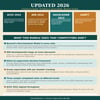
Clinical Supervision Bundle (2026)
A clinical supervision bundle: a supervision contract and disclosure agreement, individual and group session notes, monthly summaries, a supervised hours log and competency evaluations.
What is in the bundle
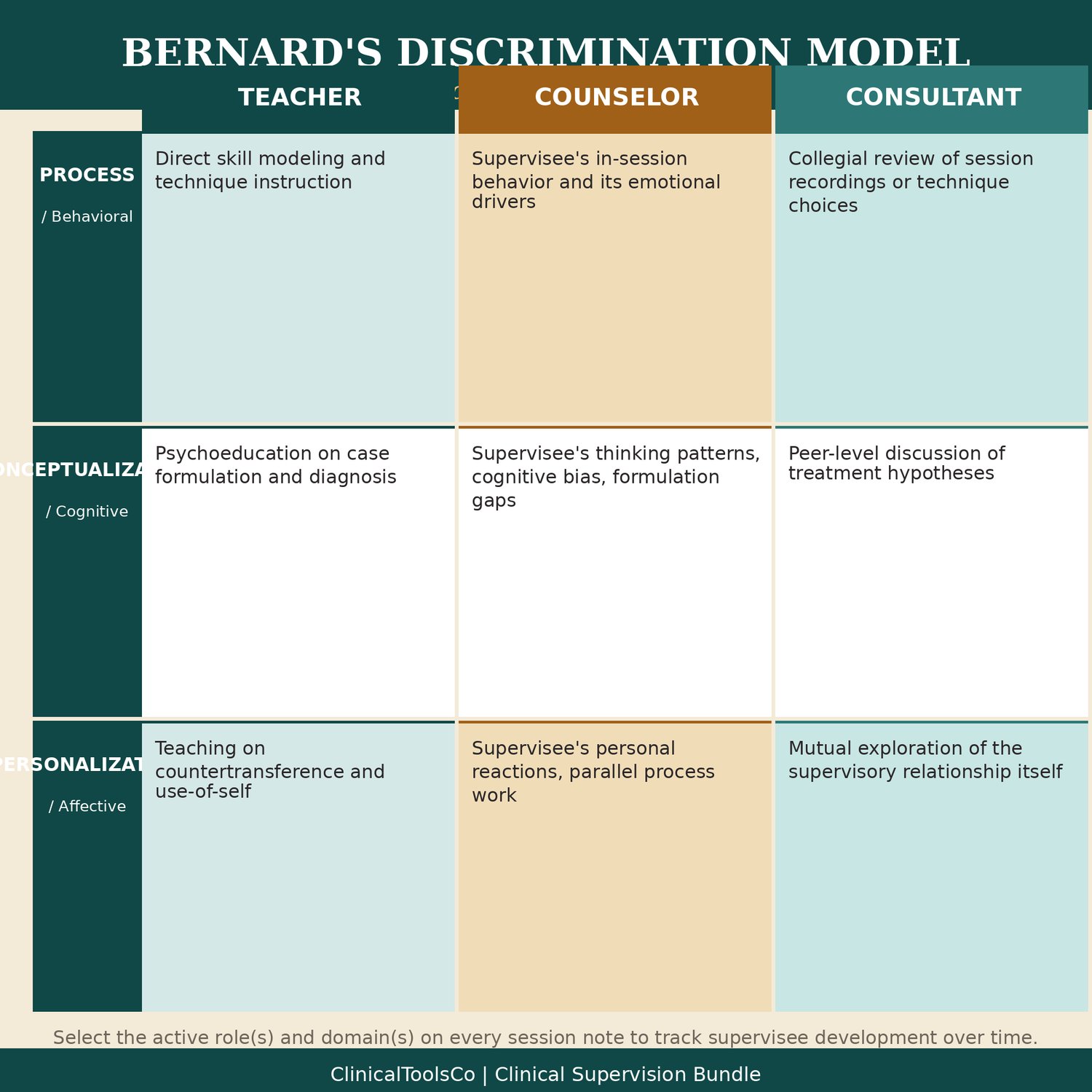
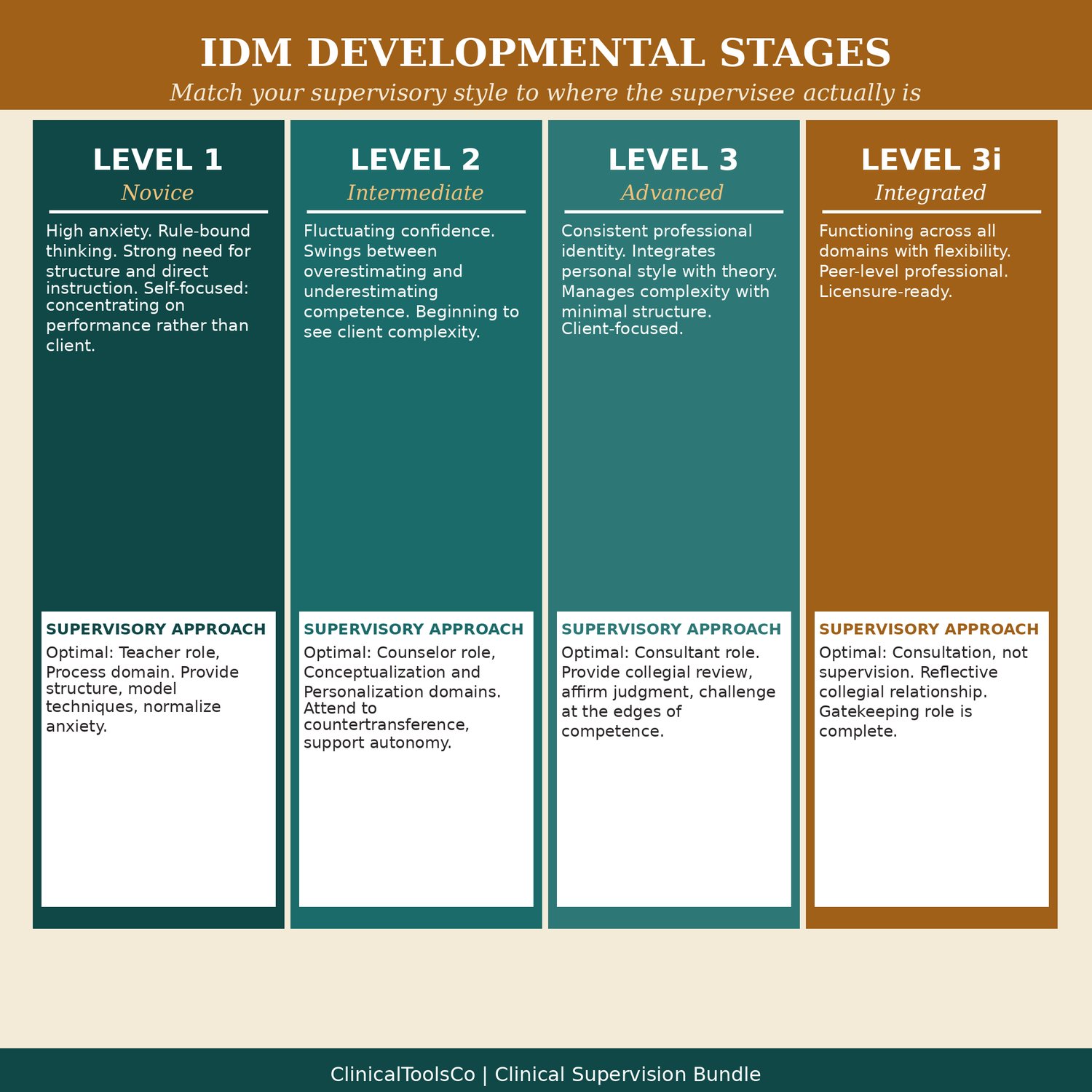
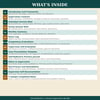
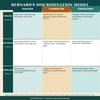
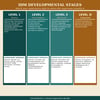
- Foundation: what clinical supervision is and the three responsibility levels (clinical, educational, gatekeeping), the supervisor's vicarious liability exposure, Bernard's Discrimination Model with its three roles and three focus domains, and IDM developmental stages with the optimal supervisor role match for each
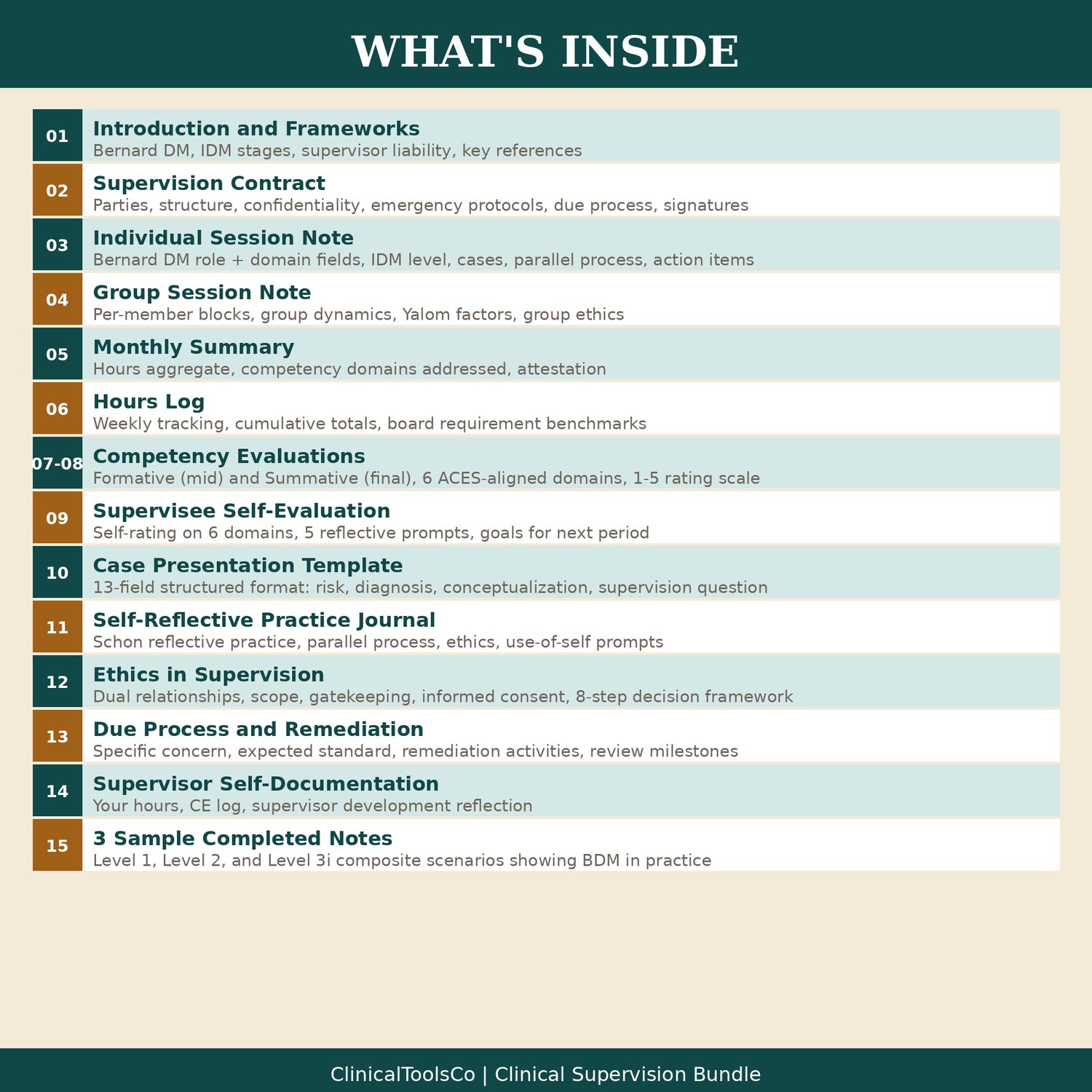
- Supervision contract and disclosure agreement: a six-part contract covering parties and credentials, structure, confidentiality limits, emergency protocols, evaluation and due process and termination, plus a signature block
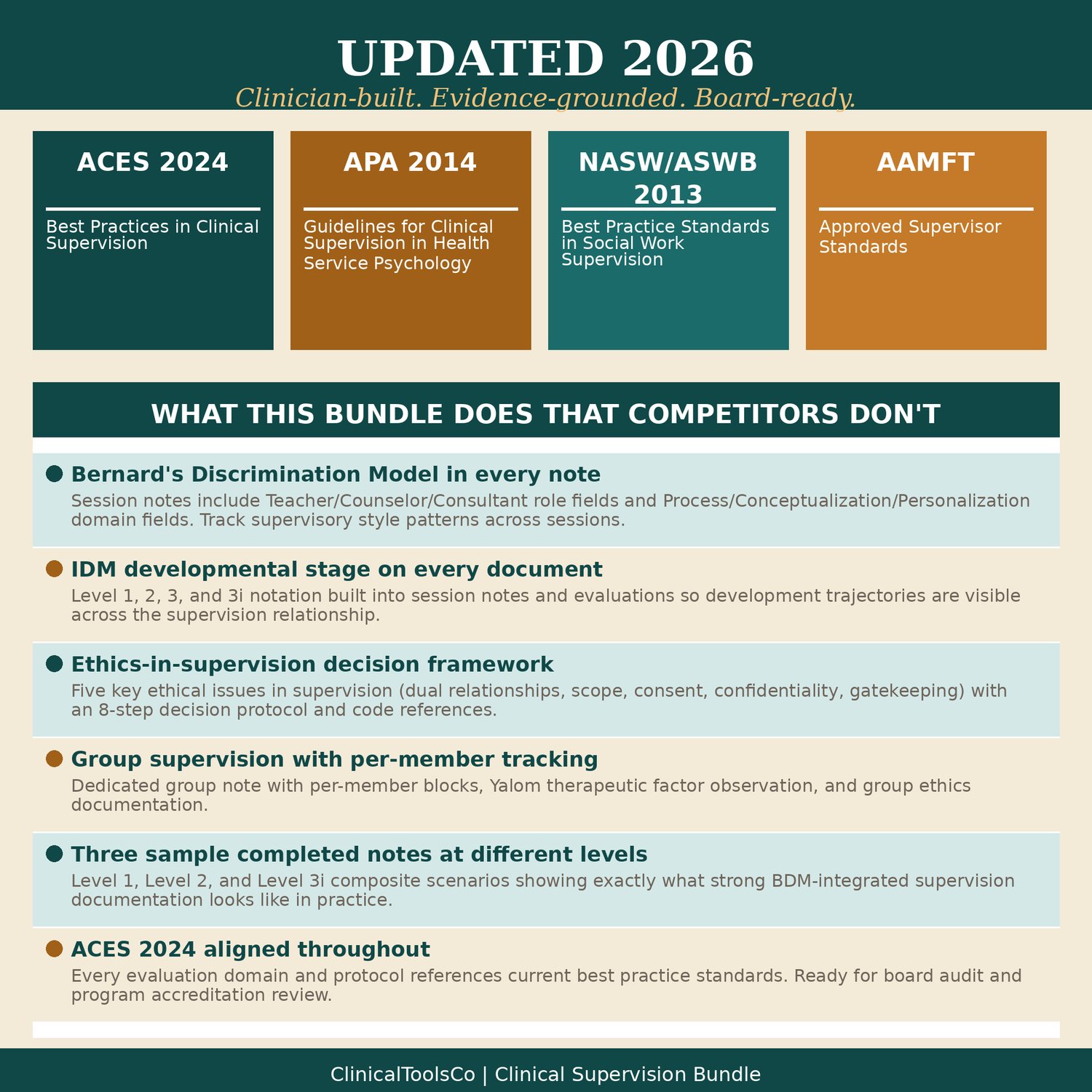
- Supervision session note integrated with the Discrimination Model: header with cumulative hours, role employed, focus domain employed, a per-case grid with risk flags, an ethics block with code citations, parallel process observation, supervisee development and action items, and attestation
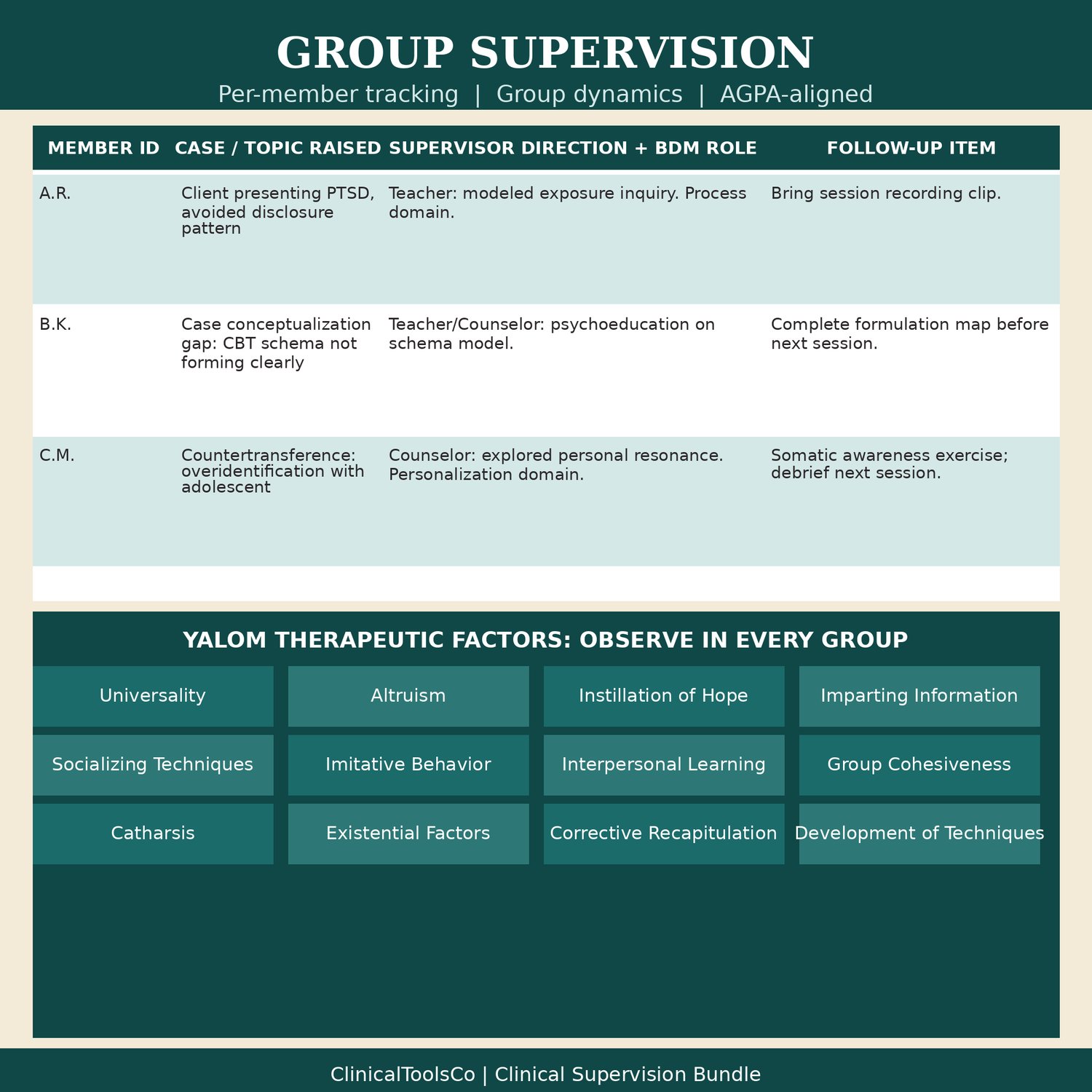
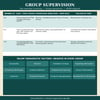
- Group supervision session note in per-member format with member-by-member case and role tracking, group process observations, a group ethics check and supervisor notes
- Monthly supervision summary: hours summary, six competency-domain checklist, outstanding action items and supervisor concerns
- Supervised hours log: a week-by-week template with individual and group session type, direct client hours, supervision hours and running total, designed for state board submission
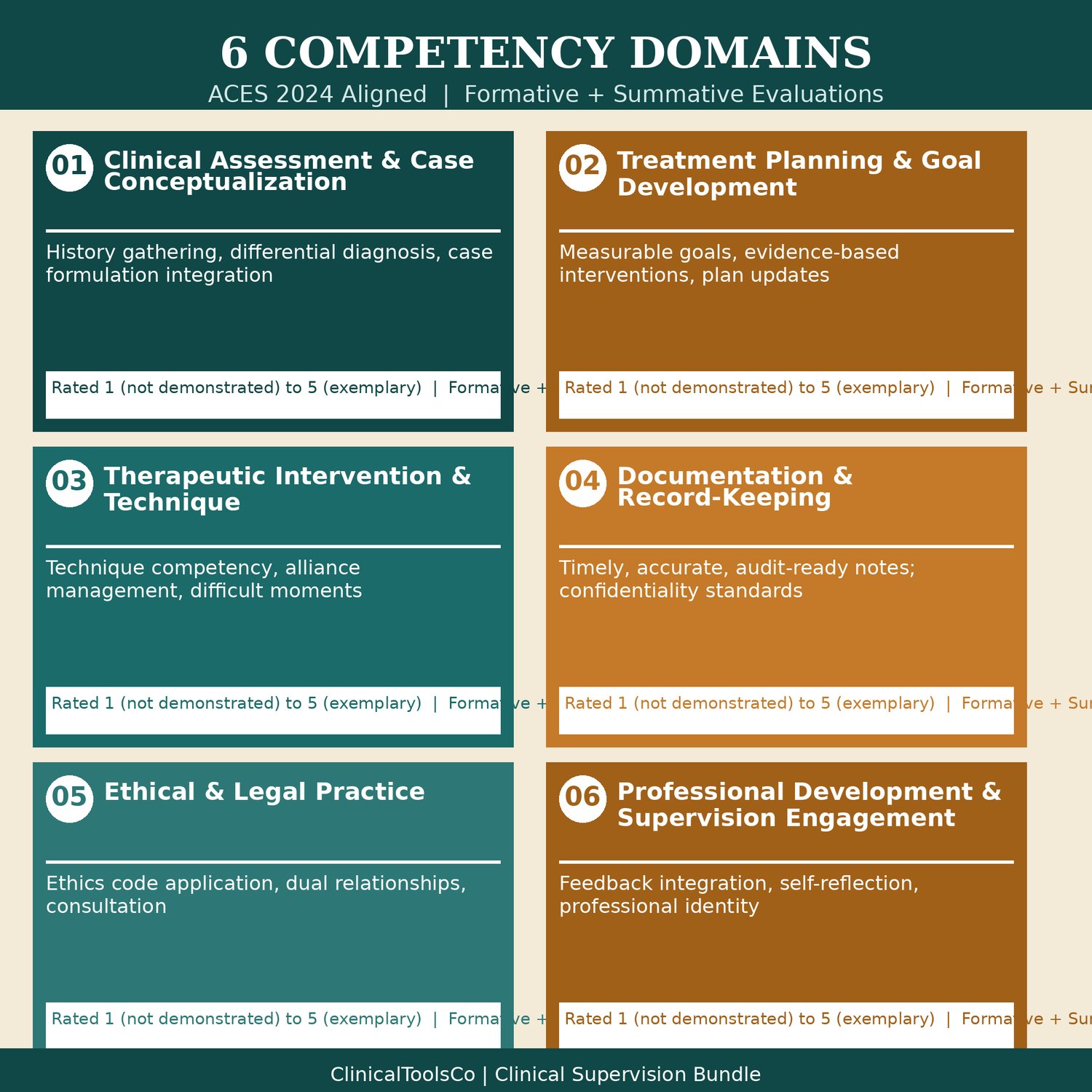
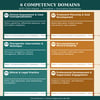
- Formative competency evaluation: a six-domain ACES-aligned and Falender and Shafranske framework evaluation at mid-period with a five-point rating scale plus a not-observed option
- Summative competency evaluation: annual or final evaluation with a growth-since-formative comparison block, overall competency assessment, licensure readiness recommendation and board submission authorization
- Supervisee self-evaluation across the same six domains for direct comparison with supervisor ratings, plus five reflection questions
- Case presentation template with risk summary, working diagnosis, case conceptualization framework and a specific question for the supervisor
- Self-reflective practice journal with weekly prompts grounded in reflection-in-action and reflection-on-action
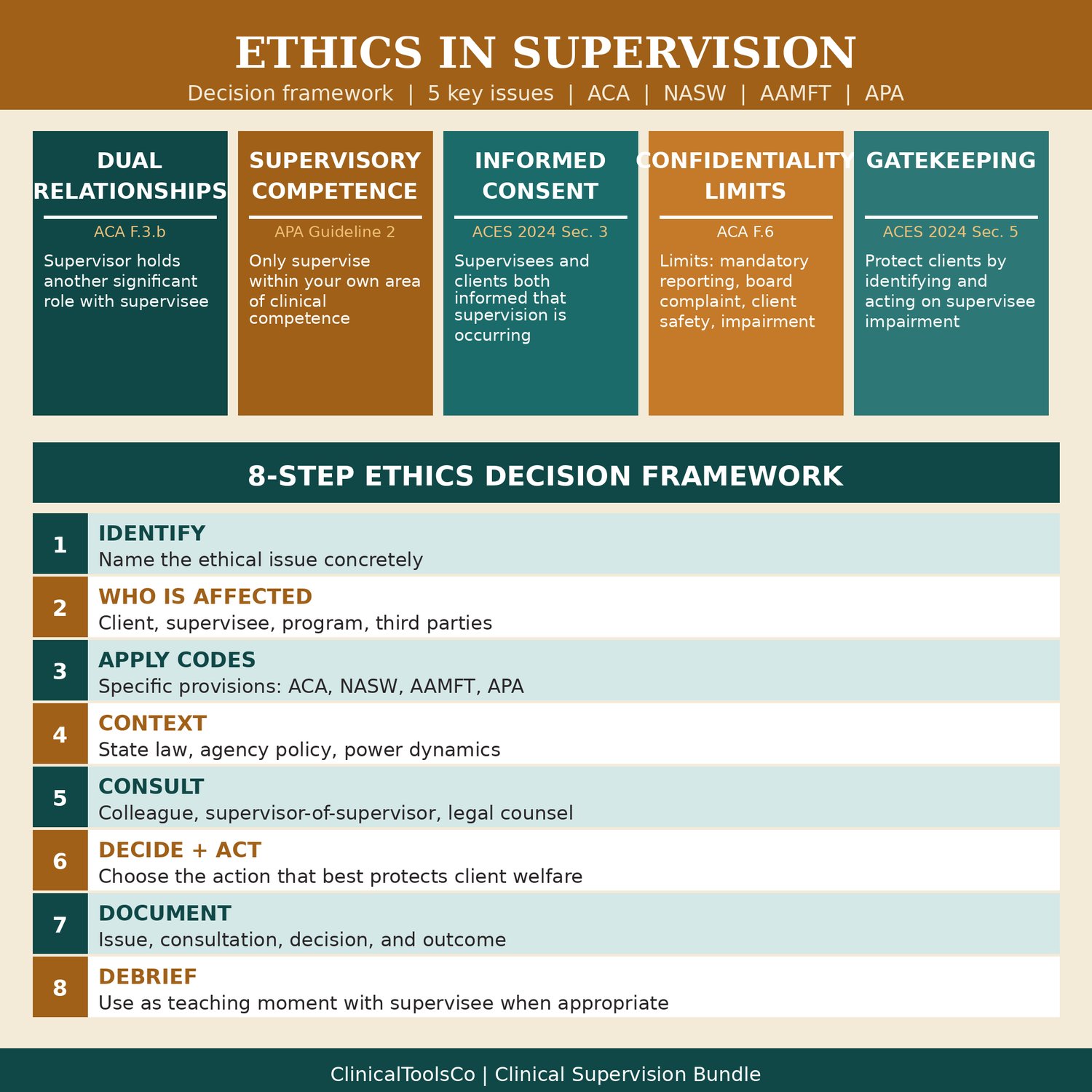
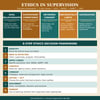
- Ethics in supervision decision framework: five common ethical issues with code citations, plus an eight-step ethical decision framework
- Due process and remediation plan: formal documentation of performance concerns with the expected standard defined behaviorally, time-bound activities, evidence-of-completion requirements, review process and consequences, and the supervisee's right to respond
- Supervisor self-documentation log: monthly tracking of supervision provided and consultation received, supervisor continuing education, and four self-reflection prompts that meet the supervisor-development standard
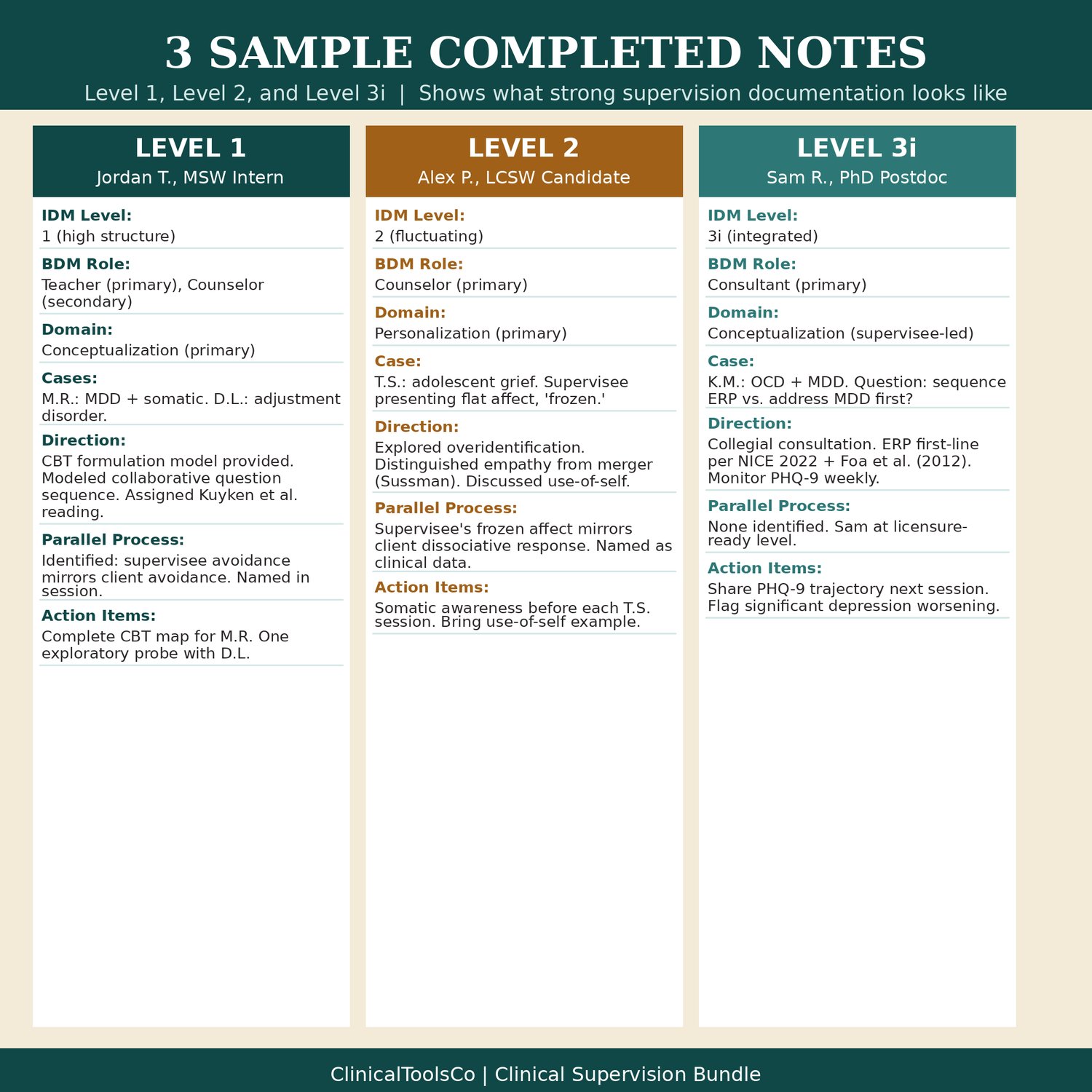
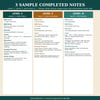
- Three sample completed supervision notes at IDM Level 1, Level 2 and Level 3i, showing what high-quality documentation looks like at each developmental stage
- A state board requirements postscript with a verification checklist before using any template for licensure documentation
Who it is for
- Licensed clinicians providing supervision to pre-licensed clinicians toward LCSW, LMFT, LPC, LCMHC or licensed psychologist credentials
- AAMFT Approved Supervisors documenting supervision-of-supervision and supervisor continuing education
- Board-approved clinical supervisors meeting state-specific documentation requirements
- Training program supervisors at internship, externship or postdoc sites
- Group practice owners standardizing supervision documentation across associates and supervisors
- Agency clinical directors overseeing supervisor performance and supervisee progress
- New supervisors completing their first cycle of supervised supervision
- Doctoral psychology faculty supervising practicum, externship and postdoctoral training
Why it exists
The supervisee has been complaining about feeling stuck in the same kinds of cases for three months. You realize you have only ever been in the Teacher role with them. Then the state board audit notice arrives, and your supervision notes do not show which Bernard role you took, which IDM developmental level you matched, or whether you have ever conducted a formative evaluation.
This is the supervision binder I built after my first three supervisees, when I realized none of the templates I had been handed actually documented what good supervision looks like. They tracked hours. They did not track the Bernard role, the IDM stage match, the competency-domain growth, or the gatekeeping decisions a state board audit will ask about.
42 pages of every form, evaluation, contract, note and ethics framework a clinical supervisor needs, organized into 15 sections plus a state board requirements postscript, with a Supervisee Self-Assessment and Competency Rubric companion whose behavioral anchors link self-assessment to evaluation and remediation. Aligned with ACES 2024 Best Practices, APA 2014 Guidelines, NASW and ASWB 2013 Standards, and AAMFT Approved Supervisor Standards. Built on Bernard's Discrimination Model and Stoltenberg's IDM.
Why this is different
Most supervision documentation is a one-page hours log, a generic supervision agreement, and whatever notes the supervisor writes in their own shorthand. None of it captures the Bernard role, the IDM stage match, the competency-domain growth or the gatekeeping decisions a state board audit or a malpractice claim will examine.
The Bernard-integrated session note matters because tracking role and focus domain over time surfaces patterns the supervisor cannot see otherwise. A supervisee receiving only Teacher interventions in the Conceptualization domain across six months is developmentally stalled, and the supervisor needs to see that before the supervisee does.
The formative and summative competency evaluations matter because supervisor evaluations are the document a licensing board will request if a supervisee files a complaint, or if the supervisee later faces a board action.
The due process and remediation plan matters because gatekeeping decisions without a paper trail expose the supervisor to legal challenge from the supervisee and ethical exposure if a client is later harmed by an unremediated supervisee.
The ethics decision framework matters because dual relationships, scope of competence, supervisee impairment and confidentiality limits in supervision are not the same as in direct clinical practice.
The three sample completed notes matter because no one teaches supervisors what good supervision documentation actually looks like across developmental stages.
Format
- Editable, fillable PDF (42 pages)
- Editable Microsoft Word (.docx) with the same content for in-house customization
- Supervisee Self-Assessment and Competency Rubric companion in PDF and Word
- Contract, session note, evaluation and remediation forms ready to drop onto letterhead
- US Letter and A4 sizes both included
- Works on Mac, Windows, iPad, GoodNotes, Notability
- Lifetime access, unlimited prints, single-supervisor license
Updated 2026
References ACES 2024 Best Practices in Clinical Supervision, APA 2014 Guidelines for Clinical Supervision in Health Service Psychology, NASW and ASWB 2013 Best Practice Standards, and AAMFT Approved Supervisor Standards. Built on Bernard and Goodyear's Fundamentals of Clinical Supervision, sixth edition. Uses McNeill and Stoltenberg's 2016 reconceptualization of the Integrated Developmental Model. The Falender and Shafranske competency-based supervision framework underlies the six-domain evaluations.
A note from the designer
I am a practicing clinician who supervises. I built this after my first three supervisees, when I realized the templates I had been handed at training did not document what good supervision looks like. The section I send every new supervisor is due process and remediation, because gatekeeping decisions without a paper trail are exactly the situation a malpractice attorney is looking for.
Good supervision is the gate between training and independent practice. Good documentation is what makes the gate hold.
Digital download. No physical product ships. Reach out by email if anything does not work or if you have questions.
Pairs with
Looking for case material to bring to supervision? Multicultural Counseling Case Vignettes has 22 composite cases built for exactly that, each one structured so the supervisee has to name the cultural factors in play before you read them what the case requires.