
Therapy Insurance Billing Toolkit (2026)
A therapy insurance billing toolkit: payer types, CPT 2026 mental health codes, a CMS-1500 walkthrough naming every field, a denial code decoder and appeal templates.
What is in the toolkit
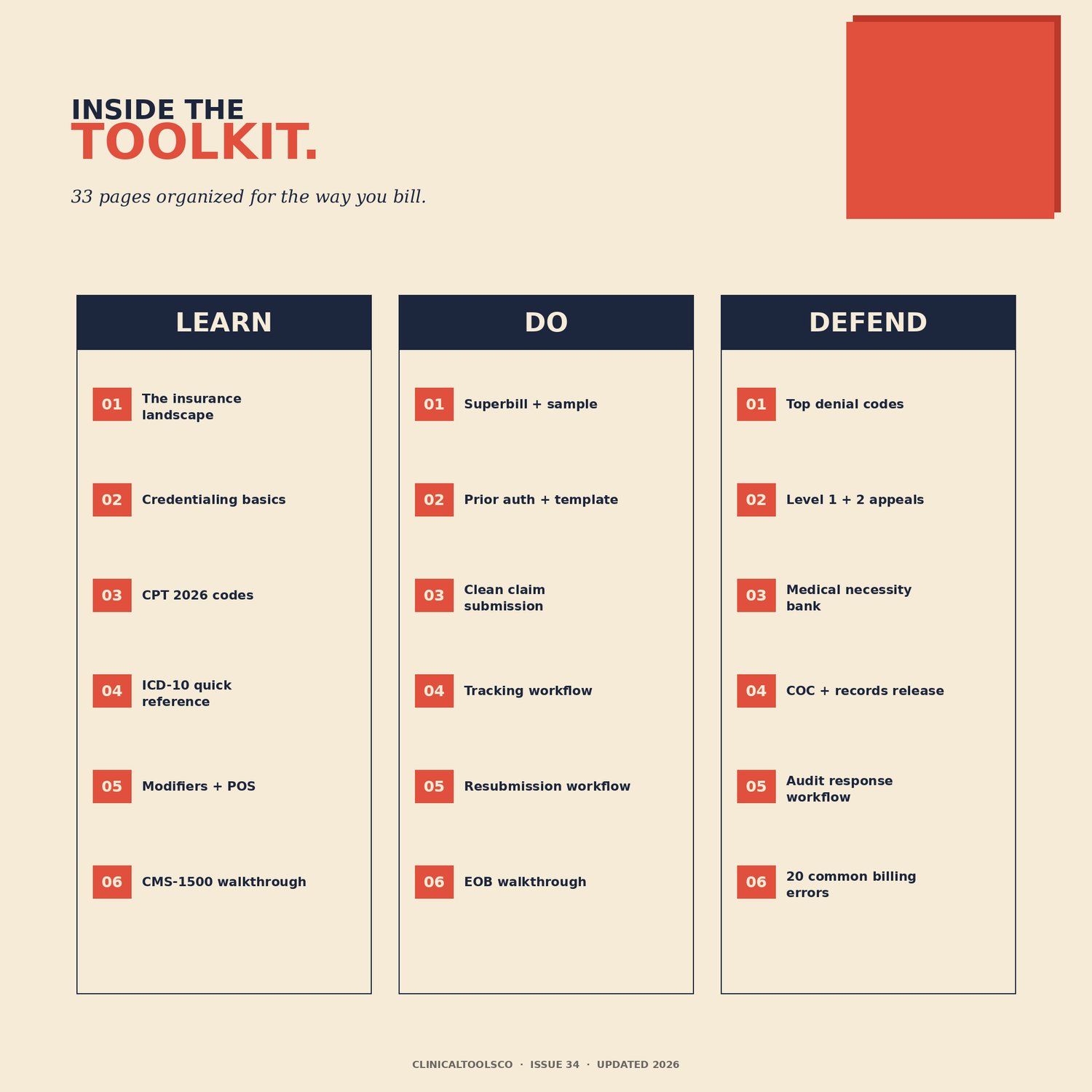
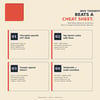
- Payer types explained and how each changes the workflow: Medicare, Medicaid, commercial, EAP, and cash pay. Credentialing basics with a checklist for getting paneled. The audit-ready chart note, meaning the documentation that actually supports what you billed.
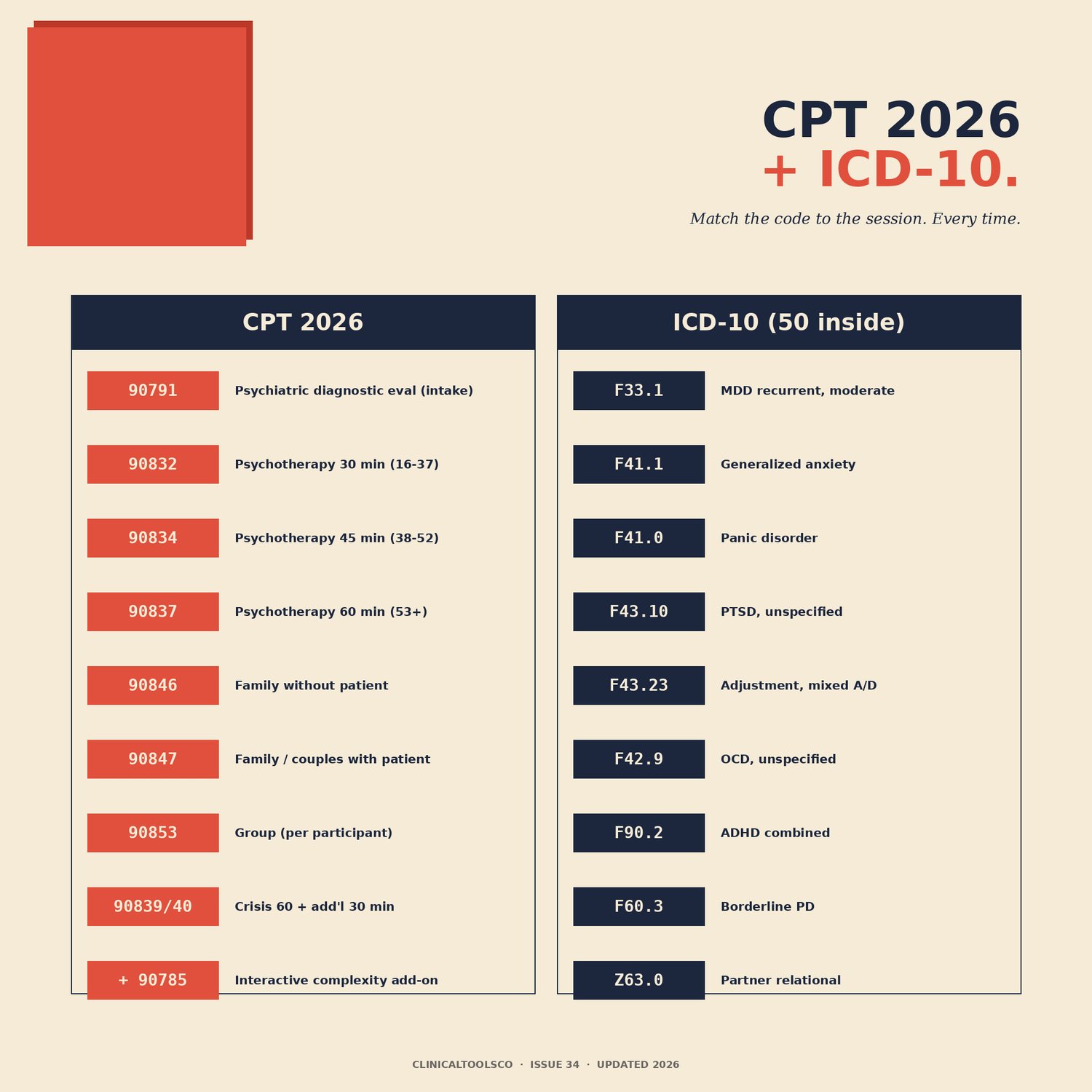
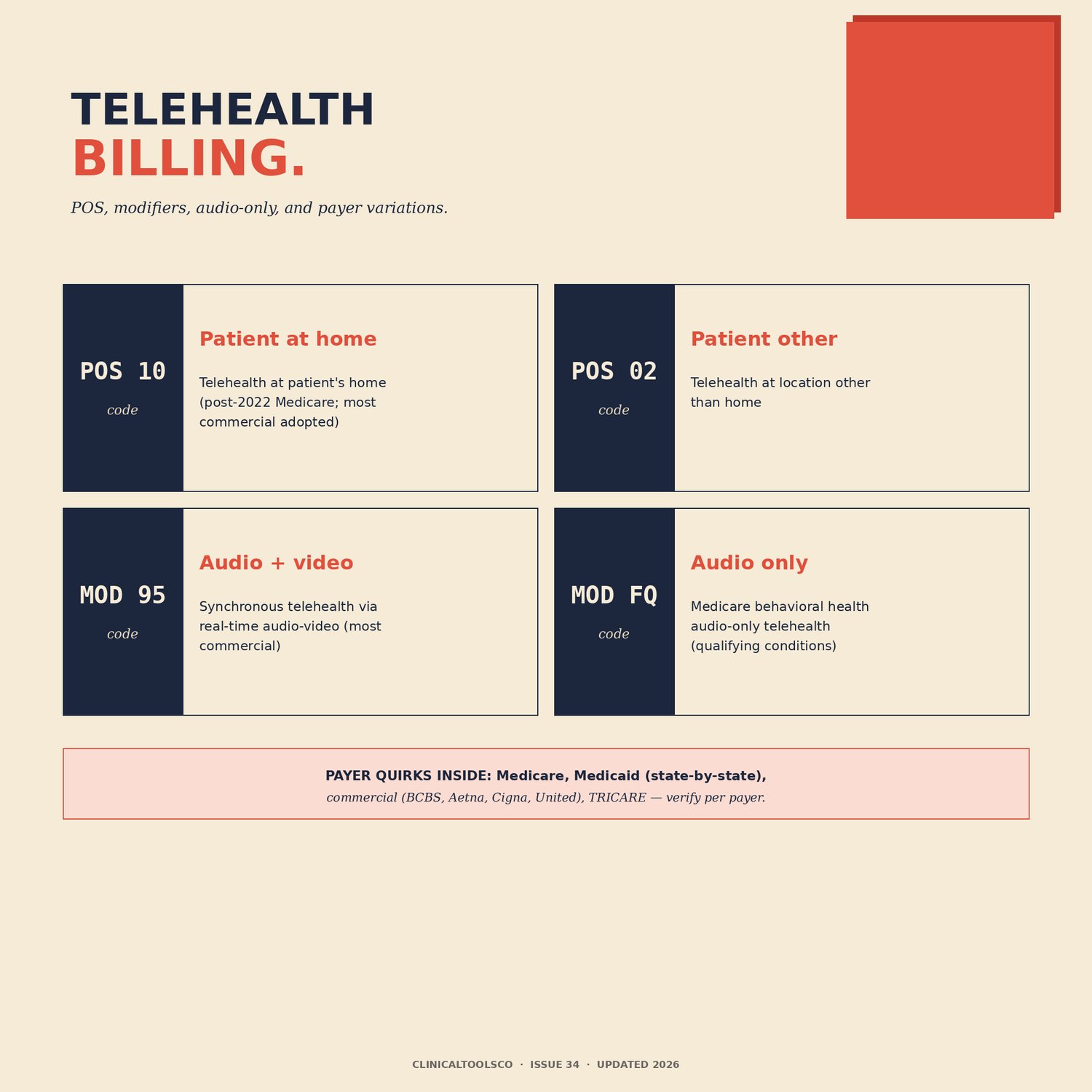
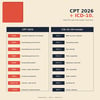
- CPT 2026 mental health codes by session type (90791, 90832, 90834, 90837, 90846, 90847, 90853, and the add-on codes). An ICD-10 quick reference covering the 50 most-used mental health diagnosis codes. Modifiers and Place of Service codes including 95, GT, 02, 10, and the telehealth conventions.
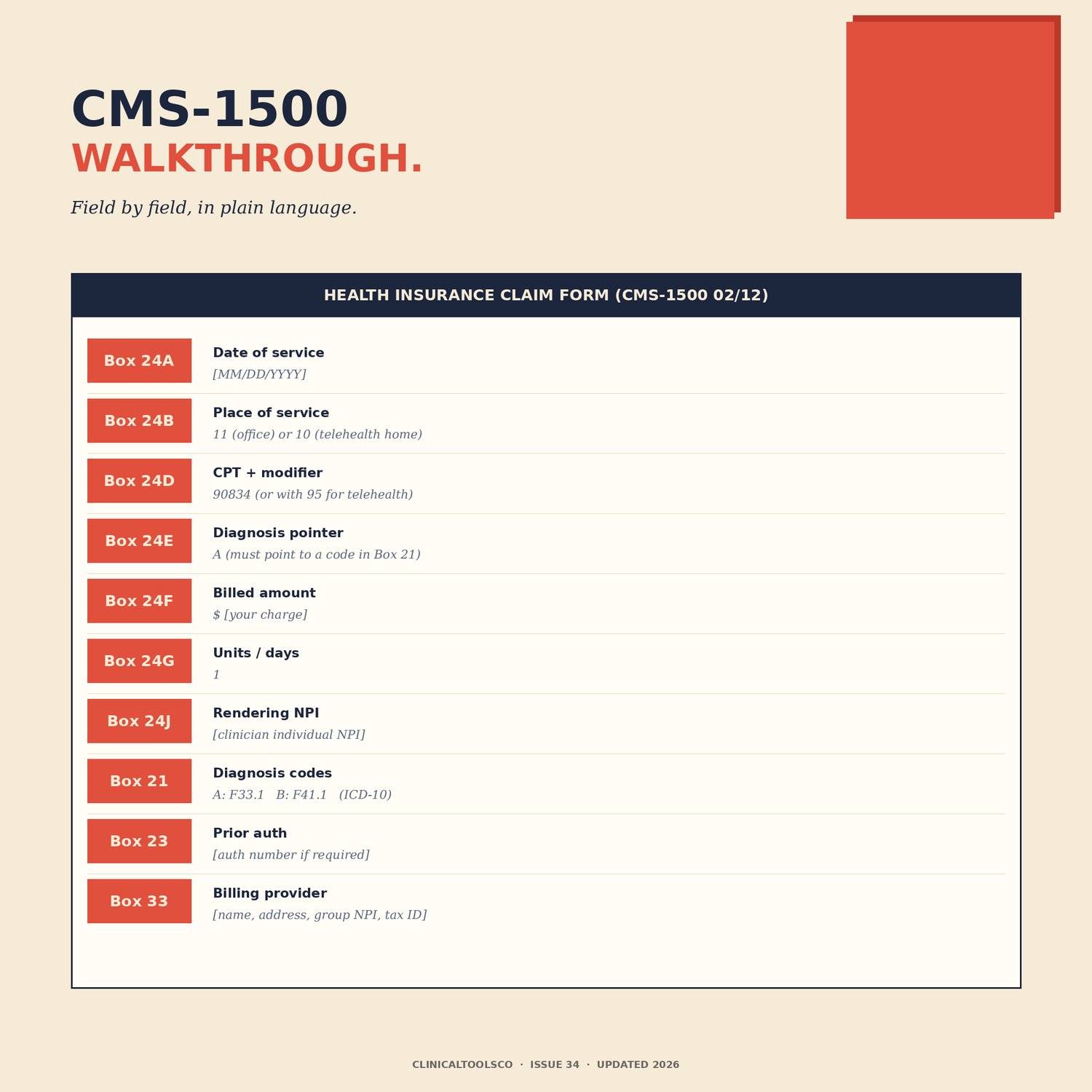
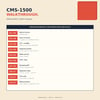
- A CMS-1500 walkthrough naming every field and the language that belongs in it, plus a superbill template with a full completed sample. Prior authorization workflow with a template letter. A clean claim submission and tracking workflow.
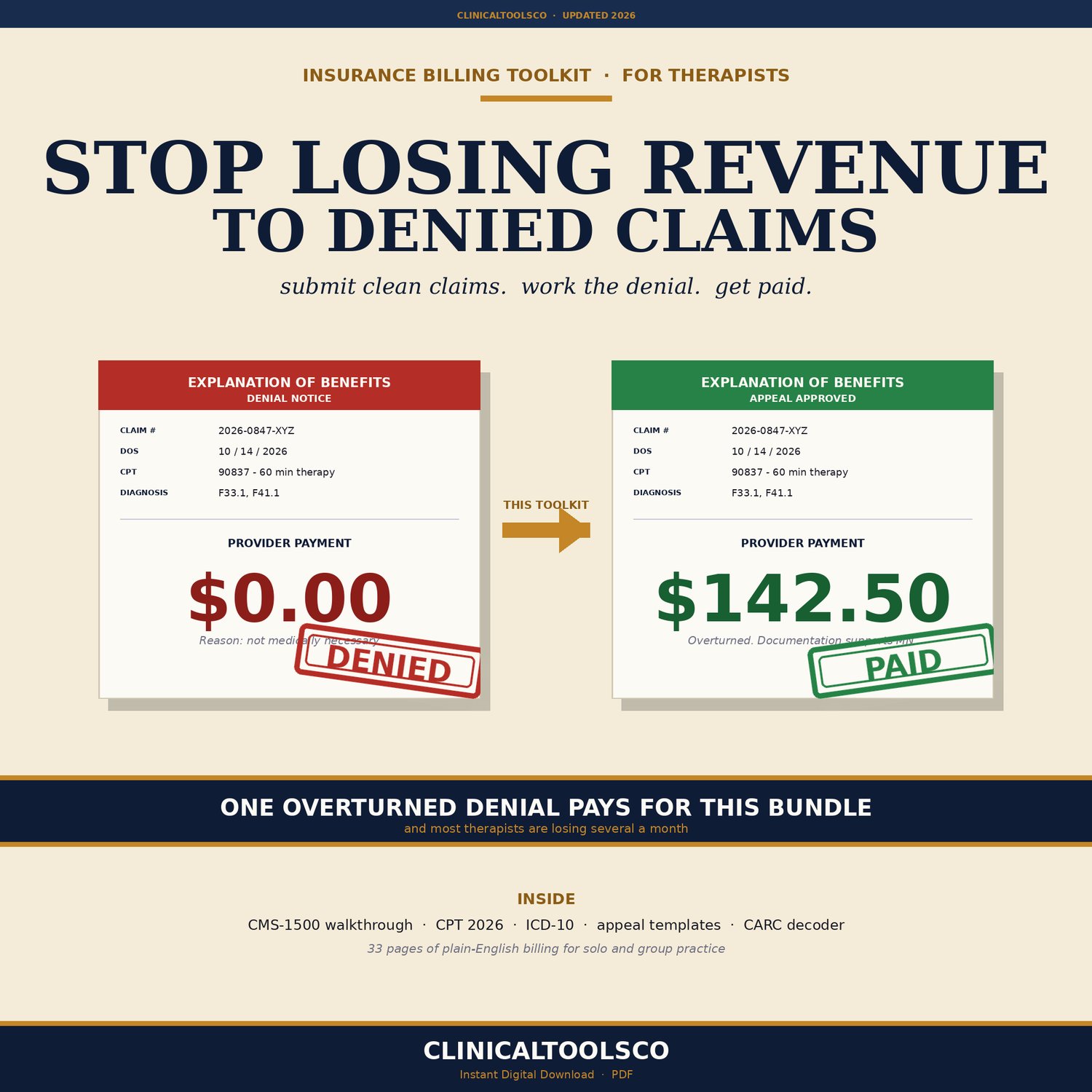
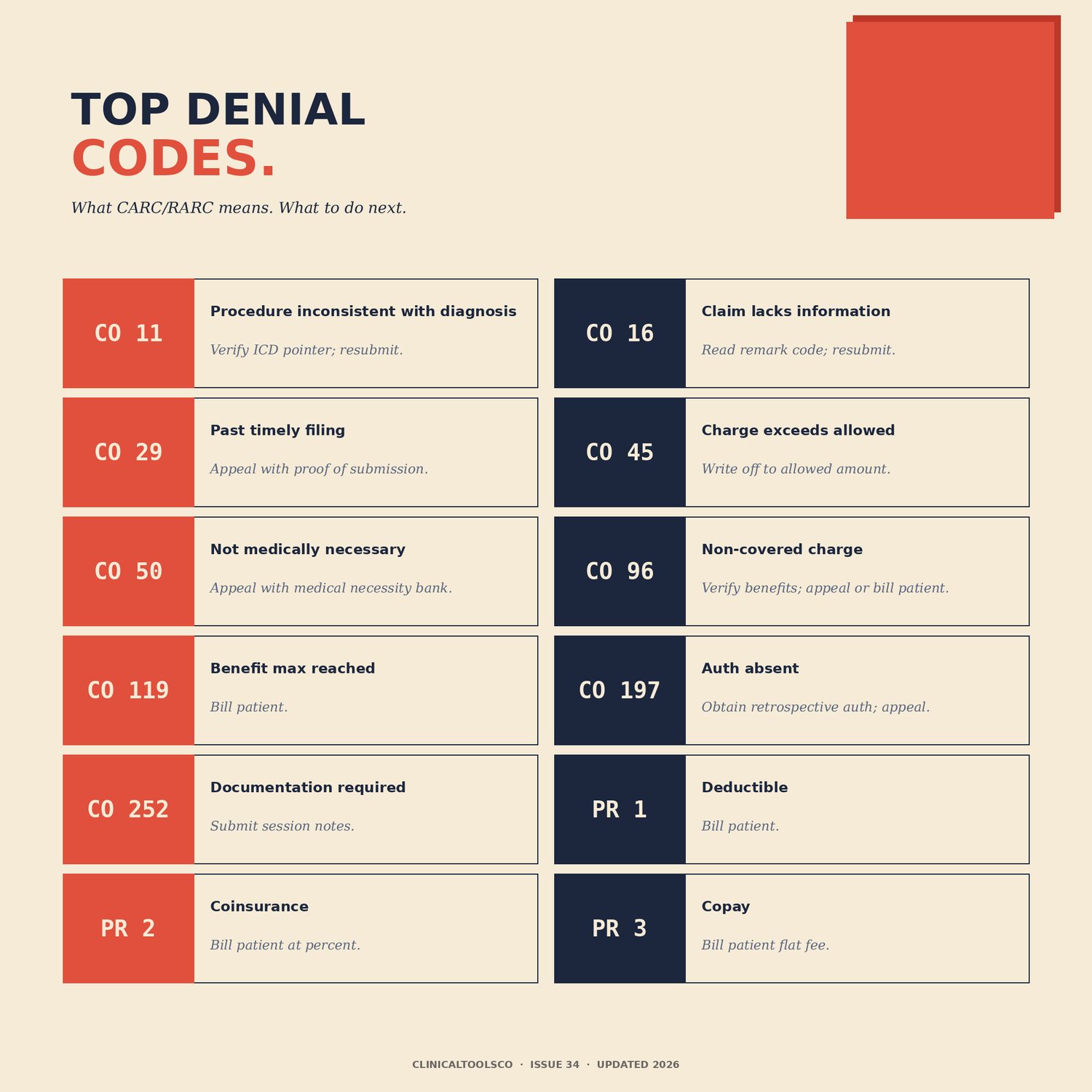
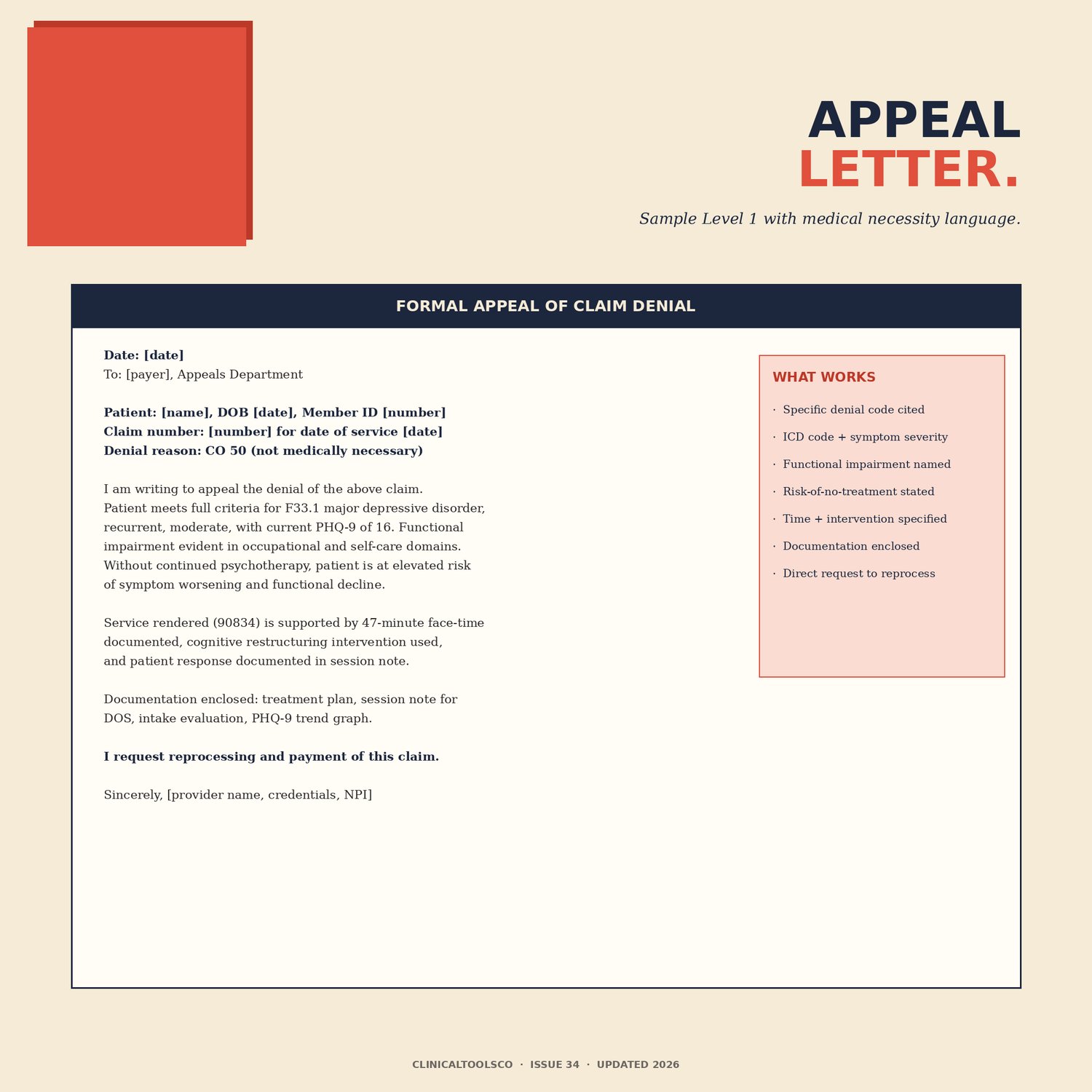
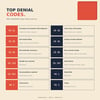
- A denial code decoder covering the top CARC and RARC patterns (CO-4, CO-16, CO-50, CO-97, CO-109, CO-197 and more) with the next-step workflow for each. Appeal letter templates for level 1 administrative review and level 2 medical necessity review. A medical necessity language bank organized by diagnostic category across mood, anxiety, trauma, OCD, ADHD, substance use, personality, and eating disorders.
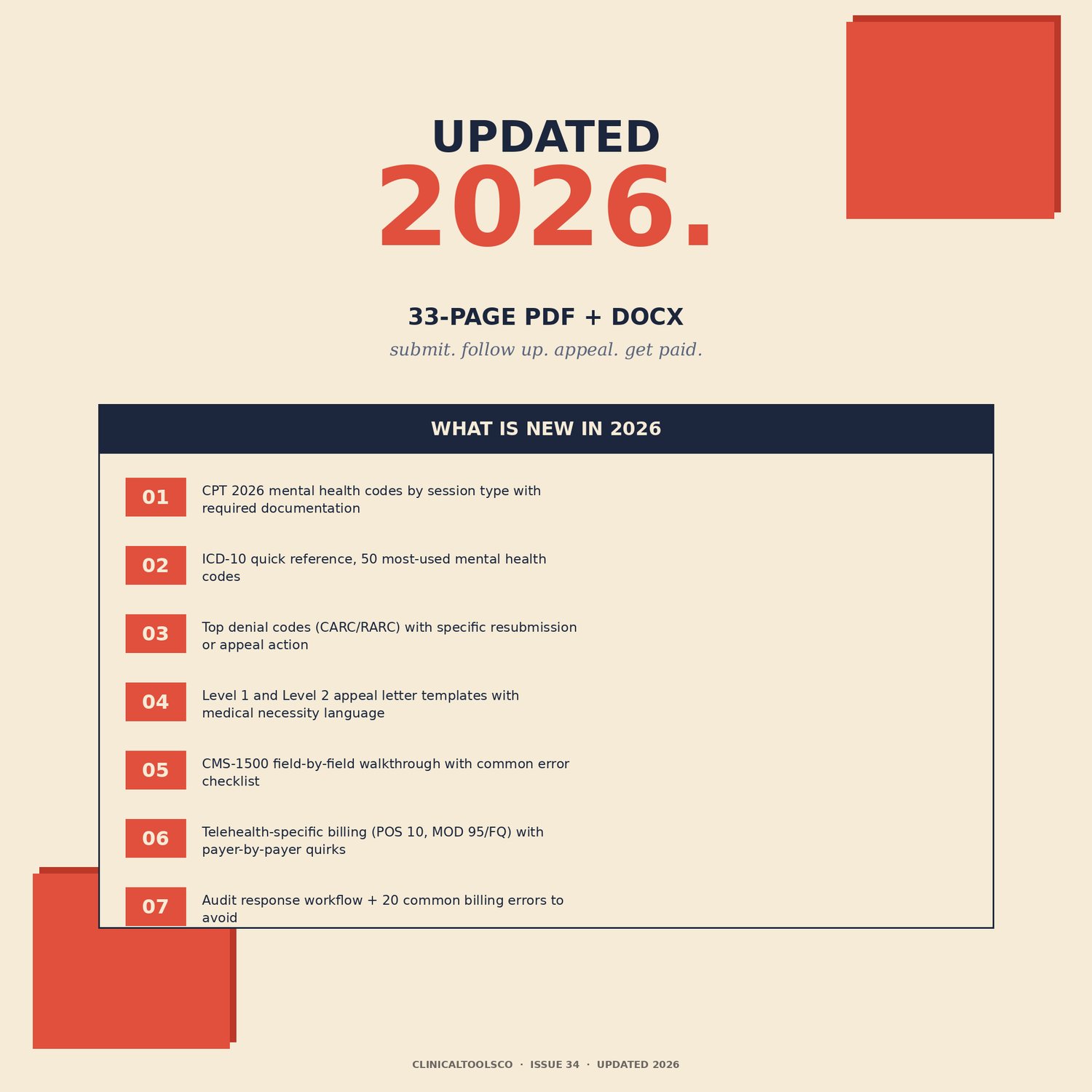
- A coordination of care letter template. A records request and subpoena response template. An EOB walkthrough for reading the remittance advice. Telehealth-specific billing with modifiers, POS, and payer variation. Sliding scale and cash pay documentation. Audit response workflow. Claim resubmission workflow. Twenty common billing errors with how to avoid each, and a one-page printable billing card.
Who it is for
Licensed therapists, counselors, social workers, and psychologists billing insurance from private practice. Group practice owners standardizing billing across clinicians. Solo practitioners credentialing for the first time. Practices moving from cash pay to insurance. Anyone working a denial backlog or an audit. Telehealth-focused practices. Pre-licensed associates learning the billing side. Practice managers and billers supporting clinical staff.
Why it exists
Private practice income lives or dies on insurance billing, and most therapists learn it on the job with denied claims and unpaid sessions as the tuition. The CMS-1500 has fields nobody trained you on. Prior authorization workflows are payer-specific and undocumented. Denial codes read like alphabet soup. Every claim that finally gets paid on appeal could have been a clean claim from the start.
33 pages. A CMS-1500 field-by-field walkthrough, a superbill template with a completed sample, prior auth and appeal letter templates, a denial code decoder for the patterns that actually recur, and a medical necessity language bank organized by diagnostic category.
Why it is built this way
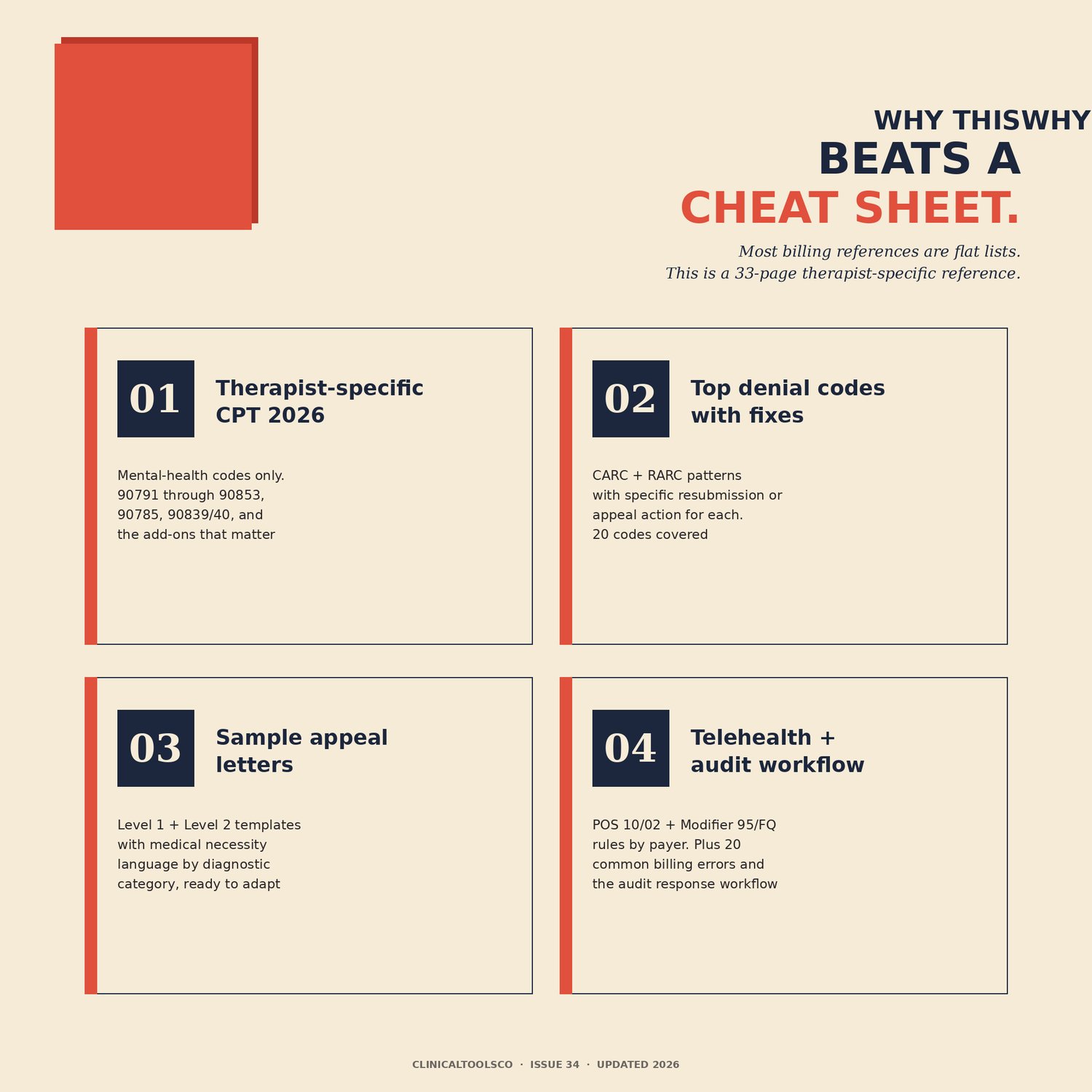
Most billing resources are a single CPT cheat sheet. This is the workflow that surrounds the cheat sheet: credentialing, the form, the superbill, prior auth, the denial decoder, the appeals, the necessity language, and the audit response.
The CMS-1500 has 33 fields and almost nobody is trained on which ones the payer actually scrutinizes. The walkthrough flags the fields most often cited in clean-claim audits.
CARC and RARC codes are noise until you have a translation table, which is what the decoder is. Appeals get more responsive when the letter speaks the payer's language, which is what the templates are for.
Medical necessity is the single most common denial reason, so the language bank is organized by diagnosis rather than as generic phrasing. Telehealth rules for modifiers, POS, and audio-only vary by payer and keep shifting. And audits happen to practices that have no protocol for them, which is a bad time to be inventing one.
Format
33 page toolkit as PDF and as editable Microsoft Word (.docx). US Letter (8.5 x 11) and A4 (8.3 x 11.7) both included. Works on Mac, Windows, iPad, Google Docs, and Pages. Print or read on screen. Lifetime access, unlimited prints.
Updated 2026
Reflects CPT 2026 mental health code requirements, ICD-10-CM 2026 diagnosis codes, current Place of Service codes including telehealth POS 02 and 10, current modifier conventions (95, GT, GQ, FQ), the CMS-1500 form version current for the 2026 cycle, current CARC and RARC denial patterns, current Medicare and major commercial payer documentation expectations, and current HIPAA records request and subpoena response standards.
How to use it
Setting up: read Sections 1 through 11 straight through, use the credentialing checklist and CMS-1500 walkthrough to build your system, start from the superbill template, and build claim tracking around Section 11. Working a denial: identify the code in Section 12, pull the matching appeal template from Section 13, add diagnosis-specific necessity language from Section 14, and use Section 21 when resubmission beats appeal. Preparing for an audit: Sections 4, 14, and 20, in that order. Telehealth: Section 18 for the payer-specific modifier and POS rules.
This is a billing reference, not legal or tax advice. Payer rules vary; verify against your payer's provider manual, and adapt every template to your jurisdiction, license scope, and institutional policy.
Instant digital download. No physical product ships. Message us if anything does not work.