



Child Custody Evaluation Bundle (2026)
A child custody evaluation bundle: a governing standards reference, a four-phase workflow, parent and child interview protocols, a parent-child observation protocol and testing battery guidance.
What is in the kit
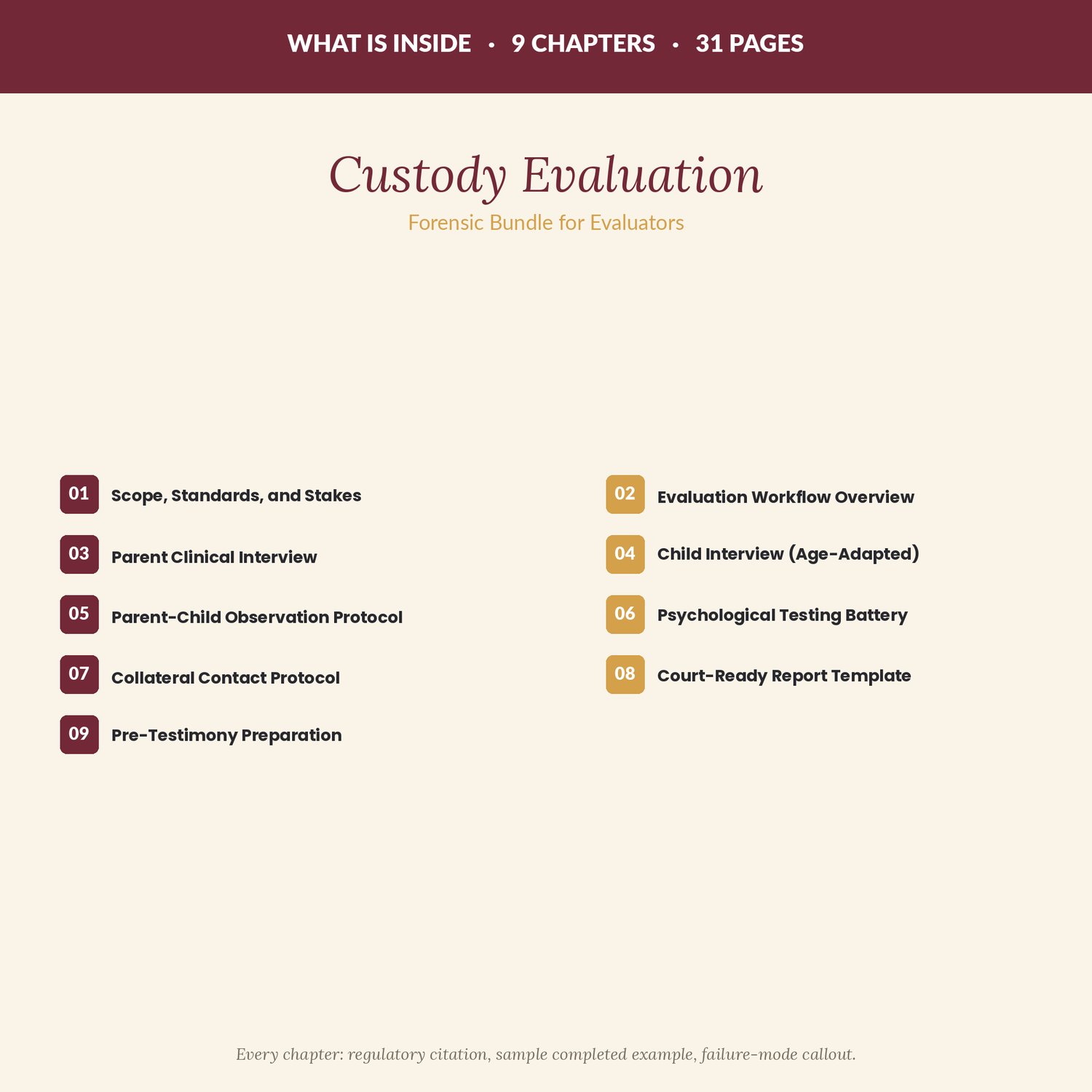
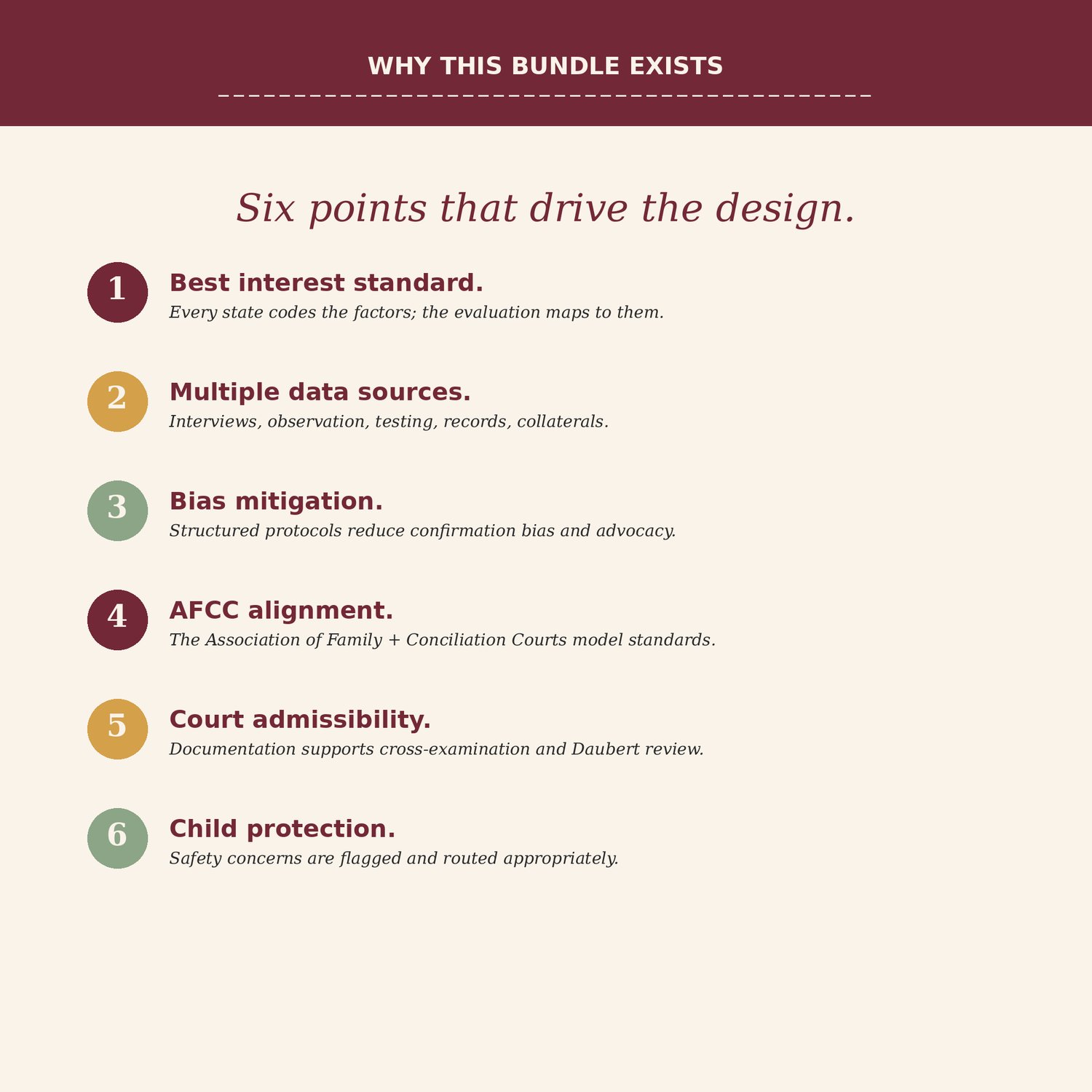
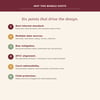
- Governing standards reference, plus Daubert and Frye admissibility. What to define in writing before any clinical contact: the specific question, parties, permitted data sources, excluded questions, timeline, fee, and distribution. The five roles an evaluator must not take on. The best-interest dimensions every state codifies. The six failure modes that generate most cross-examination trouble: scope creep, single-parent contact, anchoring bias, advocacy creep, missing collaterals, and recommendation without evidence.
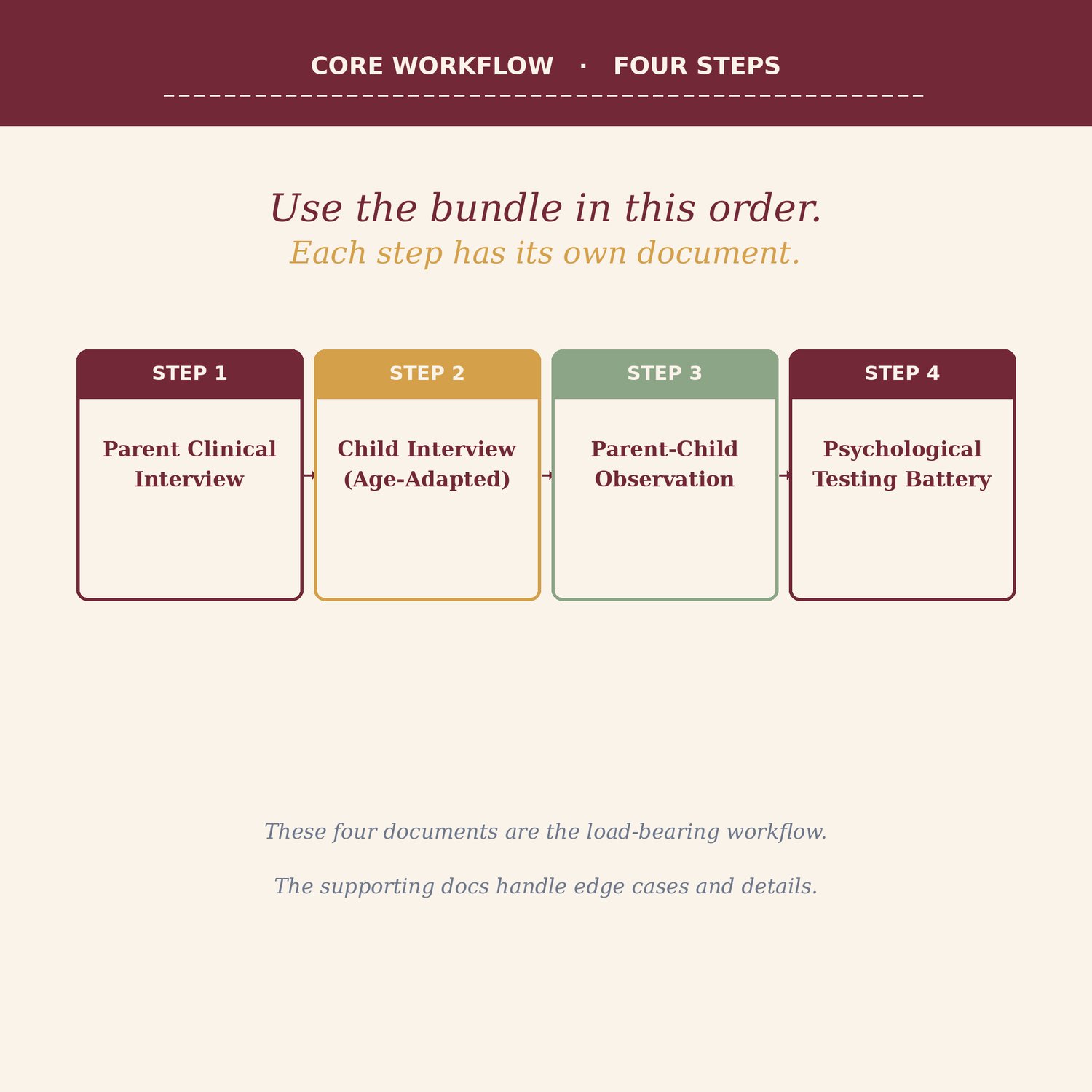
- A four-phase workflow across 6 to 12 weeks with time and documentation targets per phase: intake 2 to 4 hours, parent interviews 4 to 6, child interviews 2 to 3 per child, parent-child observation 2 to 3 per pairing, testing 4 to 6 per parent, collaterals 0.5 per contact. Sample engagement letter language defining scope and the non-therapeutic frame.
- Parent clinical interview structure: 2.5 to 3 hours per parent across two sessions, eight sections covering consent and limits, demographics, relationship history, each child, parenting capacity, co-parenting capacity, mental health and substance use, and the proposed plan. With a worked excerpt documenting routines, discipline, and view of the co-parent.
- Child clinical interview protocols for three developmental bands: 4 to 6, 7 to 11, and 12 to 17. Setting, materials, and sequence specified for each, with what to avoid at each age. Sample excerpts for an 8 year old and a 15 year old showing appropriate weighting of stated preferences.
- Parent-child observation protocol: a 90 to 120 minute session with a sample timeline and the domains to watch, engagement quality, attachment behavior, parental responsiveness, discipline, communication, and mention of the other parent. Plus a sample 60 minute observation summary with documentation language.
- Testing battery recommendations: when testing is indicated, what to administer (MMPI-3, PAI, PSI-4, CAPI, substance use measures, cognitive screening), and administration time per instrument. Custody-context validity considerations covering L, K, S, and F elevation patterns, referenced to the Bagby and Bathurst literature, with sample documentation handling defensive elevations.
- Collateral contact protocol: a 15 to 30 minute structured interview, who counts as an appropriate collateral (teacher, pediatrician, child's therapist, parent's therapist, daycare, coach, school counselor, probation officer), what each type typically provides, the interview structure, teacher-specific questions, and sample documentation.
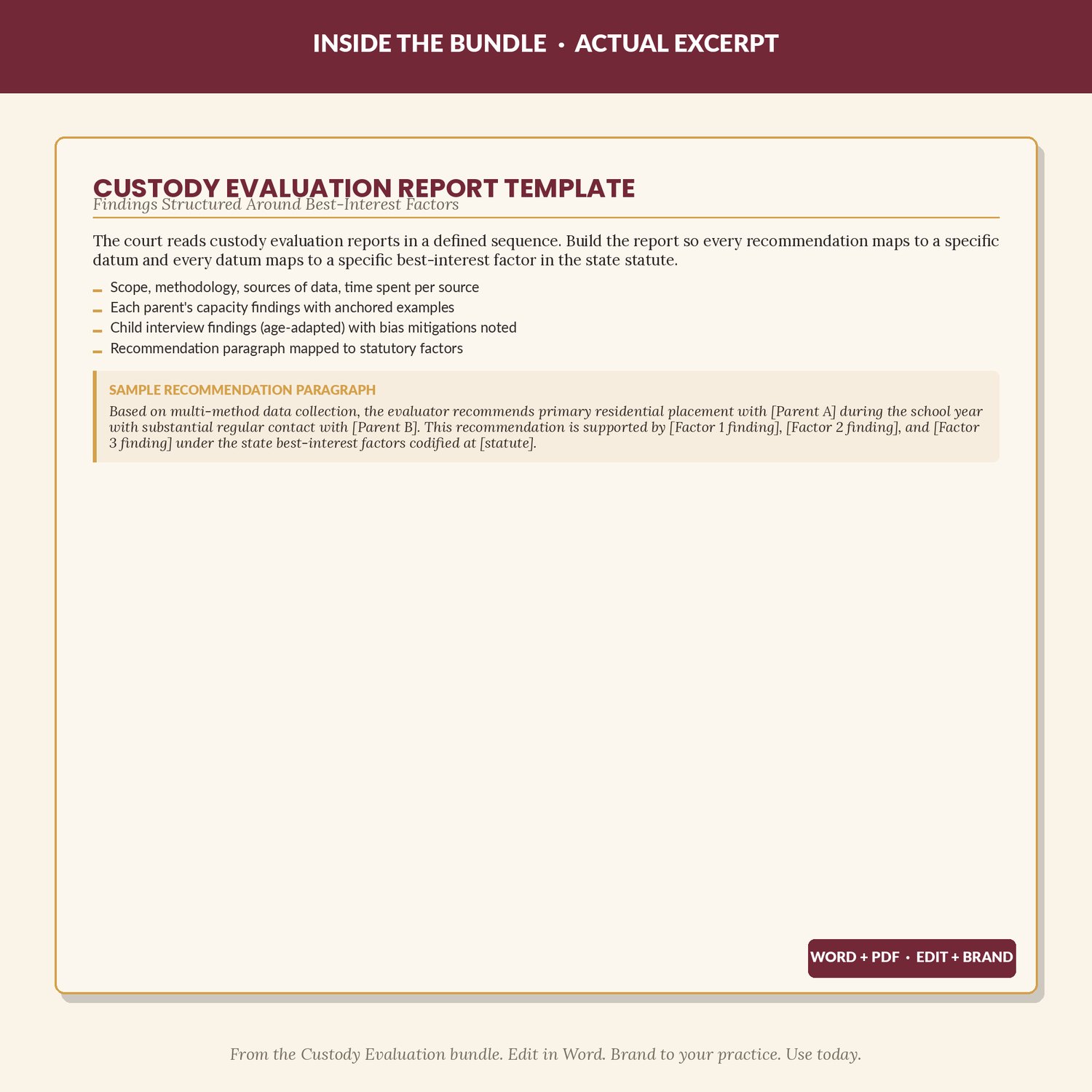
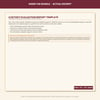
- A 13 section report template running introduction, procedures, background, interview findings, observation findings, testing results, collateral findings, best-interest factor analysis, allegations, diagnostic findings, recommendations, limitations, and signature. With writing standards on tone, evidence requirements, balanced treatment of each parent, specificity, direct quotation rules, and realistic length, and a sample primary residence recommendation showing the data trail.
- Pre-testimony preparation checklist and cross-examination defense for the six most common challenges: methodology, bias, data selection, recommendation, diagnostic, and bias toward the other side. A sample testimony excerpt answering a methodology challenge by returning to data. During-testimony rules. Plus a what-to-do-when callout at every chapter: a party refuses to participate, a parent makes allegations, a child makes an allegation, the observation shows concerning behavior, testing reveals unexpected findings, a collateral declines, there is no clear preference, or you find an error in the report after filing.
- Sources cited per chapter, including AFCC Model Standards by section, the APA Guidelines by section, the Specialty Guidelines, Stahl and Drozd (2015), Galatzer-Levy and Kraus, Ackerman, Heilbrun, Otto and Edens, Bagby et al., Bathurst et al., Marvin's Circle of Security, and Ainsworth.
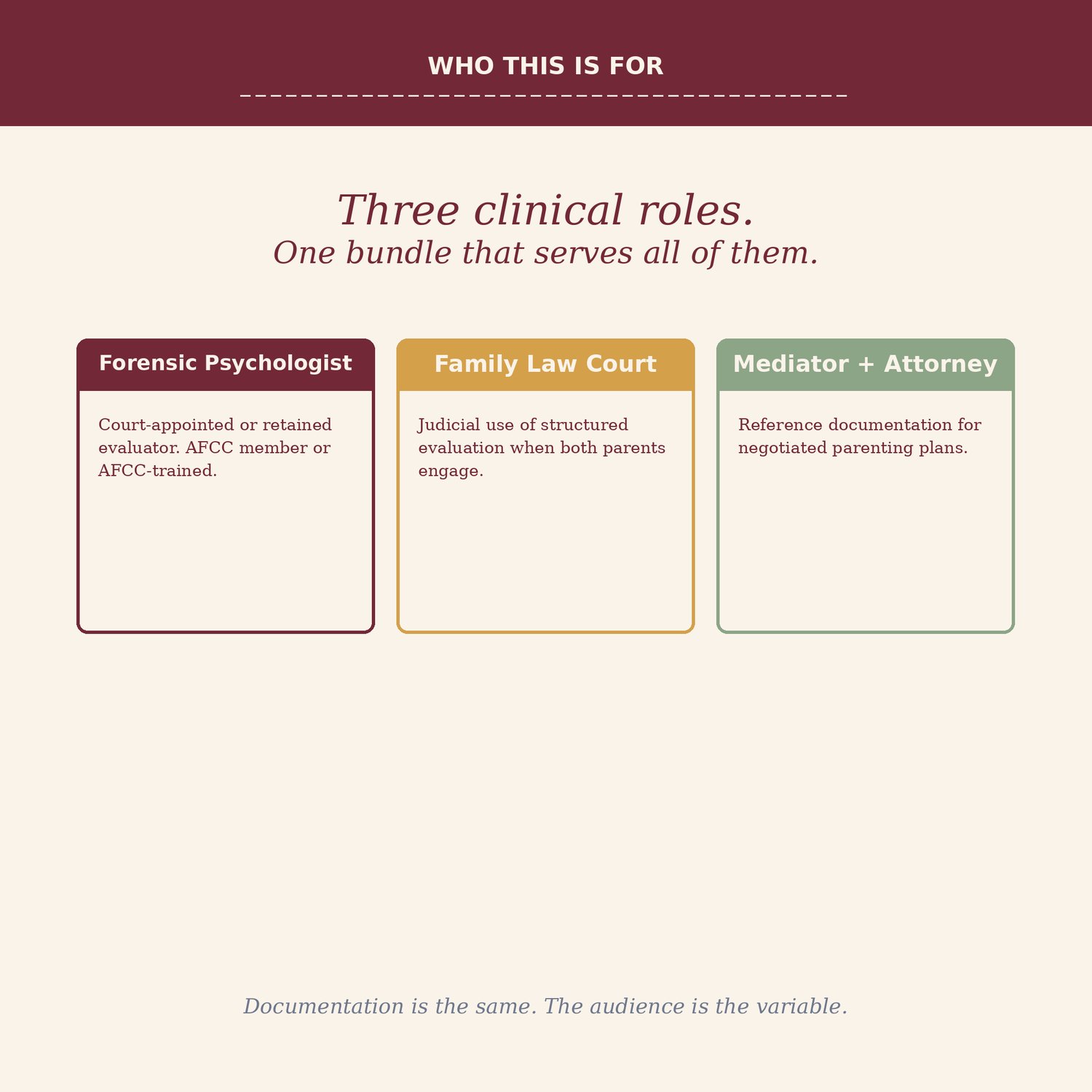
Who it is for
- Psychologists (PhD, PsyD) conducting court-appointed or retained custody evaluations. Forensic psychologists with an active custody and parenting practice. Master's-level parenting coordinators and co-parent counselors who need the evaluator-side reference for context. Forensic fellows and postdoctoral trainees building this practice. Evaluators new to a jurisdiction's best-interest statute. Practitioners taking a first contested or high-conflict case. Practice owners building a forensic service line. AFCC members refreshing alignment with the Model Standards.
- This kit assumes the evaluator is appropriately licensed and trained for forensic work. If you are not yet trained in custody evaluation, complete AFCC or equivalent training first.
Why it exists
You took the appointment. Both parents have attorneys, both want primary residence, both have allegations, and the children are 8 and 11. Twelve weeks, 30 to 60 hours, a 35 page report, and then a deposition where opposing counsel asks why you spent six hours with one parent and eight with the other. Your recommendation is only as defensible as the data trail behind it.
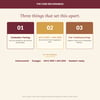
43 pages. The full workflow with phase timing, age-adapted parent and child interview structures, an observation protocol, testing battery recommendations with custody-context validity guidance, a collateral protocol, a report template built around best-interest factors, and pre-testimony preparation with cross-examination defense.
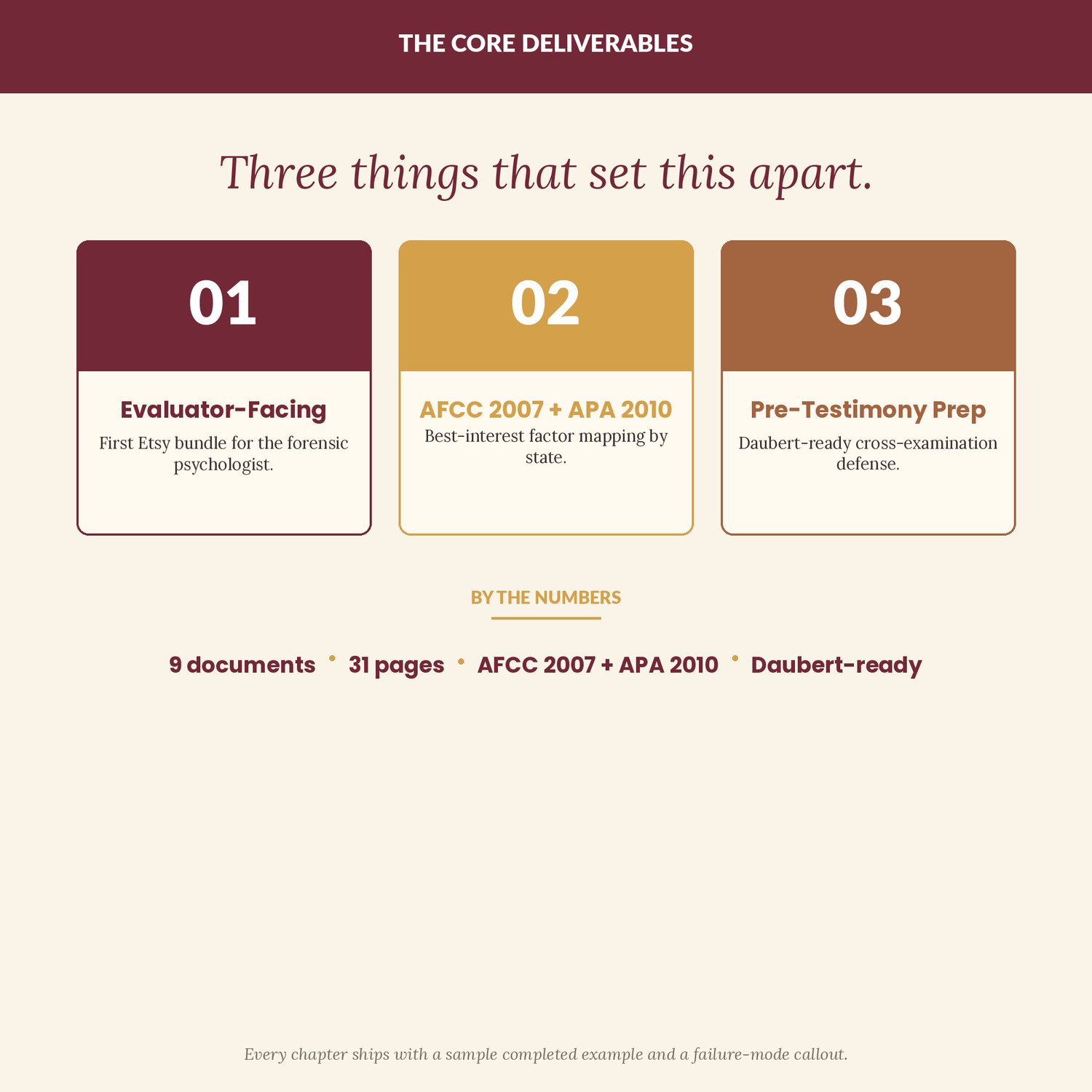
Aligned with the AFCC Model Standards of Practice for Child Custody Evaluation (2007), APA Guidelines for Child Custody Evaluations in Family Law Proceedings (2010), APA Specialty Guidelines for Forensic Psychology (2013), and state best-interest statutes.
Why it is built this way
Most custody references are either standards text or a 600 page textbook. This is an operations manual: workflow, interview structures, observation domains, testing battery, collateral protocol, report template, and testimony defense in one document.
A compressed or skipped phase produces the cross-examination question you cannot answer, which is why the hour budgets exist. The most common reversible error in the field is a leading question asked of a young child about a parent, which then sits in the chart forever, which is why the child protocols are split by developmental band.
Both parents have strong incentive to present favorably, so L, K, and S elevations are normal in this setting and reading them as pathology is a known failure. And most state statutes require each best-interest factor addressed explicitly, so omission invites a motion to exclude. The report template walks them.
The report is only as good as the testimony defending it. And the error callout matters because every evaluator eventually finds one, and notify, correct, and acknowledge is the difference between credibility kept and credibility lost.
Format
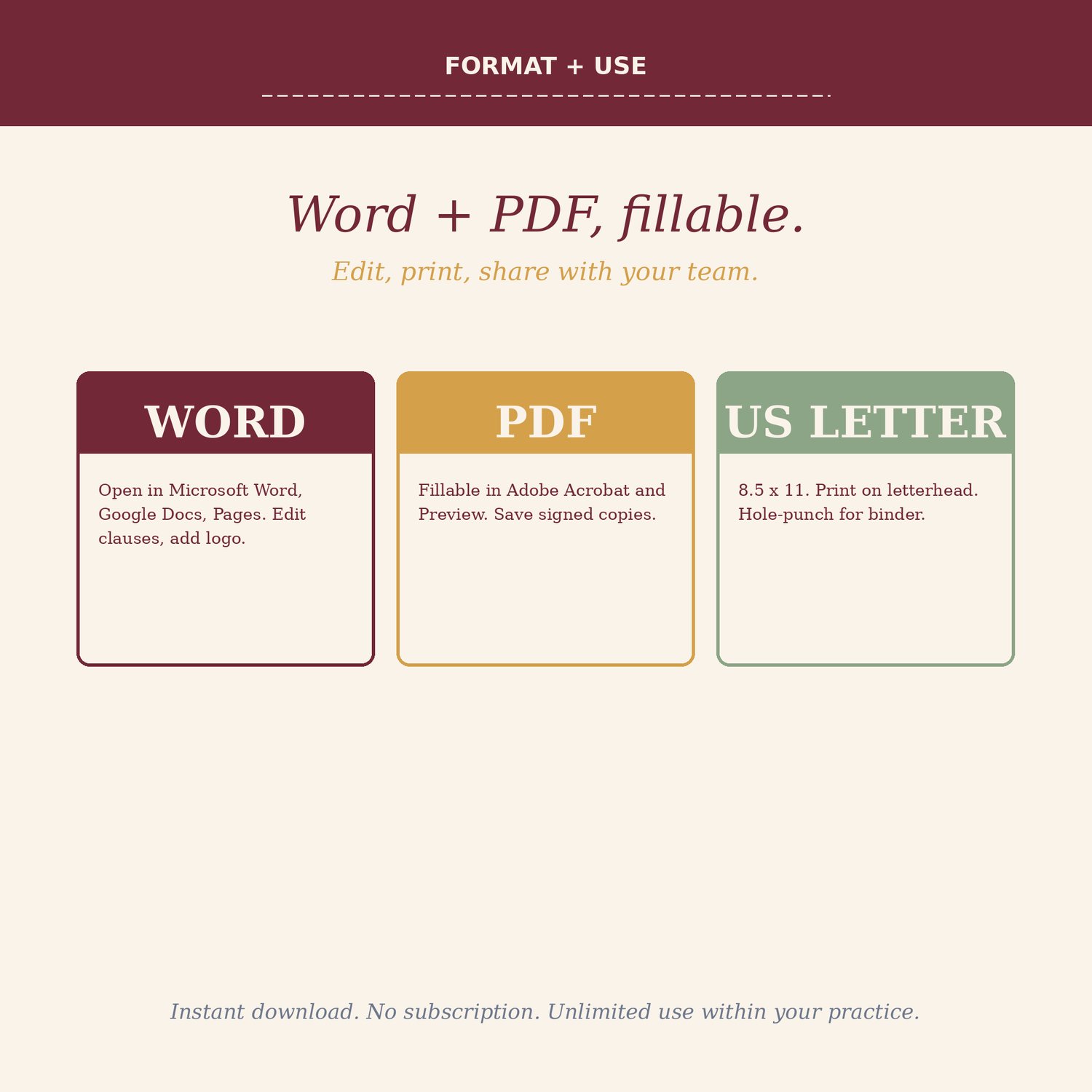
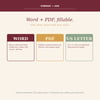
Editable, fillable PDF, 43 pages. Editable Microsoft Word (.docx), same length. Interview structures, observation templates, collateral protocol and report template copy straight into your case file workflow. US Letter (8.5 x 11) and A4 (8.3 x 11.7) both included. Works on Mac, Windows, iPad, GoodNotes, and Notability. Lifetime access, unlimited prints.
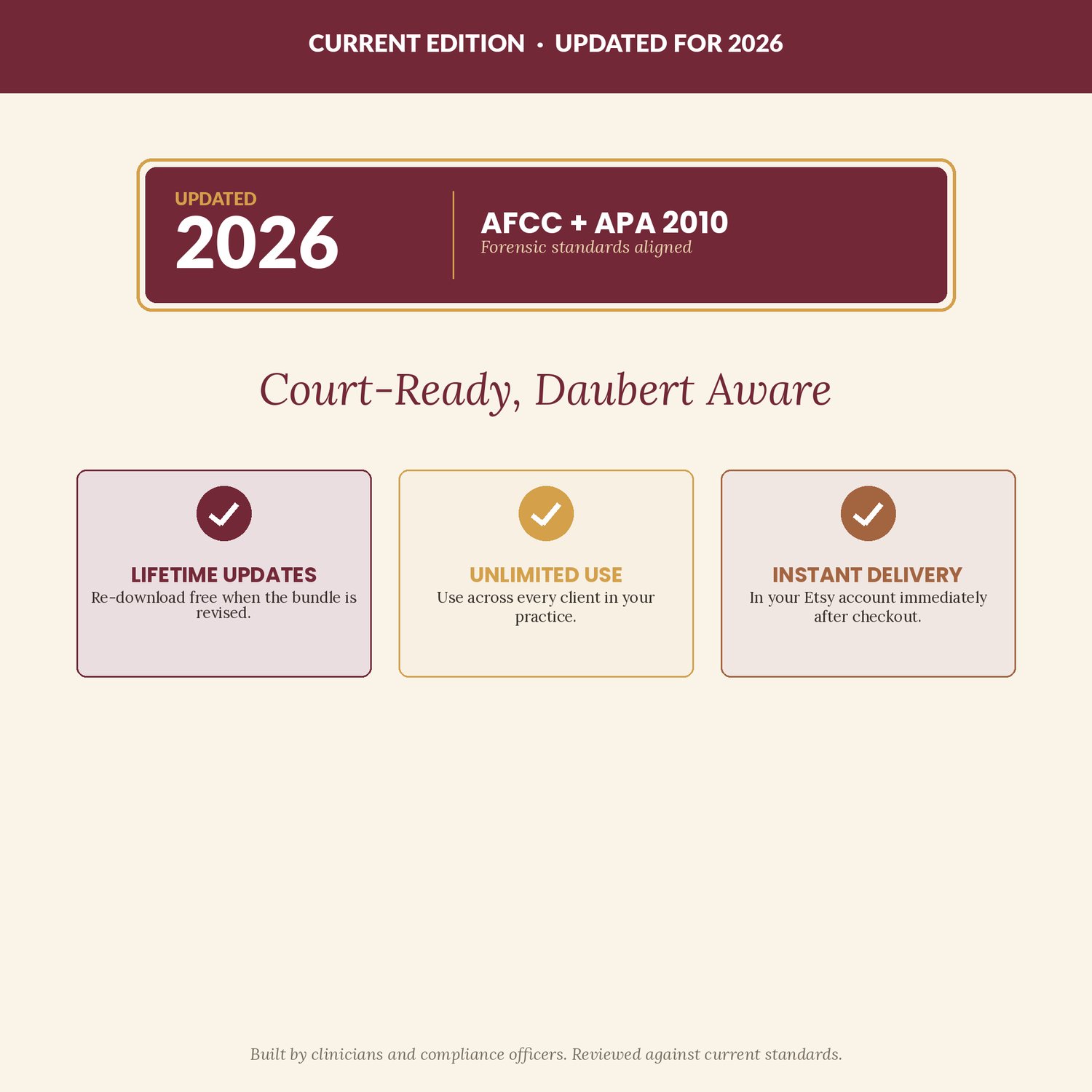
Updated 2026
Operational standards reflect the AFCC Model Standards (2007, current). Professional guidance reflects the APA Guidelines for Child Custody Evaluations (American Psychologist, 2010) and the APA Specialty Guidelines for Forensic Psychology (2013). Best-interest language reflects current state statutory frameworks. Testing recommendations reflect current MMPI-3 administration and the published custody-context interpretation literature. Admissibility references reflect current Daubert and Frye standards. Stahl and Drozd (2015) and Ackerman (2006) remain the operational references.
How to use it
When the appointment arrives, scope the case in writing from Chapter 2 before any clinical contact. The engagement letter language there is the scope-creep protection. Work Chapters 3 through 7 in sequence for data collection, with the phase timing keeping you inside the twelve week budget. Chapter 8, the best-interest factor analysis, is the heart of the report. Chapter 9 is the print-and-tab section to read 48 hours before any deposition or hearing. The what-to-do-when callouts handle the edge cases as they come up.
This is a clinical operations reference for licensed forensic evaluators. It is not training and not legal advice. The evaluator remains responsible for all evaluation decisions within their scope of practice and licensure.
Instant digital download. No physical product ships. Message us if anything does not work.