
DAP Notes Template for Therapists (2026)
A DAP notes template for therapists with what auditors look for, CPT 2026 billing codes, an ICD-10 quick reference, a 200+ entry phrase library and six full sample notes.
What is in the toolkit
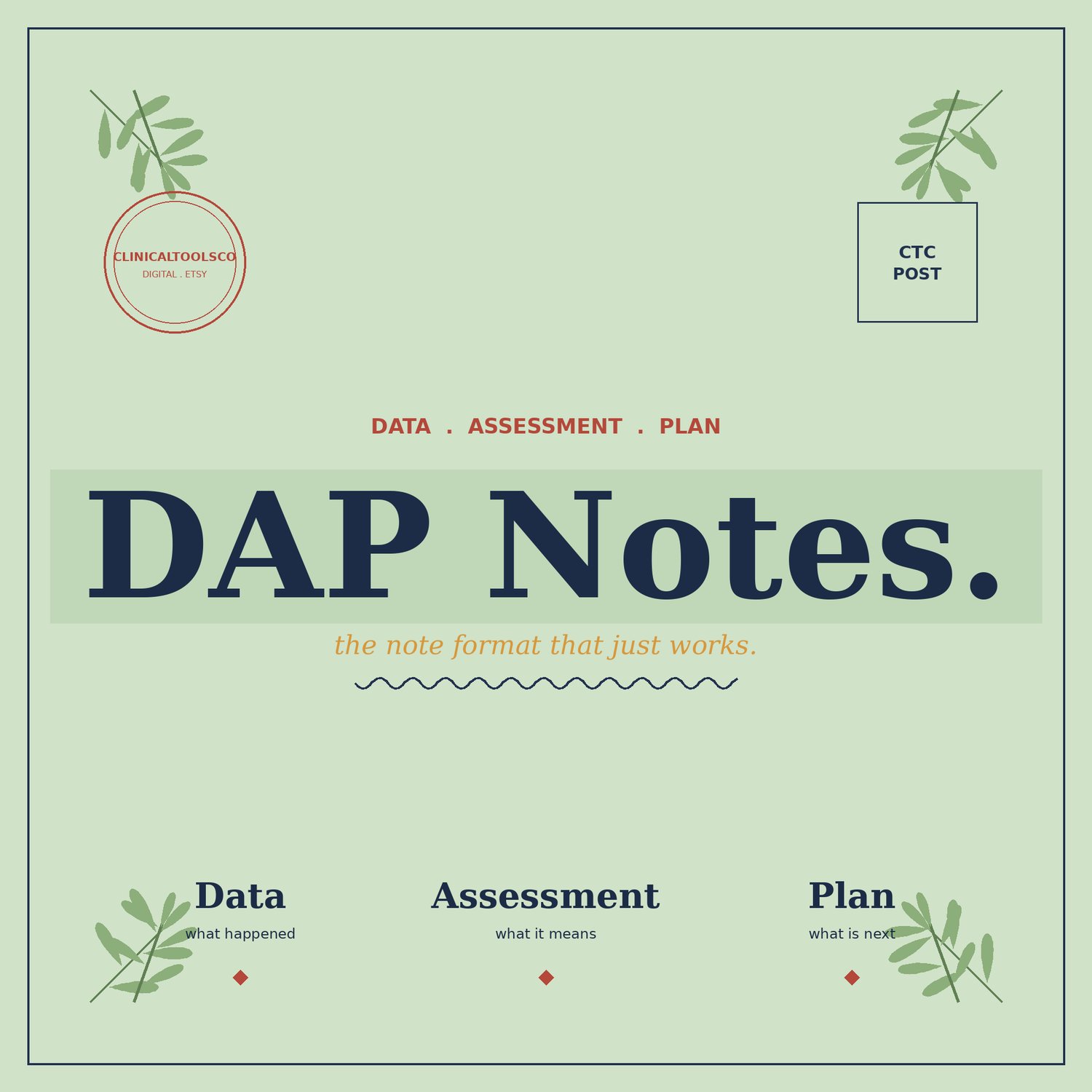
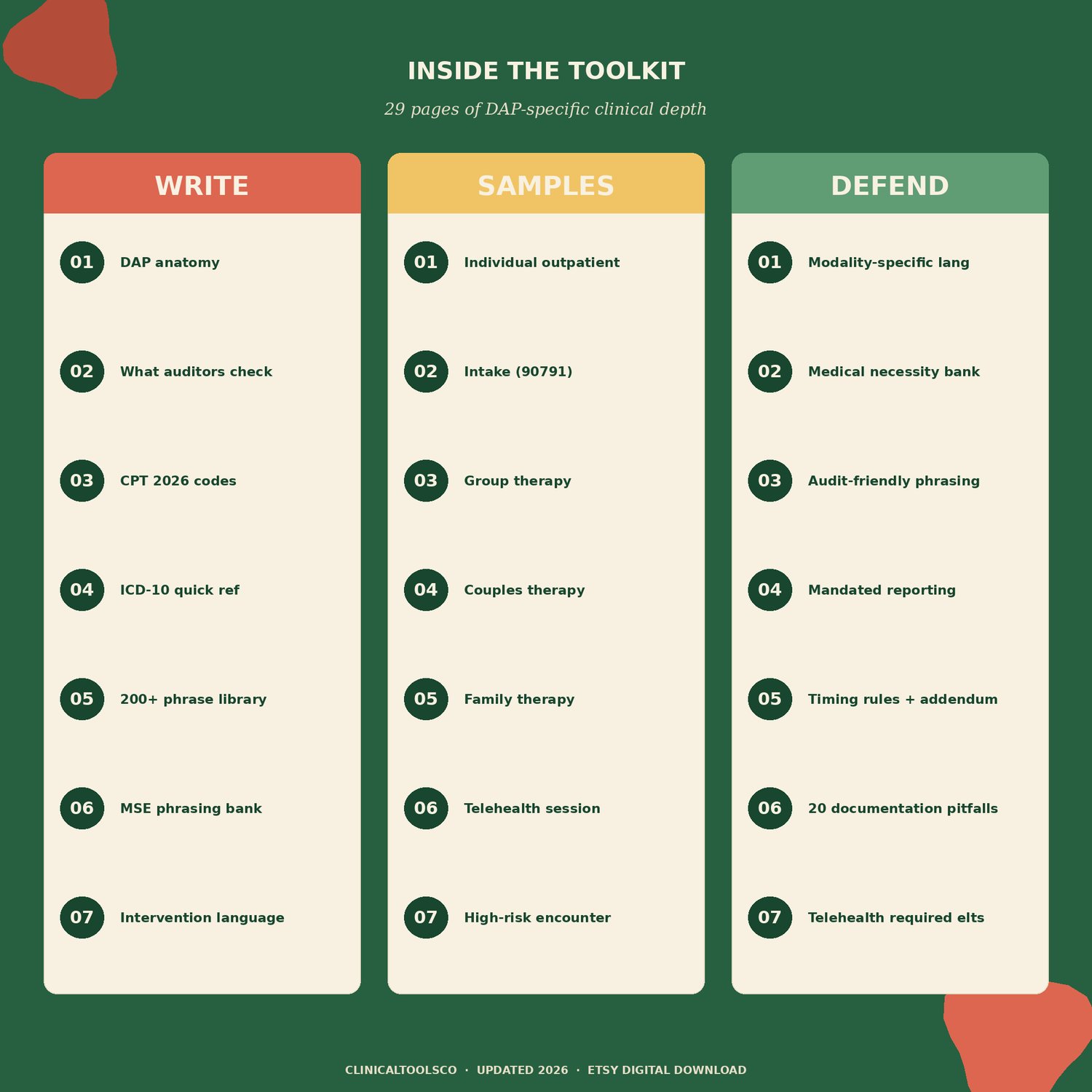
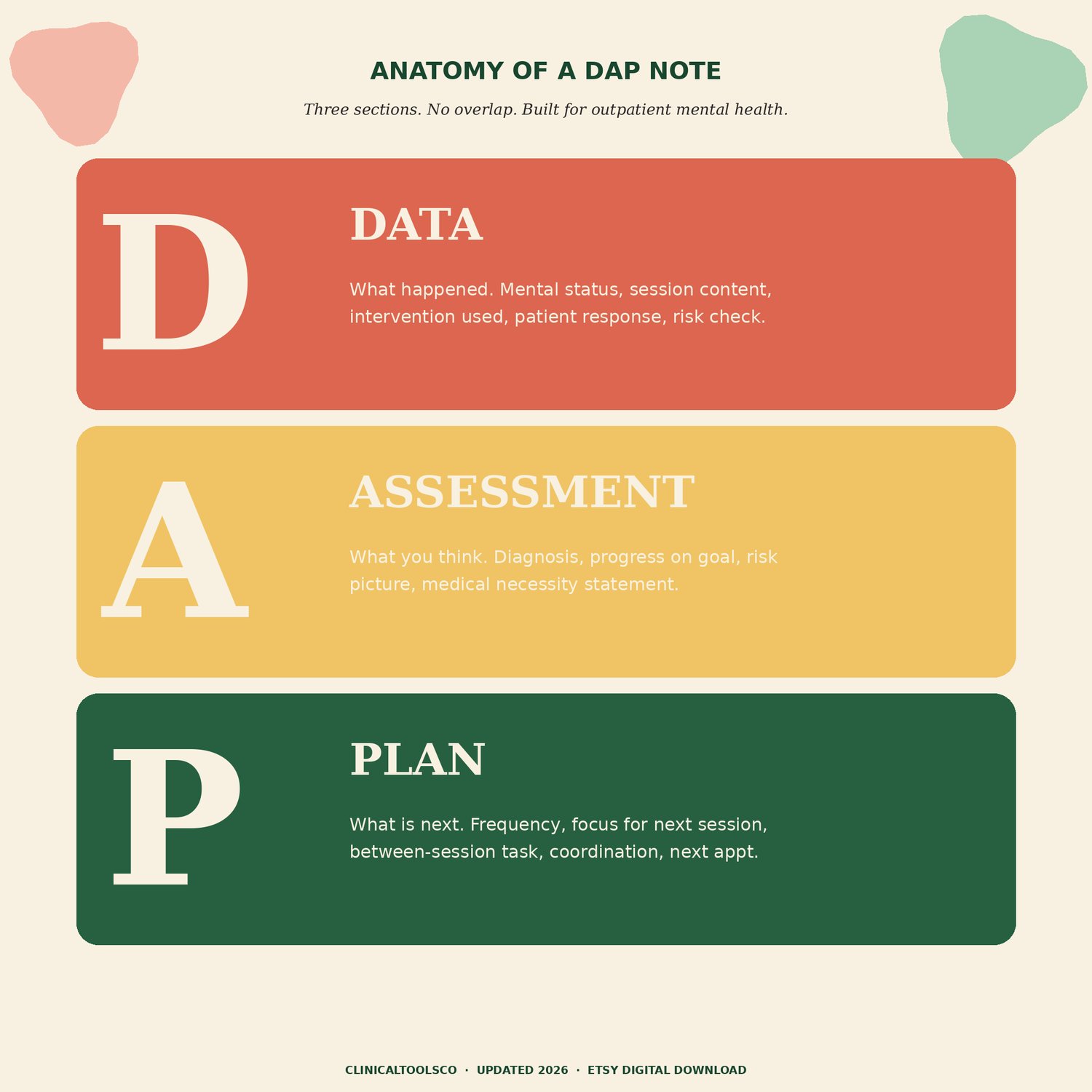
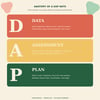
- Why DAP, and what makes a strong DAP note: the anatomy of data, assessment and plan
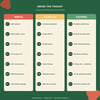
- What insurance reviewers and auditors look for, so you know the criteria your note is graded against
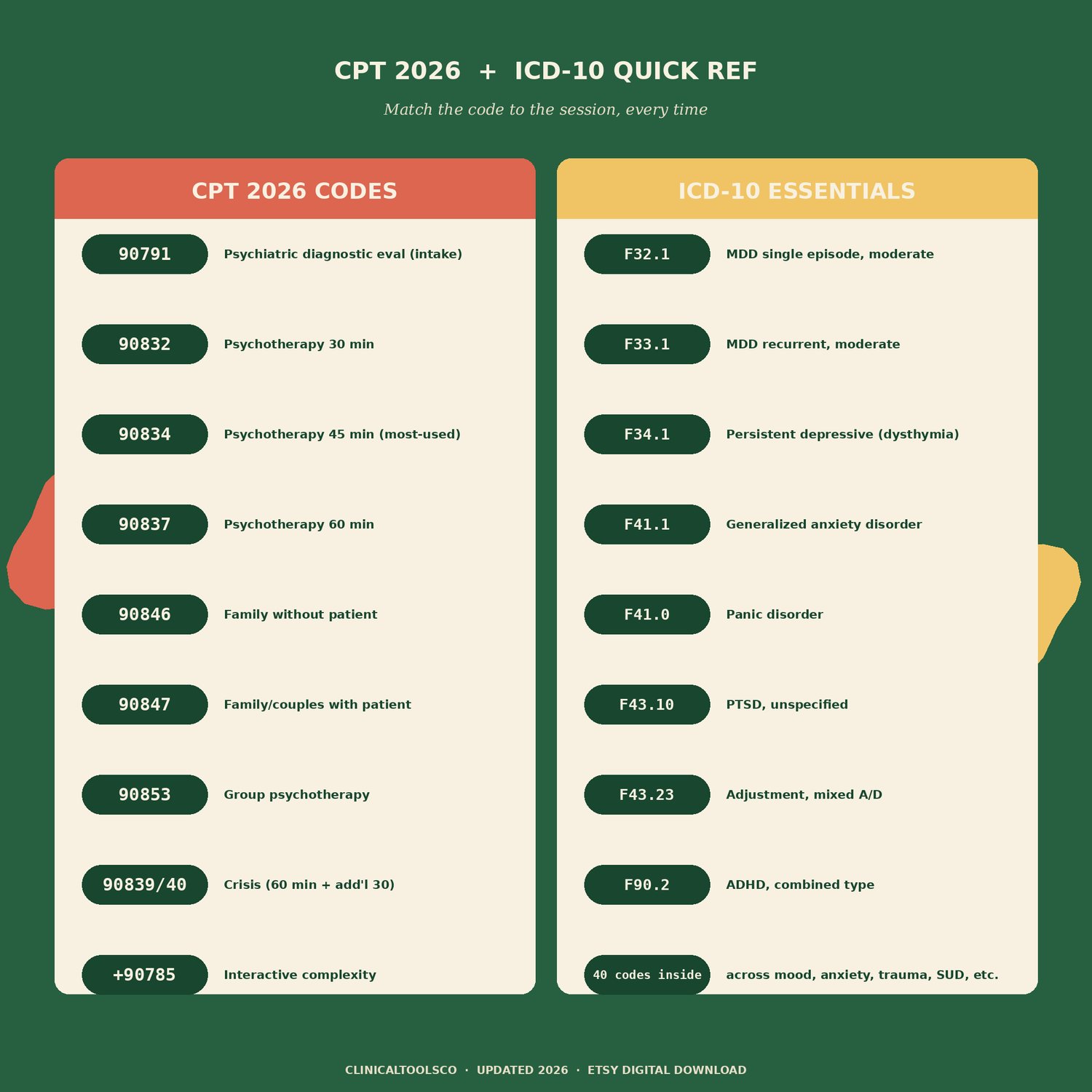
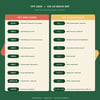
- CPT 2026 psychotherapy billing codes by session type with the documentation elements each one requires, including telehealth modifiers
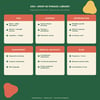
- ICD-10 quick reference covering the 40 most-used mental health diagnosis codes
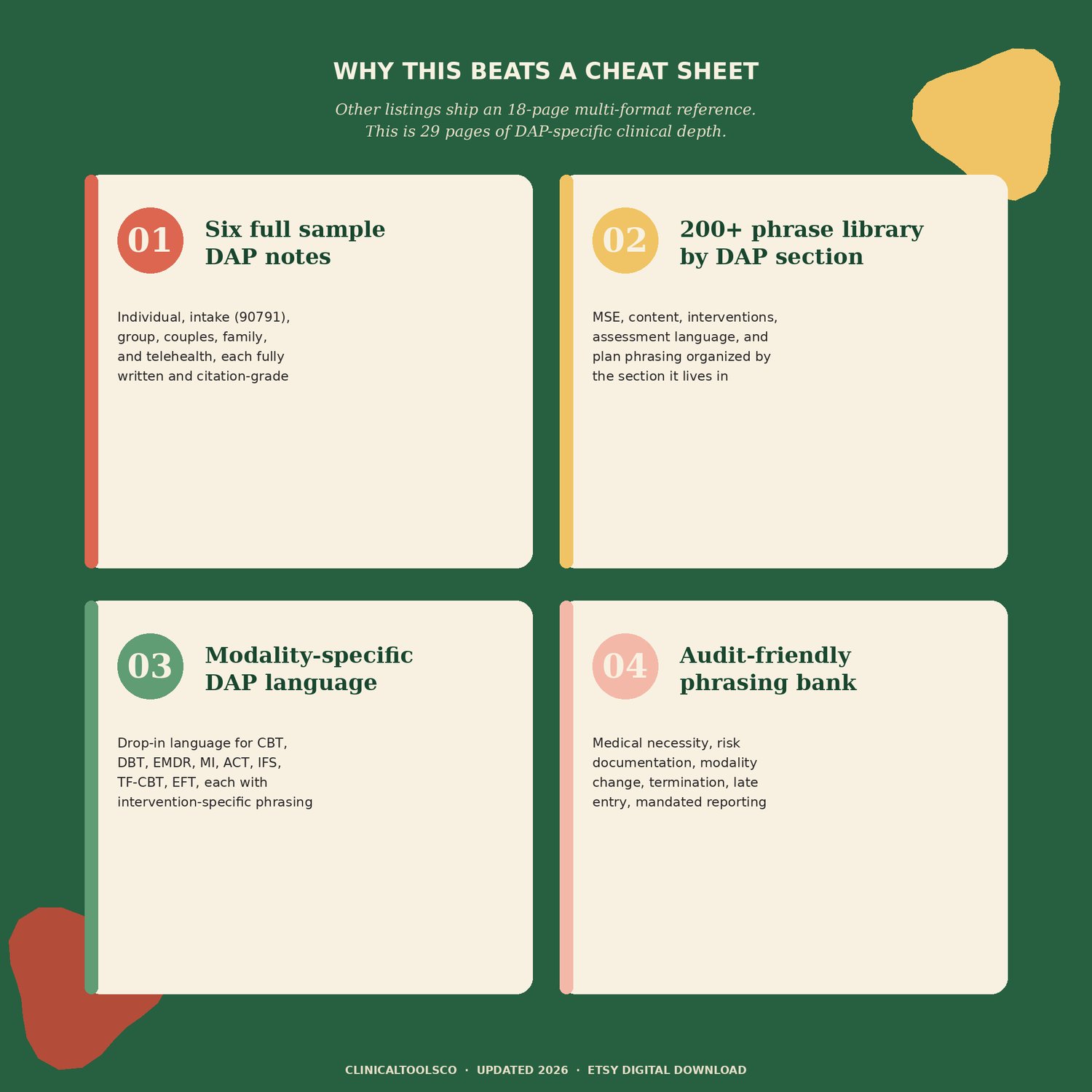
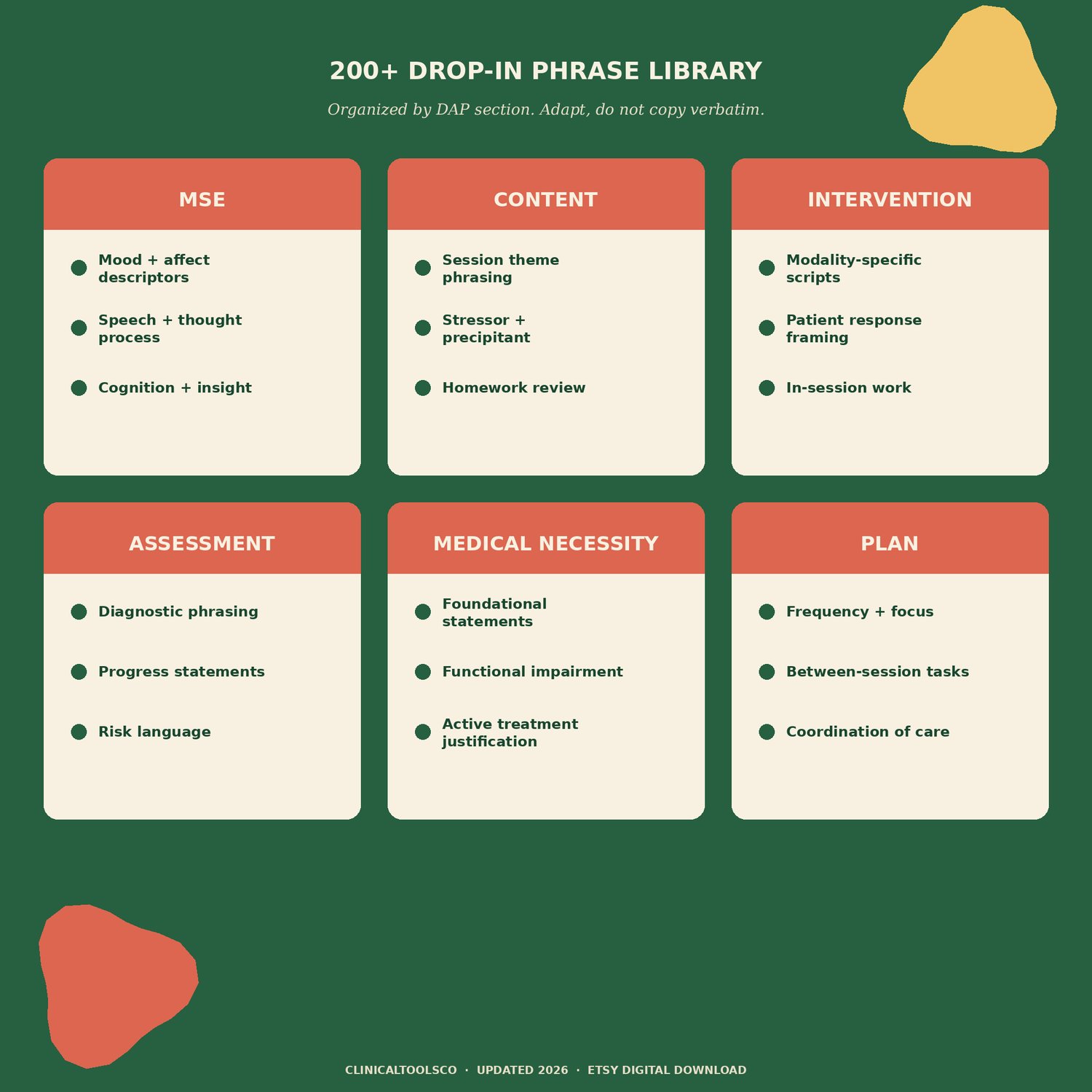
- A phrase library of more than 200 entries organized by DAP section so you can pull language while you write
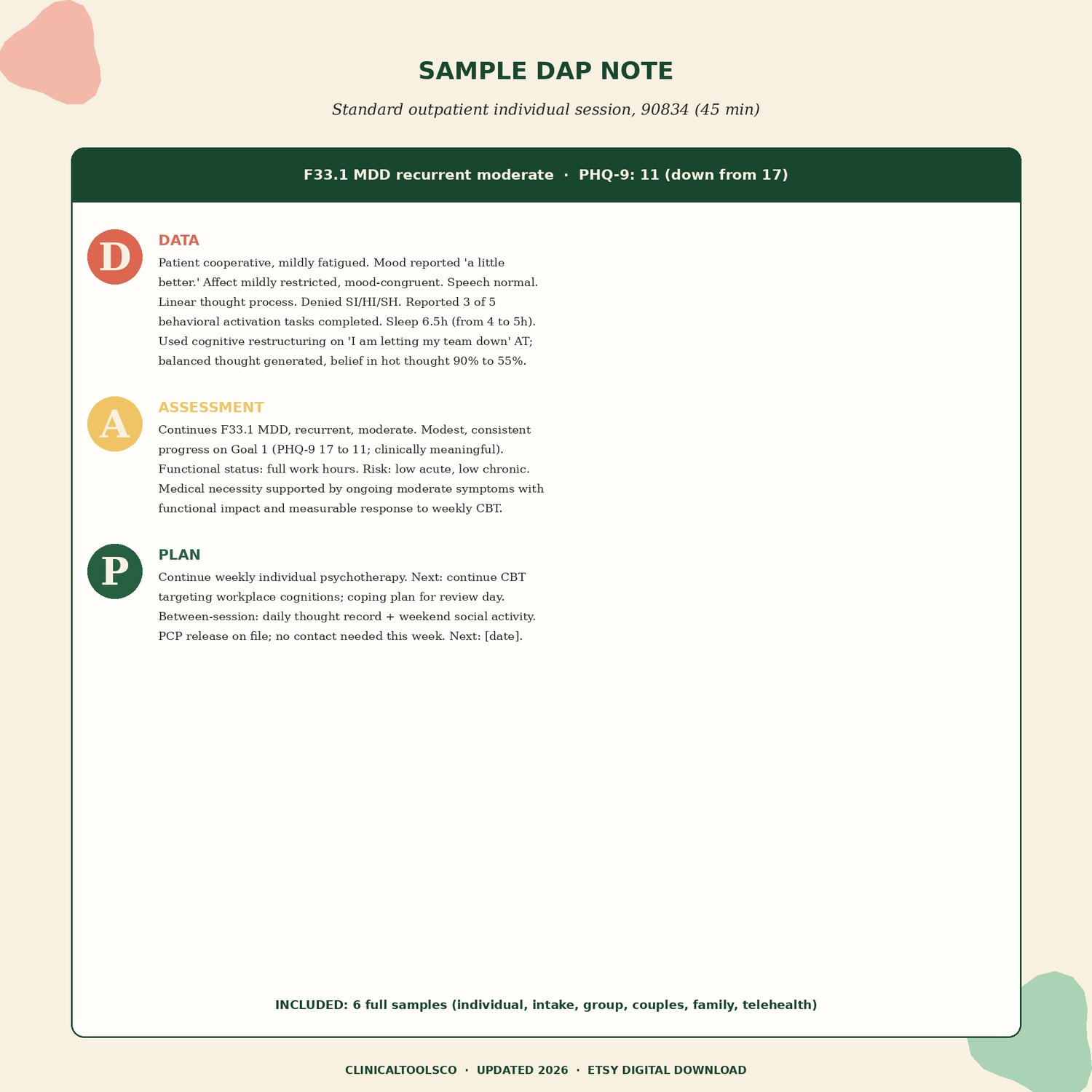
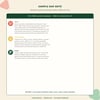
- Six full sample DAP notes: standard outpatient individual, initial intake and psychiatric diagnostic evaluation, group therapy, couples therapy, family therapy, and telehealth
- Modality-specific DAP language for CBT, DBT, EMDR, motivational interviewing, ACT, IFS, TF-CBT and EFT
- Medical necessity language bank: phrases that establish and defend medical necessity at audit
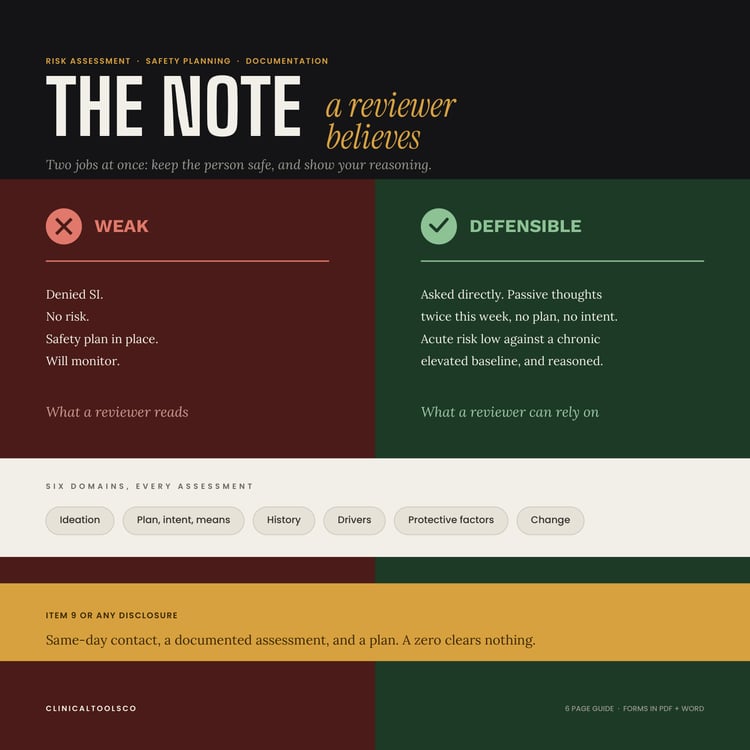
- Audit-friendly phrasing for risk assessment and clinical decision-making
- DAP for high-risk encounters: suicidal ideation, mandated reporting and safety planning documentation
- DAP versus SOAP versus BIRP, and when to use which format
- Documentation timing rules: timely entry standards, late entry conventions and the addendum procedure
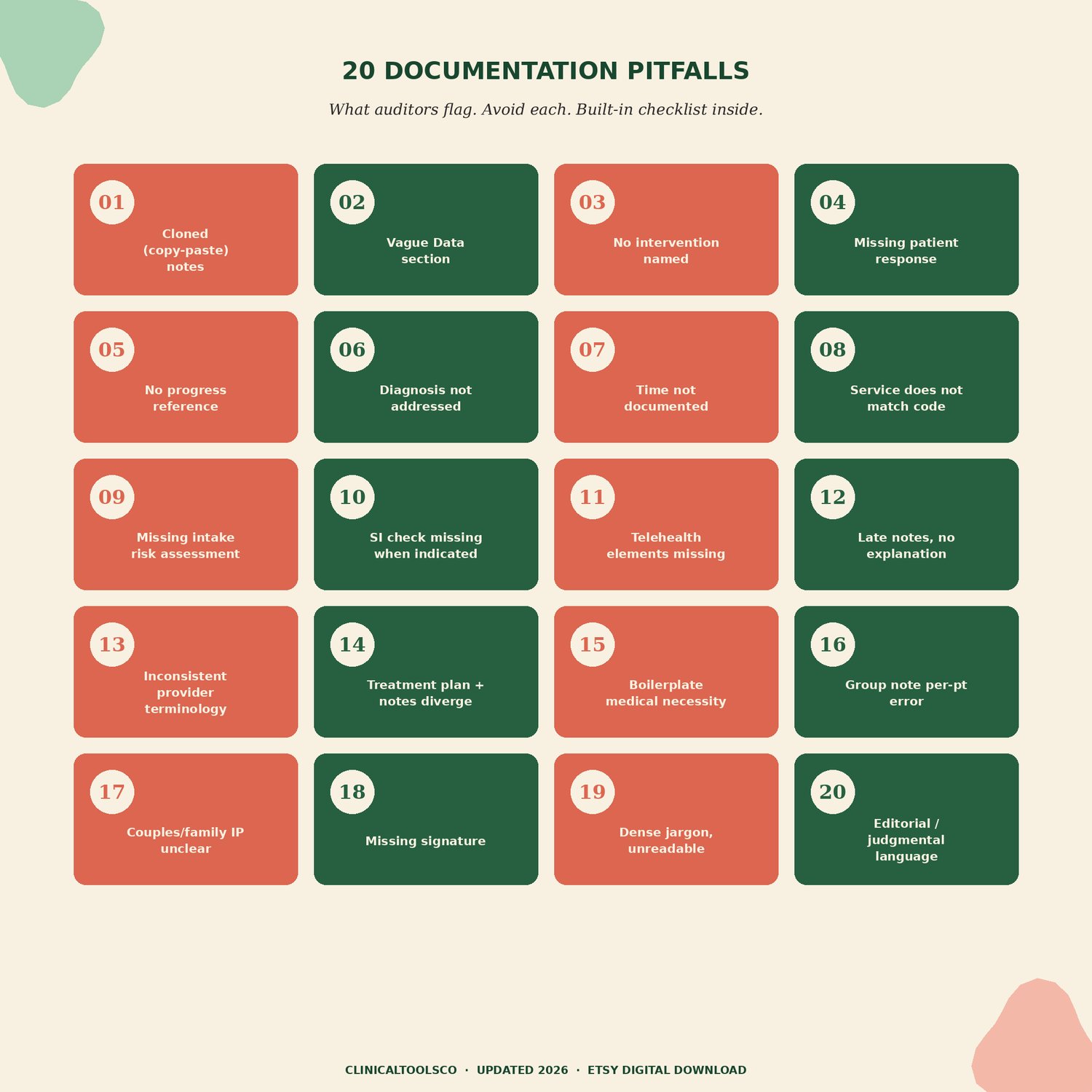
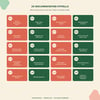
- Twenty documentation pitfalls with the audit finding each one triggers
- Telehealth-specific documentation with the required elements for video and phone sessions
- A structured writing process for getting a note done in under 10 minutes, plus a one-page printable DAP card for the desk
Who it is for
- Licensed therapists, counselors, social workers and psychologists writing DAP notes in private practice
- Agency clinicians at community mental health centers, integrated care settings and outpatient programs that use the DAP format
- Pre-licensed associates and postdoctoral fellows building documentation habits
- Group practice owners standardizing documentation across clinicians
- Practitioners switching from SOAP or BIRP to DAP
- Telehealth practices that need remote-specific documentation language
- Clinical supervisors who want a teaching resource for documentation training
Why it exists
DAP notes are supposed to be the fast format. Three sections. Data, assessment, plan. Done. In practice, most therapists either over-write, with a 600-word data section that reads like a transcript, or under-write, with a 40-word note an auditor will flag for missing medical necessity, or default to vague phrasing that cannot be defended at audit.
I put this toolkit together as the desk reference I want every therapist in my practice using. Six sample notes across session types, a phrase library of more than 200 entries you can search through, modality-specific language for the major treatment approaches, and a medical necessity bank that holds up at insurance audit.
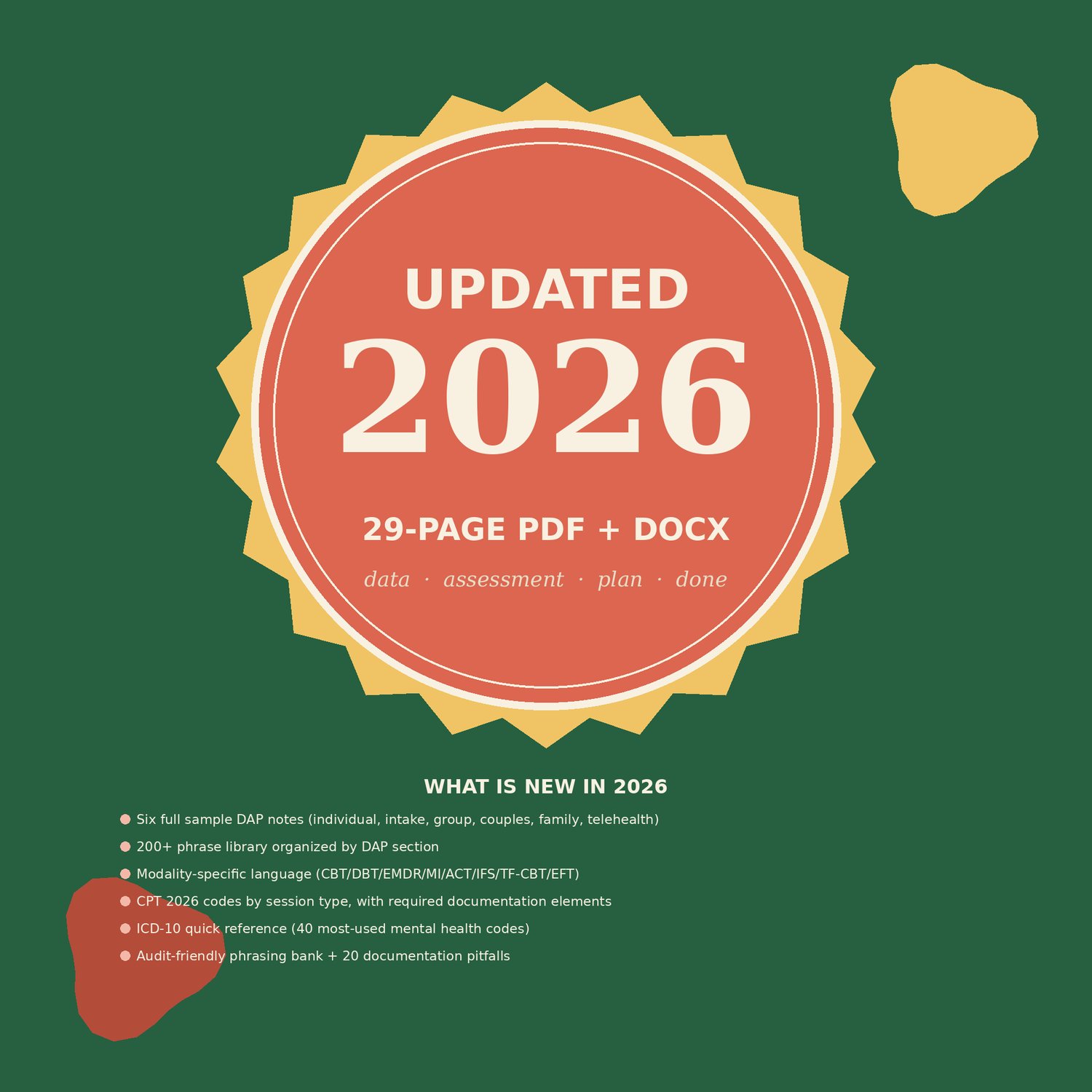
28 pages delivered as PDF and editable Word. Built for therapists, counselors, social workers and psychologists writing DAP notes for outpatient individual, intake, group, couples, family and telehealth sessions in private practice and agency settings.
Why this is different
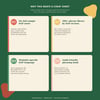
Most DAP templates give you a single blank shell. This toolkit gives you six sample notes across session types, the phrase library you pull from while writing, the modality-specific language for your treatment approach, and the medical necessity bank that defends the note at audit.
The phrase library matters because the hardest part of a fast note is the right phrasing for the assessment section. Generic phrases like patient appeared stable do not establish medical necessity. The library organizes phrases by section so you can pull language as you write.
The six sample notes matter because session types differ. The intake note has different required elements than a group session note. The couples note shows how to handle dyadic interaction documentation. The telehealth note shows the additional location and modality elements.
The modality-specific language section matters because a CBT note, an EMDR note and an IFS note look different. You get the verbs and constructs each modality uses, so your notes match the treatment you are actually providing.
The medical necessity bank matters because medical necessity is the single most common audit finding. The sample phrases ground the note in the active diagnosis, the functional impairment, the targeted symptoms and the treatment response.
Format
- 28-page toolkit as PDF
- Same toolkit as editable Microsoft Word (.docx)
- US Letter and A4 sizes both included
- Works on Mac, Windows, iPad, Google Docs, Pages
- Lifetime access, unlimited prints
Updated 2026
Reflects 2026 documentation requirements for psychotherapy billing codes, current telehealth modifiers and place-of-service codes, ICD-10-CM 2026 diagnosis codes, current commercial payer and Medicare documentation standards, current DSM-5-TR diagnostic vocabulary, and current evidence-based modality language across CBT, DBT, EMDR, MI, ACT, IFS, TF-CBT and EFT. CPT is a trademark of the American Medical Association. Codes appear here for reference. Confirm current descriptors and rules with the AMA or your payer.
A note from the designer
I am a practicing clinician. I wrote this because the DAP templates that exist online are too thin to defend at audit and the phrase libraries that exist are too long to be useful. The phrase library here is curated to the language I actually use. The six sample notes are the level of detail my supervisees should be writing. The medical necessity bank is the section that gets re-read every claims-denial cycle.
A strong DAP note is short, specific and defensible. This toolkit gives you the language, the structure and the audit-readiness to get there in under 10 minutes per note.
Digital download. No physical product ships. Reach out by email if anything does not work or if you have questions.