

Practicum Application Pack (2026)
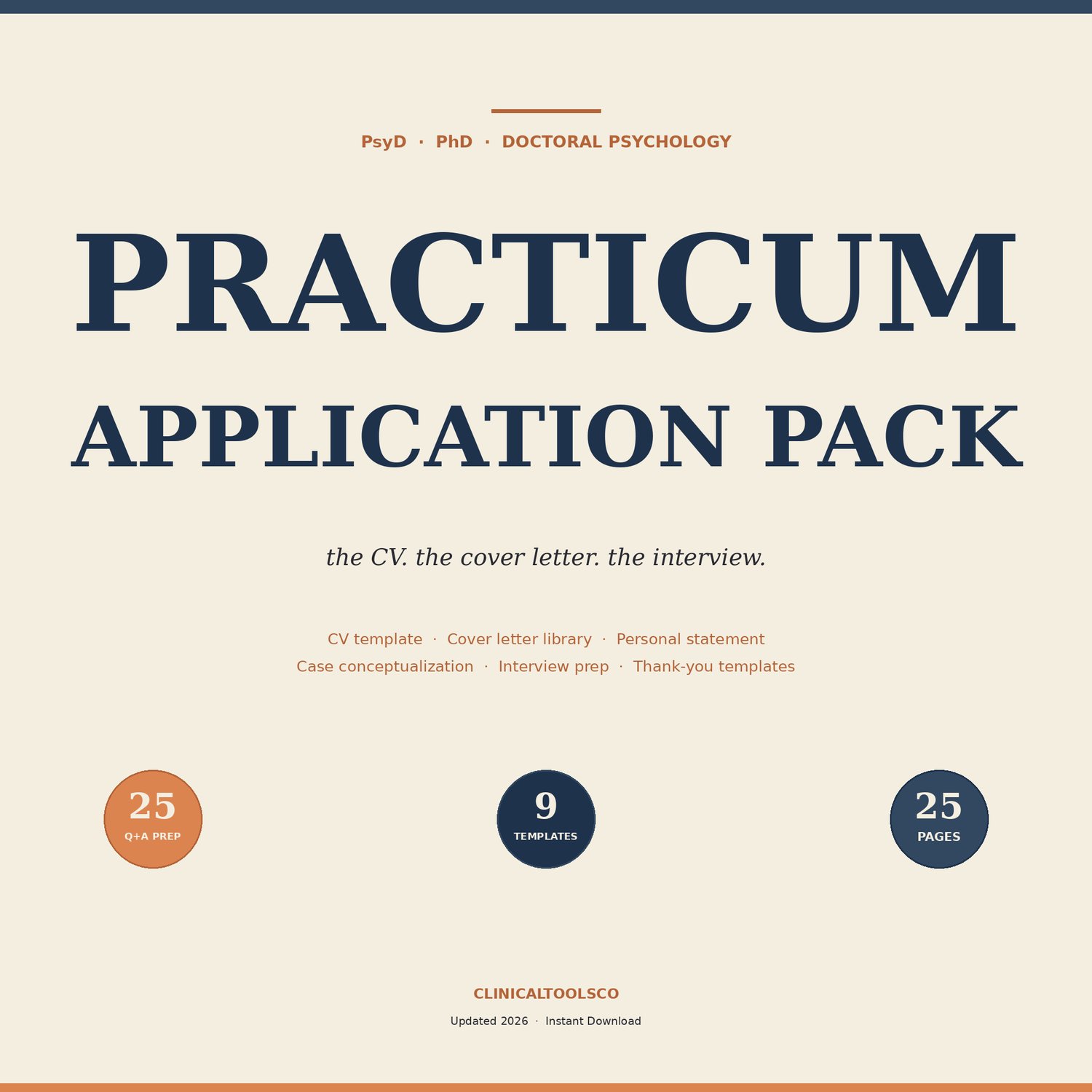
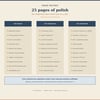
A practicum application pack: an application timeline, CV and cover letter templates, a statement of clinical interests, a site comparison matrix and interview prep across 25 question categories.
What is in the pack
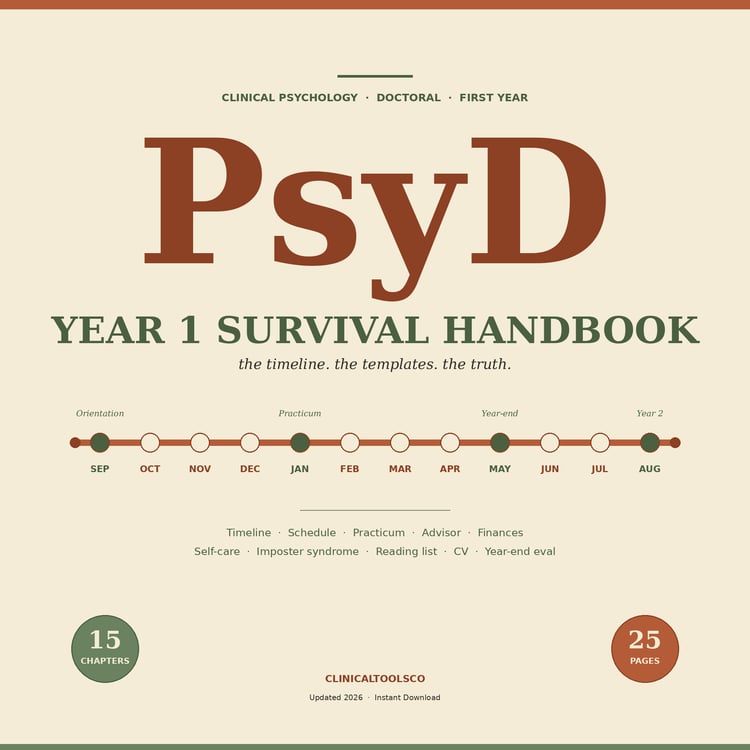
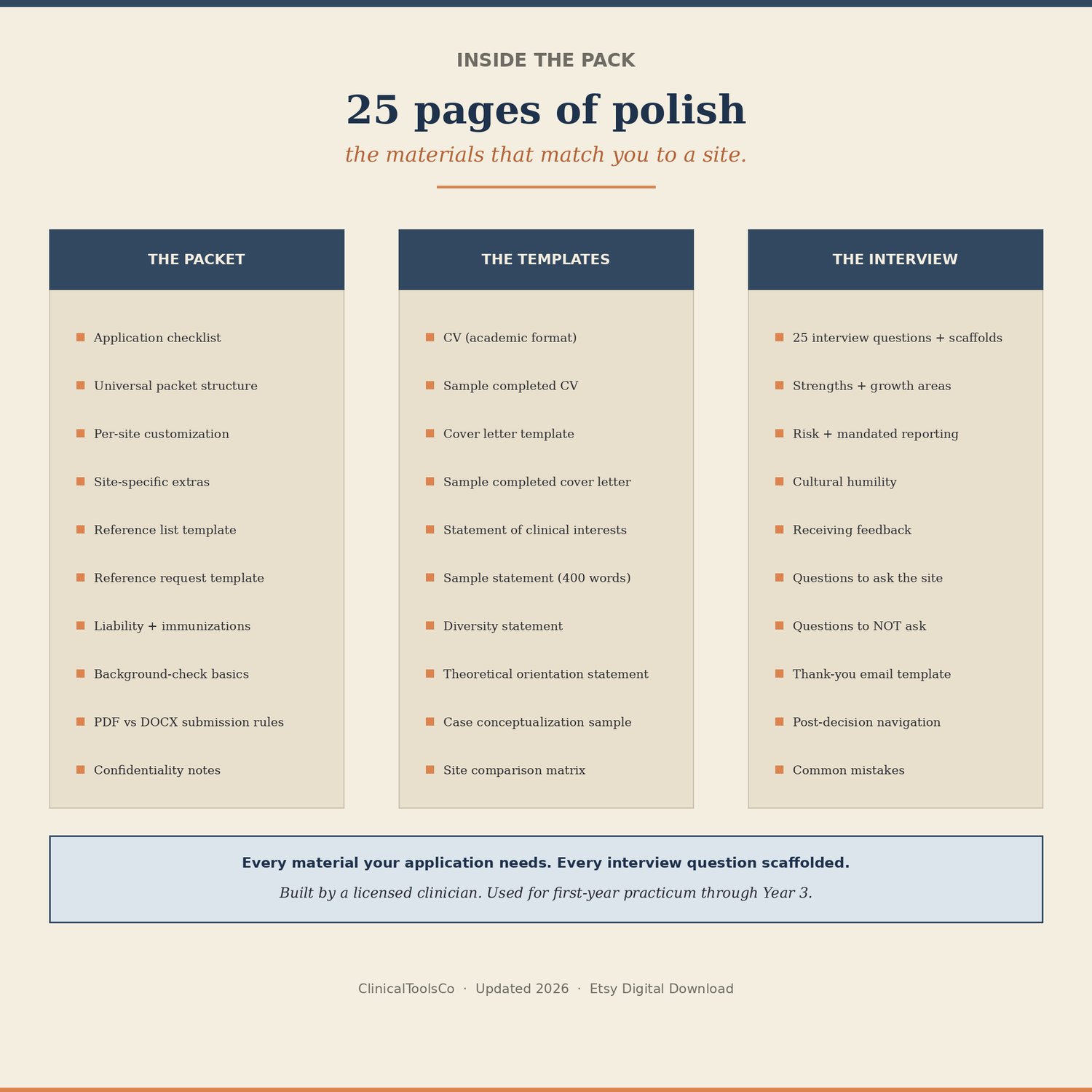
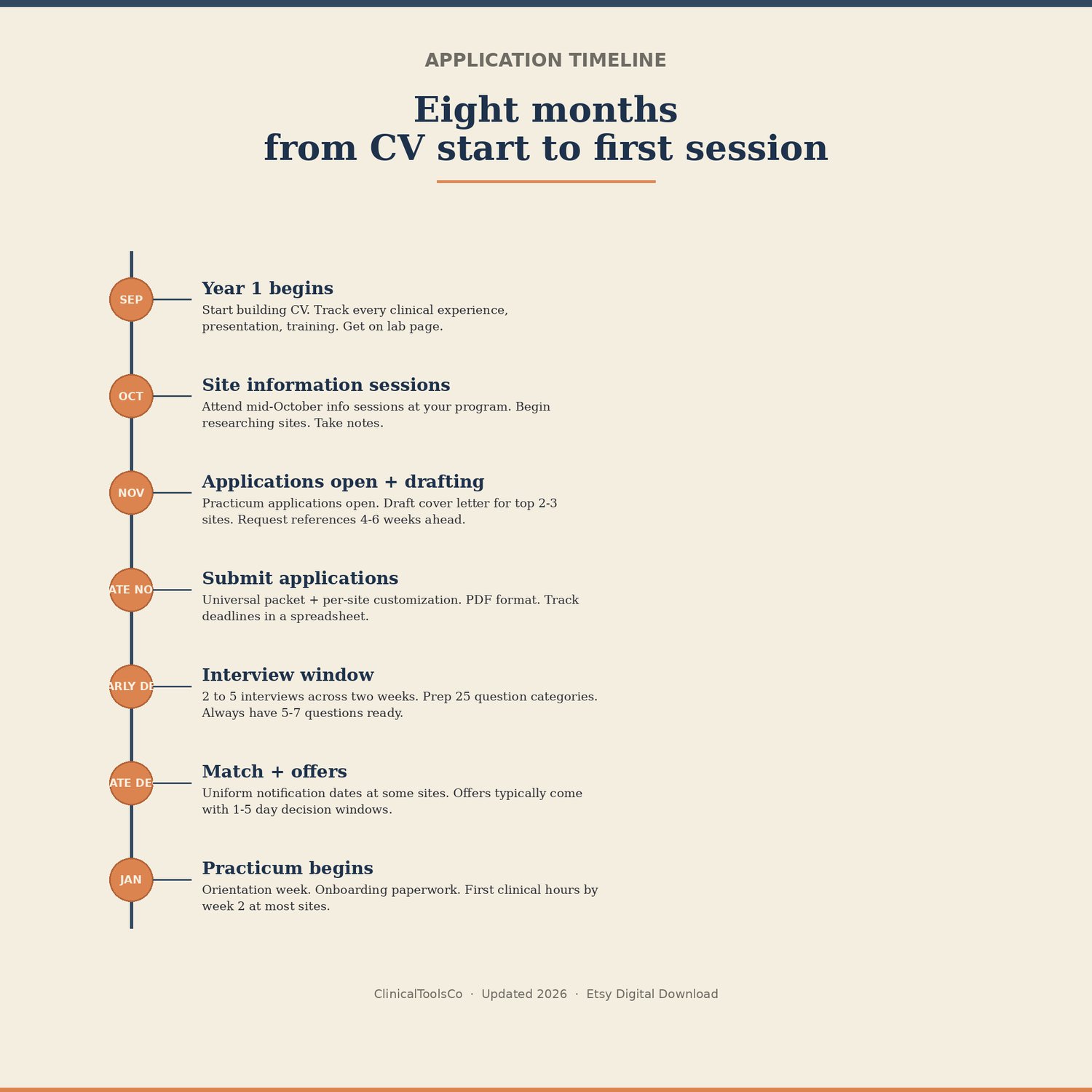
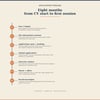
- The application timeline on the rhythm US programs actually run: CV building in September, applications opening in early November, interviews from late November into mid-December, match in late December. Plus the packet checklist covering the universal materials and the site-specific extras.
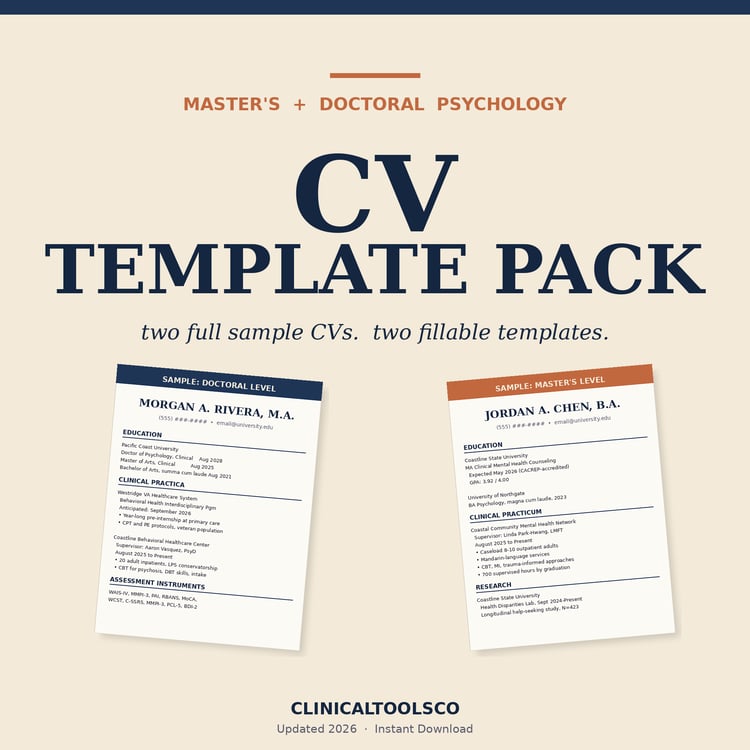
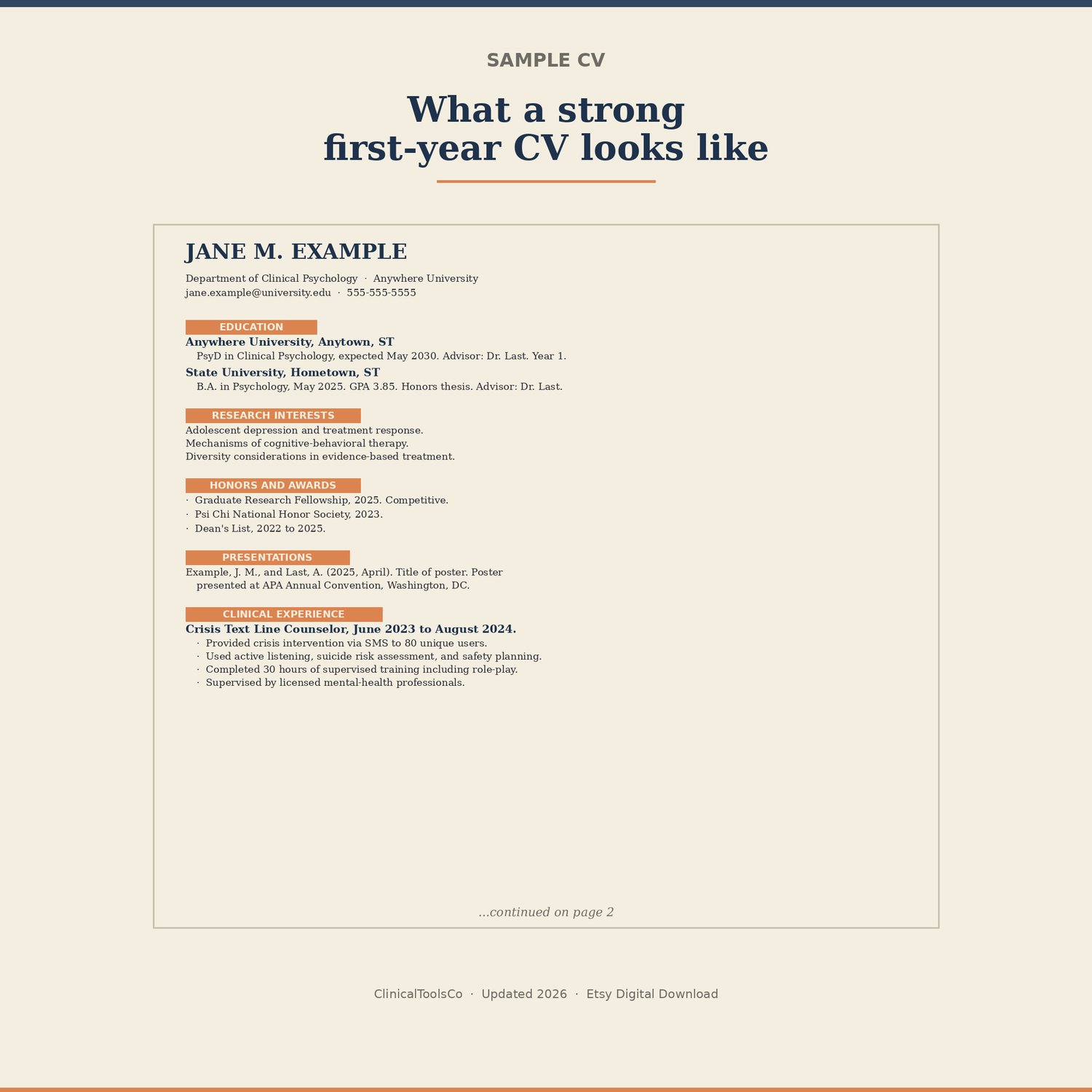
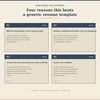
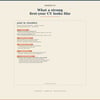
- A CV template with the full academic section order, a verb bank for clinical entries, formatting essentials, and a sample completed first page so you can see what a Year 1 CV actually looks like.
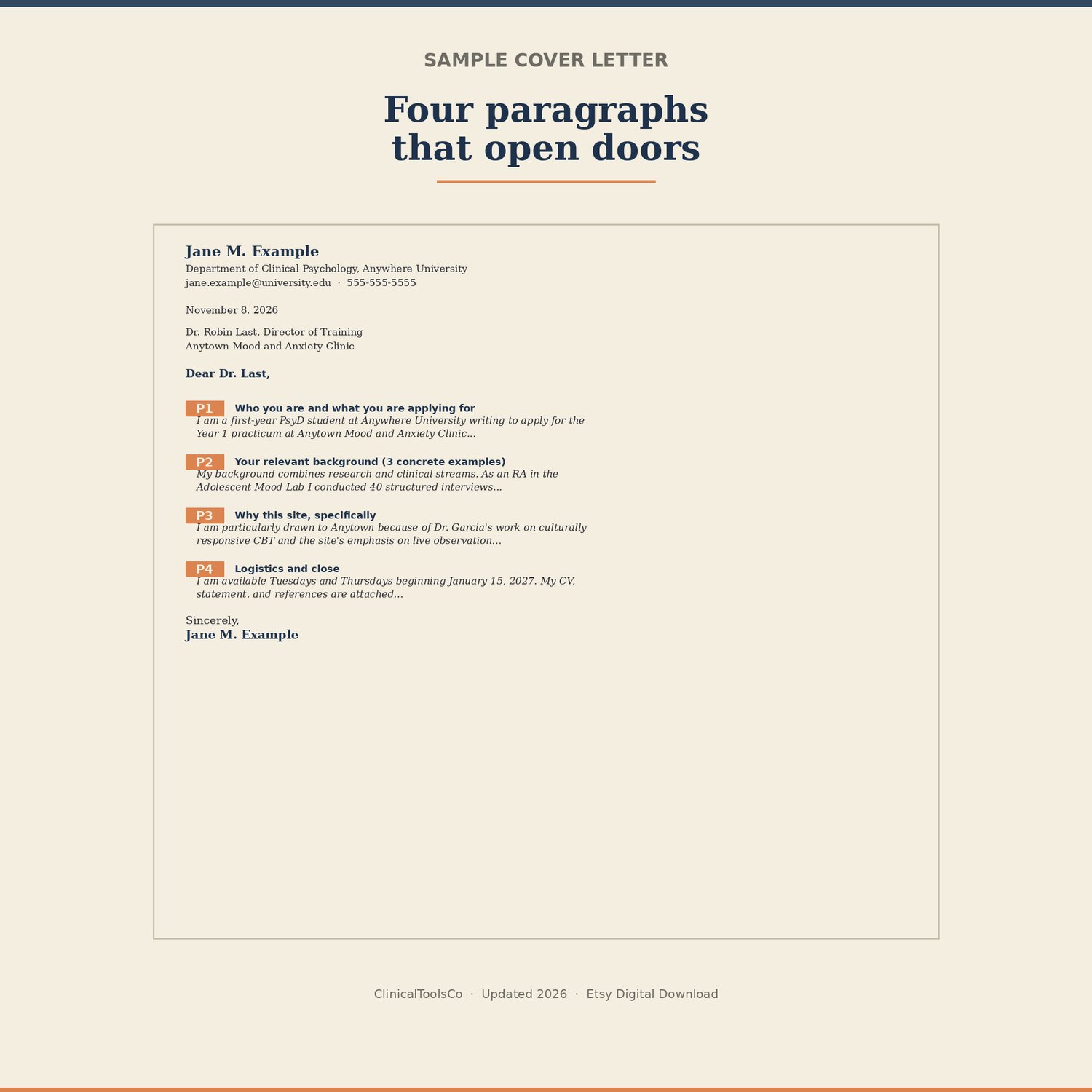
- A cover letter template: one page, four paragraphs, block format, with a sample completed letter demonstrating the tone reviewers respond to, concrete numbers, site-specific reasons, and professional warmth without effusiveness.
- A statement of clinical interests template at 300 to 500 words across three sections, with a 400 word sample. A sample case conceptualization structure with review criteria and the APA Ethics 4.07 confidentiality footer. A diversity statement template with sample and pitfalls, and a theoretical orientation statement template with Year 1 versus Year 2 to 3 expectations and four common orientation phrasings.
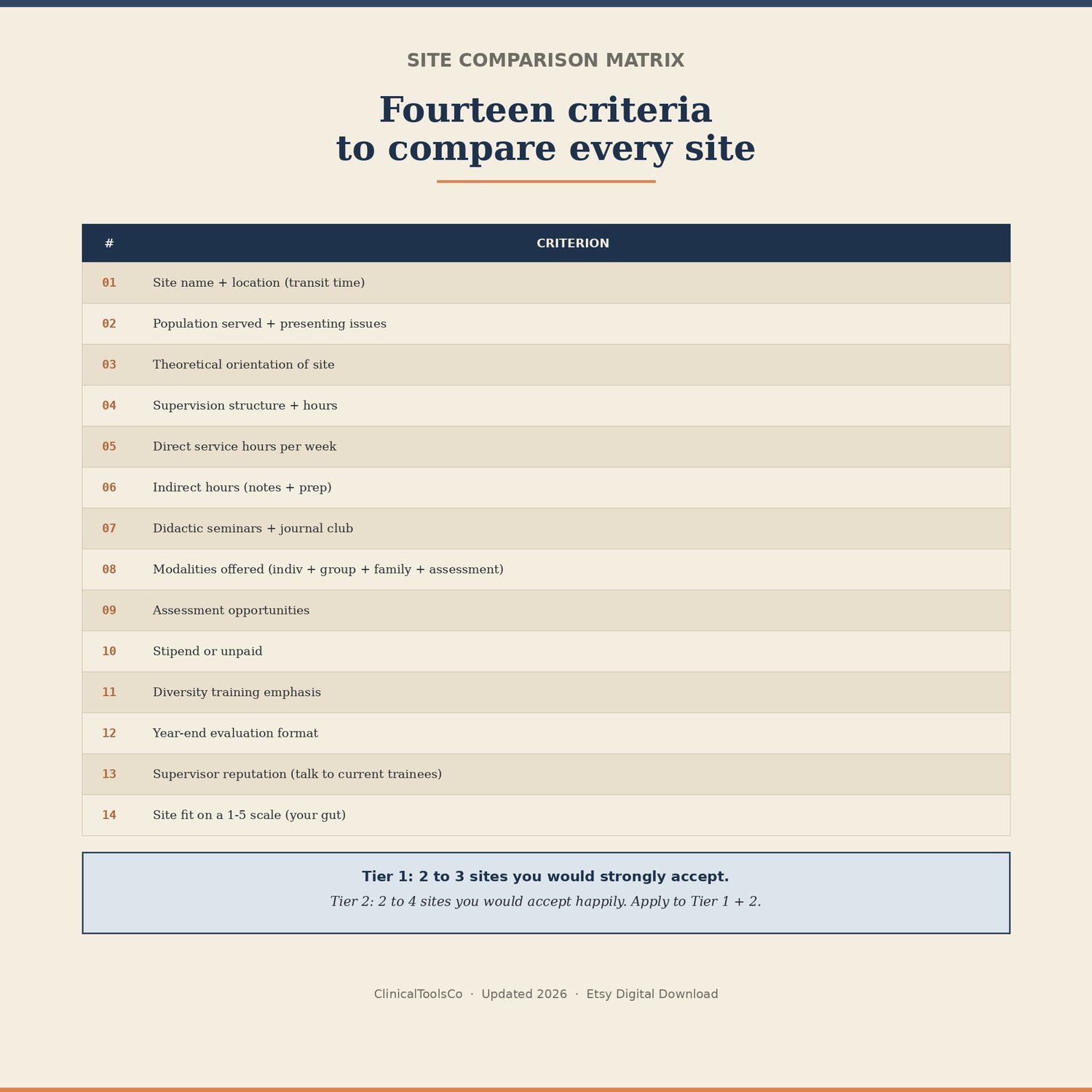
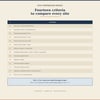
- A site comparison matrix with 14 criteria and a three-tier ranking system, so you apply to the right number of sites rather than too broadly or too narrowly.
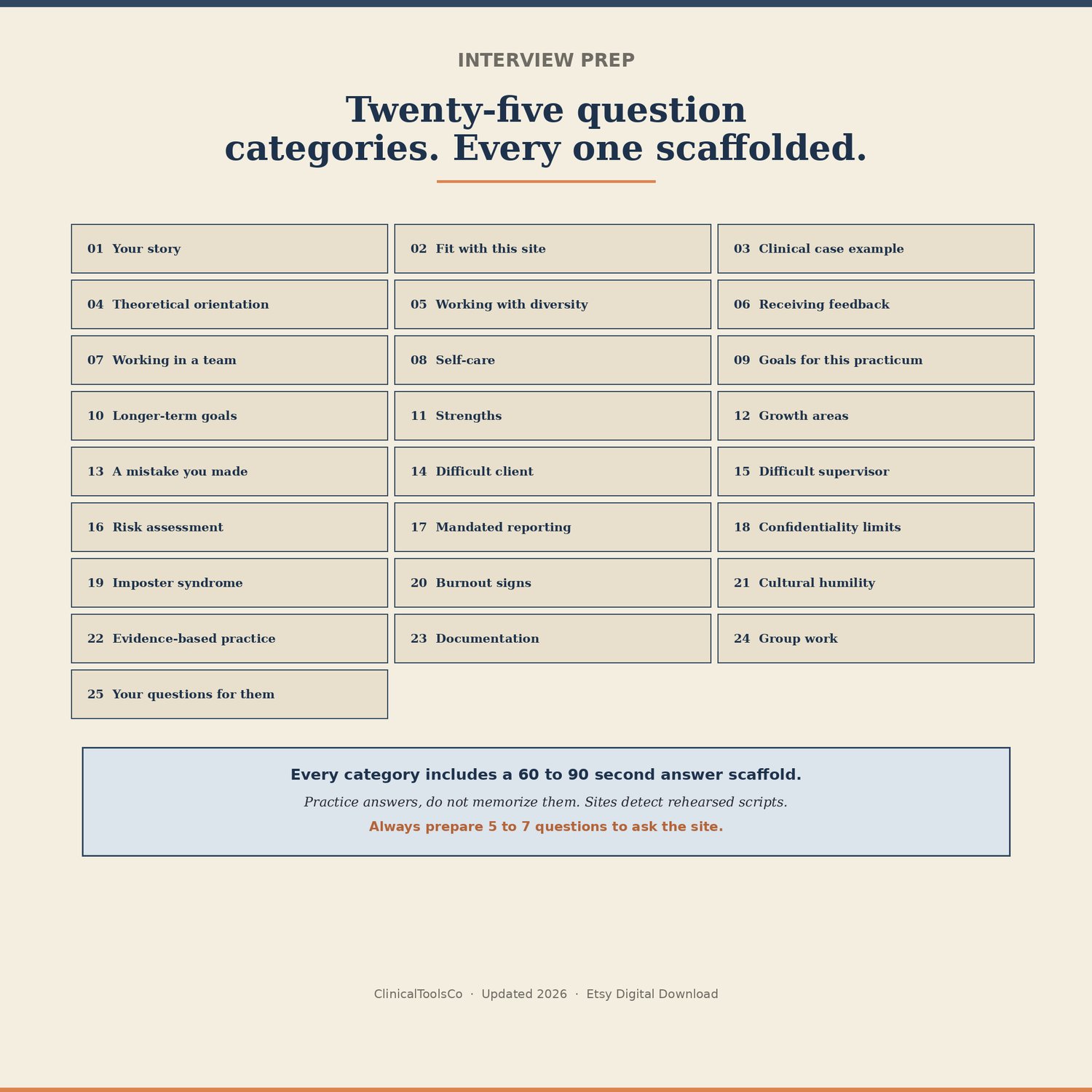
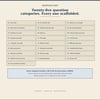
- Interview prep across 25 question categories with 30 to 90 second answer scaffolds, covering your story, fit, a clinical case, theoretical orientation, diversity, feedback, teams, self-care, goals, strengths, growth edges, mistakes, difficult clients and supervisors, risk assessment, mandated reporting, confidentiality, imposter syndrome, burnout, cultural humility, evidence-based practice, documentation, and group work. Plus five to seven questions to ask the site, and the ones not to ask.
- A thank-you email template with its pitfalls. Post-decision navigation covering offers and their response windows, declining, and the not-matched backup process. A reference request template on a four to six week lead time, a common mistakes list, an APPIC hours tracking primer, an advancing track for Year 2 and Year 3 applications with a Year 4 internship preview, a reference list template, and a glossary of the terms nobody defines.
Who it is for
First-year PsyD and PhD students in clinical, counseling, school, and combined programs preparing a first practicum application. Second-years applying for Year 2 placements and third-years applying for specialty externships. Students returning after a gap year. Counseling psychology master's students preparing for doctoral applications. Anyone writing a first academic CV. Directors of Clinical Training building Year 1 application support, and advisors who want one resource to hand an advisee. Career-changers who need a refresher on academic CV format.
Why it exists
It is November of Year 1. Applications open Monday. Your CV is from undergrad and says helped with research in three places. You have a vague sense of cover letter structure, no statement of clinical interests, one referee identified and two more to ask, and you have never heard of the site comparison matrix the second-years are filling out. Interviews start in three weeks.
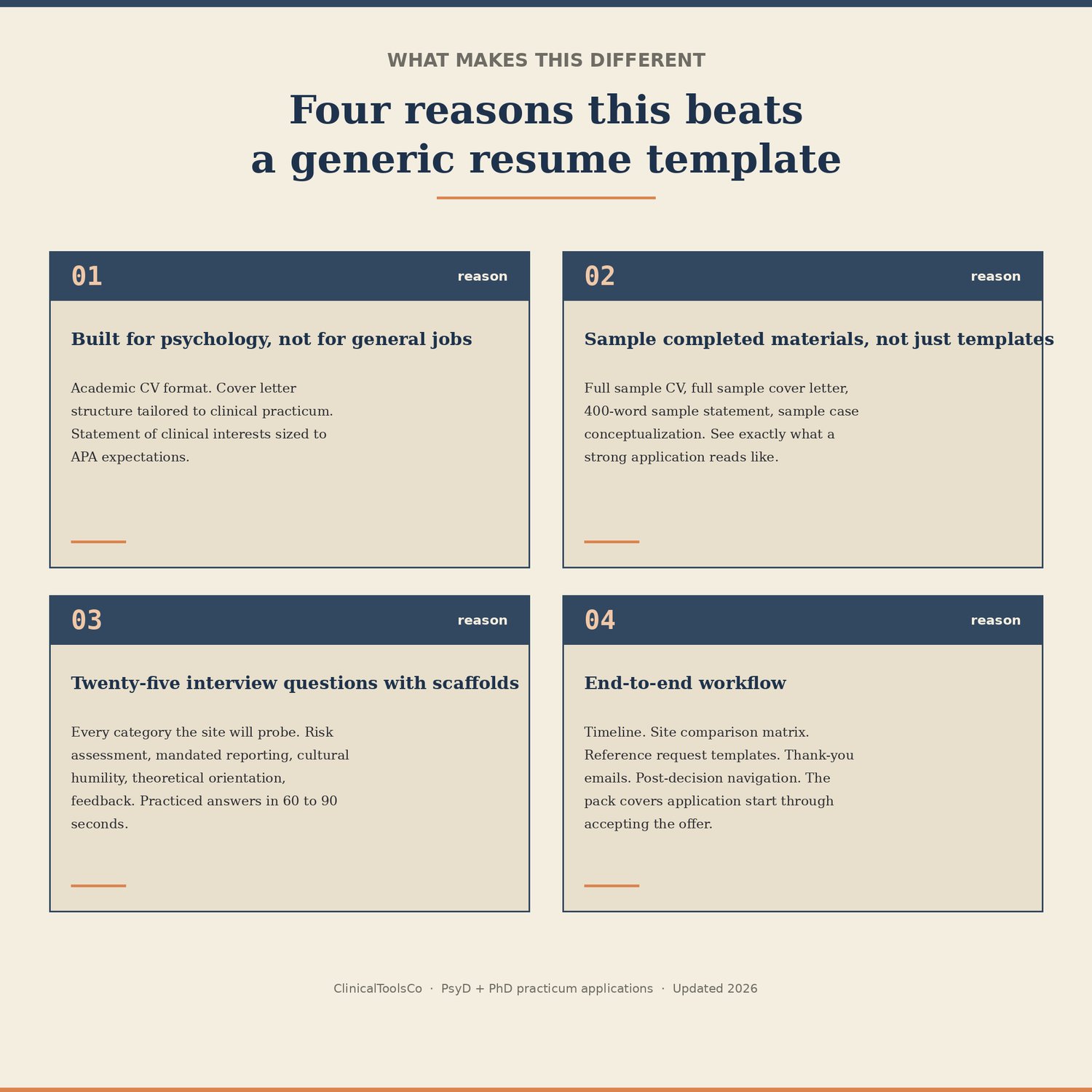
40 pages, 22 sections, built around the eight documents doctoral psychology sites actually request: CV, cover letter, statement of clinical interests, case conceptualization, diversity statement, theoretical orientation statement, reference list, and thank-you email. Each one gets a template, sample completed text, the pitfalls, and the per-site customization rules.
Includes a companion: a Practicum Interview Question Bank and Annotated Cover Letter, listing the questions sites ask, what each one is assessing, answer frameworks, and a paragraph-by-paragraph annotation of a working cover letter.
Why it is built this way
Most application resources for doctoral psychology students are scattered: a generic CV template in one place, an interview question list in another, no sample text, no customization rules. This consolidates every document a site might request.
Most Year 1 students start too late, which is what the timeline is for. Knowing the rhythm in September is what makes a competitive packet possible by November.
The academic CV format signals fluency in the field, and the verb bank exists because helped and worked with are the two phrases that flatten an otherwise strong CV.
Interview questions are predictable and candidates rarely prepare answers, which is the single largest recoverable gap in this process. And the application does not end at the interview, which is what the thank-you and post-decision sections cover.
Year 1 hours documentation pays off in Year 4 internship applications, so the APPIC primer is here rather than three years from now.
Format
Editable, fillable PDF. Editable Microsoft Word (.docx). Both files include the Interview Question Bank and Annotated Cover Letter companion. Templates are built to be edited directly; the sample completed materials are for reference rather than copy-paste. US Letter (8.5 x 11) and A4 (8.3 x 11.7) both included. Works on Mac, Windows, iPad, GoodNotes, and Notability. Personal use license. Lifetime access, unlimited prints.
Updated 2026
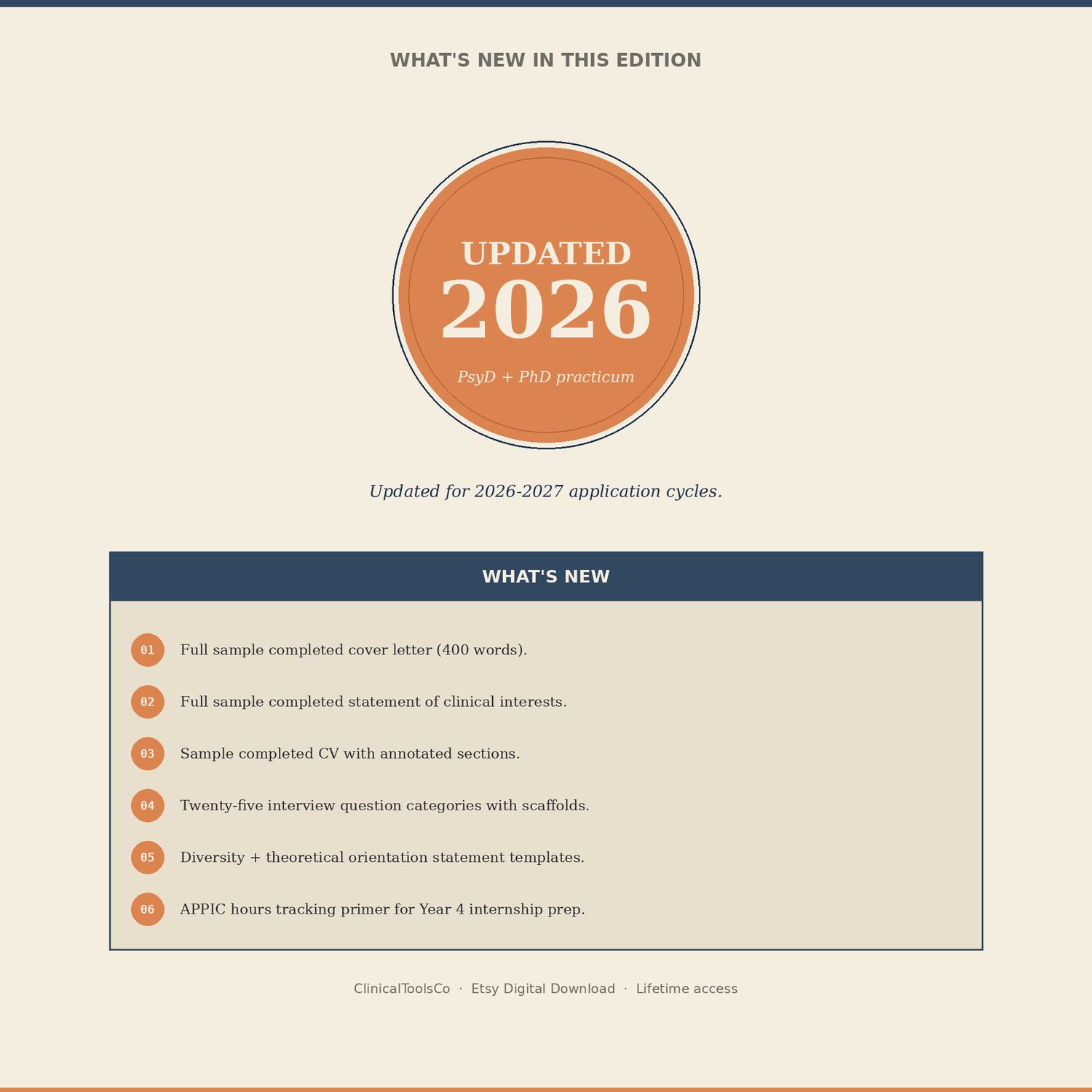
The timeline reflects current US doctoral program rhythms. CV format follows current academic conventions. Liability insurance references the current standard. APPIC hours tracking categories reflect the most recent application requirements. The APA Ethics Code 4.07 citation is current. Diversity statement framing reflects current cultural humility convention, and the orientation phrasings reflect current Year 1 to Year 3 expectations.
How to use it
First cycle: start in early October. Build the CV first, draft the cover letter template once in late October, draft the statement of clinical interests, and have your advisor read both. Narrow to four to six sites with the comparison matrix. Customize the third paragraph of the cover letter per site. Work the interview prep the week of interviews. Send thank-you emails within 24 hours.
Year 2 and Year 3: reuse the CV with the new clinical experience section at the top, update the second paragraph of the cover letter to reference your Year 1 supervisor and a specific clinical takeaway, and work the advancing track section.
For DCTs and advisors: use it as an onboarding resource, run the interview prep as a Year 1 workshop, and use the site comparison matrix as a structured advising tool.
Practicum applications are stressful, but the documents themselves are formula. This is the formula plus the samples that turn it into a competitive application.
Instant digital download. No physical product ships. Message us if anything does not work.