
DSM-5-TR Differential Diagnosis Cheat Sheet (2026)
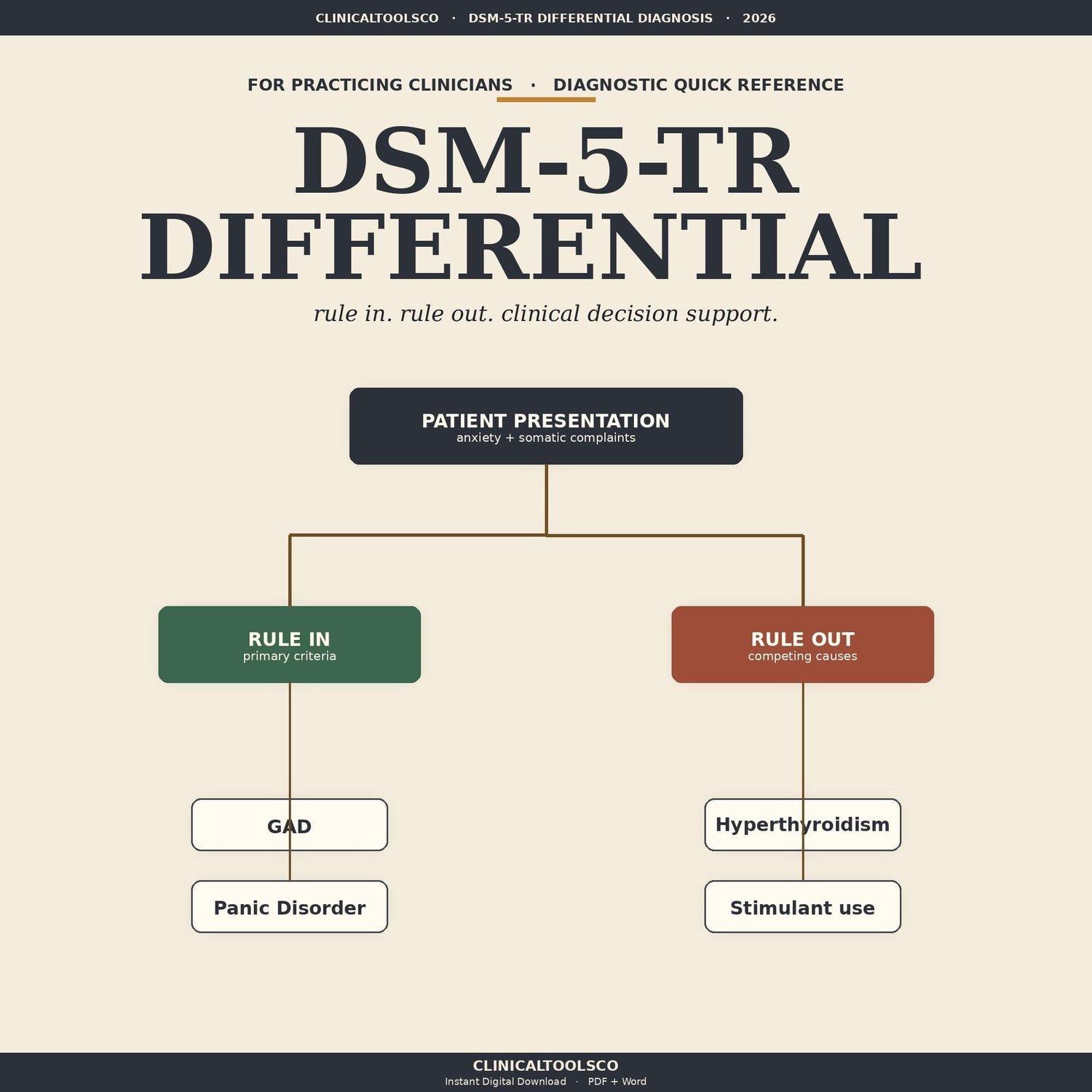
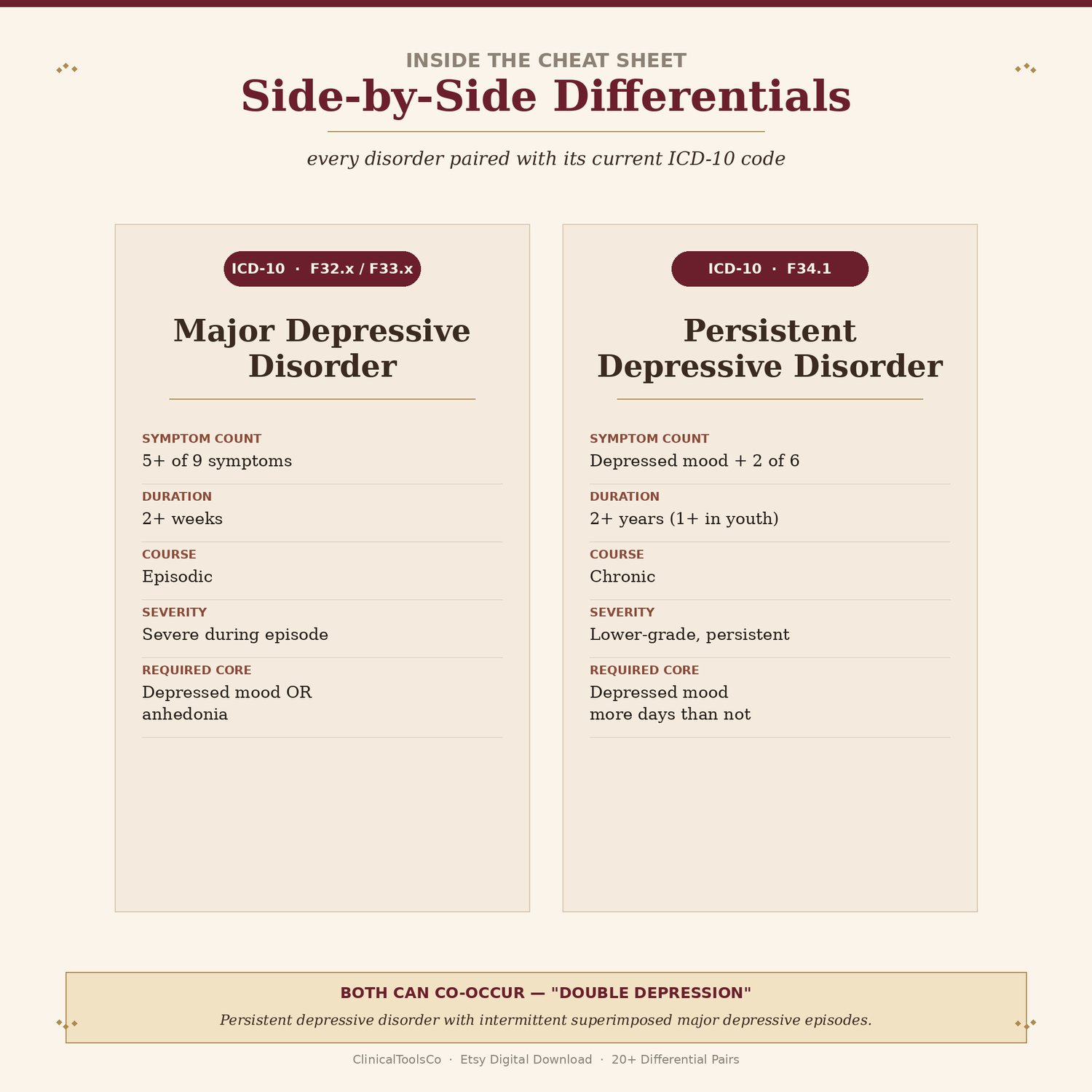
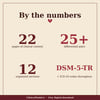
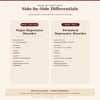
DSM-5-TR differential diagnosis side by side: the look-alike pairs that get confused in a room, the feature that separates them, and the coding that follows.
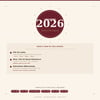
What you get
- A four-step differential process, and the diagnostic errors that show up most often
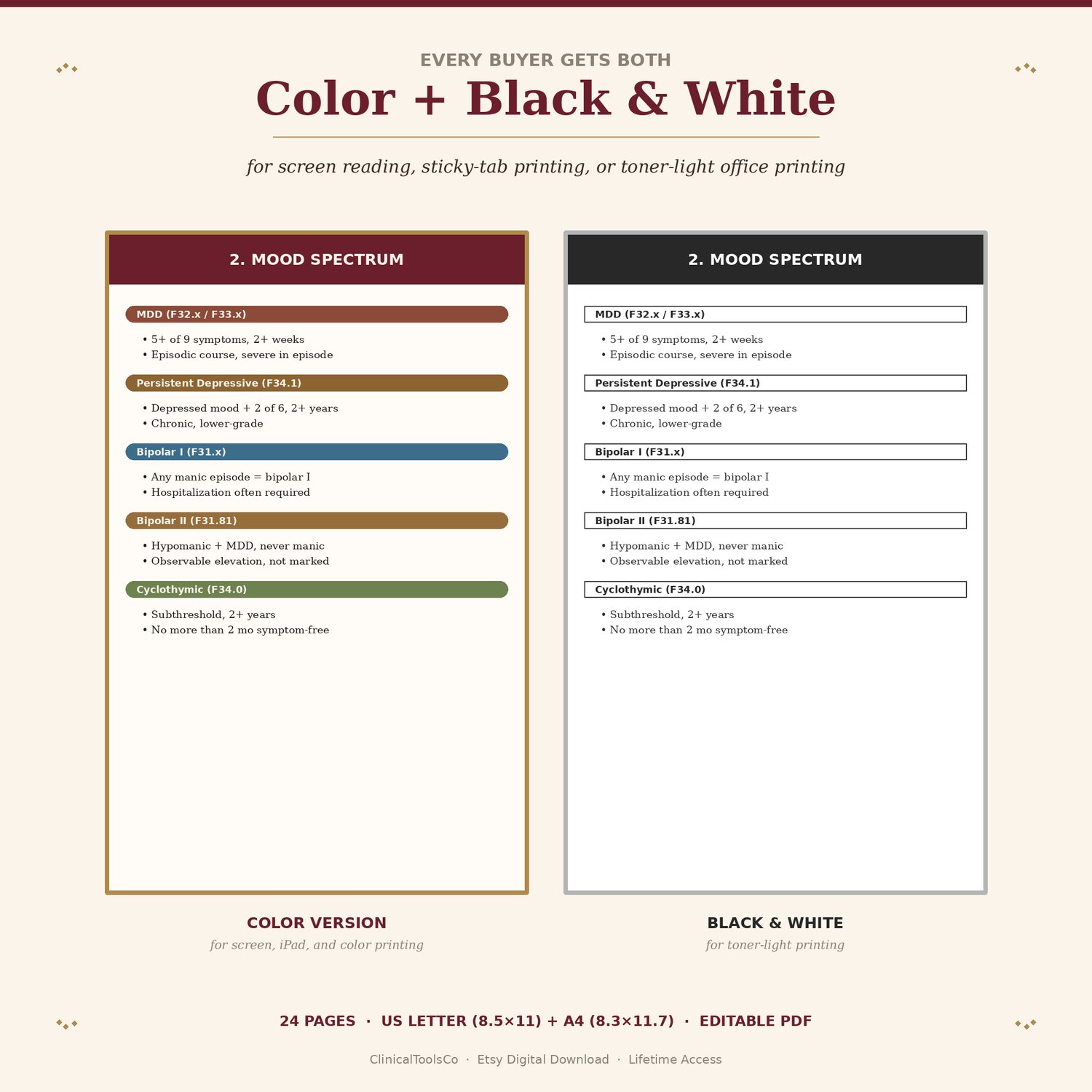
- Mood spectrum: MDD, bipolar I and II, cyclothymic, PMDD, DMDD
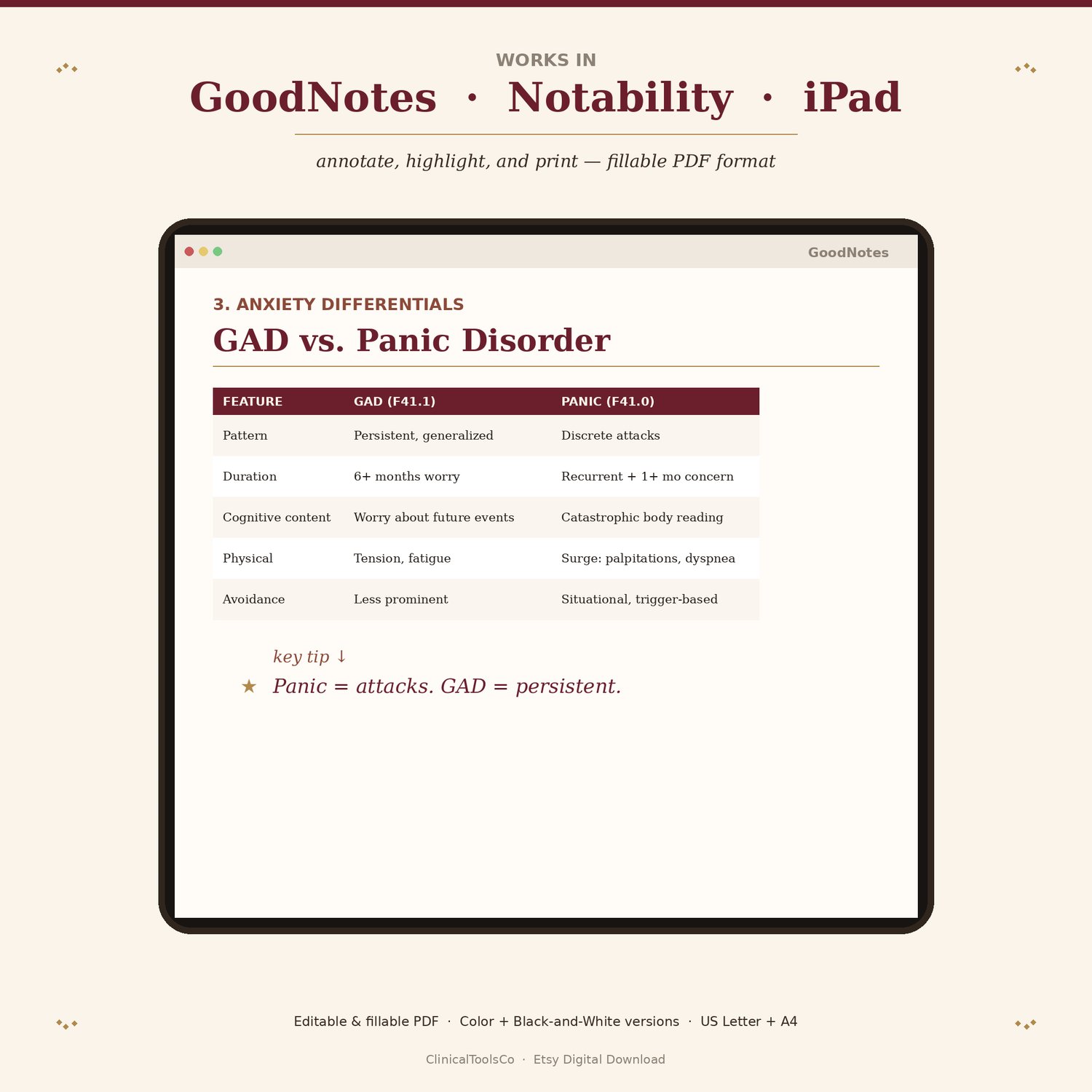
- Anxiety and related: GAD, panic, social anxiety, OCD against OCPD, body dysmorphic
- Trauma and stressor: PTSD, acute stress, the adjustment subtypes
- Psychotic spectrum: brief psychotic, schizophreniform, schizophrenia, schizoaffective
- A personality disorder grid covering ten commonly confused pairs
- Neurodevelopmental: autism, ADHD, intellectual disability
- Substance-induced against primary, with patterns by substance
- Eating disorders: anorexia, bulimia, binge eating, ARFID
- Somatic and dissociative: conversion, factitious, malingering
- Specifier reference for mood, PTSD, OCD and substance use severity
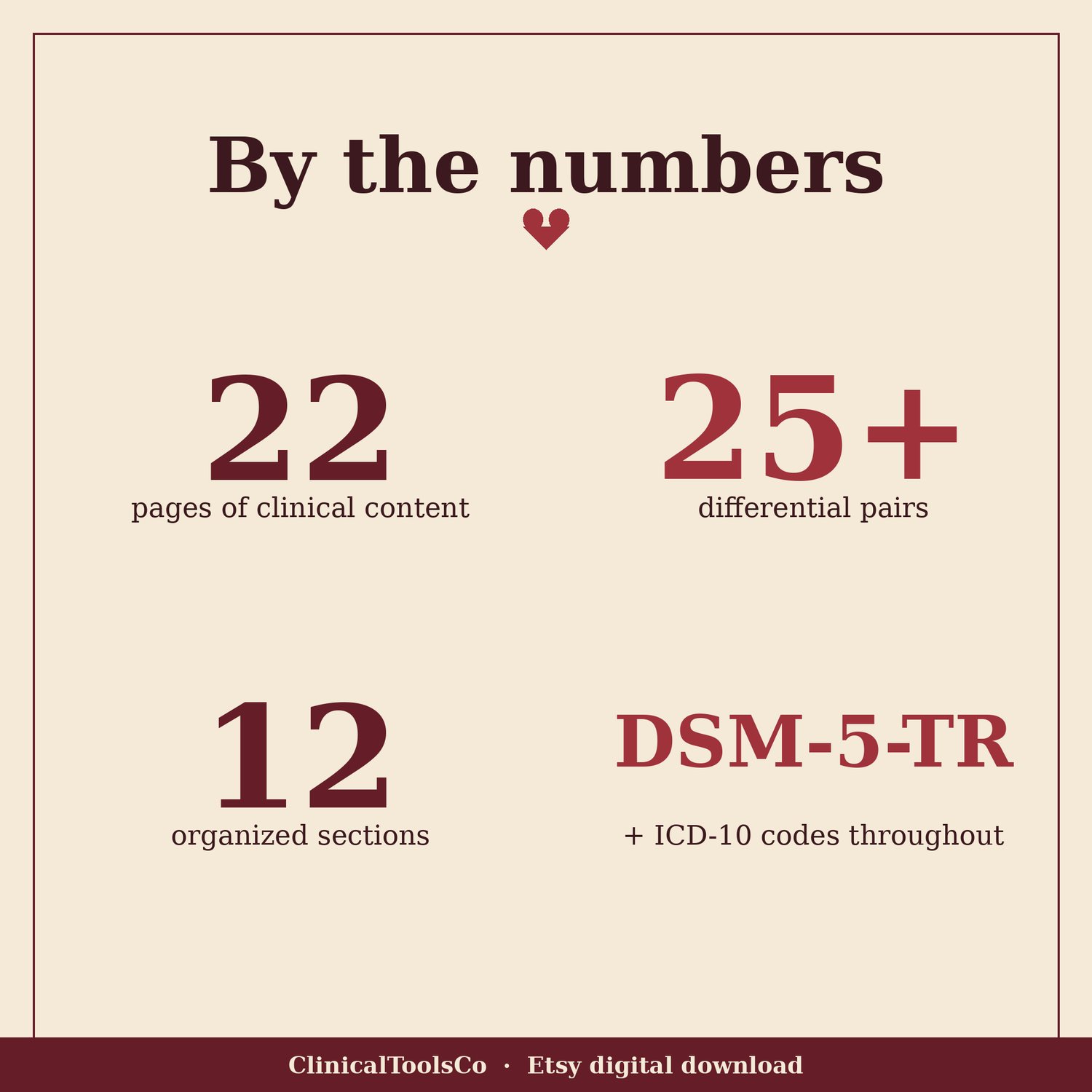
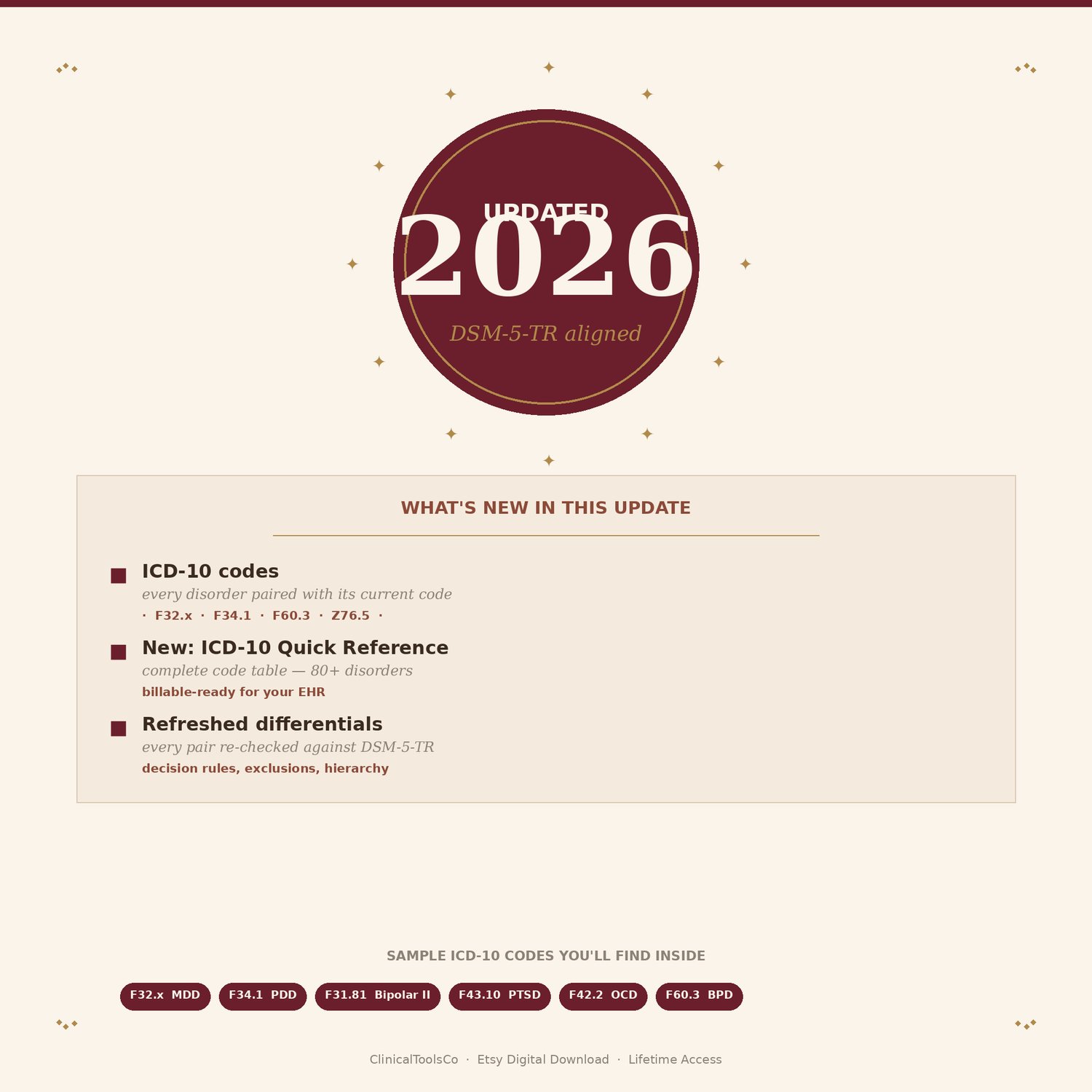
- ICD-10 quick reference organized by category, and the exclusion rules that decide close calls
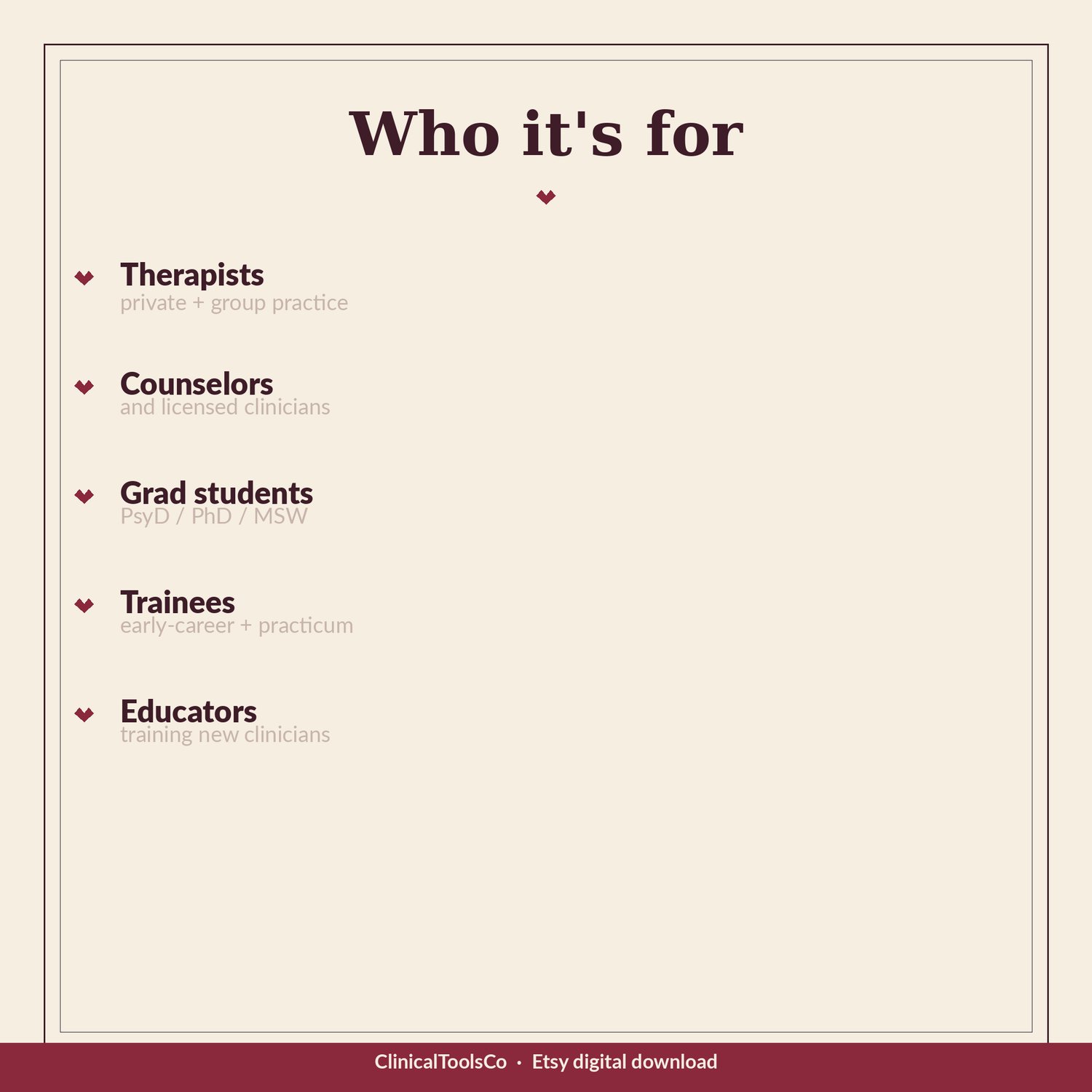
Who it is for
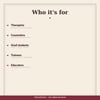
Therapists, counselors, social workers, psychologists and nurse practitioners who diagnose. It also works as exam review for the EPPP, ASWB, NCMHCE and LPC exams, because differential reasoning is what those items test.
Why it exists
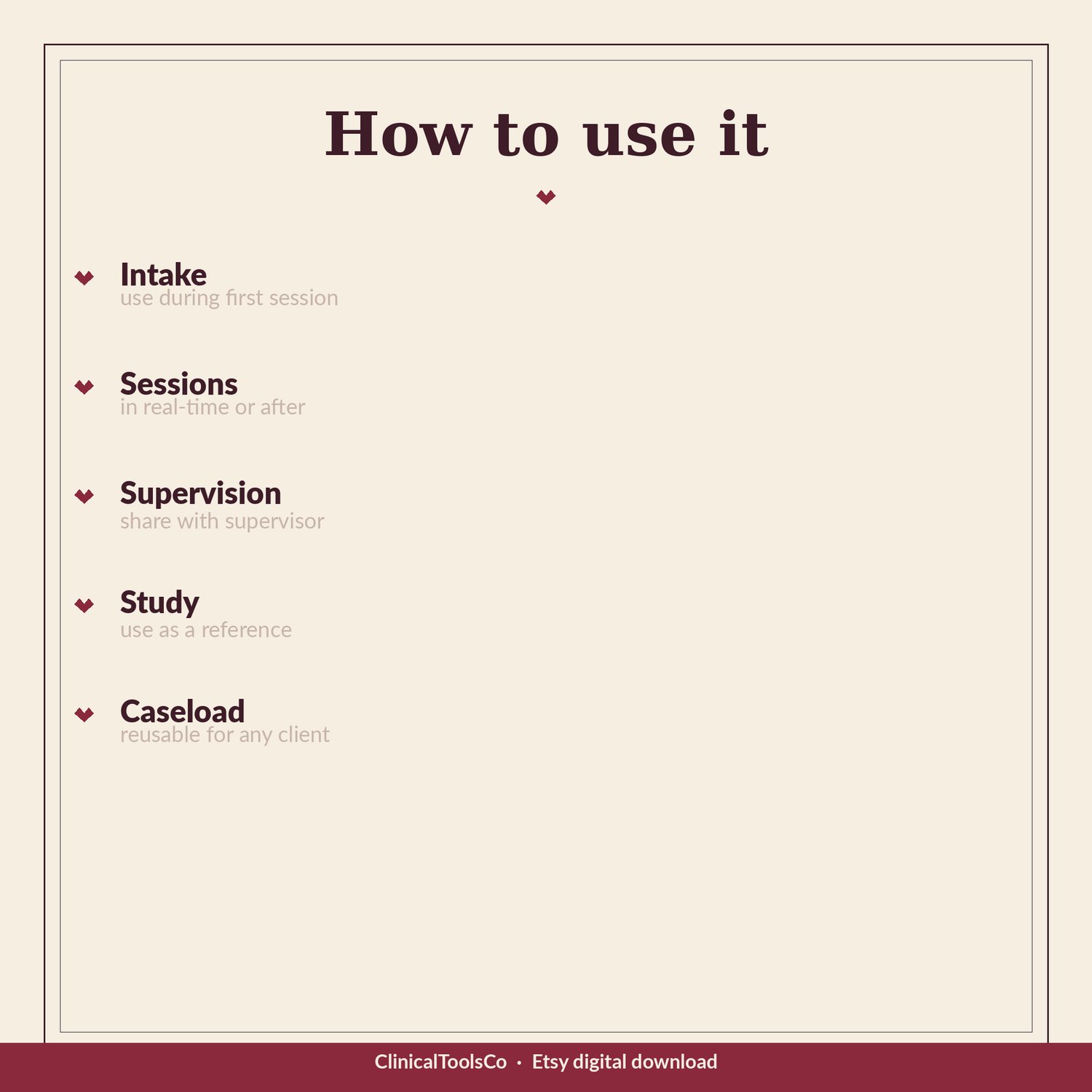
A client describes mood that turns over hours, intense fear of being left, and self-harm urges. The intake note from your colleague says bipolar II. You think it is closer to borderline. You have fifty minutes and a treatment plan due at the end of them.
That is the moment this was built for. It is not a summary of the DSM and it is not a criteria list you already own. It is the set of side-by-side comparisons for the pairs that actually get confused in a room, with the specific feature that separates them and the coding that follows.
Format
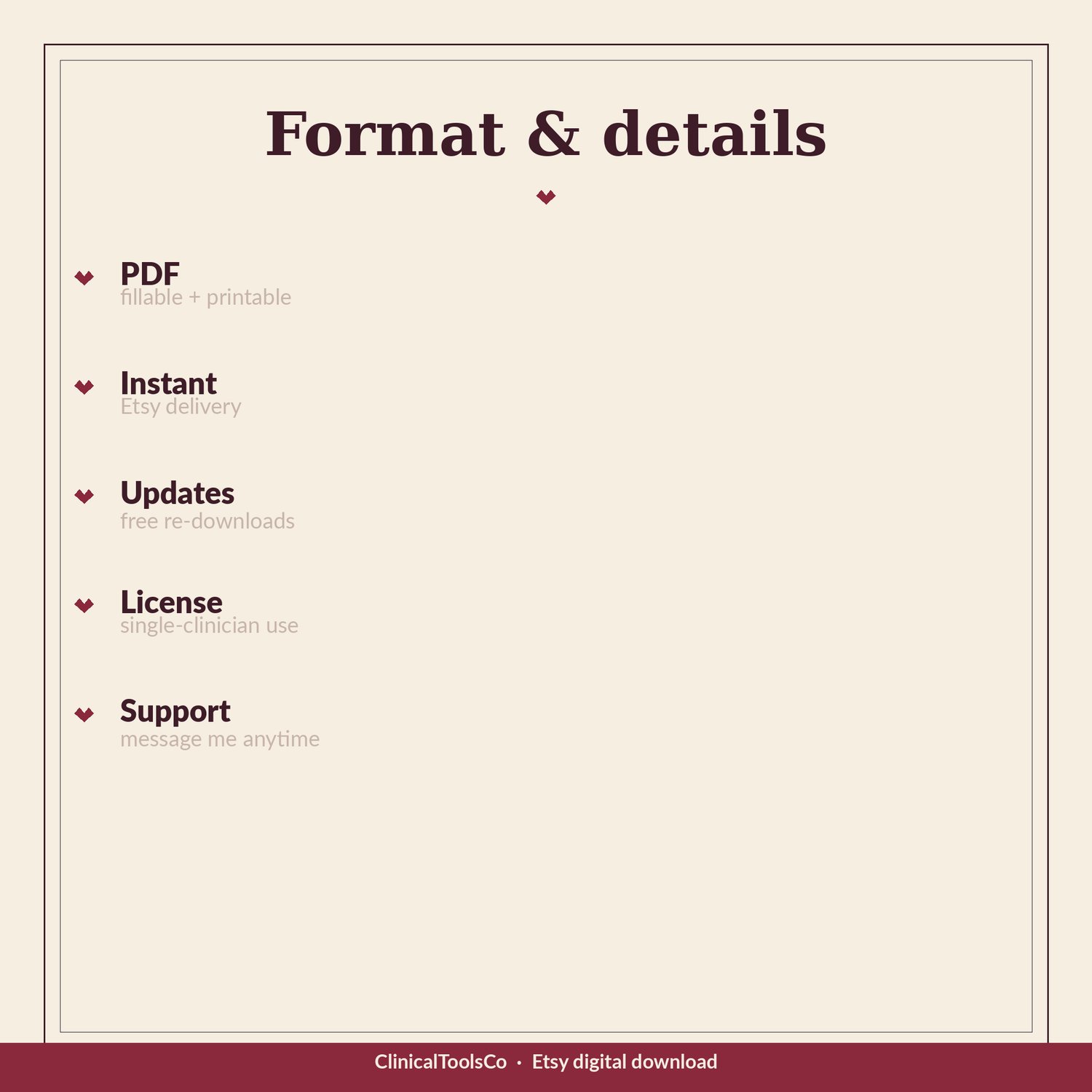
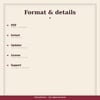
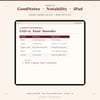
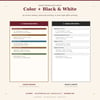
Fillable PDF and editable Word, US Letter and A4. Works on Mac, Windows, iPad, GoodNotes and Notability. Instant download, lifetime access, unlimited prints.
An independent clinical reference. Not affiliated with, endorsed by, or sponsored by the American Psychiatric Association, ASWB, ASPPB or NBCC. DSM and DSM-5-TR are trademarks of the American Psychiatric Association.
Pairs with
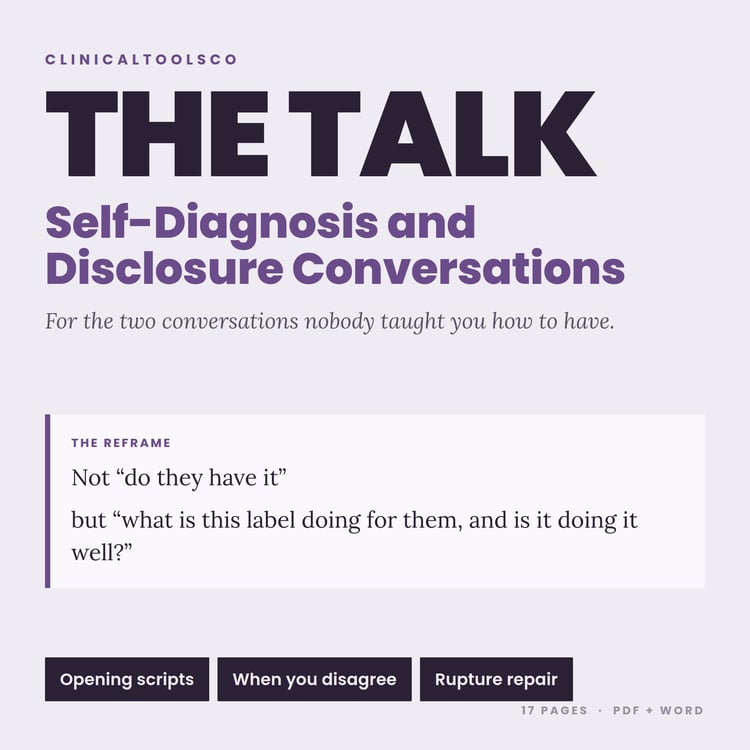
This one answers what it is. The Self-Diagnosis Conversation Guide answers how to talk about it, for the two conversations nobody trains you for: when a client arrives already holding a diagnosis, and when you are the one who has to say it first.