

Malingering Detection Reference (2026)
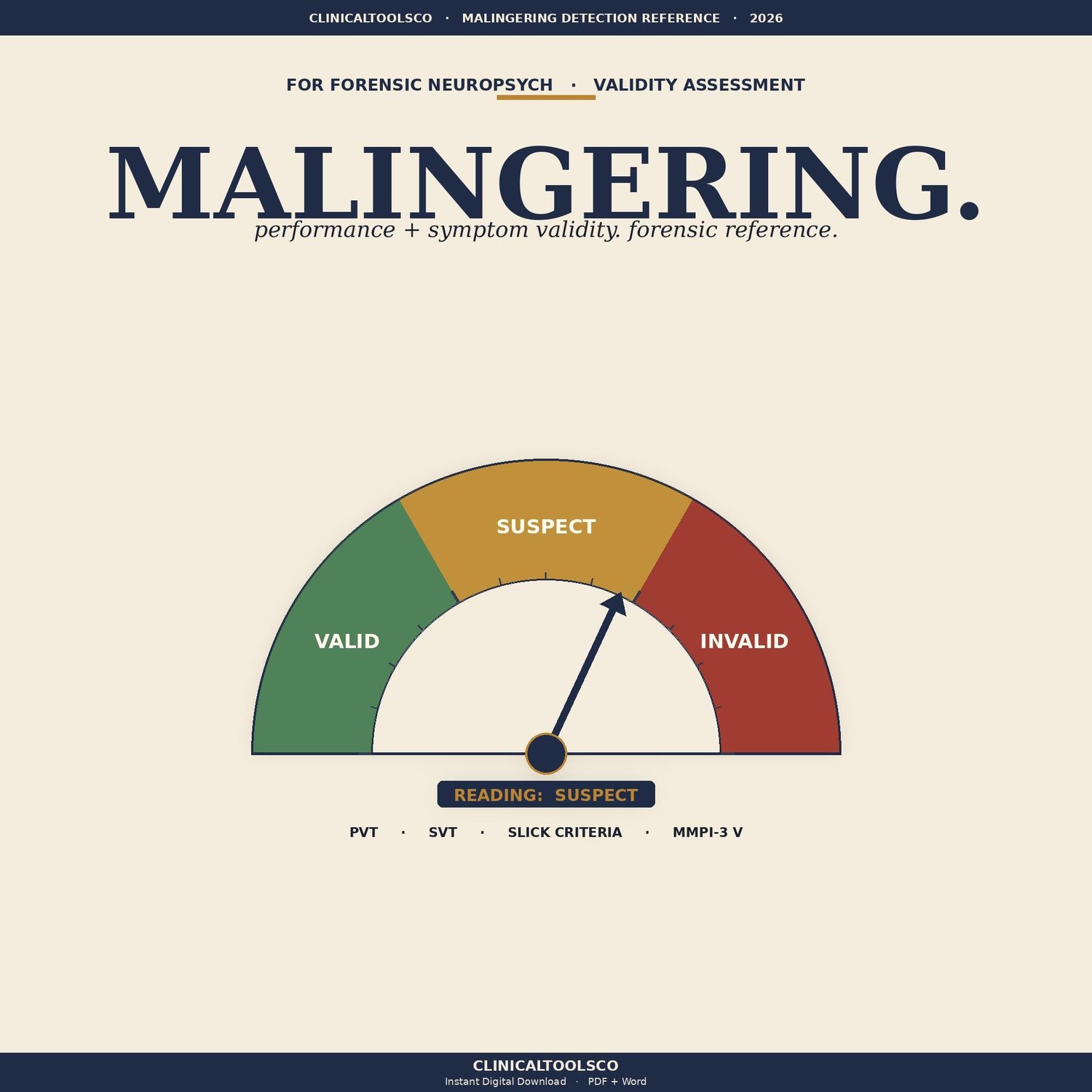
A malingering detection reference: definitions, Slick criteria, base rates across 10 evaluation contexts, and stand-alone and embedded PVT and SVT libraries with cutoffs.
What is in the reference
- Definitions separating malingering, factitious disorder, somatic symptom disorder, and conversion disorder (DSM-5-TR codes Z76.5, F68.10, F45.1, F44.x), and why that differential drives everything downstream.
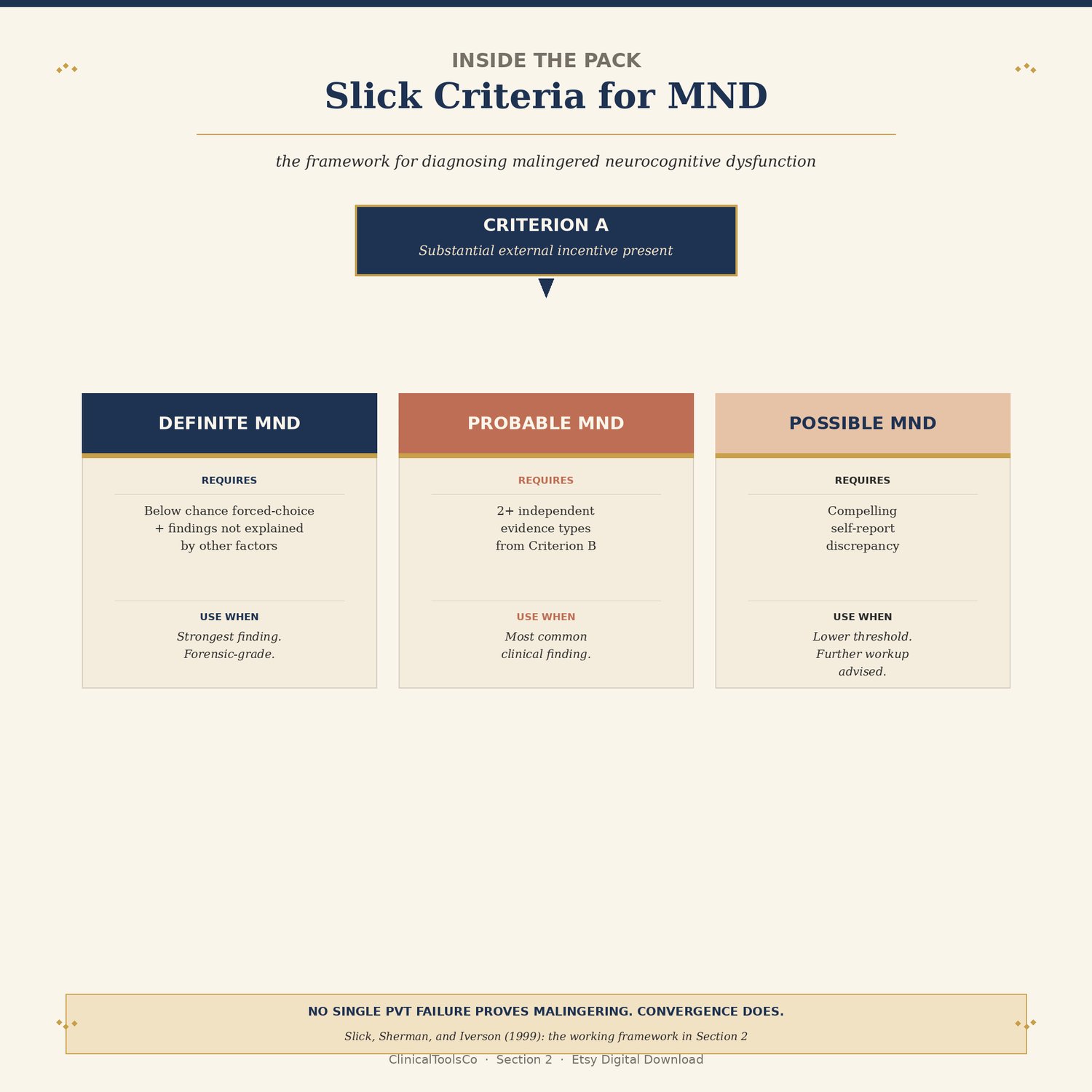
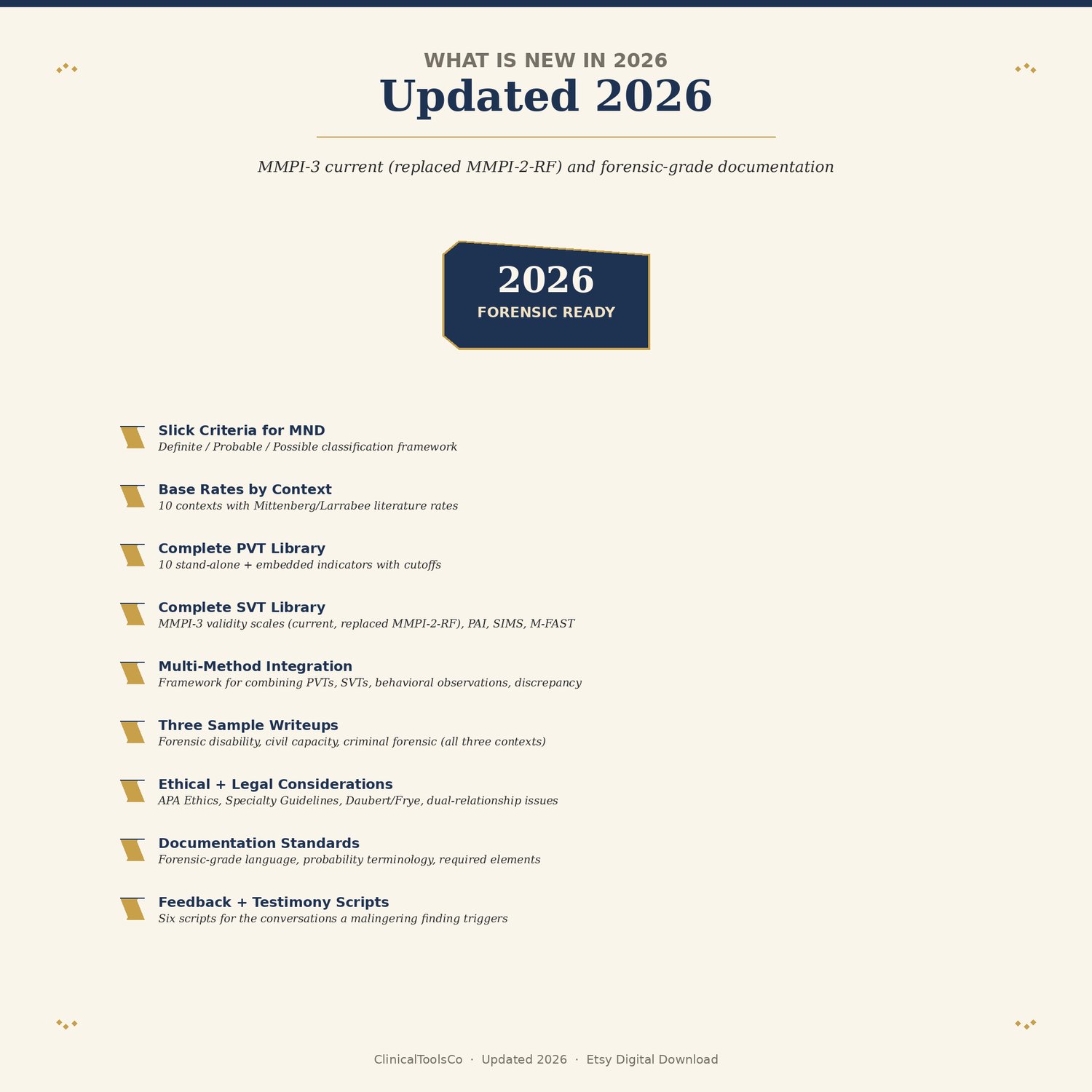
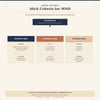
- Slick criteria for Malingered Neurocognitive Dysfunction (Slick, Sherman, and Iverson, 1999) with the Definite, Probable, and Possible categories and the explicit criterion A and criterion B evidence requirements.
- Base rates across 10 evaluation contexts with Mittenberg and Larrabee figures: personal injury 30 to 40 percent, disability 25 to 30 percent, mTBI in litigation 40 percent, criminal competency 10 to 25 percent, clinical neuropsych 5 to 10 percent, academic accommodation 10 to 20 percent. The Bayesian work is shown: a PVT at 90 percent sensitivity and 90 percent specificity carries 32 percent positive predictive value at a 5 percent base rate and 78 percent at 35 percent. Report language for documenting base rate consideration is included.
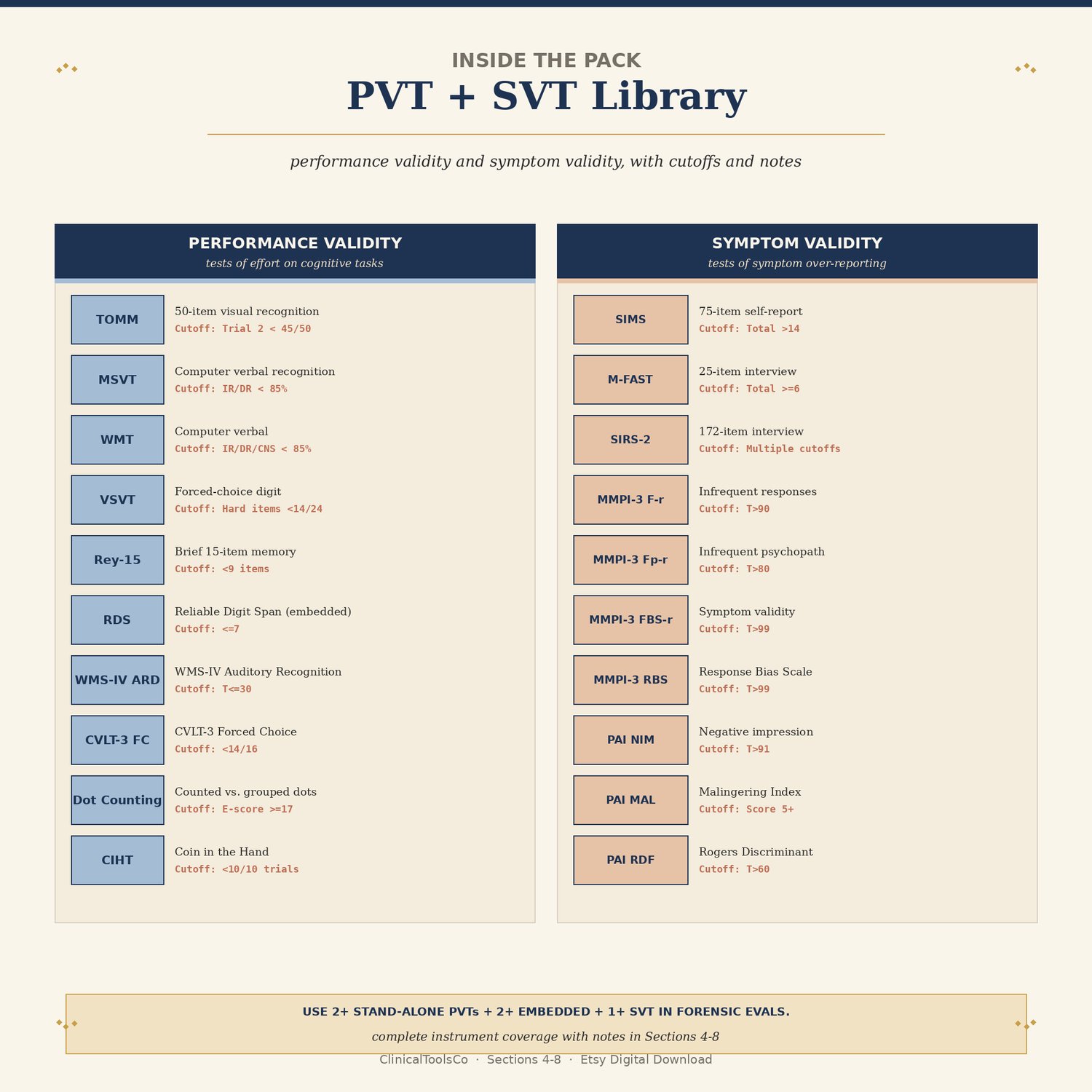
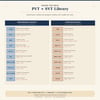
- Stand-alone PVT library with formats, cutoffs, and notes for TOMM, MSVT, WMT, VSVT, Rey 15-Item, Dot Counting, Coin in the Hand, b-Test, and ASTM.
- Embedded PVT library with sources and cutoffs for Reliable Digit Span, RDS-Revised, Vocabulary minus Digit Span discrepancy, WMS-IV Auditory Recognition Delayed, CVLT-3 Forced Choice, WCST set-failure, Boston Naming pattern, CPT pattern, and MMPI-3 embedded F-r.
- Stand-alone SVT library with cutoffs and selection logic for SIMS, M-FAST, SIRS-2, IOP-29, and TSI-2 Validity.
- MMPI-3 validity scale reference (CRIN, VRIN-r, TRIN-r, F-r, Fp-r, Fs, FBS-r, RBS, L-r, K-r) with T cutoffs and interpretation logic, including RBS for feigned cognitive complaints. PAI validity scale reference (INC, ICN, NIM, PIM, MAL Index, DEF Index, RDF) with T cutoffs and interpretation patterns.
- Structured interview techniques: rare-symptom endorsement, improbable symptom combinations, probing approaches, and the mistakes interviewers make, alongside the structured tools (SIRS-2, M-FAST, IOP-29).
- Behavioral observation patterns with documentation language: inconsistency across contexts, inconsistency within session, theatrical presentation, and compliance asymmetry.
- Multi-method integration framework built on four evidence types (performance validity, symptom validity, behavioral observation, discrepancy analysis) with an explicit decision rule: zero to one evidence types is insufficient, two supports possible MND, three or more supports probable or definite.
- Ethical and legal context: APA Ethics Code 9.06, 9.01, and 9.10, the Specialty Guidelines for Forensic Psychology, Daubert and Frye, dual relationships, and sealed records.
- Documentation standards naming the required elements (referring source, dates, records reviewed, instruments with editions, behavioral observations, each PVT and SVT result with cutoff and pass or fail, validity scales with T scores, discrepancy analysis with specific examples, Slick application with reasoning shown), probability language by Slick category, what to keep out (categorical language, intent language, character conclusions), and the standard caveats.
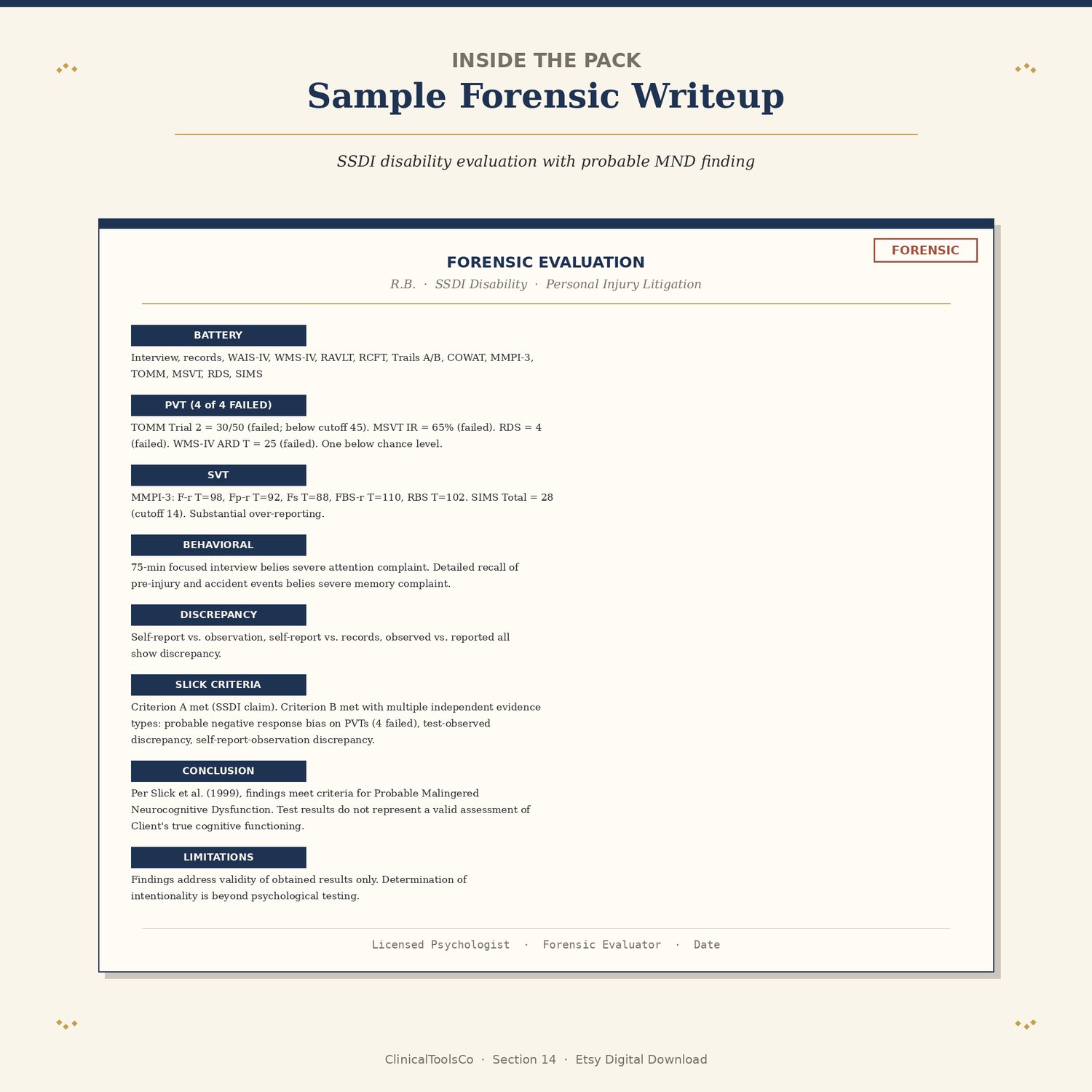
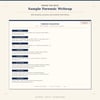
- Three full sample writeups. A forensic disability evaluation (47 year old male, SSDI claim, four PVT failures including TOMM below chance, probable MND). A civil capacity evaluation (78 year old female, estate planning challenge, all PVTs passed, valid mild neurocognitive disorder with reduced capacity on the MAC-T). A criminal competency evaluation (32 year old male, court-ordered, TOMM below chance, M-FAST 18, definite MND with competency nonetheless retained on the MacCAT-CA). Each shows the conclusion section in Slick probability language.
- Seven weak-to-strong rewrites of the interpretation errors that recur: concluding from a single PVT failure, claiming intentionality from validity scales, ignoring base rates, using MMPI-2-RF in 2026, reporting validity without positive findings, premature attorney disclosure, and dual relationships.
- Feedback and testimony scripts for six moments: the client asking for the result during the evaluation, the attorney asking before the report is final, cross-examination on the validity finding, opposing counsel challenging your PVT selection, the question about whether you decided the examinee is malingering, and the client who is angry about the finding.
- A forensic validity assessment timeline from pre-evaluation through finalization, with time benchmarks for forensic disability, capacity, criminal competency, and personal injury cases.
Who it is for
Forensic psychologists conducting personal injury, disability, capacity, and criminal evaluations. Neuropsychologists in forensic and disability contexts. Clinical psychologists who take occasional forensic referrals. Disability and IME evaluators across SSDI, SSI, and workers compensation. School psychologists evaluating accommodation requests where validity is in question. Forensic postdoctoral fellows, graduate students, and the supervisors training them. Treating clinicians who run into validity questions, with the scope note that forensic evaluations belong to non-treating evaluators.
Why it exists
The claimant failed three PVTs. MMPI-3 F-r sits at T=98, FBS-r at T=105. Severe self-reported memory loss, intact recall of pre-litigation events. You know the presentation is invalid. Now write the conclusion. Malingering or feigning? Slick Definite or Probable? Does intentionality go in the report at all? And when opposing counsel asks in deposition whether you have decided the examinee is lying, what is your answer?
38 pages, 19 sections, plus a Decision Tree and Test-Selection Map companion covering malingering versus factitious versus somatic versus genuine, and which validity instrument fits which referral question. Built for forensic, disability, and capacity evaluators who need a working desk reference rather than a textbook.
Why it is built this way
Most malingering references are textbooks. Thorough, and no help when the report is due Friday and the deposition is Monday. Slick criteria fit on one page here. Cutoffs live in tables. Integration paragraphs come as templates.
Instrument selection drives admissibility, so the PVT, SVT, and personality validity scale tables are the spine of the reference. Base rates shape what a positive result means, so the Bayesian reasoning is worked rather than asserted. And cross-examination is something most evaluators learn by being deposed, which is why Section 18 exists.
Format
Editable, fillable PDF. Editable Microsoft Word (.docx). Both files include the Decision Tree and Test-Selection Map companion. Designed for desk reference during write-ups: print Sections 2, 3, 4, 5, 7, and 8 for active cases. US Letter (8.5 x 11) and A4 (8.3 x 11.7) both included. Works on Mac, Windows, iPad, GoodNotes, and Notability. Lifetime access, unlimited prints.
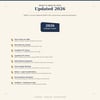
Updated 2026
MMPI-3 current, having replaced MMPI-2-RF in 2020. PAI validity scales current. SIMS, M-FAST, SIRS-2, and IOP-29 cutoffs reflect the most recent peer-reviewed literature. PVT cutoffs current per forensic standards (TOMM Trial 2 below 45 of 50, MSVT IR and DR below 85 percent, RDS at or below 7). Slick criteria per Slick, Sherman, and Iverson (1999). Base rates per Mittenberg et al. (2002) and Larrabee (2007). Daubert and Frye admissibility considerations current. DSM-5-TR coding included for malingering (Z76.5), factitious disorder (F68.10), somatic symptom disorder (F45.1), and functional neurological symptom disorder (F44.x).
How to use it
Anchor the differential with Section 1, then apply Slick from Section 2 as the overarching framework. Contextualize every PVT and SVT result against Section 3 base rates. Build the battery from Sections 4 to 8 using at least two stand-alone PVTs, two embedded indicators, and the validity scales of any personality measure administered. Run the interview with Section 9, document observations with Section 10, integrate with Section 11, and check the legal and ethical context in Section 12. Write to Section 13 standards in Slick probability language, using Sections 14 to 16 as tone and depth models. Self-check against Section 17 before finalizing. Prepare for testimony with Section 18 and pace the case against Section 19.
Instant digital download. No physical product ships. Message us if anything does not work.