

Group Therapy Toolkit (2026)
A group therapy toolkit: a pre-group screening interview, inclusion criteria, group consent, a group treatment plan, an eight-session curriculum template and group note templates.
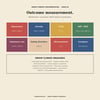
What is in the bundle
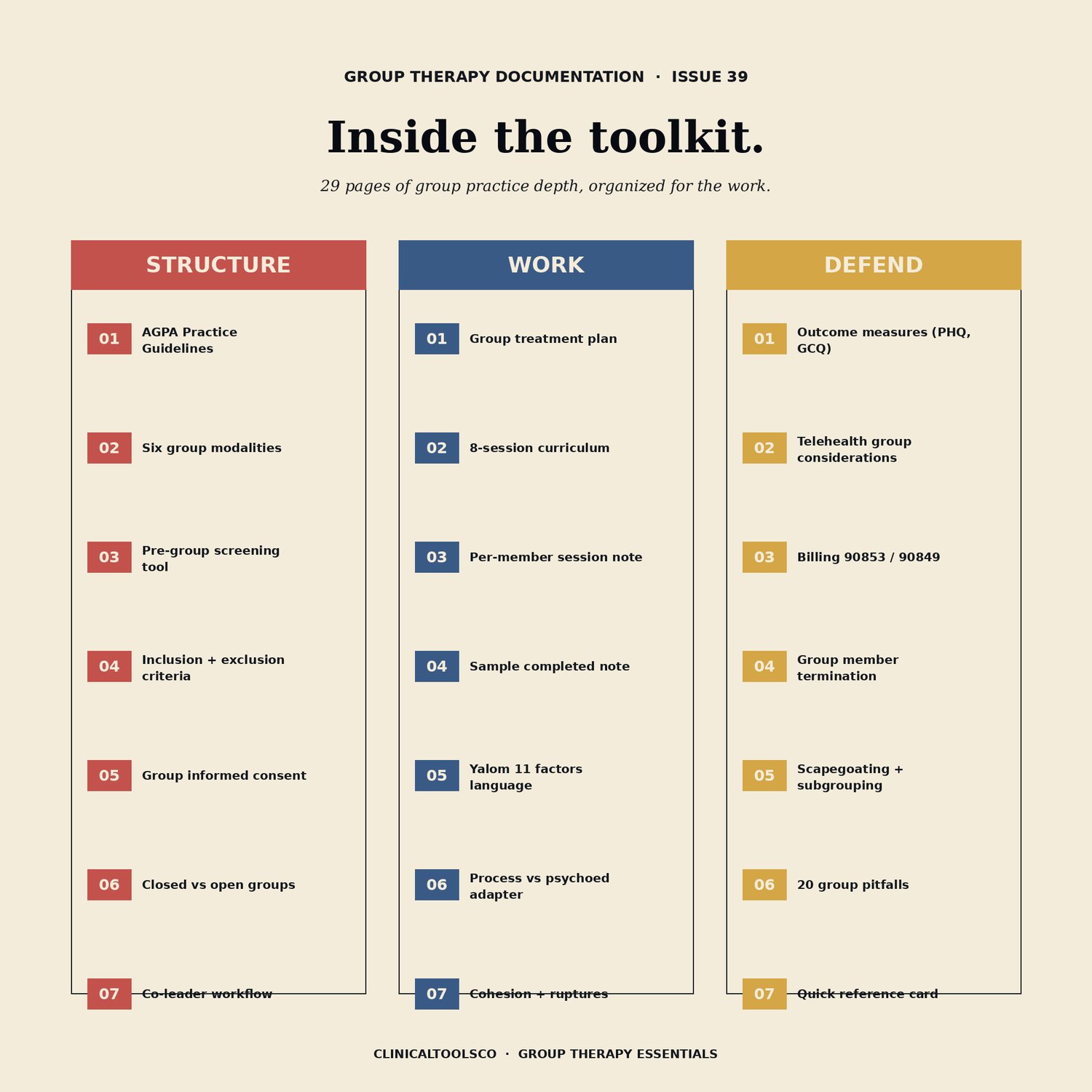
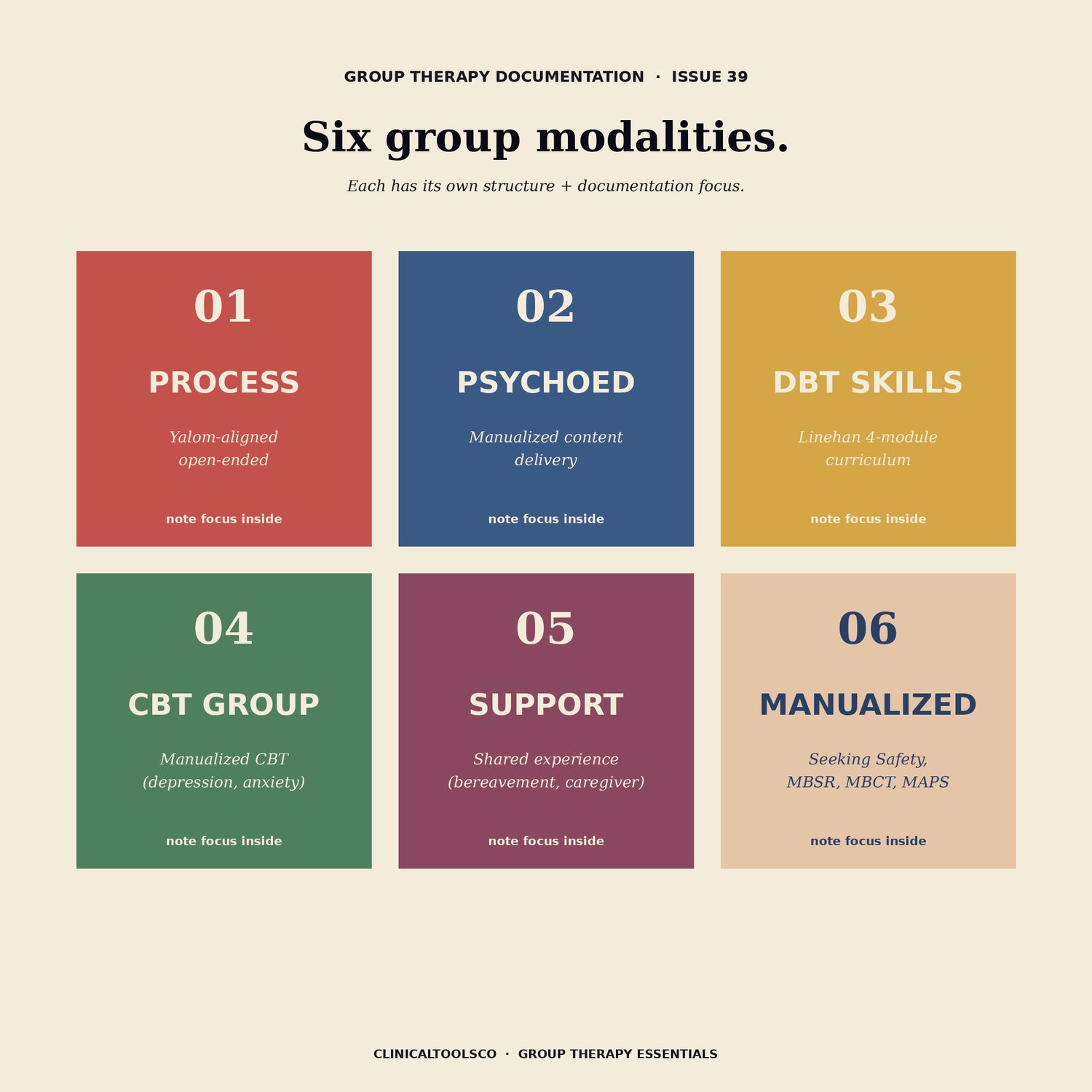
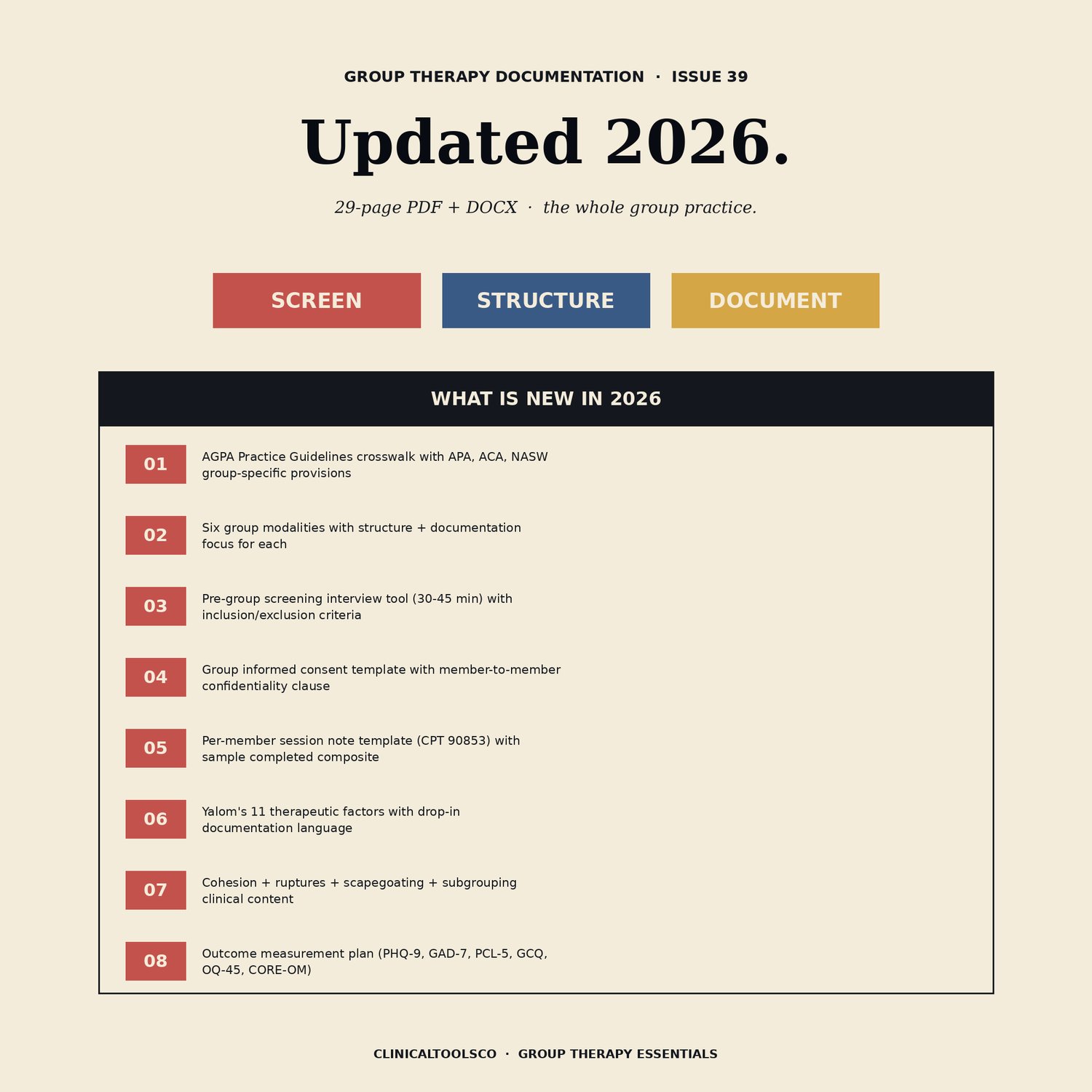
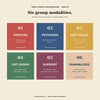
- Foundation: how to use it, the six dimensions that make group documentation different from individual therapy, an AGPA and ethics crosswalk (APA 10.03, ACA A.9 and B.4, NASW 1.07(f), AAMFT 2.2), and the six clinical group modalities
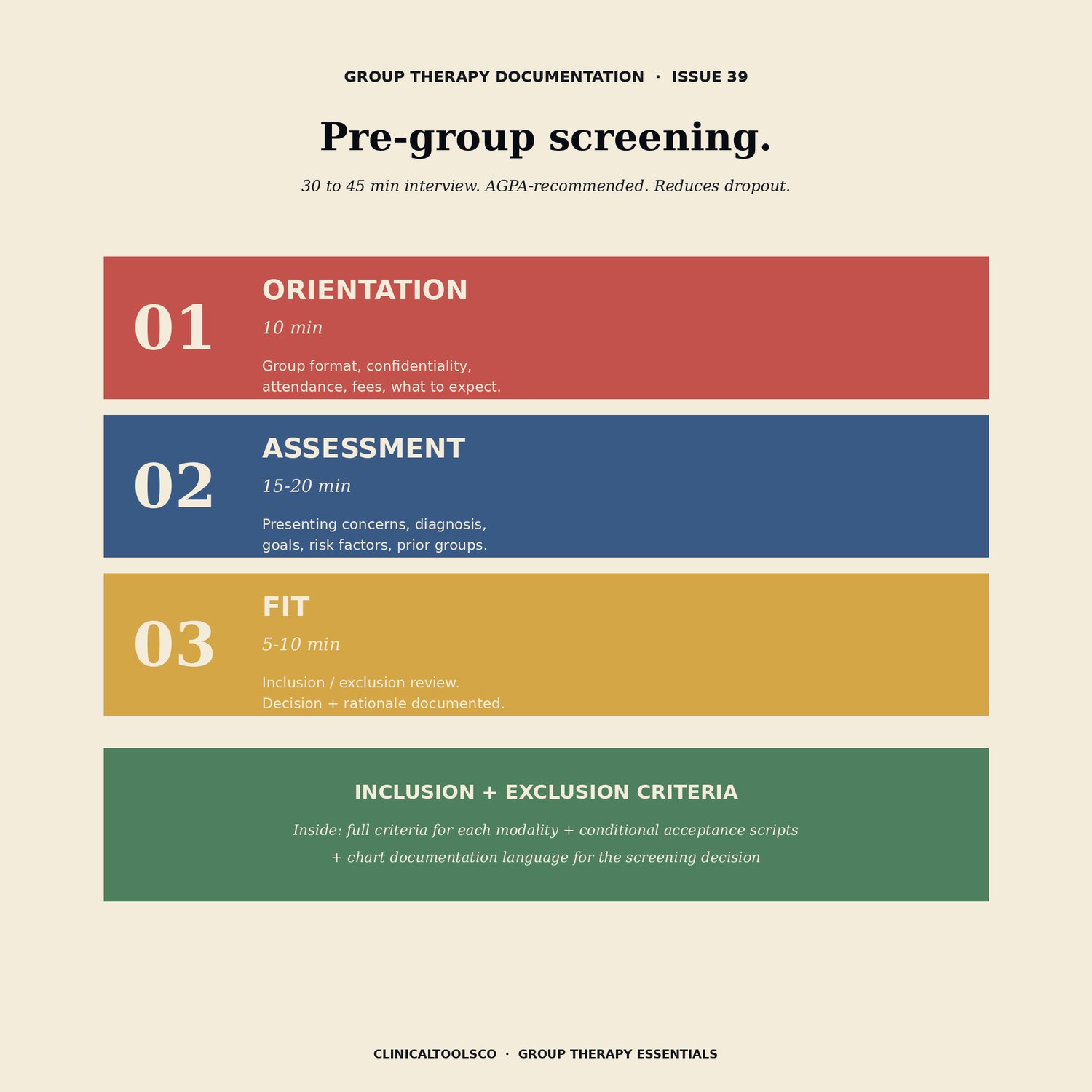
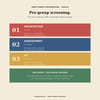
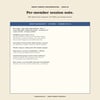
- Pre-group screening interview tool: a 30 to 45 minute structured interview with member orientation, assessment, fit determination and documentation requirements
- Inclusion and exclusion criteria with conditional acceptance language and a sample chart entry for the screening decision
- Group informed consent template with nine numbered sections covering format, member-to-member confidentiality, clinician-held confidentiality, contact between members, attendance and lateness, recording and screenshots, fees and billing, risk and limits, and termination
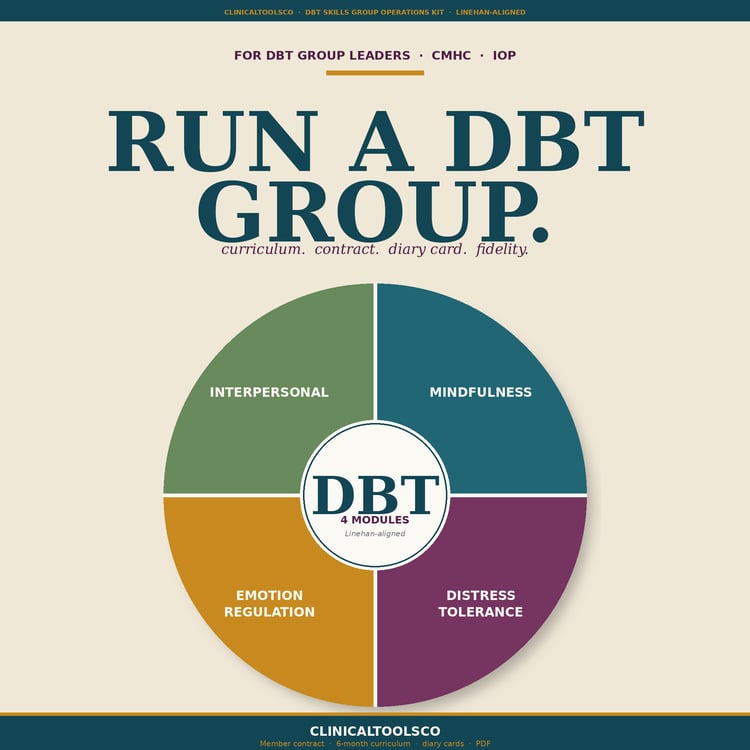
- An annotated sample completed consent for a DBT skills group, showing the level of detail expected for a high-acuity member
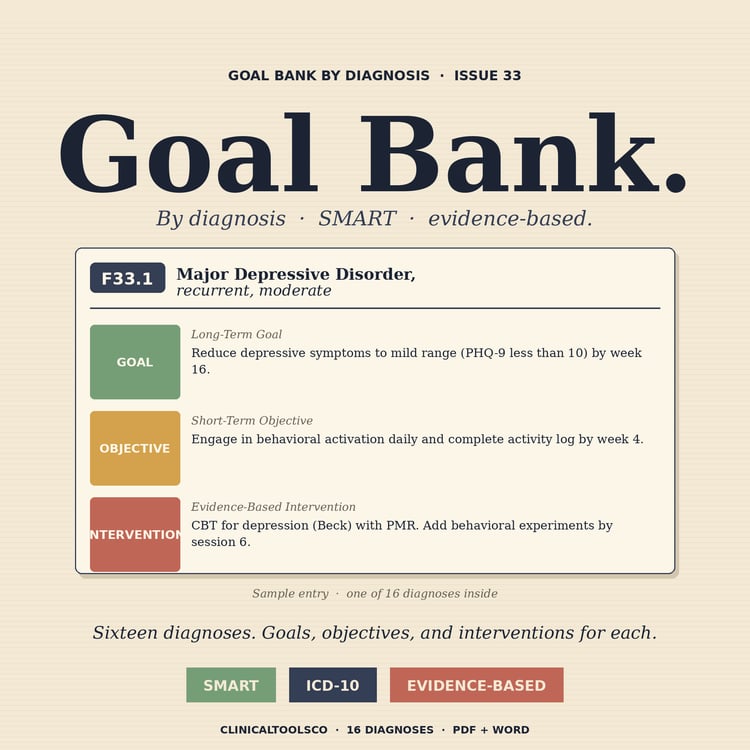
- Group treatment plan template with group-level and member-level elements, including sample cohesion benchmarks, GCQ targets and retention rate, plus a sample member-level DBT goal with diary card and BSL-23 outcome cadence
- Eight-session group curriculum template with the generic arc plus modality-specific variants for process groups, psychoeducation, the full 24-week DBT skills structure, CBT for depression, and Seeking Safety
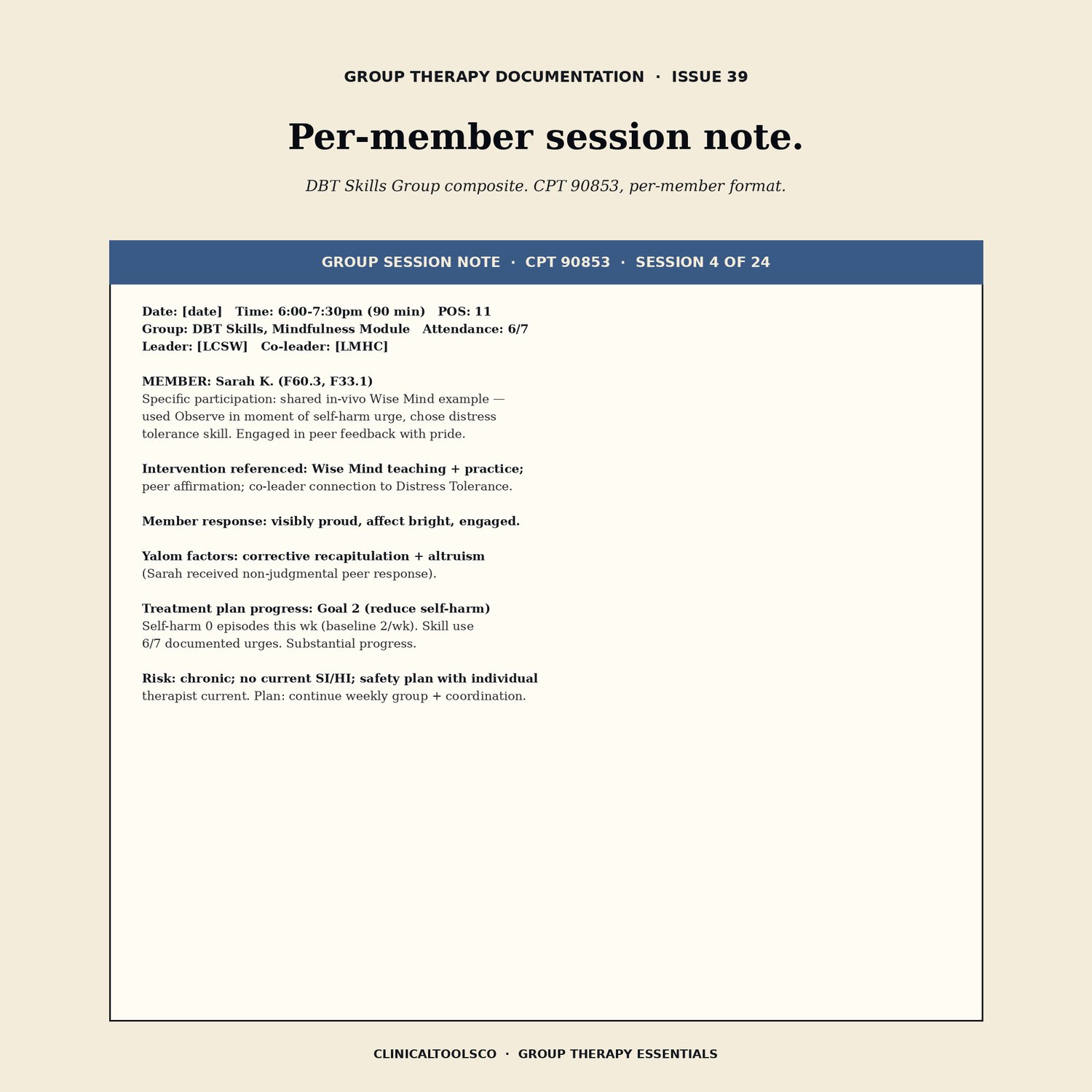
- Group session note template for CPT 90853 in per-member format, covering every required element
- A sample completed group session note with per-member sections for two contrasting members, one highly engaged and one resistant, showing how to differentiate notes
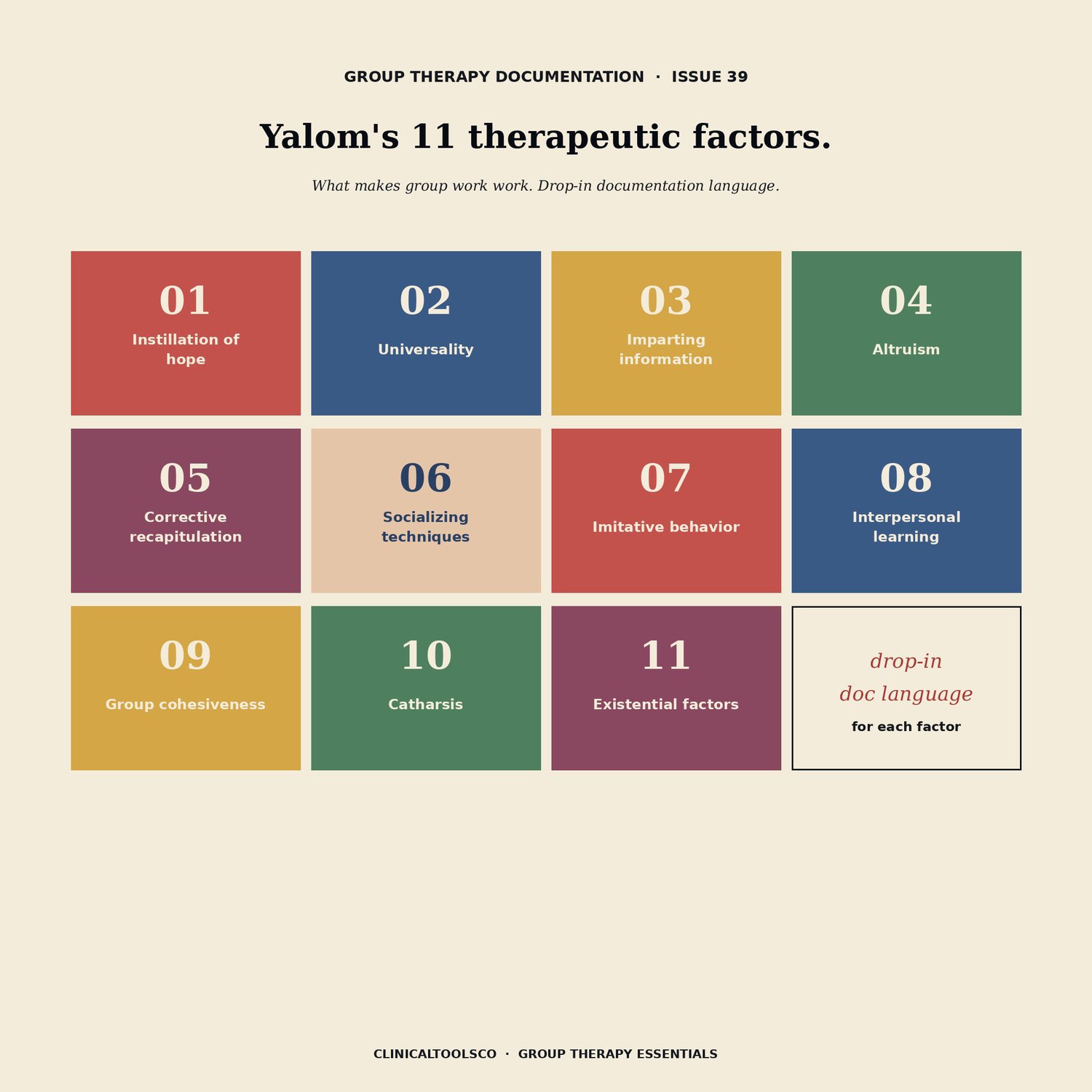
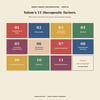
- Yalom's 11 therapeutic factors with specific documentation language for each
- Group dynamics: cohesion building, ruptures, scapegoating and subgrouping, with clinical response protocols for each
- Closed versus open group considerations, including hybrid models
- Co-leader workflow and debrief template: the pre-group agreement covering roles, communication, disagreement handling, member-specific responsibility and crisis response, plus a five-question post-session debrief protocol
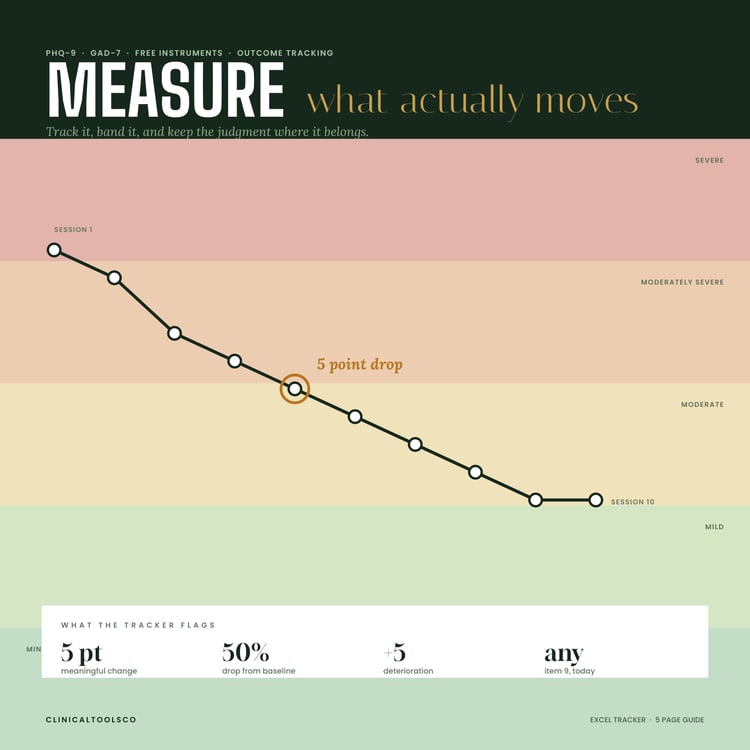
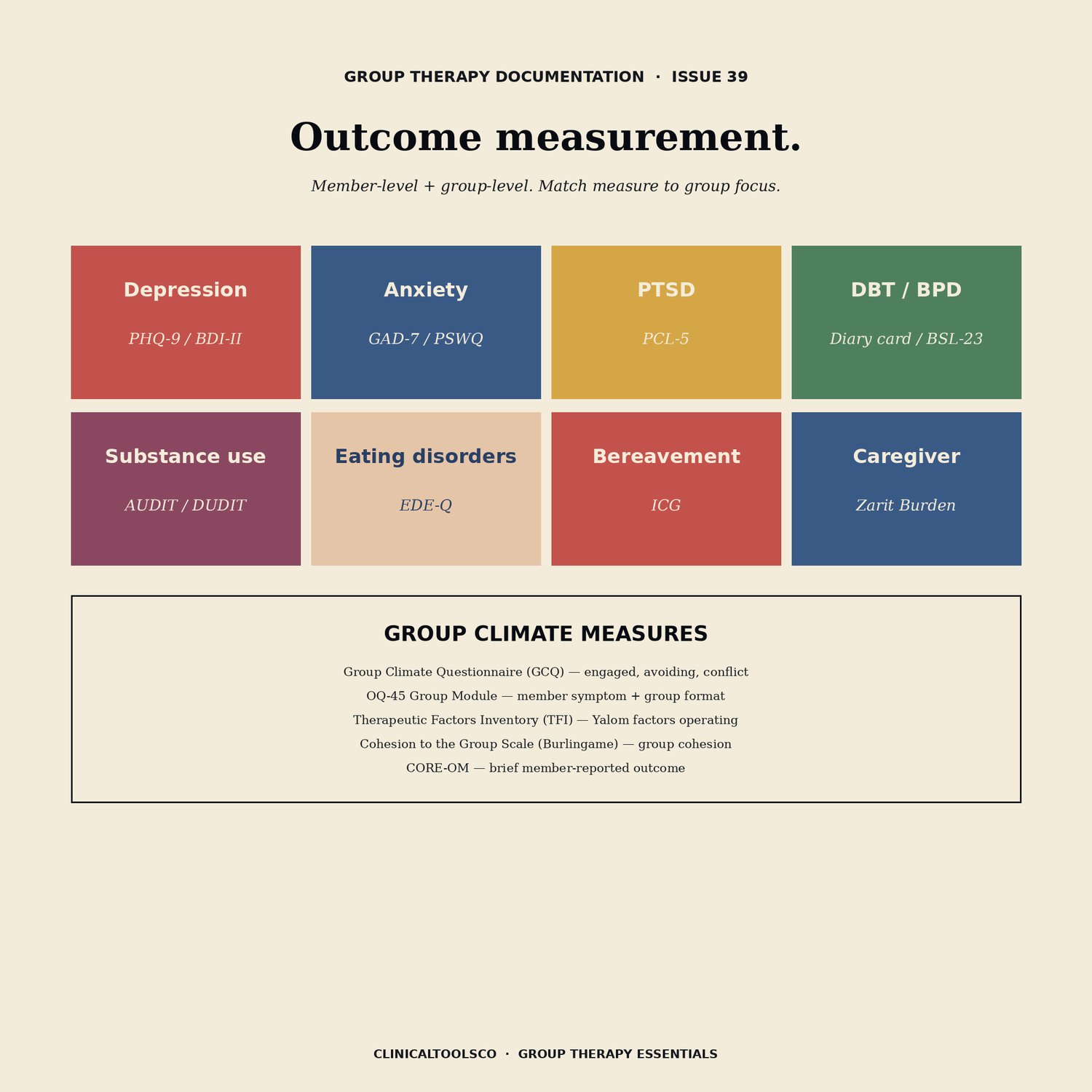
- Outcome measurement plan with member-level symptom measures by group focus and group climate measures, with cadence recommendations
- Process versus psychoeducation note adapter with sample documentation phrases for each format plus hybrid notes
- Telehealth group considerations: member privacy, platform requirements, consent additions, adaptations from in-person, and billing additions
- Billing group therapy: CPT 90853, 90849 and the 90785 interactive complexity add-on, documentation requirements per participant, and common billing errors specific to group work
- Group member termination: planned, member-initiated and clinician-initiated, with criteria, process and a sample termination letter
- Twenty group documentation pitfalls and audit-friendly habits, plus a quick-reference group card for the group room
Who it is for
- Licensed clinicians starting their first therapy group
- Group practice owners standardizing group documentation across associates
- Pre-licensed clinicians and trainees building their first group caseload under supervision
- Co-leaders working together for the first time who need a shared debrief and pre-group agreement
- Agency clinicians running outpatient groups in community mental health or college counseling
- Clinicians transitioning from in-person to telehealth groups
- Clinical supervisors teaching group therapy to supervisees
Why it exists
You finish facilitating a 90-minute group with seven members. You sit down to write seven separate notes, each one justifying medical necessity for that member's diagnosis, tied to that member's treatment plan goal, citing the specific intervention they engaged with. You realize you have one note template, and it was designed for individual therapy.
This is the group binder I built after starting my first depression psychoeducation group and realizing none of my training had covered the documentation. The intake screen, the member-to-member confidentiality consent, the per-member note format that survives a 90853 audit, the outcome measurement plan, the co-leader debrief structure. None of it was in my supervisor's filing cabinet.
47 pages of every form, template, modality framework and clinical reference a clinician running outpatient therapy groups needs, organized into 23 sections. Aligned with AGPA Practice Guidelines and grounded in Yalom and Leszcz's 11 therapeutic factors. Written by a practicing clinician for licensed clinicians and supervised pre-licensed staff.
Why this is different
Most group therapy documentation guidance assumes you are running a structured manualized program with a built-in note template, and forgets that solo clinicians starting their first group have to build the whole paperwork stack from scratch.
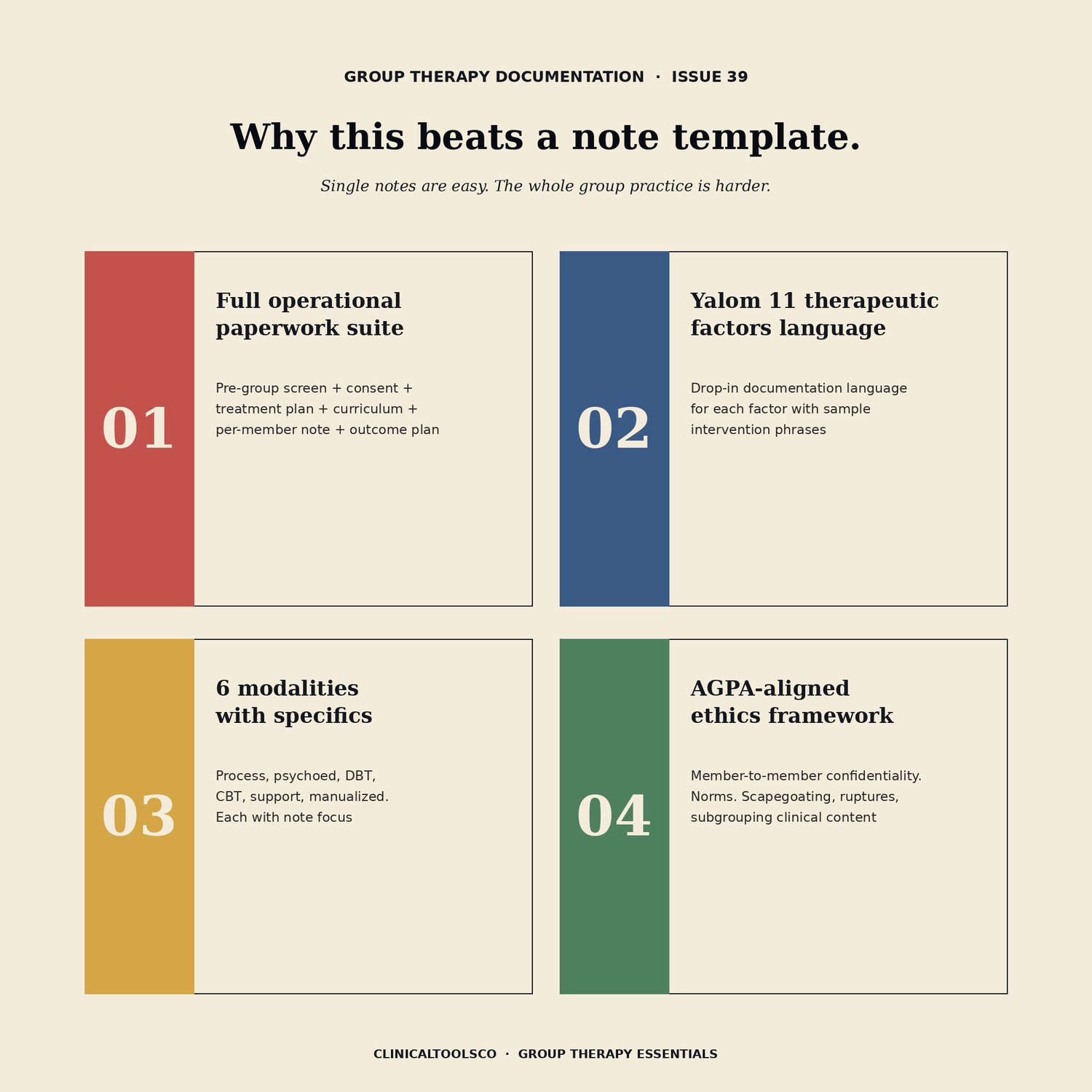
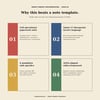
The pre-group screening tool matters because AGPA Practice Guidelines call for screening every prospective member, and skipping it is the single biggest predictor of mid-cycle dropout and group disruption.
The group consent template matters because member-to-member confidentiality is contractual, not legal, and a generic individual-therapy consent does not address it. The nine clauses close the gap, including the recording and screenshot policy that has become essential in telehealth groups.
The per-member group note template matters because CPT 90853 is billed per participant, each member's chart must independently support medical necessity, and a single shared note for the whole group fails audit.
The Yalom 11-factor documentation language matters because process group notes that only describe content miss the actual mechanism by which group therapy works.
The outcome measurement plan matters because group outcomes are tracked at both member and group levels, and the measures that work for individual therapy are only half of what you need.
Format
- Editable, fillable PDF (47 pages)
- Editable Microsoft Word (.docx) with the same content for in-house customization
- Screening, consent, treatment plan, note and curriculum templates ready to drop into your EHR
- US Letter and A4 sizes both included
- Works on Mac, Windows, iPad, GoodNotes, Notability
- Lifetime access, unlimited prints
Updated 2026
References AGPA Practice Guidelines and Yalom and Leszcz, The Theory and Practice of Group Psychotherapy, sixth edition, for the 11 therapeutic factors. Cites APA Ethics Code 10.03, ACA Code Sections A.9 and B.4, NASW Code 1.07(f), and AAMFT 2.2. References named evidence-based group protocols including DBT Skills, CBT for depression, CBT for social anxiety, group Cognitive Processing Therapy, Seeking Safety, MBSR and MBCT. Uses 2026 CPT codes with telehealth modifier 95 and place of service 10 and 02.
A note from the designer
I am a practicing clinician. I built this after starting my first depression psychoeducation group and realizing none of my training had covered the documentation. The section I send every supervisee is Yalom's 11 factors with documentation language, because process group notes that only describe content miss the clinical mechanism actually doing the work.
Good group work depends on good documentation.
Digital download. No physical product ships. Reach out by email if anything does not work or if you have questions.