






HIPAA Intake and Consent Toolkit for Therapists (2026)
Every intake form, agreement and protocol a US outpatient mental health practice needs, updated for the April 2024 HIPAA Privacy Rule changes on reproductive health care.
What is in the bundle
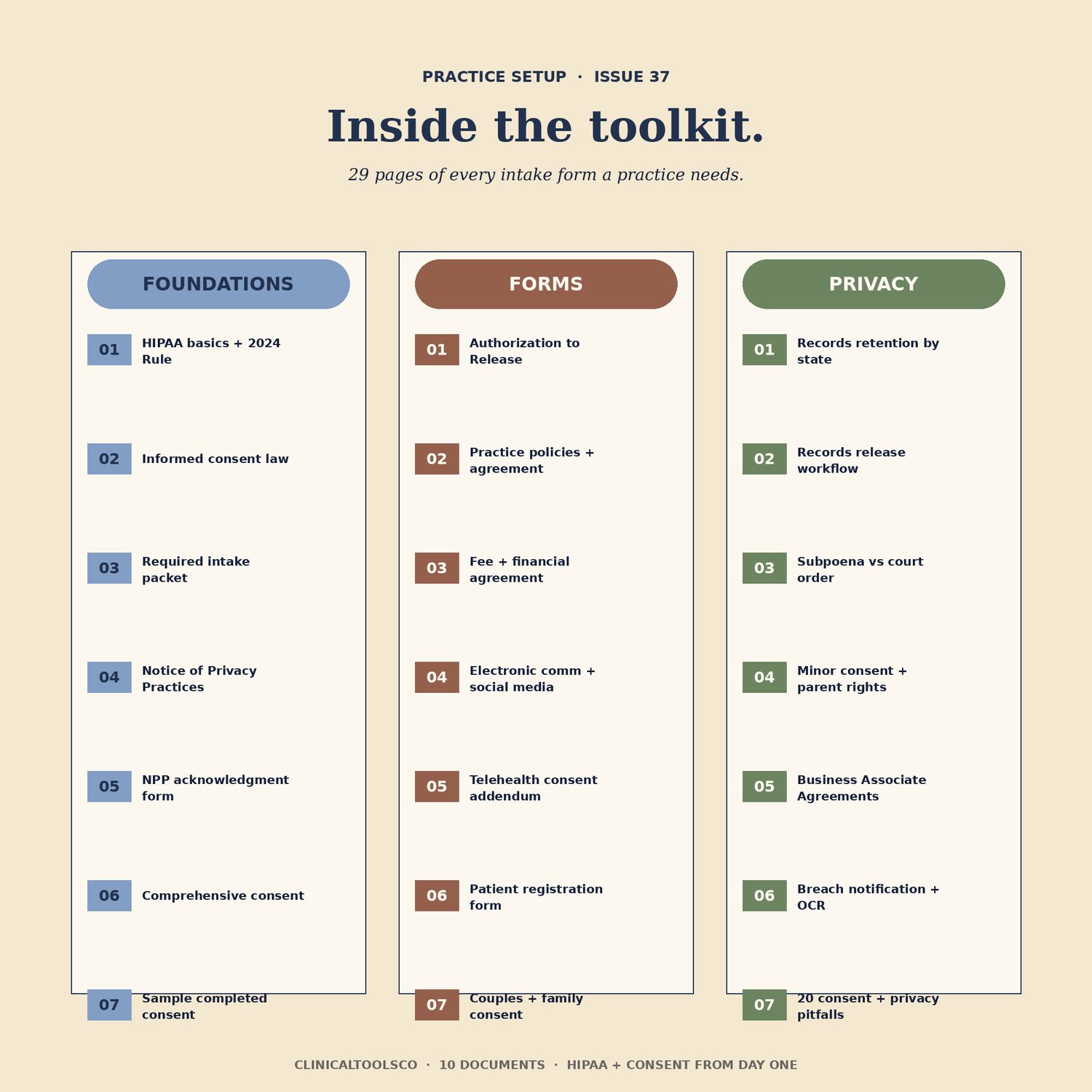
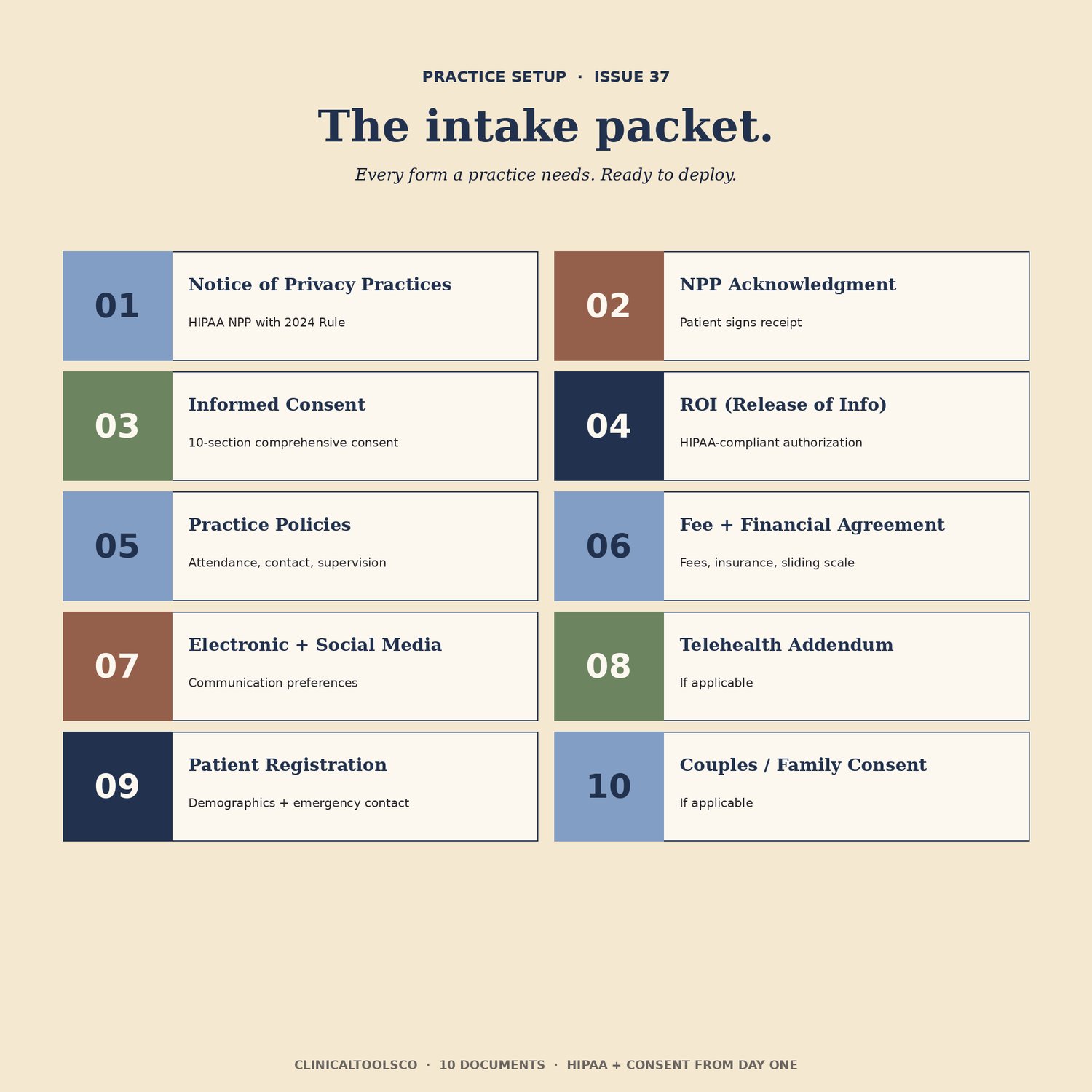
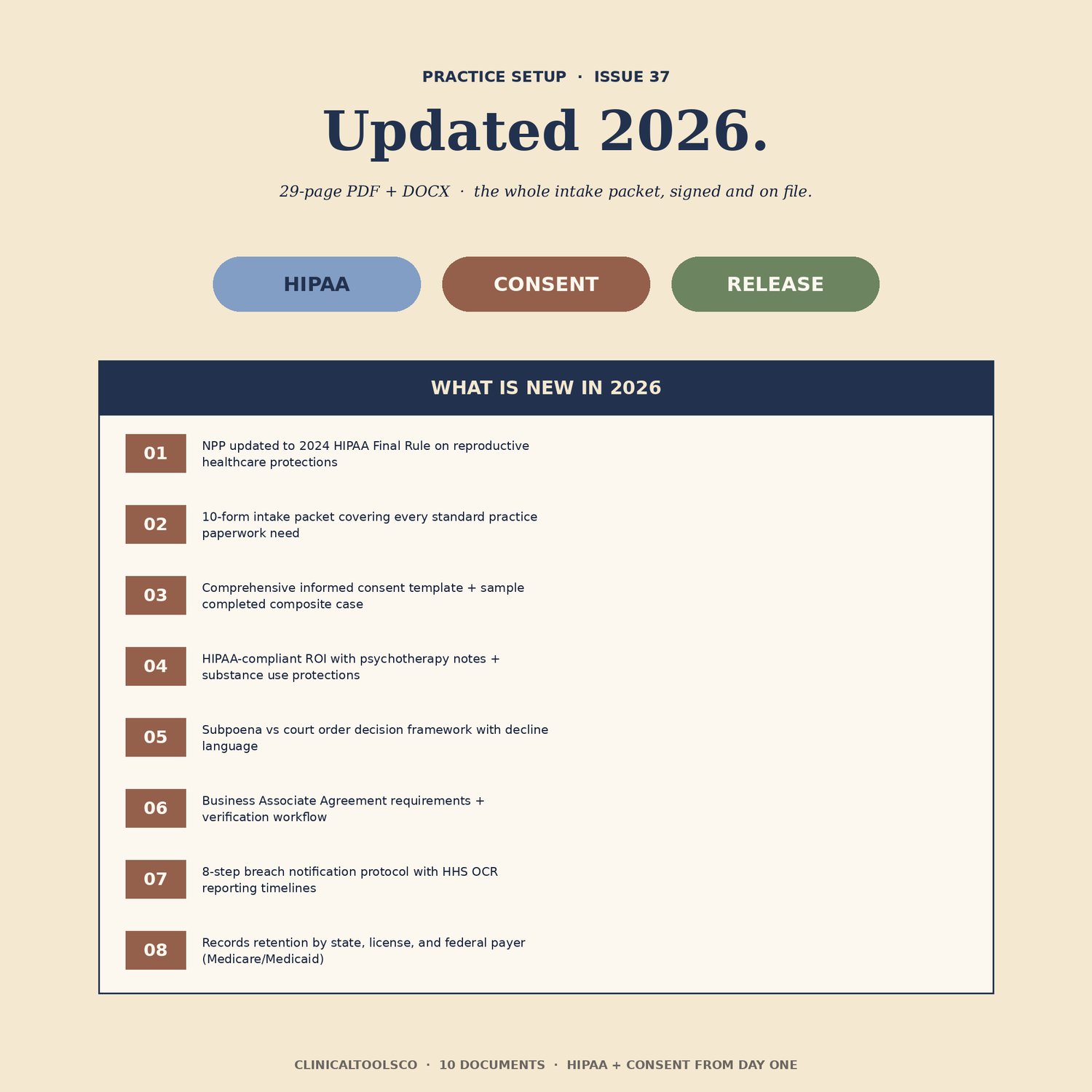
- Setup foundation: HIPAA Privacy Rule and Security Rule basics, the 2024 Reproductive Health Final Rule with the NPP language it requires, an informed consent law and ethics crosswalk (APA 10.01, ACA A.2, NASW 1.03, AAMFT 1.2, AACAP), and the full intake paperwork checklist.
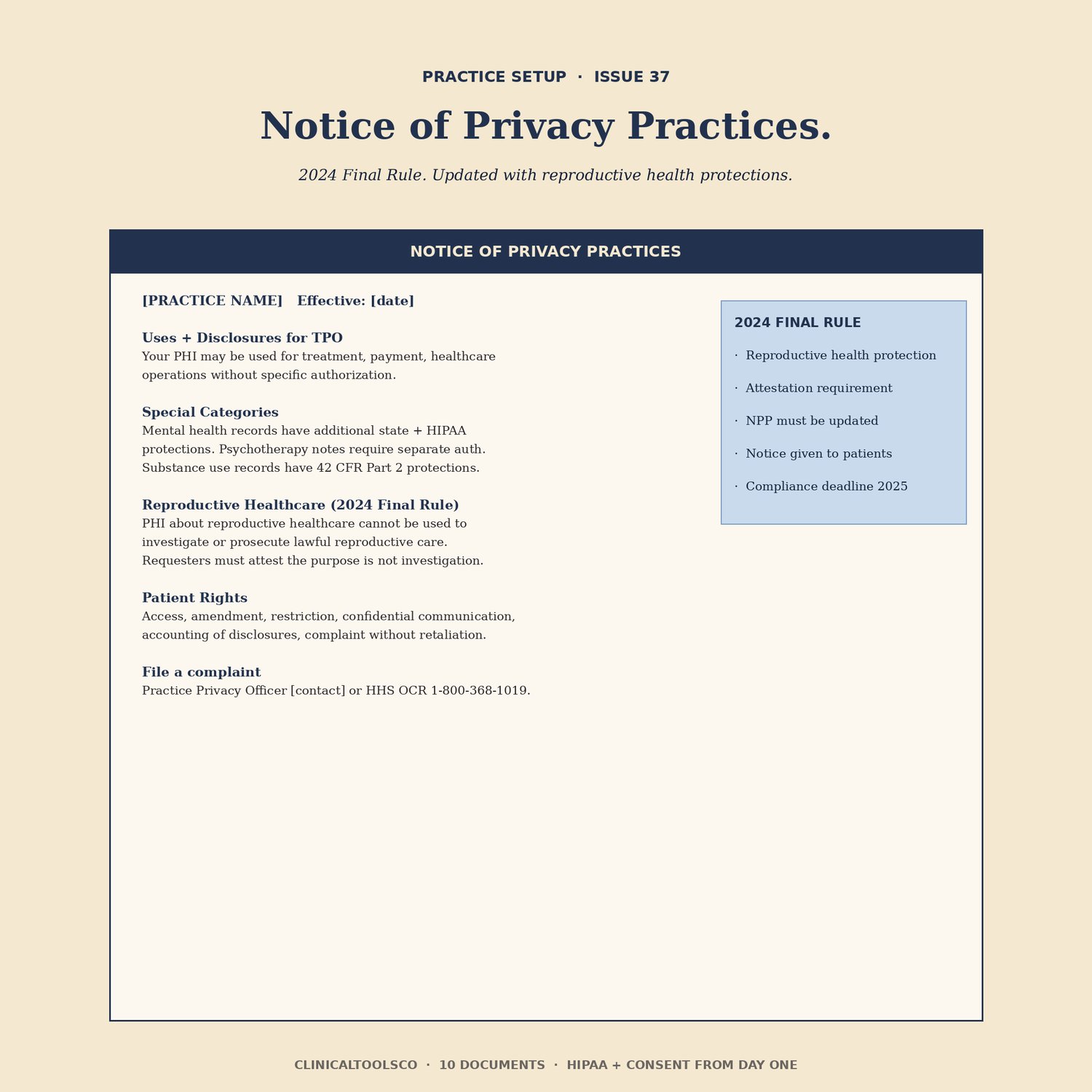
- A Notice of Privacy Practices template with the 2024 reproductive healthcare protection language built in, ready to drop onto your practice header, plus an NPP acknowledgment form including the patient-declined-to-sign documentation block.
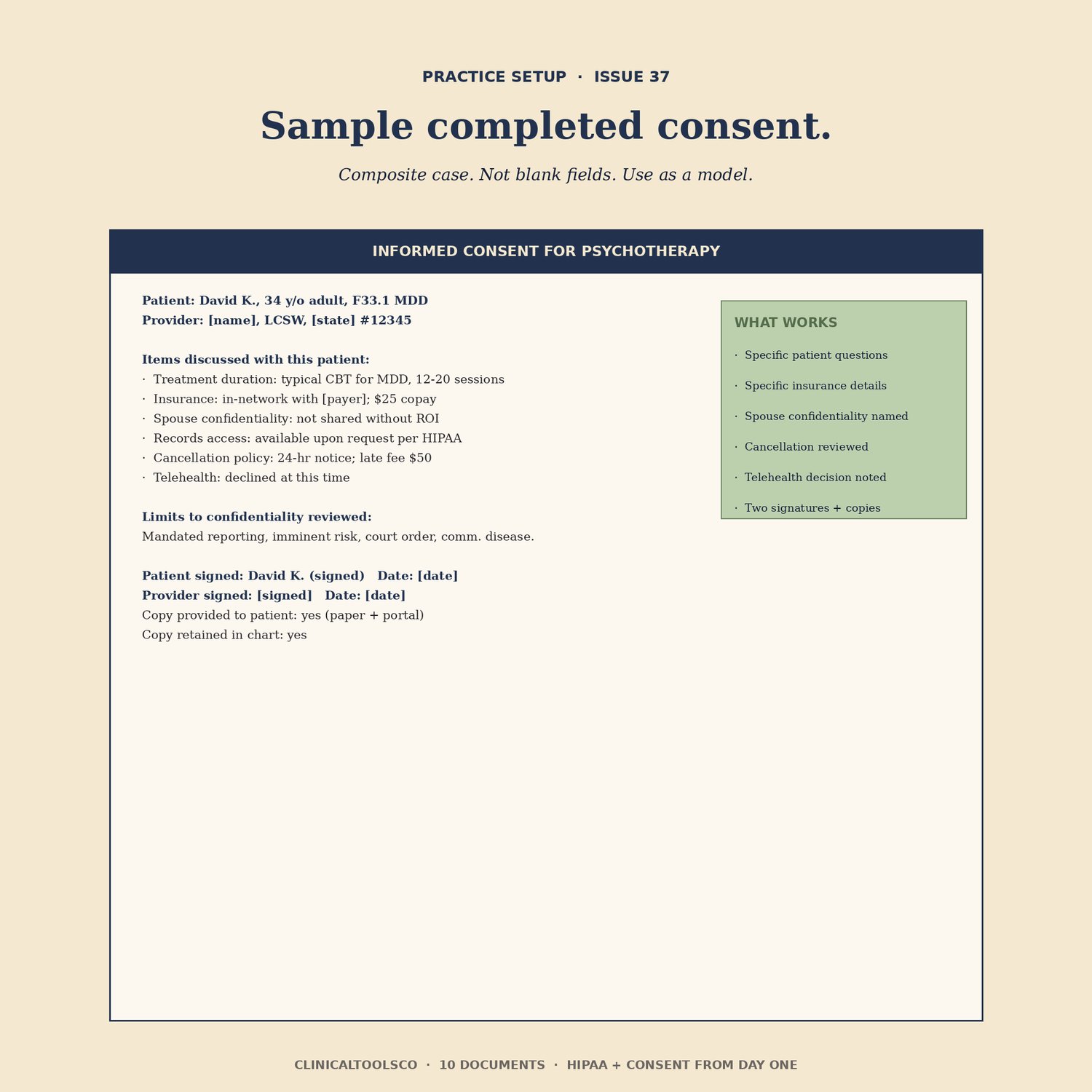
- A full informed consent for treatment template across ten numbered sections covering nature of services, benefits and risks, alternatives, provider qualifications, limits to confidentiality, electronic records and communication, telehealth handoff, fees and insurance, patient rights, and acknowledgment. Plus a completed sample showing the patient-asked-about items documented at the level state boards expect.
- A HIPAA-compliant Authorization to Release Information with per-recipient fields, type-of-information checkboxes, explicit exclusions for psychotherapy notes and 42 CFR Part 2 substance use records, expiration options, and a re-disclosure notice.
- Practice Policies and Patient Agreement covering attendance, cancellation, between-session contact, after-hours, communication methods, supervision disclosure, records, and termination. A Fee and Financial Agreement with every common session-type fee line, in-network, out-of-network with superbill, and cash options, sliding scale, late and no-show fees, and balance and collections language.
- An Electronic Communication and Social Media Policy with a communication-method election checklist and a five point clinician social media policy covering friend requests, professional accounts, online encounters, reviews, and complaint channels. Plus a telehealth consent addendum for practices not running a full telehealth toolkit.
- A Patient Registration and Demographic Intake Form with preferred name and pronouns, emergency contact, insurance, referral source, provider coordination authorization, reason for treatment, mental health history, medical history, and additional context.
- Records retention rules: federal benchmarks (HIPAA 6 years for compliance documents, Medicare 7, Medicaid state-specific, Tricare 4), by-license benchmarks for psychologists, LCSWs, LMFTs, LPCs, and psychiatrists, and successor plan requirements with a Designated Records Custodian. Plus records release after termination, covering the HIPAA 30 day timeframe with one extension and the special protections for psychotherapy notes, test data, 42 CFR Part 2 records, reproductive healthcare PHI, and minor records.
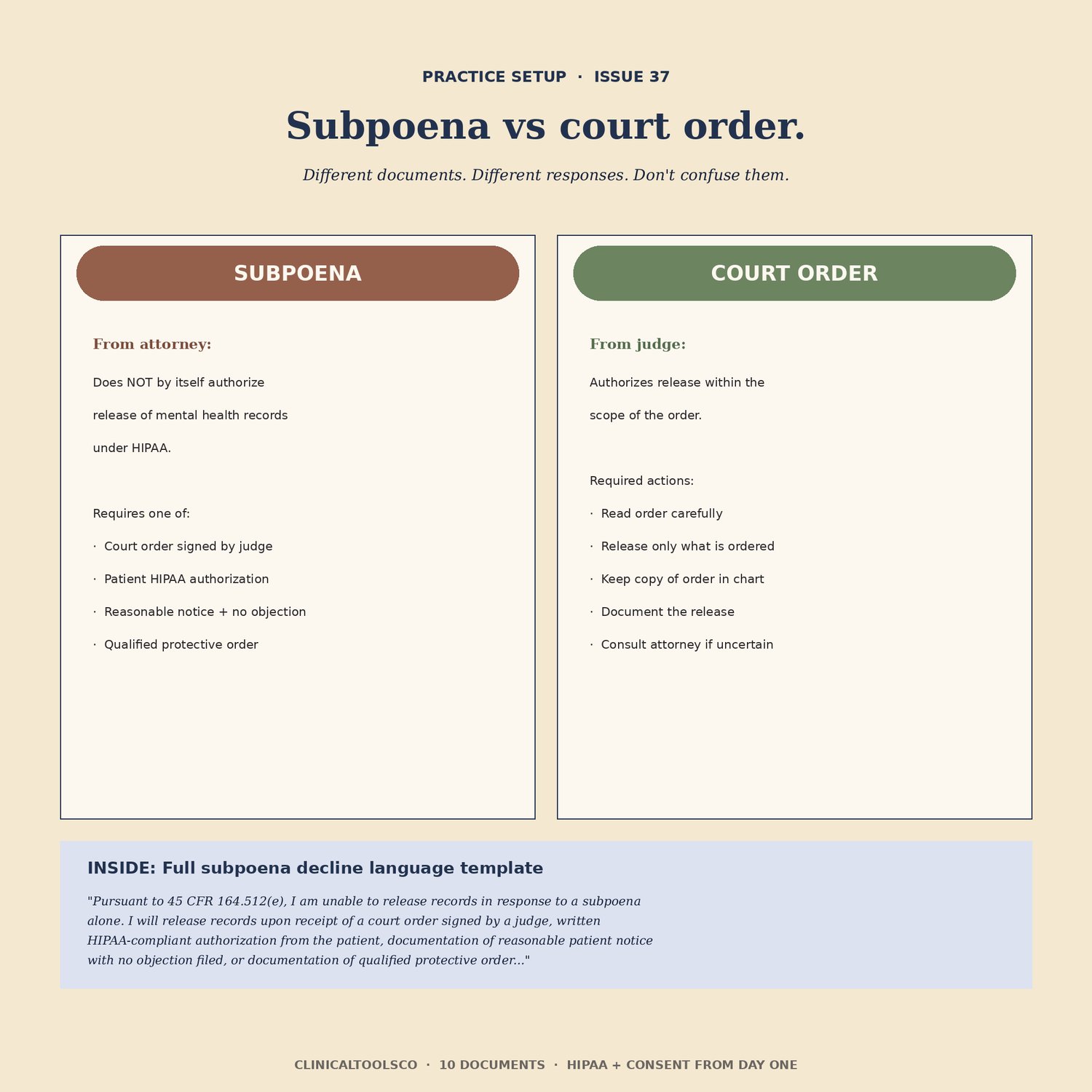
- A subpoena and court order response framework: the distinction between the two, and a full response letter template citing 45 CFR 164.512(e) and walking the four conditions under which release is justified.
- Minor consent and parental rights by state including the mature minor doctrine and records access patterns. Couples and family consent covering group identification logic, a no-secrets policy addendum, and the conflict-of-interest rule for post-relationship individual therapy.
- Business Associate Agreements: required elements, the common business associates for a therapy practice (EHR, telehealth platform, billing service, cloud storage, secure email, transcription), and an annual verification workflow.
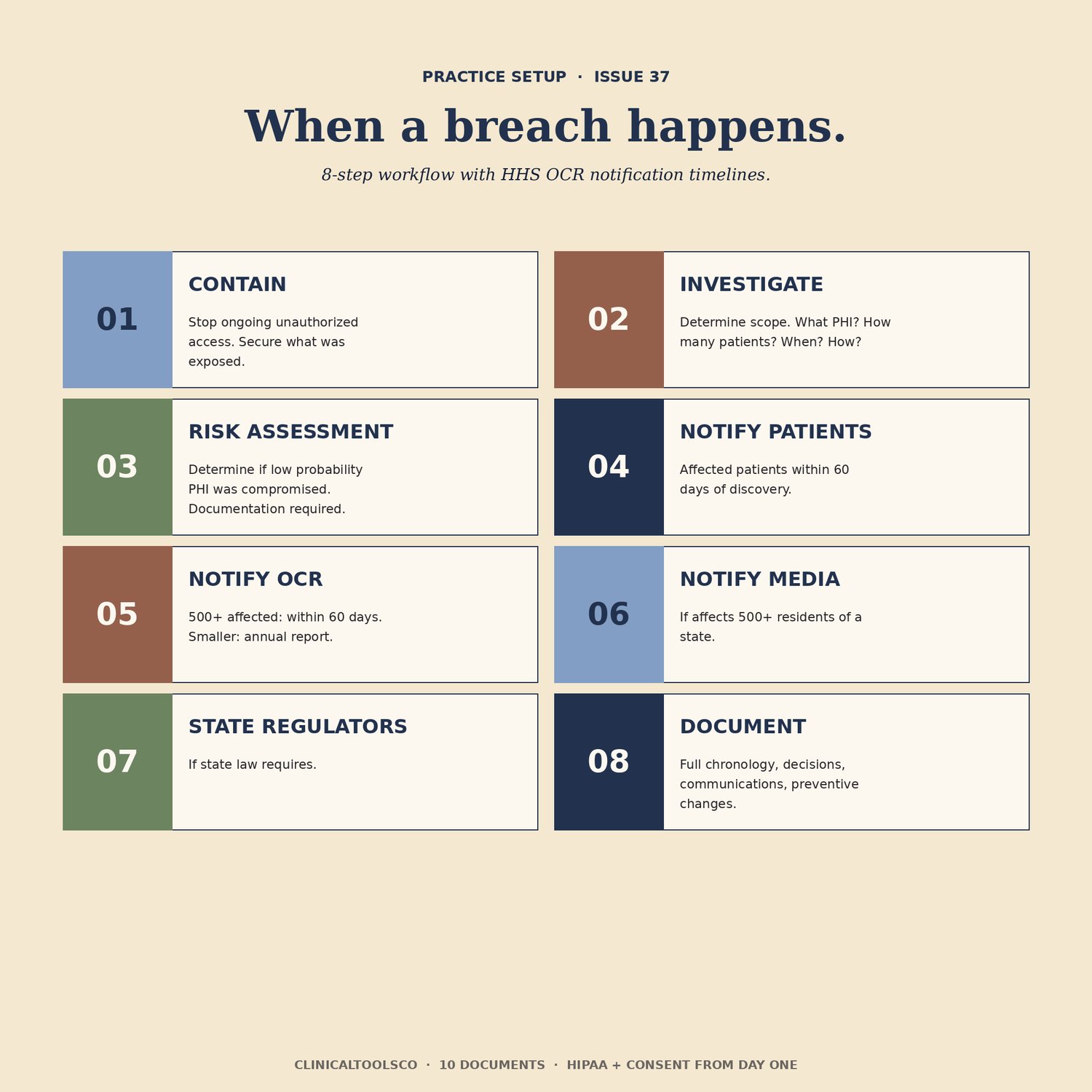
- A breach notification protocol: an eight step workflow from contain to document, the elements of a patient breach notification letter, and the OCR portal and timing rules, 60 days for breaches affecting 500 or more, annual for smaller ones.
- Twenty common consent and privacy pitfalls with an audit-friendly habits list, and a one-page quick-reference intake card.
Who it is for
Solo clinicians building or rebuilding an intake packet. Group practices standardizing paperwork across associates. Pre-licensed clinicians, postdocs, and trainees building first-time forms under supervision. Practice managers and clinical administrators handling compliance. Anyone updating an existing packet for the 2024 rule. Anyone who just received a first subpoena and needs a response template tonight. Supervisors teaching intake paperwork. Telehealth-only practices. Clinicians moving from agency to private practice and building their own forms for the first time.
Why it exists
Your practice opened in 2019 and the Notice of Privacy Practices still references the original Privacy Rule. The 2024 Reproductive Health Final Rule deadline came and went. A subpoena arrived last week, and the only thing in the folder labeled Subpoena Response is a Word document somebody emailed you from their dissertation in 2016.
42 pages, 23 sections. Every intake form, agreement, and protocol a US outpatient mental health practice needs, updated for the April 2024 HIPAA Privacy Rule Final Rule on Reproductive Healthcare.
Why it is built this way
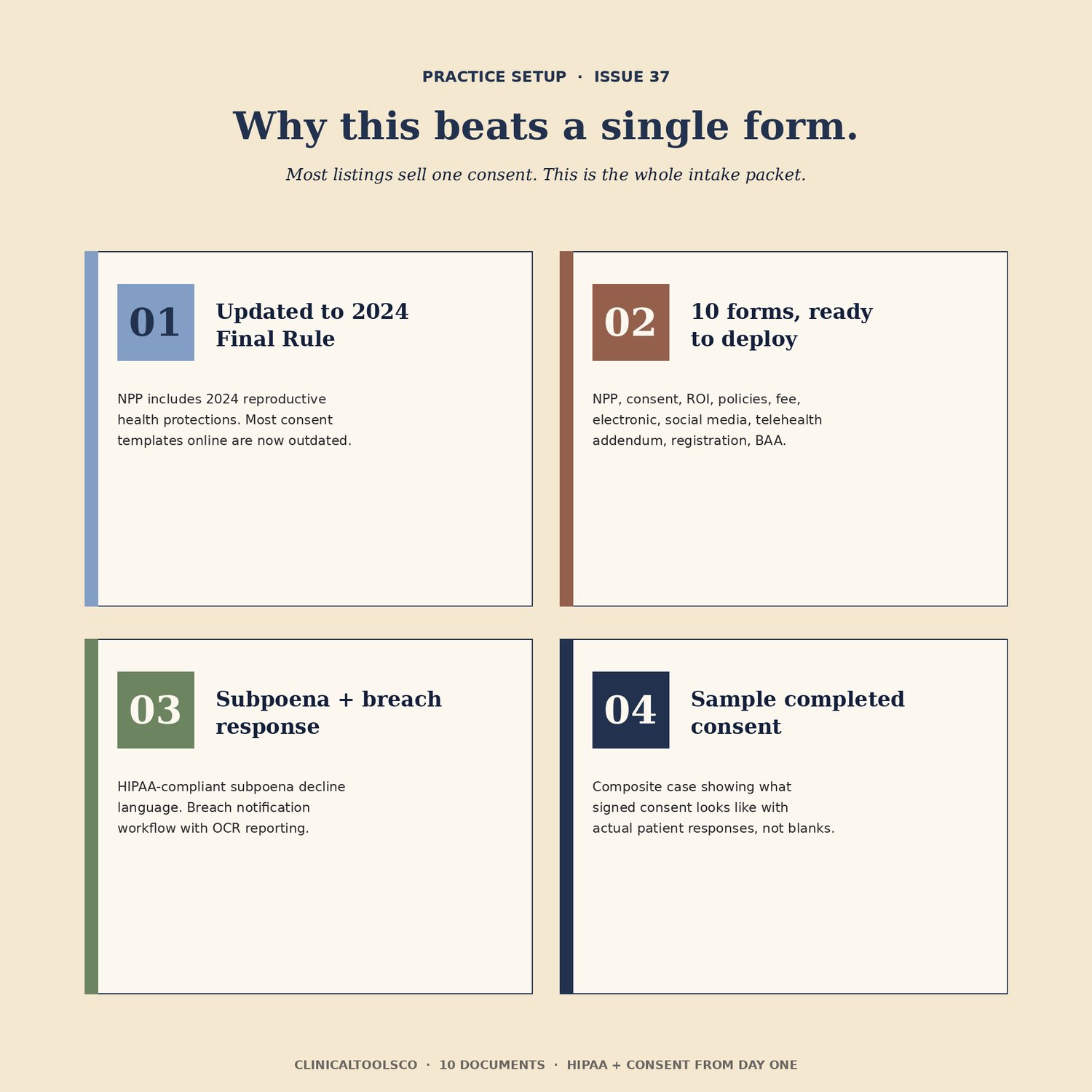
Most HIPAA and consent material for therapists online is at least five years out of date. The April 2024 Reproductive Health Final Rule changed what every NPP must include and what disclosures are now explicitly prohibited, and most templates never caught up.
The NPP is the first document the HHS Office for Civil Rights will look at if a complaint is filed against your practice.
The most common HIPAA error in independent practice is using one generic release to cover unrelated disclosures. The version here is per-recipient and per-information-type, with the records that need separate authorization carved out explicitly.
Most subpoenas served on mental health practices come from attorneys, not judges, and HIPAA does not authorize release on a subpoena alone. The response letter cites the regulation and walks the four conditions, and it can go out the day the subpoena arrives.
The breach clock starts at discovery, OCR posts breaches affecting 500 or more publicly, and the procedure has specific notification, documentation, and reporting steps. The workflow here is what a HIPAA attorney would walk you through.
The twenty pitfalls section reverse-engineers the most common OCR enforcement actions and state board complaints against small practices, so you can audit your own paperwork before a complaint forces it.
Format
Editable, fillable PDF, 42 pages. Editable Microsoft Word (.docx) with the same content for in-house customization. Every form is ready to drop onto letterhead or load into your EHR. US Letter (8.5 x 11) and A4 (8.3 x 11.7) both included. Works on Mac, Windows, iPad, GoodNotes, and Notability. Lifetime access, unlimited prints.
Updated 2026
References the April 2024 HIPAA Privacy Rule Final Rule on Reproductive Healthcare with the required NPP language. Cites the Privacy Rule (45 CFR 164.500), Security Rule (45 CFR 164.300), Breach Notification Rule (45 CFR 164.400), and subpoena response under 45 CFR 164.512(e). Cites 42 CFR Part 2 for substance use disorder records. References APA Ethics Code 10.01, ACA Code A.2, NASW Code 1.03, AAMFT Code 1.2, and AACAP. Crisis language uses the 988 Suicide and Crisis Lifeline.
How to use it
New practice: read the foundation sections, build out the templates with your practice details, and save the result as your intake packet. Existing practice: open the NPP template next to your current one and update for the 2024 language, then audit your releases and your BAAs against the matching sections. Subpoena on the desk this week: the response letter goes out the same day. Possible breach: that is the section to know cold before you need it. Print the intake card and tape it where intakes happen.
Instant digital download. No physical product ships. Message us if anything does not work.
This is a practice paperwork reference, not legal advice. Verify against your state's requirements and your own counsel before deploying.