
Licensing Exam Retake Plan (2026)
A 24 page retake plan for anyone who failed a licensing exam: find out why it happened before you study again.
24 pages, bookmarked PDF plus an editable Word version
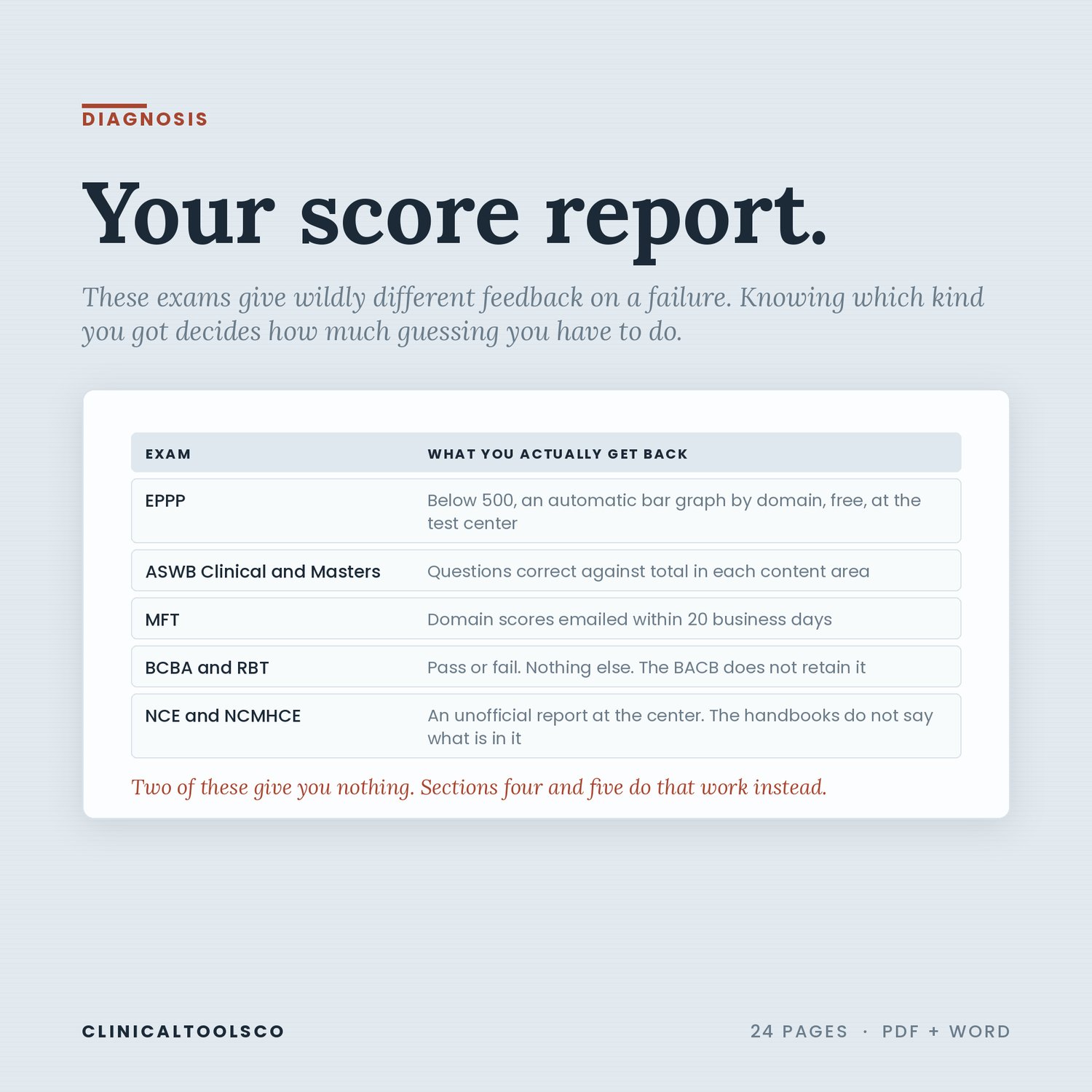
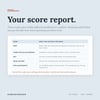
- A decoder for what your score report actually tells you, exam by exam, because these exams give wildly different feedback on a failure
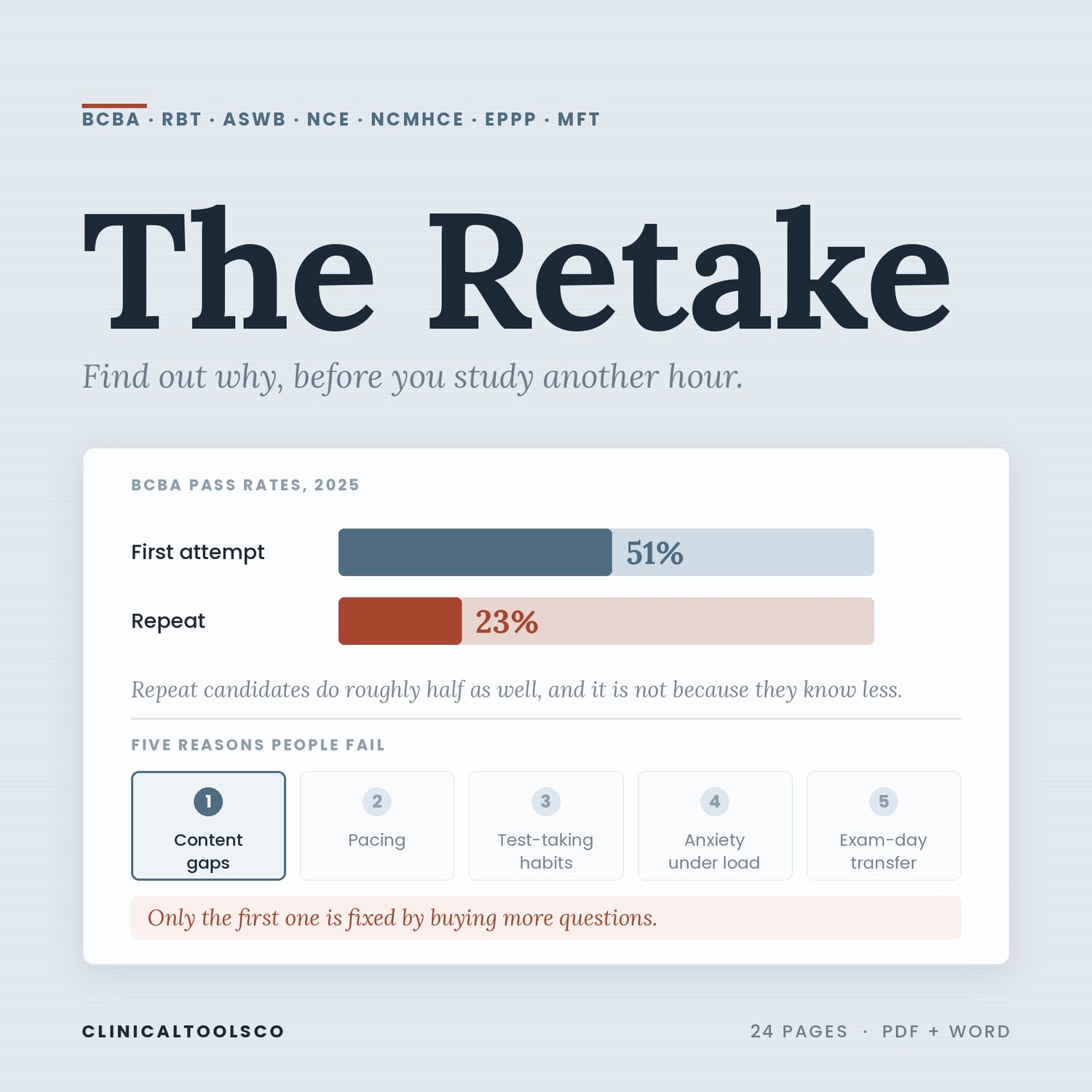
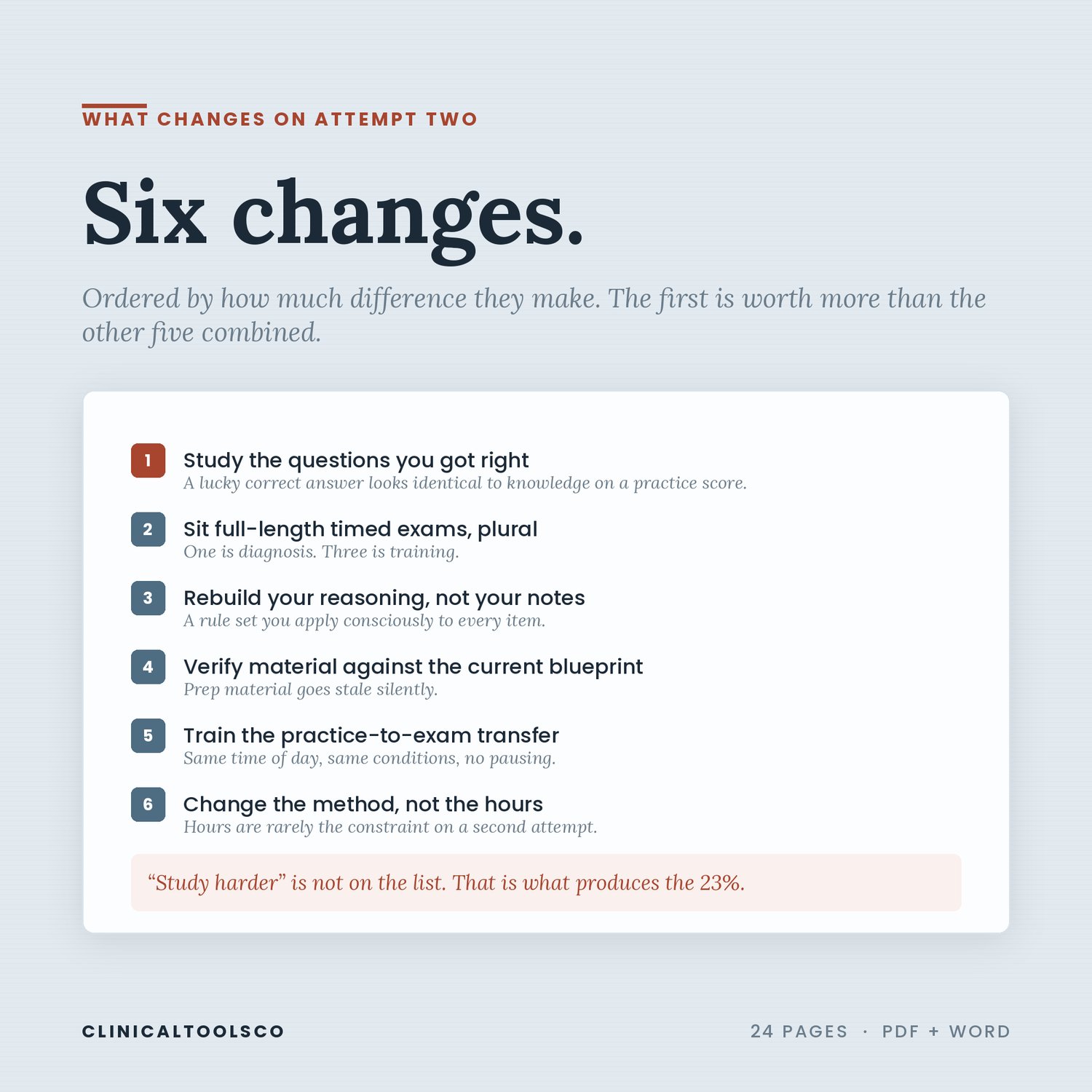
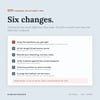
- The five reasons people fail, only one of which is fixed by buying more content
- A scored self-diagnosis, so you find out which of the five was you
- A domain triage grid that weights your gaps by exam share before you spend an hour studying
- Six week and ten week rebuild schedules
- A test-day rule set for anyone who knew the material and could not show it
- A section for people whose practice scores were fine and whose exam score was not
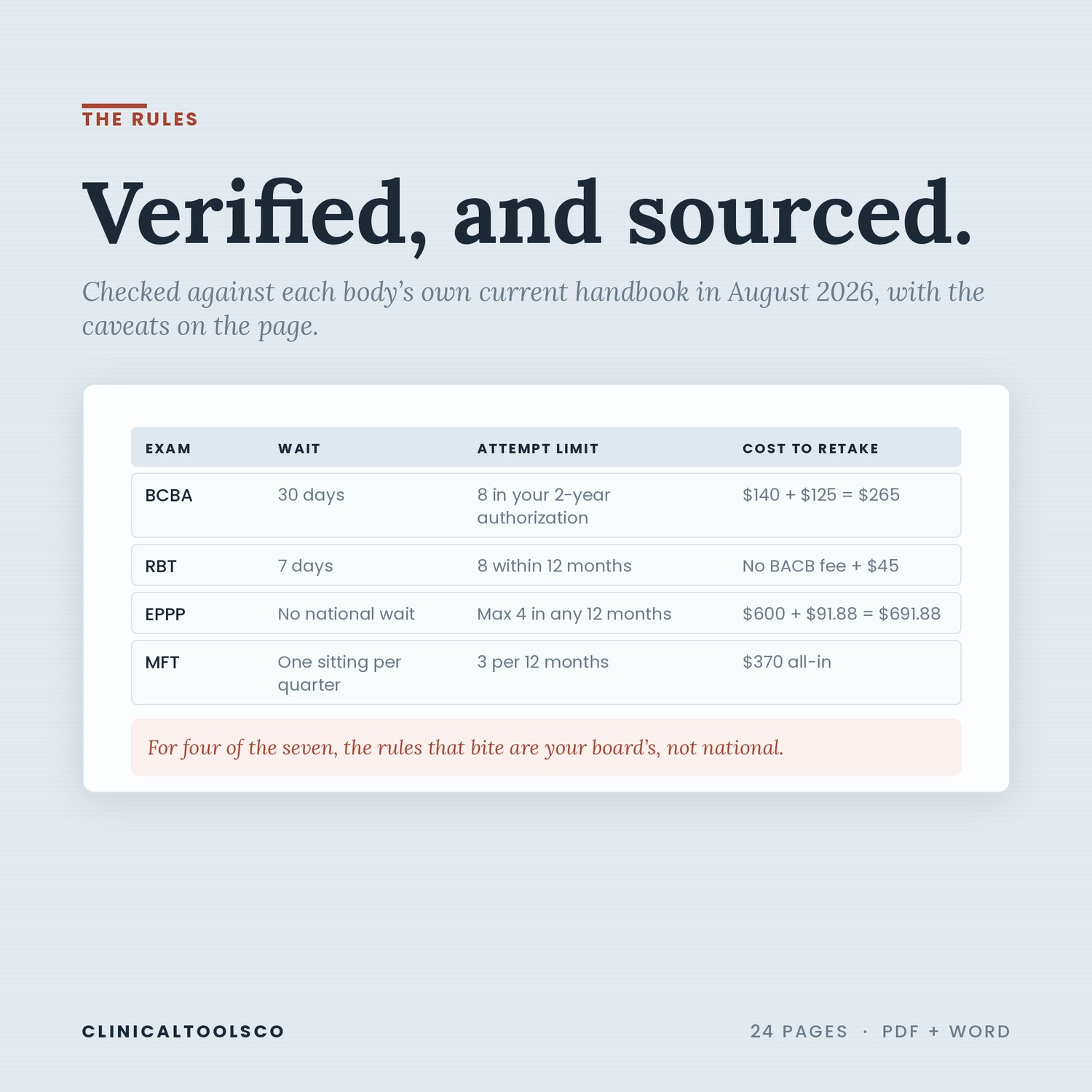
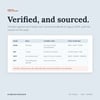
- Verified retake rules, waiting periods and fees, each one sourced
- A board call worksheet, because for several of these exams the rules that matter are set by your board and not nationally
- A study log and a final week protocol
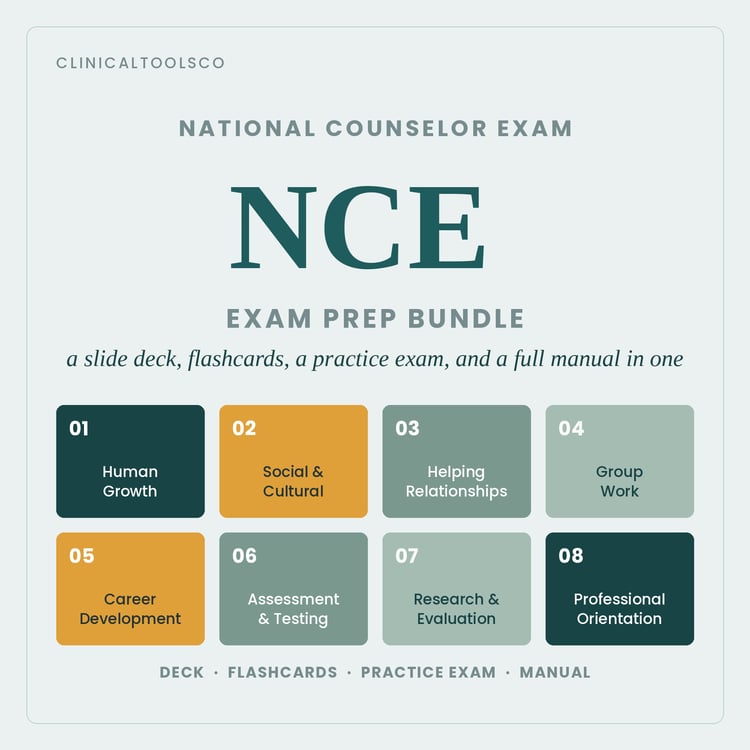
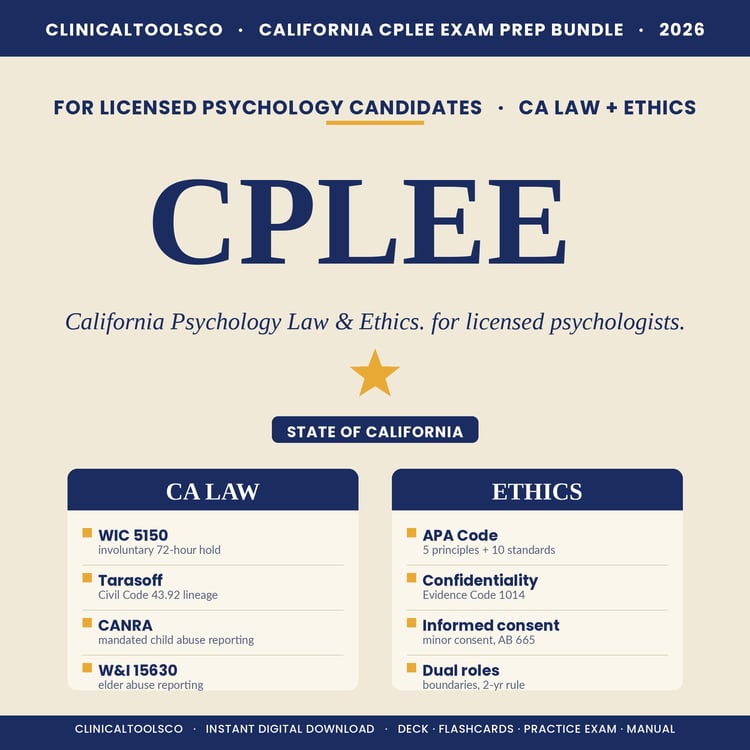
Exams covered. BCBA, RBT, ASWB Clinical, ASWB Masters, NCE, NCMHCE, EPPP and the National MFT exam.
Who it is for
Candidates preparing for a second or later attempt at the BCBA, RBT, ASWB Clinical, ASWB Masters, NCE, NCMHCE, EPPP or National MFT exam.
Why a retake needs its own plan
In 2025 the BCBA exam had a first-time pass rate of 51 percent. The repeat pass rate was 23 percent. On the RBT exam it was 75 percent first time and 38 percent repeat.
Repeat candidates do roughly half as well as first timers, and it is not because they know less. It is because most of them study the same way twice.
That is the whole reason this exists. Every other prep product in this store is built for a first attempt. You are not on a first attempt, and the difference is not a detail.
Most people who fail assume the problem was knowledge, because knowledge is the only cause that feels like a legitimate reason to have failed. The other four feel like personal deficiencies, so they get quietly ruled out and another question bank gets bought. Then the exam is sat again with the same timing problem, the same test-taking habits and the same arousal curve. That is what the 23 percent is made of.
This makes you find out which of the five it actually was before you spend another dollar on content. If your problem is pacing, no question bank on earth fixes it.
Every retake rule, waiting period, fee and pass rate was checked against the credentialing body's own current handbook in August 2026, and the source is named so you can check it yourself. Where a figure varies by jurisdiction it says so, rather than giving you a clean national number that might be wrong. Where the official sources contradict each other, and for one of these exams they do, it shows you both and tells you to call your board. There is a great deal of confidently wrong information about retake rules on prep company blogs, and some of it will cost you a testing window.
Failing a licensure exam is a common professional event, not a verdict on whether you belong in this field. Roughly half of BCBA candidates and a quarter of ASWB Clinical candidates do not pass on a given attempt, and almost all of them go on to practice. The exam measures how you perform on a standardized multiple-choice instrument on one particular morning. It does not measure whether you will be good at this work.
Format
Print-ready PDF, US Letter and A4, plus a fully editable Word file so you can adapt the schedules to your own dates. Instant download, no app and no subscription.
An independent study resource. Not affiliated with, endorsed by, or sponsored by the BACB, ASWB, NBCC, ASPPB, AMFTRB or any prep company, and not a guarantee of a passing score. Confirm any date-sensitive rule with your own board before you rely on it.
Prefer to listen? Episode 10 of The Prep Room, our free exam-prep podcast, is on what to change before the retake: reading the score report, the five reasons people fail, and a plan for the retake. It ends with ten exam-style questions.
Watch free on YouTube: