
Measurement Based Care Pack (2026)
A measurement based care system for PHQ-9 and GAD-7: an Excel tracker that computes severity, change and flags for each client, plus a five page guide.
What you get
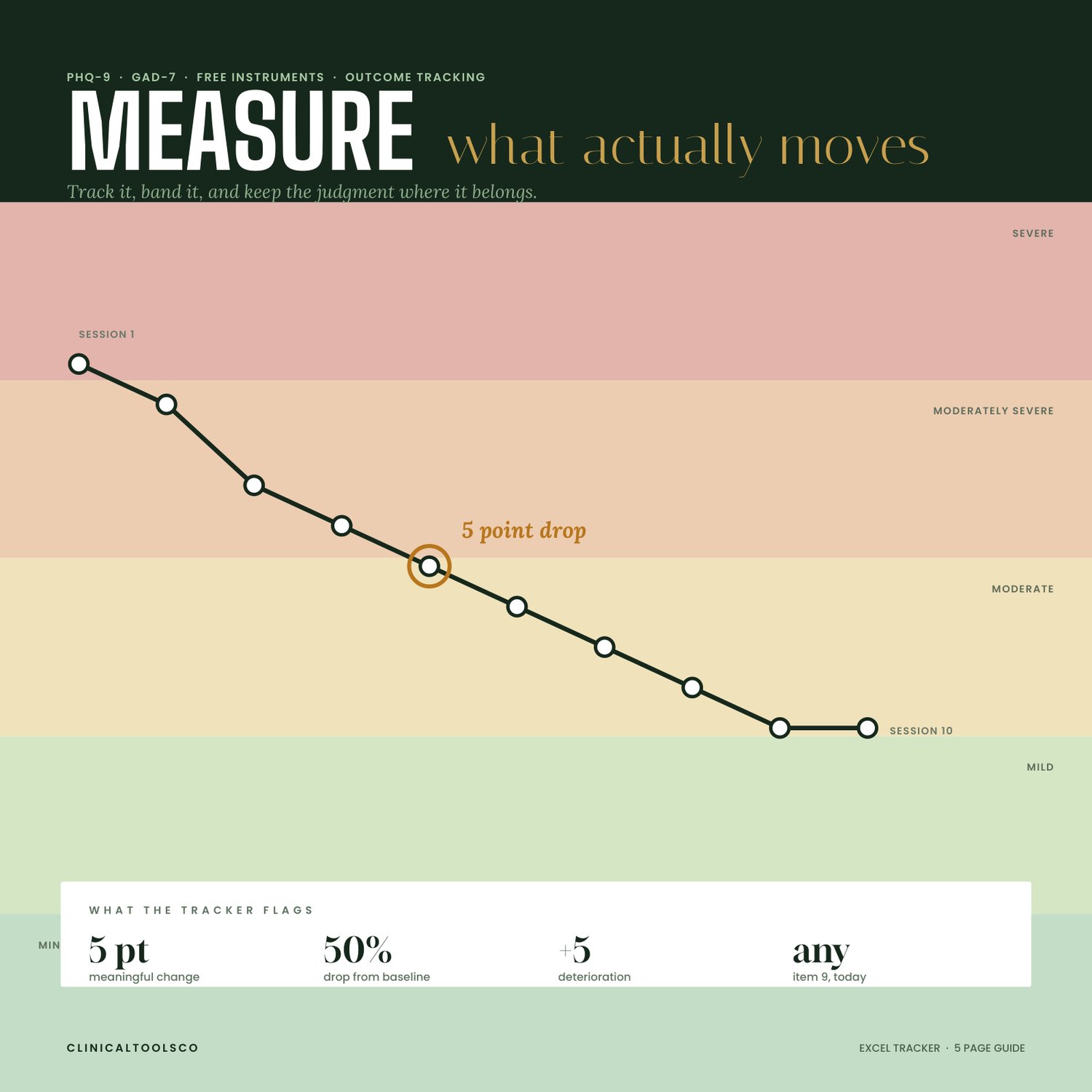
- An Excel tracker with one tab per client: severity band, change from baseline and flags compute themselves, with a trajectory chart
- Flags that follow published conventions for meaningful change, response and deterioration
- A separate rule for PHQ-9 item 9
- A five page guide to making measurement work with a real caseload
Who it is for
Outpatient clinicians who want to track outcomes without new software.
How it works
Clinicians who track outcomes catch deterioration earlier and defend their care better, and the two most validated brief instruments in outpatient mental health are free to use without permission. What is missing is the working system around them. This is that system.
The Excel tracker holds one tab per client: enter PHQ-9 and GAD-7 totals after each administration and the severity band, change from baseline, and flags compute themselves, with a chart that draws the trajectory. The flags follow published conventions: a five point PHQ-9 drop as meaningful change, fifty percent below a baseline of ten or more as response, a five point rise as a deterioration prompt. And item 9 gets its own rule, because any endorsement of the self-harm item is a same-day clinical matter, not a cell in a spreadsheet, and the tracker says so.
The guide covers the parts that decide whether measurement survives contact with a real caseload: the thirty second introduction that keeps it collaborative rather than surveillance, the cadence policy, reading scores like a clinician instead of worshiping them, and a table of note language that turns trajectories into progress evidence for charts, treatment plan updates, and reauthorization requests.
Format
Excel tracker plus a five page PDF guide. Administer the instruments from the official free forms at phqscreeners.com; this pack tracks and interprets scores.
Severity bands and change markers are published conventions, not diagnoses. Scores inform clinical judgment and never replace it.