
Medical Necessity Language Bank (2026)
Nobody ever told you how long a note has to be. Not in graduate school, not in supervision, and not by any payer. There is no published standard and no agreed answer to what enough documentation means, and yet you are the one holding the risk when somebody decides to read six months of your notes.
This does not invent a standard. It gives you a structure, language that describes real clinical work accurately, and a way to check your own notes before someone else does.
What is inside
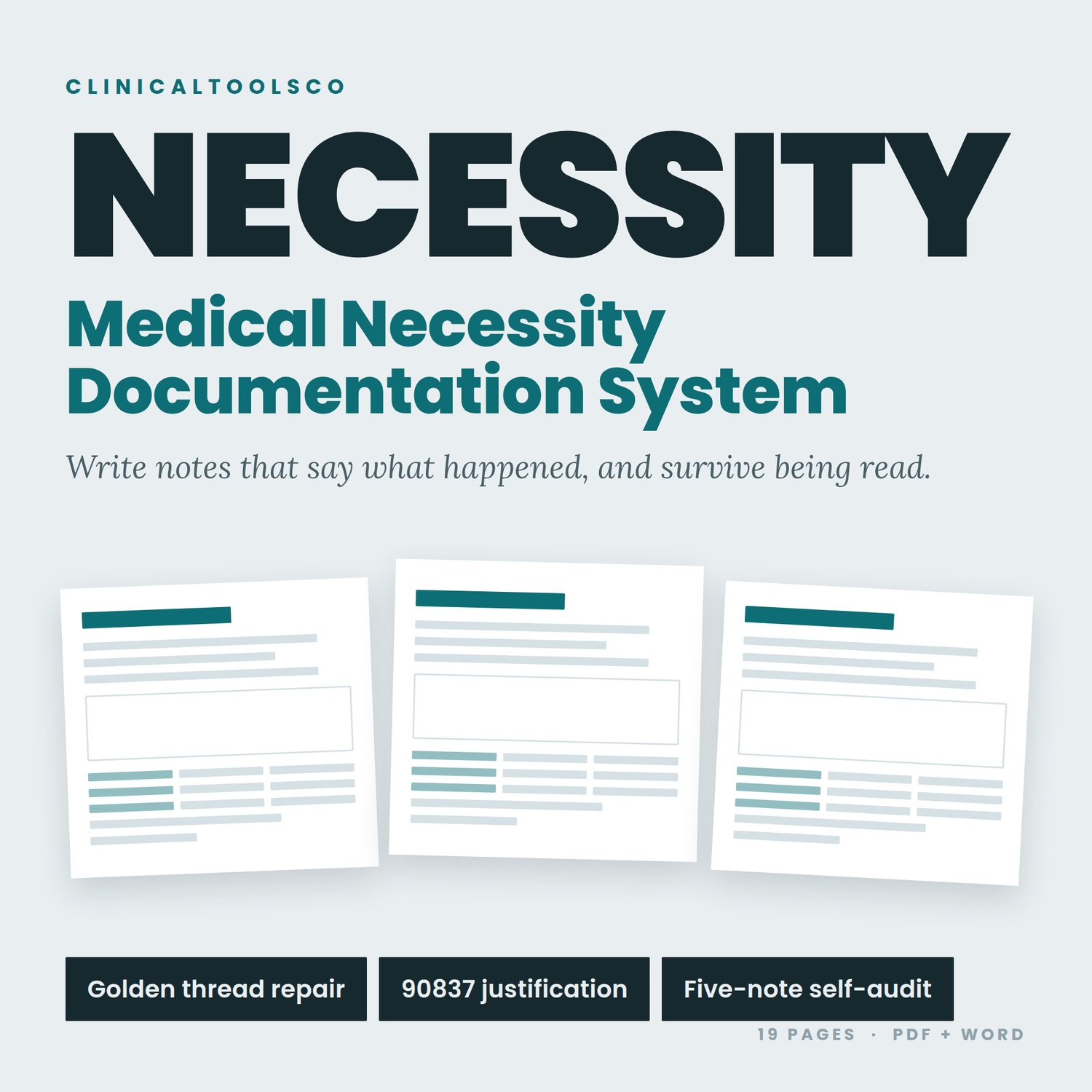
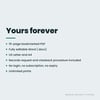
- A 19 page bookmarked PDF and a fully editable Word version.
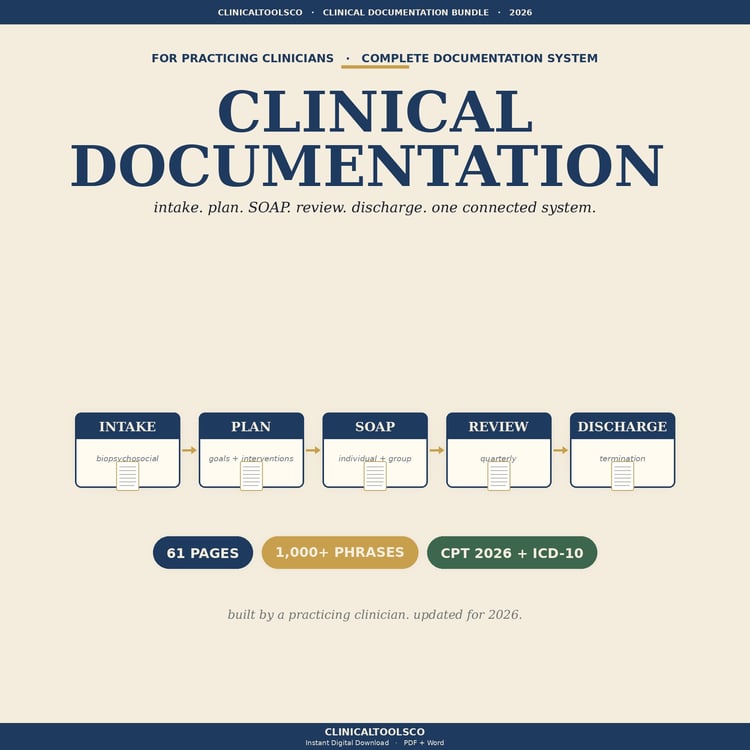
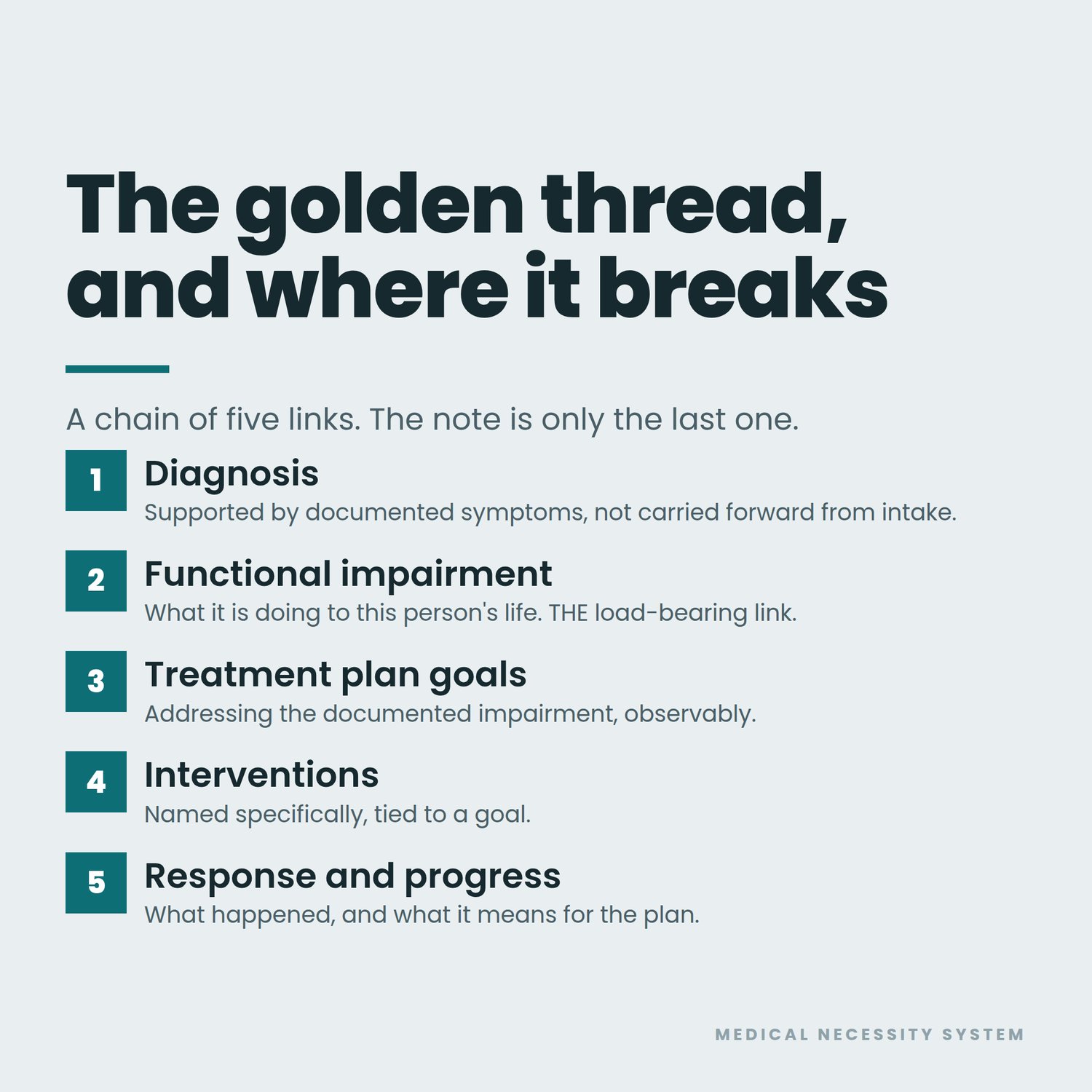
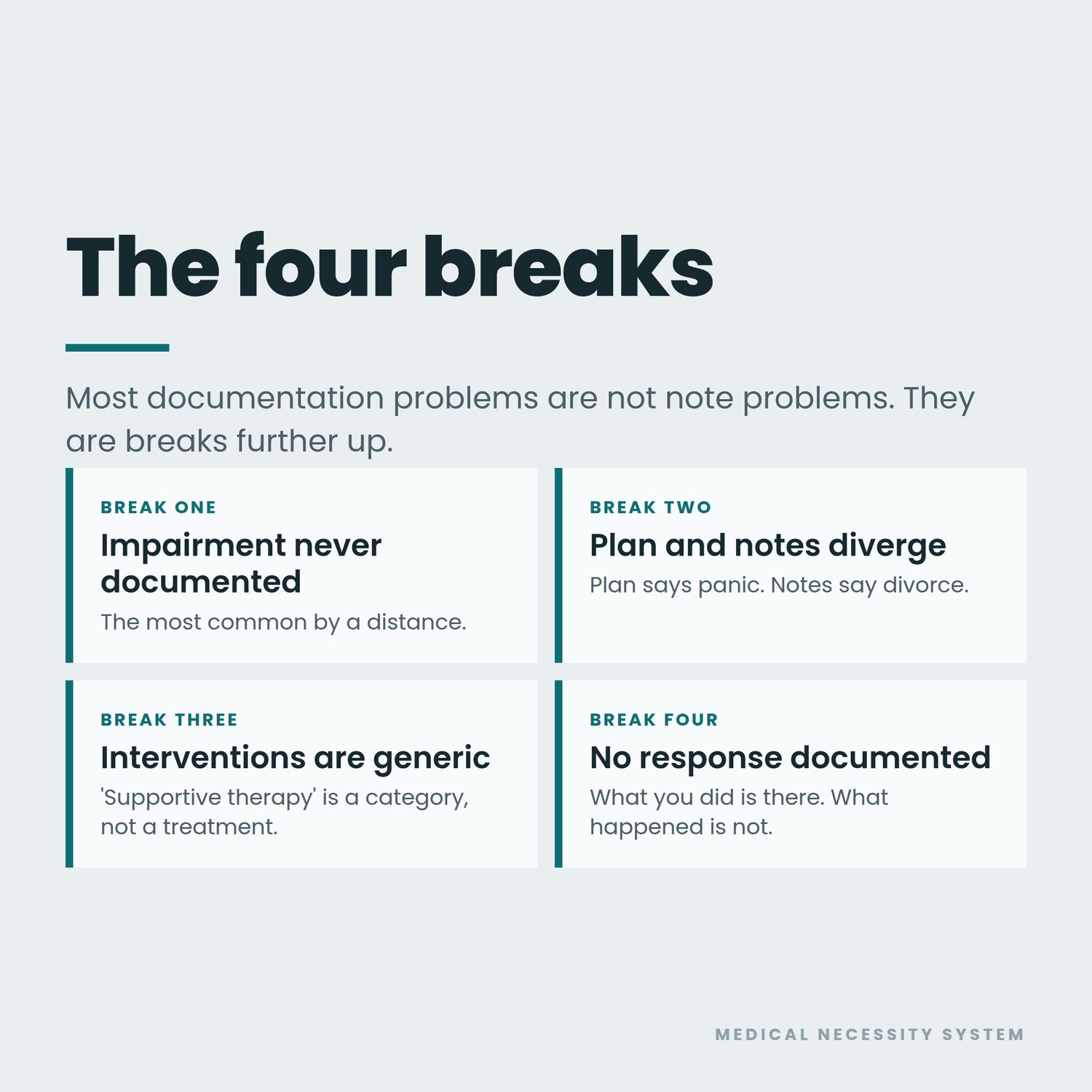
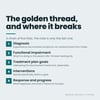
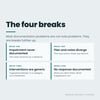
- The golden thread mapped as five links, with the four places it actually breaks and how to repair each one.
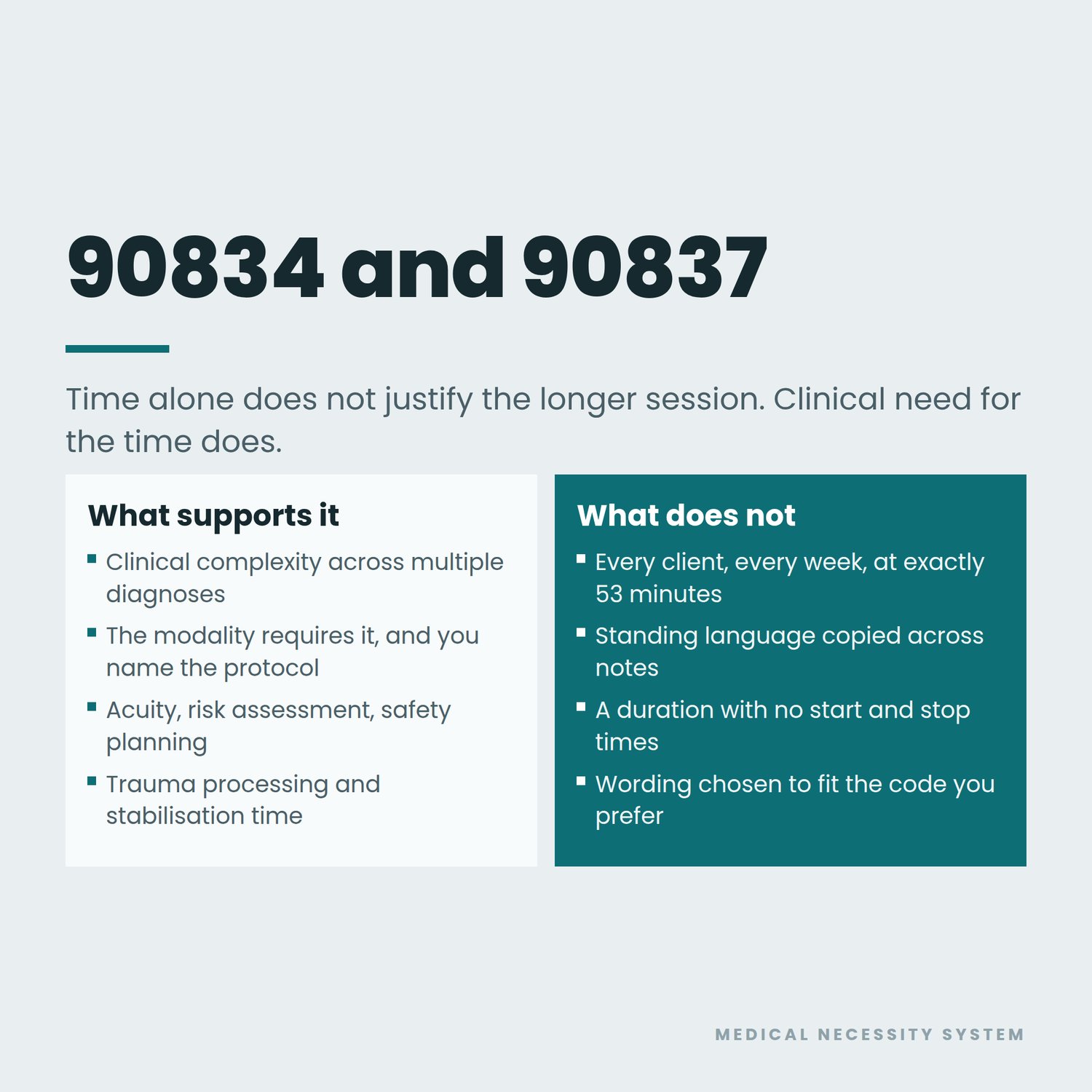
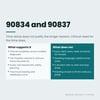
- The 90834 and 90837 question: what genuinely supports the longer session and how to document it honestly.
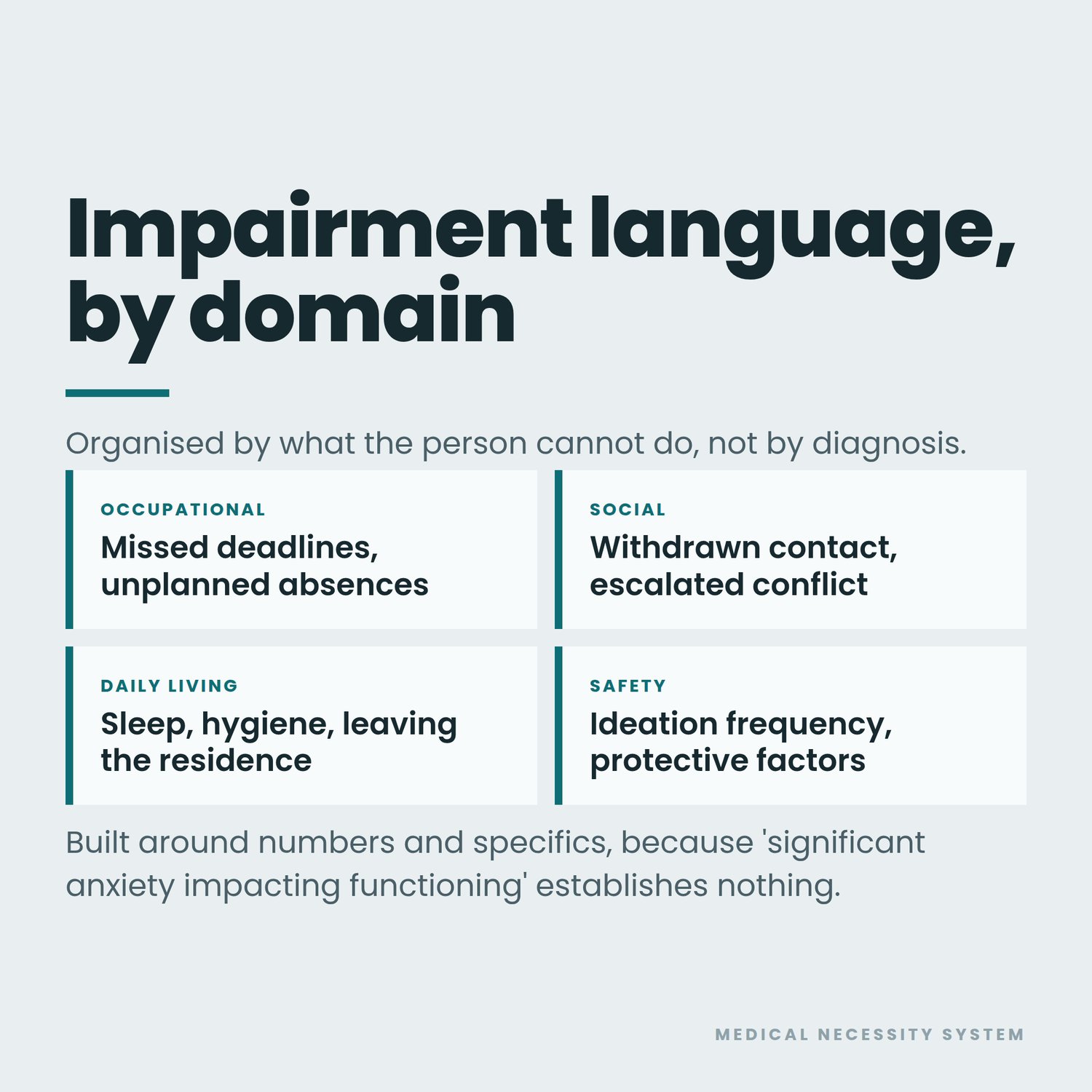
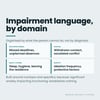
- An impairment language bank organized by functional domain rather than by diagnosis, so the note names what the client cannot do rather than only what they feel.
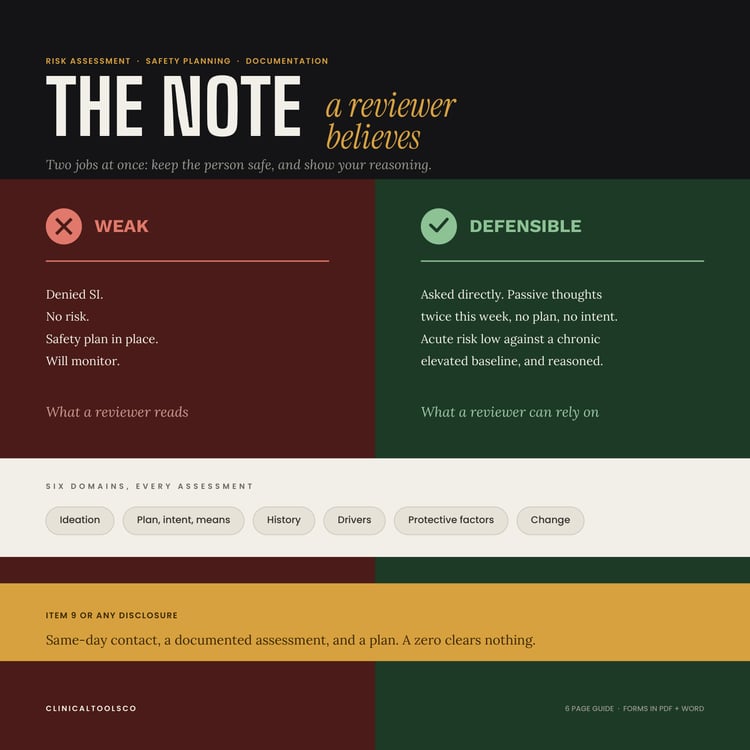
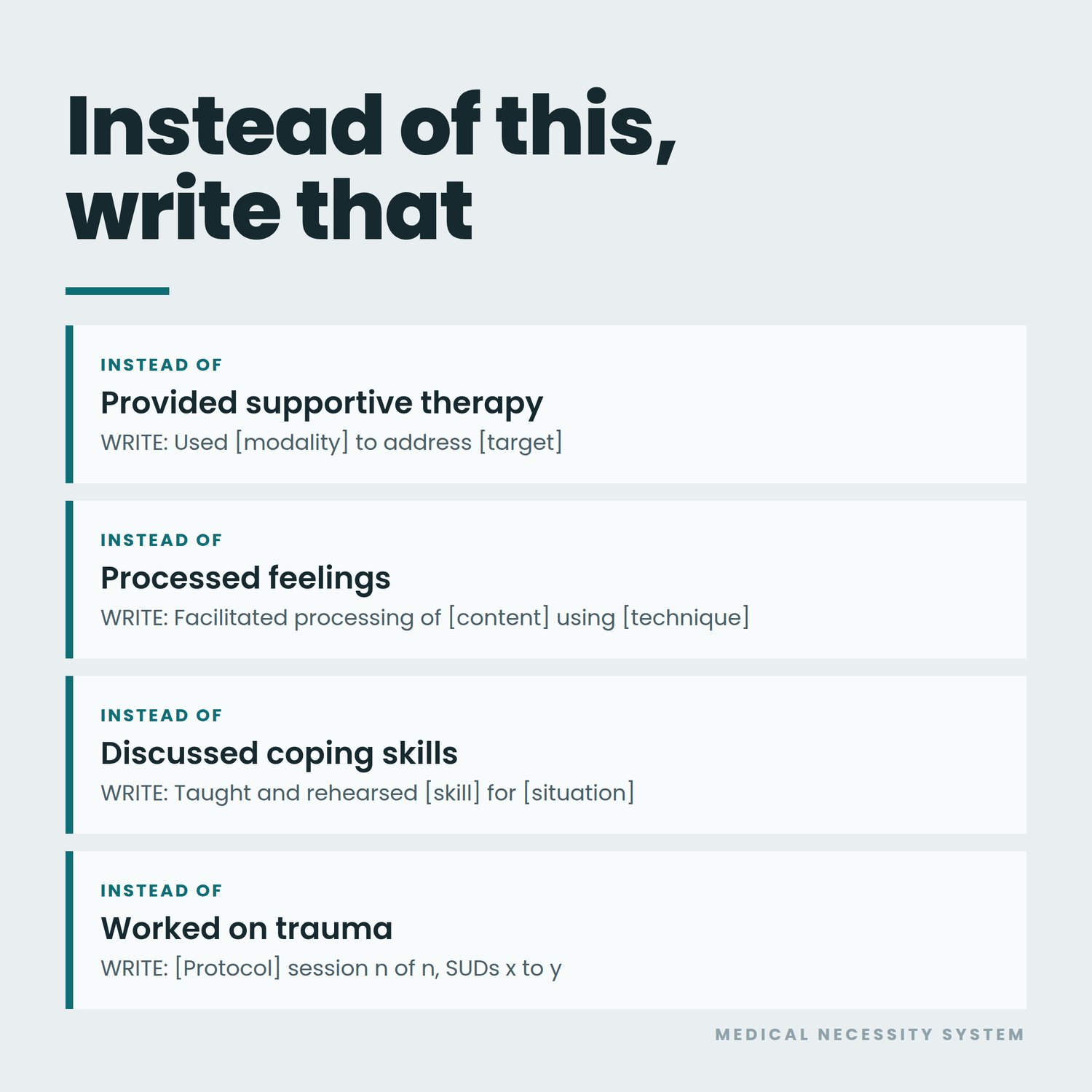
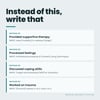
- Intervention and response language, with an instead of this write that table.
- Treatment plan goal language, because the plan is the argument and the note is only the evidence.
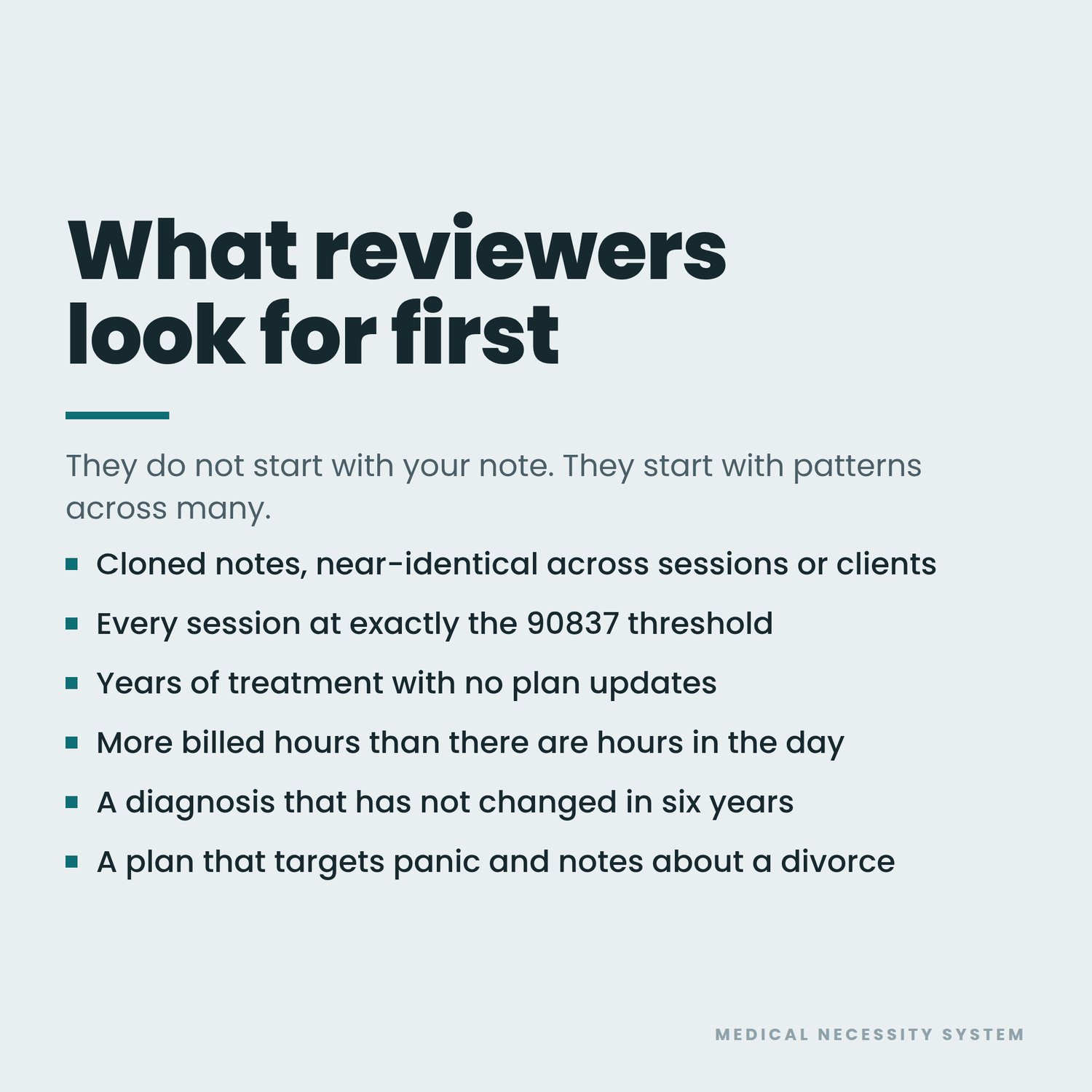
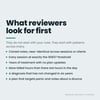
- The six documentation patterns reviewers look for before they read a single note.
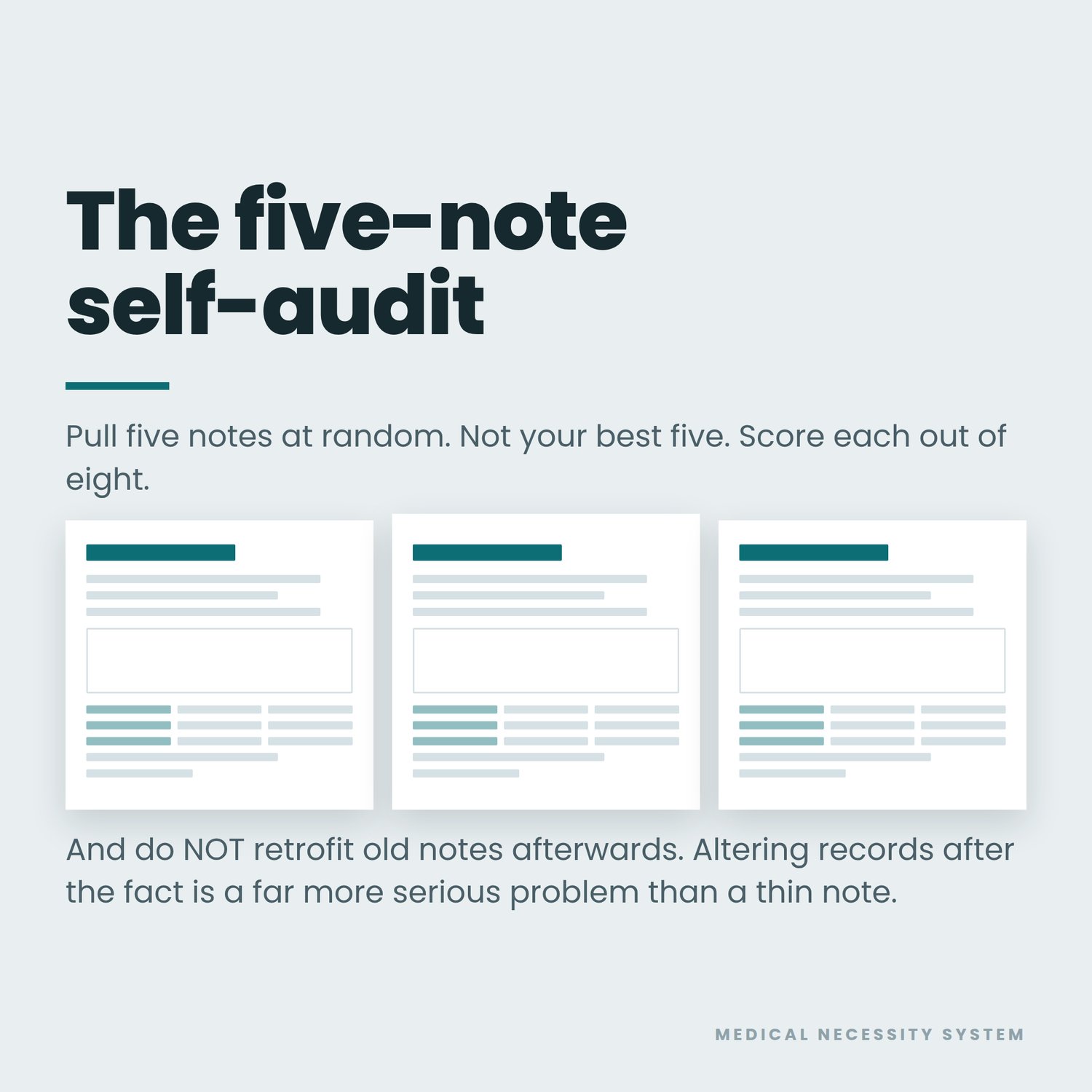
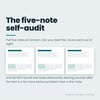
- A five note self audit you can run in twenty minutes, with scoring.
- Three note structures, including a genuinely brief one for stable clients.
- A records request procedure in the order the steps actually matter, plus a clawback log and an appeal window warning.
Who it is for
Clinicians billing insurance in outpatient practice: LCSW, LPC, LMHC, LMFT and psychologists. Particularly useful for anyone recently out of agency work, where somebody else set the documentation standard and now nobody does. Also useful for supervisors, because the self audit works as a supervision exercise.
Watch free on YouTube:
- How to Write Therapy Progress Notes That Hold Up (Weak vs Strong Examples)
- How to Write Measurable Treatment Plan Goals and Objectives (With Examples)
The honest version
This is not a kit for making a 45 minute session look like a 55 minute one. Every phrase exists to help you describe real clinical work more precisely. If the honest note does not support the code, the answer is to change the code rather than to find better words. That is said plainly inside, more than once.
Inflated, uniform, phrase bank language is exactly the pattern reviewers are trained to spot. Used properly this makes your notes shorter, more specific and more defensible. Used improperly it makes them worse, and the kit is explicit about which is which.
The part most kits skip
Most documentation products give you phrases, and phrases are the easy part. A reviewer does not start with your note. They start with patterns across many notes: cloned text, every session landing on exactly the same length, plans not reviewed in two years, treatment with no discharge criteria, a diagnosis unchanged since 2019. Those are what trigger the wider sample, so those are covered here.
It also tells you not to retrofit old notes after a bad self audit, which is the first instinct almost everyone has and a considerably more serious problem than a thin note.
On the 2027 code changes
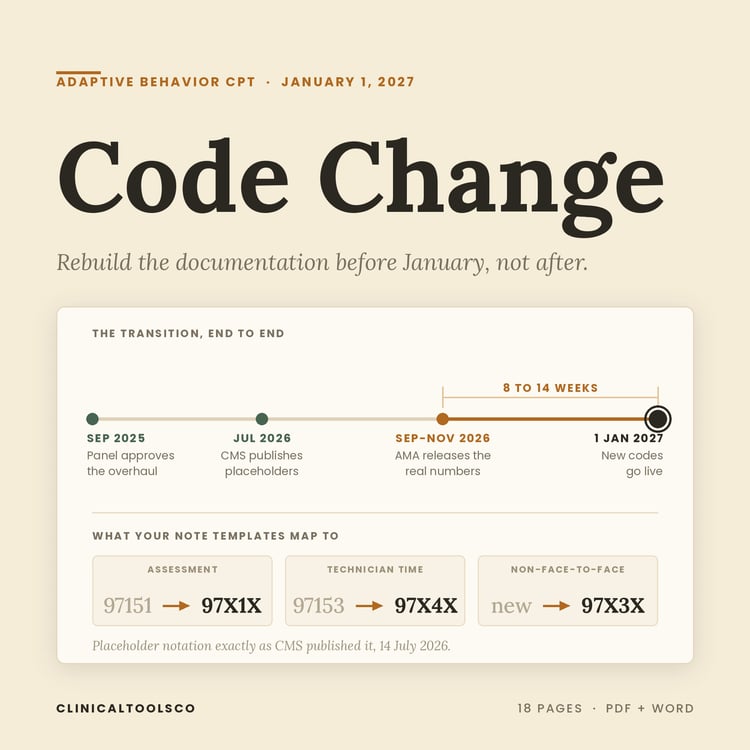
Your psychotherapy codes are not changing. 90791, 90792, 90832, 90834, 90837, 90846, 90847 and 90853 are unaffected by the overhaul taking effect 1 January 2027, which applies to adaptive behavior services only. If you have seen posts telling therapists their codes are being replaced next year, they are wrong, and the sources are cited inside.
Format
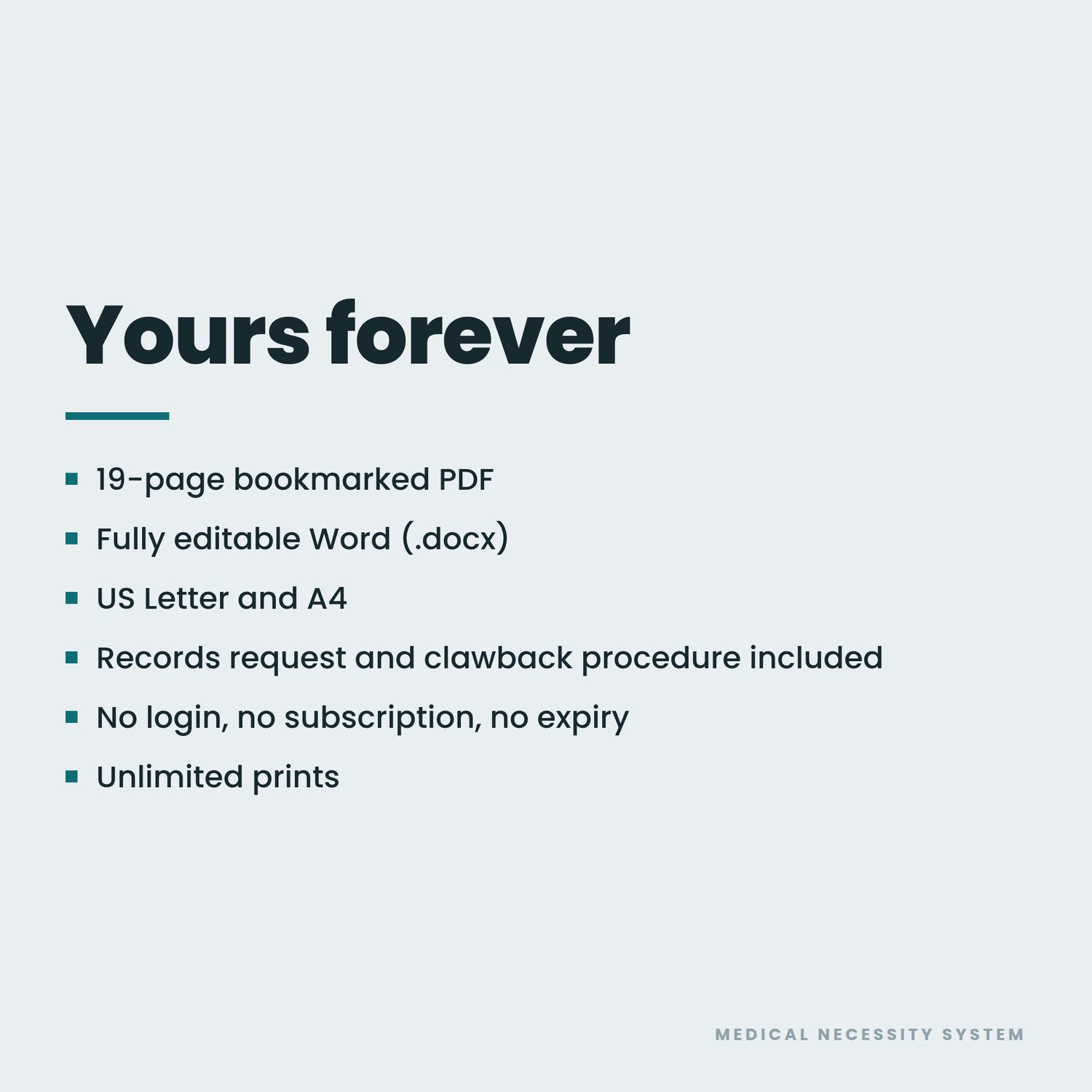
19 page bookmarked PDF plus fully editable Word. US Letter and A4. Works on Mac, Windows, iPad, GoodNotes and Notability. Yours to keep, no login, no subscription, unlimited prints.