
Multicultural Counseling Case Vignettes (2026)
22 multicultural counseling case vignettes across 52 pages, each worked through the ADDRESSING framework, with cultural intake prompts and a common errors taxonomy.
What is inside
- 52 pages across 22 cases, plus a separate Cultural Formulation Toolkit. Fillable PDF and editable Word for both.
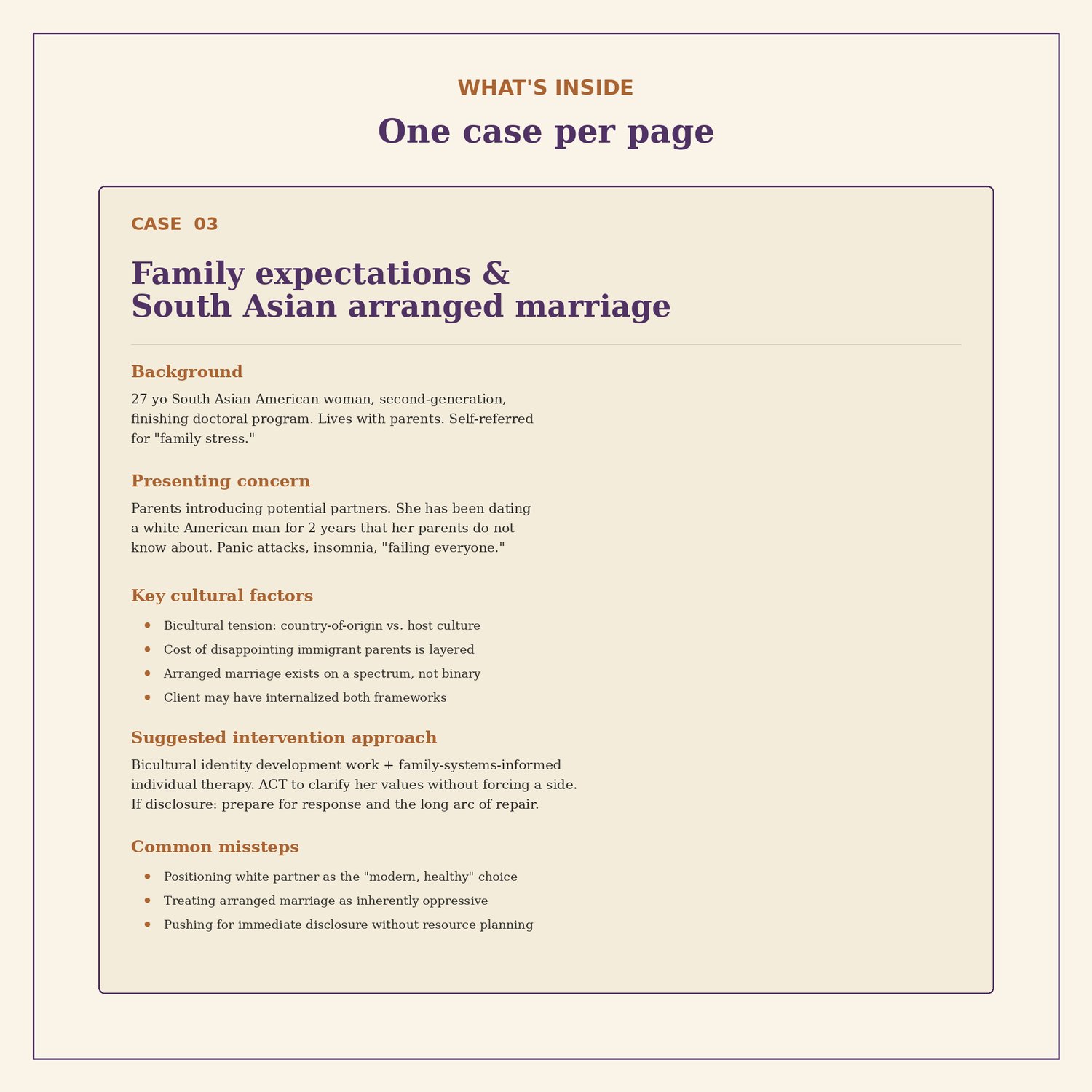
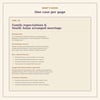
- Every case follows the same six sections: background, presenting concern, key cultural factors, what this case requires, suggested intervention approach, and common missteps. The repetition is the point. Most clinicians can recite the frameworks and still freeze when one has to be applied to an actual session.
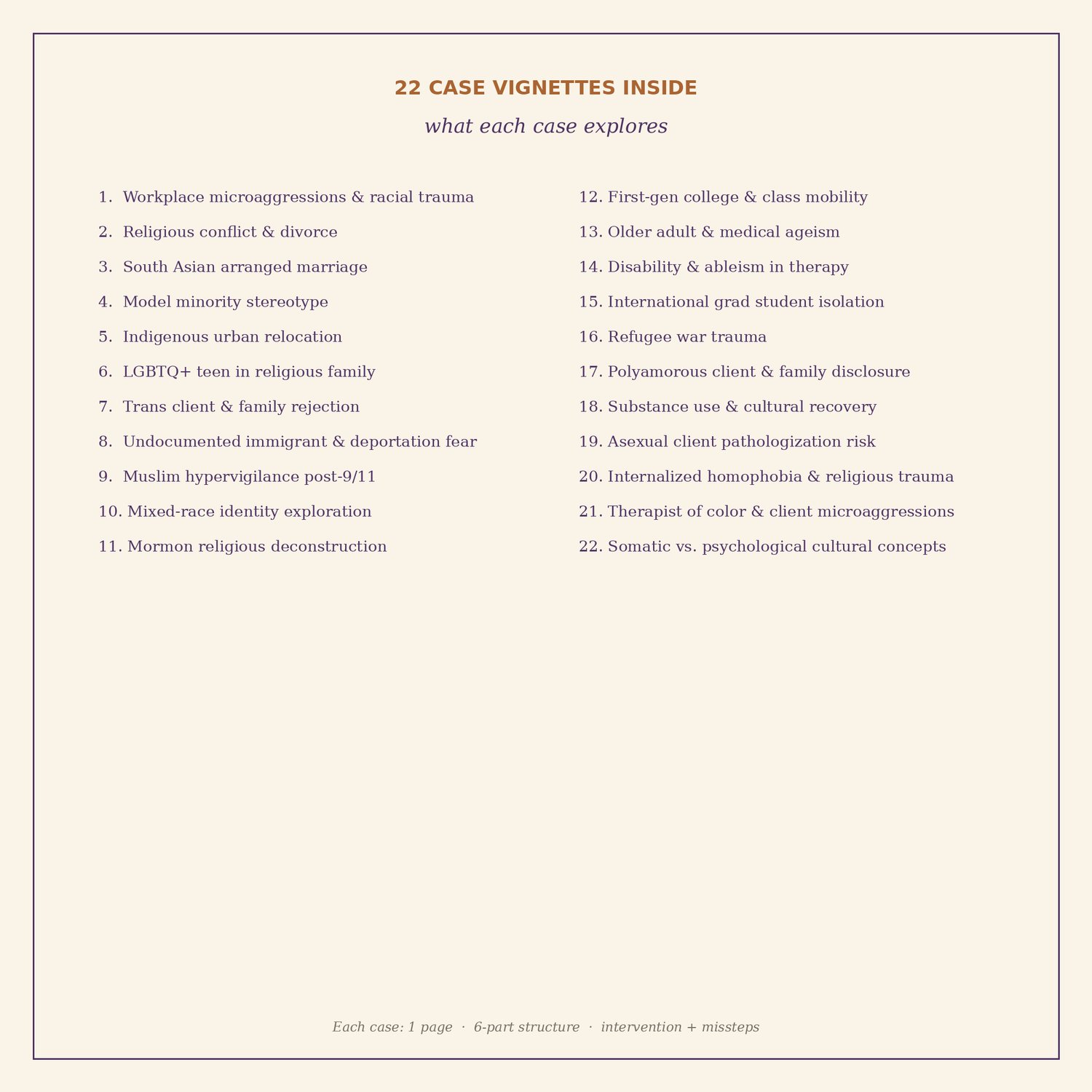
- The cases cover workplace racial trauma, religious conflict and divorce, arranged marriage and bicultural tension, the model minority stereotype with suppressed help-seeking, historical trauma and urban relocation, an LGBTQ+ teen in a religiously conservative family, family non-acceptance of a trans client, undocumented status and deportation fear, anti-Muslim discrimination, mixed-race identity, Mormon faith transition, working-class first-generation students, ageism in the medical system, ableism in the therapy room, international students, refugee resettlement, polyamory and family-of-origin disclosure, Spanish-language recovery communities, asexuality and pathologization risk, internalized homophobia, microaggressions directed at a therapist of color by a client, and somatic concepts of distress.
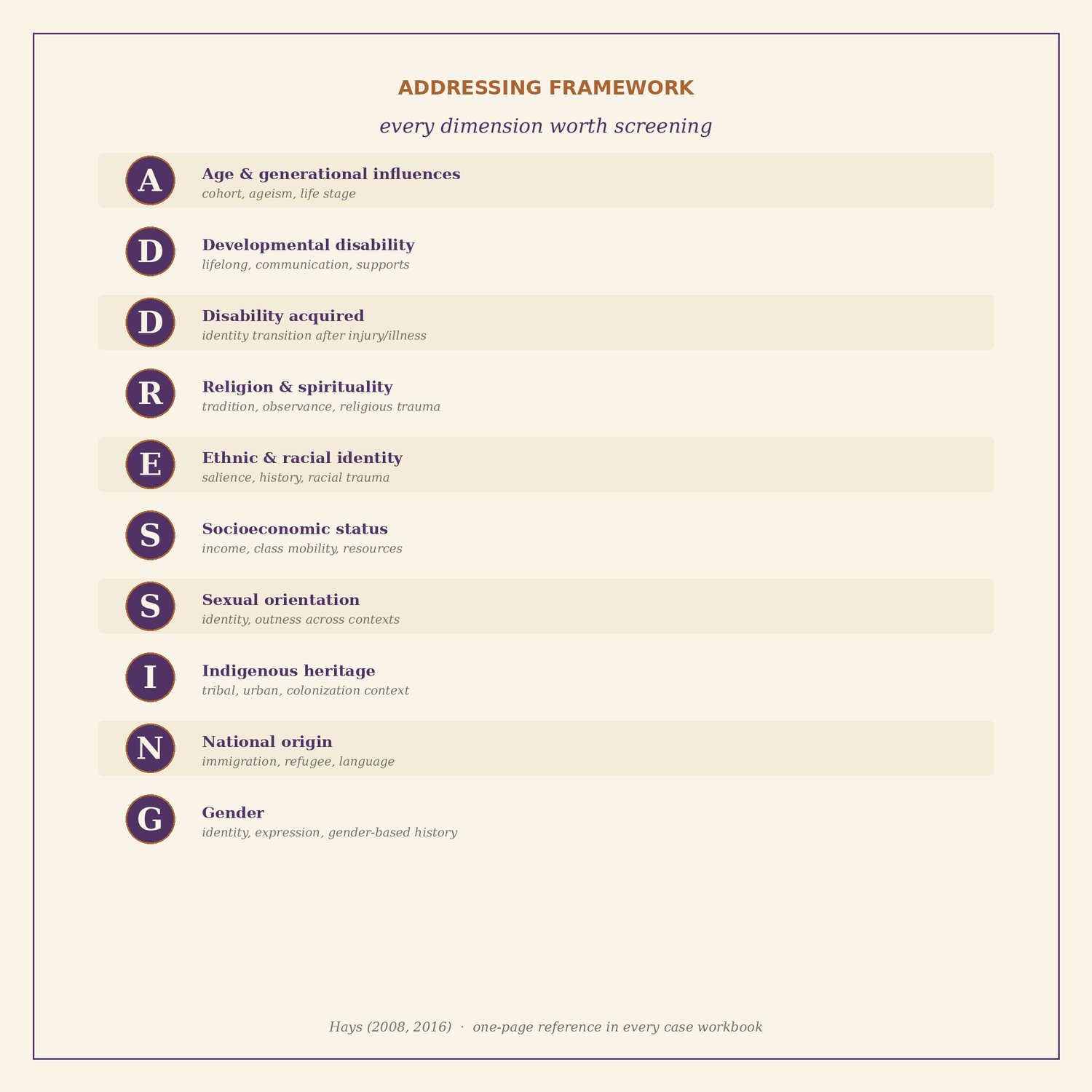
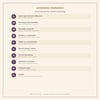
- The ADDRESSING framework as a one-page intake reference, per Hays.
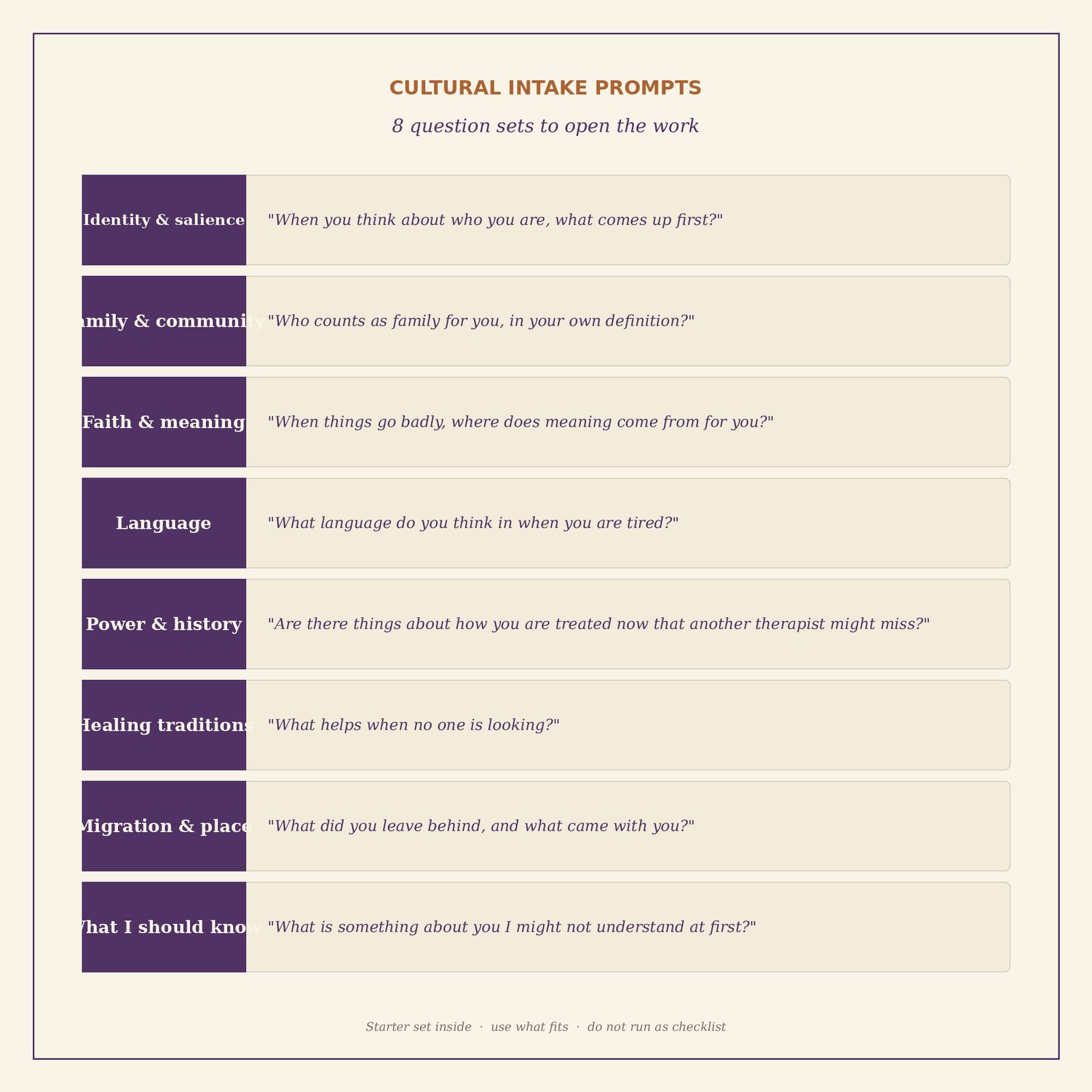
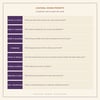
- A cultural intake prompts set in eight clusters, written as openers rather than a checklist.
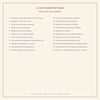
- A common errors taxonomy naming six patterns that recur across very different cases. The translation error, where race-based stress becomes generalized anxiety. The centering error, where clinician discomfort moves to the foreground. The permission-asking error, where the client ends up educating the clinician. Then the saviorism error, the single-axis error and the linear-development error.
- The Cultural Formulation Toolkit companion: a CFI interview guide, vignette discussion prompts, a write-up template and a clinician self-assessment.
Who it is for
Clinical social workers, counselors, marriage and family therapists, psychologists and trainees. Supervisors running case conference. Training programs that want case material rather than another textbook chapter. Every case is composite, so it is realistic enough to recognize and still protects any real client.
Why it exists
A Black client mentions that a coworker keeps asking to touch her hair. A Vietnamese client tells you her chest is broken but not her mind. A Mormon father in private deconstruction does not know who he is outside the church. You sit down to write the formulation and the vocabulary you have feels too thin for what was in the room.
Most multicultural counseling resources describe cultural groups in the abstract. This is 22 cases instead. Each one is composite, drawn from ordinary outpatient presentations across community mental health, university counseling, private practice and integrated care.
How people use it
In supervision, read the background and presenting concern aloud, stop, and ask the supervisee which dimensions are in play before reading on. In a training program, assign three to five cases per session alongside the didactic. On your own, one case a week, sitting with the opening before reading the rest and noticing which of the six errors you would have made.
Format
52 pages plus the toolkit. Fillable PDF and editable Word, US Letter and A4. Works on Mac, Windows, iPad, GoodNotes and Notability. Yours to keep, unlimited prints.