
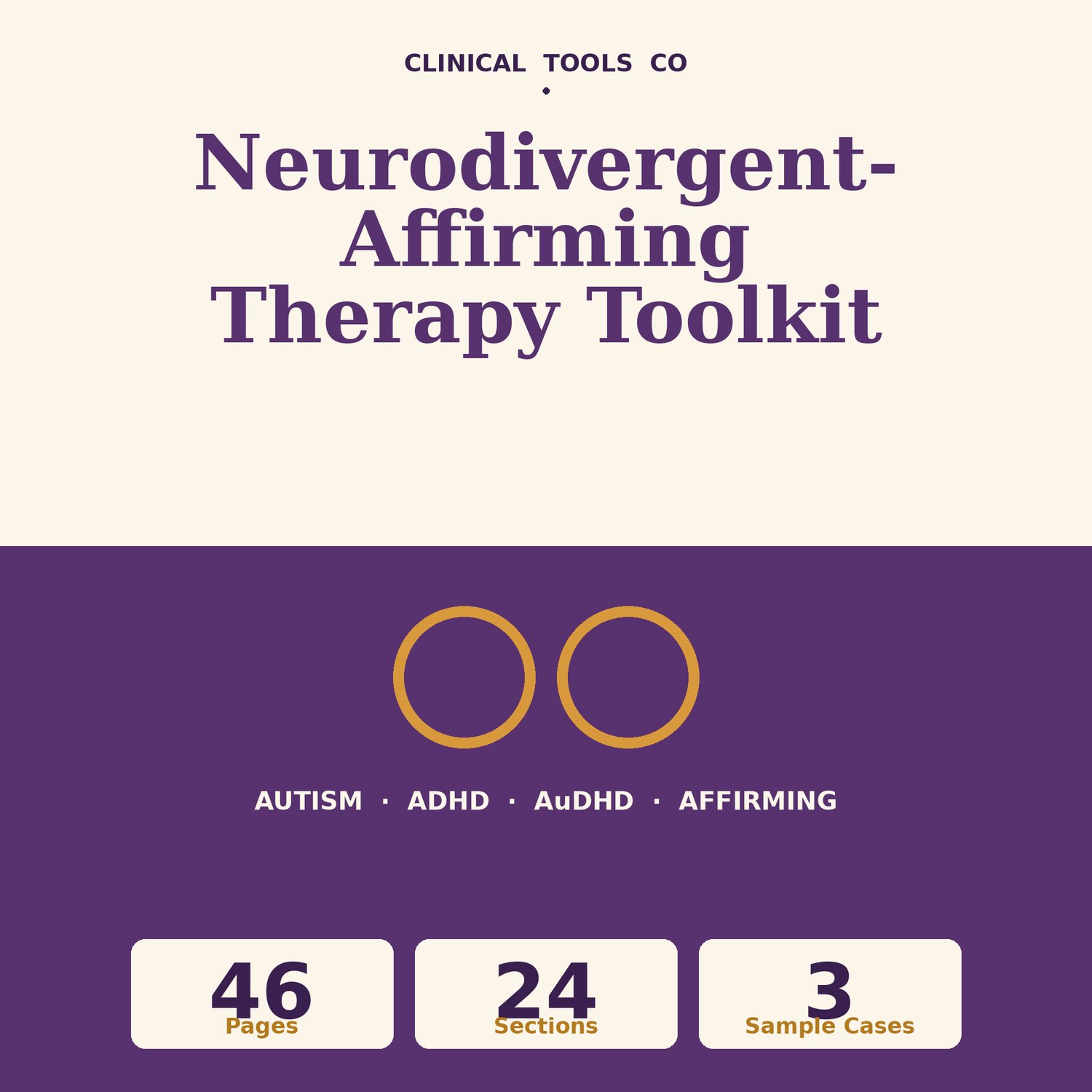
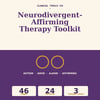

Neurodivergent Affirming Therapy Toolkit (2026)
A neurodivergent affirming therapy toolkit covering autism, ADHD and AuDHD in adults, affirming language, unmasking worksheets and autistic burnout.
What is in the toolkit
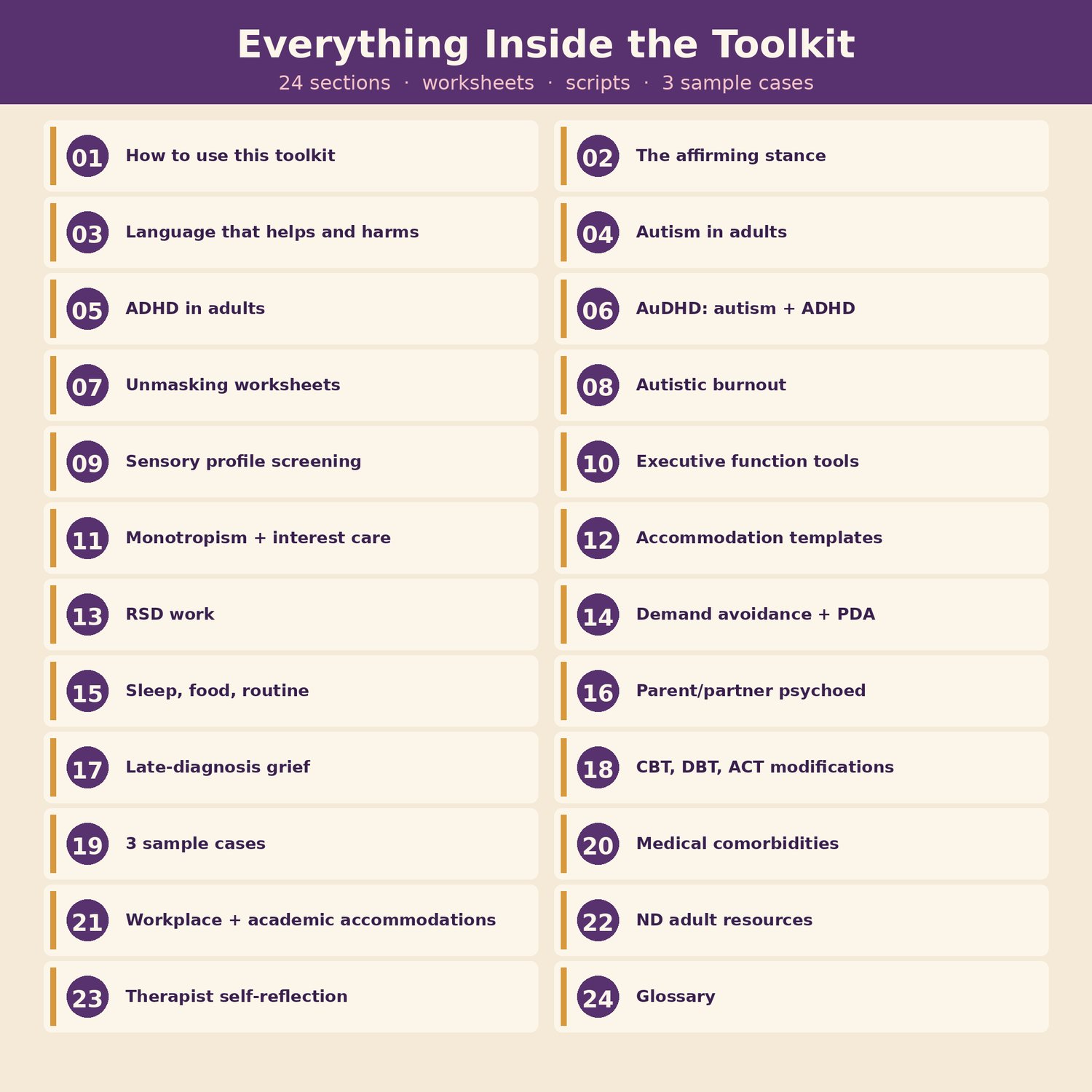
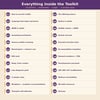
- Section 1: How to use this toolkit. The dual-audience design, how to sequence sections by case, and the clinician scope reminder
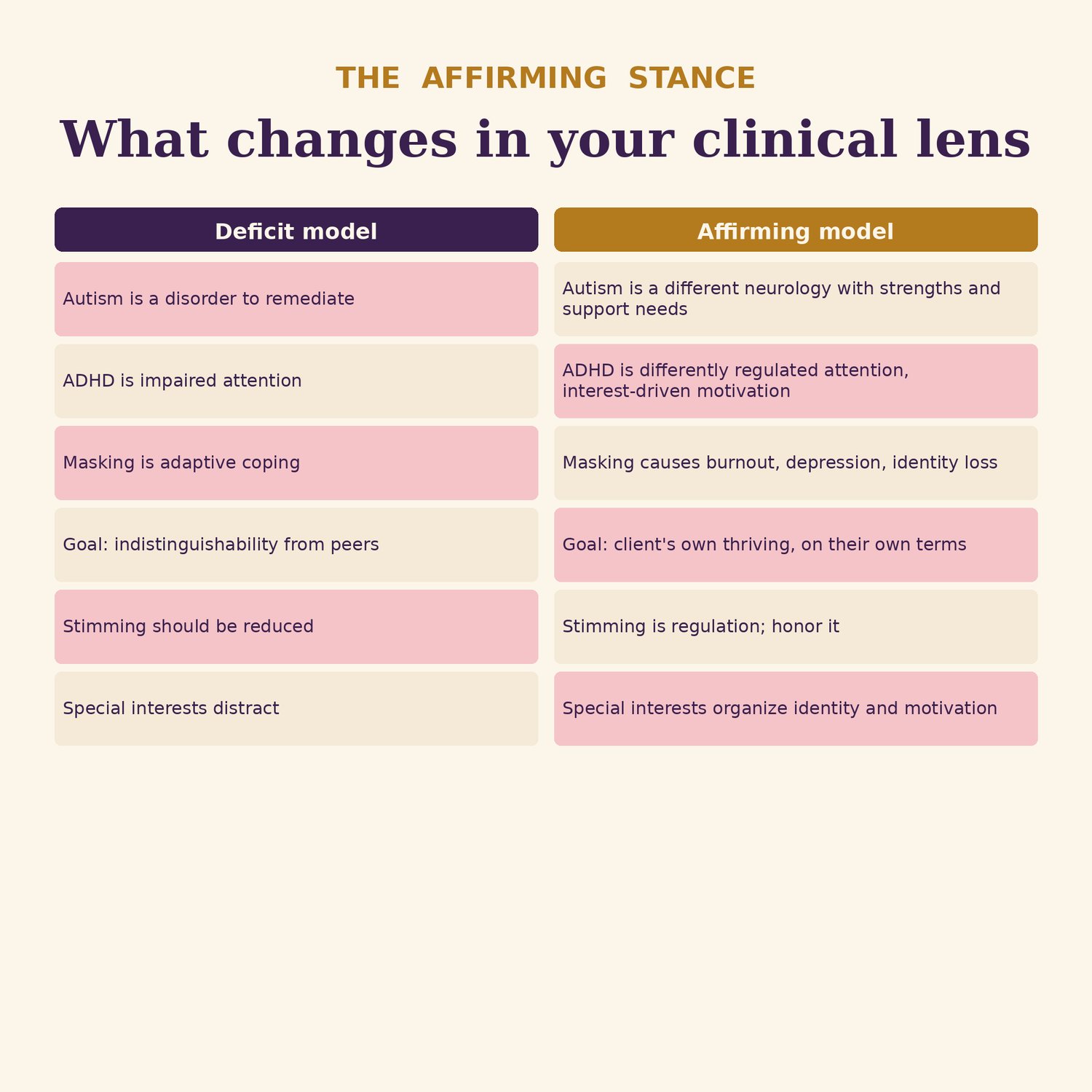
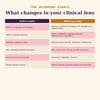
- Section 2: The affirming stance. The eight-row old-framing versus affirming-framing reference, and what changes in case formulation
- Section 3: Language that helps and harms. Identity-first versus person-first guidance with the ask-each-client rule, 10 words clinicians should drop with affirming replacements, and 11 words to add
- Section 4: Autism in adults. Why adult autism is missed in clinical settings, the seven commonly-missed adult features, the strengths-first formulation table, and the high-co-occurrence comorbidities
- Section 5: ADHD in adults. The attention-regulation framing, the four adult presentations, ADHD and trauma overlap, and the strengths-first formulation
- Section 6: AuDHD. The co-occurrence range, the internal-contradictions experience, a client-facing description, and clinical implications
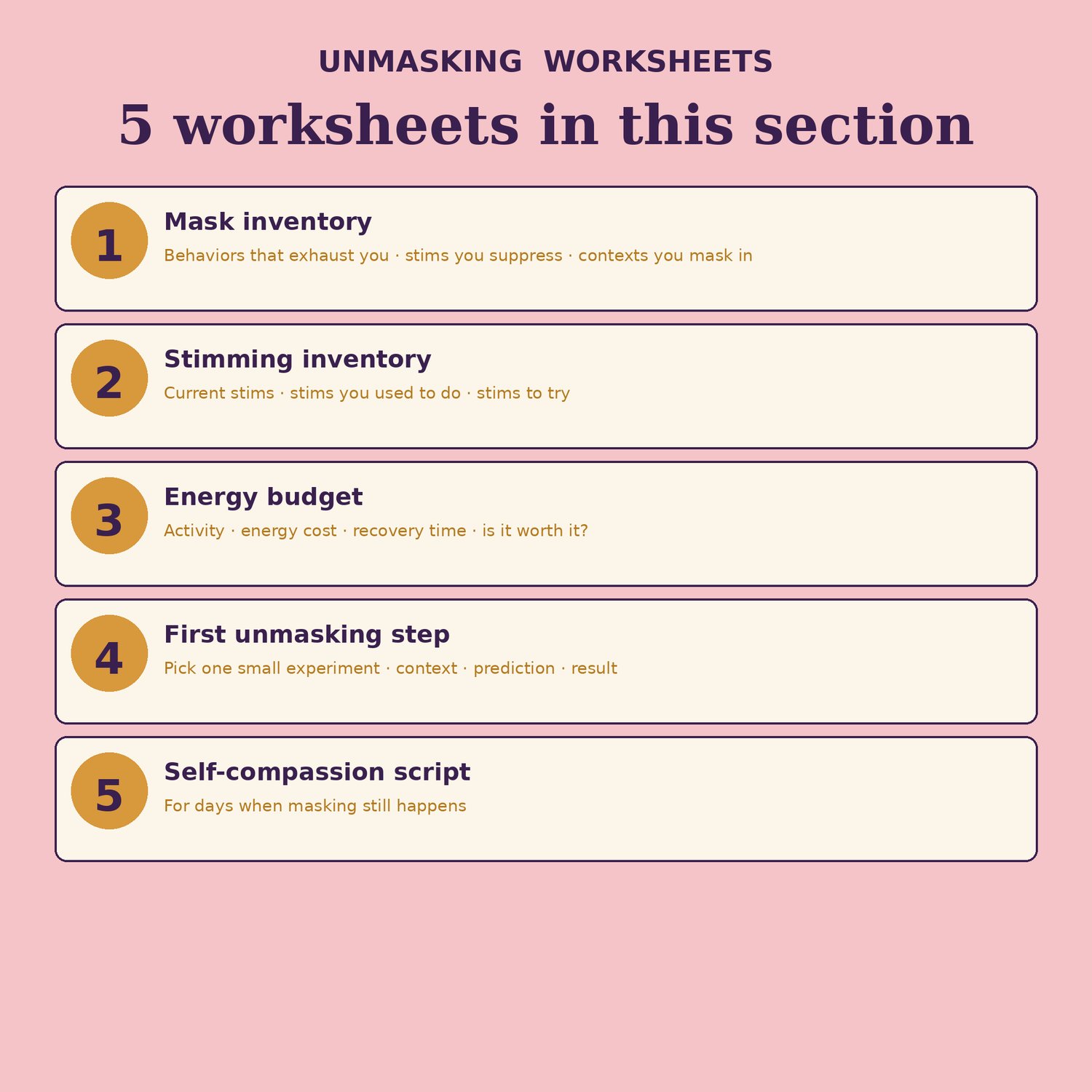
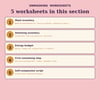
- Section 7: Five unmasking worksheets, sequenced from safest-context identification through gradual restoration of natural behaviors in increasingly visible contexts
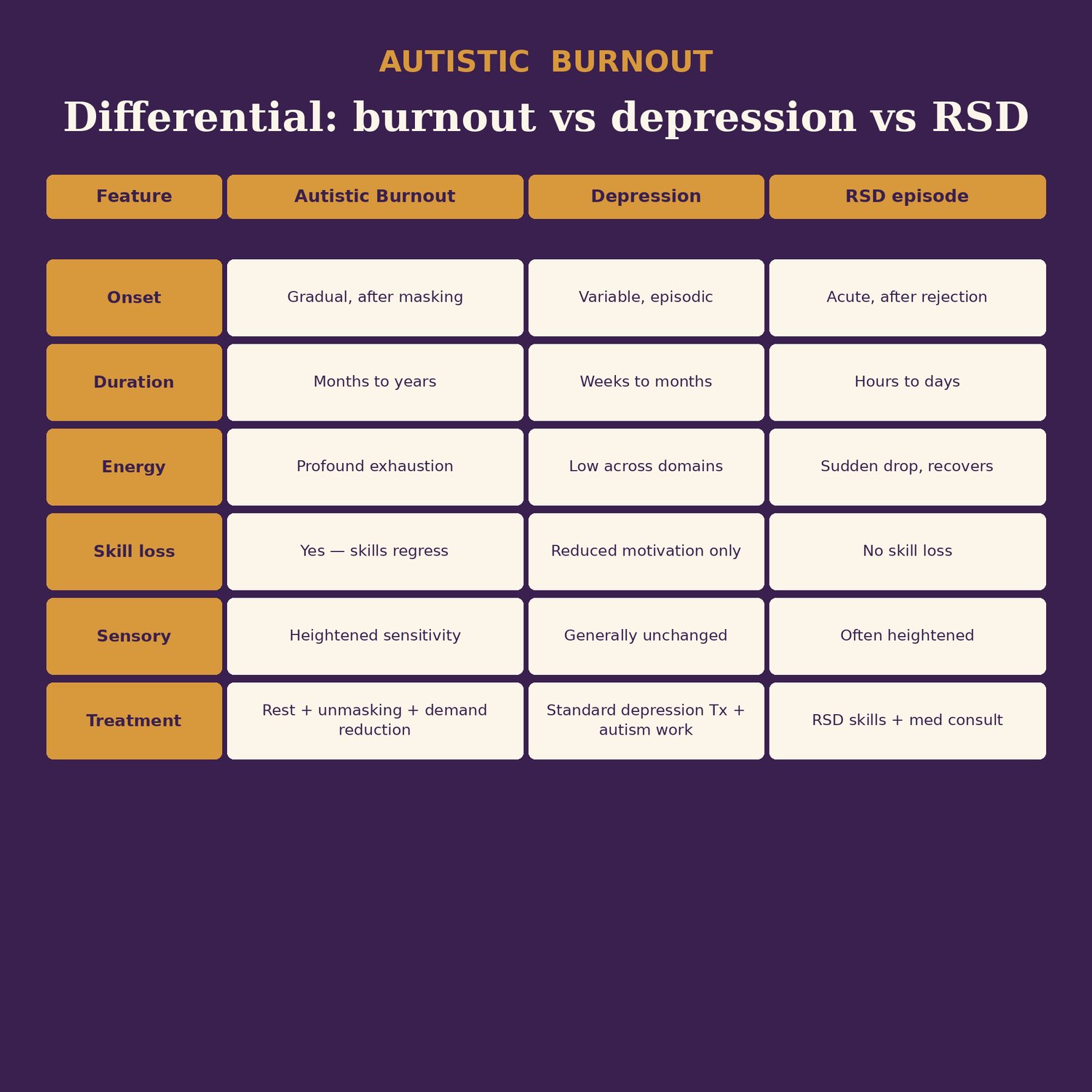
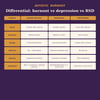
- Section 8: Autistic burnout assessment and recovery plan. The differential between burnout, depression and RSD, the burnout assessment instrument, and a recovery plan built on energy budgeting and accommodation-first intervention
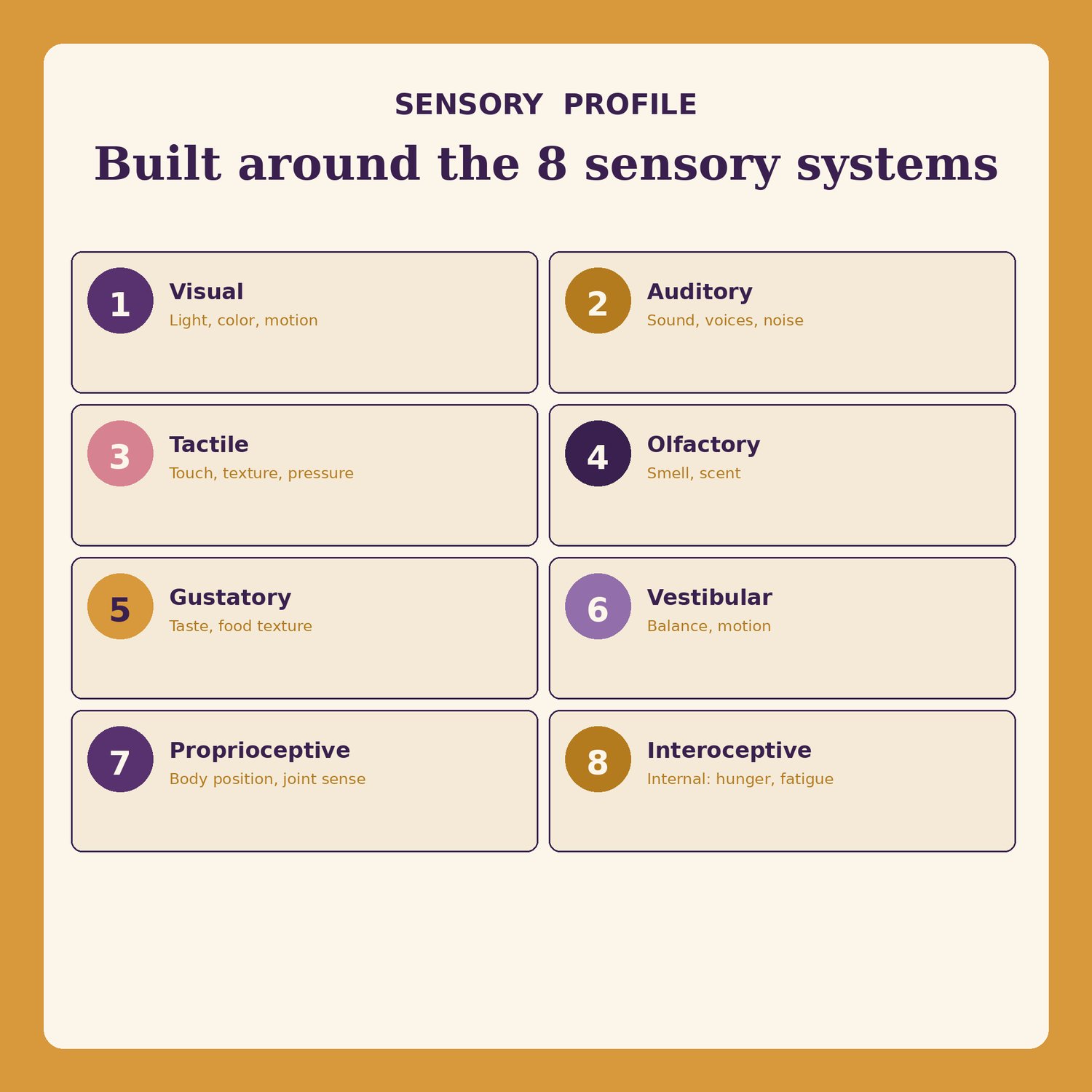
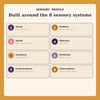
- Section 9: Sensory profile screening across all eight sensory systems with high-input and low-input profiles
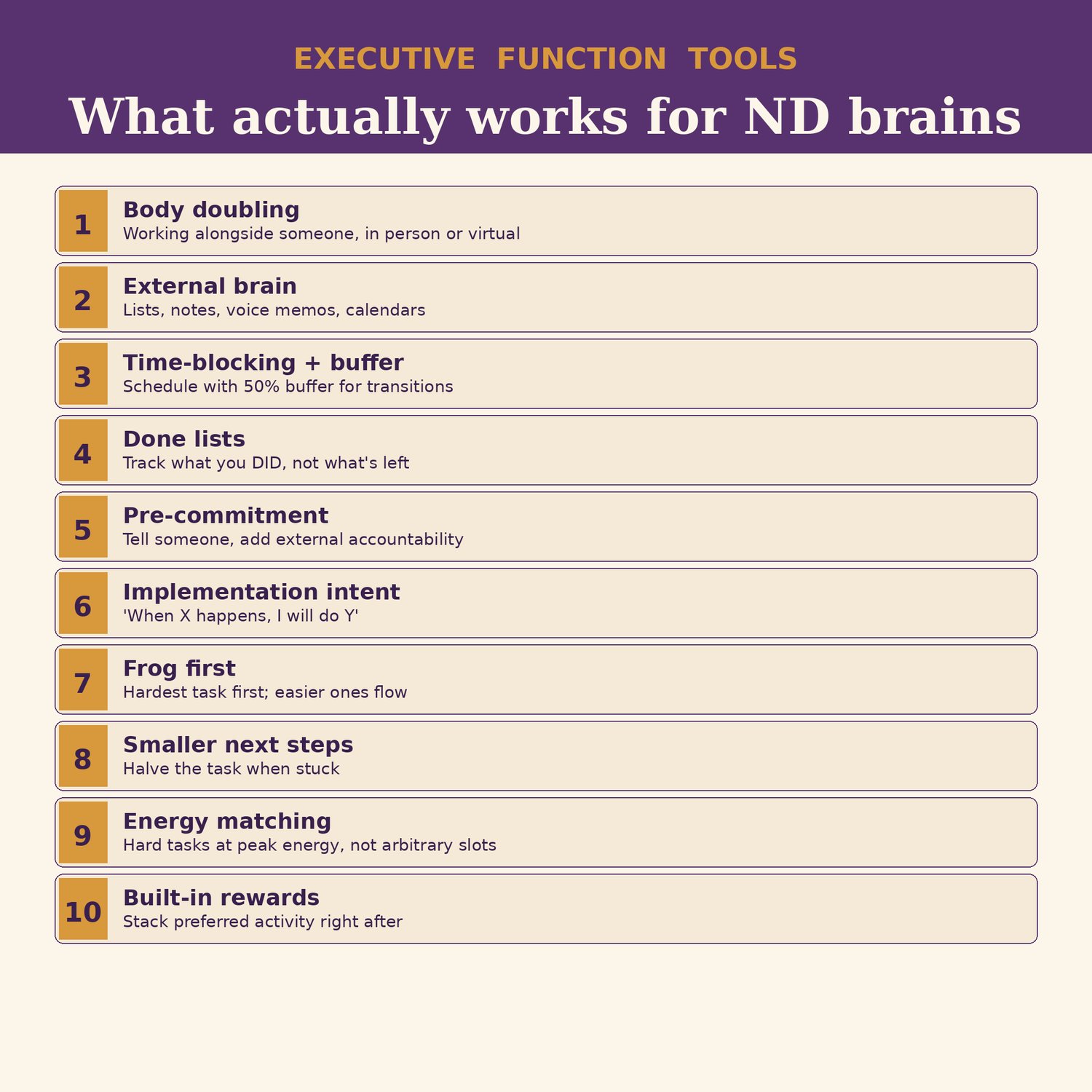
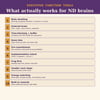
- Section 10: Executive function tools that work for ND brains, including body doubling, time anchors, working-memory externalization, task-switching transitions and the dopamine bridge
- Section 11: Monotropism and interest-led care. The monotropism construct, how to use special interests as therapy anchors, and the distinction between regulation-supporting and isolation-driving interest engagement
- Section 12: Accommodation request templates for workplace, school (504 and IEP variants) and healthcare, each editable to the specific client
- Section 13: Rejection sensitive dysphoria work. Identification framework, the distinction from BPD and trauma-based rejection sensitivity, and the coping skills that actually help
- Section 14: Demand avoidance and the PDA profile. Why standard CBT and behavioral interventions backfire, and the collaborative low-demand approach that works
- Section 15: Sleep, food and routine for ND adults. Delayed sleep phase, ARFID and food selectivity, and routine as regulation, with adaptations that respect autonomy
- Section 16: Parent and partner psychoeducation handouts, including the difference between symptom and identity and the practical asks
- Section 17: Late-diagnosis grief and identity. The common 12 to 18 month post-diagnosis arc
- Section 18: Therapy modifications. How CBT, DBT and ACT each adapt for neurodivergent clients: what to keep, what to modify, what to drop
- Section 19: Three fully worked cases (late-diagnosed autistic adult, AuDHD adult, ADHD adult) showing the affirming framing, the case formulation, the accommodation-first plan and the session note language
Who it is for
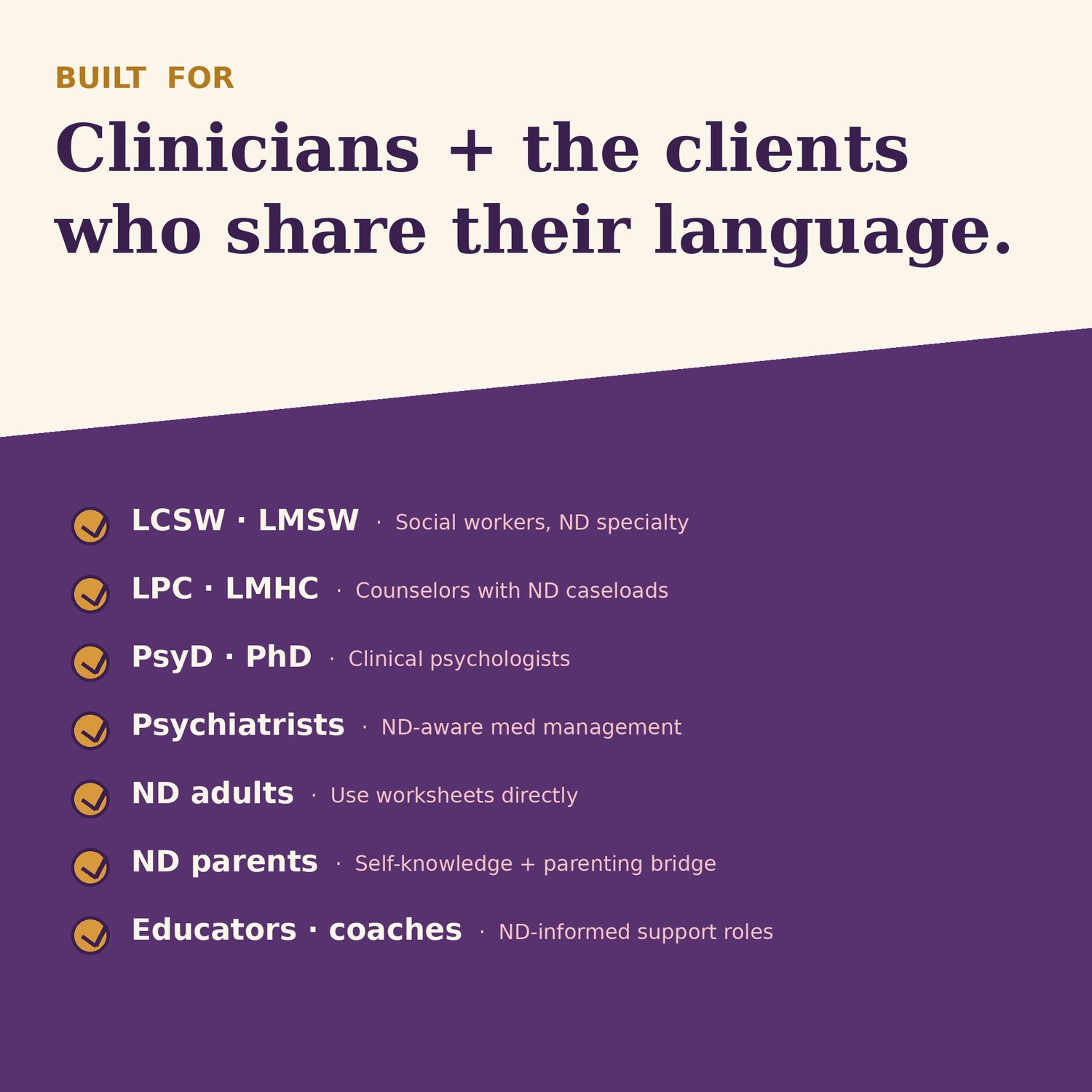
- Licensed psychologists (PhD, PsyD) working with neurodivergent adults
- Licensed clinical social workers building affirming practice with autistic and ADHD clients
- LMFTs, LMHCs and LPCs committed to neurodiversity-informed care
- Clinicians adjusting from deficit-model training to affirming practice
- Early-career clinicians and trainees learning affirming practice from the start
- Clinical supervisors building affirming consultation for their supervisees
- Group practice owners building a neurodivergent-affirming service line
- Late-diagnosed autistic, ADHD and AuDHD adults bringing usable worksheets to their therapist
Why it exists
A 34-year-old woman in your Tuesday 11am slot tells you she just got a late autism diagnosis after 12 years of treatment-resistant depression that turned out to be autistic burnout, that she has been quietly suspecting ADHD on top of it because the inattentive scattered AuDHD profile finally fits, and that her last therapist kept telling her to manage her symptoms while assigning behavioral activation that made her shutdown worse. She asks if you have actually worked with autistic adults. She knows the difference between identity-first and person-first language and is testing whether you know it too. Most neurodivergent worksheet packs are visual schedules and emotion thermometers built for children. This toolkit is the clinical operating system for the late-diagnosed autistic, ADHD and AuDHD adults arriving in adult outpatient practice and asking, before anything else, whether the therapy room is safe.
I built this after seven years of practice with neurodivergent adults, two years of clinical supervision focused specifically on AuDHD presentations, and roughly 80 late-diagnosis clients across that window. The first three years I was reading the community literature on my own time and writing handouts from scratch. This is the toolkit that ended the scratch-writing.
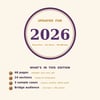
61 pages, 19 sections, written for the licensed adult clinician (psychologist, LCSW, LMFT, LMHC, LPC) who works with neurodivergent adults and is committed to the affirming clinical stance. Also written for the neurodivergent client who wants to bring usable worksheets to a therapist who is still learning.
Why this is different
Most clinical resources for neurodivergent clients were built for children, written by neurotypical clinicians, and anchored in the deficit model. This toolkit is built for adults, draws on the neurodivergent community literature alongside current clinical practice, and treats autism and ADHD as identity-and-experience variations rather than disorders to eliminate.
The language section matters because the words a clinician uses signal whether the room is safe. A clinician who says high-functioning or manage your symptoms has lost the late-diagnosed adult before the third sentence.
The autistic burnout chapter matters because burnout is the most-missed presentation in adult outpatient practice. You get the differential between burnout, recurrent depression and RSD, the assessment instrument, and a recovery plan that does not involve behavioral activation, which makes burnout worse.
The accommodation request templates matter because environmental fit is the primary intervention in affirming practice and most clients have never had a clinician draft an accommodation letter with them.
The therapy modifications chapter matters because standard CBT, DBT and ACT each require modification. The chapter walks the specific changes: what stays useful, what needs modification, and what often backfires.
The three sample completed cases are the chapter clinicians read first. They show the affirming framing in actual prose, the formulation that separates trait-level neurology from current state, the accommodation-first plan, and session note language that documents progress without falling back into deficit framing.
Format
- Editable, fillable PDF (61 pages)
- Editable Microsoft Word (.docx, 61 pages)
- Worksheets written in ND-accessible language
- Accommodation request templates ready to customize per client
- US Letter and A4 sizes both included
- Works on Mac, Windows, iPad, GoodNotes, Notability
- Lifetime access, unlimited prints
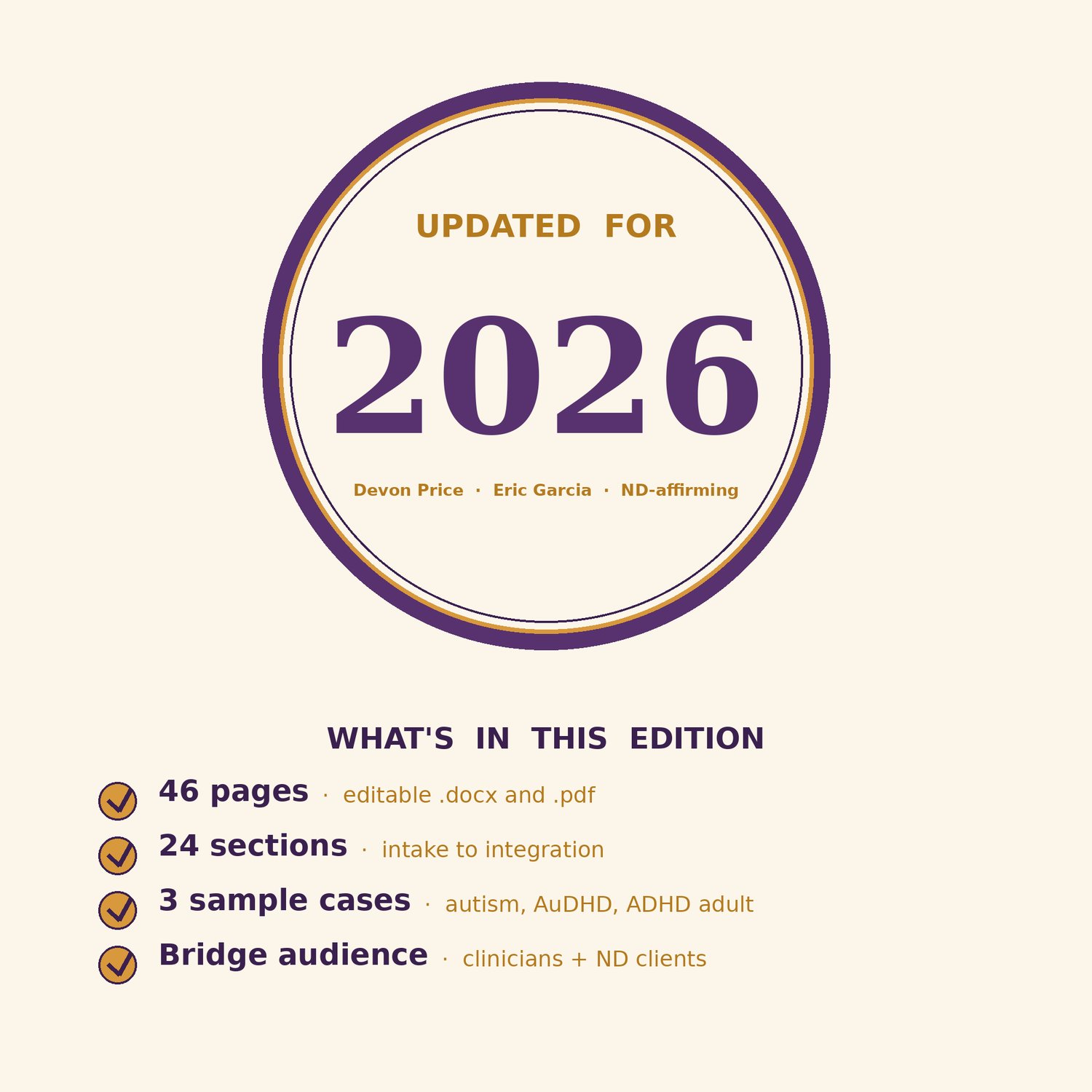
Updated 2026
The toolkit reflects current affirming clinical practice and draws on Devon Price, Jenara Nerenberg, Eric Garcia, Damian Milton on the double-empathy problem, Lorna Wing on the autism spectrum framework, William Mandy on camouflaging and autistic burnout, and the Murray, Lesser and Lawson monotropism construct. The clinical framing reflects 2024 and 2025 published work on AuDHD as its own presentation, the high-co-occurrence comorbidity pattern, and contemporary critique of ABA-style behavioral interventions. The toolkit does not replace formal diagnostic assessment, ongoing therapy or licensure-specific scope of practice.
A note from the designer
I am a practicing clinician with seven years of work with neurodivergent adults. I built this after my first year in practice, when a late-diagnosed autistic client told me, gently, that my language was still deficit-based and that I had assigned behavioral activation that made her burnout worse. Section 2 is the chapter I rebuilt my practice around. Section 8 is what I print and bring into every new case where the presenting concern is chronic exhaustion.
This is the working neurodivergent-affirming clinical toolkit for an adult outpatient practice, and for clients who want a reference written in their own language.
Digital download. No physical product ships. Reach out by email if anything does not work or if you have questions.