

OCD and Anxiety Toolkit, ERP and Y-BOCS (2026)
A 15 section OCD and anxiety toolkit: screening with full scoring, OCD differentials, the four-phase ERP protocol, family accommodation work, chart language and referral letters.
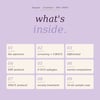
What is in the toolkit
- A how-to-use page with three common clinical use cases and the reminder that ERP can be done correctly and still be done wrong when response prevention is incomplete
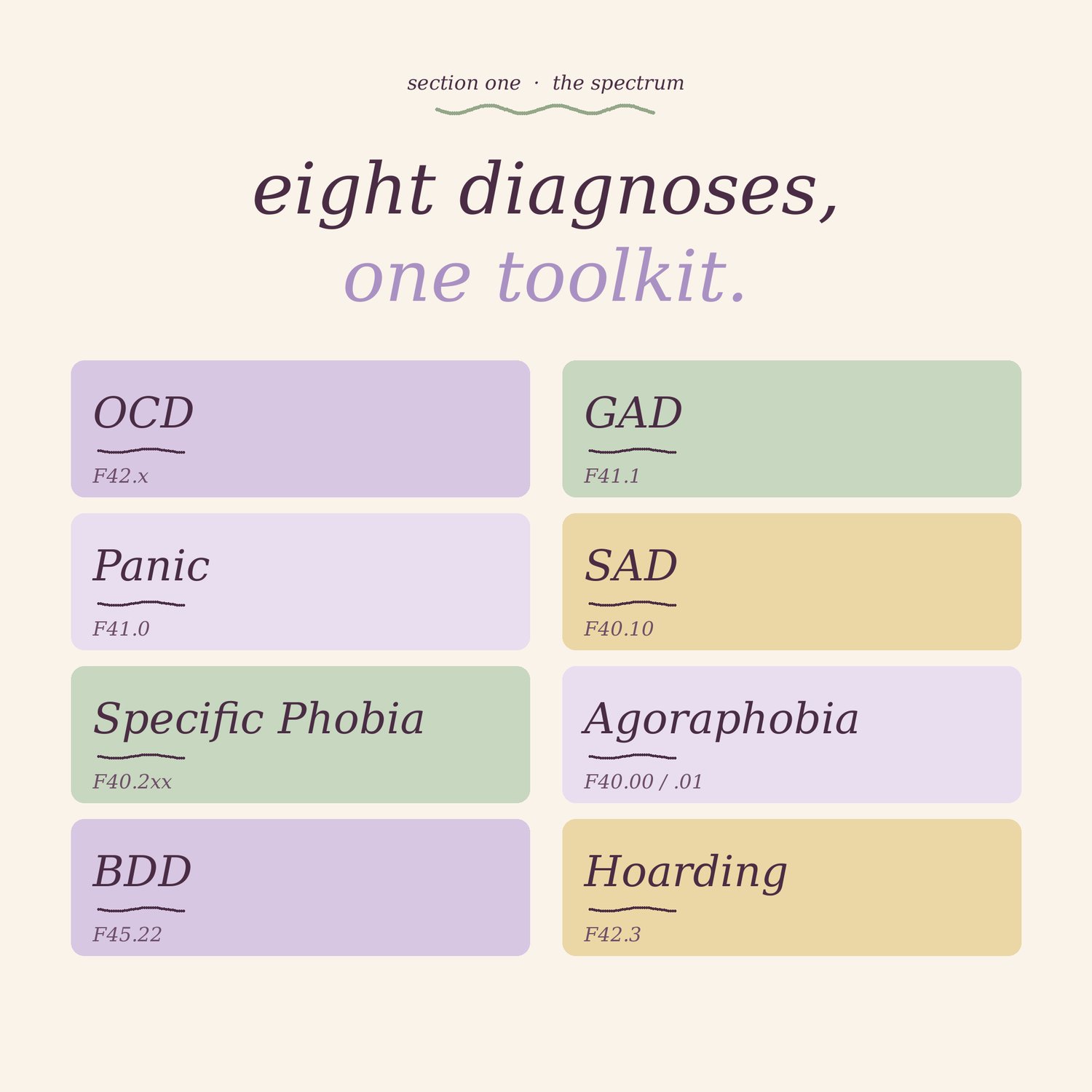
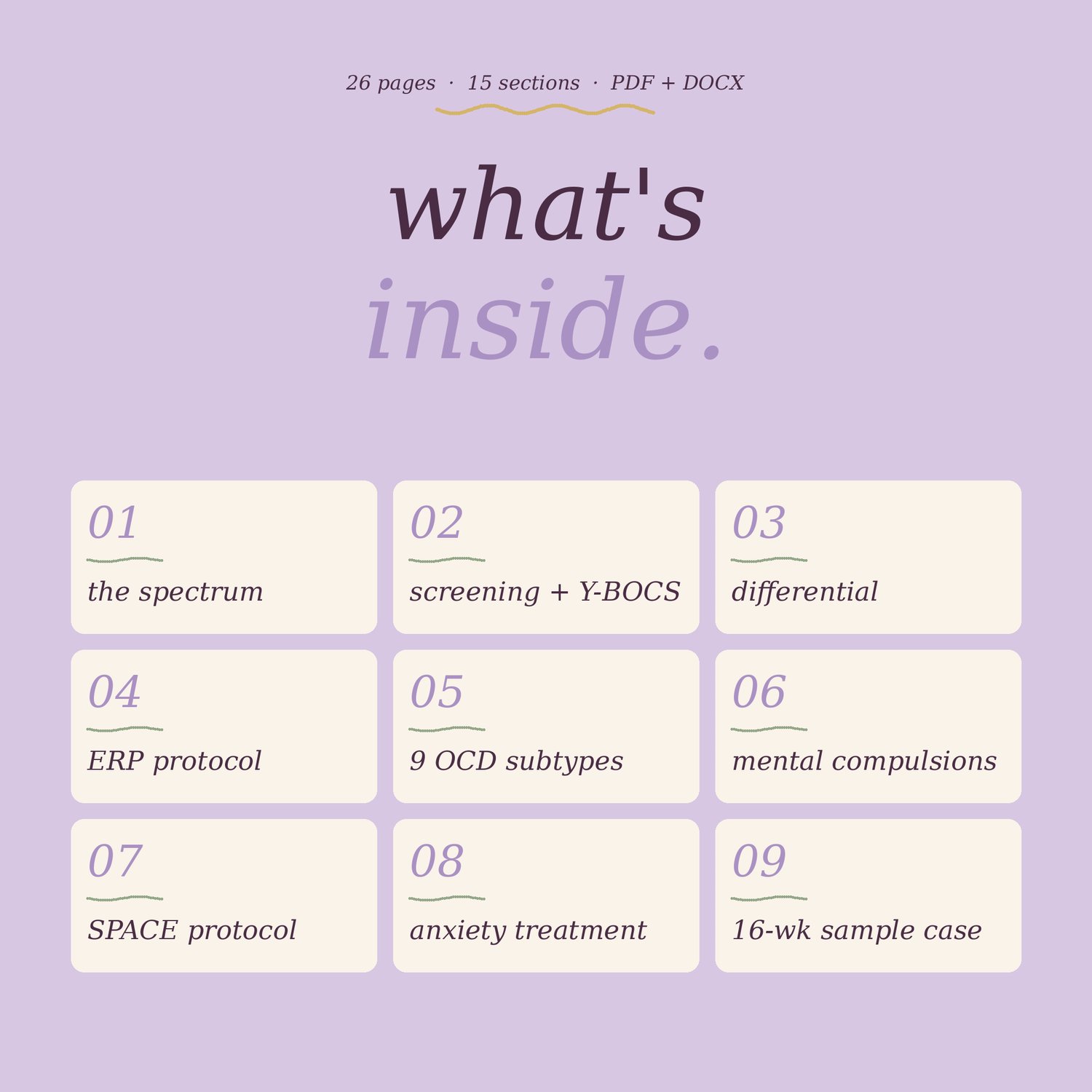
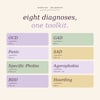
- Section 1: The OCD and anxiety spectrum with prevalence and ICD-10 for OCD, GAD, panic, social anxiety, specific phobia, agoraphobia, body dysmorphic disorder and hoarding, plus why treating OCD as anxiety produces iatrogenic worsening
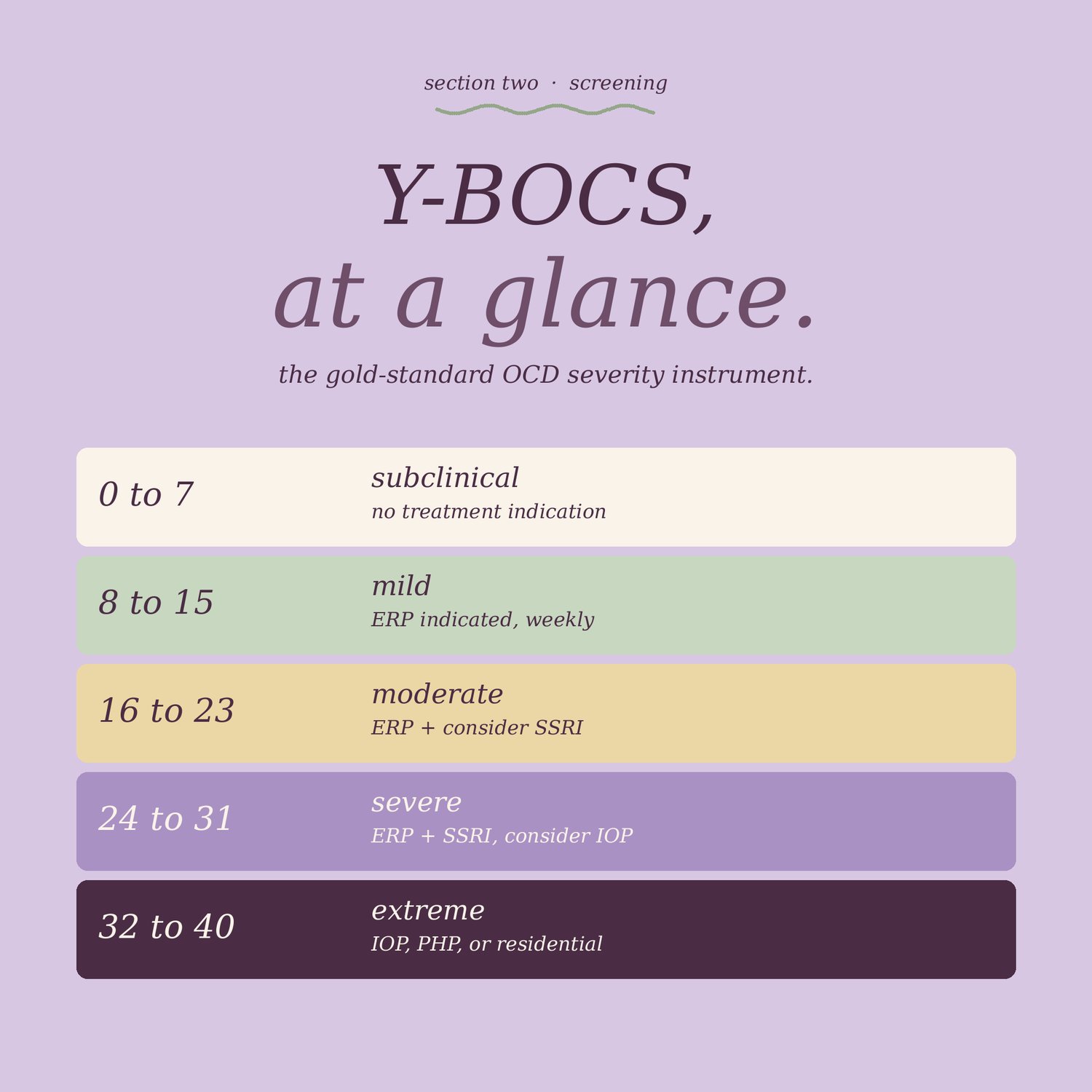
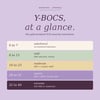
- Section 2: Screening protocols with full scoring anchors for the Y-BOCS, with severity-based treatment matching from subclinical through extreme, plus GAD-7, PDSS and LSAS and the suggested multi-measure intake workup
- Section 3: Differential between OCD obsessions and intrusive thoughts in depression and psychosis using a four-feature framework, plus common misdiagnoses including postpartum OCD versus psychosis, relationship OCD versus preference change, and scrupulosity versus moral failing
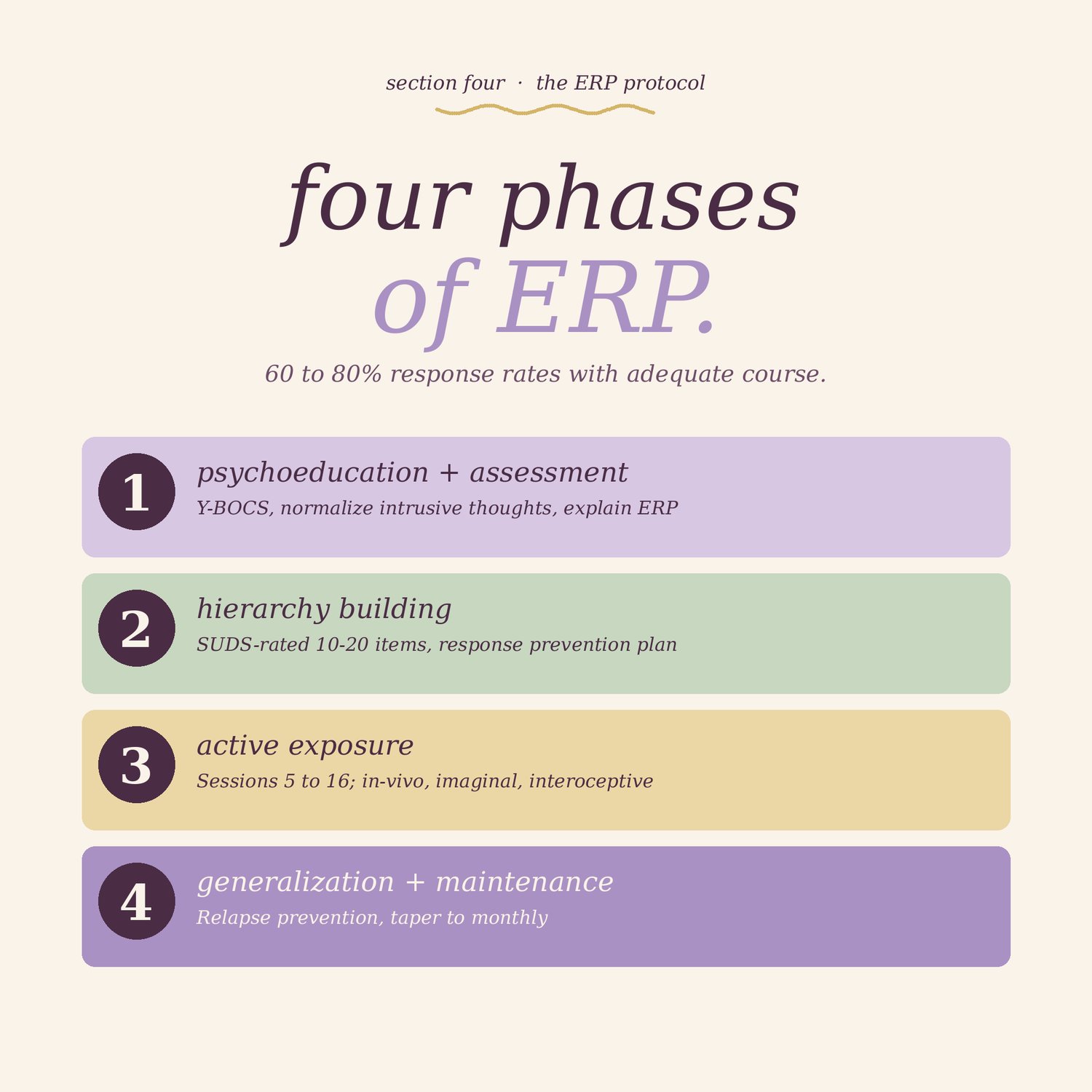
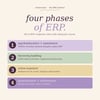
- Section 4: The ERP four-phase protocol with session structure, the three ERP modalities, and the inhibitory learning model as the modern alternative to habituation
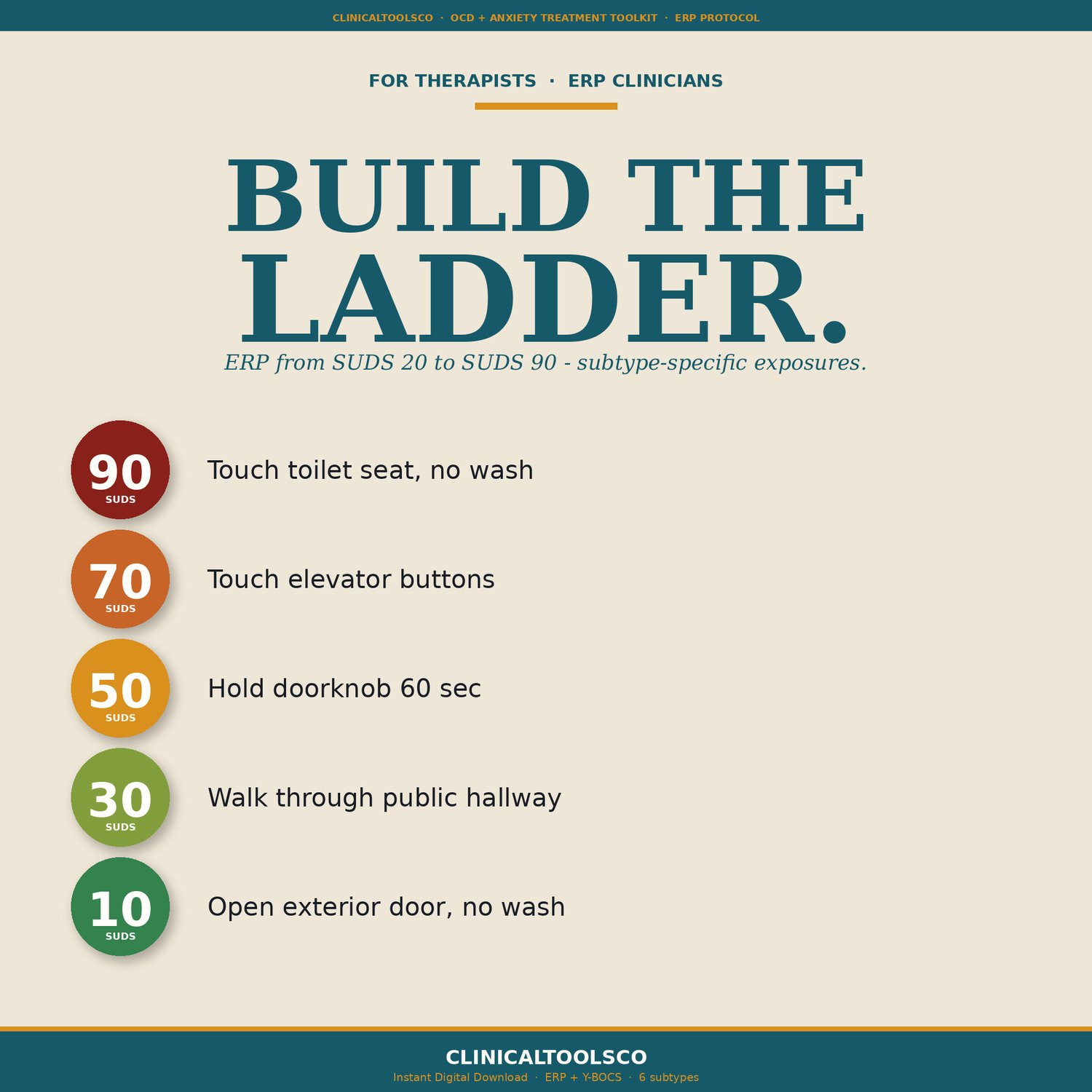
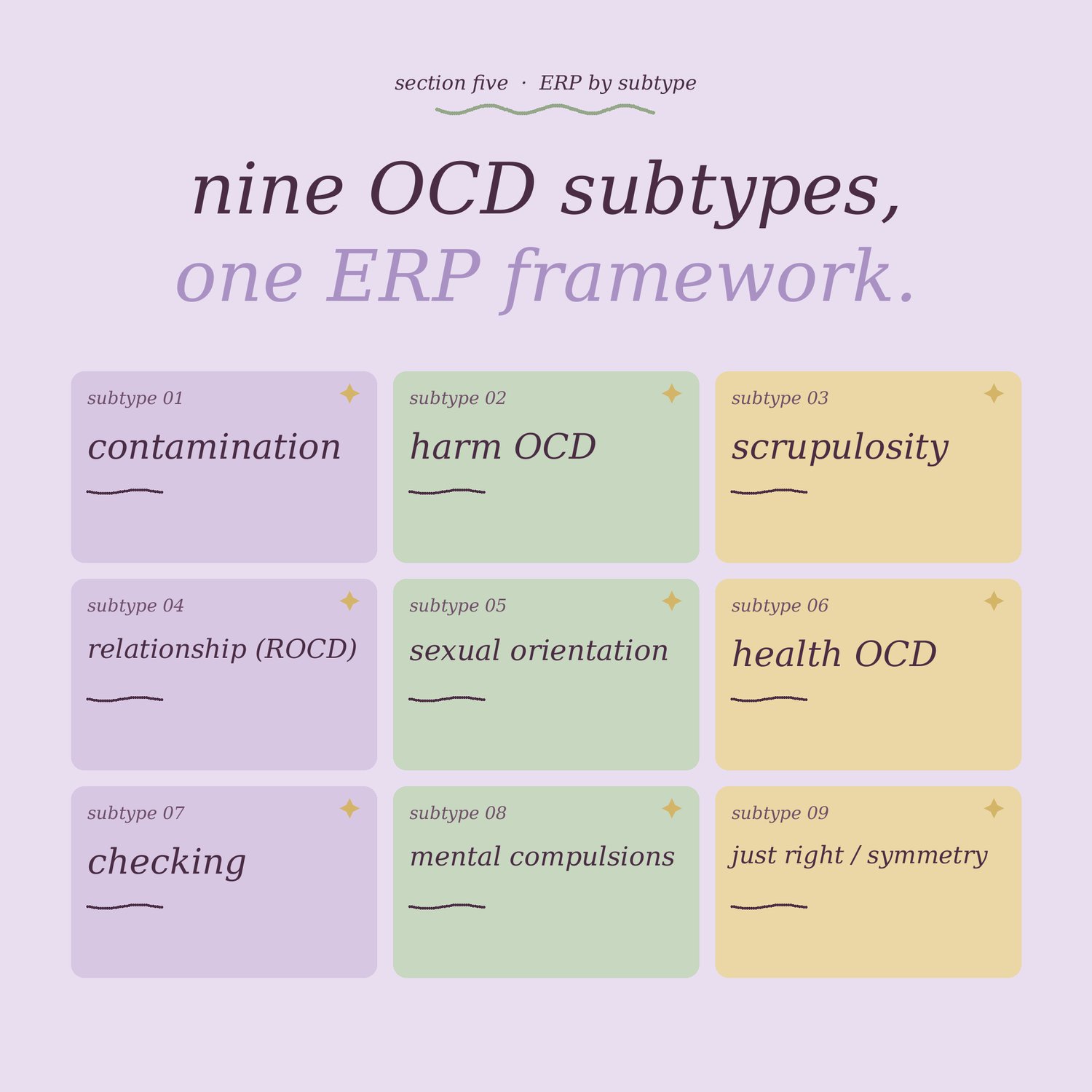
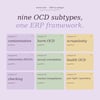
- Section 5: ERP by OCD subtype with obsession content, compulsion patterns, exposure design and response prevention plans across nine subtypes: contamination, harm, scrupulosity, relationship, sexual orientation, health, checking, mental and just-right or symmetry
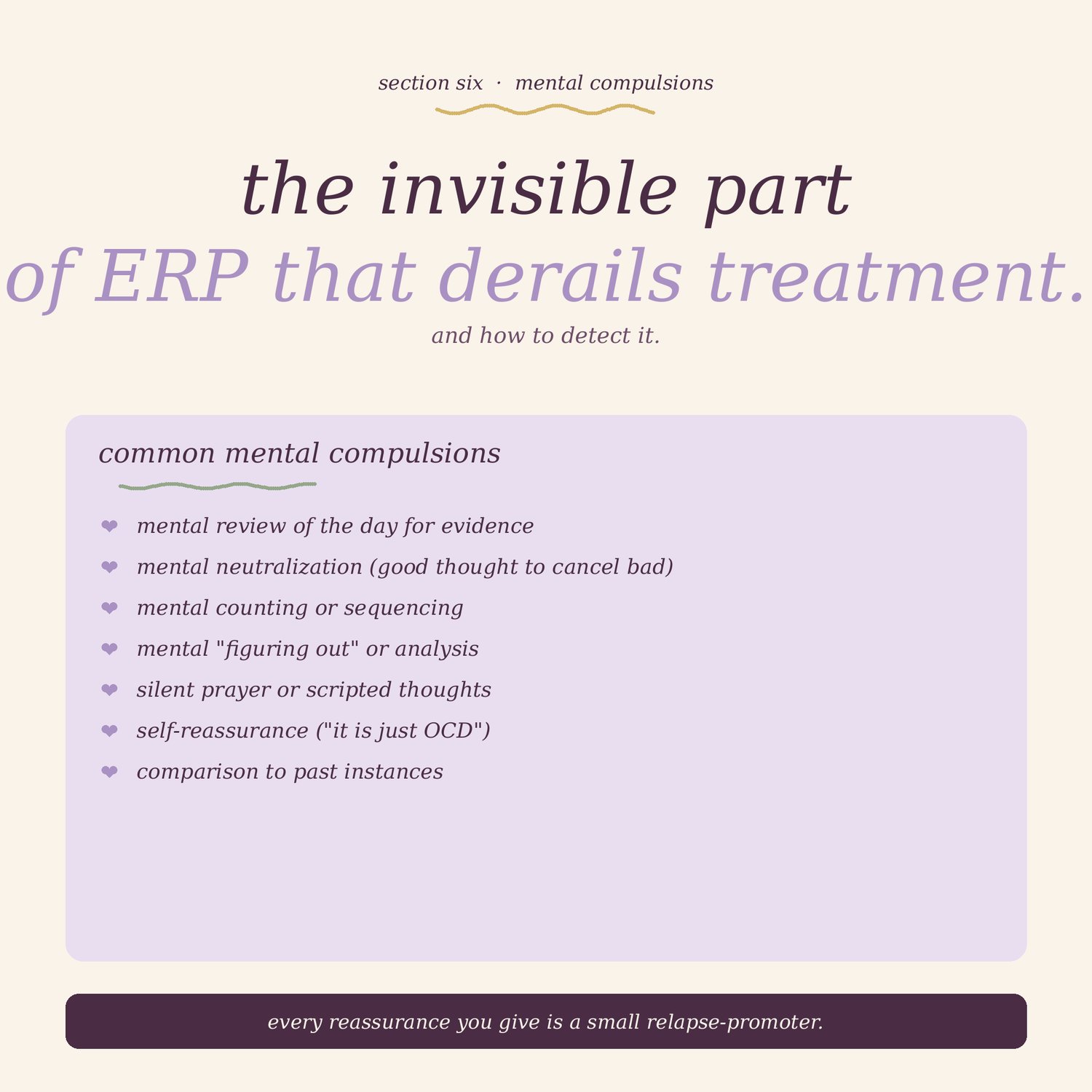
- Section 6: Mental compulsions and reassurance-seeking, the single most-missed feature in ERP treatment failure, with a catalog of mental compulsions, reassurance-seeking patterns, in-session scripts for addressing them, and a self-monitoring note for the therapist's own reassurance-giving
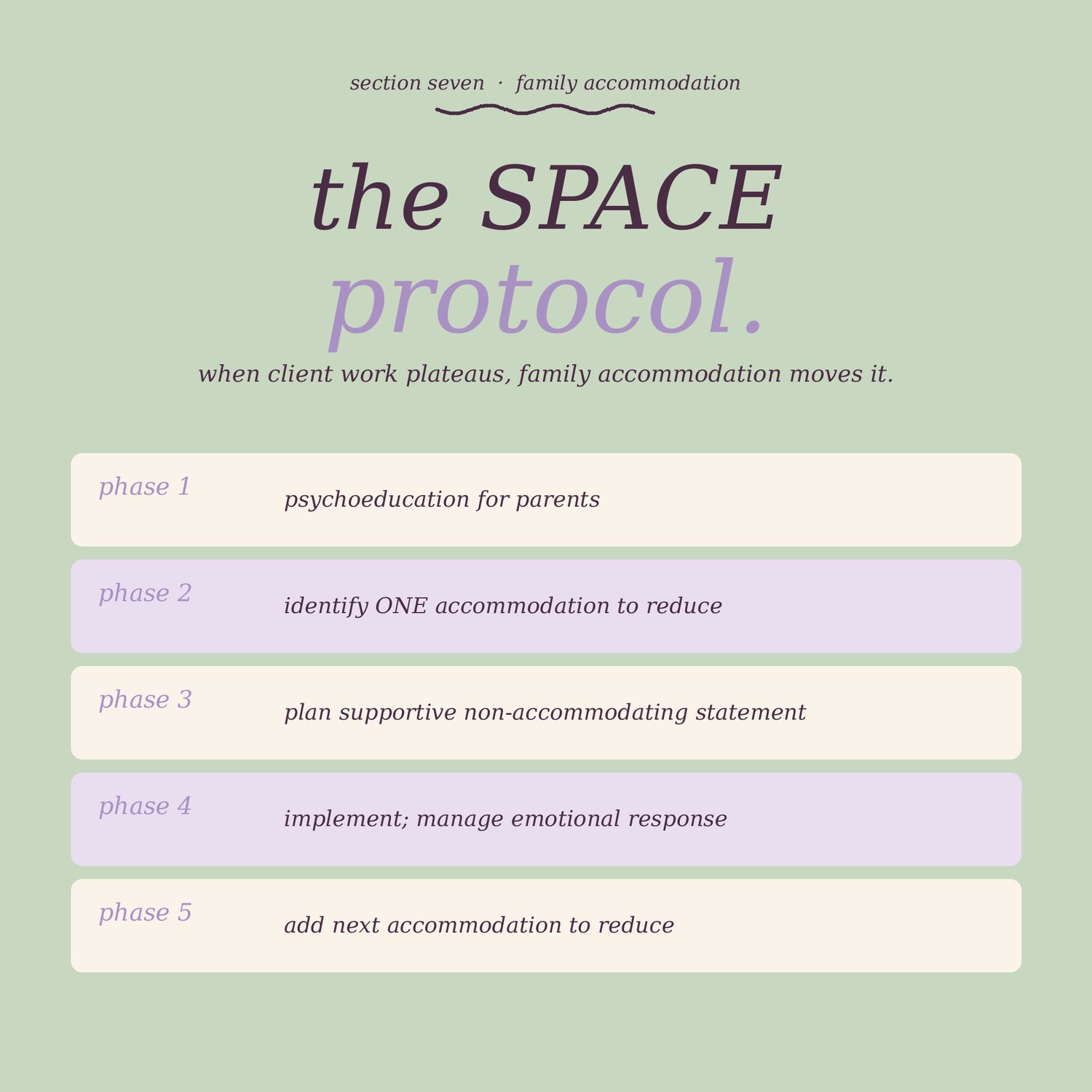
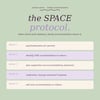
- Section 7: Family accommodation work using the Lebowitz SPACE protocol, with the five-phase pediatric structure, the adult partner adaptation, common accommodation behaviors and a sample partner-coaching script
- Section 8: Treatment by anxiety diagnosis with best-evidenced modalities and key interventions for generalized anxiety, panic, social anxiety and specific phobia, including the single-session phobia protocol
- Section 9: Medication consultation language with OCD-specific SSRI dosing and the benzodiazepine concerns that complicate ERP
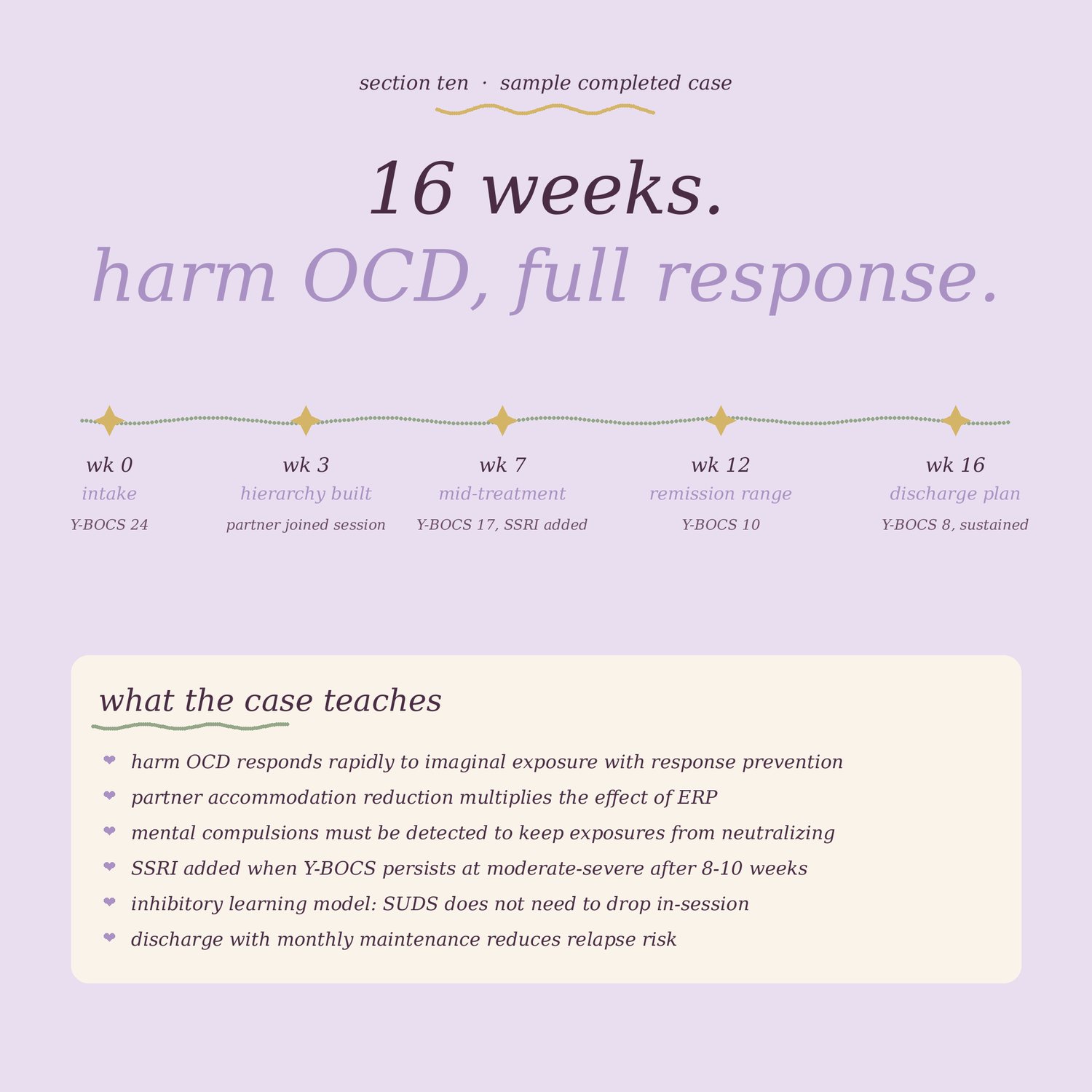
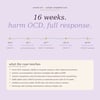
- Section 10: A sample completed case walked across 16 weeks from intake through hierarchy building, a partner accommodation session, mid-treatment active exposure and discharge planning, showing Y-BOCS reduction from 24 to 8
- Section 11: Chart language library with audit-protective phrases by diagnosis, written for medical-necessity payer review
- Section 12: ICD-10 codes and CPT considerations including the telehealth modifier
- Section 13: Phrase library for OCD and anxiety documentation organized by note section
- Section 14: Three referral letter templates, for a prescriber SSRI trial with OCD-specific dosing rationale, an OCD-specialty IOP or PHP, and a SPACE-trained clinician for pediatric family work
- Section 15: Provider directories, crisis lines, continuing education pathways and a selected reading list
Who it is for
- LCSW, LMFT, LPC, LMHC and other licensed therapists treating OCD and anxiety disorders
- IOCDF-trained clinicians and ERP specialists wanting a desk reference
- Generalist CBT clinicians expanding into OCD specialty without learning iatrogenic patterns the hard way
- Pediatric mental health providers using or training in the SPACE protocol
- Group practice owners standardizing OCD documentation across clinicians
- Supervisors training pre-licensure clinicians in ERP execution
- Doctoral students rotating through anxiety and OCD placements
Why it exists
Your client has spent the past four sessions doing a textbook ERP exposure. SUDS go up, SUDS come down, the hierarchy moves. Y-BOCS will not budge. You start to wonder if you are doing it wrong. You are. The exposures are fine. What you are missing is what is happening in the client's head during the exposure: the silent mental review for evidence the feared outcome did not occur, the internal I would never repeated three times after each exposure ends, the mental do-over that quietly neutralizes everything. Mental compulsions are the single most-missed reason ERP plateaus, and the only way to catch them is to know exactly what they look like.
I built this toolkit after years of supervising ERP and watching well-trained clinicians do everything right except the part that mattered. The reference resources for OCD treatment are scattered across the Foa and Kozak therapist guide, the Craske inhibitory learning paper, the Lebowitz SPACE manual, IOCDF specialty trainings, and somebody's old subtype hierarchy. I wanted one document on the desk during sessions.
31 pages built for the outpatient clinician treating OCD and anxiety disorders. Aligned with International OCD Foundation ERP standards, the Craske inhibitory learning model, and the Lebowitz SPACE protocol.
Why this is different
Most OCD references are written for graduate training in generalized CBT and then add an ERP chapter at the end. The clinical reality is the reverse: ERP is a specialty requiring its own protocol mastery, and clinicians trained primarily in generalized CBT often produce iatrogenic worsening before they learn the difference. This is built around the ERP specialty from the inside out.
The mental compulsion section matters because it explains why ERP plateaus when everything else looks right. The catalog of mental review, neutralization, counting, analysis and silent reassurance-seeking is what you need to detect in session, with the scripts for naming and interrupting them without giving reassurance yourself.
The subtype-specific exposure design matters because a harm OCD exposure looks nothing like a contamination OCD exposure, and the response prevention plan for mental compulsions is entirely different from the plan for arranging compulsions.
The SPACE section matters because family accommodation is the single most-modifiable variable in OCD treatment and the one that most often moves treatment when client-only work has stalled.
The inhibitory learning model matters because it changes how you run sessions and how you write the note. Sessions may end with SUDS still high as long as prediction violation occurred, and the note should say so.
The OCD-specific medication consultation language matters because OCD requires higher SSRI doses than depression and a longer adequate trial. The referral letter is written so prescribers understand the OCD dosing target rather than defaulting to a depression-range dose.
Format
- Editable, fillable PDF (31 pages)
- Editable Microsoft Word (.docx, 31 pages)
- Identical content in both formats so you can fill, print or copy into your EHR
- US Letter and A4 sizes both included
- Works on Mac, Windows, iPad, GoodNotes, Notability
- Lifetime access, unlimited prints
Updated 2026
Aligned with International OCD Foundation ERP standards, the Craske et al. (2014) inhibitory learning model paper that replaced the older habituation framework, the Lebowitz SPACE protocol and its randomized noninferiority study against child-focused CBT (Lebowitz et al., 2020, JAACAP), and the Foa and Kozak Mastery of OCD therapist guide. Y-BOCS administration follows Goodman et al. (1989). ICD-10 and CPT sections reflect 2026 documentation expectations.
A note from the designer
I am a practicing clinician treating OCD and anxiety disorders in outpatient practice. I built this after years of supervising ERP cases where the exposures were structured well, the homework was completed, the alliance was strong, and the Y-BOCS still would not move because nobody had caught the mental review happening silently during every exposure. Section 6 is the page I wish I had in my first year.
This is the reference I built so the next ERP clinician does not have to learn the response-prevention subtleties one accidental iatrogenic case at a time.
Digital download. No physical product ships. Reach out by email if anything does not work or if you have questions.