







Perinatal Mental Health Toolkit (2026)
42 pages built for the clinician serving pregnant and postpartum clients, partners, and families. Screening protocols, PMAD differentials, postpartum psychosis emergency response, the EMDR Recent Birth Trauma Protocol, perinatal safety planning, a sample completed case from 28 weeks gestation through 12 months postpartum, chart language library by PMAD type, ICD-10 and CPT references, and three referral letter templates. Aligned with ACOG Clinical Practice Guideline No. 5 (2023) and ACOG's 2025 Clinical Practice Update on zuranolone, Postpartum Support International screening recommendations, the EMDR Recent Birth Trauma Protocol (Cattaneo, Chiorino et al.), and the APA Clinical Practice Guideline for Depression.
What is in the toolkit
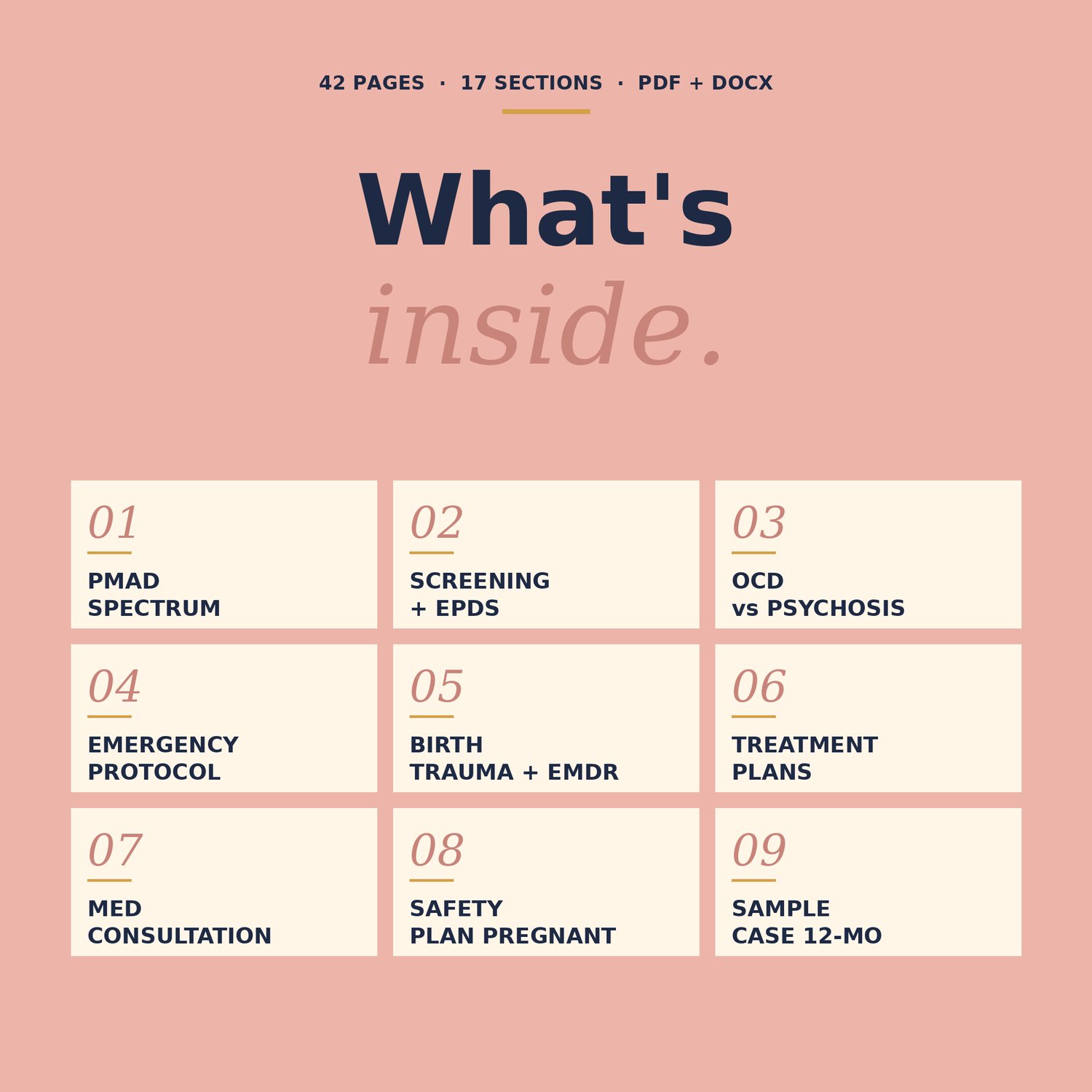
- HOW TO USE THIS TOOLKIT page with four common clinical use cases organized for desk reference during sessions
- Section 1: The PMAD Spectrum with prevalence data for the six PMADs, onset windows, screening tools by condition, and current CDC data on pregnancy-related deaths and maternal suicide
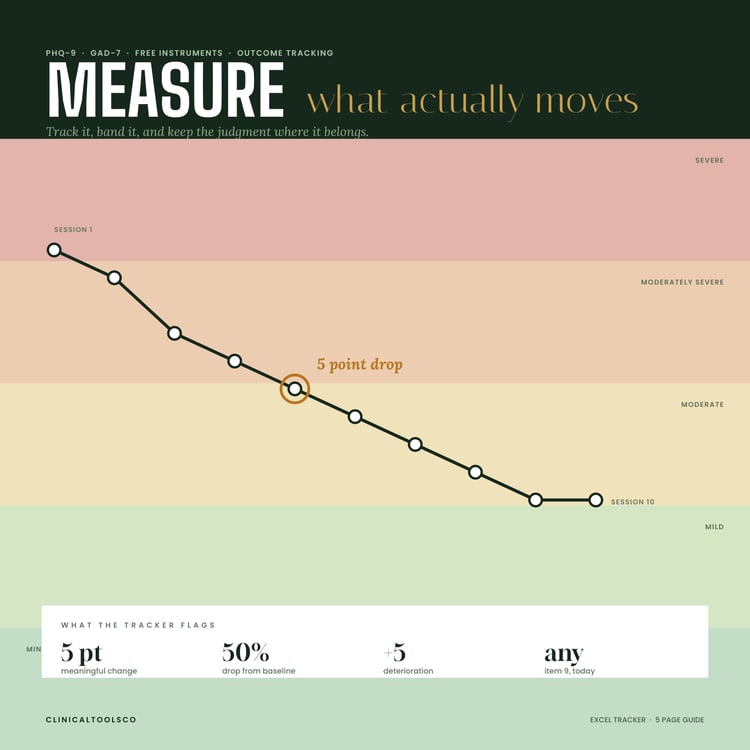
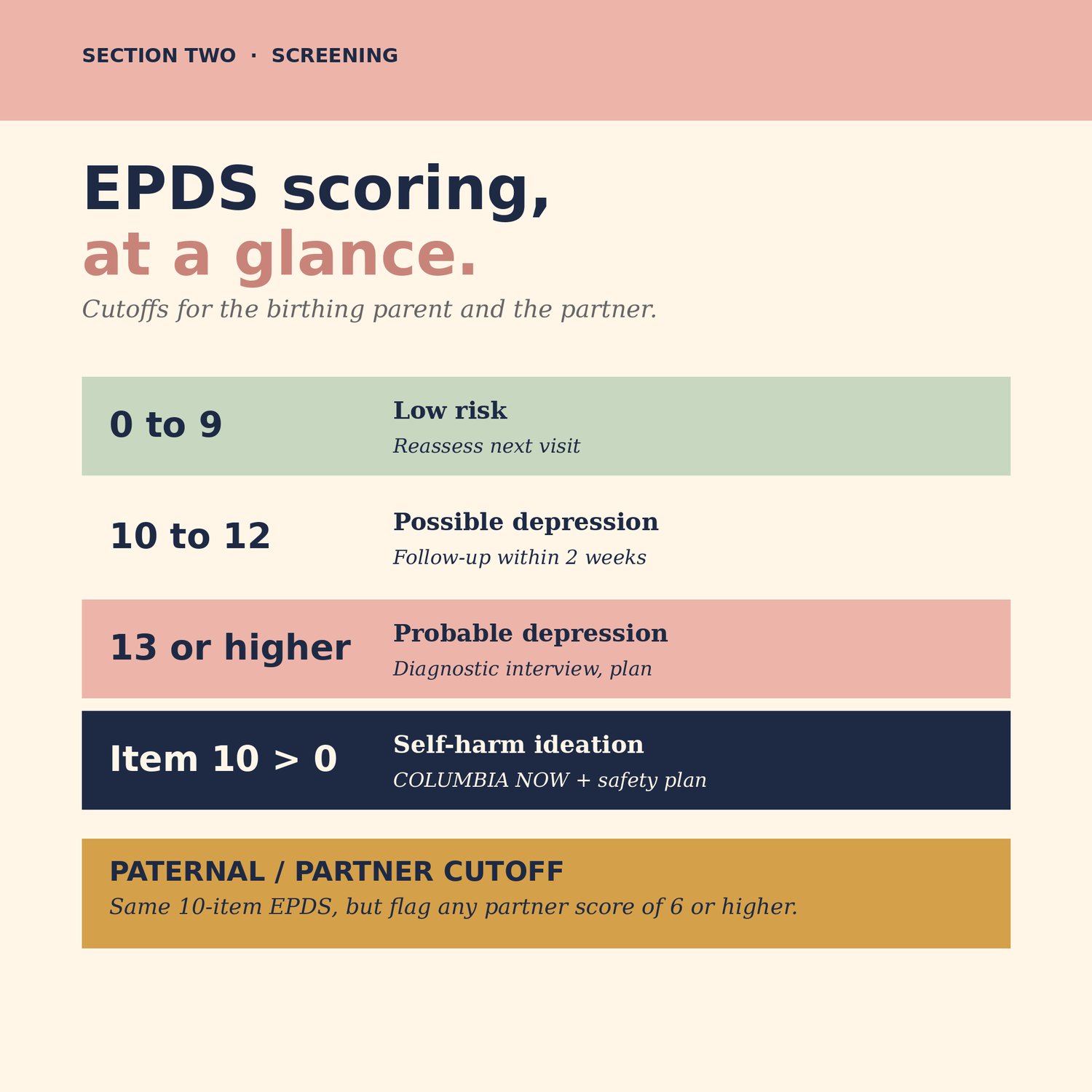
- Section 2: Screening protocols with scoring anchors for the EPDS, PHQ-9 with perinatal modifications, GAD-7, the Columbia, and the EPDS-Partner (EPDS-P) version (the EPDS itself is not reproduced; use a published copy)
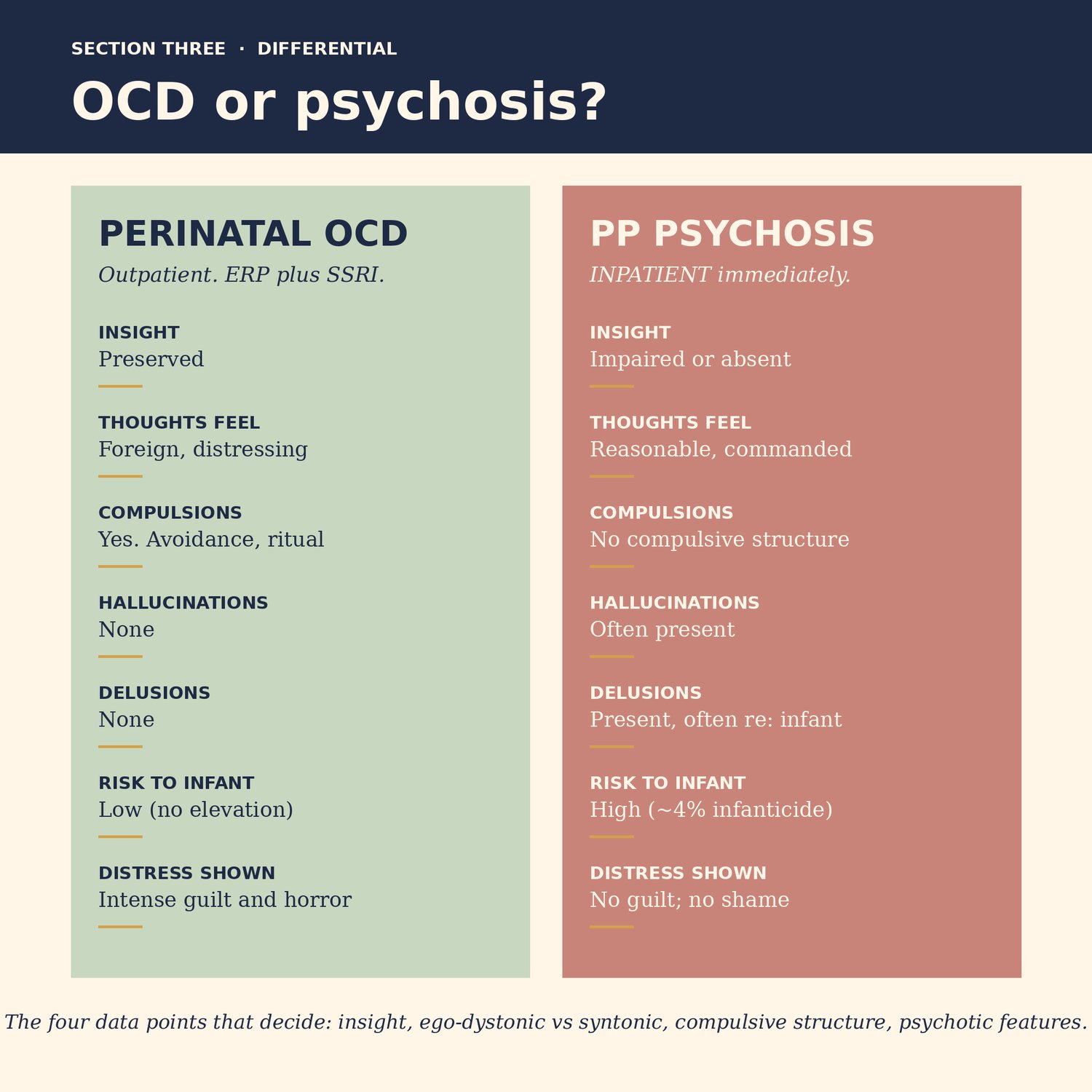
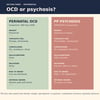
- Section 3: The OCD vs Psychosis vs Depression with Intrusive Thoughts differential table covering insight, ego-syntonicity, compulsions, hallucinations, delusions, infant risk, and treatment setting, plus how clinicians get this call wrong in both directions
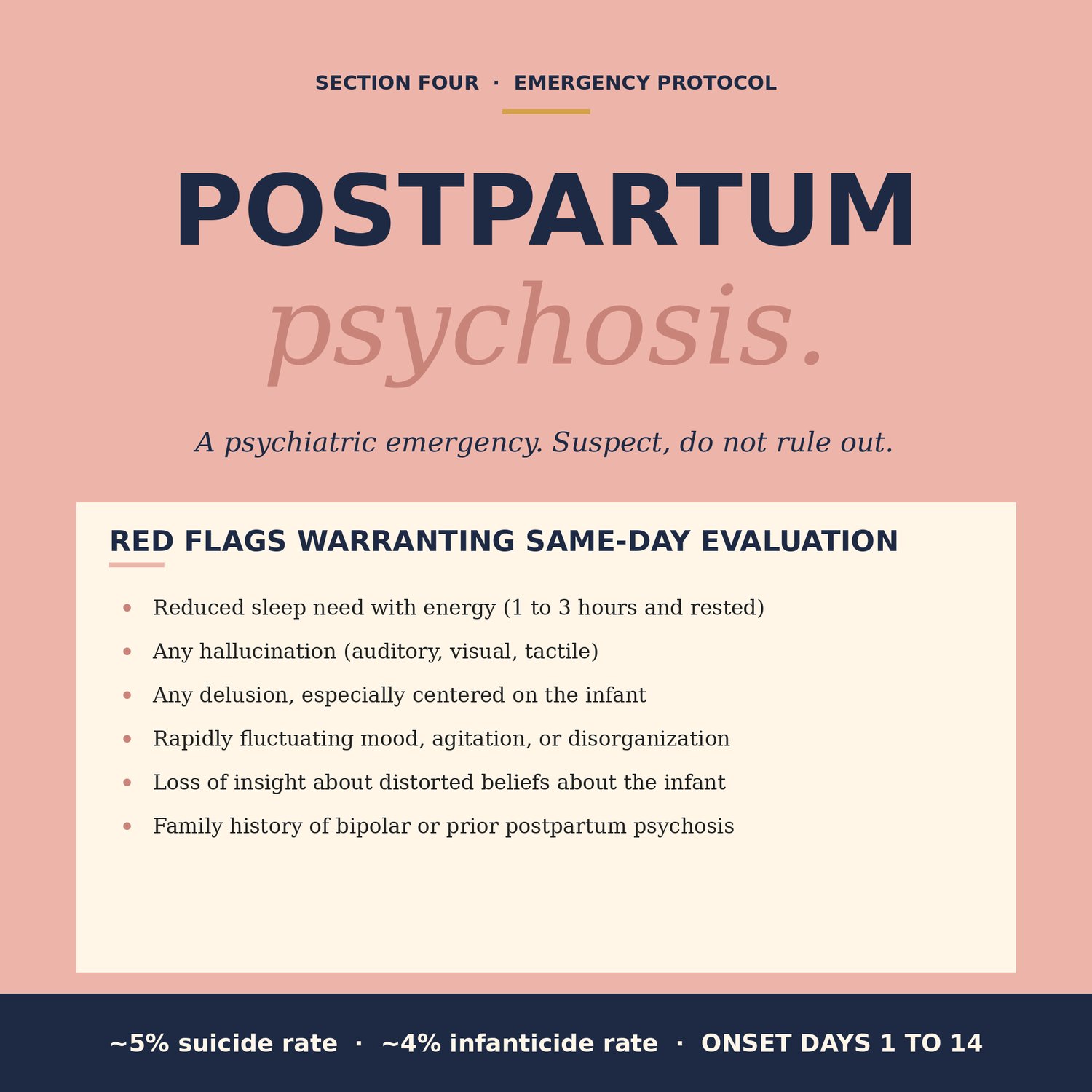
- Section 4: Postpartum Psychosis emergency protocol with the three symptom profiles (Manic 34%, Depressive 41%, Atypical/Confused 25%), red flags, the five-step same-day action sequence, and first-line inpatient treatment
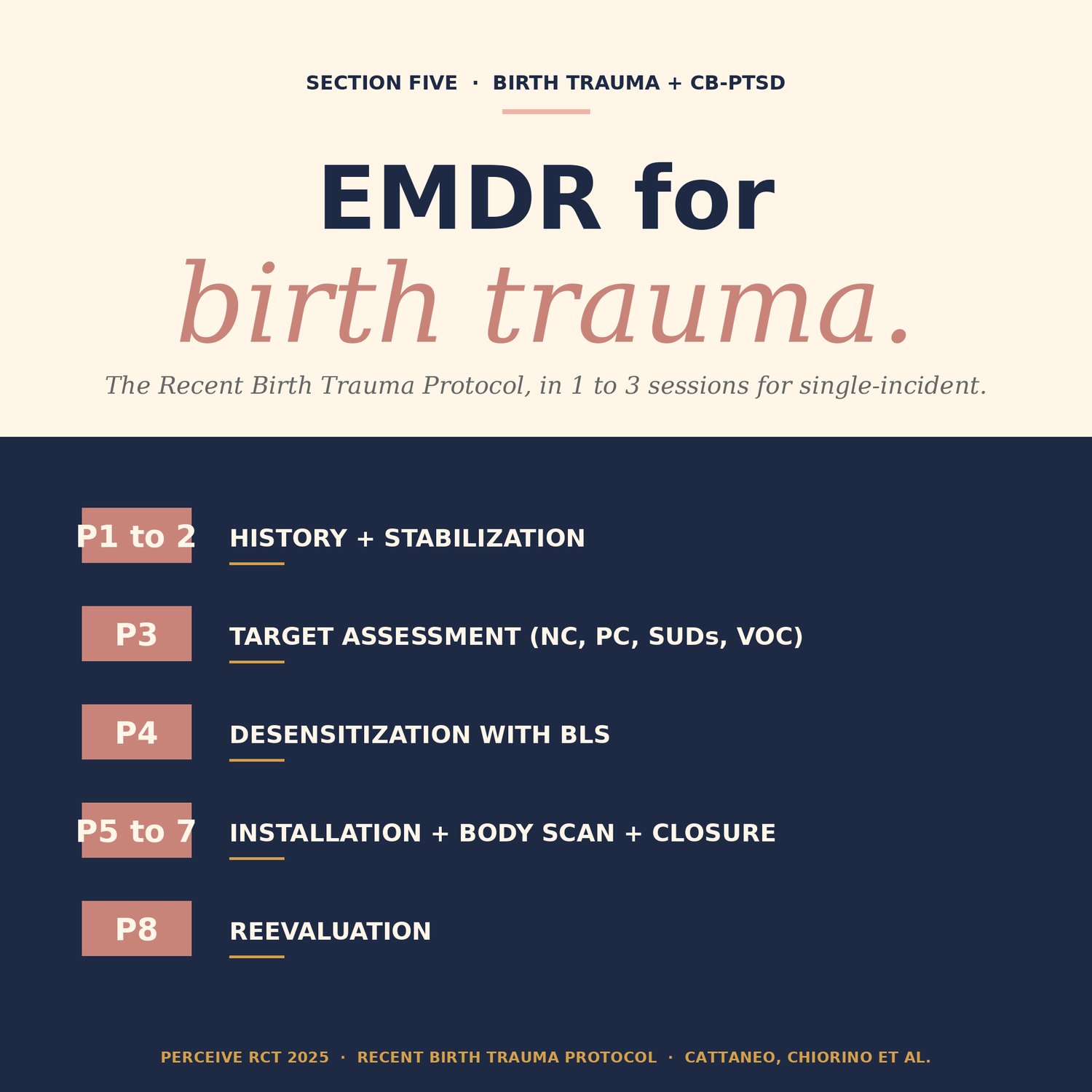
- Section 5: Birth Trauma and CB-PTSD with the PCL-5 plus three birth-specific questions, the City Birth Trauma Scale, the EMDR Recent Birth Trauma Protocol phase by phase, and the 2025 PERCEIVE trial results
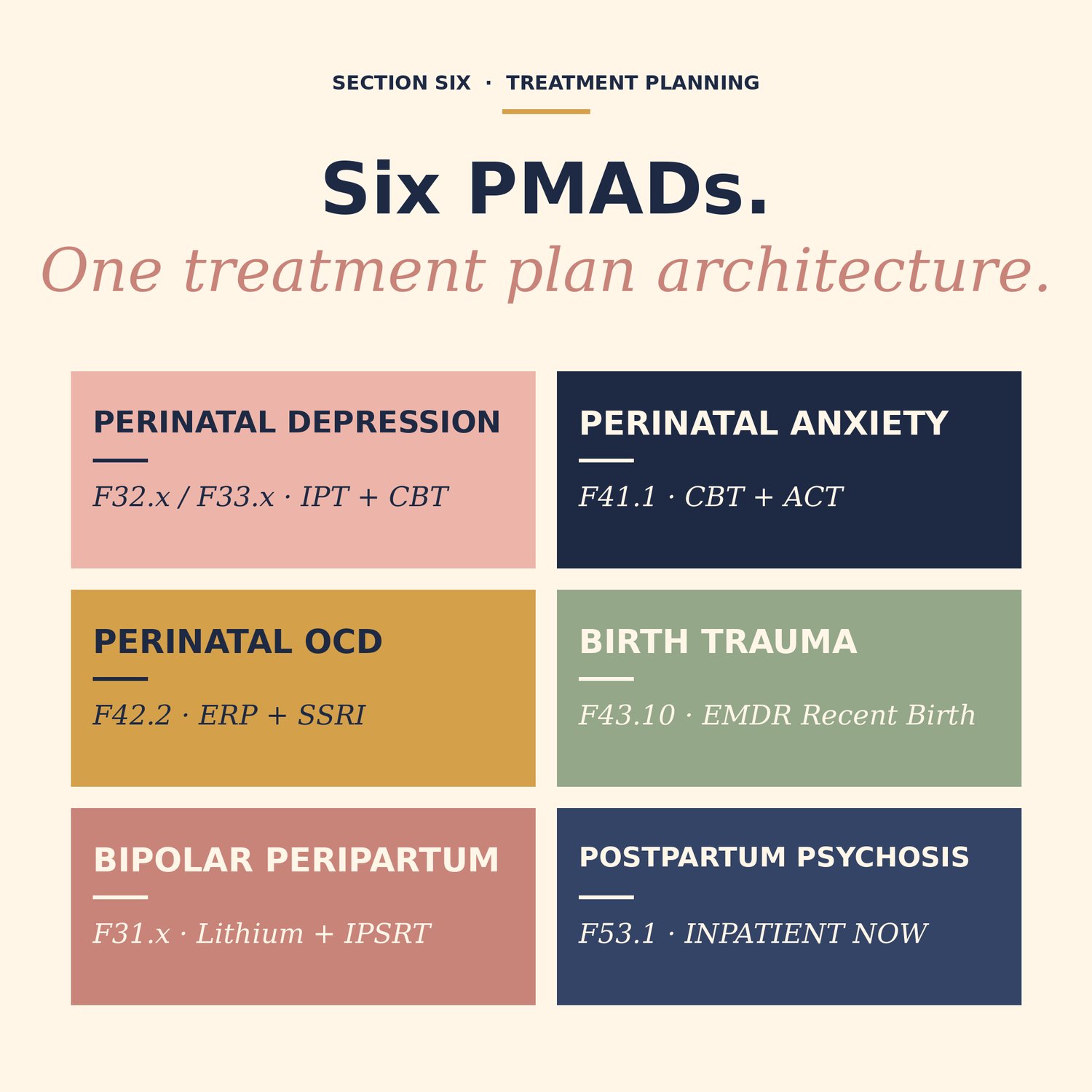
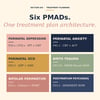
- Section 6: Treatment planning architecture by PMAD type with SMART goals and supported modalities for perinatal depression, anxiety, OCD, birth trauma, and bipolar peripartum
- Section 7: Medication consultation language including the ACOG first-line table, zuranolone (Zurzuvae) dosing and the safety points from ACOG's 2025 update, the brexanolone (Zulresso) withdrawal, and a sample therapist-to-client consultation conversation
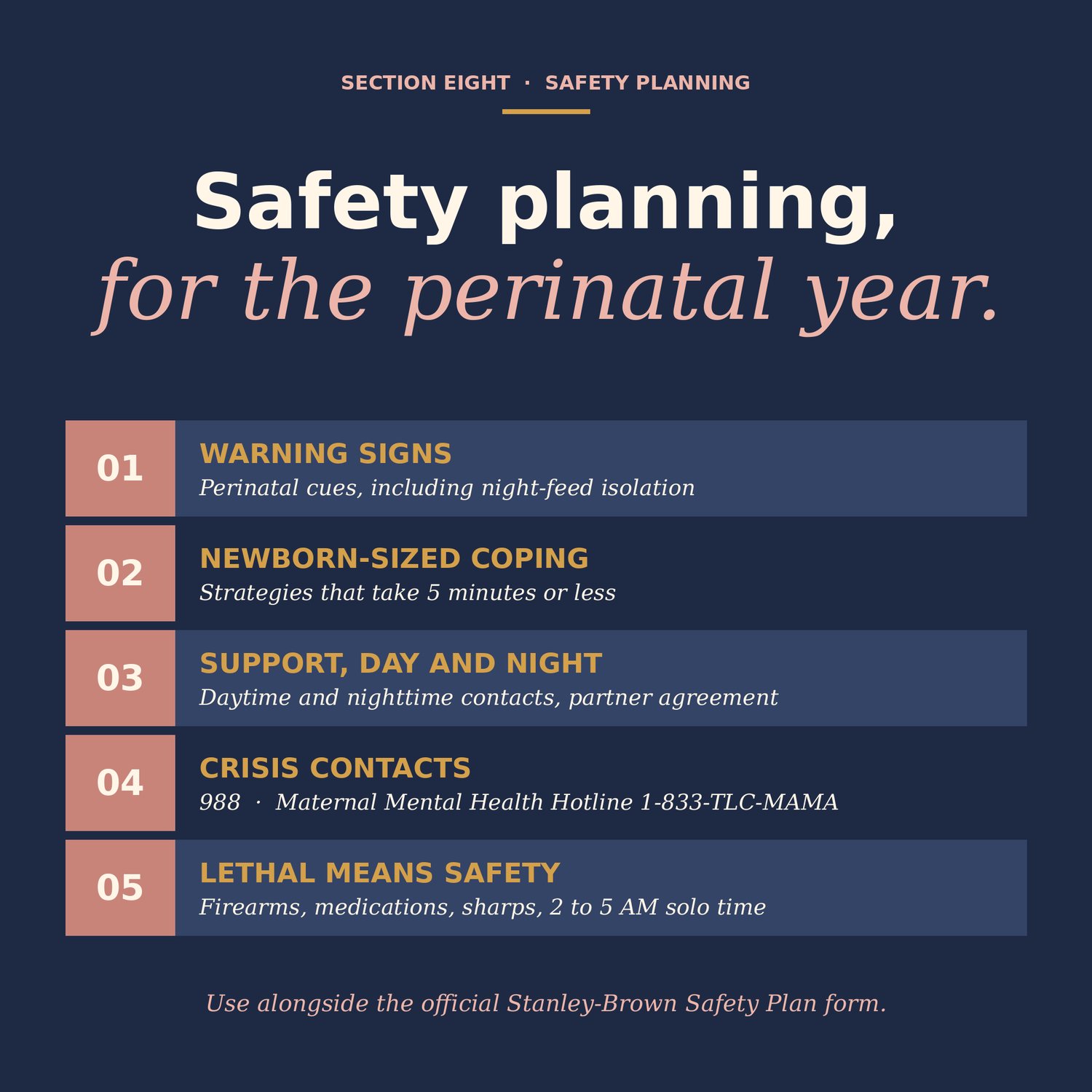
- Section 8: Safety planning in pregnancy and postpartum, used alongside the official Stanley-Brown Safety Plan form: perinatal warning signs, coping that fits life with a newborn, day and night support, crisis contacts, and lethal means safety at home
- Section 9: Bipolar Peripartum with MDQ screening, lithium prophylaxis guidance, sleep protection plans, lactation considerations, and a sample chart note
- Section 10: Paternal and non-birthing partner screening with the EPDS 5/6 cutoff, the EPDS-Partner version, and a recommended screening cadence
- Section 11: Cultural framework with disparities in perinatal mental health and concrete clinical adjustments for screening in non-English languages, trans and nonbinary clients, and immigrant birthing parents
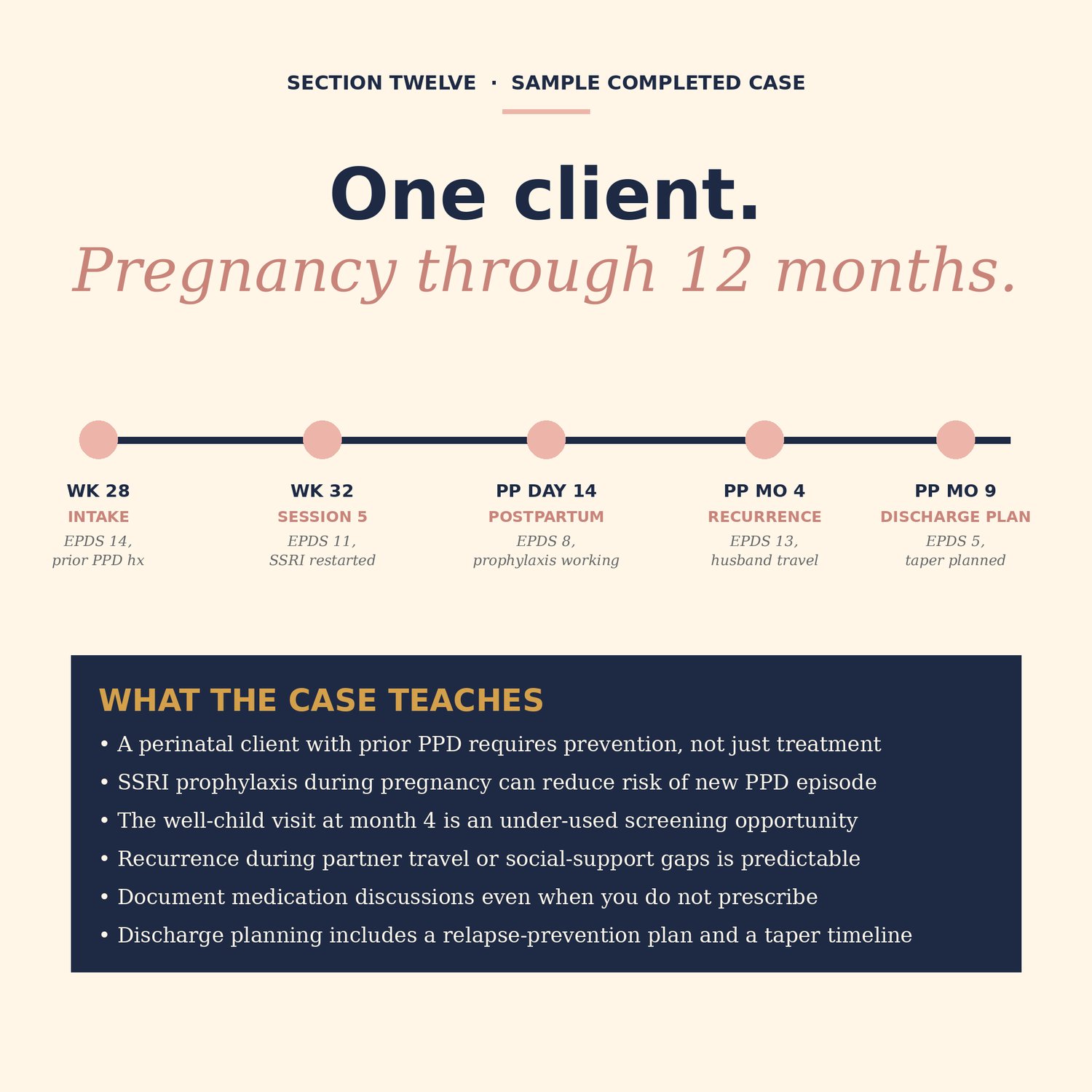
- Section 12: A sample completed case (M.R., 31, G2P1) walked from intake at 28 weeks gestation through discharge at postpartum month 12, including the month-4 recurrence caught at the pediatric well-child visit
- Section 13: Chart language library with audit-protective phrases organized by PMAD presentation for depression, anxiety, OCD, birth trauma, and postpartum psychosis
- Section 14: ICD-10 perinatal codes (F32.x and F33.x with the peripartum specifier in the narrative, F53.0, F53.1, O99.34x, F31.x, F41.1, F42.2, F43.1x, Z codes for psychosocial context) and CPT coding considerations (90791, 90834, 90837, 90847, when 90785 does and does not apply, 99366 and 99368, telehealth modifiers)
- Section 15: Phrase library for perinatal documentation with drop-in language by note section (Subjective, Assessment, Plan, Risk)
- Section 16: Three referral letter templates (OB for SSRI consultation, psychiatric emergency for suspected postpartum psychosis, specialty perinatal mental health provider)
- Section 17: Crisis lines (988, National Maternal Mental Health Hotline 1-833-TLC-MAMA, Crisis Text Line, and the PSI HelpLine for non-crisis support), provider directories, PMH-C certification, and selected reading
- Full reference list
Who it is for
- LCSW, LMFT, LPC, LMHC, and other licensed therapists building perinatal specialty
- PSI-trained clinicians and PMH-C-certified providers wanting a desk reference
- Group practice owners standardizing perinatal documentation across clinicians
- OB and pediatric integrated behavioral health providers
- EMDR-trained therapists expanding into birth trauma work
- Supervisors training pre-licensure clinicians in perinatal specialization
- Mental health agencies receiving postpartum referrals from OB practices
- PsyD and PhD doctoral students rotating through women's health or maternal-child placements
This is a clinical reference for clinicians. It is not a client workbook and does not replace clinical judgment, supervision, or the official screening instruments.
Why it exists
You are sitting with a new mom at week 3 postpartum. She says "I keep imagining my baby falling down the stairs. I would never do it but I cannot get the image out of my head." Your training said intrusive thoughts could mean psychosis. You also know postpartum OCD is high prevalence. The wrong call sends a healthy parent to the ER. The wrong call in the other direction misses a real psychiatric emergency. Most perinatal references will not tell you which call is which because the answer requires reading insight, ego-dystonicity, compulsive structure, and psychotic features as a single picture.
I built this toolkit after sitting in supervision and watching colleagues either escalate ordinary postpartum OCD to inpatient or miss postpartum psychosis because the family was articulate. The reference resources for perinatal mental health are scattered across screening guidance, ACOG and PSI guidelines, a textbook chapter on PMADs, supervisor consultation notes, and somebody's old completed sample case. I wanted one document on the desk during sessions.
Why this is different
Most perinatal references are written for the academic curriculum or by the screening-tool publisher. They cover one tool at a time and they are not built for the desk during sessions. This is built to be the thing you keep open when you are seeing perinatal clients.
The differential diagnosis table matters because the OCD vs psychosis call is the single most consequential one in perinatal mental health, and the four-feature framework (insight, ego-syntonicity, compulsive structure, psychotic features) is the thing that protects you from misdiagnosis in either direction.
The sample completed case matters because every other perinatal resource shows you isolated forms. The case walks one client from 28 weeks pregnant through postpartum month 12 with every note documented, including the recurrence at month 4 that was caught only because of universal screening at the pediatric well-child visit.
The chart language library matters because clear, specific documentation is what holds up in a payer review. The phrases are written in medical-necessity language and organized by PMAD type so you can adapt them to your client and drop them into your EHR.
The medication consultation language matters because therapists are often the first clinician to recognize that pharmacotherapy is needed. The script for the consultation conversation is written in ACOG-aligned, lactation-aware terms so you can have it with the client and then with the OB.
The ICD-10 reference matters because ICD-10-CM has no code digit for "with peripartum onset." The toolkit shows how to code the episode and document the specifier, and when F53.0 is used instead.
Format
- Printable PDF (42 pages, US Letter)
- Editable Microsoft Word file (.docx) with the same content, so you can adapt templates and chart language
- Works on Mac, Windows, and iPad
- Print at home or office, or read on screen
- Lifetime access, unlimited prints, free updates
Updated October 2026
Fact-checked against primary sources. Current crisis lines (the Maternal Mental Health Hotline is now 1-833-TLC-MAMA), current ICD-10 and CPT guidance, ACOG's 2025 update on zuranolone, the 2025 PERCEIVE trial results, current CDC data on pregnancy-related deaths, and a corrected and expanded reference list.
How to use it
Keep Sections 2 and 14 within reach for every session because the EPDS scoring table and the ICD-10 codes get used most often. Sections 3 and 4 are the differential and emergency protocol pages; print them and keep them where you can see them for the cases you do not want to second-guess in the moment. Section 12 is the sample completed case; read it once before your first perinatal intake so you have a model of what the full arc looks like in writing. Section 13 is your chart language library. Section 16 has the three referral letter templates; copy and adapt for the OB or psychiatric handoff.
A note from the designer
I am a practicing clinician working with perinatal populations. I built this toolkit after sitting in supervision meetings where a colleague had escalated obvious postpartum OCD to inpatient because the content of the intrusive thoughts was disturbing, and after watching the reverse error in a case where postpartum psychosis was missed because the family was articulate and the client was well-spoken. The differential table in Section 3 is the page I wish I had on my wall from year one. The sample completed case in Section 12 is the structure I use with my own supervisees. The medication consultation language in Section 7 is what I send to OB colleagues when they ask how I talk to clients about SSRIs.
This is the reference I built so that the next clinician picking up a perinatal case does not have to piece five sources together at the desk.
Digital download. No physical product ships. Reach out by email if anything does not work or if you have questions.