

Pre-Licensure Supervision Manual (2026)
A pre-licensure supervision manual: a licensure roadmap by credential, state requirement tables, the direct versus indirect hour rules, choosing a supervisor and a ten-item supervision contract.
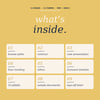
What is in the manual
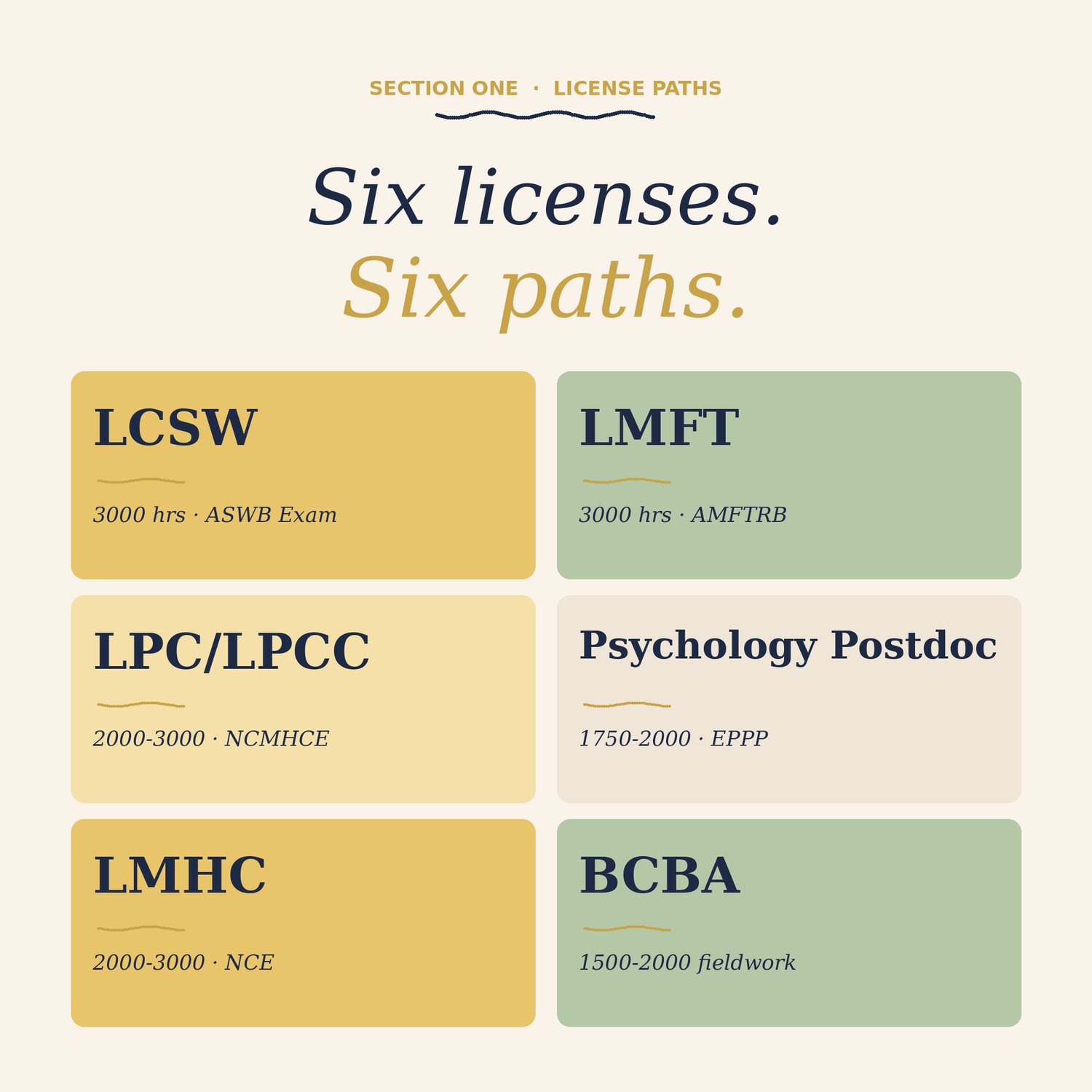
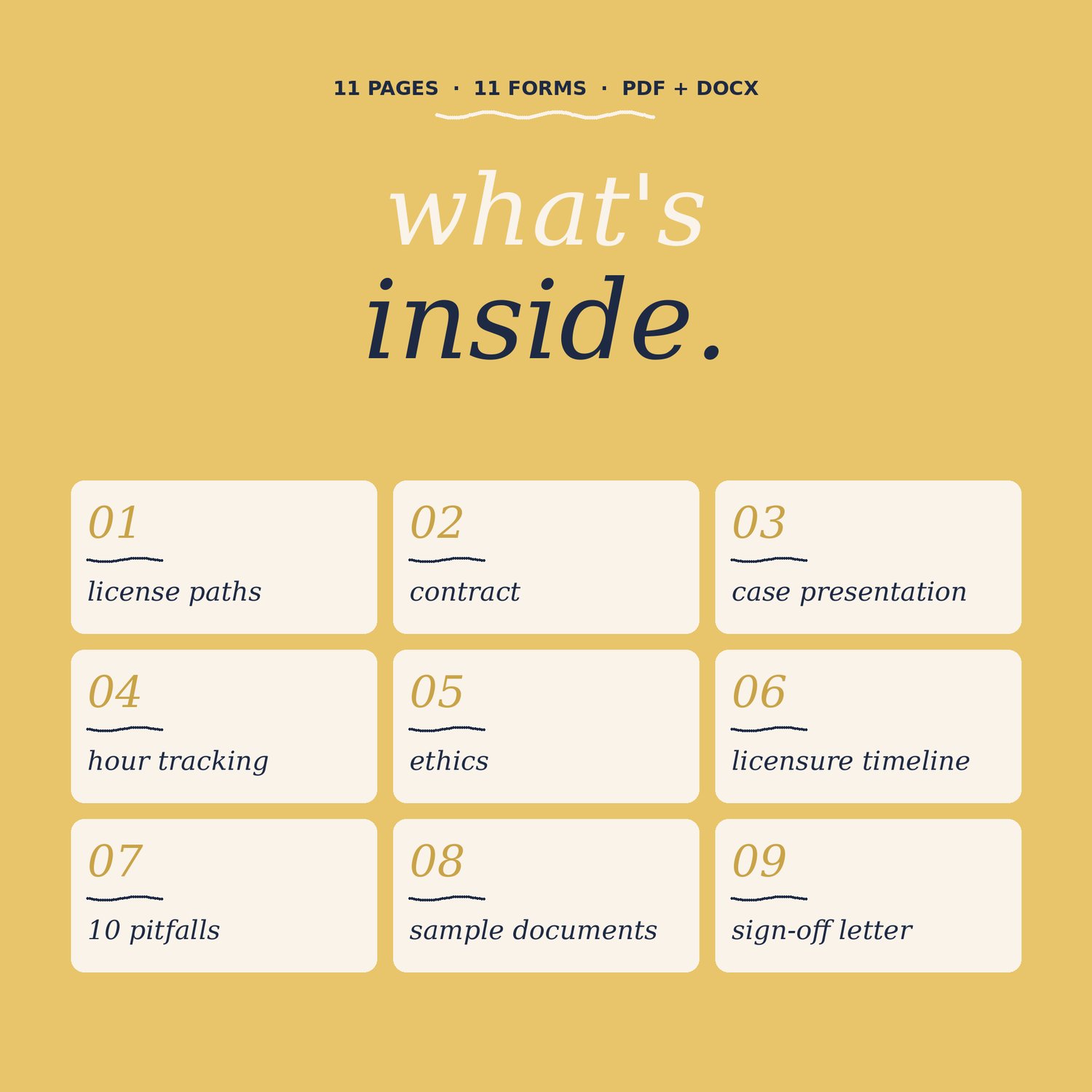
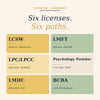
- A licensure roadmap by credential across LCSW, LICSW, LMFT, LCMFT, LPC, LPCC, LMHC, LCMHC, and postdoctoral psychology.
- State-by-state requirement tables for 15 states across the LCSW and LPC tracks: California BBS, New York, Texas BHEC, Florida 491, Illinois IDFPR, Pennsylvania, Massachusetts, Washington, Colorado DORA, Georgia, North Carolina, Arizona, Ohio CSWMFT, Michigan LARA, and Oregon. Each table cites its governing body and current statute.
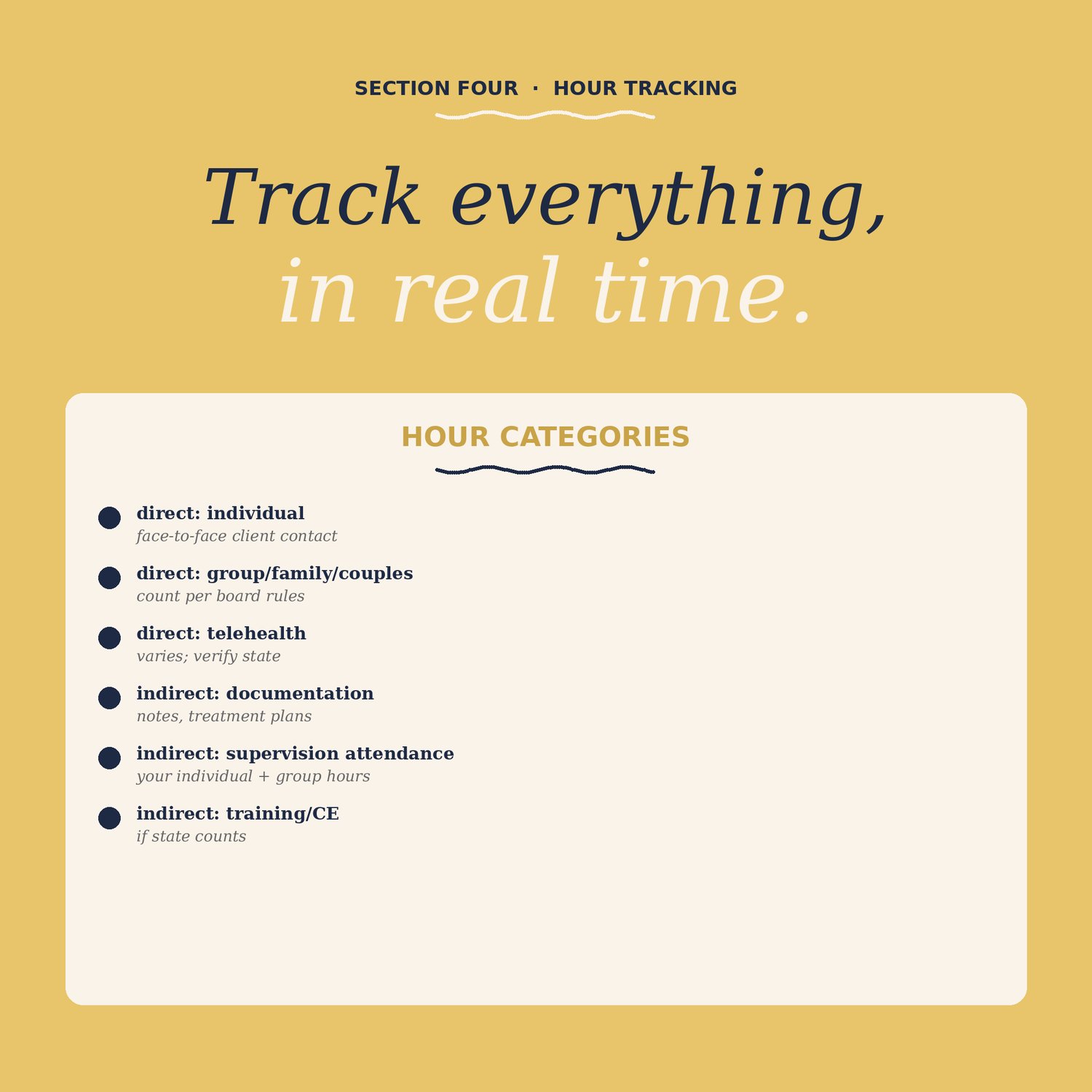
- The direct versus indirect hour distinction with the category breakdown every board uses, and the group-to-individual conversion ratios by state, which is the math supervisees miscount most often.
- Picking a supervisor: qualifications to verify, red flags, pre-contract interview questions, and a supervisor disclosure of limitations document.
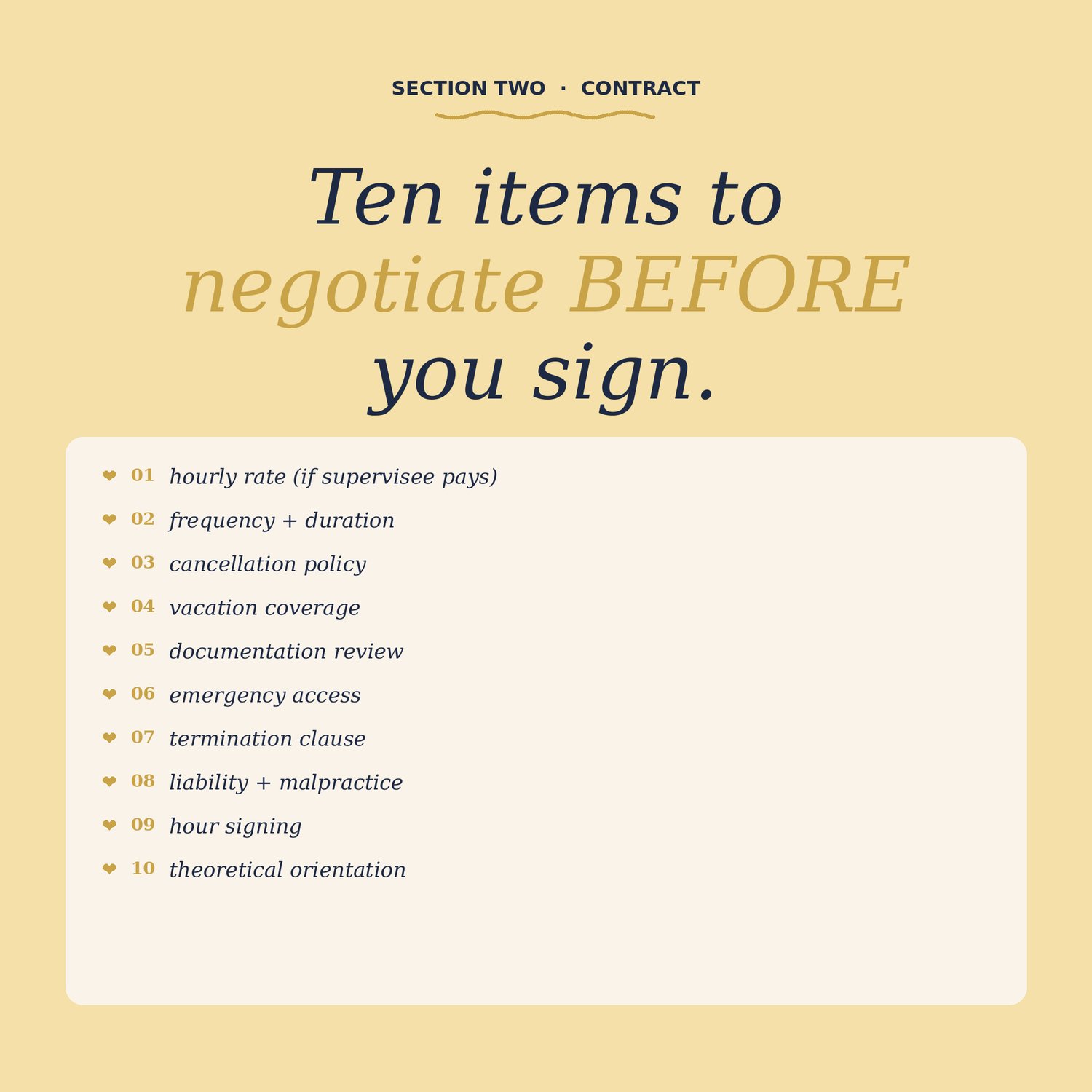
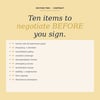
- The ten-item supervision contract with drop-in sample language for each item: frequency, fees, qualifications, hour tracking, evaluation, confidentiality, due process, emergency access, termination, and liability.
- The four major supervision models side by side, Discrimination, IDM, Competency-Based, and Reflective and Relational, with developmental level markers, best-use cases, and the limitations of each.
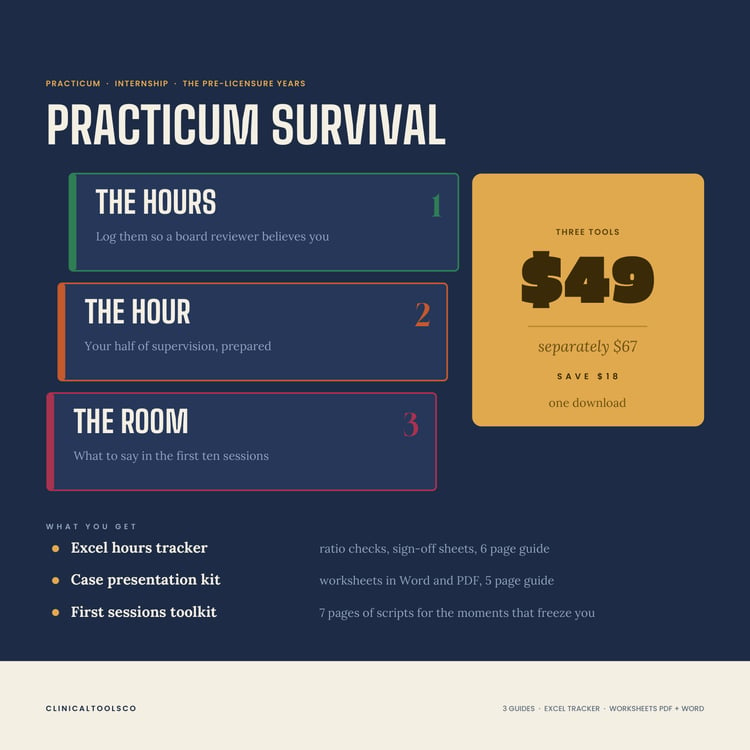
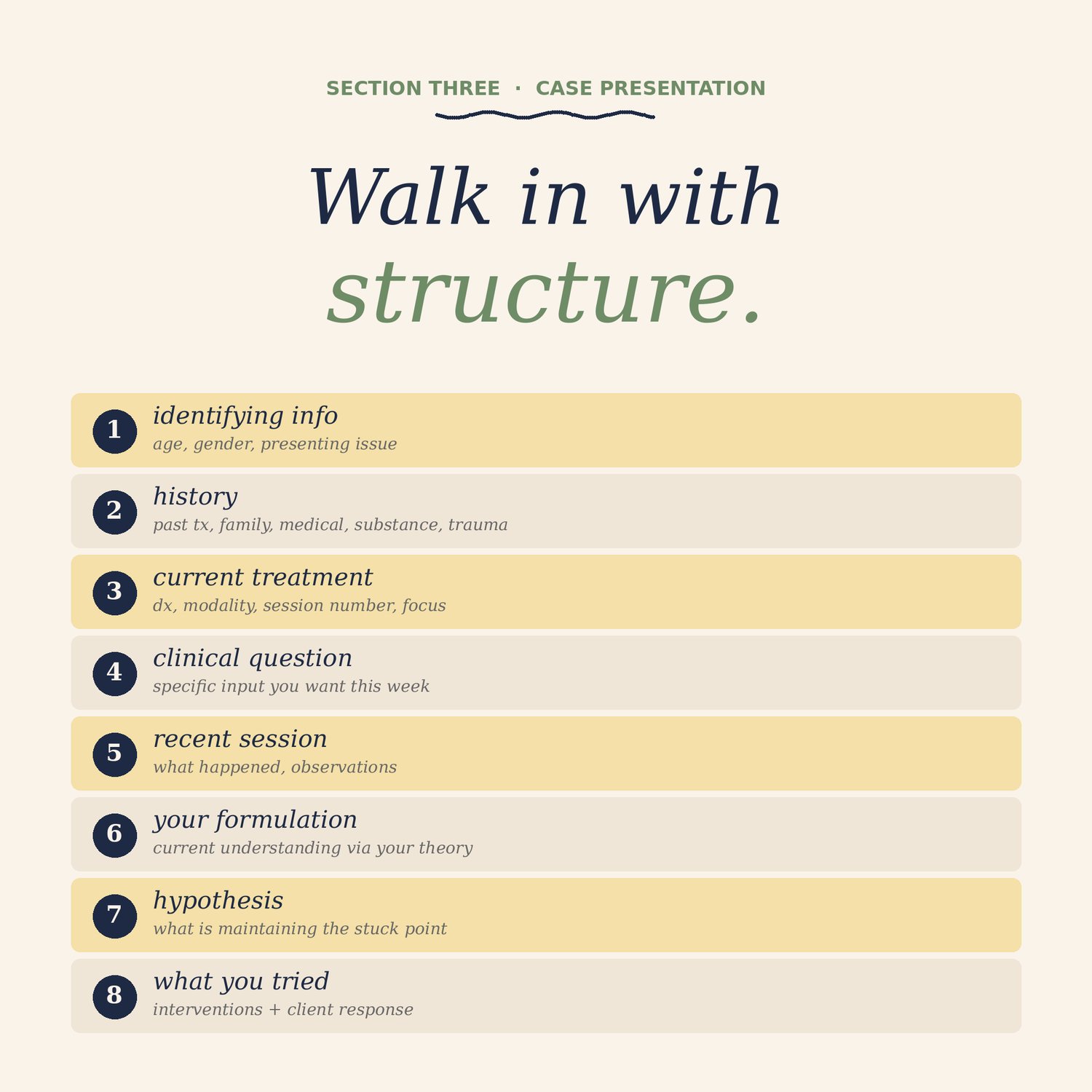
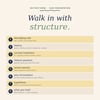
- An eight-part case presentation framework built for 12 to 15 minutes, including the sentence supervisees skip most often.
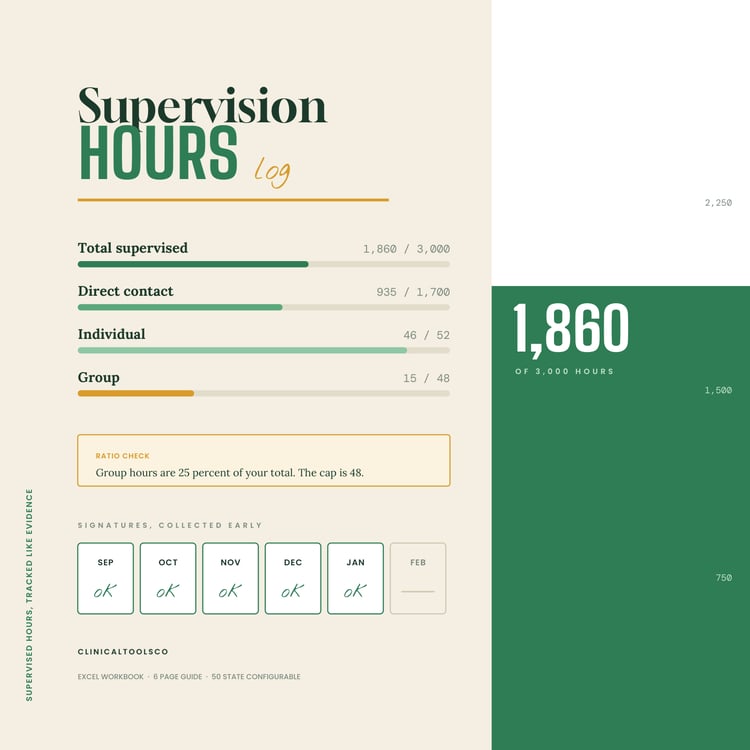
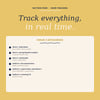
- Hour tracking math: which categories to track separately, the conversion pitfalls, weekly log discipline, and a sample weekly entry.
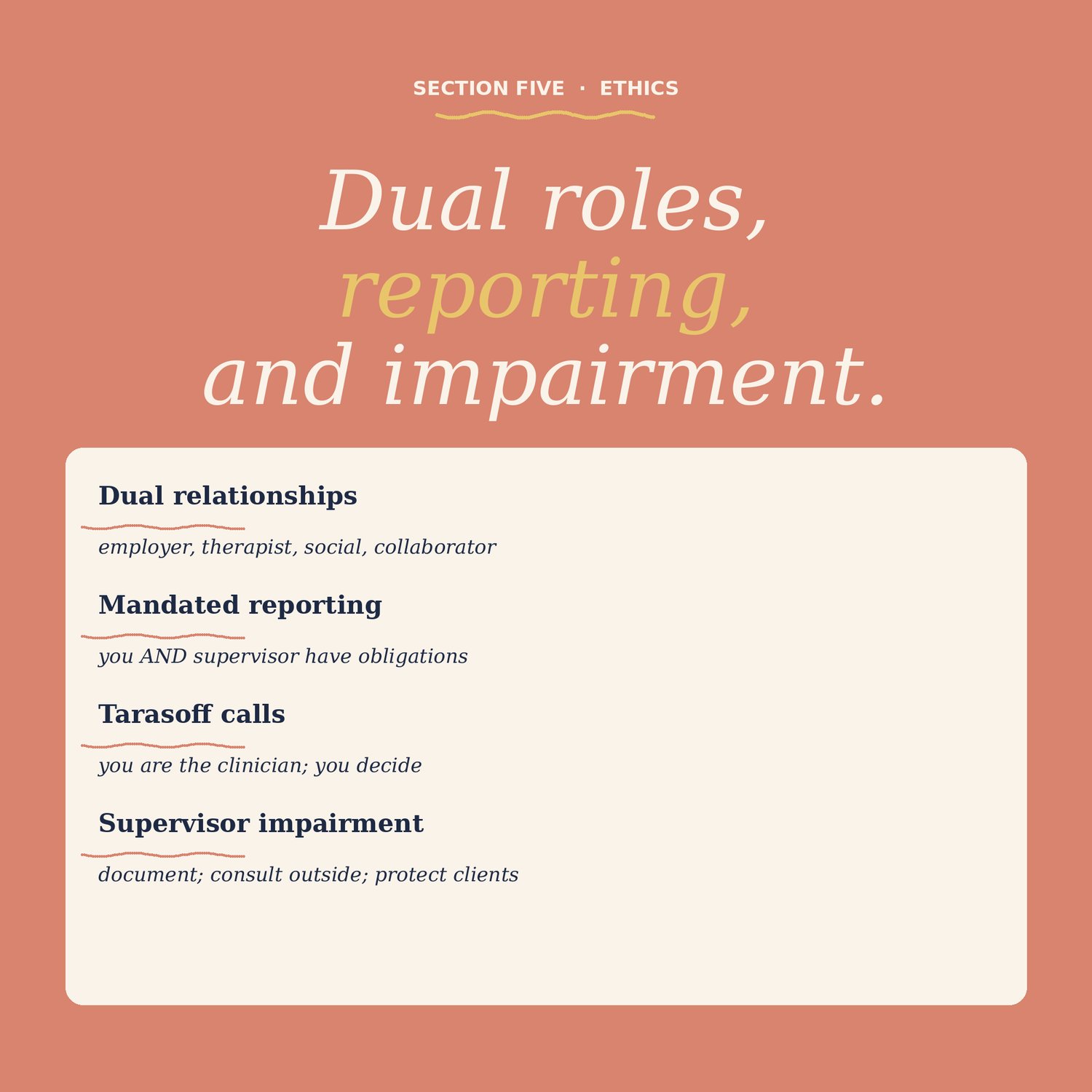
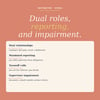
- A supervision ethics table comparing NASW 3.01 to 3.03, ACA Section F, and AAMFT Section 4 side by side on competence, dual relationships, evaluation, due process, sexual conduct, and multiculturalism. Plus mandated reporting and Tarasoff in supervised practice, covering who reports, who documents, and who is the decision-maker. Gatekeeping and due process protections for a supervisee facing remediation. Multicultural supervision with broaching scripts, what to do when the supervisor does not broach, and power in the supervisor, supervisee, client triad.
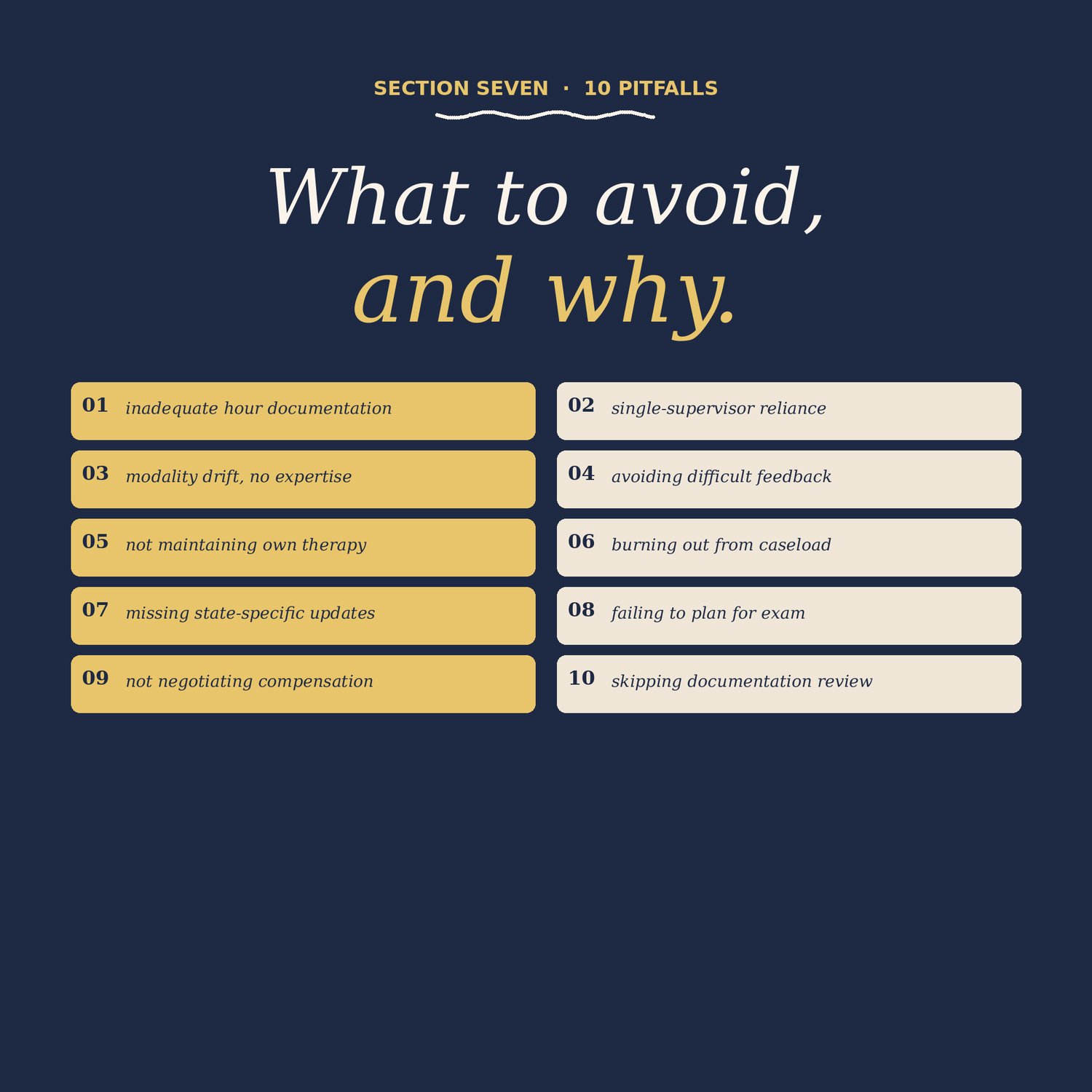
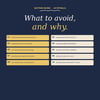
- Six common pre-licensure pitfalls: the verbal contract, single-supervisor reliance, modality drift, hour padding, avoiding hard feedback, and dropping personal therapy.
- When the supervisor is the problem: a documentation protocol, escalation steps, transition planning, board complaint considerations, sample emails, and a worked scenario.
- Chart language templates for log notes, case consultation, risk documentation, and mandated reporting. Two evaluation forms: a 15 item supervisee evaluation of the supervisor with scoring thresholds, and a 10 area supervisor evaluation of the supervisee.
- Worked samples throughout: a completed ten-item supervision contract (Texas BHEC), a case presentation note, a fully drafted sign-off letter to a licensing board, and a cumulative hours log summary with running counts and projected completion date. Plus forty-plus academic and regulatory references.
Who it is for
Pre-licensure clinical social workers (ASW, LMSW, LICSW track) working toward LCSW. Pre-licensure counselors (LPC-A, LPCC-A, LMHCI, LCMHCA, RMHCI, LLPC). Pre-licensure marriage and family therapists (AMFT, LMFT-A). Postdoctoral psychology fellows accumulating supervised practice. Graduate students approaching practicum, internship, or a first associate role. Clinical supervisors who want a contract template and evaluation forms to adapt. Agency clinical directors building a supervision program. Practicum and internship coordinators. And anyone who signed a supervision contract without reading it and wants to revisit the terms.
Why it exists
You finished the degree, took the associate license, and started accumulating hours. Eight months in, your supervisor cancels every third week, signs hours in batches you cannot verify, and mentions in passing that she is not sure she will sign off when the time comes. No written contract. No remediation plan. No specific feedback. The two to three years between graduation and licensure decides whether you get licensed at all, and it is slipping.
43 pages, plus a Competency Milestones and Hours Reference companion carrying a readiness checklist and a configurable multi-state, multi-license requirements worksheet. Written to treat supervision as a structural problem the supervisee owns rather than a relationship the supervisor controls.
Cross-referenced with the ASWB Model Practice Act, AAMFT Approved Supervisor Standards, NBCC ACS Standards, ACES Best Practices (2011), the APA Guidelines for Clinical Supervision in Health Service Psychology (2024), and the rules of fifteen state boards.
Why it is built this way
Most pre-licensure material is a state board PDF written for lawyers plus blog posts that summarize it badly. Nothing pairs the hour math with the contract language with the protocol for a supervisor who will not sign.
Hour requirements vary by more than 1,000 hours between states for the same credential, and the group-versus-individual conversion rule is where supervisees lose the most hours at audit.
The contract is rarely revisited once signed, and most pre-licensure clinicians sign whatever is put in front of them. The sample language covers cancellation policy, signing cadence, malpractice coverage, termination, due process for remediation, emergency access, and vicarious liability.
The supervisor-as-problem chapter is the one nobody talks about, because the supervisor controls hour sign-off, evaluation, and reference letters, and the supervisee needs all three. The protocol covers the documentation log, outside consultation, escalation for sexual misconduct, transition planning before confrontation, the board complaint decision, and the certified-mail email that gets hours signed.
A supervision hour costs $75 to $250 in supervisor fees. Walking in unprepared converts it into ventilation. The case presentation template is what most supervisors expect by month three, and bringing it in week one moves the relationship forward by months.
Format
Editable, fillable PDF, 43 pages. Editable Microsoft Word (.docx), same length. Both files include the Competency Milestones and Hours Reference companion. Hour-log templates copy into spreadsheet apps and supervision tracking platforms. US Letter (8.5 x 11) and A4 (8.3 x 11.7) both included. Works on Mac, Windows, iPad, GoodNotes, and Notability. Lifetime access, unlimited prints.
Updated 2026
State hour requirements reflect 2024 to 2026 statutes for California BBS, New York OP, Texas BHEC, Florida 491, Illinois IDFPR, Pennsylvania, Massachusetts, Washington, Colorado DORA, the Georgia Composite Board, North Carolina NCSWCLB and NCBLCMHC, Arizona BBHE, Ohio CSWMFT, Michigan LARA, and Oregon OBLSW. Ethics tables reference the NASW 2017 Code, the ACA 2014 Code, and the AAMFT 2015 Code as revised in 2023. Supervision standards reflect ACES Best Practices 2011 and the APA Guidelines as revised in 2024. NBCC ACS and AAMFT Approved Supervisor requirements reflect current standards.
How to use it
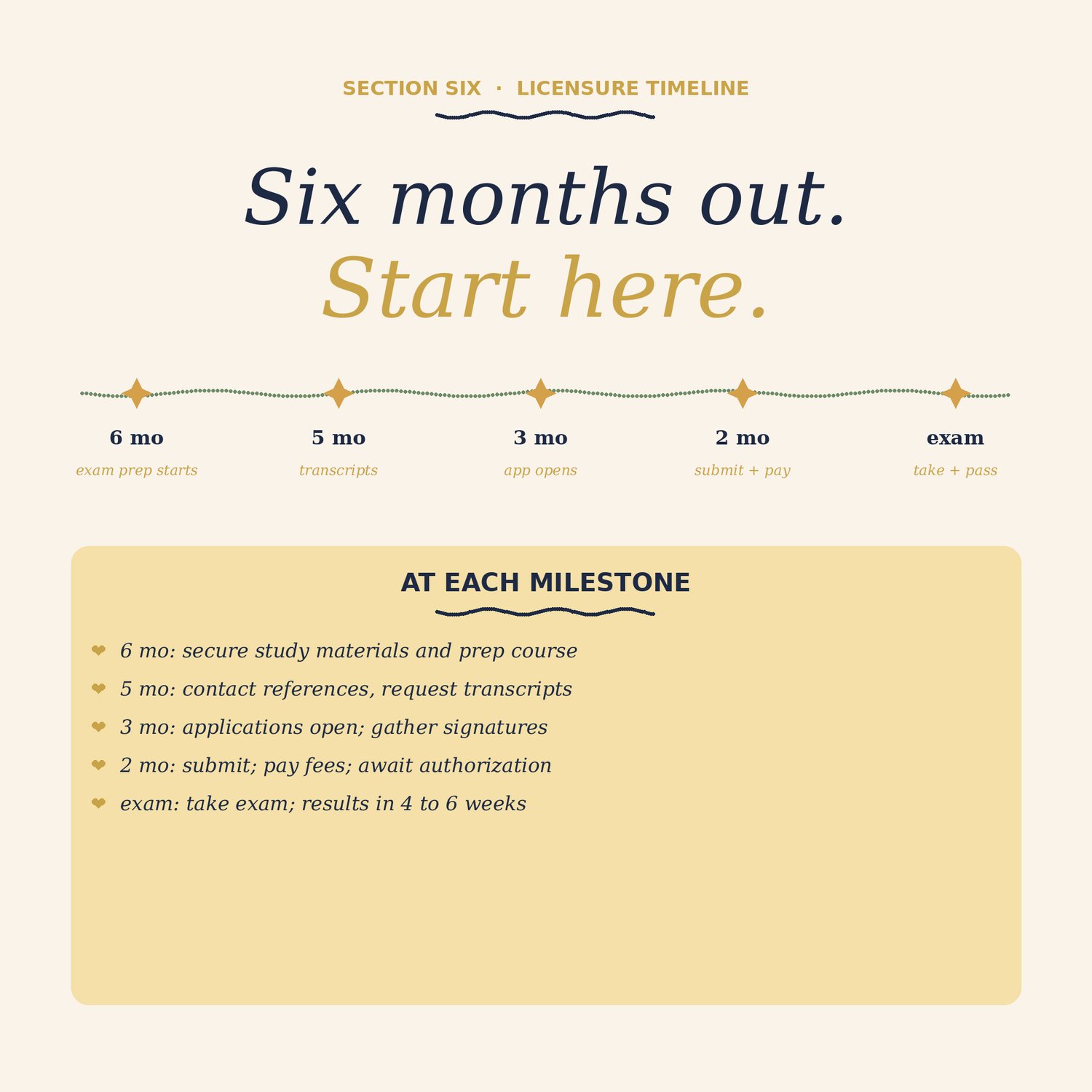
Starting a new supervisory relationship: read the supervisor selection and contract sections before the first contract meeting, and bring the ten-item checklist to the negotiation. Mid-stream on a verbal agreement: the contract section gives you the language to put it in writing. Approaching application: the state hour math, the categories your board will audit, and the sample sign-off letter. Supervisor has become the problem: the step-by-step protocol, including the email that gets hours signed before you transition. Run the supervisee evaluation of the supervisor every 90 days, and use the case presentation template weekly.
The supervisee with a written contract, a weekly log, a real case presentation, and a supervisor evaluation form is the one who gets licensed on the first attempt with no audit problem.
Instant digital download. No physical product ships. Message us if anything does not work.
Watch free on YouTube: