
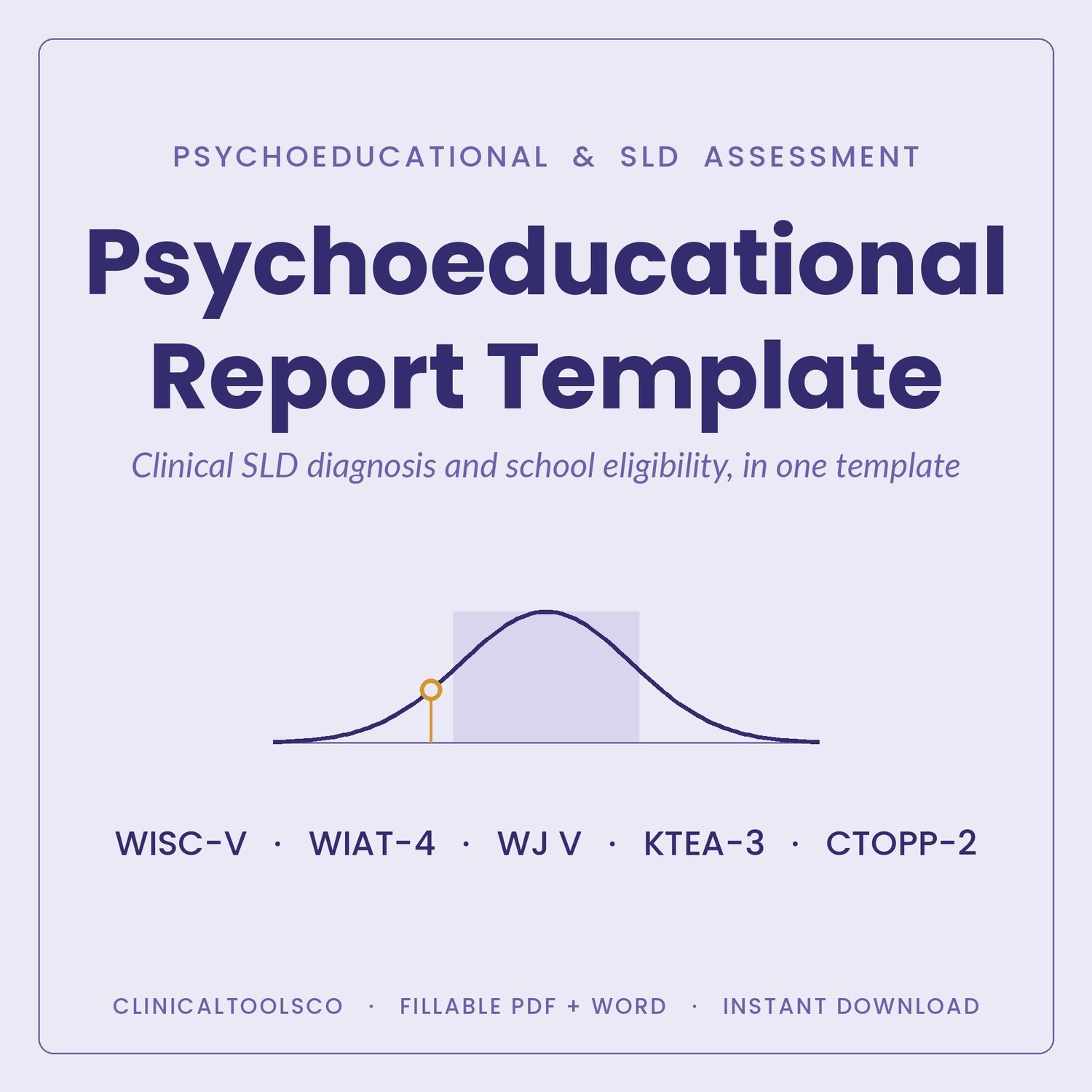

Psychoeducational Evaluation Report Template (2026)
Stop rebuilding the same battery write-up from a blank page for every learning evaluation. The tests change, the structure does not.
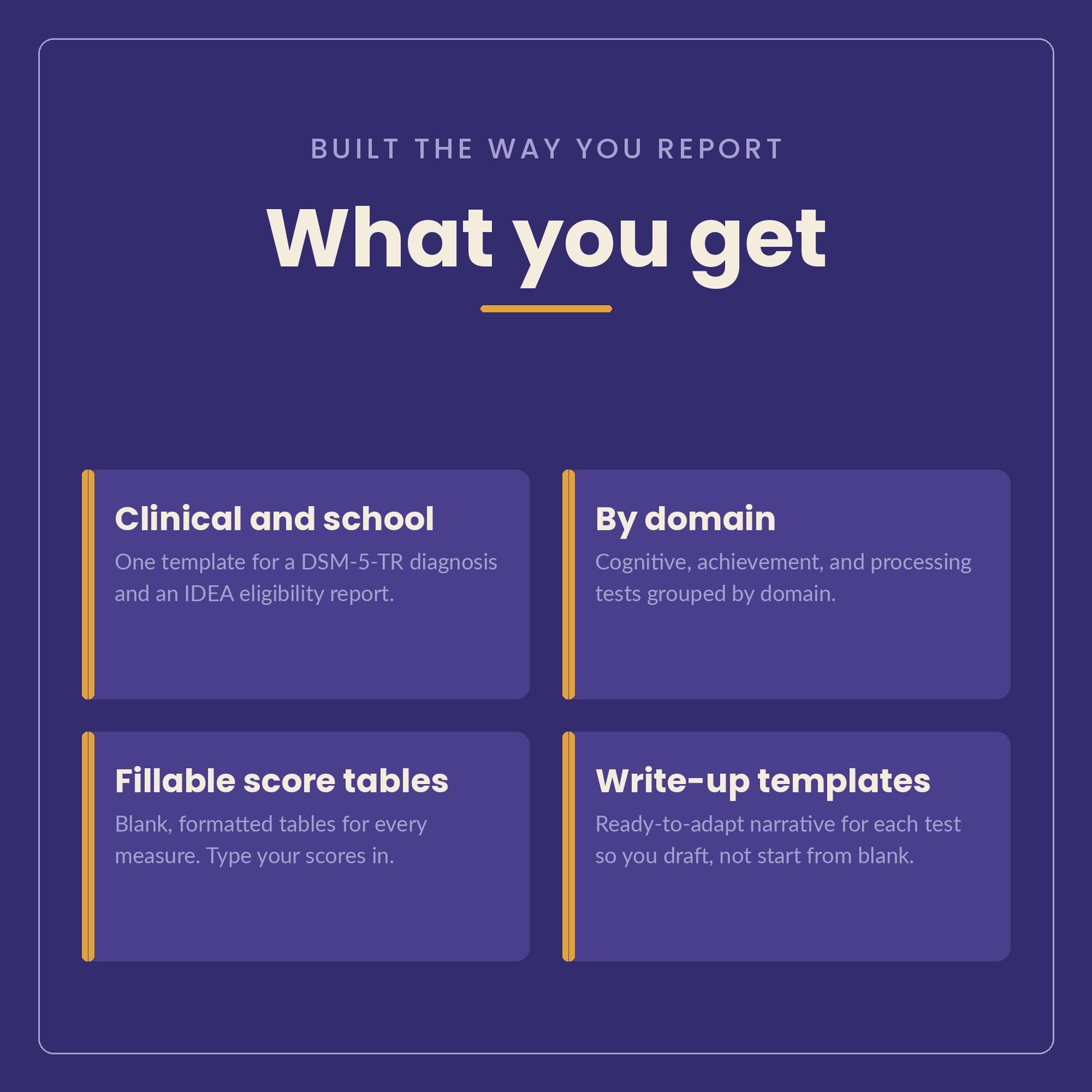
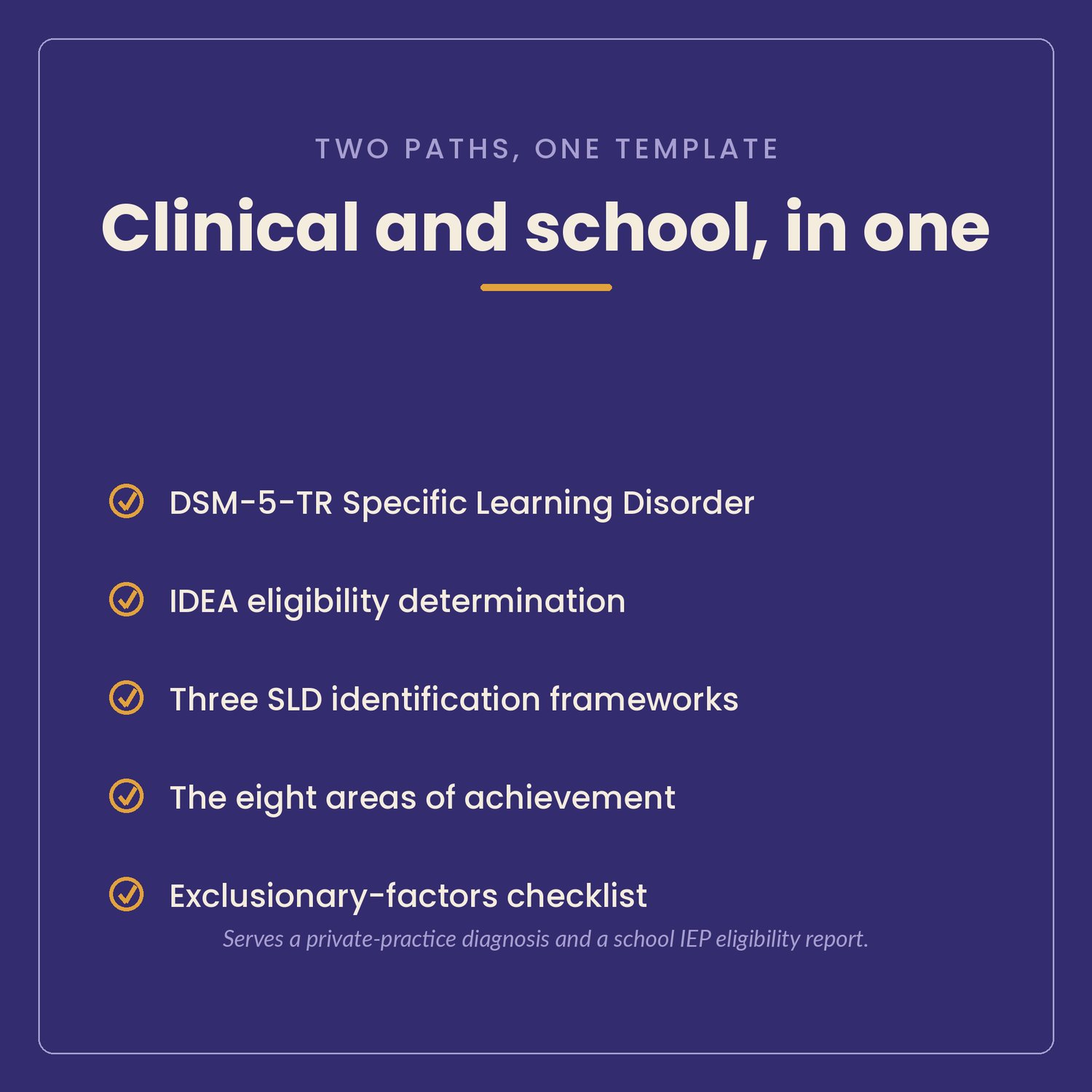
This holds both pathways in one document. A clinical DSM-5-TR diagnosis and a school-based IDEA eligibility decision are different arguments built from the same data, and most templates only handle one of them.
What you get
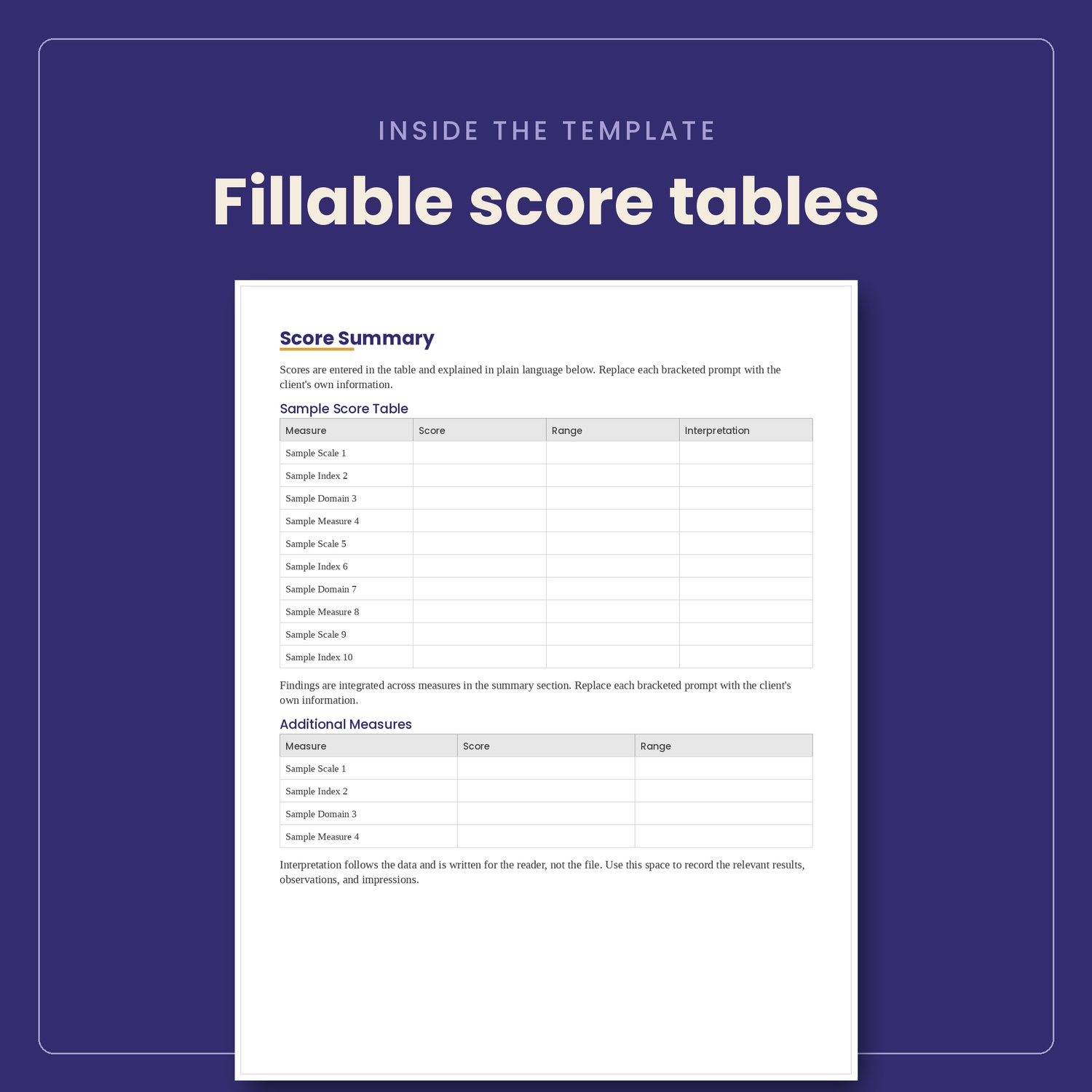
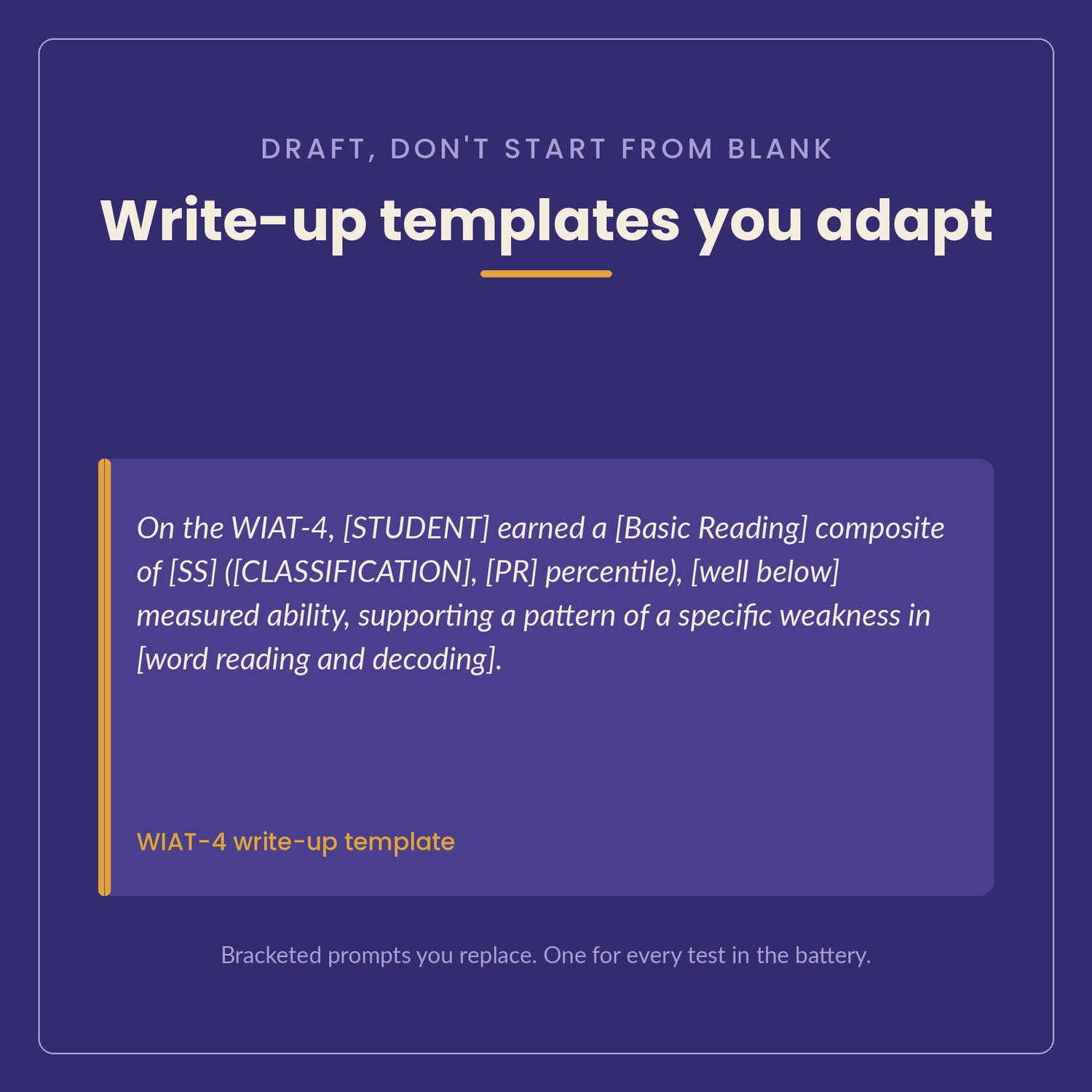
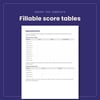
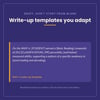
- Test modules with plain language descriptions, fillable score tables, and write-up templates you can adapt
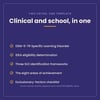
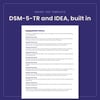
- Both diagnostic pathways in one document, DSM-5-TR and IDEA
- Three frameworks for identifying a specific learning disability, with guidance on choosing between them
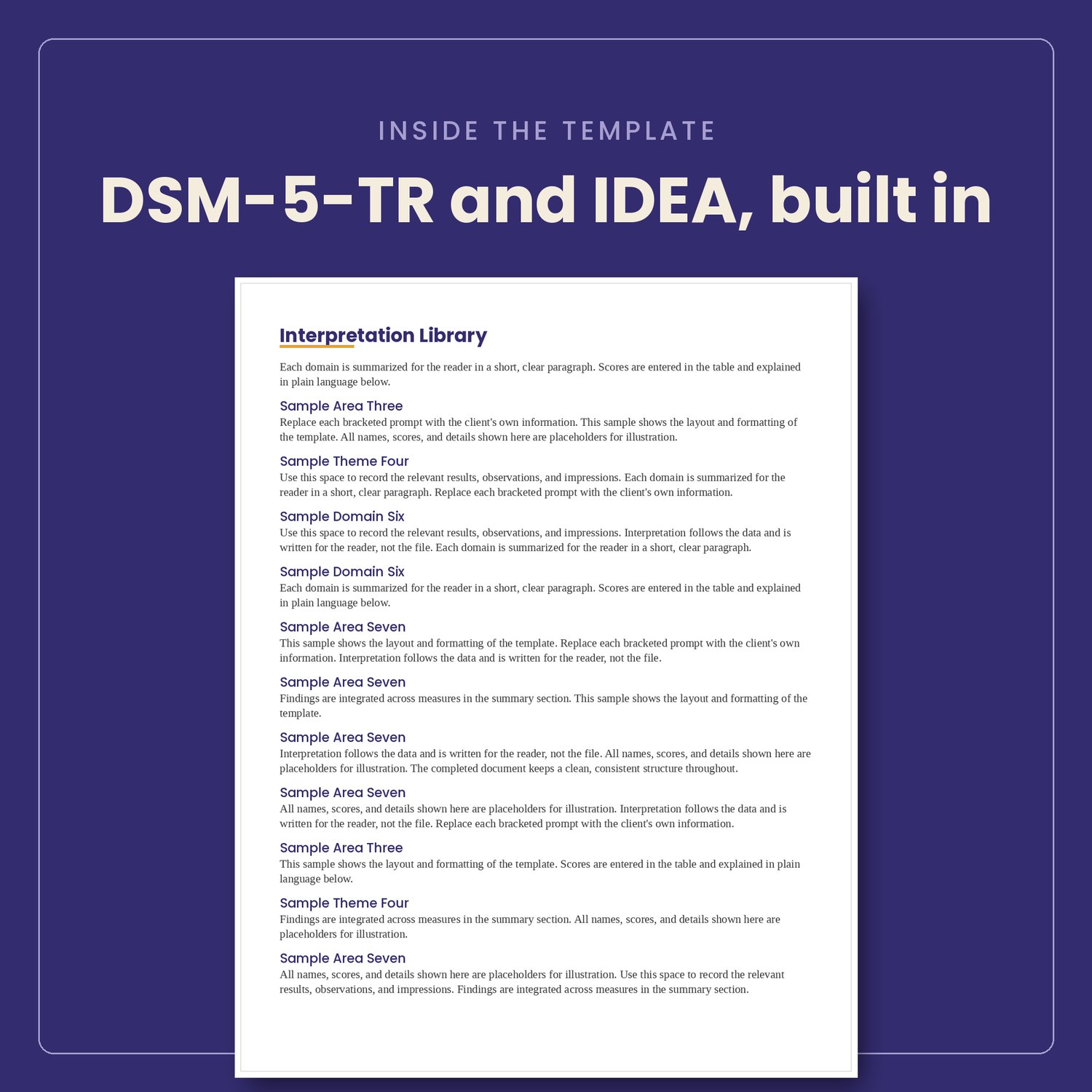
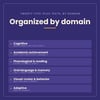
- Domain interpretation libraries
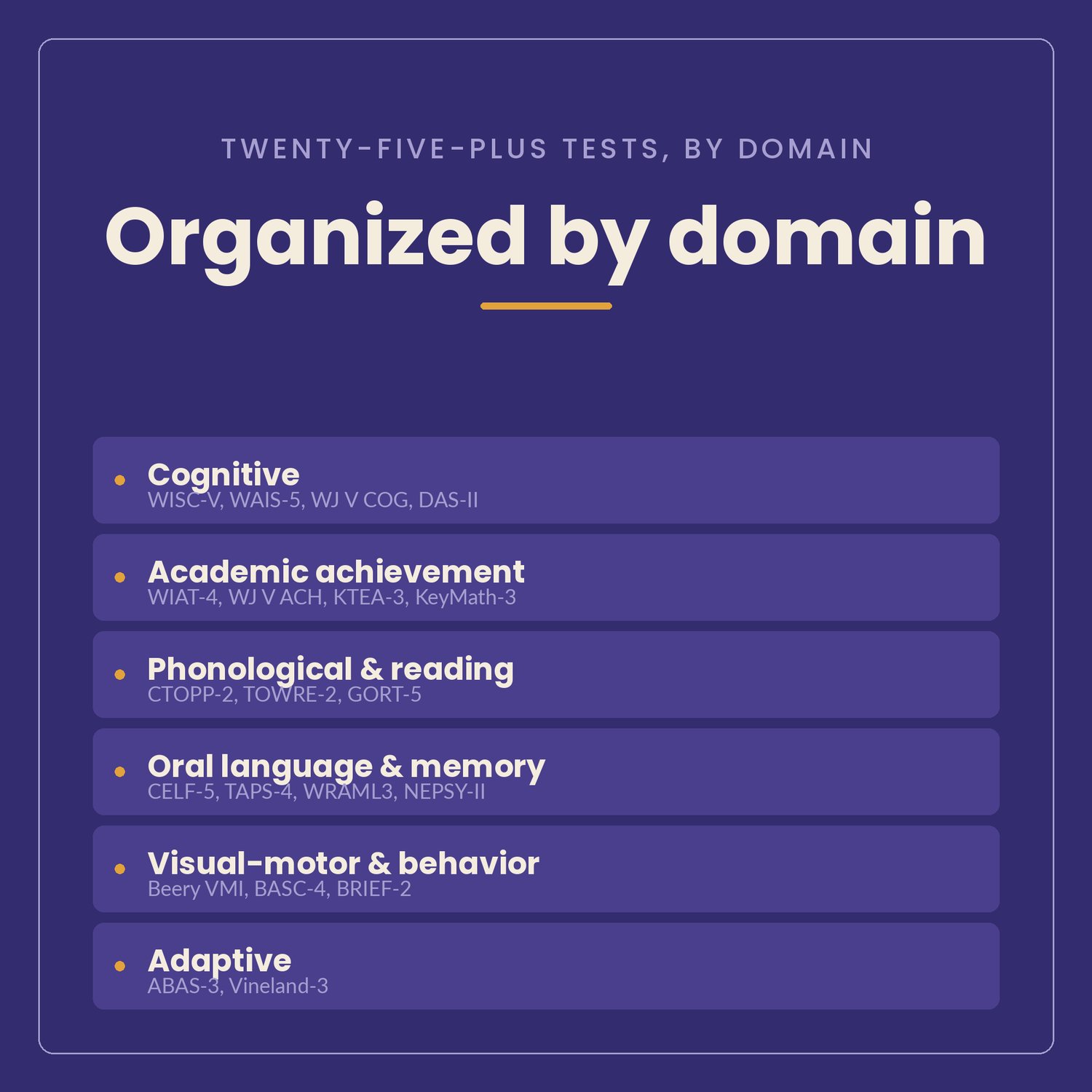
- Coverage of more than 25 tests across cognitive, achievement, language, memory and adaptive domains
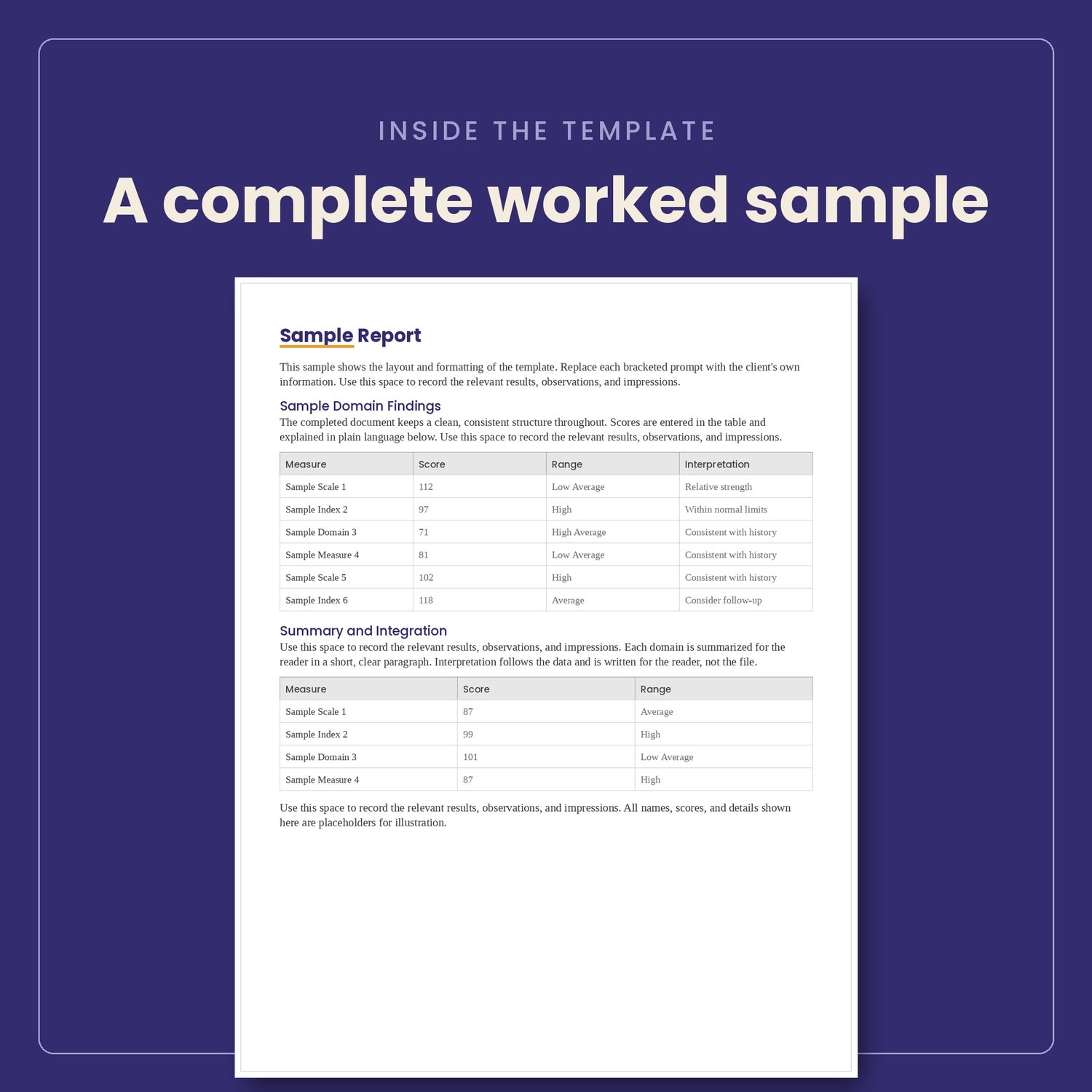
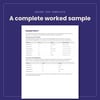
- A complete sample report
Who it is for
School psychologists, clinical and pediatric psychologists, and doctoral trainees who evaluate learning disabilities and want the scaffolding without the blank page.
Format
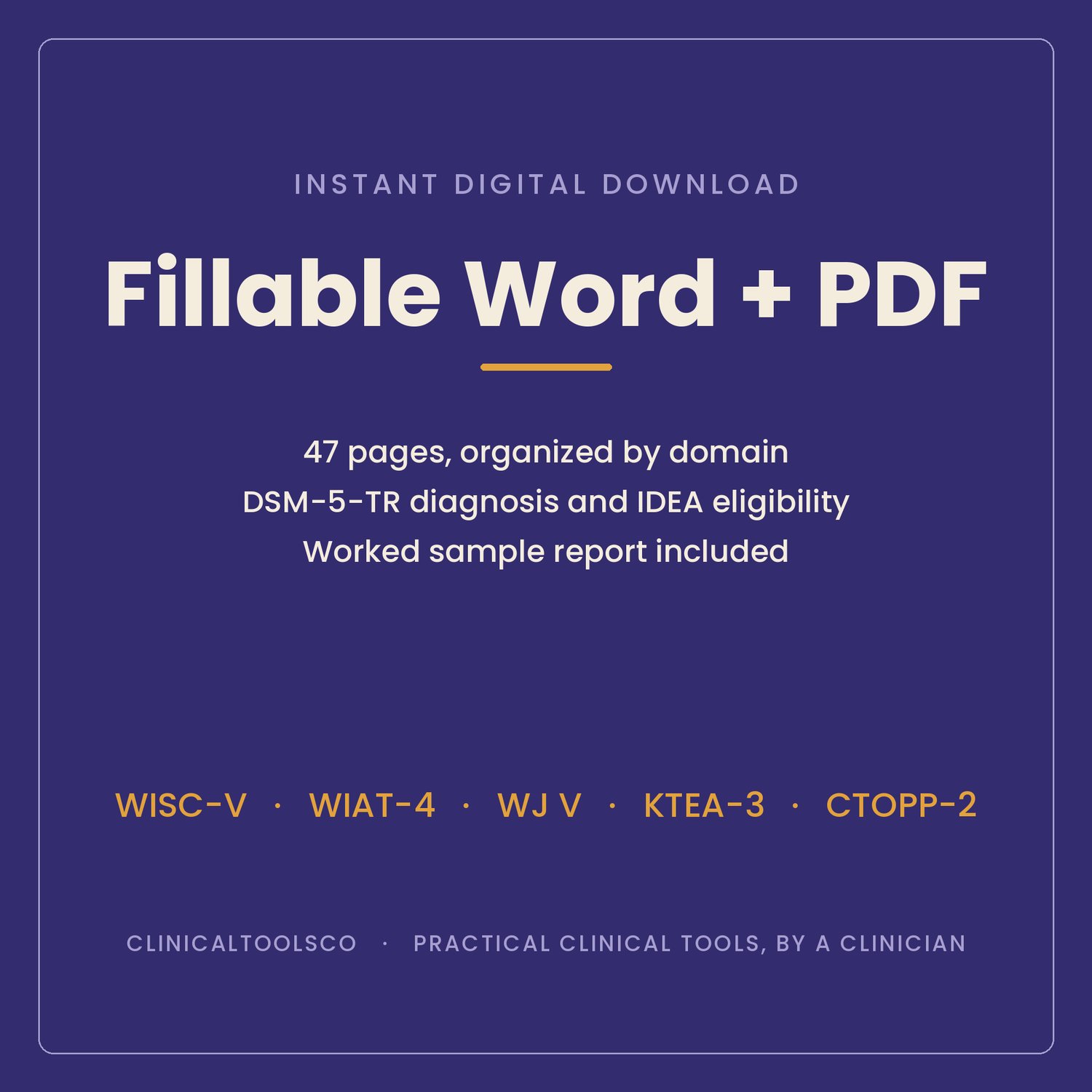
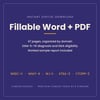
52 pages. Fillable PDF plus an editable Word version. Instant download, lifetime access.
An independent clinical template. Not affiliated with, endorsed by, or sponsored by the American Psychiatric Association. DSM-5-TR is a trademark of the American Psychiatric Association.
There is a five minute walkthrough that shows what is inside the file.
Common questions
What goes in a psychoeducational evaluation report?
Reason for referral, background and records review, tests administered, behavioral observations, results by domain (cognitive, achievement, language, memory, adaptive), an integrated summary, the diagnostic or eligibility conclusion, and recommendations. The template gives you each section with score tables and write-up language to adapt.
How is a specific learning disability identified under IDEA?
Federal regulations (34 CFR 300.307) let states use a response-to-intervention process, permit other research-based procedures, commonly a pattern of strengths and weaknesses approach, and allow but cannot require an ability-achievement discrepancy. The template explains all three and how to choose between them.
Can I use it for a clinical diagnosis as well as school eligibility?
Yes. It holds both pathways in one document, because a DSM-5-TR diagnosis and an IDEA eligibility decision are different conclusions drawn from the same data.
Which tests does it cover?
More than 25 instruments across cognitive, achievement, language, memory and adaptive domains, each with a plain-language description and a fillable score table.