


Psychological Assessment Report Bundle (2026)
A psychological assessment report bundle: battery planning by referral question and report-ready references for cognitive, academic, personality, attention, autism, adaptive and memory instruments.
What is in the bundle
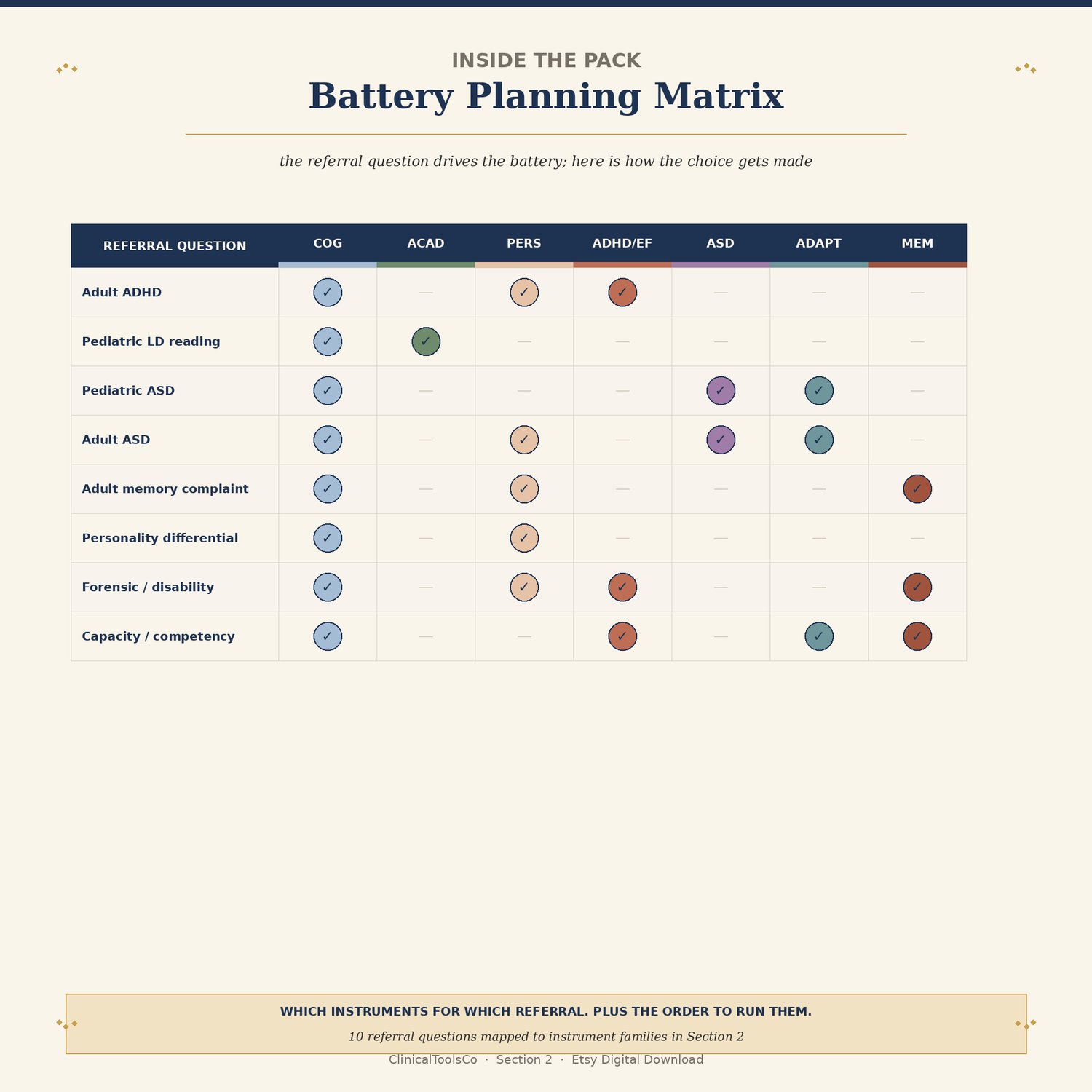
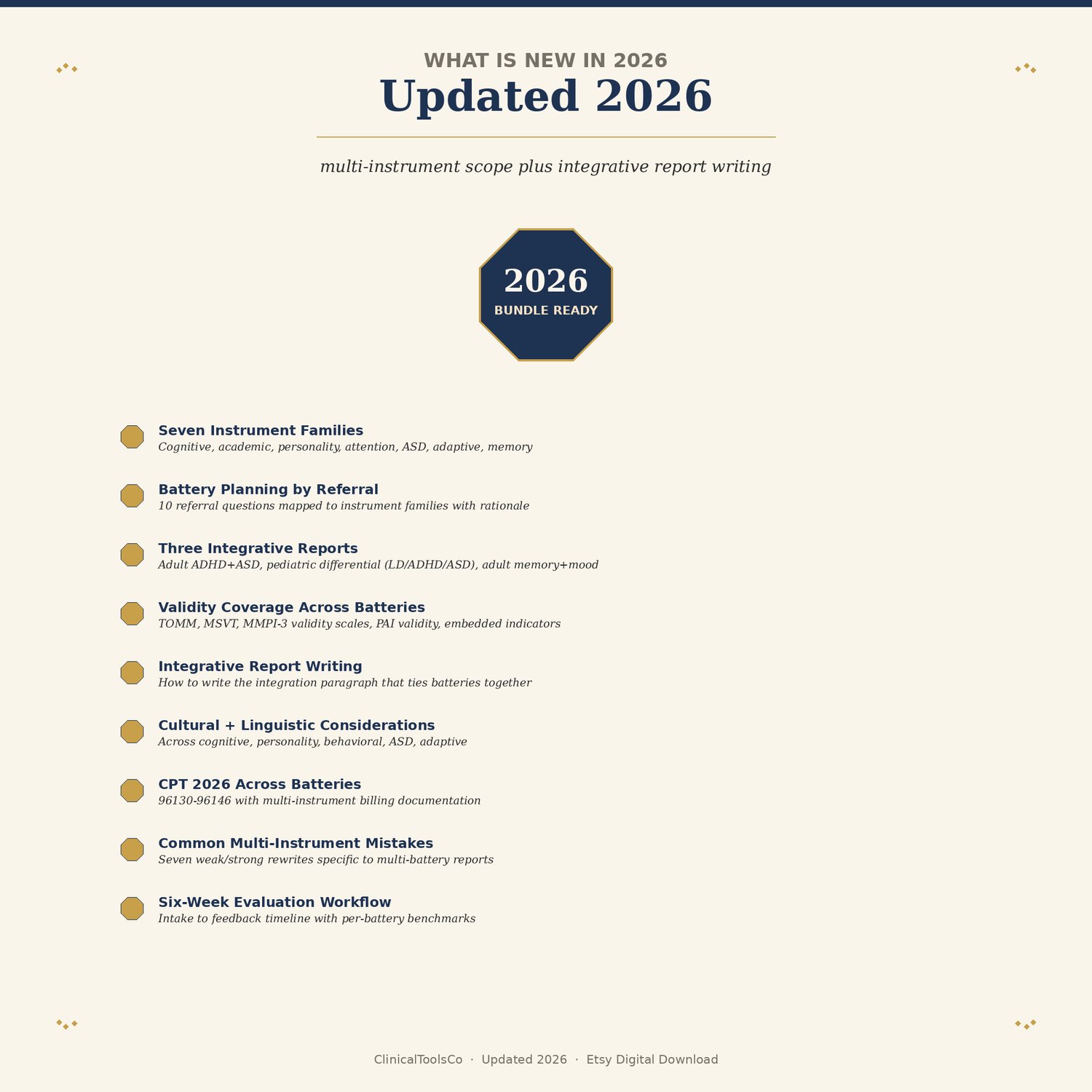
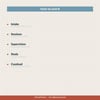
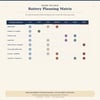
- Battery planning by referral question with 10 common referral mappings covering adult ADHD, pediatric LD reading, pediatric and adult ASD, adult memory complaint, personality disorder differential, forensic and disability, school psychoeducational, complex pediatric differential, and capacity
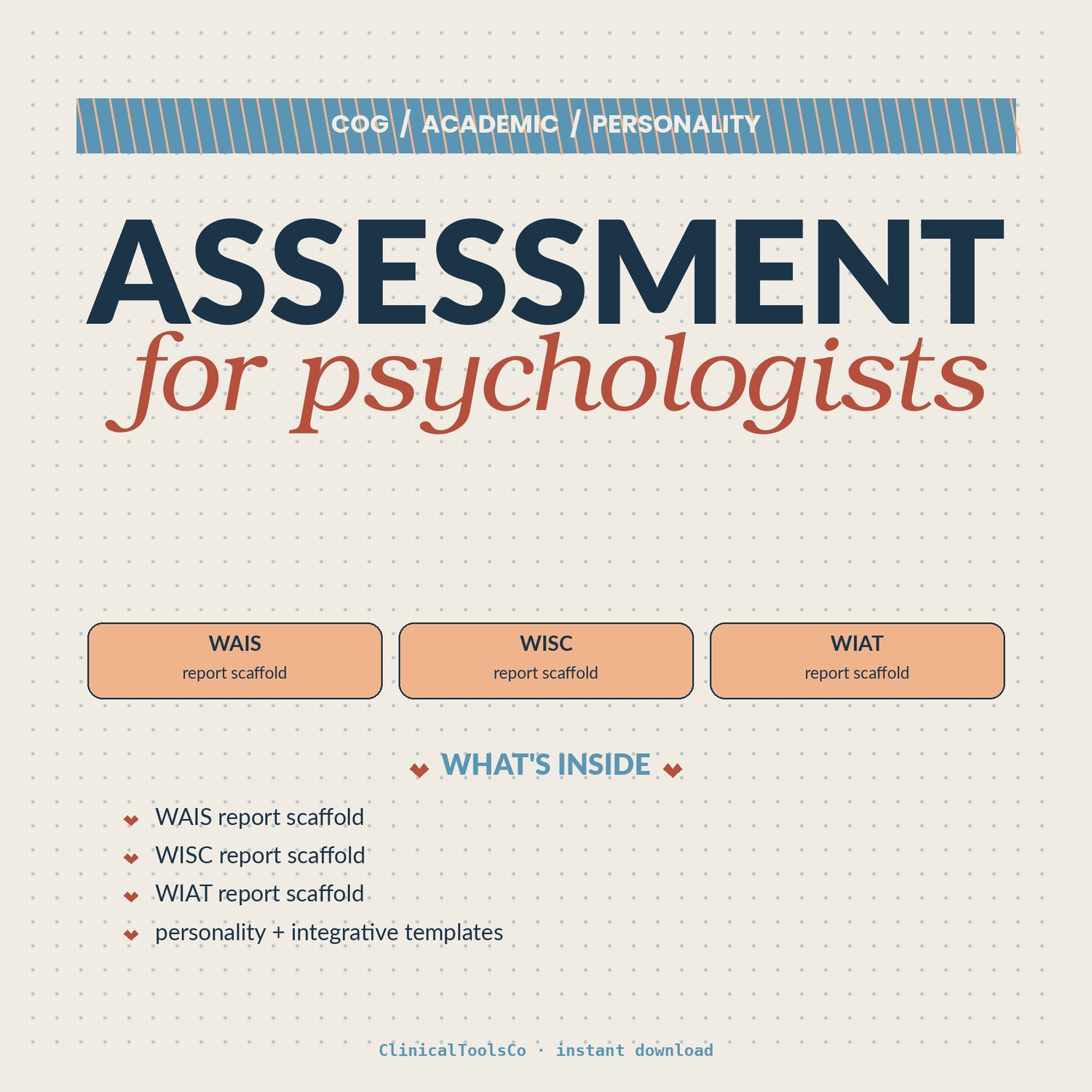
- Cognitive instruments reference (WAIS-IV and WAIS-5, WISC-V, WPPSI-IV, SB-5, RIAS-2, KBIT-2, UNIT-2, Leiter-3, Bateria-IV) with selection logic
- Academic instruments reference (WIAT-IV, WJ-IV Achievement, KTEA-3, GORT-5, CTOPP-2, TOWRE-2, KeyMath-3, TOWL-4) with cross-battery SLD reading composition
- Personality instruments reference (MMPI-3, MMPI-A-RF, PAI, PAI-A, MCMI-IV, PID-5, NEO-PI-3, R-PAS, TAT, BASC-3) with selection logic and documentation language
- Attention and executive function reference (CAARS-2, Conners-4, Vanderbilt, CPT-3, DIVA-5, BAARS-IV, BRIEF-A and BRIEF-2, D-KEFS, Trail Making, WCST, Stroop) with adult and pediatric battery composition
- Autism spectrum reference (ADOS-2 all five modules, ADI-R, SRS-2, SCQ, RAADS-R, AQ, ASRS, M-CHAT-R/F, CARS-2, Vineland-3 for support level) with adult and pediatric diagnostic battery
- Adaptive functioning reference (Vineland-3, ABAS-3, SIB-R) with when-required guidance for ID diagnosis, ASD support level, SSI and SSDI, IDEA eligibility and capacity
- Memory reference (WMS-IV, WRAML-3, CMS, RAVLT, CVLT-3, CVLT-C, RCFT, BVMT-R, HVLT-R) with adult memory battery composition
- Performance and symptom validity testing (TOMM, MSVT, WMT, VSVT, Rey 15, embedded PVTs, MMPI-3 and PAI validity scales, SIMS, M-FAST) with requirements by context
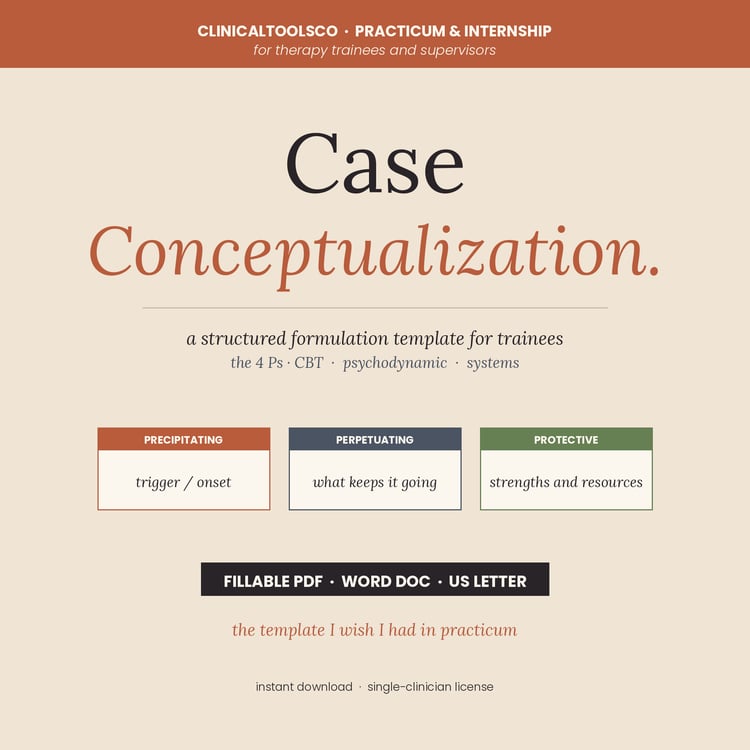
- Integrative report writing across batteries: the integration paragraph structure, convergence and divergence patterns by referral type, and a sentence-level template
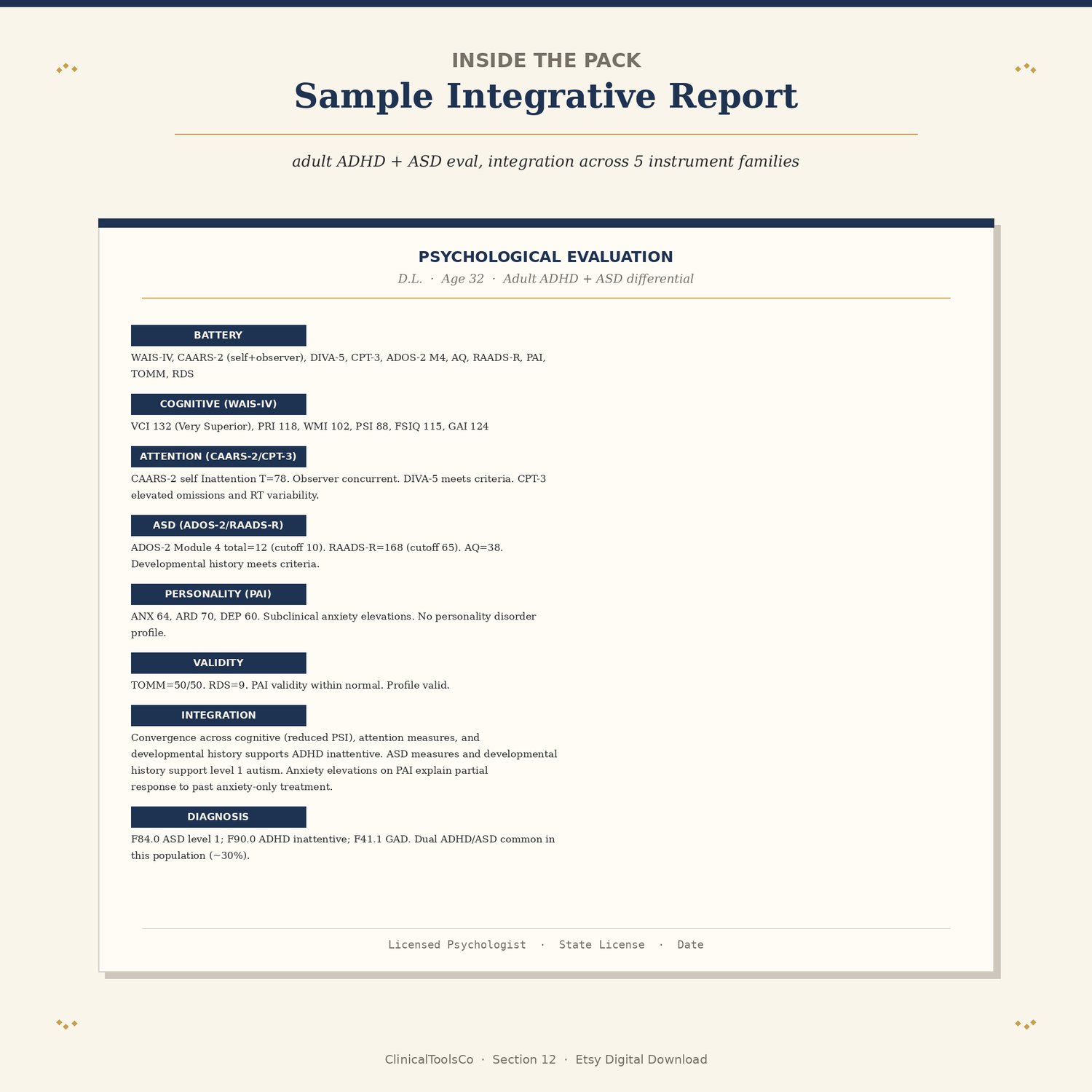
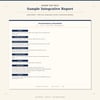
- Sample integrative report 1: adult ADHD with personality, a dual ADHD and ASD diagnosis via WAIS-IV, CAARS-2, DIVA-5, CPT-3, AQ, RAADS-R, ADOS-2, PAI and TOMM
- Sample integrative report 2: pediatric differential across LD, ADHD and ASD via WISC-V, WIAT-IV, CTOPP-2, Conners-4, CPT-3, ADOS-2 Module 3, SRS-2, Vineland-3 and BASC-3
- Sample integrative report 3: complex adult differential of memory plus mood, a mild neurocognitive disorder workup via WAIS-IV, WMS-IV, RAVLT, RCFT, Trails, D-KEFS, mood scales, MMPI-3, TOMM and MSVT
- Cultural and linguistic considerations across instrument families
- Recommendations writing for multi-instrument reports: audience organization, multi-instrument principles, sequencing
- CPT 2026 testing codes 96130 through 96146 with multi-instrument billing guidance and audit flags
- Common multi-instrument mistakes with seven paired weak and strong rewrites
- Six-week multi-instrument evaluation timeline with time benchmarks
Who it is for
- Doctoral psychology practicum students completing multi-instrument batteries
- Predoctoral psychology interns rotating through diagnostic clinics
- Postdoctoral fellows working in adult ADHD, ASD, neuropsychology or assessment clinics
- Licensed psychologists conducting multi-instrument psychological evaluations
- School psychologists writing full psychoeducational evaluations with adaptive and behavioral measures
- Neuropsychologists looking for a multi-battery shell with integration writing
- Forensic and disability evaluators who need validity-anchored multi-instrument structure
- Supervisors who want a consistent multi-instrument reference for trainees
- Group practices standardizing complex assessment report quality
Why it exists
The referral question came in as rule out ADHD versus ASD versus anxiety. You picked the WAIS, added CAARS and CPT-3, added ADOS-2 and RAADS-R, added PAI to address personality contributions, added TOMM for validity. Now the scores are in and you have data from five different instrument families. You have to write a report that ties them together into one diagnostic answer. The shell you used for the WAIS-only report does not handle this. The integration paragraph is the part most clinicians struggle with, and it is the part that decides whether the referral source acts on the report.
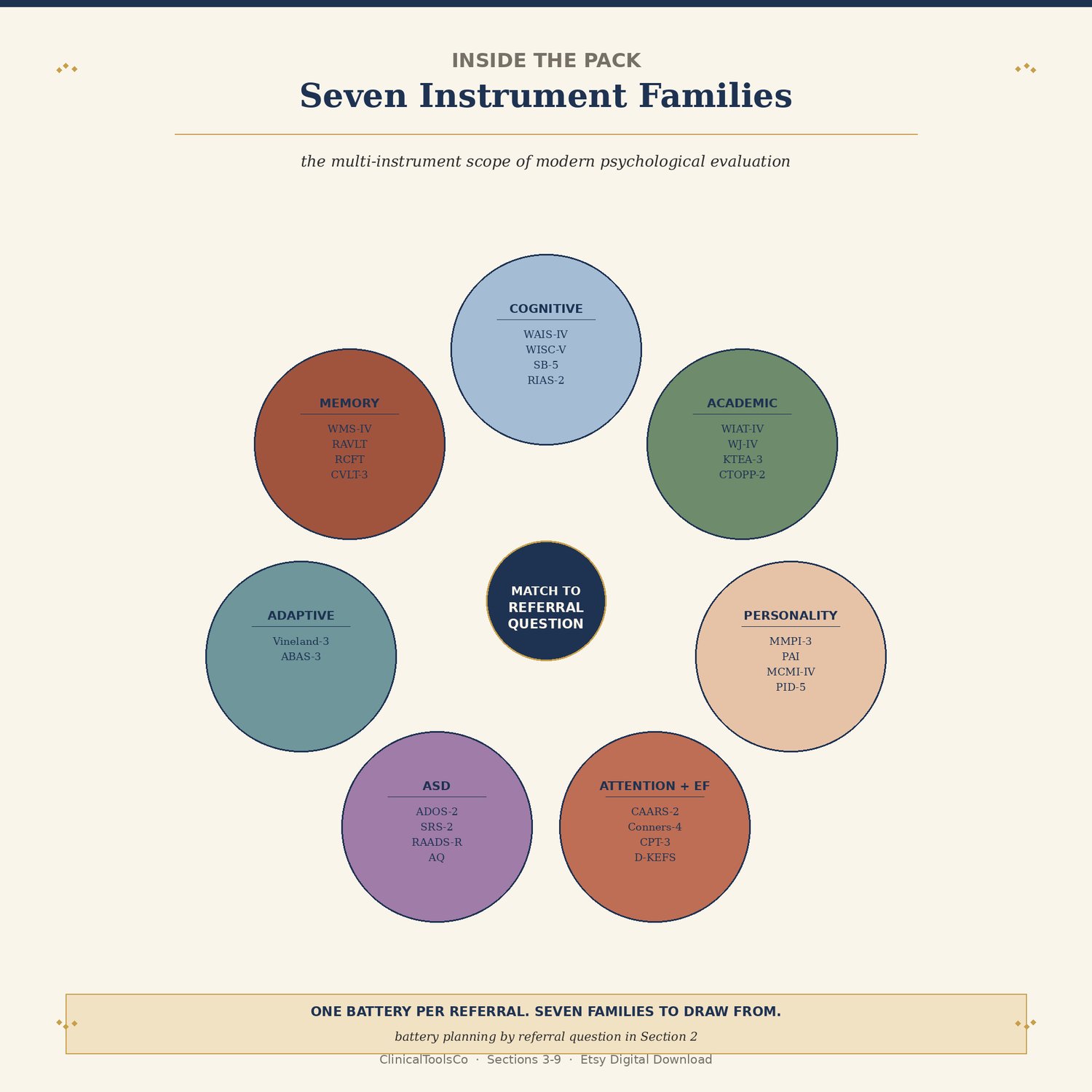
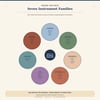
This is the multi-instrument reference for psychological evaluation. It covers all seven instrument families used in modern multi-instrument assessment (cognitive, academic, personality, attention and executive function, ASD, adaptive, memory), with battery planning by referral question, three full sample integrative reports across the most common multi-instrument referrals, and the integration-paragraph writing structure that ties batteries together.
37 pages organized into 19 sections. Built by a practicing clinician for psychologists and supervised trainees whose typical battery uses three or more instruments across multiple families.
Why this is different
Single-instrument report templates handle cognitive and academic referrals. This one handles everything else: personality differentials, ADHD evaluations that need to rule out anxiety and personality contributors, adult and pediatric ASD evaluations that need adaptive and language-context data, memory complaints that need mood and validity-anchored differentials, and complex pediatric differentials spanning LD, ADHD and ASD at once.
The battery planning section matters because the first decision in any evaluation is which instruments to administer, and the answer depends on the referral question. Ten common referrals are mapped to the required instrument families and example tools, with planning principles and time estimates.
The instrument family references matter because no single resource gives you a working snapshot across all seven families. Each entry gives the age range, the use case, and the selection logic for choosing within a family: when MMPI-3 versus PAI versus MCMI-IV, when to add CTOPP-2 to a reading battery, when CPT-3 versus DIVA-5 versus rating scales.
The three sample integrative reports matter because integration is the hardest part of a multi-instrument report to learn from textbooks. Each walks through battery selection, validity, domain-organized findings, and the integration paragraph that ties everything to the referral question.
The integration paragraph template matters because most multi-instrument reports list findings without integrating them, and that is the most-flagged issue in supervision. You get the convergence and divergence framework, the common patterns by referral type, and a six-sentence template.
The validity section matters because PVT requirements differ across clinical, forensic, disability and capacity contexts, and a single PVT is rarely enough for high-stakes evaluations.
Format
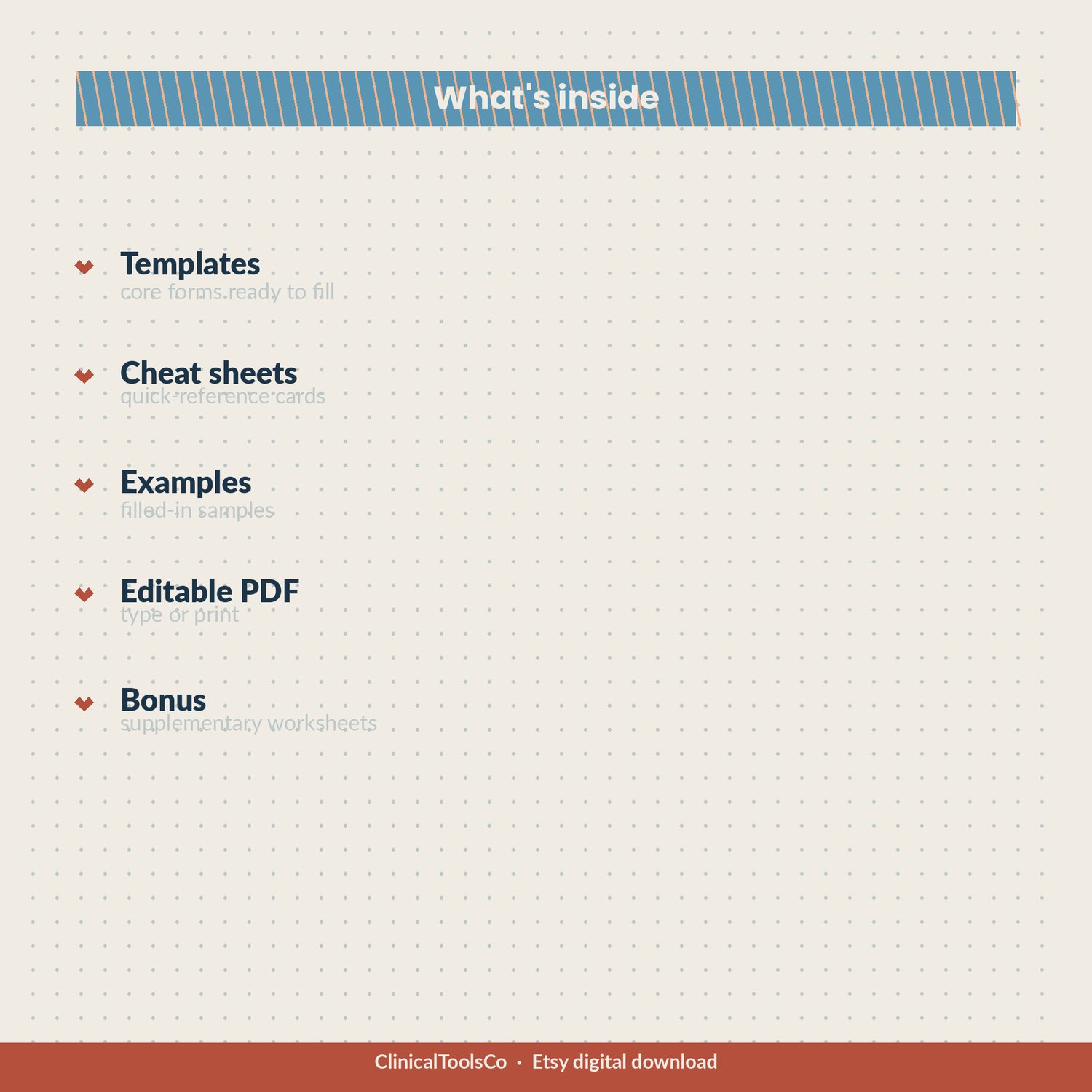
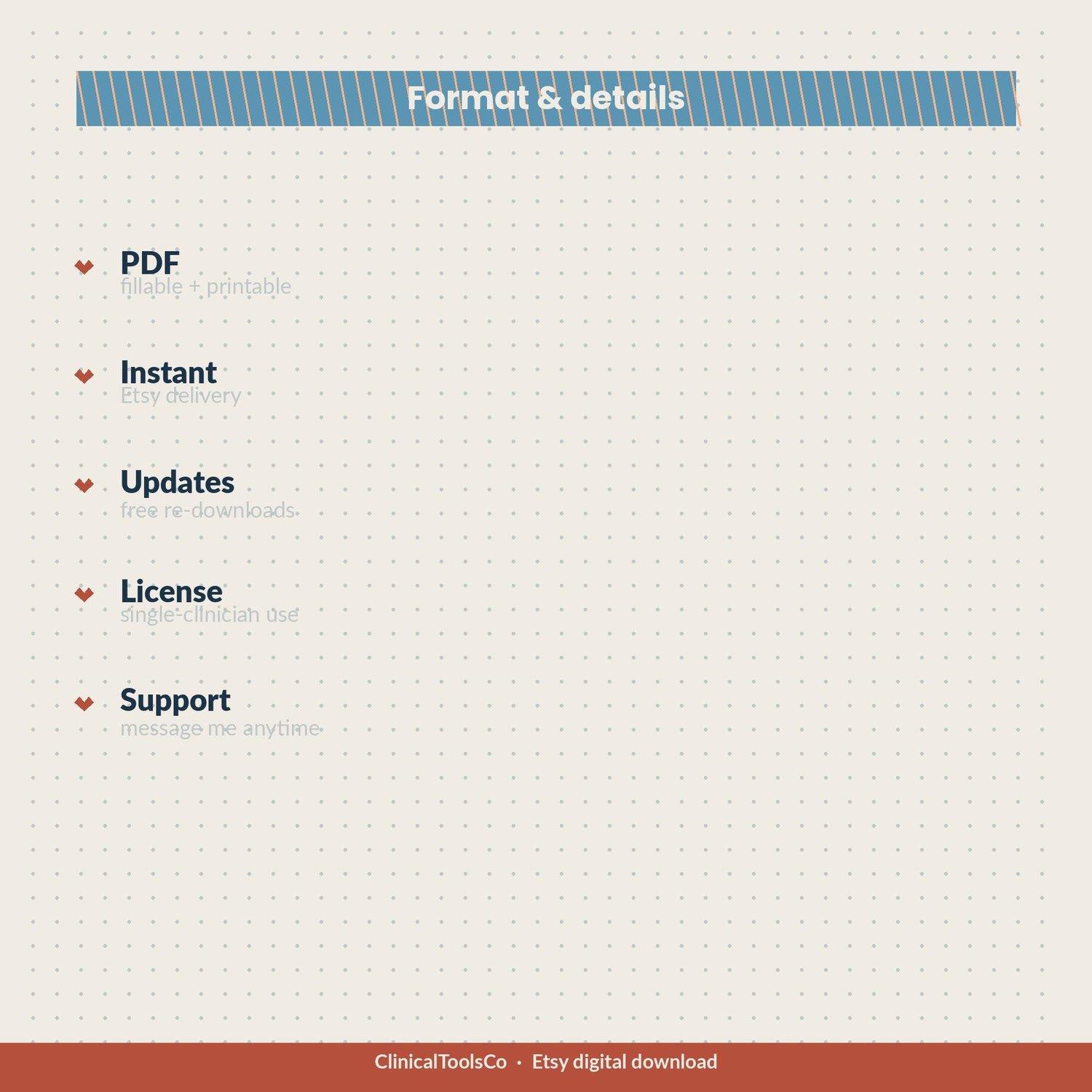
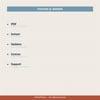
- Editable, fillable PDF
- Editable Microsoft Word (.docx)
- Designed as a working reference; print the battery planning, validity, integration and mistakes sections for active write-up sessions
- US Letter and A4 sizes both included
- Works on Mac, Windows, iPad, GoodNotes, Notability
- Lifetime access, unlimited prints
Updated 2026
WAIS-IV and WISC-V current. WIAT-IV with PSW reasoning current. MMPI-3 included rather than the older MMPI-2-RF. Conners-4 current. ADOS-2 module-by-age guidance current. Testing code family current to 96130 through 96146 with 2026 multi-instrument documentation requirements. Diagnostic reasoning aligned with DSM-5-TR, including the Alternative Model for Personality Disorders via PID-5. ASD support-level determination via Vineland-3 reflects current DSM-5-TR convention. WAIS-5 and WMS-5 transition notes included.
A note from the designer
I am a practicing clinician. I built this after my own training years, when every multi-instrument battery felt like reinventing the wheel: which instruments address the personality piece, what a strong ADOS plus CAARS plus PAI integration paragraph actually looks like, when ADHD and ASD comorbidity gets diagnosed rather than collapsed into one or the other. The three sample integrative reports are the ones I still pull off the shelf for trainees.
Reports that integrate across batteries are the ones referral sources act on. The shell that connects them is the work.
Digital download. No physical product ships. Reach out by email if anything does not work or if you have questions.