


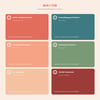

APPIC Internship Year Planner (2026)
A twelve month planner for the APPIC internship year: logistics, clinical caseload, competency mapping, postdoc planning, and EPPP and licensure steps.
What is in the planner
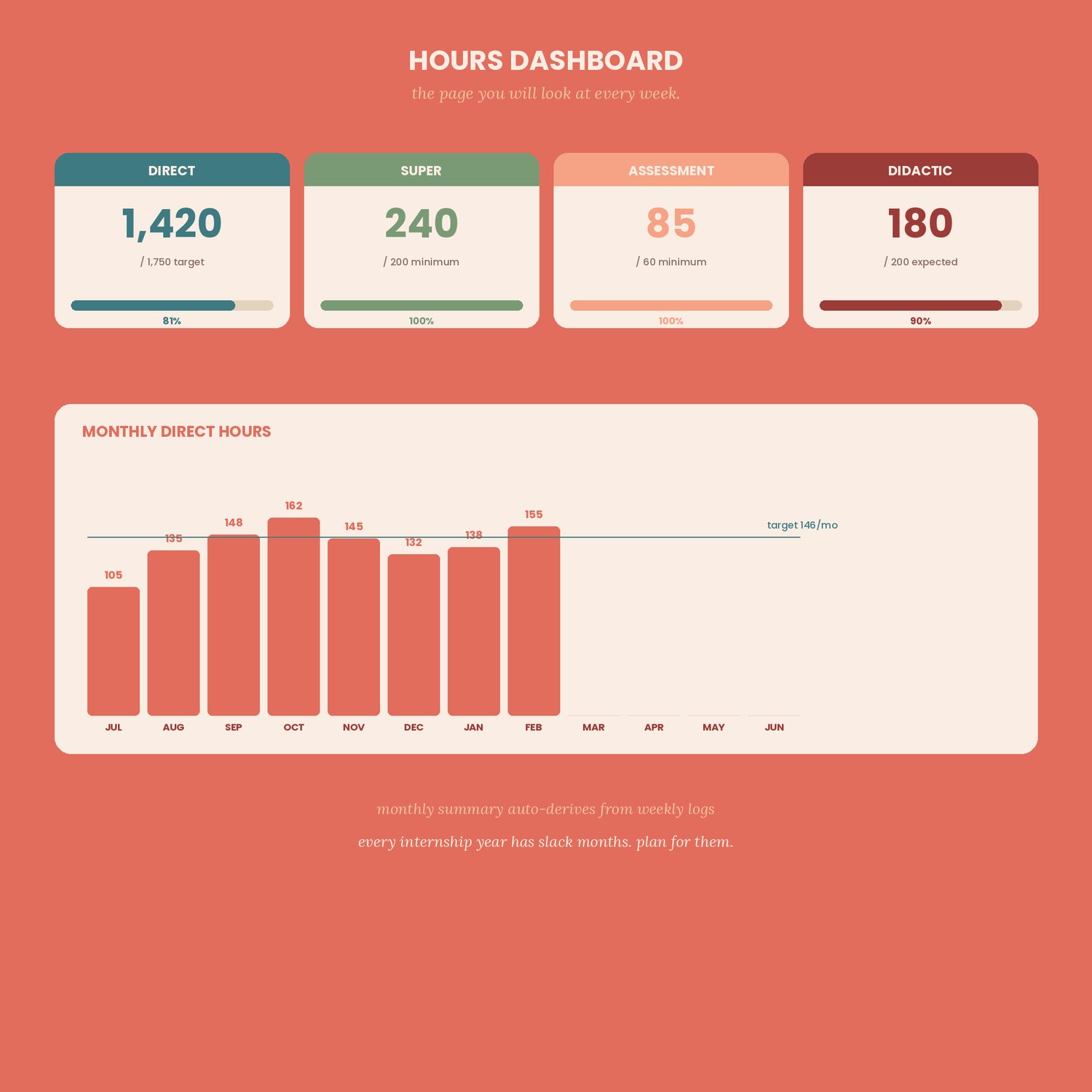
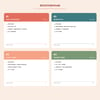
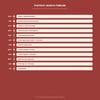
- A twelve month overview with required hours and a year-long task map, a twelve milestone tracker from orientation through hours certified with target and actual dates, and a year-at-a-glance calendar that runs the monthly focus, the postdoc track and the EPPP track in parallel.
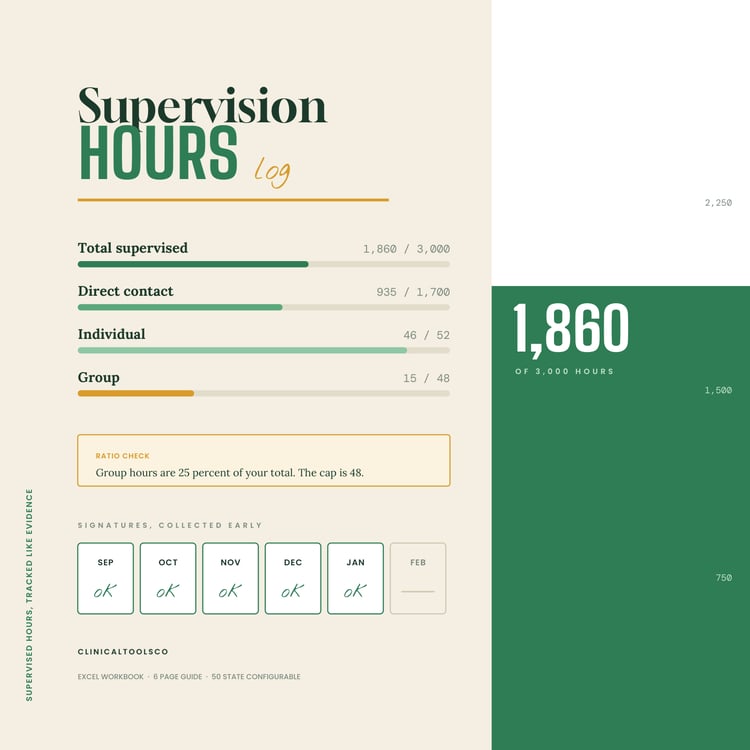
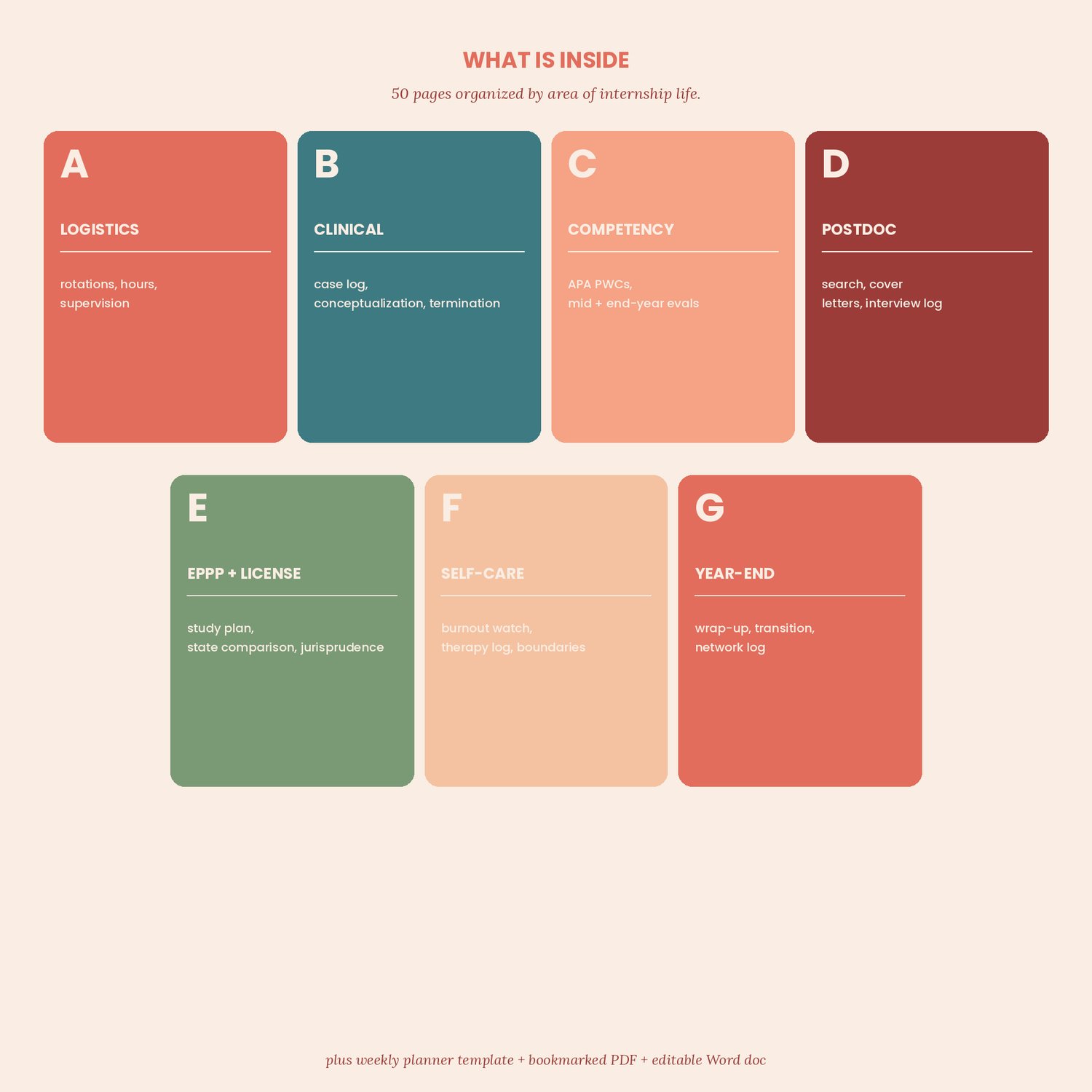
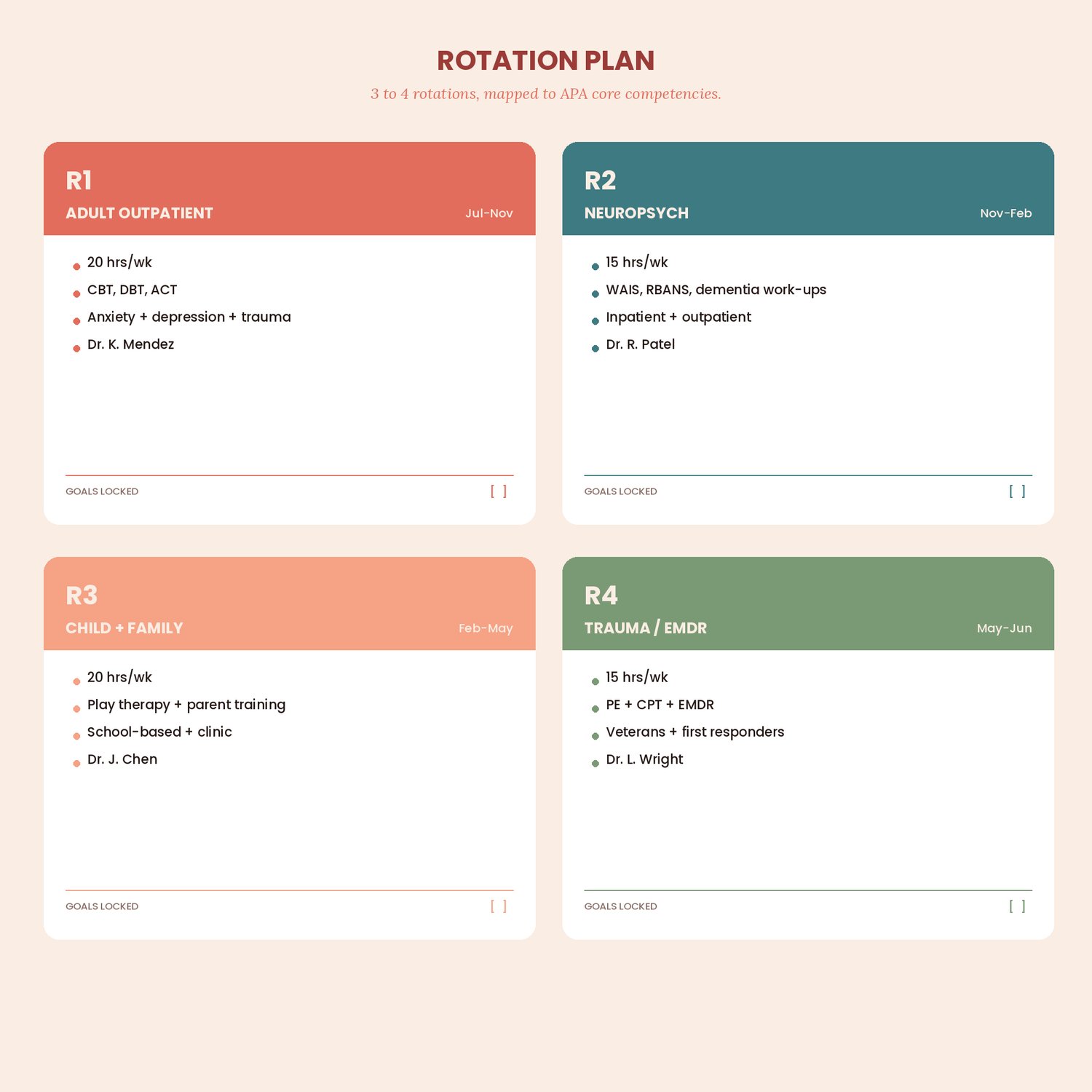
- Section A, Logistics (8 pages): site basics, three rotation planning templates, a weekly hours tracker with 18 rows, monthly and annual hours summaries, a supervision log, and a didactic seminar log.
- Section B, Clinical (8 pages): caseload summary, case log, case conceptualization template, treatment plan tracker, termination log, crisis and risk events log, and two copies of the reflective practice template.
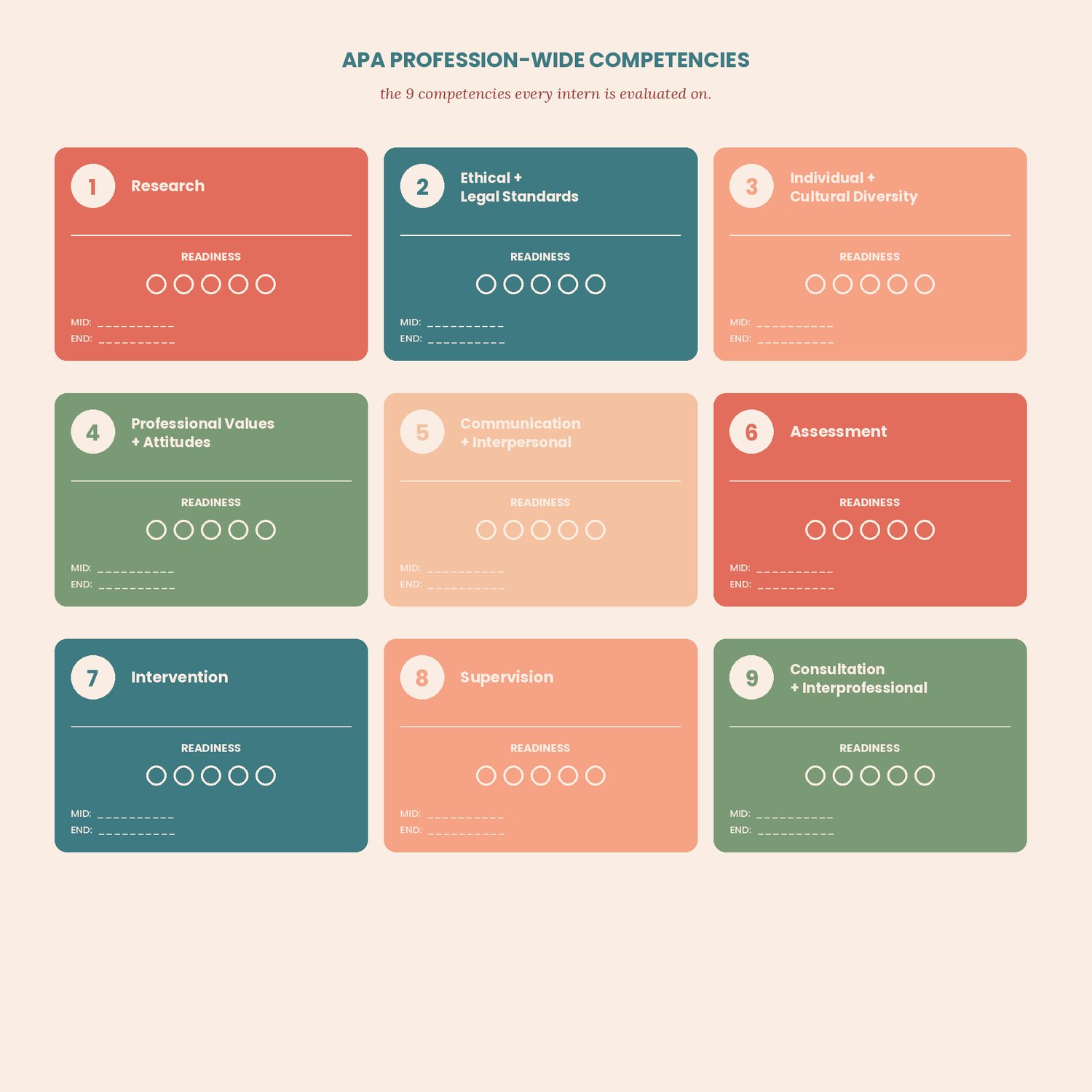
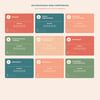
- Section C, Competency (5 pages): a map of the APA nine Profession-Wide Competencies, mid-year and end-year evaluation prep tables, a self-evaluation worksheet, and quarterly goal setting with review.
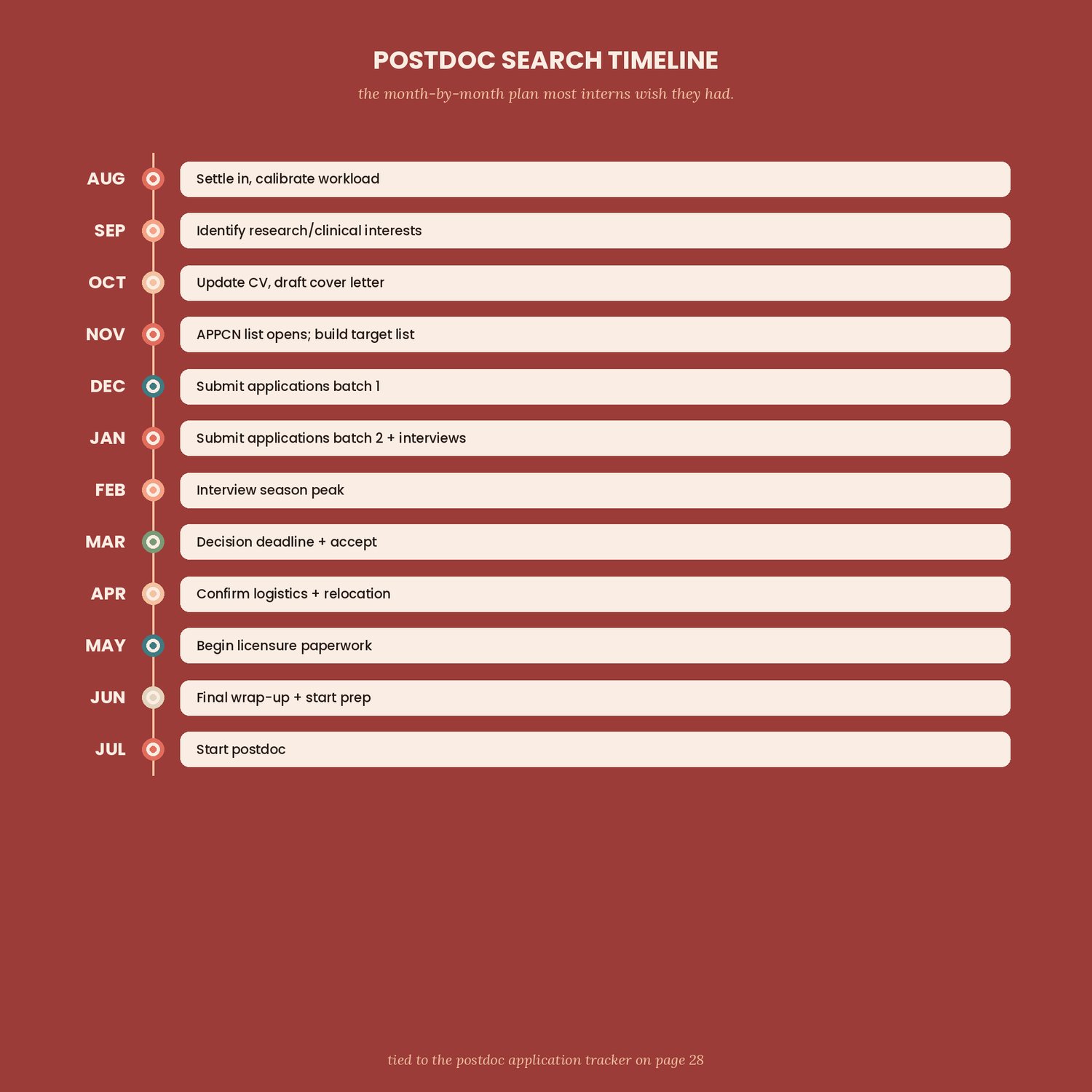
- Section D, Postdoc (6 pages): postdoc types and search timeline, application tracker, cover letter scaffold, CV update checklist, interview log, and a weighted decision matrix for choosing between offers.
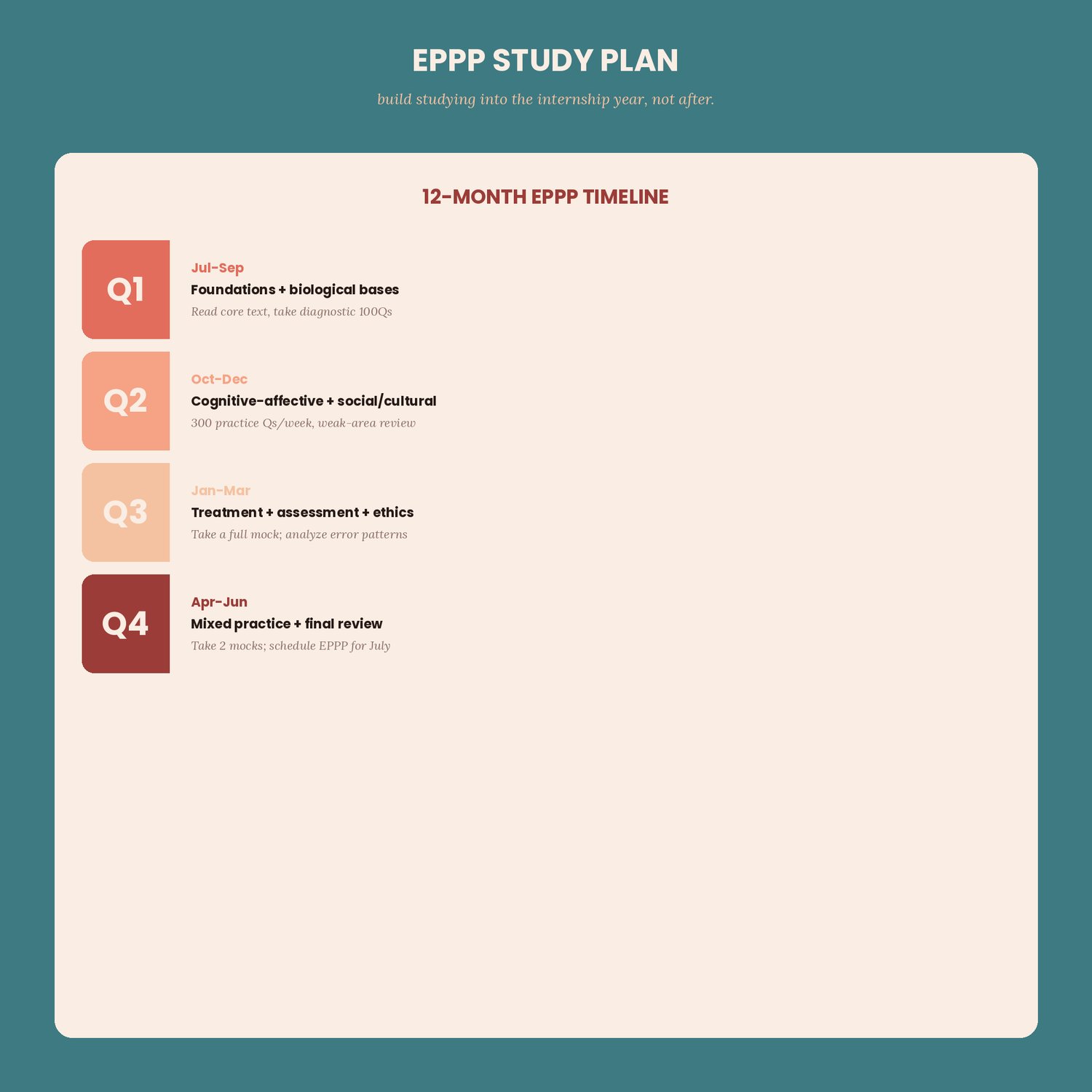
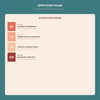
- Section E, EPPP and Licensure (6 pages): EPPP basics, a twelve month study plan with monthly hour targets, a state licensure comparison, postdoc hours requirements by state, jurisprudence exam prep, and a licensure application tracker.
- Section F, Self-Care (5 pages): eight burnout warning signs for weekly self-monitoring, a weekly planner across seven domains, a personal therapy and consultation log, a boundaries worksheet, and a year-end reflection.
- Section G, Year-End (5 pages): wrap-up checklist, internship-to-postdoc transition checklist, a first-job decision tree, a lifetime network worksheet, and a year in review.
- Plus a weekly planner template, a seven day grid with planned and actual hours by category, and a bookmarked PDF for fast navigation.
Who it is for
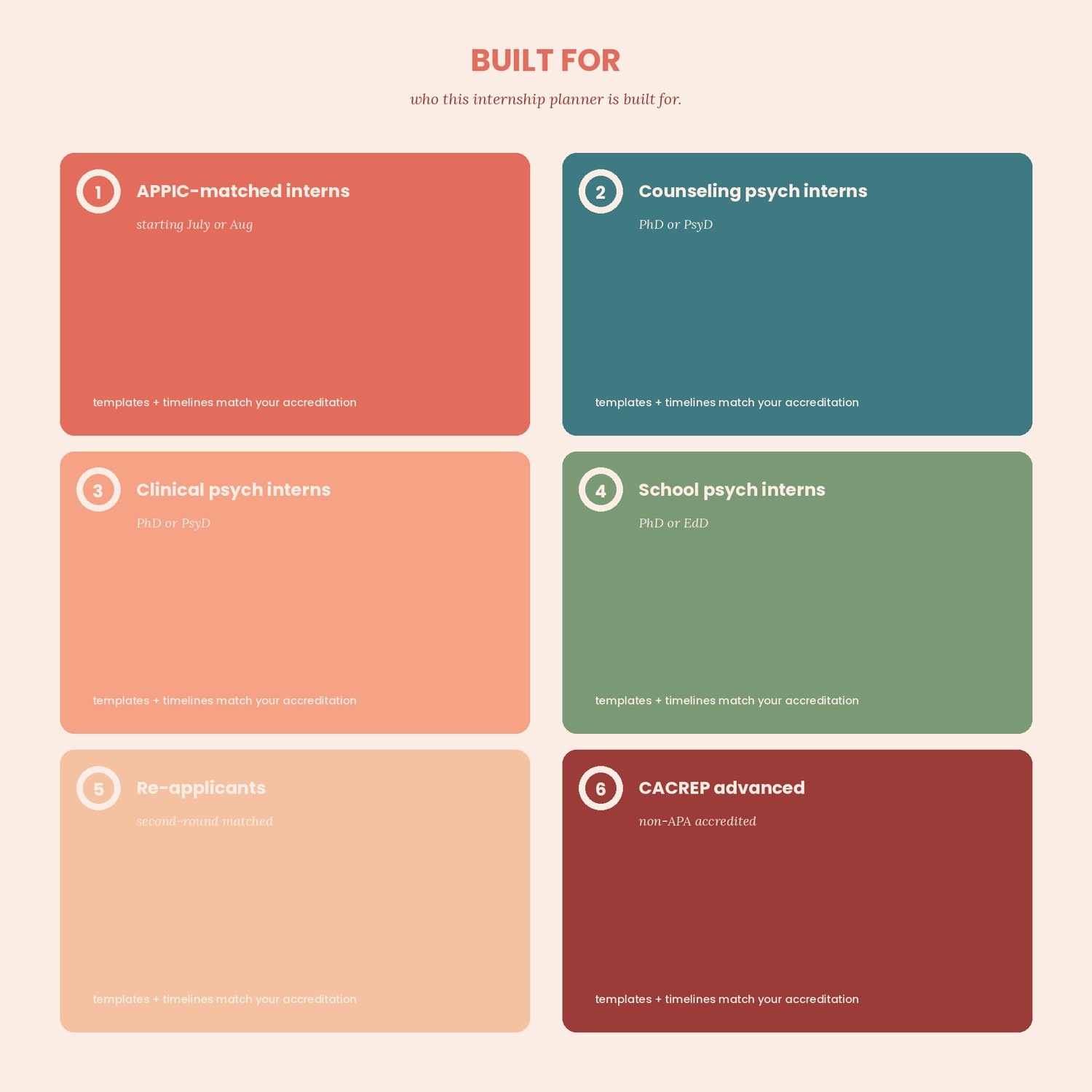
APPIC-matched predoctoral interns starting in July or August. Counseling, clinical, and school psychology PhD, PsyD, and EdD interns. Combined and integrated program interns. Re-applicants who matched on a second cycle. Training directors who want something to hand an incoming cohort. Postdoctoral fellows retrofitting the structure for a fellowship year. Anyone whose program is not providing year-long scaffolding.
Why it exists
Internship is sold as an apprenticeship. In practice it is a twelve month operations project: 2,000 hours to document, mid-year and end-year evaluations, postdoc applications due between October and February, and an EPPP study window most people underestimate. Interns show up with a calendar app and a hours spreadsheet somebody in the cohort made, then spend evenings and weekends doing organization work that a workbook would have absorbed.
50 pages, seven sections, built for the APPIC-matched intern at an APA-accredited site. Logistics, clinical, competency, postdoc, EPPP and licensure, self-care, and year-end.
Why it is built this way
Generic productivity planners are built for any project. Internship is not any project. Hour tracking comes from APA accreditation. Supervision requirements vary by site. Postdoc cycles align to APPIC and APPCN. Evaluations map to the nine Profession-Wide Competencies. The planner is organized around those specifics, by section rather than by week, because the documentation lives in the sections and the execution lives in the weekly page.
The Friday discipline in Section A is the single most useful habit of the year. Hours logged more than two weeks late are reconstructed from memory, and they lose accuracy.
Section C is the one that changes outcomes. Walking into an evaluation with your own self-assessment and specific examples tends to move the conversation, and evaluators rate prepared interns higher on PWC 4, Professional Values and Attitudes.
Section D exists because postdoc applications are the second most anxiety-provoking task of the year for most interns. Section F exists because burnout in internship cohorts is well documented and worth watching weekly rather than noticing in March.
Format
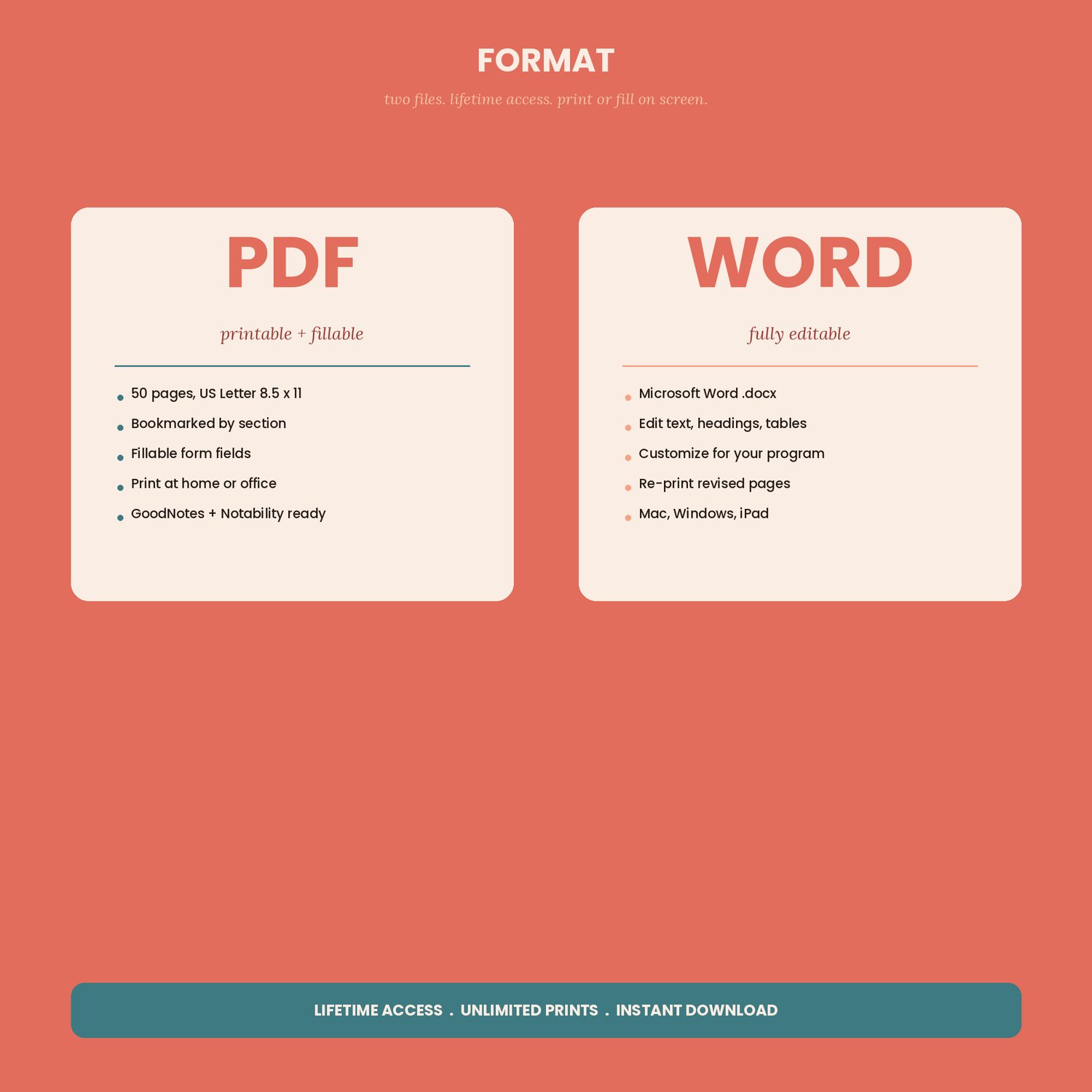
Editable, fillable PDF. Editable Microsoft Word (.docx). US Letter (8.5 x 11). Works on Mac, Windows, iPad, GoodNotes, and Notability. Print or fill on screen. Lifetime access, unlimited prints.
Updated 2026
Aligned to current APA Profession-Wide Competencies and current APPIC and APPCN postdoc timelines, with 2025 to 2026 EPPP Step 2 rollout considerations included. State licensure tables reflect current postdoc-hours requirements, and PSYPACT eligibility is referenced for interjurisdictional planning. The twelve month EPPP study plan is calibrated for 2026 testing windows. Verify your own state's Step 2 adoption schedule.
How to use it
First 30 days: complete the site basics page and the rotation planning pages, then start updating the weekly hours tracker every Friday. From September: build the postdoc target list in the Section D tracker, on the November to February cycle. December: the mid-year evaluation prep page. May or June: the end-year page. The weekly planner at page 49 is the one you print most, and the actual-hours column is where you find out where the year is really going.
Instant digital download. No physical product ships. Message us if anything does not work.