

PsyD Year 1 Survival Handbook (2026)
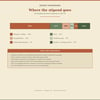
A PsyD year one survival handbook: a five phase first-year timeline, a realistic weekly schedule, advisor relationships, practicum search and preparation, finances and burnout warning signs.
What is in the handbook
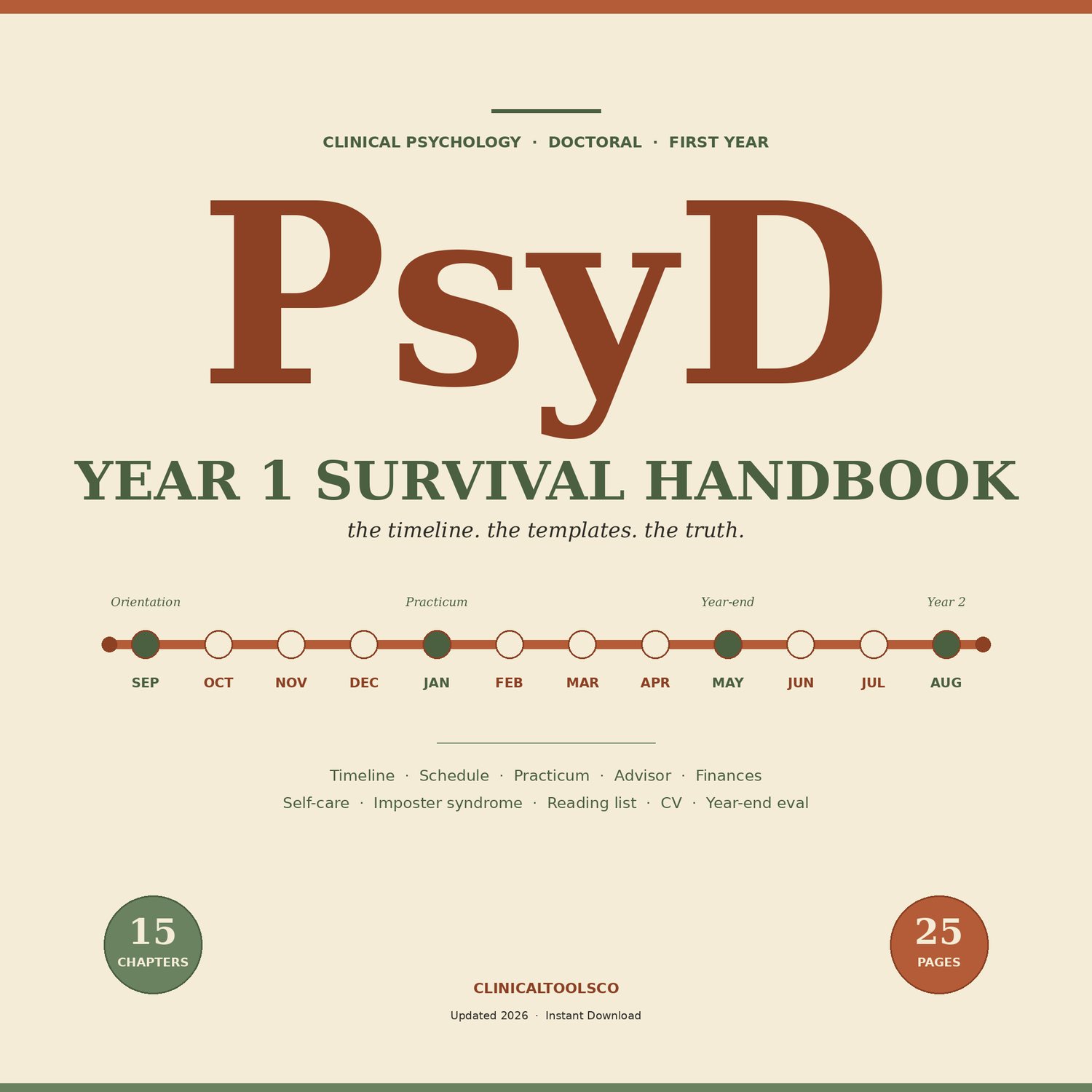
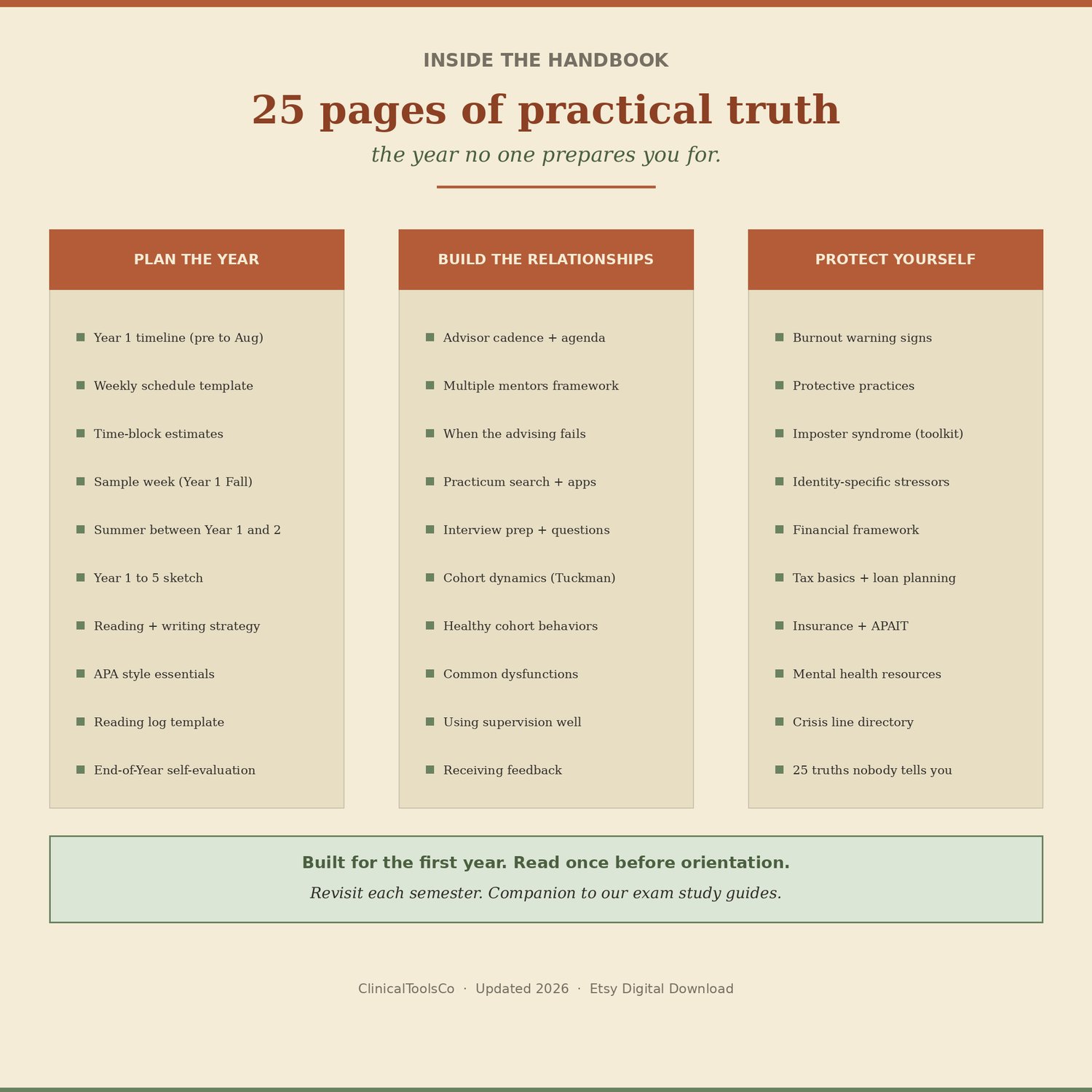
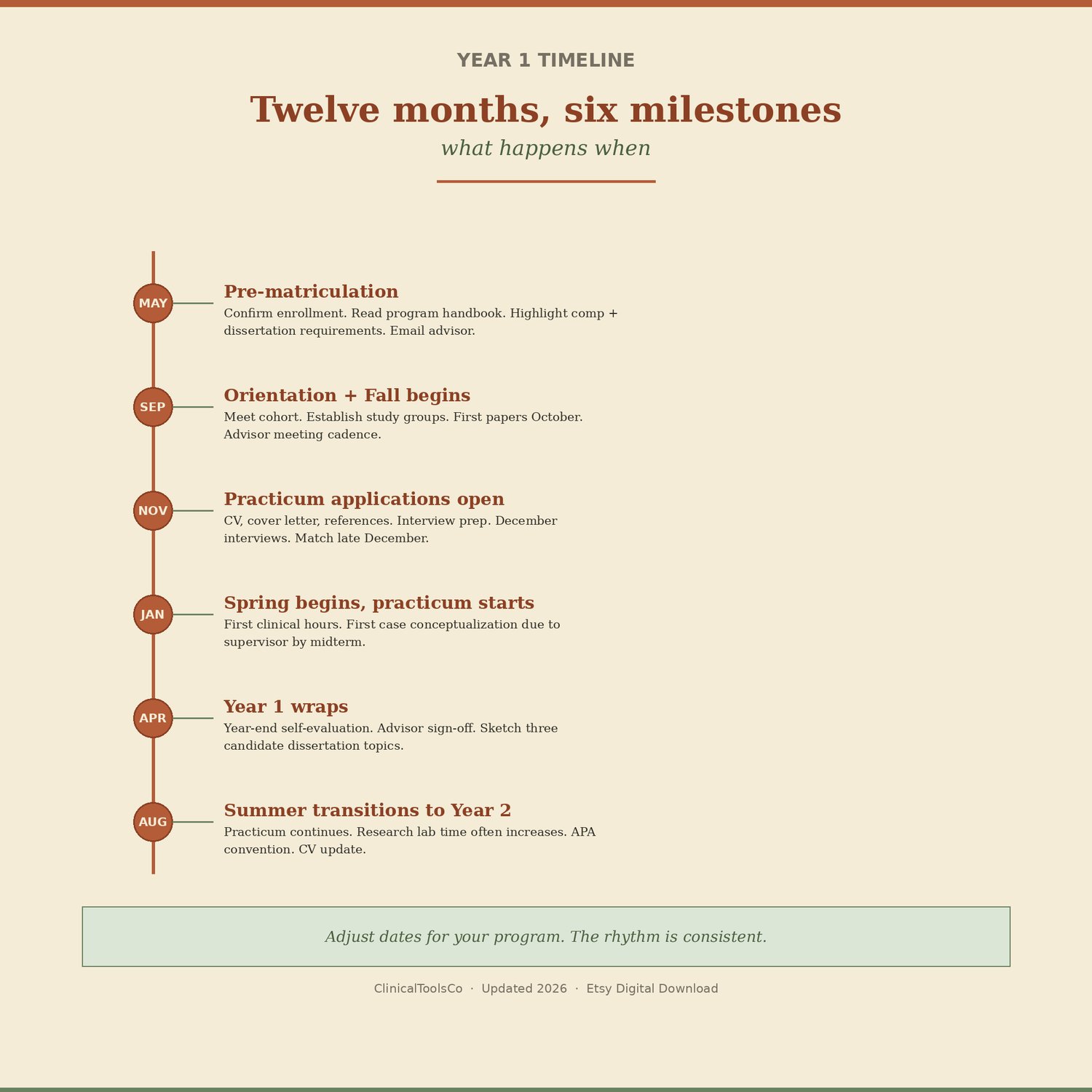
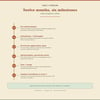
- A Year 1 timeline across five phases, from pre-matriculation in May through the summer after Year 1, with the milestones at each: practicum applications open in November, match lands in late December, practicum starts with a one week orientation in spring, self-evaluation in May. Knowing the rhythm in August is what lets you prepare for the November push rather than be surprised by it.
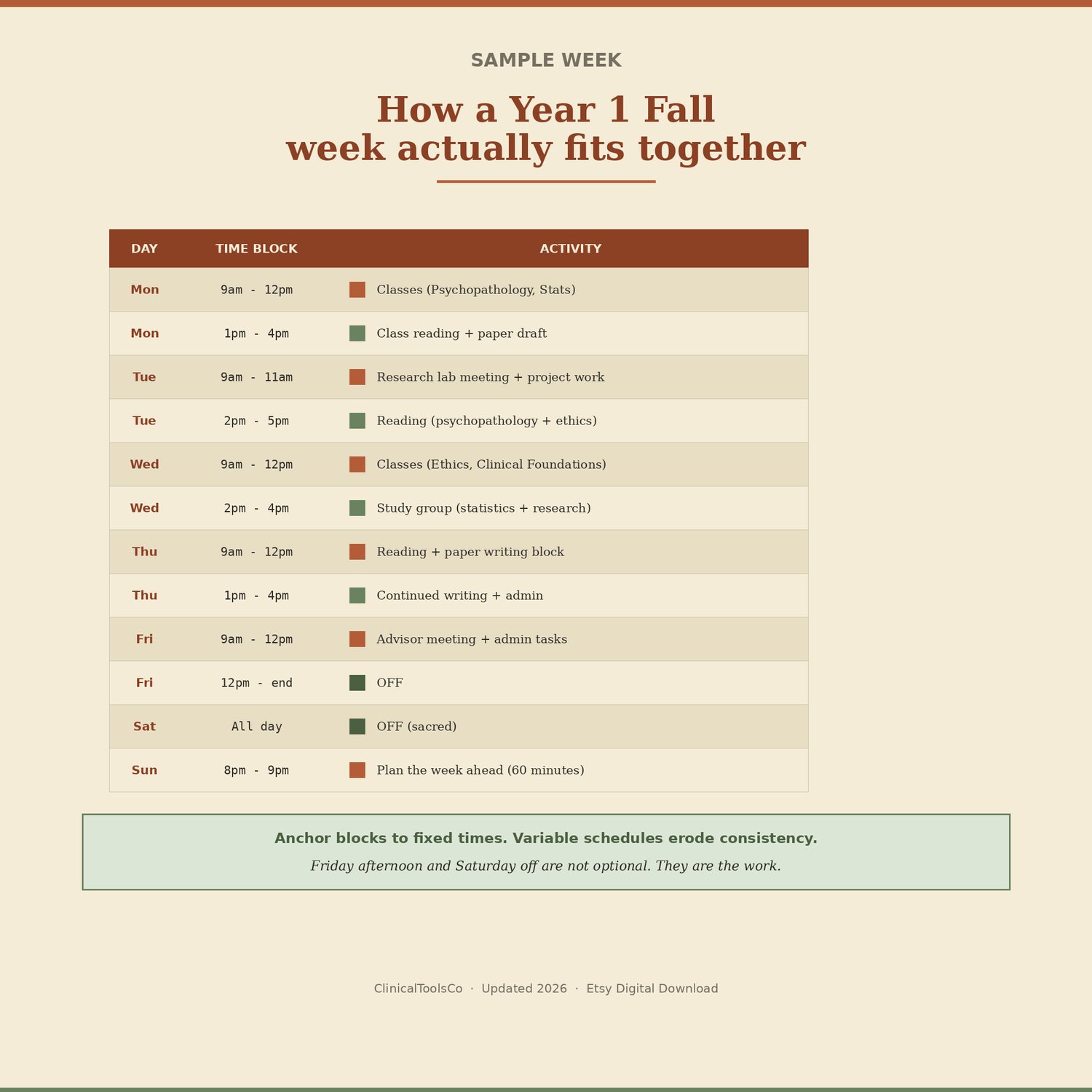
- A weekly schedule template with realistic time blocks by activity: class 9 to 15 hours, reading 15 to 25, papers 5 to 12, lab 5 to 10, study group 2 to 4, advisor prep 1 to 2, practicum 10 to 20, exercise and meals 10 to 15, sleep 49 to 63. Plus four time-block strategies that hold up and a sample Fall schedule that includes one full day off, which is required rather than optional.
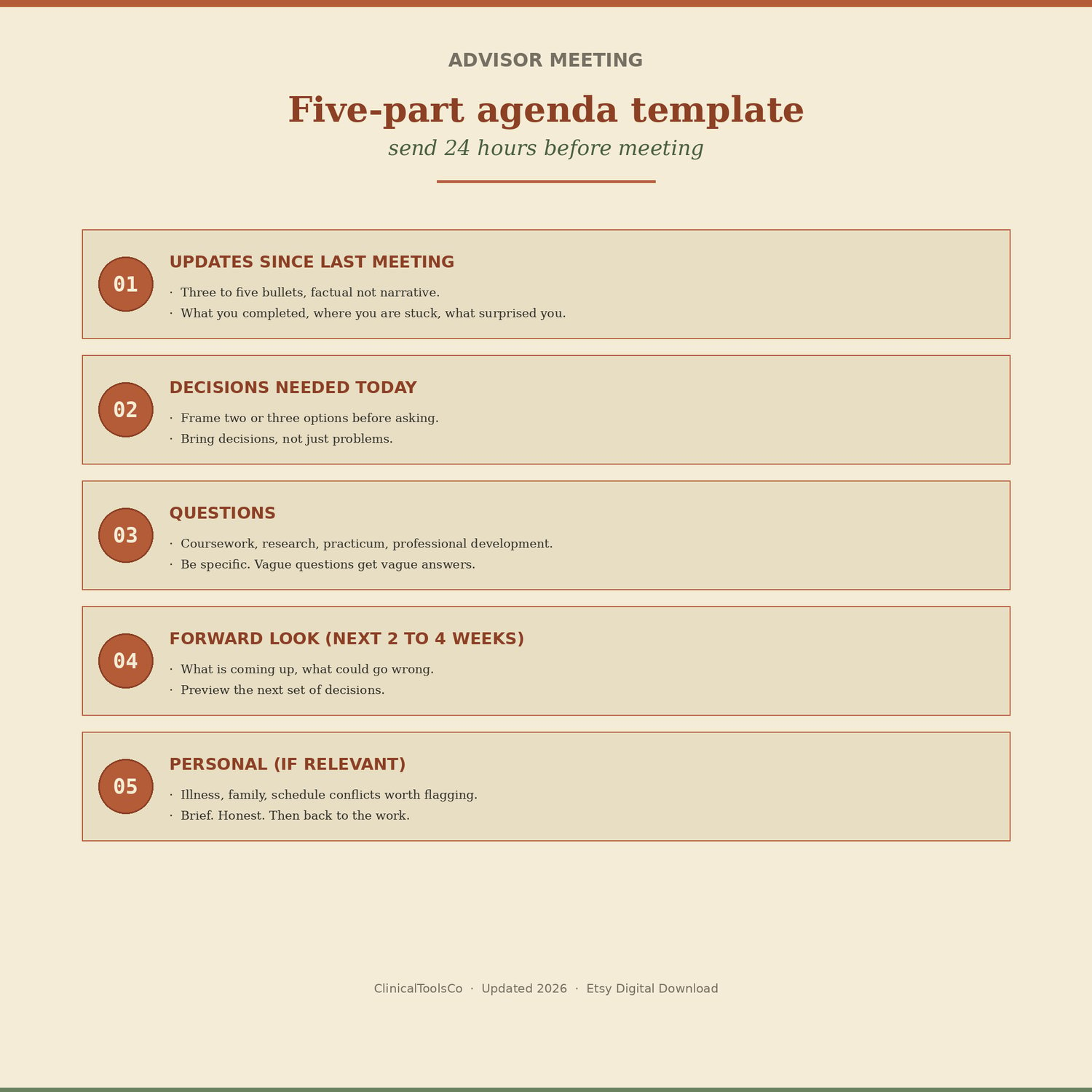
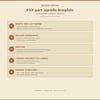
- Advisor and mentor relationships: meeting cadence, an agenda template in five sections, what advisors wish students did more of, a multiple-mentor strategy, and what to do when the relationship is consistently depleting. Advisor changes are more common than students think.
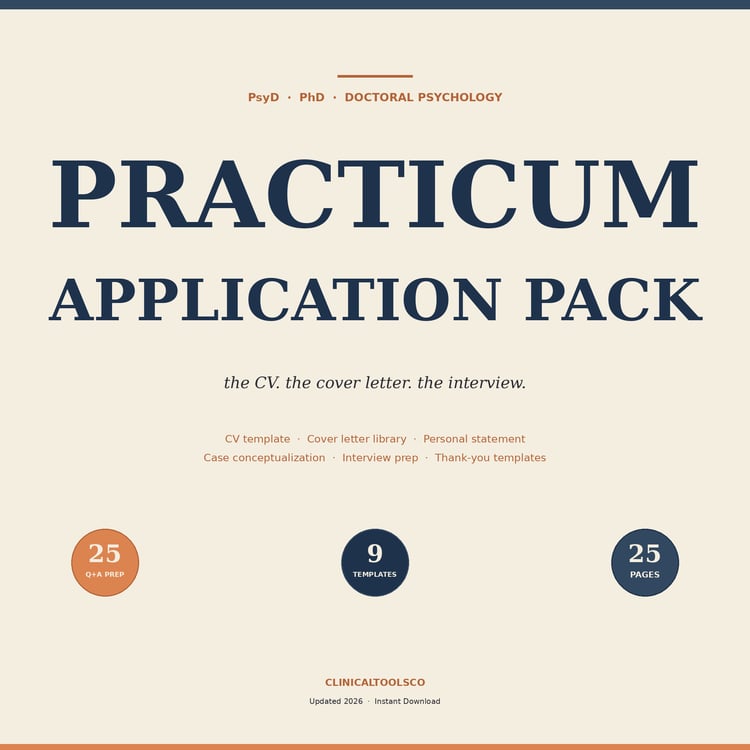
- Practicum search and preparation: where to apply, the application materials checklist, interview prep with a clinical strengths and growth pair and a case story, and the post-match checklist down to liability insurance.
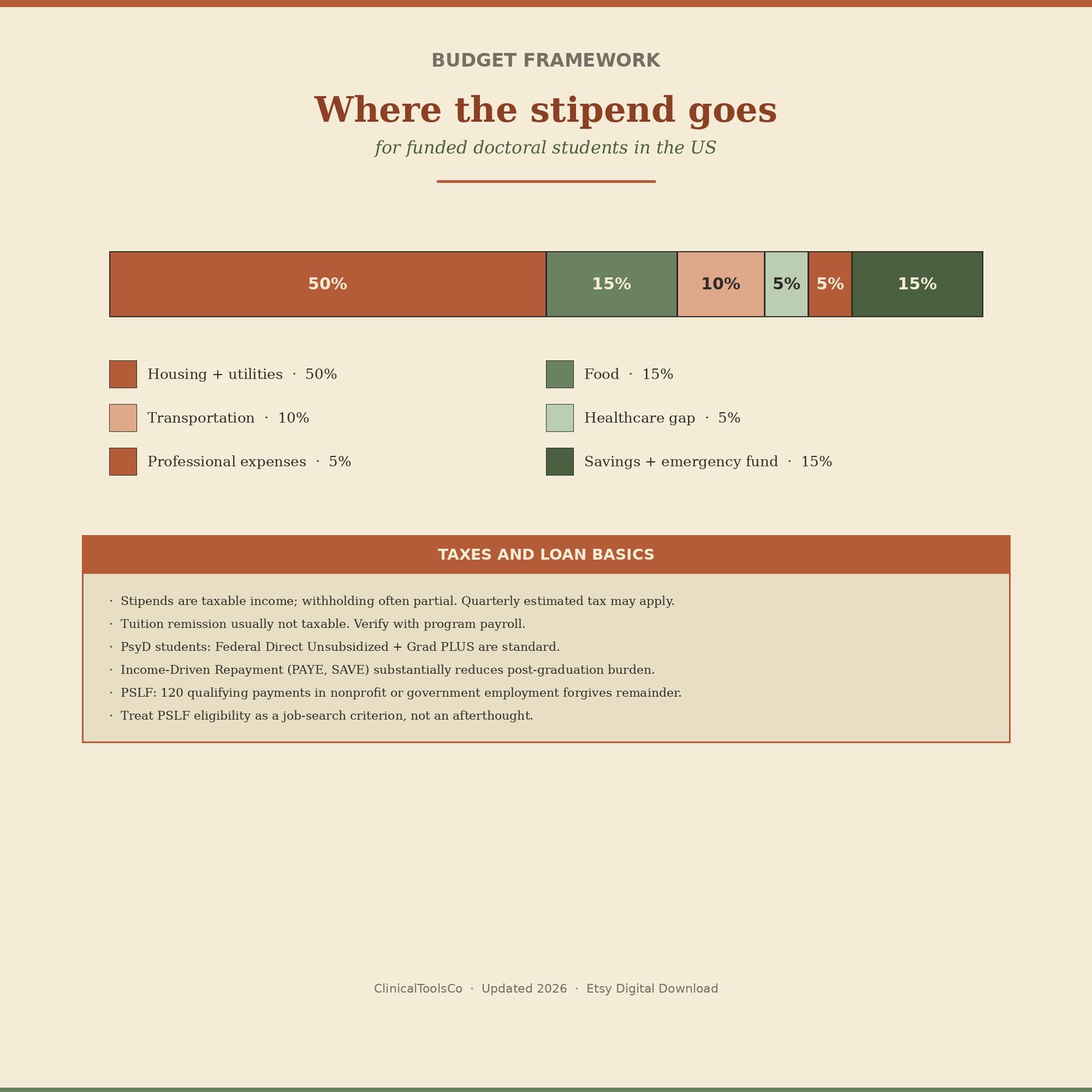
- Finances: typical stipend ranges, a budget framework, tax handling when the stipend arrives without withholding, PsyD loan strategy across Direct Unsubsidized and Grad PLUS with income-driven repayment and PSLF eligibility as a job-search criterion, and the insurance categories you actually need.
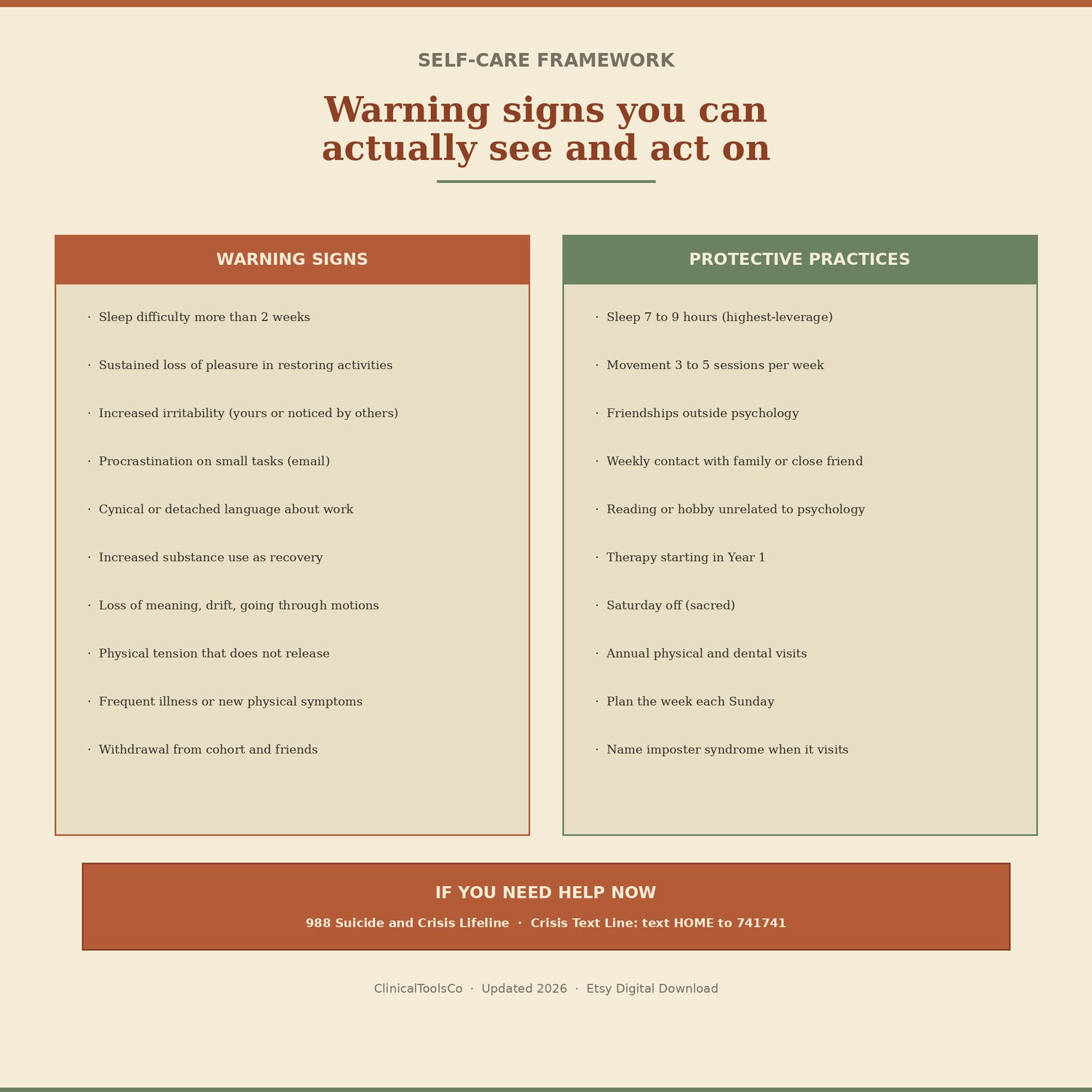
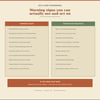
- Self-care and burnout: early warning signs named explicitly, protective practices in priority order with sleep first, when-to-seek-help thresholds, and a usable framing for imposter syndrome. Clinical psychology graduate students carry higher rates of depression, anxiety, and burnout than the general population, and the norms of the field tend to minimize it.
- Professional identity and cohort dynamics: what changes in year one, the three predictable subgroup patterns, and the Tuckman-adapted cohort phases with the dysfunctions worth recognizing early, competition spirals, triangulation, over-disclosure, isolation, and the faculty-favorite dynamic.
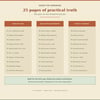
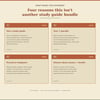
- Twenty-five truths nobody tells first-year doctoral students, grouped across coursework, practicum, program, personal, and future. A B-plus is fine in most courses. Study groups outperform solo study. Office hours are radically underused. The DCT is more powerful than students realize. Money will be tight. The work becomes meaningful by year four or five, and the hard middle is real and finite.
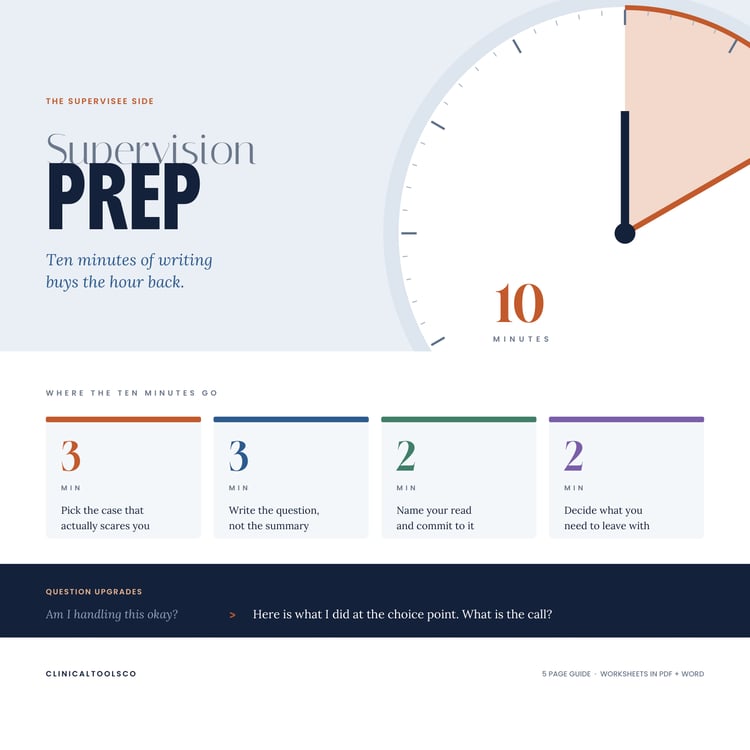
- Using supervision well: what good supervision looks like, how to come prepared with one specific case and the moment of uncertainty, and how to handle the defensive reaction to feedback. Most first years mistake supervision for a place to discharge anxiety.
- Plus EPPP and comprehensive exam prep timing, dissertation early ideation, networking and conferences, a mental health resources page with current crisis lines and directories, strategic reading and academic writing guidance, the summer between years one and two, a Year 1 reading list, an essential documents checklist, a CV template with verb bank, a four-paragraph cover letter structure, and an end-of-year self-evaluation across ten domains.
Who it is for
Incoming PsyD and PhD students in clinical, counseling, school, and combined programs. Admitted students in the months before matriculation. First-years at any point in the year. Second-years reviewing what they wish they had known. Master's-level and post-bac students considering doctoral programs. Program advisors and Directors of Clinical Training who want one handbook to give incoming students. Career-changers entering after time away from academia. And family members trying to understand the process.
Why it exists
It is August and you move in two weeks. The program handbook is 90 pages of policy and zero pages of strategy. Nobody told you practicum applications open in November and your CV is from undergrad. Nobody told you the stipend often arrives without withholding and quarterly estimated taxes may apply. Nobody told you the advisor relationship is the single highest-impact variable in the whole doctoral experience, that cohorts move through predictable phases, or that EPPP prep starts years before the exam.
39 pages, 21 chapters, plus a Year-One Time Budget and Reading-Triage Toolkit with a sample weekly time budget, a three-pass method for triaging assigned reading, and practices that make a first year sustainable.
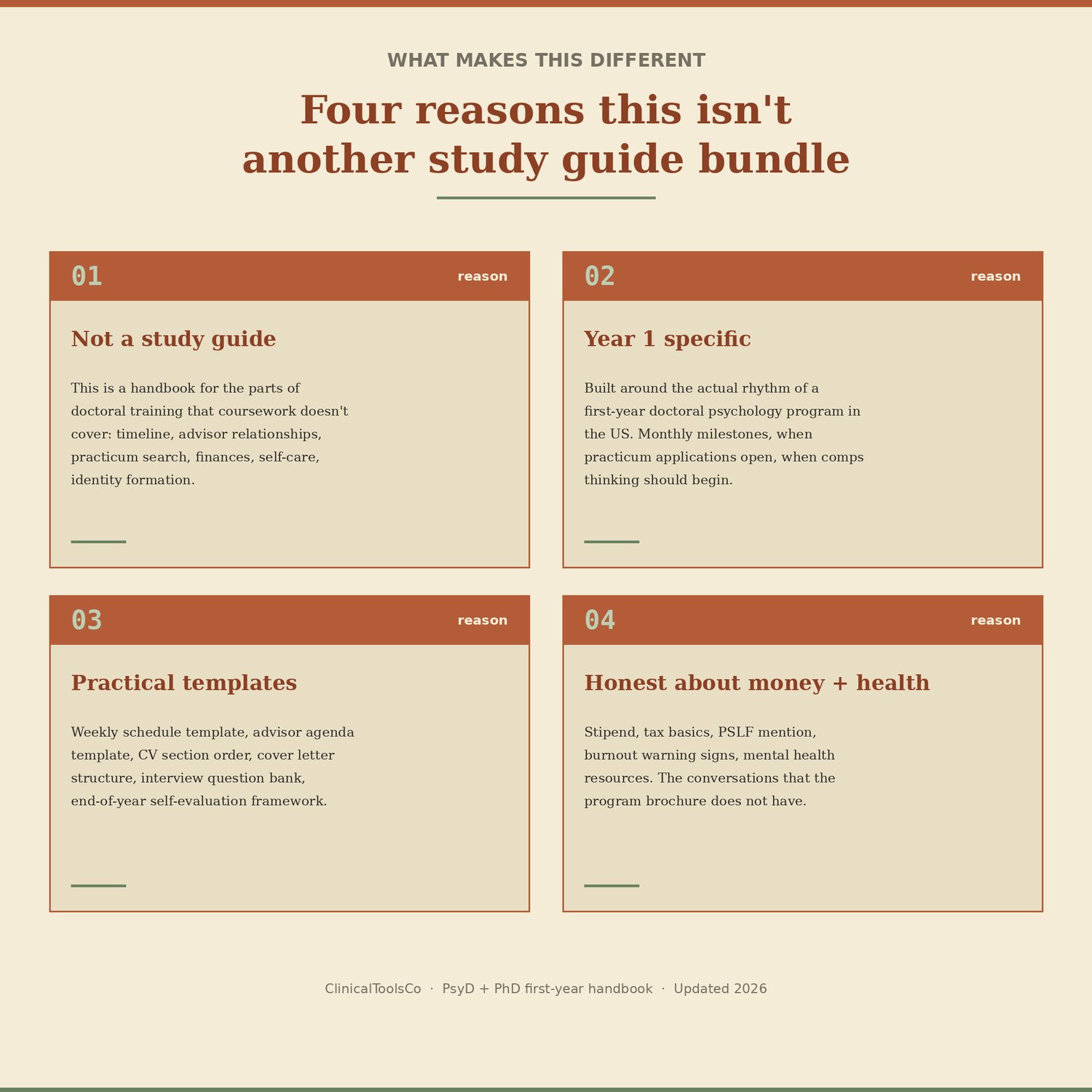
This is the practical companion nobody assigns. It covers what coursework does not teach: planning the year, building the relationships, managing the money, protecting your health, writing the CV and cover letter, preparing for practicum, using supervision well, and getting through Year 1 with your relationships and your mental health intact.
Format
Editable, fillable PDF. Editable Microsoft Word (.docx). Both files include the Time Budget and Reading-Triage companion. Built for three reads, before orientation, end of Fall, end of Spring, plus ongoing reference. US Letter (8.5 x 11) and A4 (8.3 x 11.7) both included. Works on Mac, Windows, iPad, GoodNotes, and Notability. Personal use license. Lifetime access, unlimited prints.
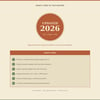
Updated 2026
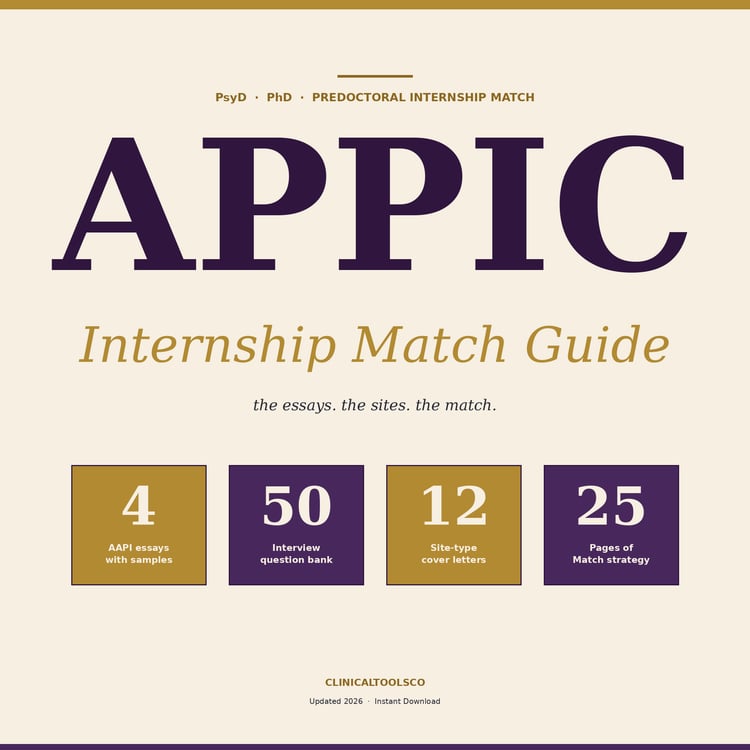
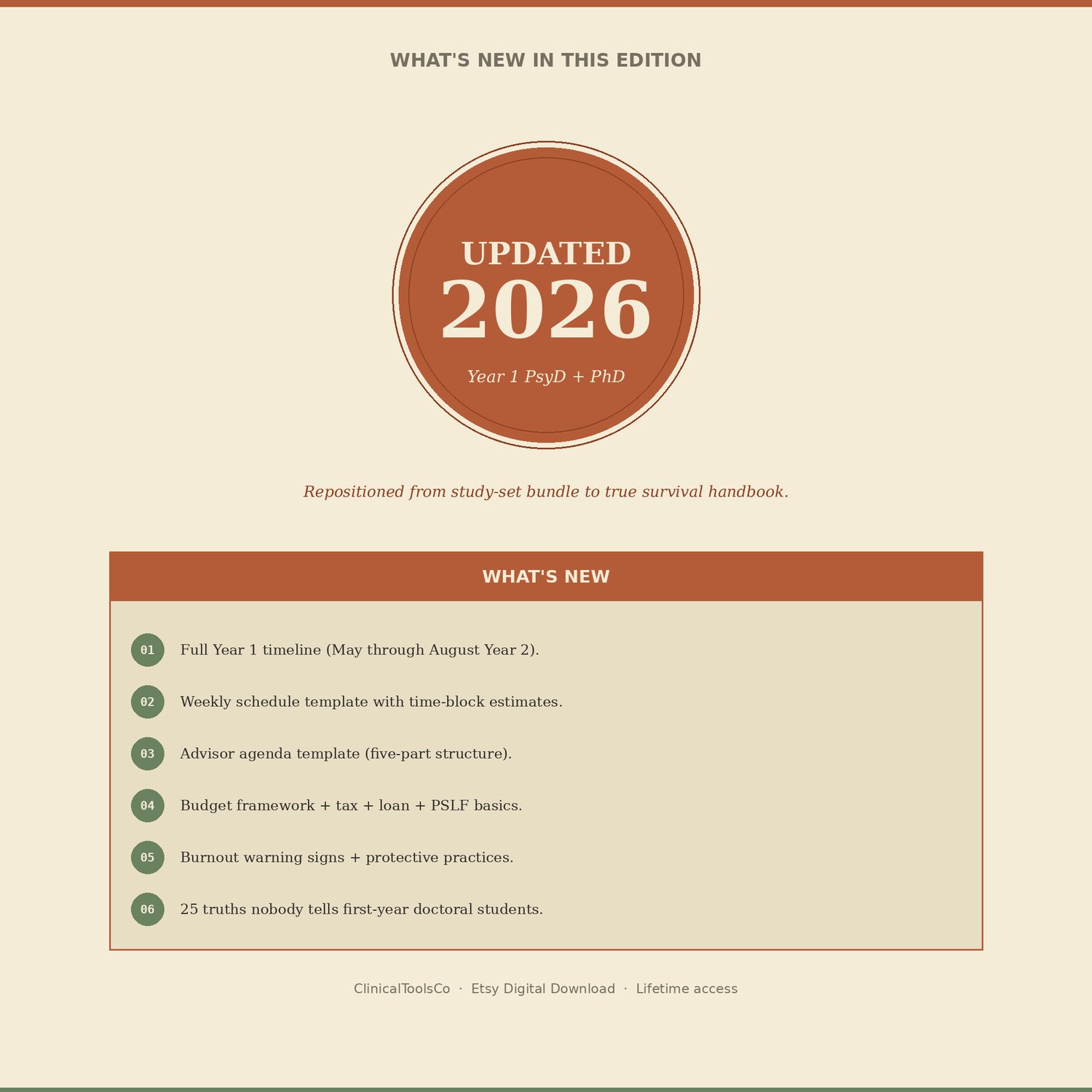
Timeline reflects current US doctoral psychology program rhythms. Stipend ranges current per the most recent CUDCP and APA salary surveys. Federal loan strategy current across Direct Unsubsidized, Grad PLUS, current income-driven repayment plans, and PSLF status. APA 7th edition cited. Crisis line numbers current to the 988 Suicide and Crisis Lifeline. APPI internship application reference current.
How to use it
Incoming: read it through in the two weeks before orientation, build the cloud folder structure before classes start, and draft the CV in October. End of Fall: recalibrate the timeline for spring, check yourself against the self-care warning signs, and start practicum interview prep. Before practicum: re-read the practicum, supervision, and application chapters, and confirm liability insurance and compliance trainings. End of Spring: complete the ten domain self-evaluation, sketch three dissertation candidate topics, and plan the summer. For advisors and DCTs: assign it before orientation and use the self-evaluation as a year-end check-in.
The first year of a doctoral program is one of the most cognitively demanding stretches most people go through. This is the structure that helps keep the relationships, the finances, the health, and the sense of self intact while it happens.
Instant digital download. No physical product ships. Message us if anything does not work.