

Substance Use Treatment Plan Worksheets (2026)
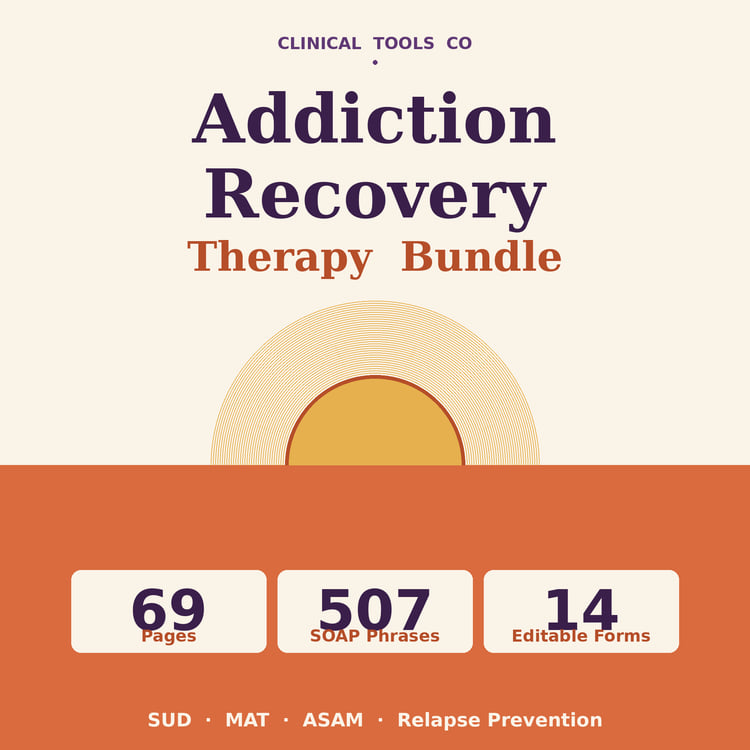
Substance use treatment plan worksheets aligned to ASAM: a six-dimension review, a level-of-care matrix, a full plan template, goal and intervention libraries and a relapse prevention plan.
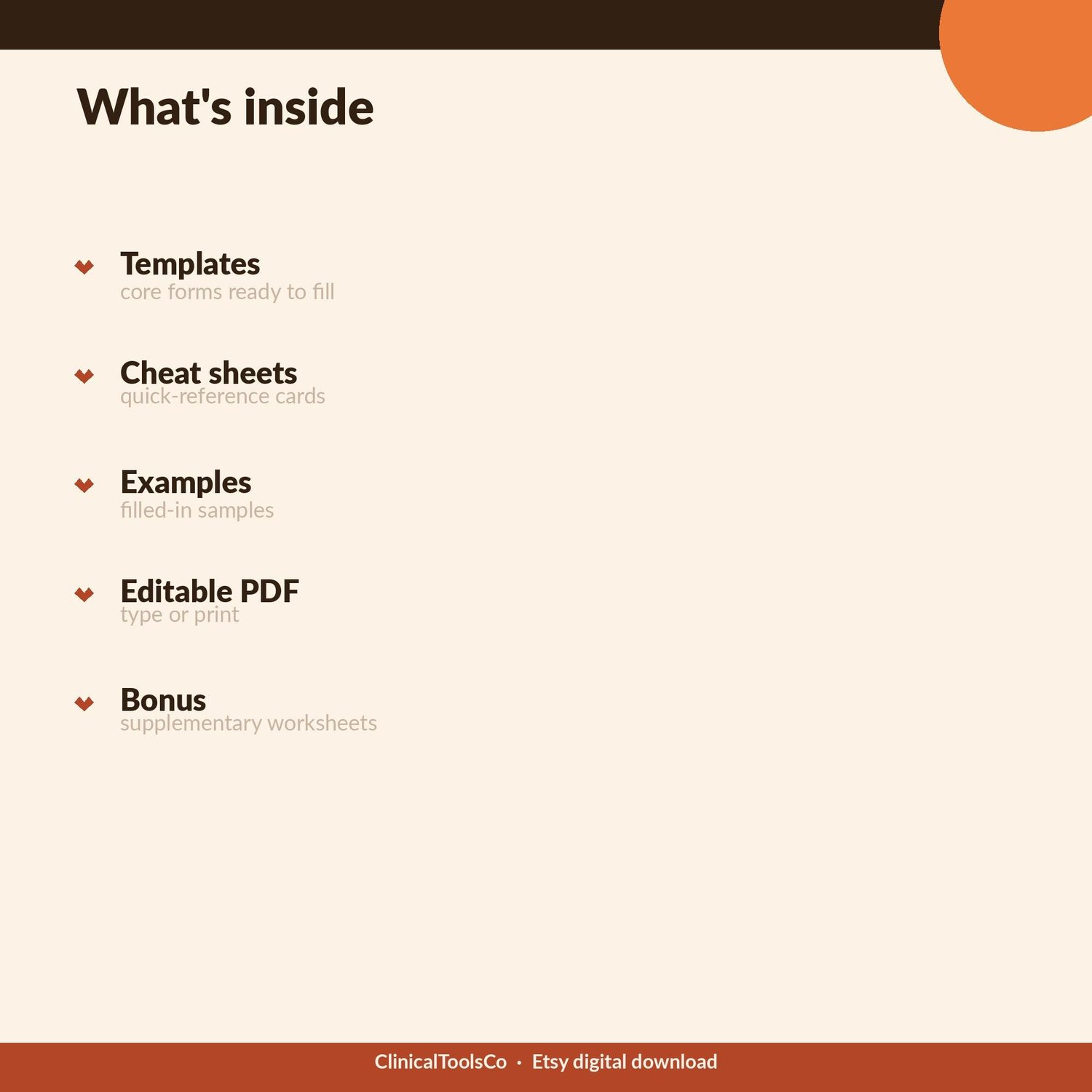
What is in the bundle
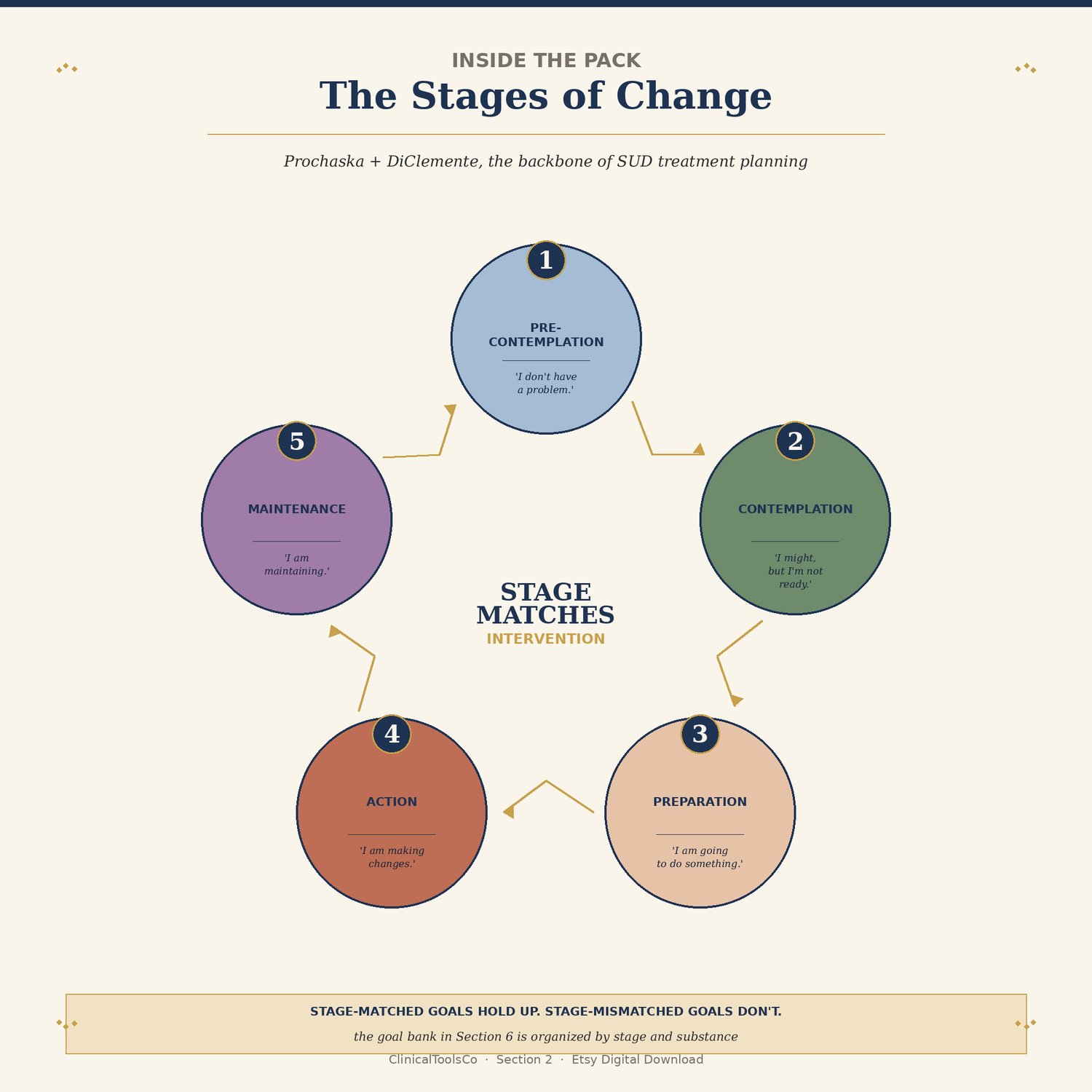
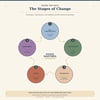
- How substance use treatment planning differs: stage of change, substance specifics, harm reduction versus abstinence, dual diagnosis as the rule, and relapse as part of the disease
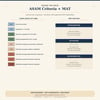
- ASAM six-dimension review covering acute intoxication and withdrawal, biomedical conditions, emotional and behavioral and cognitive conditions, readiness to change, relapse potential, and recovery environment, with examples
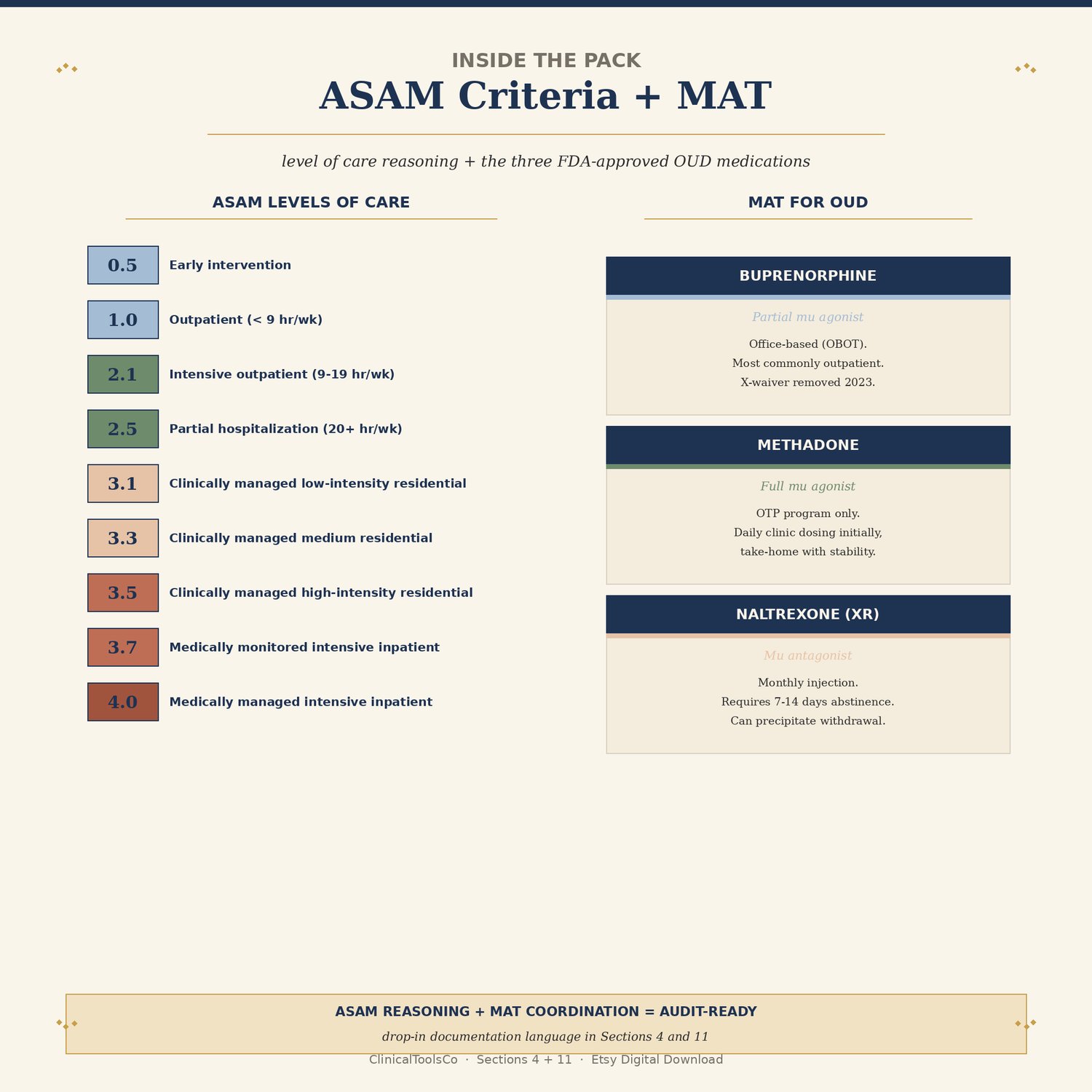
- ASAM level-of-care matrix from early intervention through medically managed inpatient
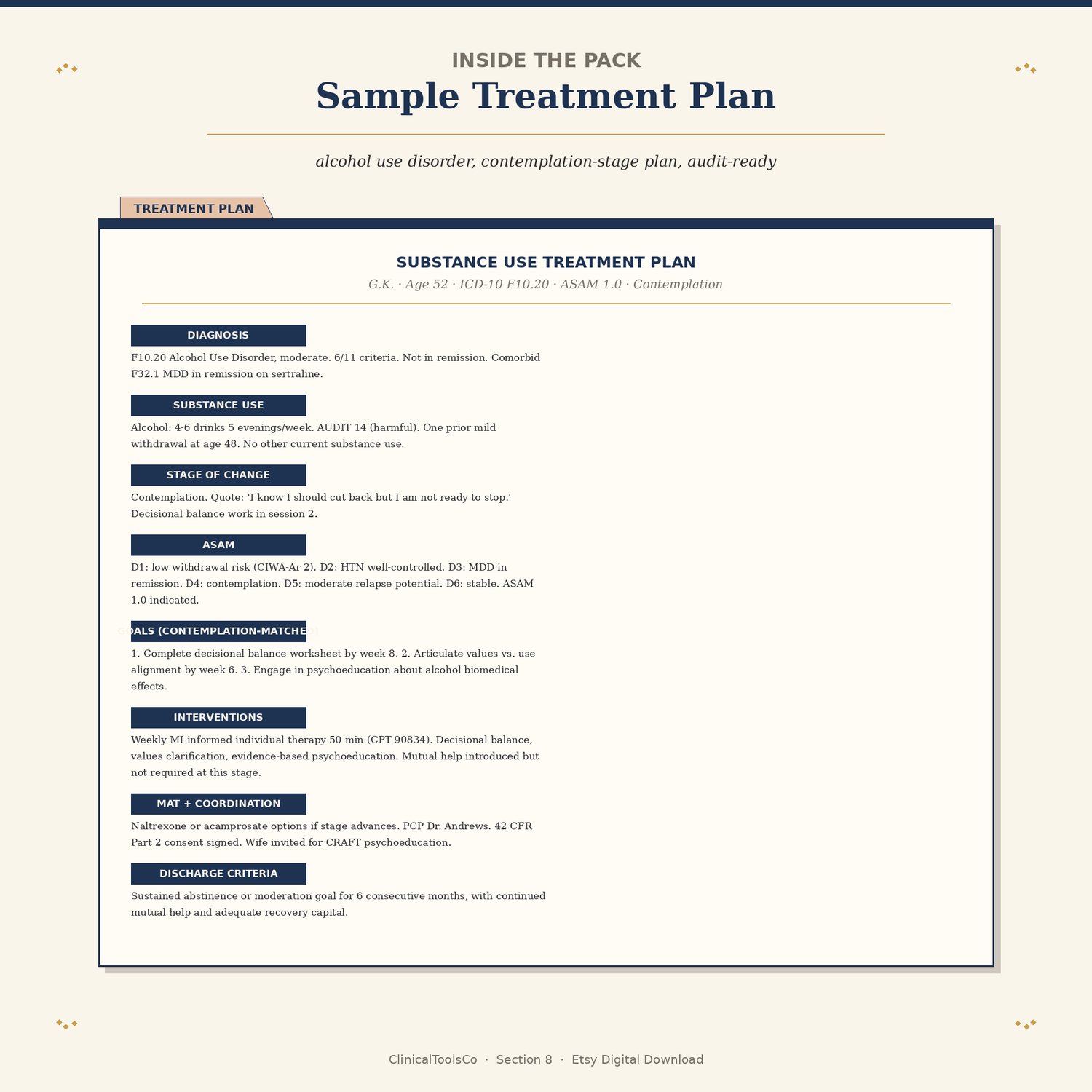
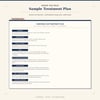
- A full treatment plan template with all required components
- Goals and objectives library by substance: alcohol use disorder with AUDIT trajectory, abstinence days, recovery meetings and medication; opioid use disorder with medication engagement, drug screen targets, group, triggers and vocational goals; stimulant use disorder with abstinence days, screen targets, contingency management and sober activities; cannabis use disorder with reduction targets and functional alternatives; and polysubstance use with per-substance targets
- Intervention library by modality across motivational interviewing, CBT for substance use, contingency management, medication-assisted treatment by substance, 12-step facilitation, SMART Recovery, and family and couples approaches including behavioral couples therapy and CRAFT
- Relapse prevention plan template covering triggers, coping, support and post-relapse re-engagement
- Discharge planning with stepped-down care and recovery support
- Dual diagnosis considerations for mood, anxiety and PTSD alongside substance use
- A documentation language library that holds up to audit, and three full sample plans across substance types
Who it is for
- Licensed addiction counselors (LADC, CADC, LCDC, CCDP)
- Substance use therapists (LCSW, LMFT, LPC, LMHC, LPCC with a substance use focus)
- IOP, PHP and residential clinicians
- Community mental health substance use providers
- Dual-diagnosis clinicians
- Group practice owners standardizing treatment planning
- Pre-licensed associates building planning skill, and the supervisors training them
Why it exists
Substance use treatment plans require frameworks the standard mental health plan does not have: ASAM dimensions for level-of-care decisions, stage-of-change matching, substance-specific objectives, medication coordination, and a relapse prevention plan. Use a generic treatment plan template for an alcohol use disorder and you end up with vague goals, no level-of-care reasoning, and a relapse plan that says support sobriety. That plan does not survive utilization review.
This is the template I built after watching too many alcohol and opioid use disorder plans come back from review for missing ASAM dimensions or no documented medication coordination. Substance-specific goals. A modality-specific intervention library. An ASAM walkthrough. Relapse prevention as a required component, not an optional one.
50 pages built by a practicing clinician with substance use treatment experience.
Why this is different
Most substance use treatment plan templates are generic mental health plans with substance use pasted in. They miss the structural pieces that make this planning specific: the ASAM dimensions, the medication coordination, the stage-of-change matching, and the relapse prevention plan that is required rather than optional.
The ASAM dimension review matters because it is the framework commercial and state Medicaid auditors use to evaluate level-of-care decisions. The six-dimension walkthrough lets you document the assessment in the standard format, with a matrix mapping common dimension profiles to outpatient, IOP, PHP, residential or inpatient care.
The substance-specific goals matter because alcohol, opioid, stimulant, cannabis and polysubstance use disorders have different evidence bases, different measurable handles and different medication options. Alcohol measures AUDIT and abstinence days. Opioid measures screens for non-prescribed opioids and medication engagement. Stimulant relies on contingency management with no approved medication.
The medication coordination section matters because most therapists do not prescribe, but every plan should reflect coordination with the prescriber. The table by substance gives the options, the prescriber relationship and the documentation language for the chart.
The relapse prevention template matters because relapse is part of the disease, and a plan without explicit relapse prevention is incomplete.
The dual diagnosis section matters because mood, anxiety, PTSD and personality disorders frequently co-occur, and a plan that ignores the co-occurring condition will not hold.
Format
- Editable, fillable PDF
- Editable Microsoft Word (.docx)
- Designed for ASAM intake review, initial plan and 30-day review cycles
- US Letter and A4 sizes both included
- Works on Mac, Windows, iPad, GoodNotes, Notability
- Lifetime access, unlimited prints
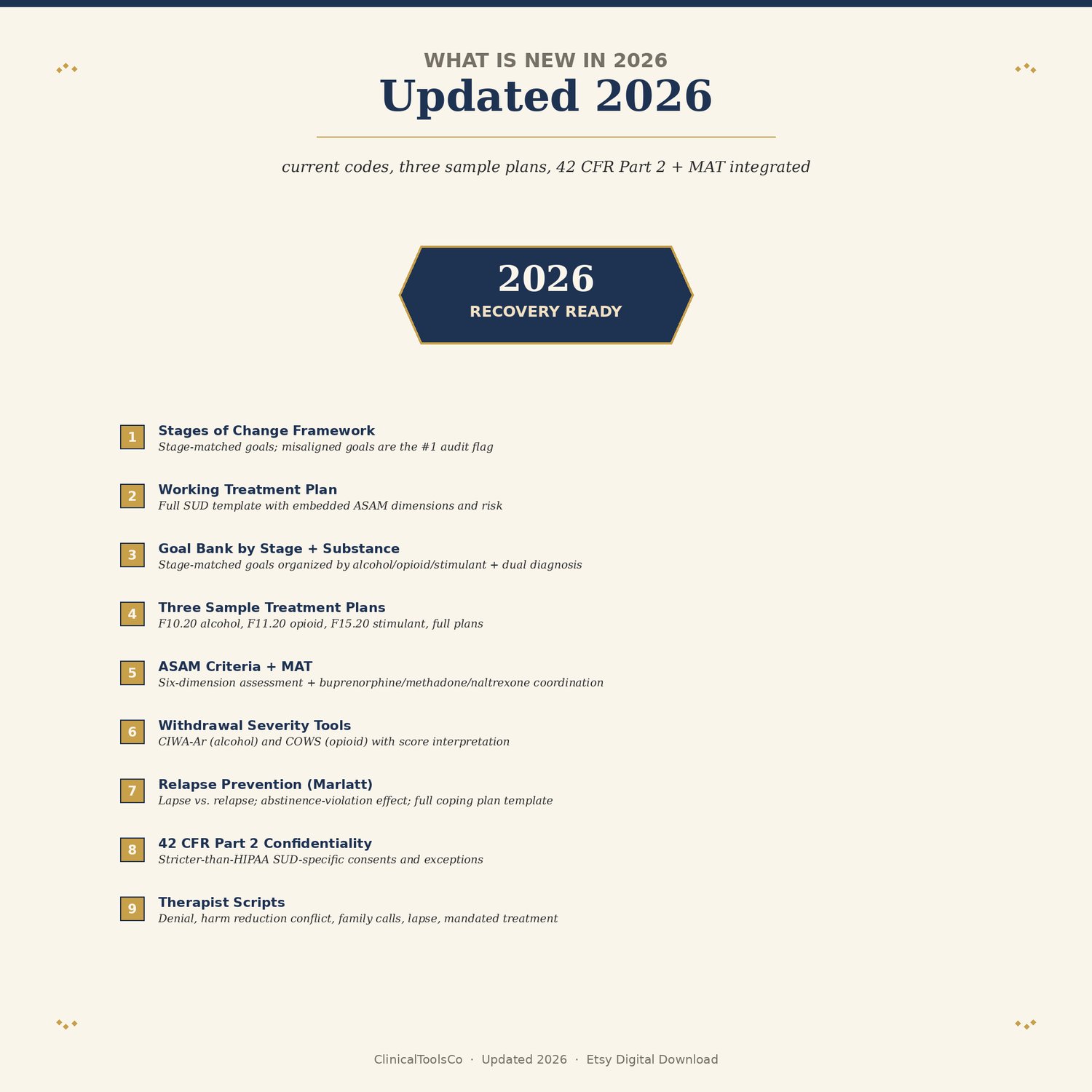
Updated 2026
ASAM criteria current to the fourth edition. Medication options reflect current FDA-approved formulations for alcohol, opioid, tobacco and stimulant use disorders. Contingency management protocols are current to the NIDA evidence base. SMART Recovery and 12-step facilitation language reflect current practice. DSM-5-TR substance use disorder criteria throughout.
A note from the designer
I am a practicing clinician with substance use treatment experience. The ASAM walkthrough is the section that fixed my level-of-care documentation. The substance-specific libraries are the ones I pull from for every new intake. The relapse prevention template is what I share with supervisees who were treating relapse prevention as an afterthought rather than a core component.
These plans live or die on the specificity of the objectives and the coherence of the level-of-care reasoning. The template treats both as central.
Digital download. No physical product ships. Reach out by email if anything does not work or if you have questions.