








Therapist Caseload and Revenue Planner (2026)
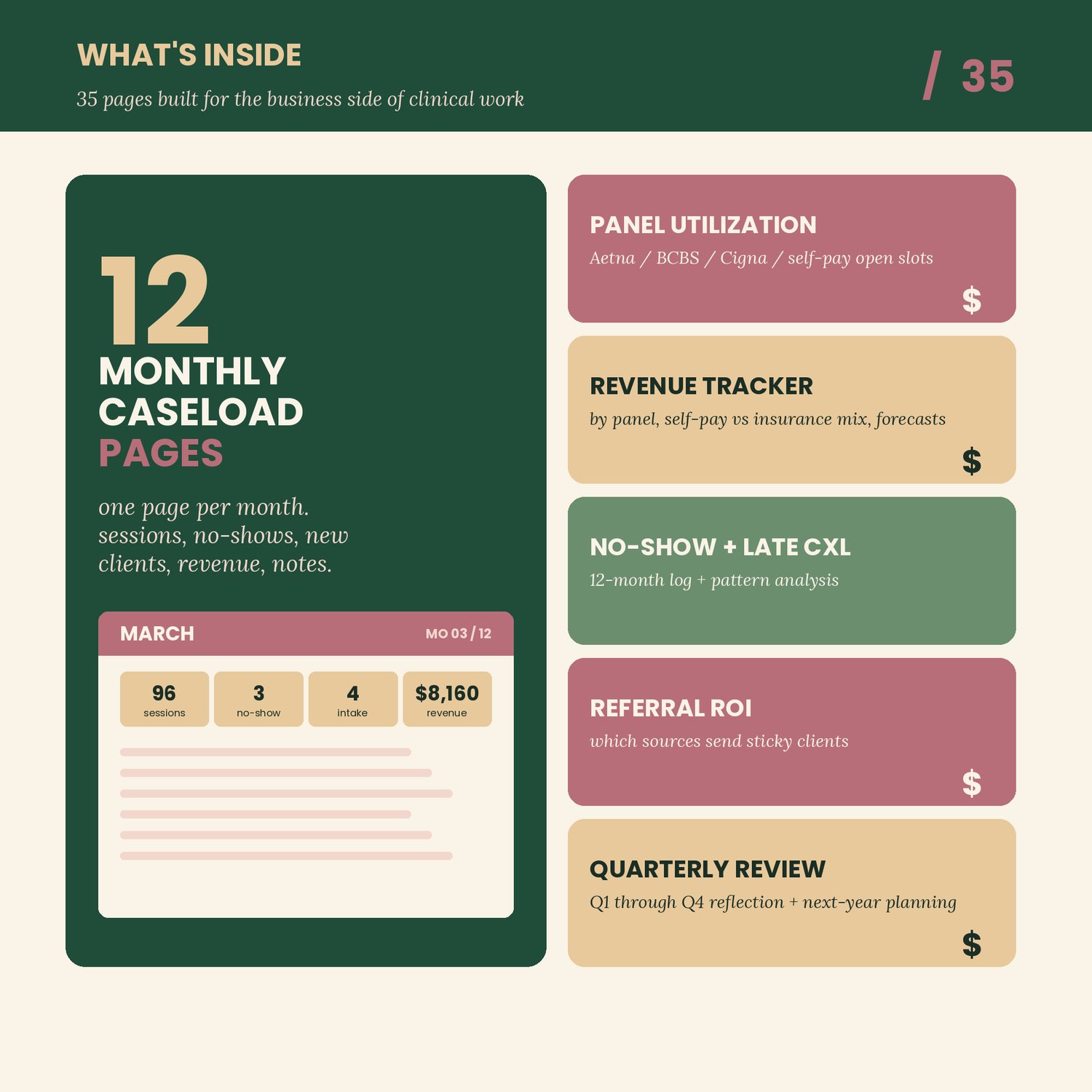
A twelve month caseload and revenue planner for therapists: annual targets, monthly caseload pages, panel utilization, a referral source tracker, no-show tracking and revenue by panel.
What is in the planner
- An annual targets page with caseload, revenue, and operations sections you fill once in January, and a panels reference page holding rate, copay, claim turnaround, and contact details for every panel you are on.
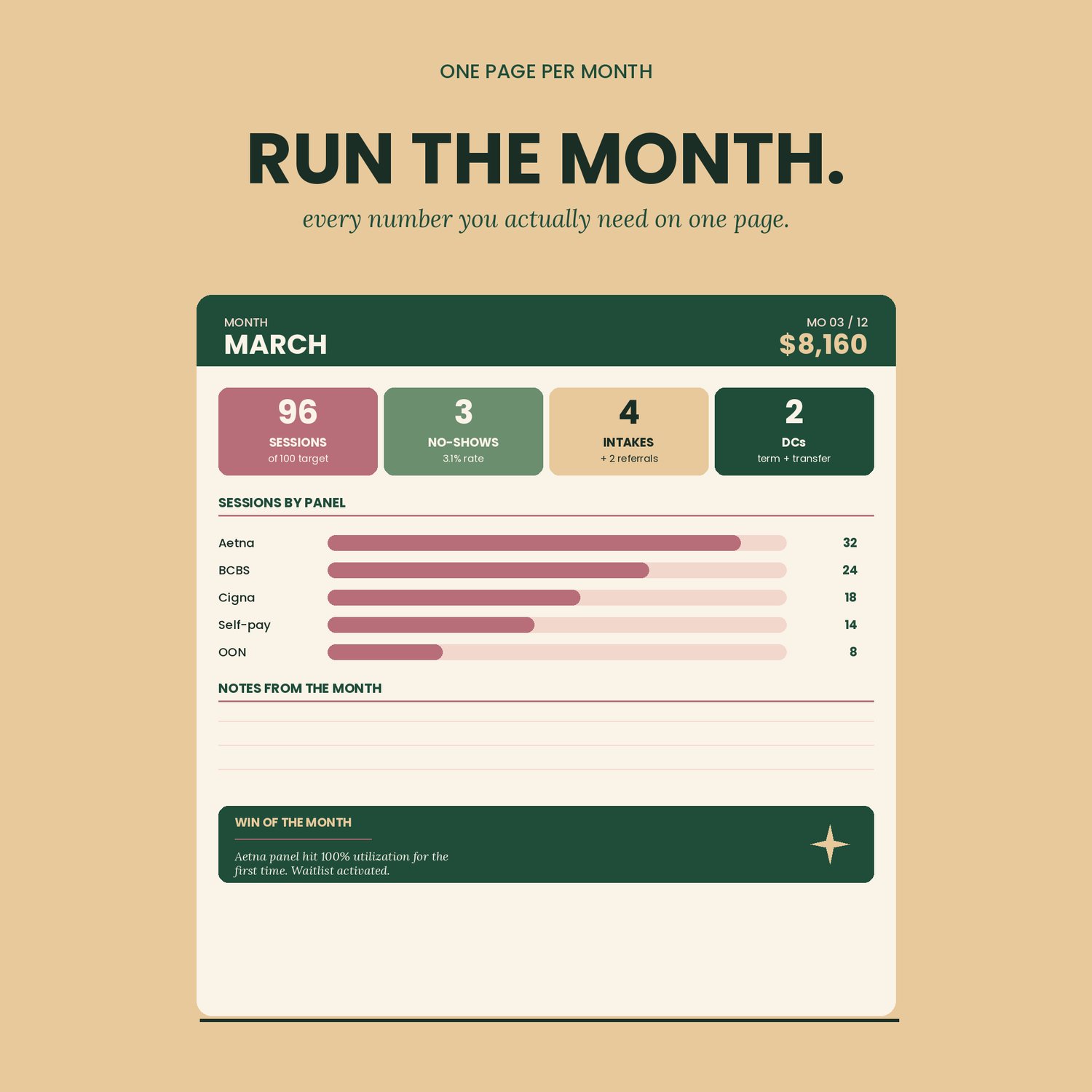
- Twelve monthly caseload pages, one per month, each capturing sessions held, no-shows, intakes, discharges, revenue by panel, a capacity check, notes, and a win of the month.
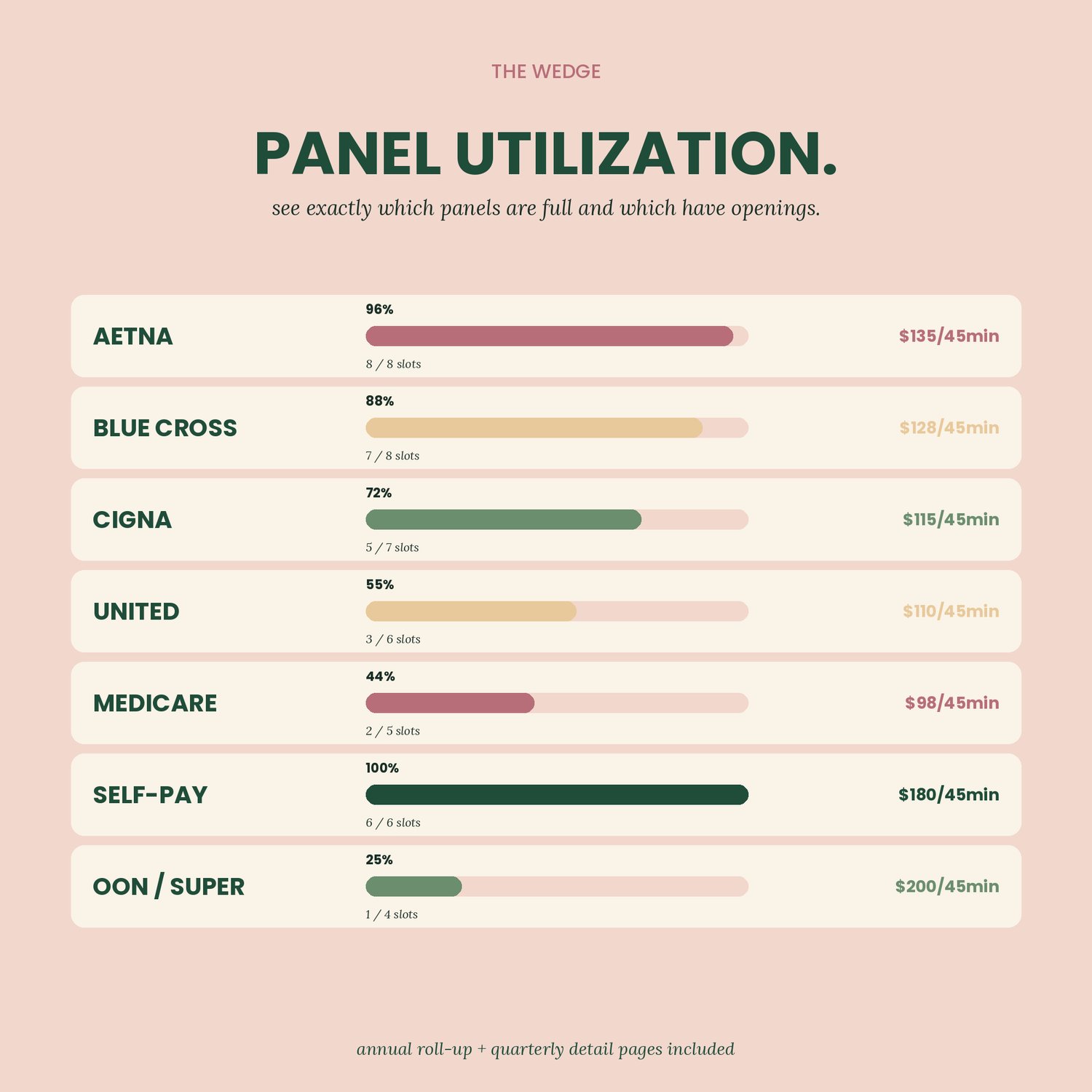
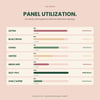
- An annual panel utilization roll-up with target slots, average filled, total revenue, and a next-year decision column, plus two quarterly detail pages so mid-year drift shows up while you can still act on it.
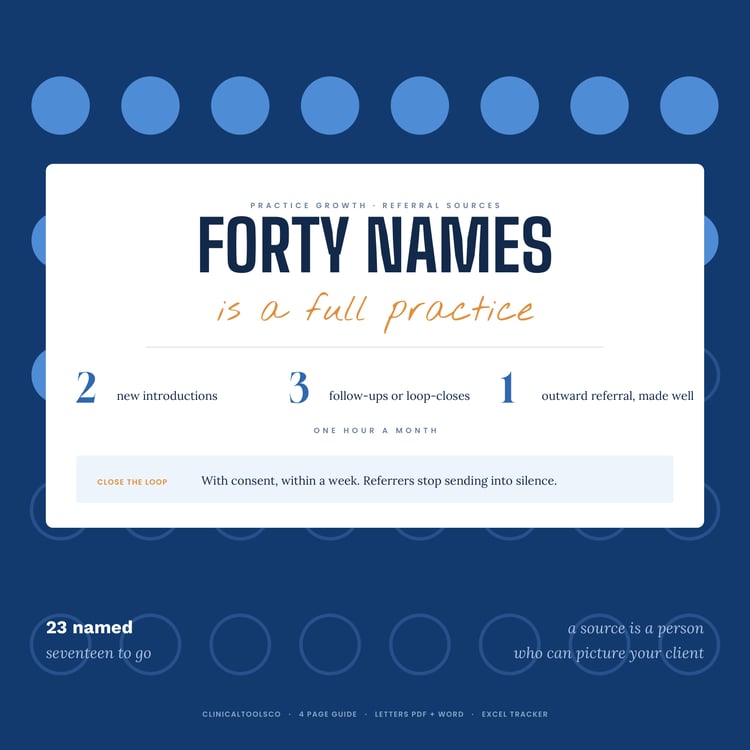
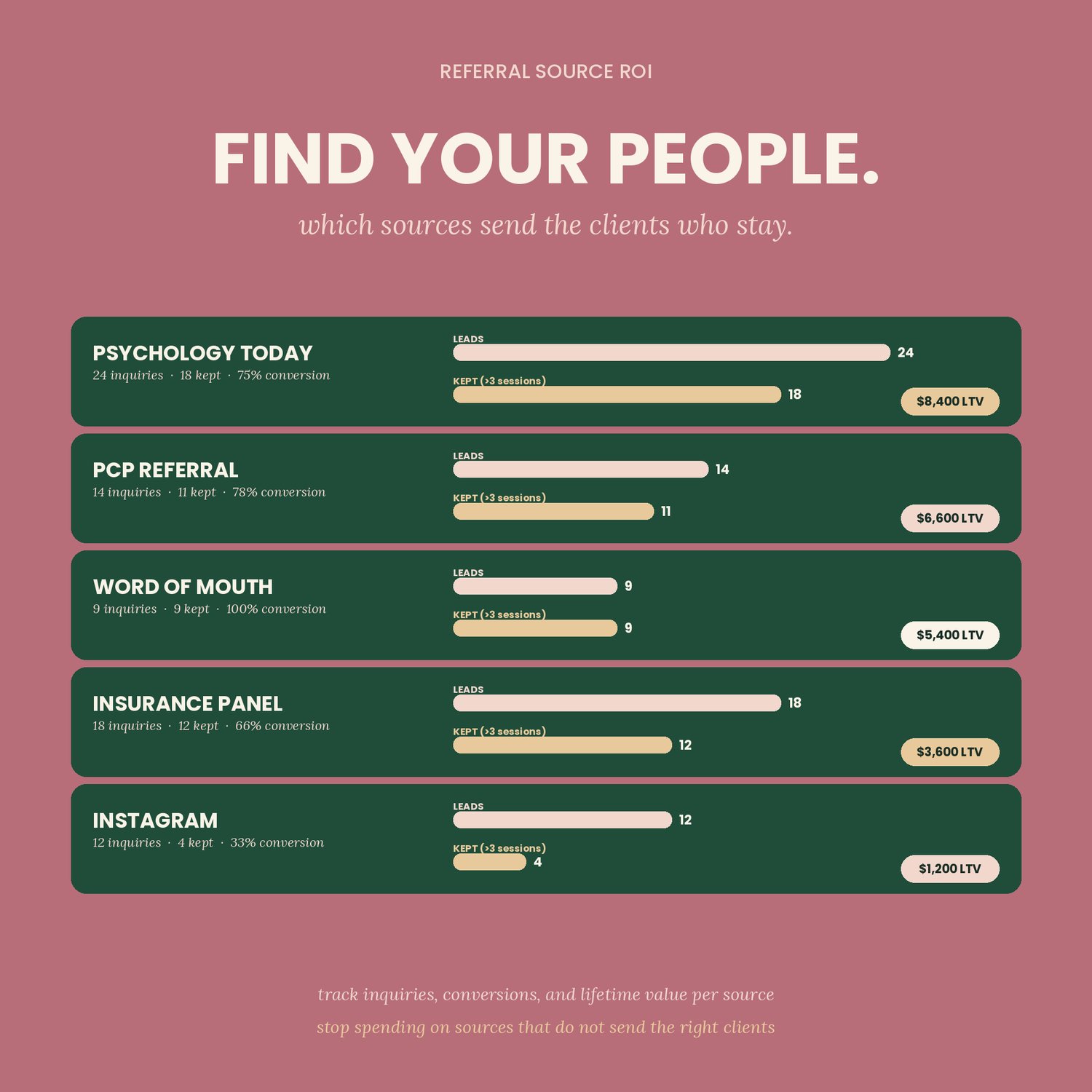
- A referral source tracker with 18 inquiry rows logging date, client initials, source, first session, and whether they stayed past three sessions, feeding a referral ROI page that ranks sources by conversion and lifetime value.
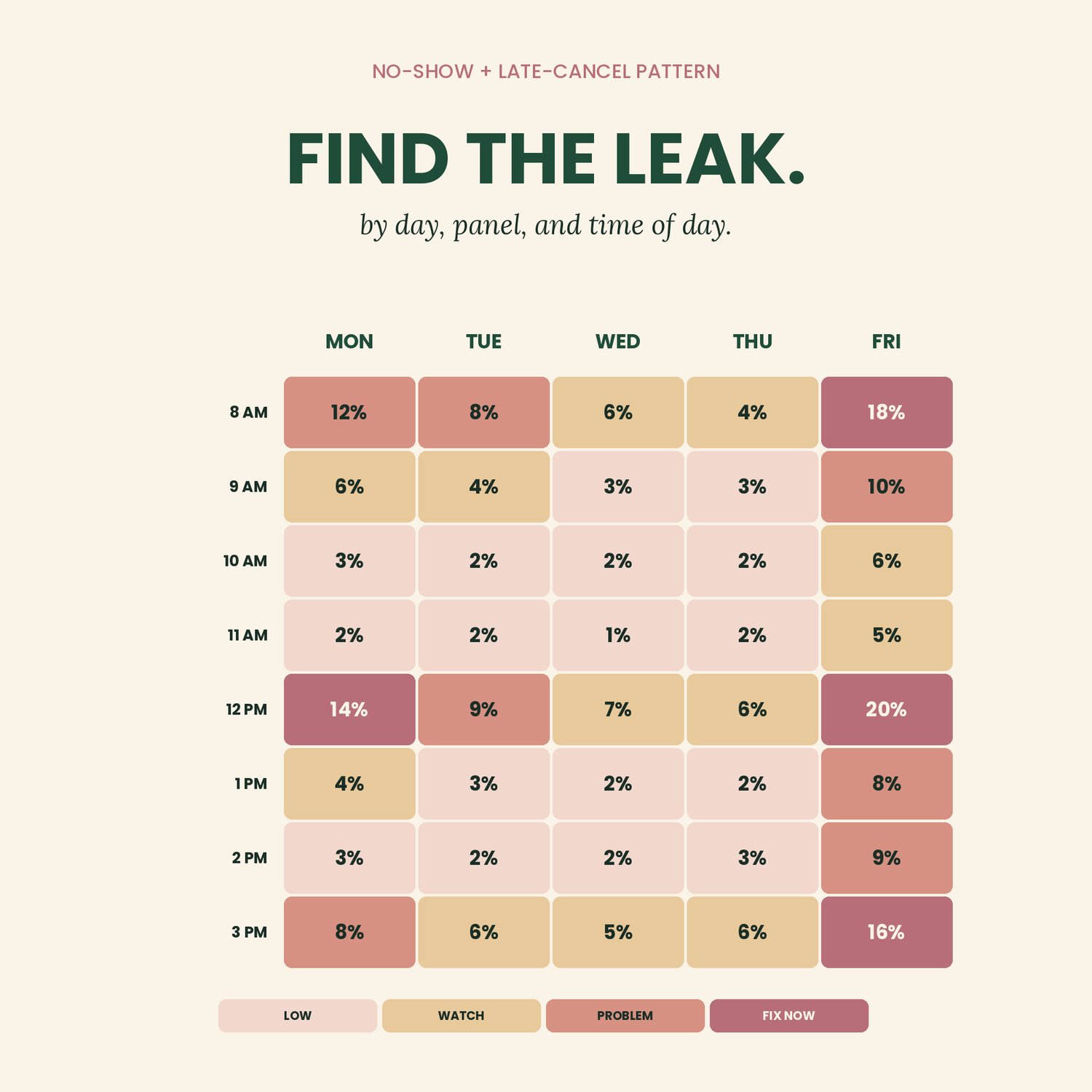
- A twelve month no-show and late-cancel log with cumulative rate and revenue lost, and a pattern analysis page breaking no-shows out by day of week, by panel, and by time of day.
- An annual revenue by panel table, twelve months across and every panel down. A self-pay versus insurance mix tracker with a cash-flow reflection. A revenue forecast worksheet for any quarter with floor and stretch totals.
- Four quarterly review pages with metric rows and three reflection sections each. An 18 item new client onboarding checklist across before, during, and after the first appointment. An annual review page with eight headline numbers and a one-paragraph synthesis, a next-year planning page with three structural questions, and a win log with 24 numbered lines.
Who it is for
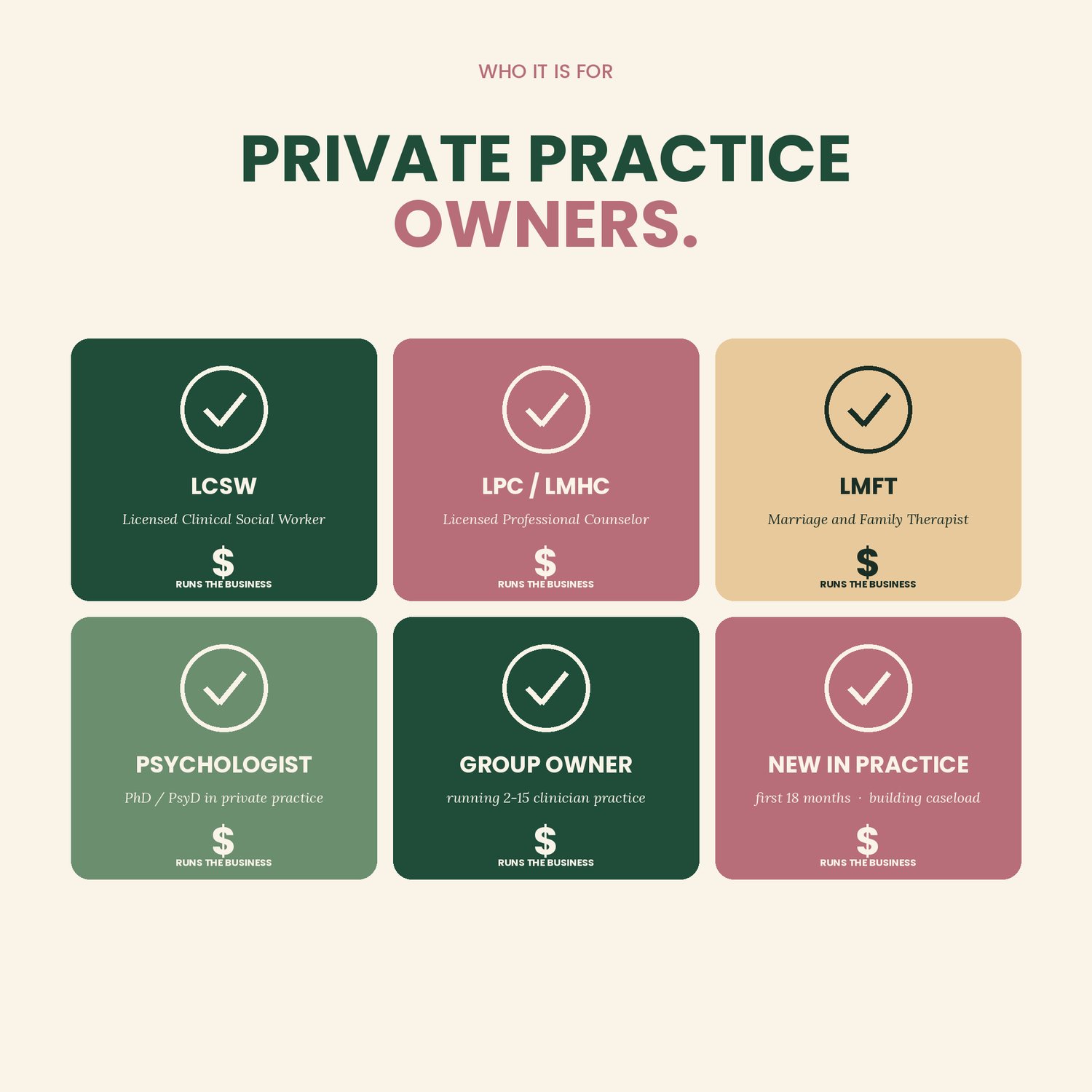
Solo practice owners who run their own books. Group practice owners tracking per-clinician benchmarks. LCSWs, LPCs, LMHCs, LMFTs, and psychologists in independent practice. Clinicians stepping out of agency work into a first private caseload. Therapists adding self-pay revenue to an insurance-heavy practice. Practice managers running monthly close for a team. Anyone preparing for an annual tax review or accountant meeting, running a hybrid in-person and telehealth practice, or building a first independent caseload under supervision.
Why it exists
Most therapists can tell you how many clients they saw last Tuesday. Almost none can tell you what percent of March revenue came from Aetna. The numbers live in three places: the schedule, the EHR billing tab, and a spreadsheet somebody built in 2019 that nobody remembers how to update. Then tax season arrives and the year gets reconstructed from memory and bank deposits.
35 pages, one PDF and one editable Word file, built around the four numbers that actually move private practice revenue: panel utilization, no-show rate, revenue by payer, and referral source ROI.
Why it is built this way
Most caseload trackers stop at sessions held and copay collected. That is the operational view. It will not tell you whether the practice is growing or whether you are running flat on the same panel mix you set up three years ago.
The monthly page puts sessions by panel next to revenue by panel, which is the only way to see that one panel is doing the work of two while another is eating slots that should go elsewhere. Most clinicians know their total open slots and cannot say which specific panel has the openings without scrolling two weeks of calendar. The roll-ups fix that.
The referral ROI page is the one almost nobody runs on themselves. Psychology Today sends 20 inquiries a quarter, word of mouth sends 9. Which is worth more? Whichever produced more clients who stayed past three sessions and generated more lifetime revenue. The page does that math on one sheet, and the answer is often not the one you expect.
No-show policies get written once at intake and never revisited. If your no-shows concentrate on Friday at 4pm with one panel, a stricter policy is the wrong fix. A different schedule block or reminder cadence is the right one. The pattern page finds the actual leak.
The forecast worksheet ties it together: expected sessions per panel times contracted rate, minus a no-show buffer built from your real rate, gives you a defensible floor for the quarter. Ten minutes once the numbers are in place.
Format
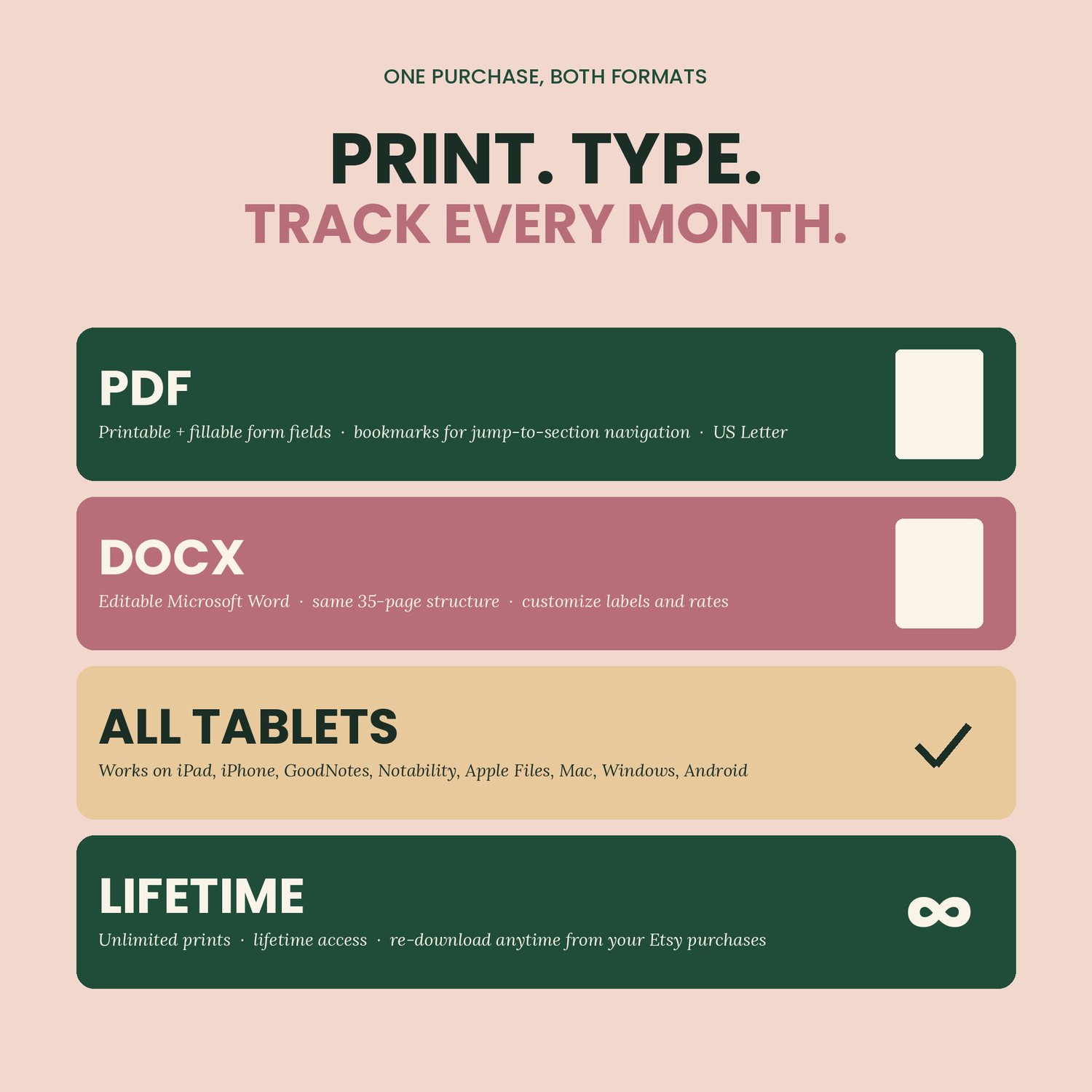
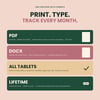
Two files at one price. A 35 page printable PDF with fillable fields and section bookmarks, and a 35 page editable Microsoft Word (.docx) with the same structure. US Letter (8.5 x 11). Works on Mac, Windows, iPad, iPhone, GoodNotes, Notability, Apple Files, and Android. Print, fill on screen, or annotate on tablet. Undated, so the same files work every year. Lifetime access, unlimited prints.
Updated 2026
The panel reference table lists the major commercial insurers (Aetna, Blue Cross, Cigna, United, Medicare, Medicaid) plus self-pay and out-of-network superbill rows. The mix tracker accounts for the cash-flow gap between same-day self-pay collection and the 14 to 60 day insurance claim turnaround that defines practice cash flow. The referral ROI page reflects the current channel mix: Psychology Today, panel directory listings, PCP referrals, word of mouth, Instagram, Facebook groups, and therapist-to-therapist referrals.
How to use it
Fill the annual targets page and the panels reference at the start of the year. Those two anchor everything else. At each month's end, fill that month's page, about ten minutes if your calendar and billing are current. At each quarter's end, fill the quarterly review and the matching panel utilization detail. Three times a year, run the referral ROI page and the no-show pattern page, which pull from the running trackers and tell you what to change about intake and scheduling. At year-end, work through annual revenue by panel, the self-pay mix, the annual review, next-year planning, and the win log.
The Word version is for customizing the panel list or saving a filled copy per year. The PDF is for printing or filling on an iPad.
Instant digital download. No physical product ships. Message us if anything does not work.