

Therapist Practice Operations Bundle (2026)
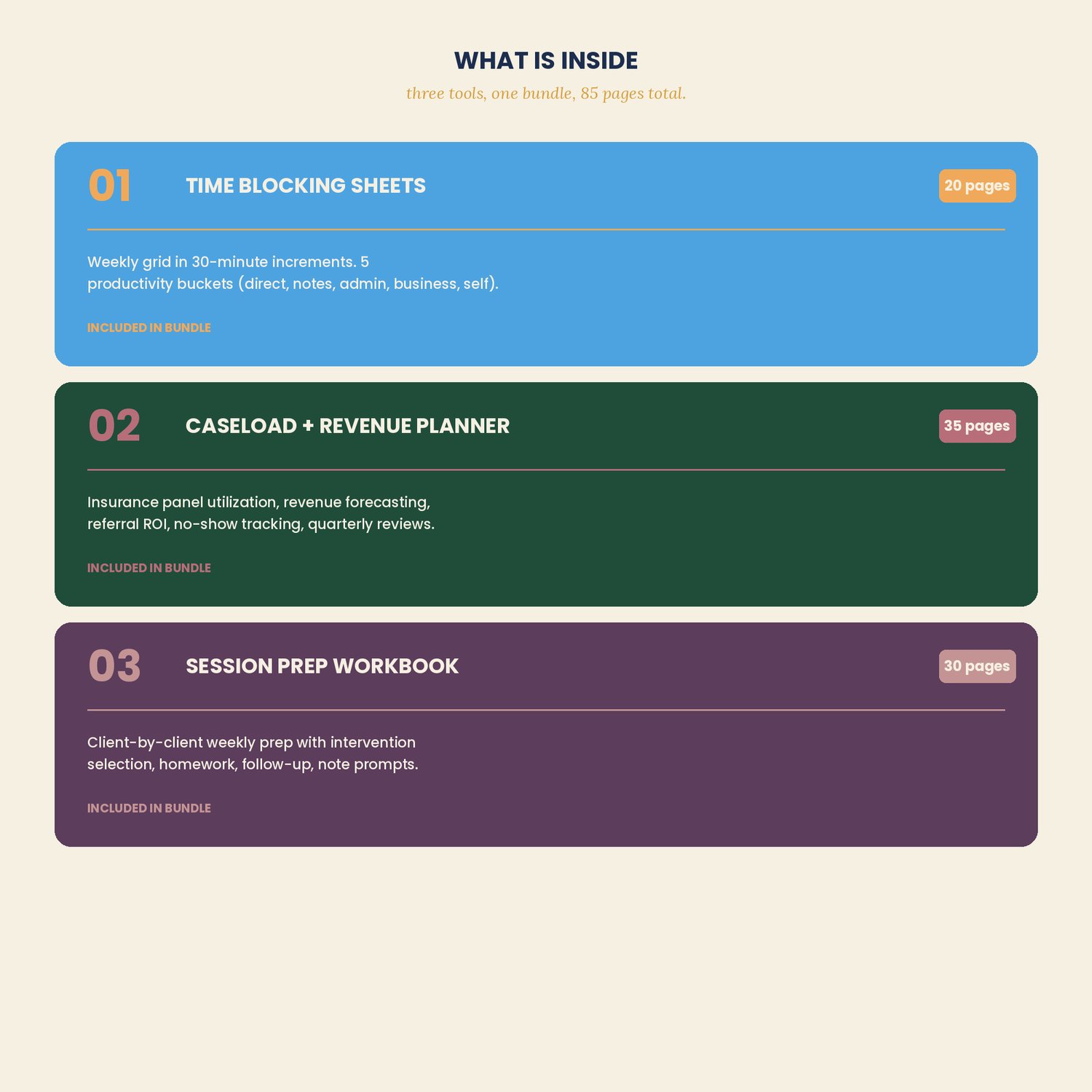
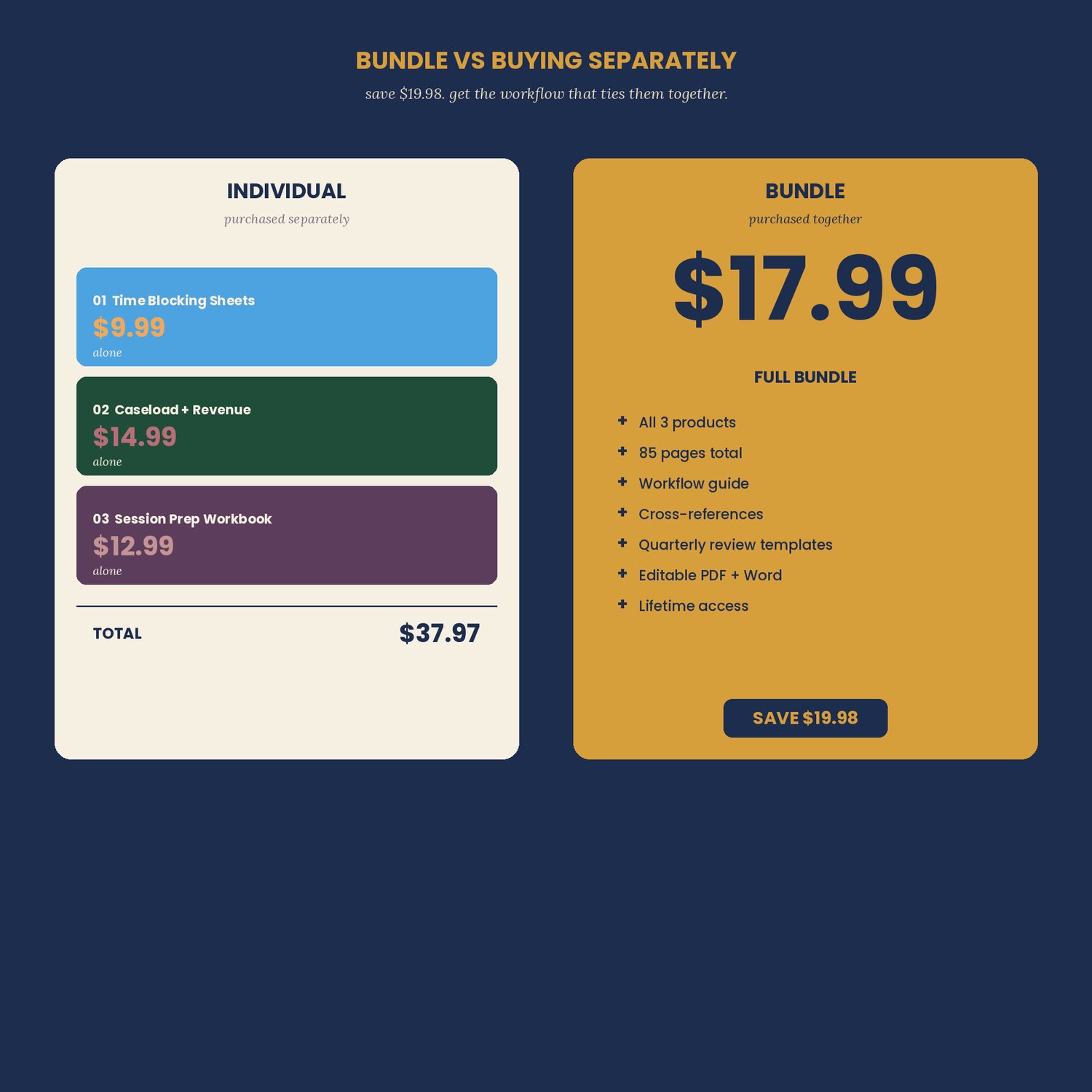
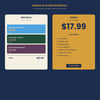
Three practice tools merged into one 91 page bundle: time blocking sheets, a caseload and revenue planner, and a session prep workbook, tied together by one weekly workflow.
What is in the bundle
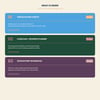
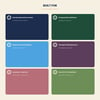
- Bundle introduction (6 pages): how it works, the weekly workflow, a which-tool-when decision tree, why these three belong together, and what follows.
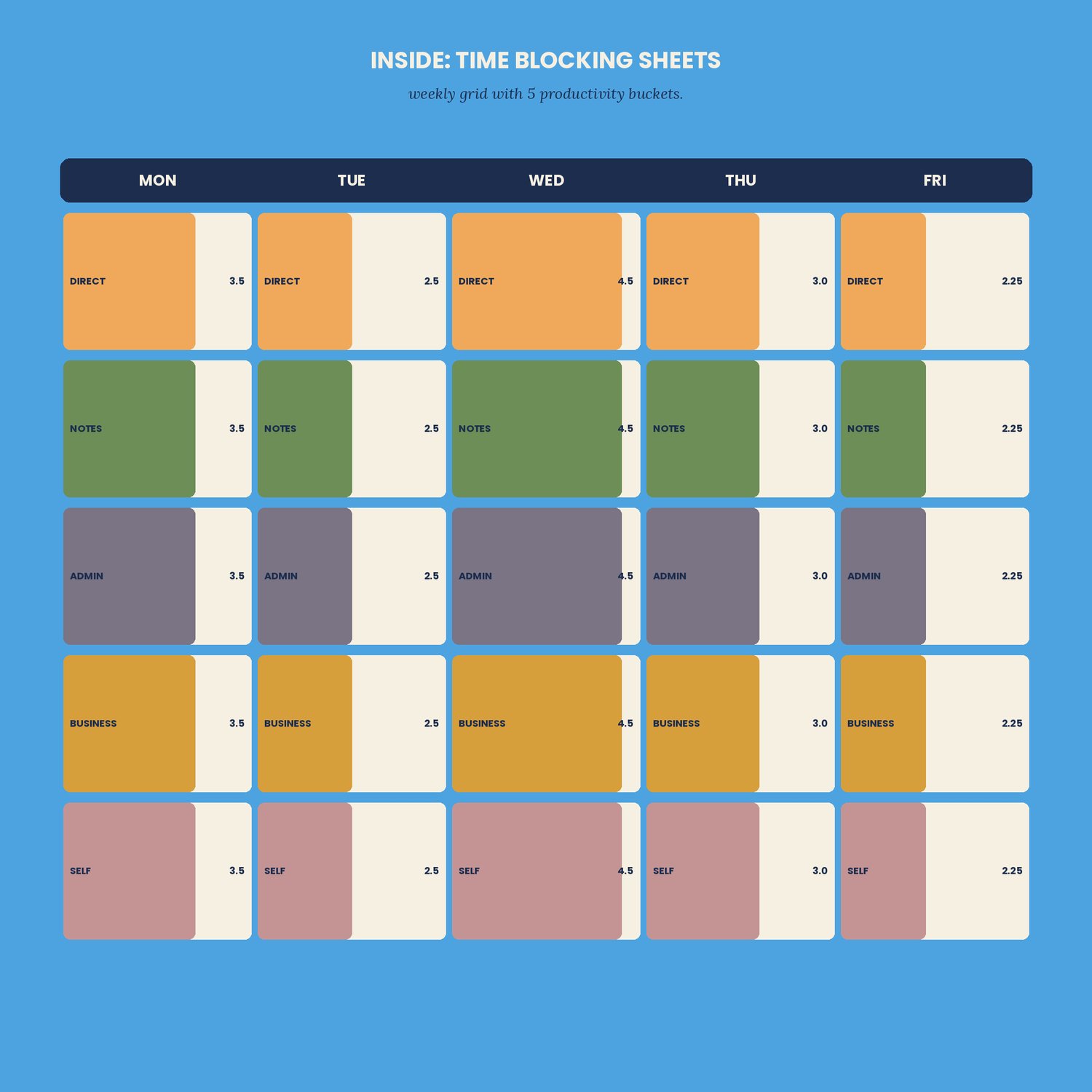
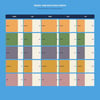
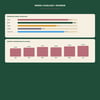
- Tool 01, Time Blocking Sheets (20 pages): a weekly grid in 30 minute increments across five productivity buckets (direct client time, notes, admin, business, self-care), a daily summary tracker, a four week pattern review, and a burnout watch checklist.
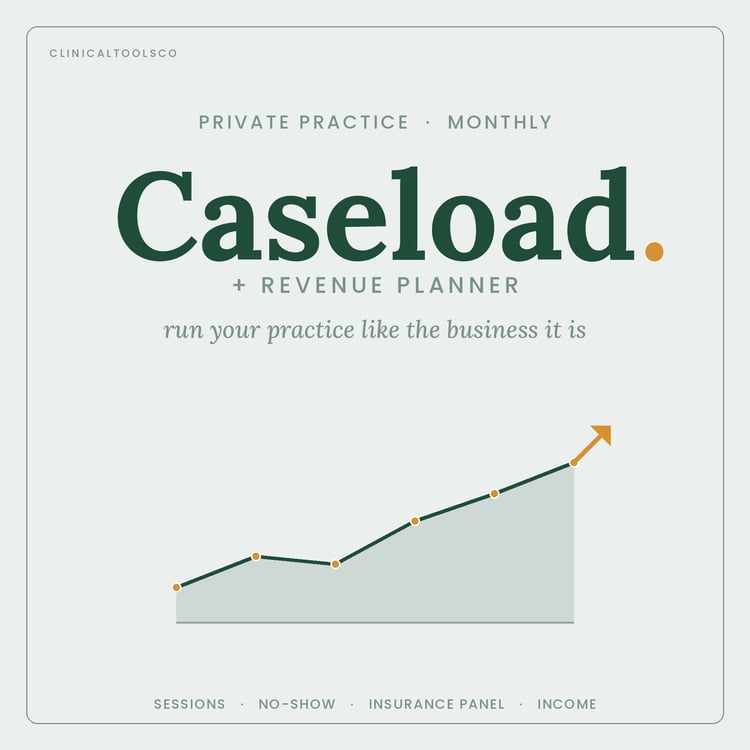
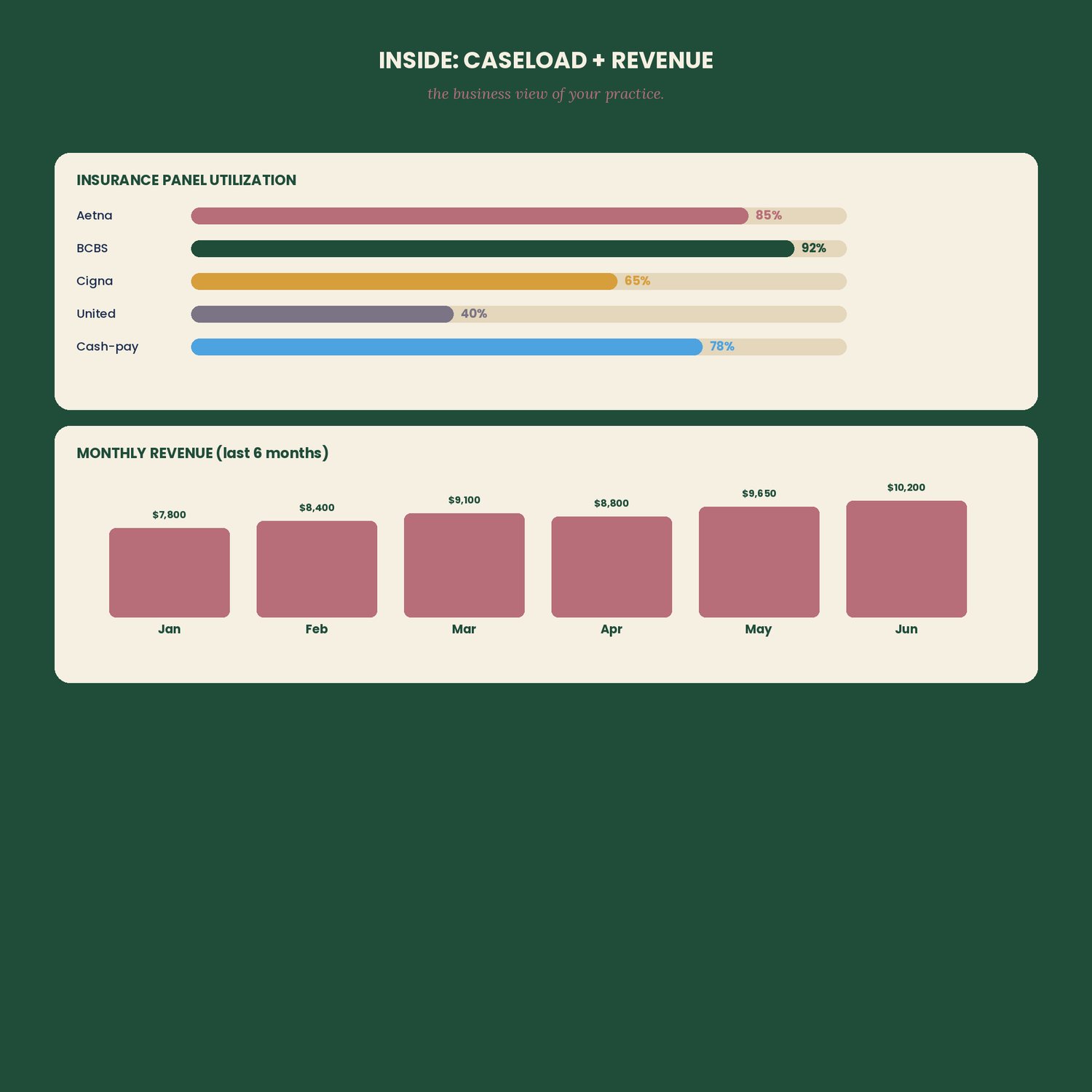
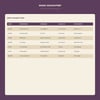
- Tool 02, Caseload and Revenue Planner (35 pages): annual targets, twelve monthly caseload pages, panel utilization trackers at annual and half-year views, a referral source and ROI tracker, a twelve month no-show log with pattern analysis, revenue by panel plus payer mix and forecast, four quarterly reviews, an onboarding checklist, annual review, next-year planning, and a win log.
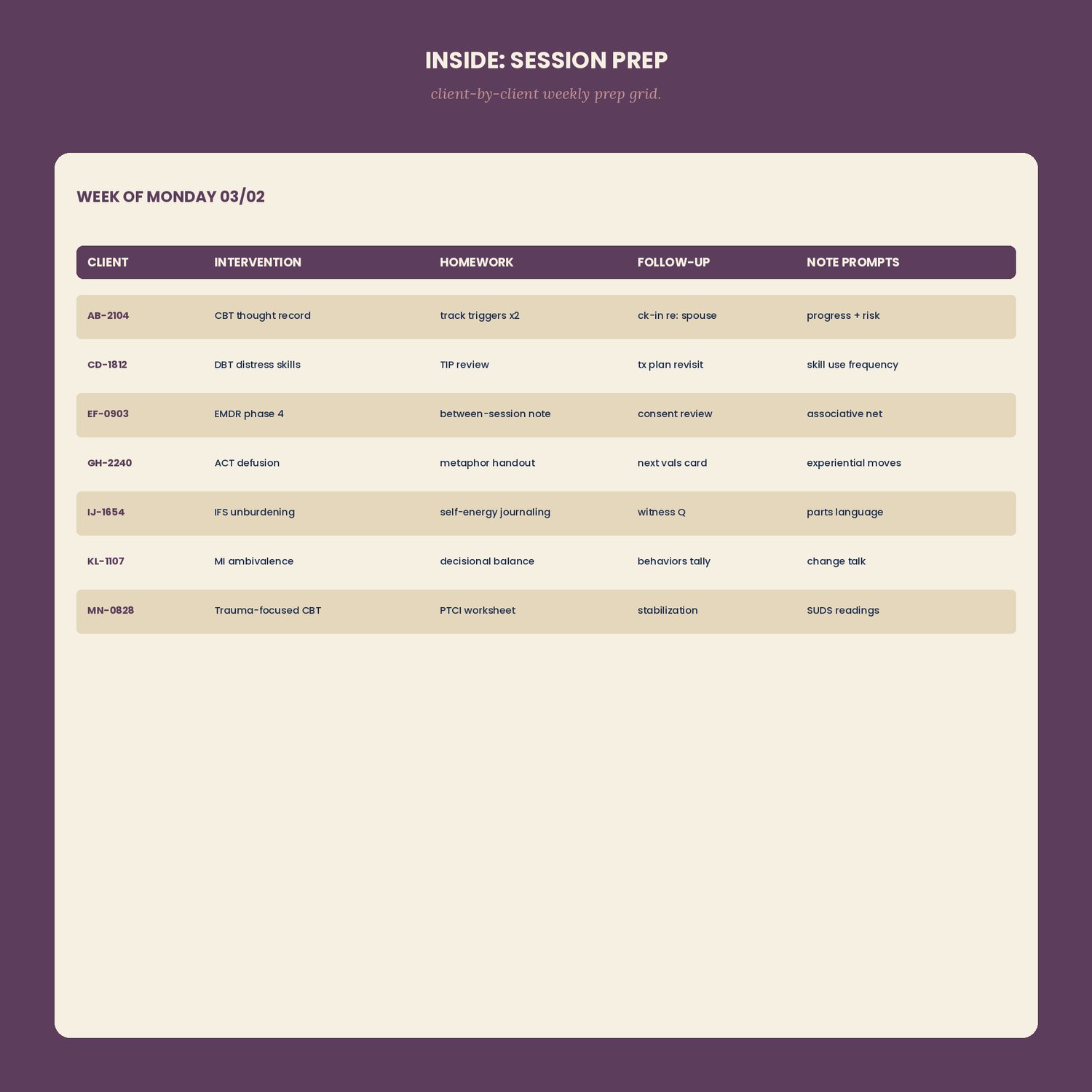
- Tool 03, Session Prep Workbook (30 pages): four weekly session prep grids running client by client with intervention, homework, follow-up, and note prompts; two active caseload tracker pages; a four page intervention library covering CBT, DBT, ACT, IFS and EFT; homework and follow-up logs; pre-session check-in and post-session reflection templates; note-writing prompts; risk and crisis prep; two supervision log pages; and the Sunday night planning and Friday wrap pages.
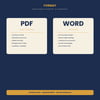
- Master PDF bookmarked by tool, and a master editable Word file with all three combined for customization.
Who it is for
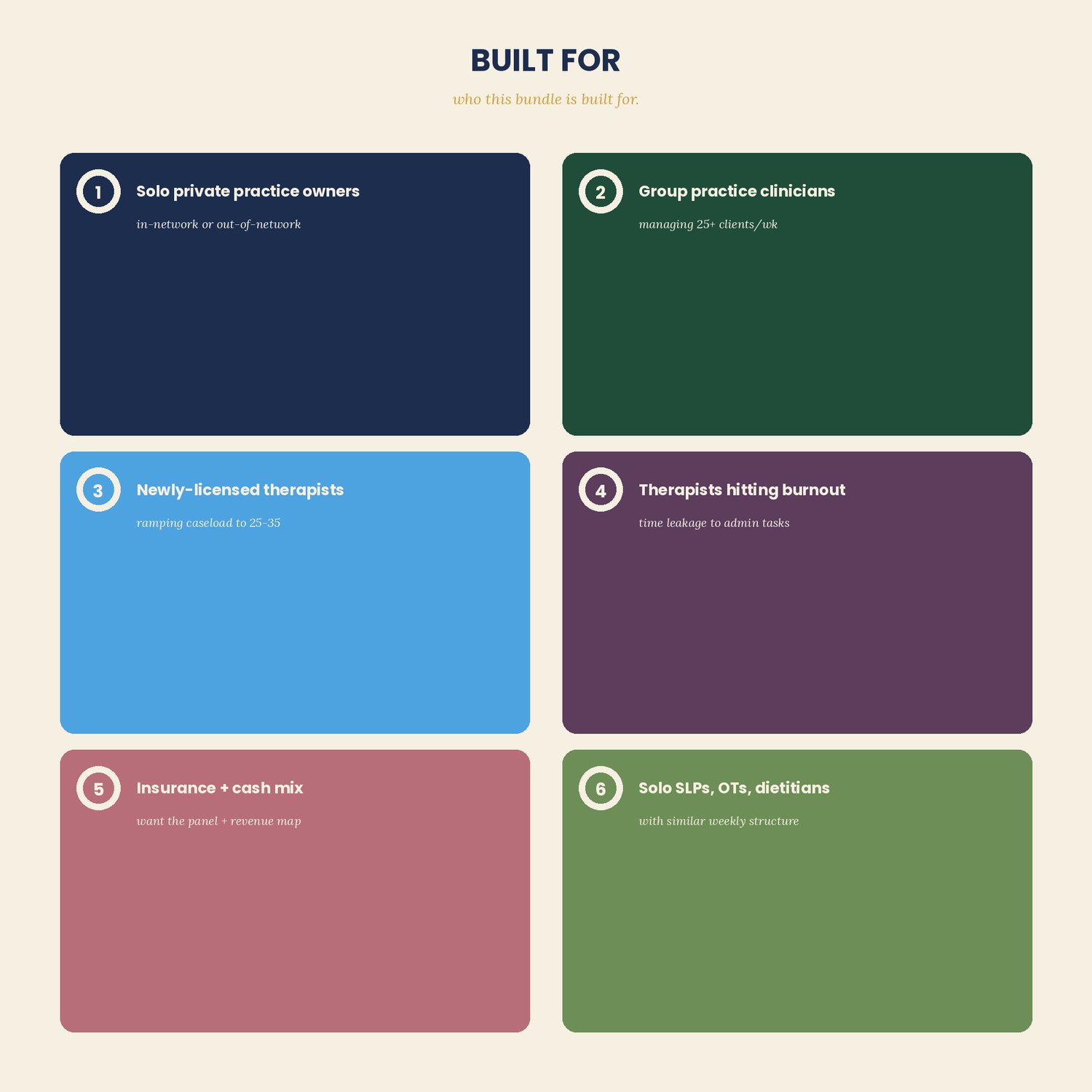
Solo private practice owners, in-network, out-of-network, or mixed. Group practice clinicians carrying 25 or more clients a week. Newly licensed therapists ramping toward a full caseload. Therapists feeling the burnout that comes from admin and time leakage rather than from the clinical work. Practices with an insurance and cash mix that need the panel and revenue map. Pre-licensure clinicians with caseload management responsibilities. Solo SLPs, OTs, and dietitians with a similar weekly structure. Anyone whose practice management software handles billing but not clinical prep or self-care planning, and anyone who has tried three separate planners and found none of them fit.
Why it exists
Private practice runs on three operational layers and almost nothing addresses them together. The weekly schedule: when sessions happen, when notes get written, where admin and self-care land. The business math: which panels are filling, where revenue comes from, where no-shows erode the bottom line. And the clinical work: which intervention with which client, what homework you assigned, what the next session needs to pick up.
Generic productivity planners cover the schedule. Practice management software covers the math. Clinical reference books cover the interventions. None of the three covers the other two, so the same Sunday night planning ritual ends up happening in three different notebooks.
91 pages. Three tools merged into one master PDF and one master Word file, with a six page introduction carrying the weekly workflow that ties them together.
Why it is built this way
The three tools share one unit of analysis: the session. Each session is a unit of clinical work that Tool 03 plans, a unit of time that Tool 01 places in the week, and a unit of revenue that Tool 02 categorizes by panel. Moving between tools never requires translating between data models, which is the thing that makes separate tools cost an hour a week.
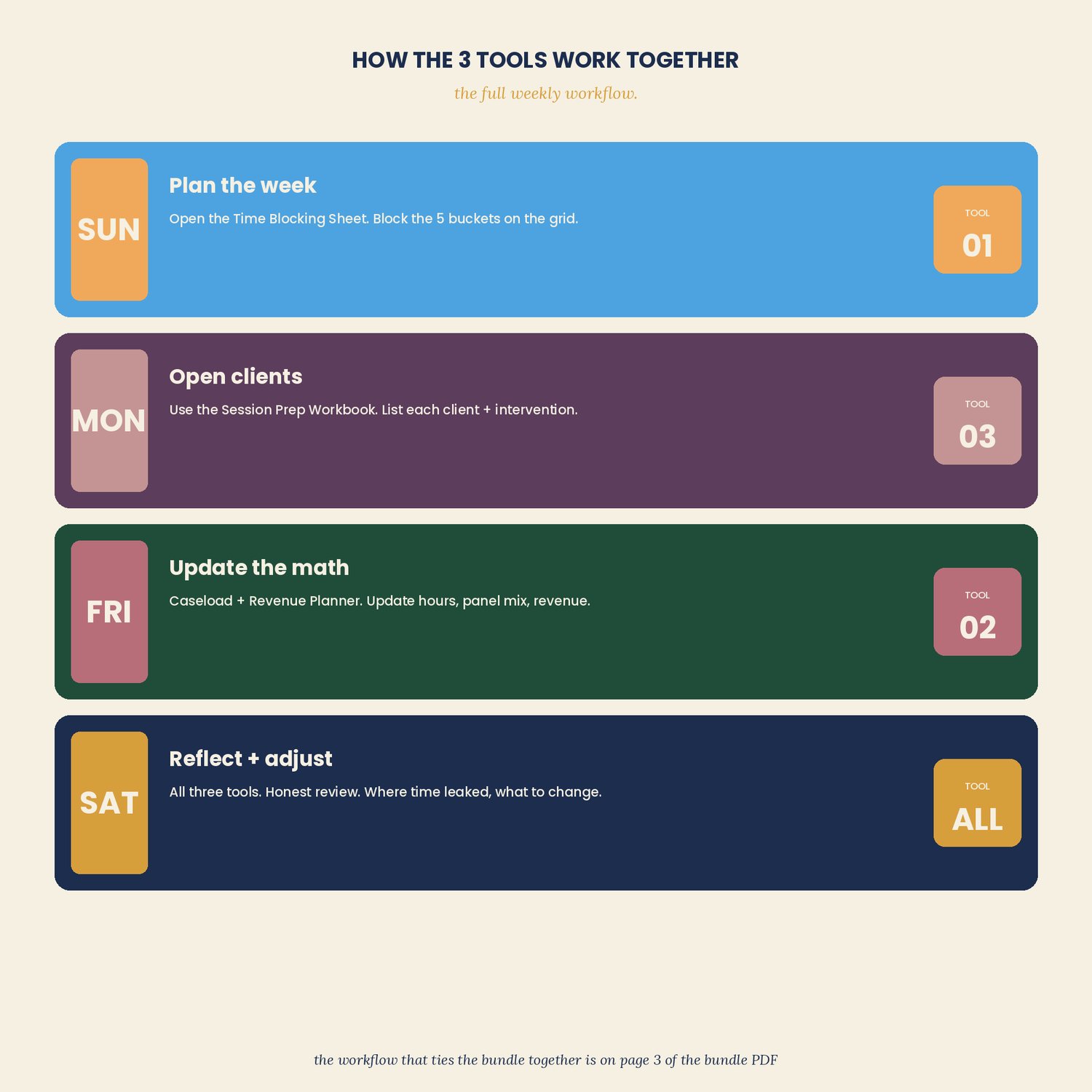
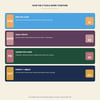
The workflow is the actual product. Sunday: Tool 01 and Tool 03 together, block the week and prep each client, 45 to 60 minutes. Friday: Tool 02, update hours by panel, no-shows, and revenue, 15 minutes. Saturday: all three for an honest look at where time leaked, 30 minutes. Most people report the rhythm goes automatic around week six.
The Tool 01 grid uses 30 minute increments rather than the 15 minute ones that produce false precision, and five buckets rather than the four-bucket schemes that quietly omit self-care. The daily summary is tuned to catch the common leaks: notes after the last client, admin eating the lunch hour, business work pushed to the weekend.
The Tool 02 panel utilization views are for therapists who take insurance and need to see which panels are full and which are bottlenecking. The referral ROI page is the one that decides which networking to keep and which to drop.
The Tool 03 intervention library is a quick reference for Sunday prep, not a treatment manual. The client-by-client grid is what turns Sunday from a wall into a 30 minute planning session.
Format
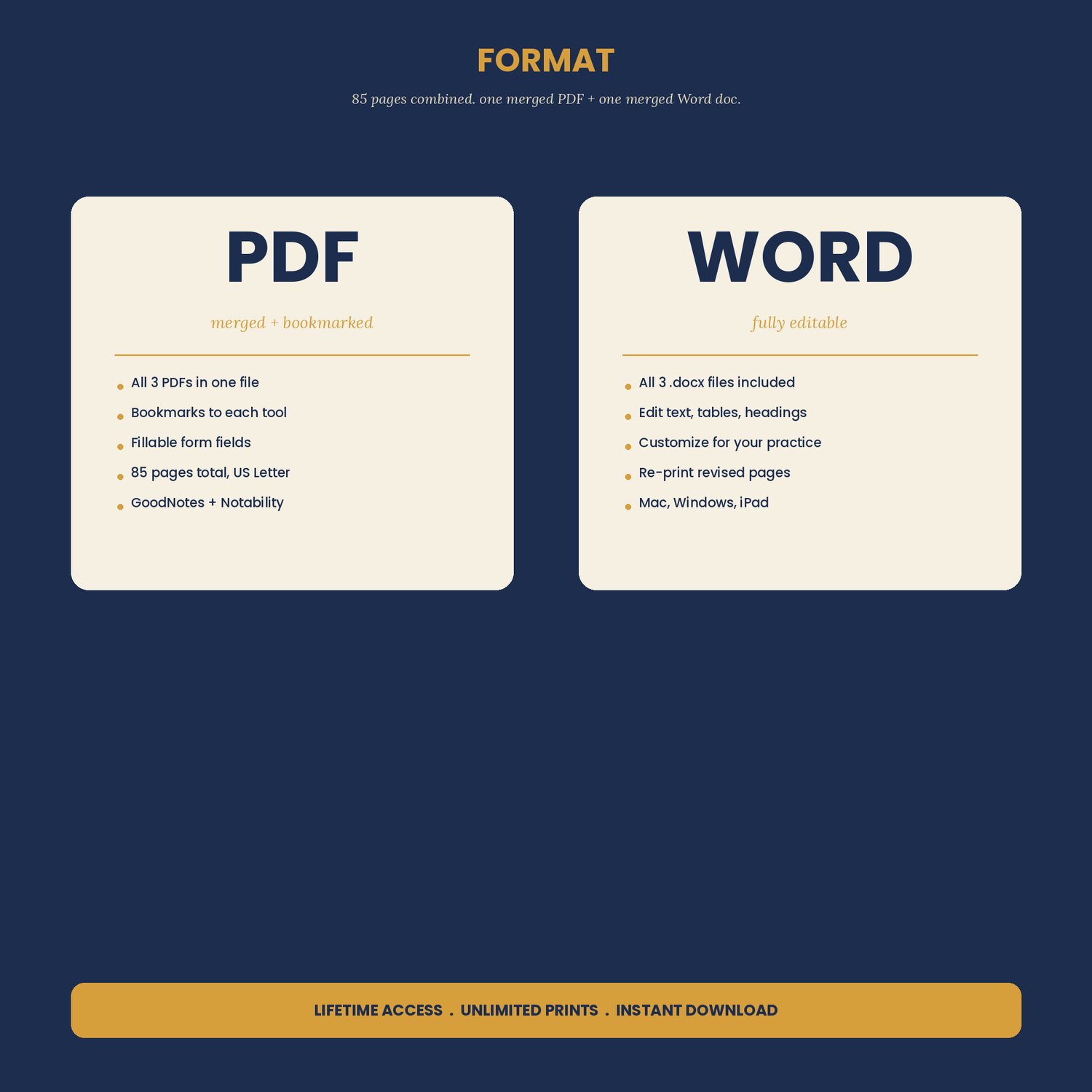
Editable, fillable PDF, 91 pages, bookmarked by tool. Editable Microsoft Word (.docx) with all three tools combined. US Letter (8.5 x 11). Works on Mac, Windows, iPad, GoodNotes, and Notability. Print or fill on screen. Lifetime access, unlimited prints.
Updated 2026
The Caseload and Revenue Planner references 2026 CPT codes where relevant and reflects current insurance panel realities. The Session Prep Workbook references DSM-5-TR criteria and the current evidence base for CBT, DBT, ACT, IFS, and EFT. The Time Blocking Sheets are calendar-agnostic and work for any year.
How to use it
Read the six page introduction first. Skim each tool but do not try to run all three at once. Most people start with Tool 01 in week one, layer Tool 03 in week two, and add Tool 02 in week three, with all three part of the rhythm by week four. Then run the Sunday, Friday, Saturday cycle for six weeks before deciding whether it works for you.
Instant digital download. No physical product ships. Message us if anything does not work.