
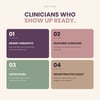

Therapist Session Prep Workbook (2026)
A 30-page session prep workbook for therapists: weekly prep grids, a caseload tracker, an intervention library by modality, and homework and follow-up logs.
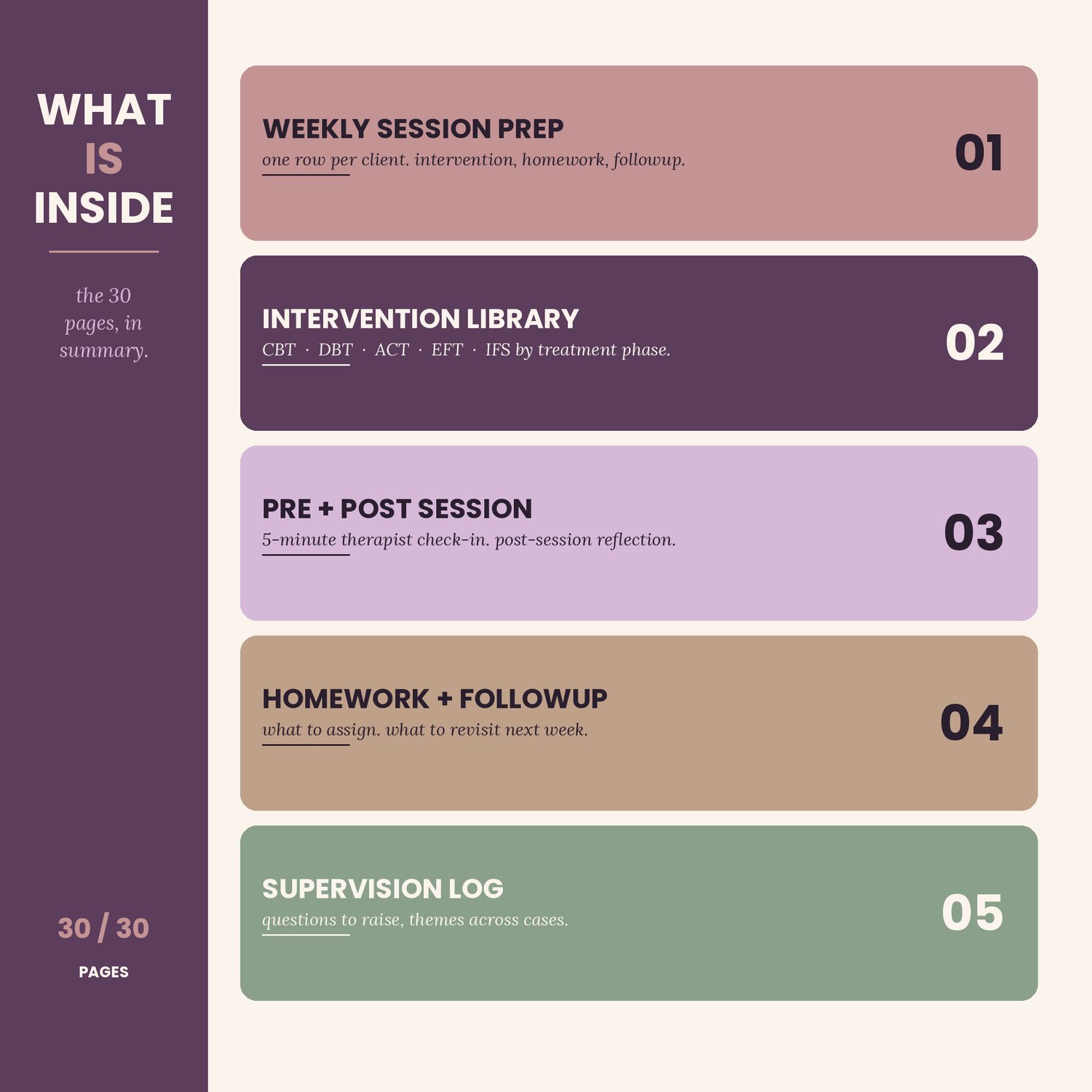
What is in the workbook
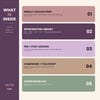
- 30-page workbook with cover, how-to guide and back cover
- Treatment phase reference card mapping the four phases (assessment, active treatment, consolidation, termination) to what changes in your session prep at each
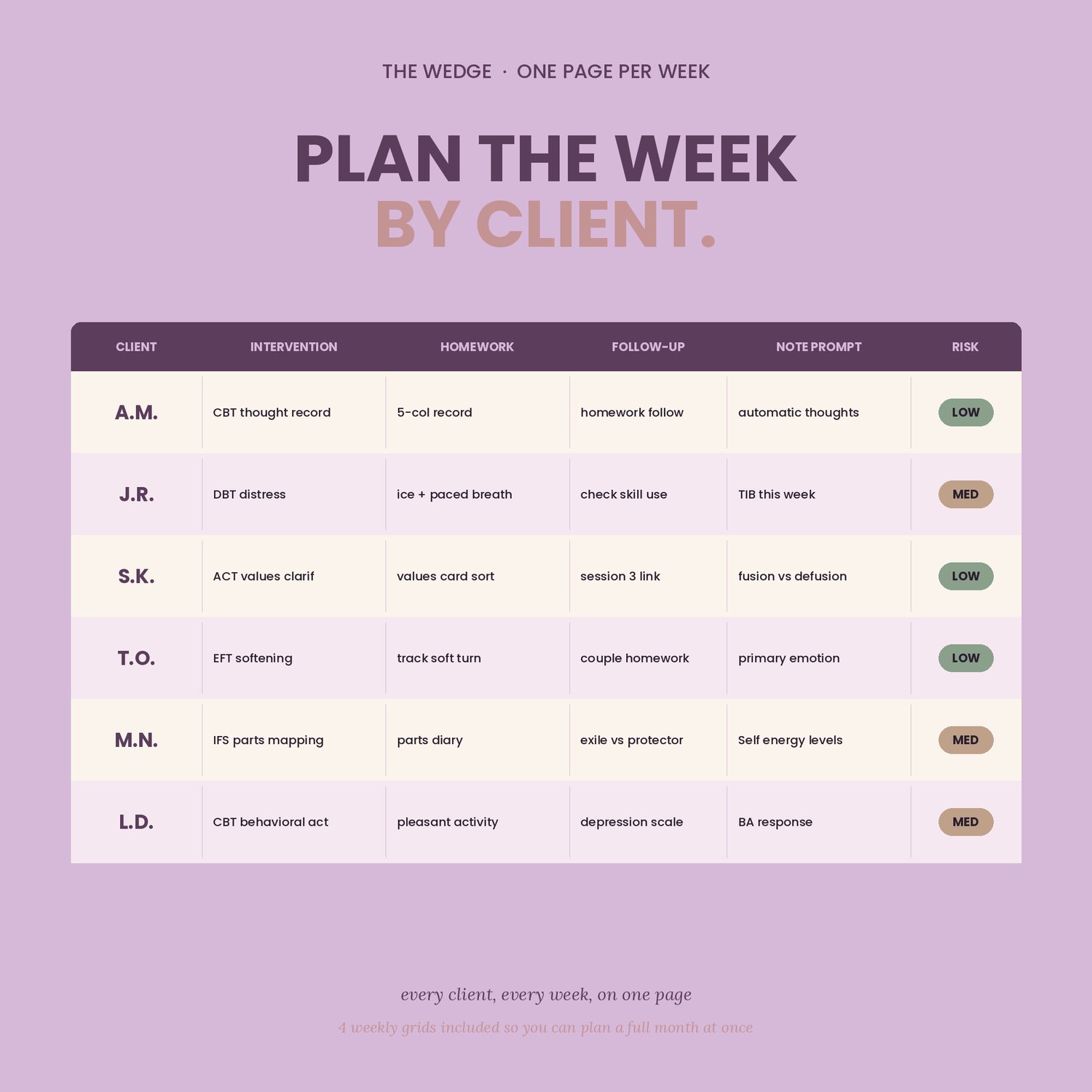
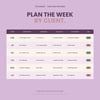
- Four weekly session prep grids, one per week of the month, with rows for client, phase, intervention, homework, follow-up, note prompt and risk
- 18 client rows per weekly grid, so the full caseload fits on one page
- Active caseload tracker across two pages with 36 client slots, showing phase, weeks in care, diagnosis and next milestone
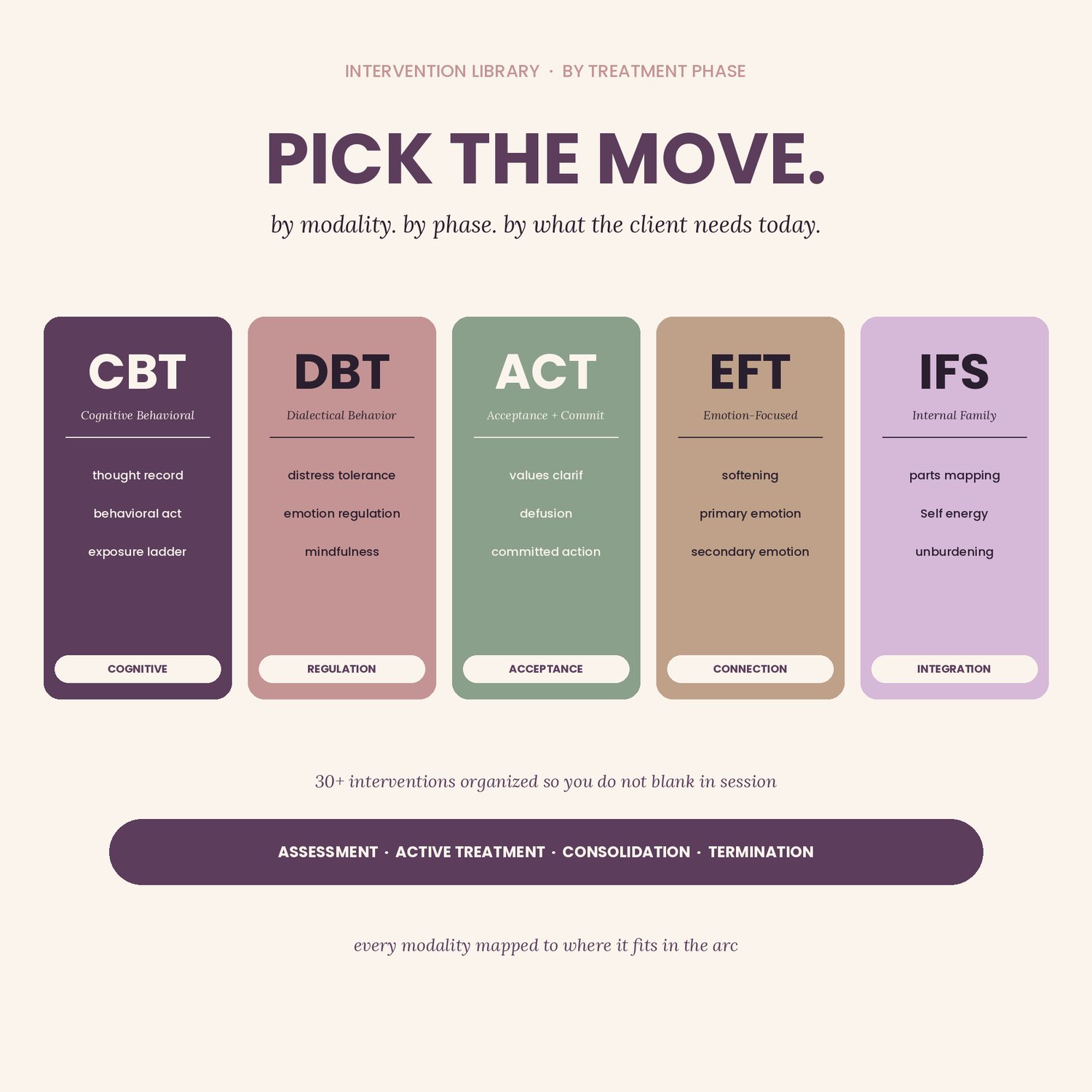
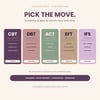
- Intervention library by modality across CBT, DBT, ACT, IFS and EFT, with 28 specific interventions each carrying a purpose and a use-when note
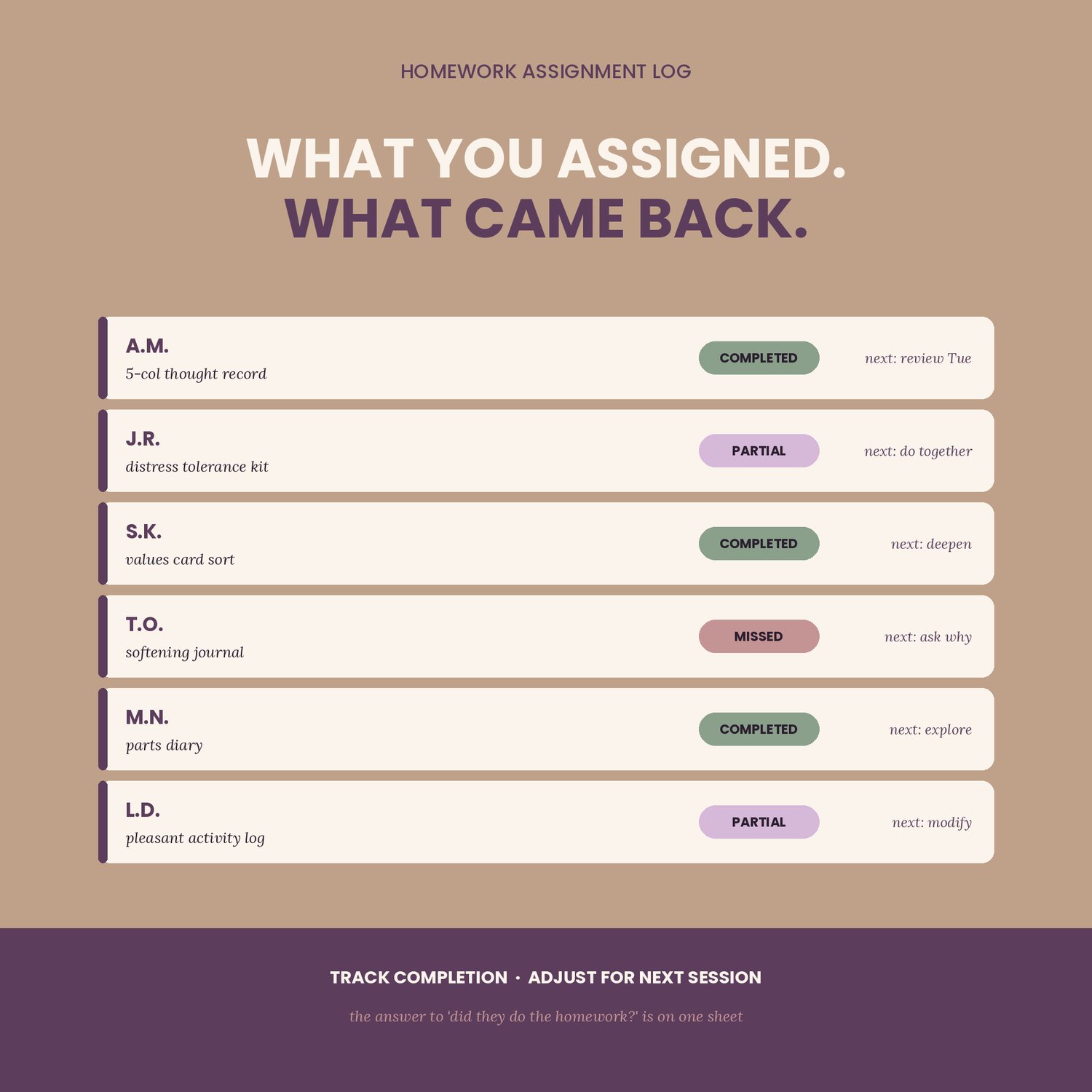
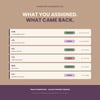
- Homework assignment log across two pages with 44 entry rows, showing status and next-week action
- Follow-up reminders log across two pages with 44 entry rows tracking what to revisit
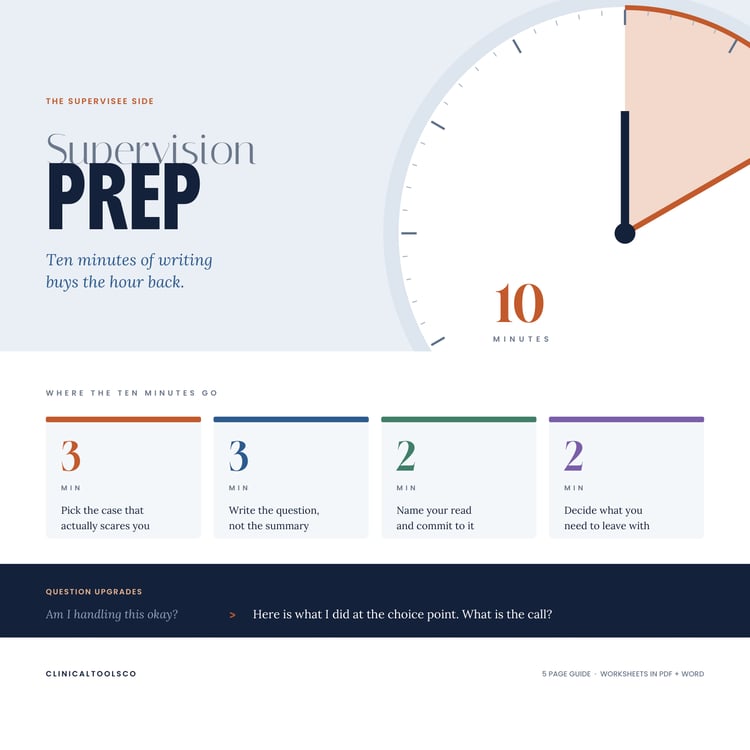
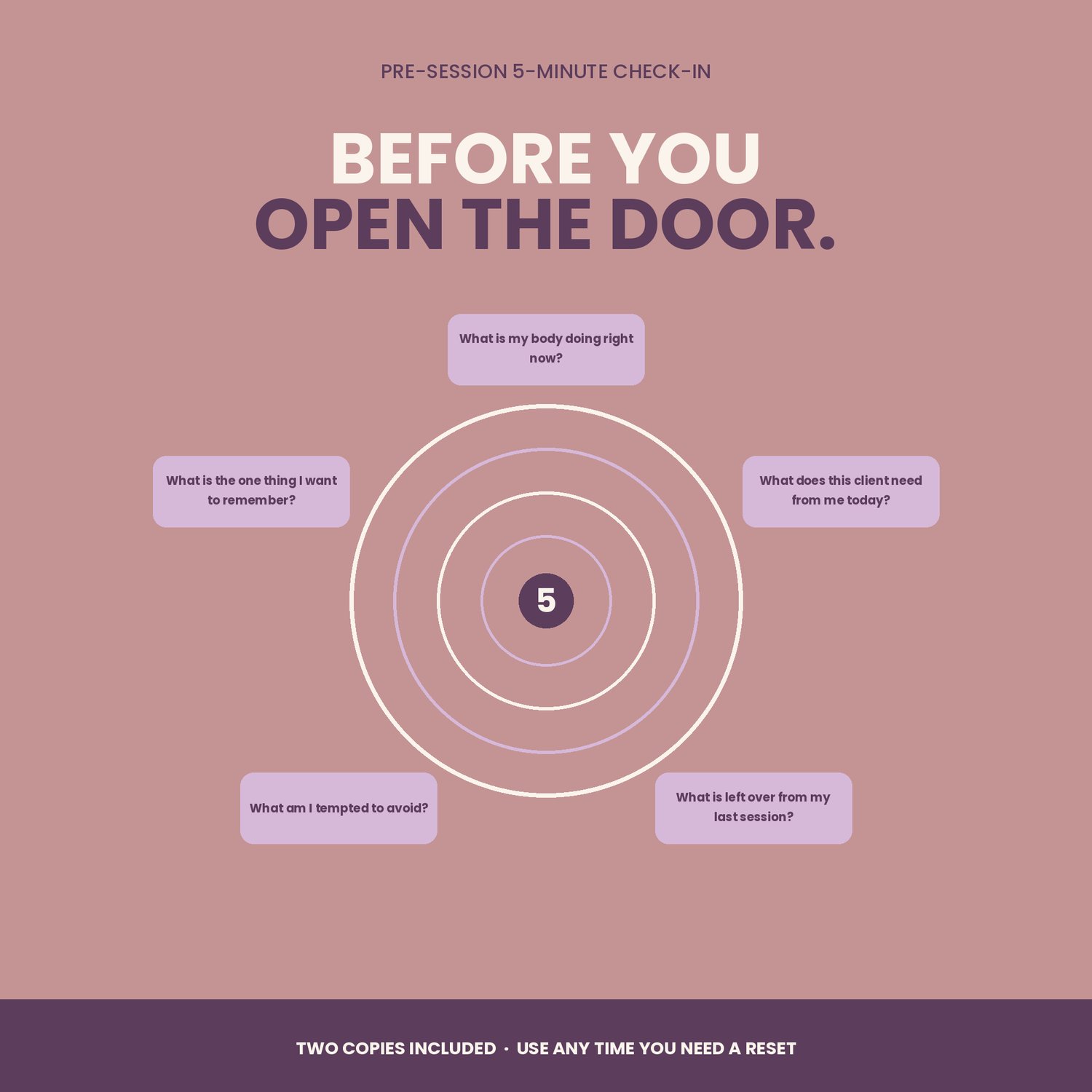
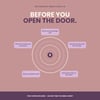
- Pre-session five-minute therapist check-in template with the five questions to ask yourself before opening the door
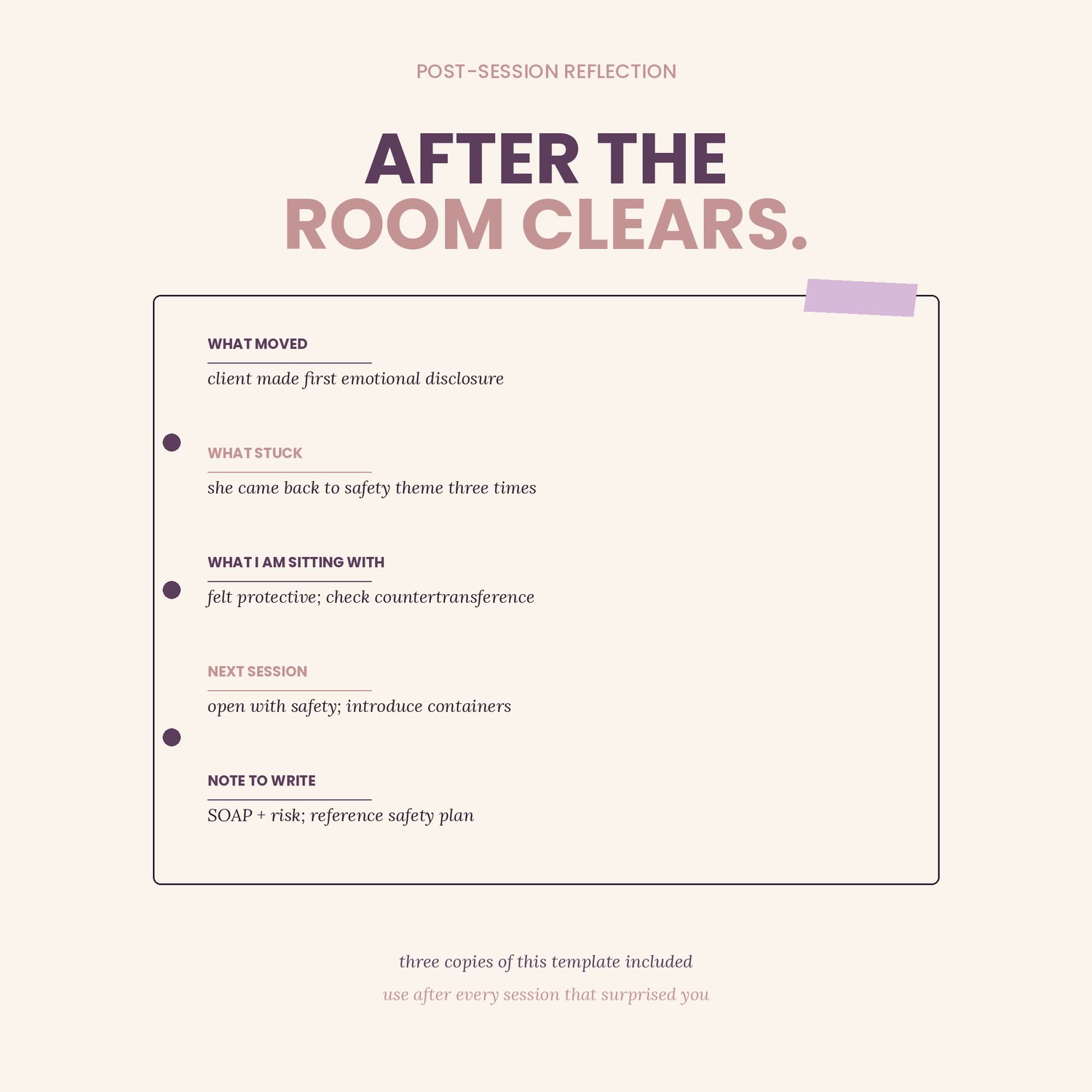
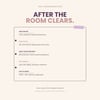
- Post-session reflection template with five structured prompts including what moved, what stuck and what I am sitting with
- Note-writing prompt sheet covering the SOAP, DAP and BIRP frameworks
- Risk and crisis prep checklist with 15 items across before, during and after the session
- Supervision question log across two pages with 44 entry rows for tracking themes across cases
- Sunday-night pre-week planning page with six prompts that change Monday, and a Friday-afternoon wrap with six prompts to bookend the week
- A free notes page for journaling, case notes or anything off-template
Who it is for
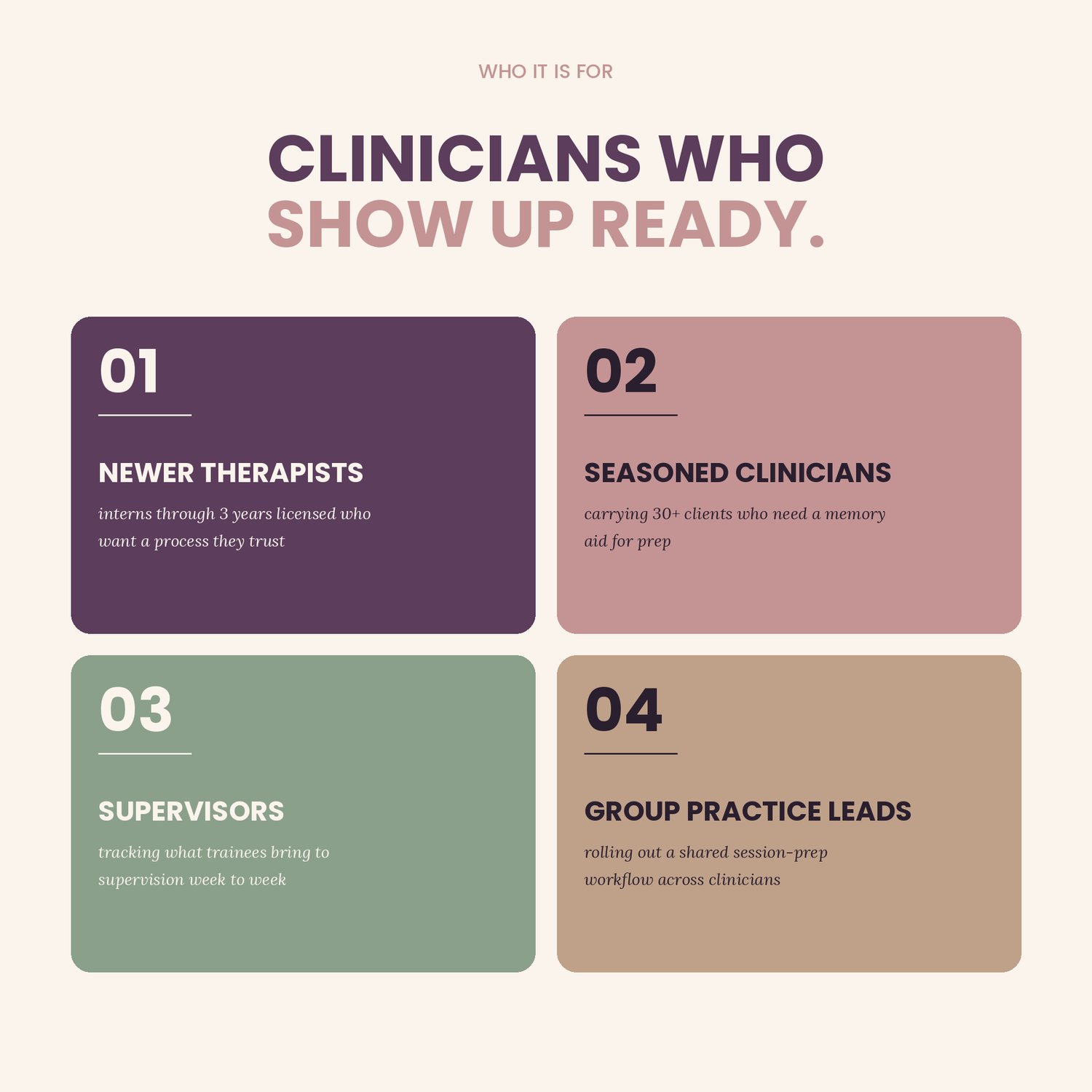
- Newer therapists, from interns through three years licensed, who want a process they can trust
- Seasoned clinicians carrying 30 or more clients who need a memory aid for session prep
- LCSWs, LPCs, LMHCs, LMFTs and psychologists in private practice or agency settings
- Supervisors tracking what trainees bring to weekly supervision
- Group practice leads rolling out a shared session-prep workflow across clinicians
- Predoctoral and postdoctoral interns building their first independent caseload
- Therapists returning from leave or moving between settings
Why it exists
You have a 9 AM with a client you have not seen in three weeks. You opened the schedule at 8:55. You cannot remember what you assigned for homework, which intervention you started, or what the client said in the last five minutes of the last session that you wrote on a sticky note that is now gone. You will spend the first ten minutes of the session catching up to where you already were. Again.
I built this workbook after my third year in practice, when my caseload climbed past 25 and the wall-calendar-plus-memory system finally broke. I tried Notion. I tried a therapy-specific EHR. The EHR had everything but took too long to open. The Notion build collapsed because clinical work is too messy for that level of structure. What I needed was something I could fill out in five minutes on a Sunday night, glance at on Monday morning, and trust.
30 pages. One printable PDF and one editable Word document. Built around the four things you actually need to remember before every session: the intervention, the homework, the follow-up and the note prompt.
Why this is different
Most therapist planners are caseload trackers. They count sessions and tally hours. That is the administrative view of clinical work. This workbook is the clinical view: what am I actually doing with each client this week.
The weekly session prep grid is the wedge. One row per client, six columns. By 8 PM on Sunday you have a snapshot of what each session will hold, what homework you assigned last week, what to follow up on and what to write in the note. By Monday morning you walk in already knowing the moves.
The intervention library is the second wedge. Most clinicians know two or three interventions cold and reach for them every time because the others slip out of memory. The library gives you 28 interventions across five modalities with a one-line purpose and a use-when note.
The pre-session five-minute check-in is the third wedge. Five questions before the client walks in: what is my body doing, what does this client need from me today, what is left over from last session, what am I tempted to avoid, what do I want to remember. The answers shape the session more than the treatment plan does.
The post-session reflection is the fourth wedge. Five prompts to capture what moved, what stuck, what you are sitting with, what to do next session and what to write in the note. The note prompt alone cuts documentation time, because you have already drafted the clinical content while it is fresh.
The Sunday-night planning page and the Friday-afternoon wrap bookend the week. Twenty minutes total, and together they change how Mondays and Fridays feel.
Format
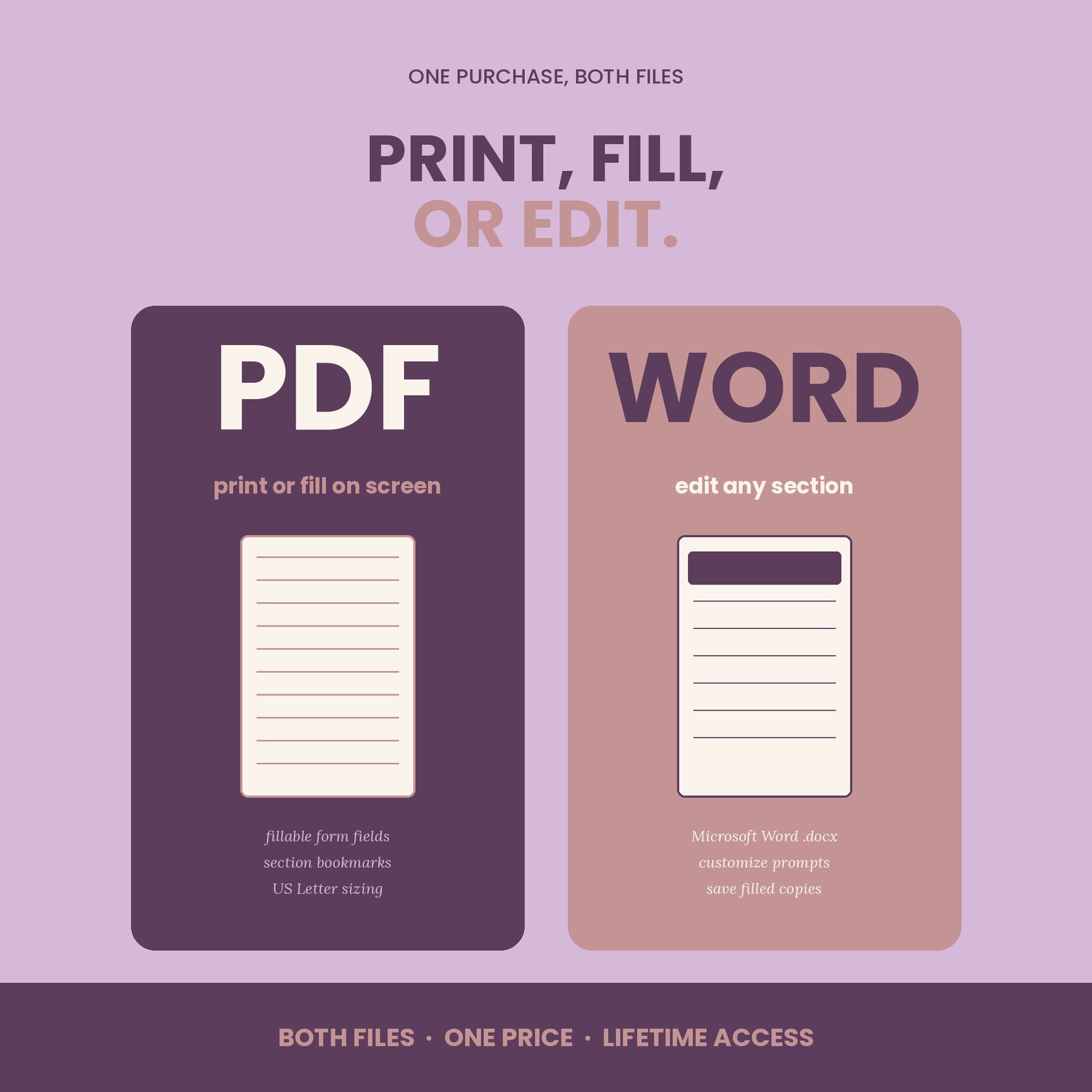
- Two files at one price: a printable PDF and an editable Word document
- 30-page printable PDF with fillable form fields and section bookmarks
- 30-page editable Microsoft Word (.docx) with the same section structure
- US Letter sizing
- Works on Mac, Windows, iPad, iPhone, GoodNotes, Notability, Apple Files and Android
- Lifetime access, unlimited prints
- Undated. Use any year, and reuse the same files indefinitely.
Updated 2026
Reflects current 2026 clinical practice across the five modalities most clinicians blend in real work: CBT, DBT, ACT, EFT and IFS. The intervention library covers the named techniques most commonly used in outpatient mental health, including thought records, behavioral activation, TIPP skills, DEAR MAN, values clarification, parts mapping and softening, with 21 more. The note-writing prompt sheet covers SOAP, DAP and BIRP.
A note from the designer
I am a practicing clinician building professional clinical paperwork for therapists. I built this workbook after a year where Sunday nights were dread, because Monday was five sessions back to back and I had not thought about any of them since Friday. The page I use most is the pre-session five-minute check-in. The first time I used it honestly, I realized I was tempted to avoid an entire client because I had been giving up on her treatment without admitting it to myself. Naming it gave me the language to bring it to supervision, and her treatment took off three sessions later.
The numbers in this workbook are not impressive. They are not supposed to be. The point is that you walk into the room having already thought about the person sitting across from you. That is the entire benefit.
Digital download. No physical product ships. Reach out by email if anything does not work or if you have questions.