



Case Conceptualization Template (2026)
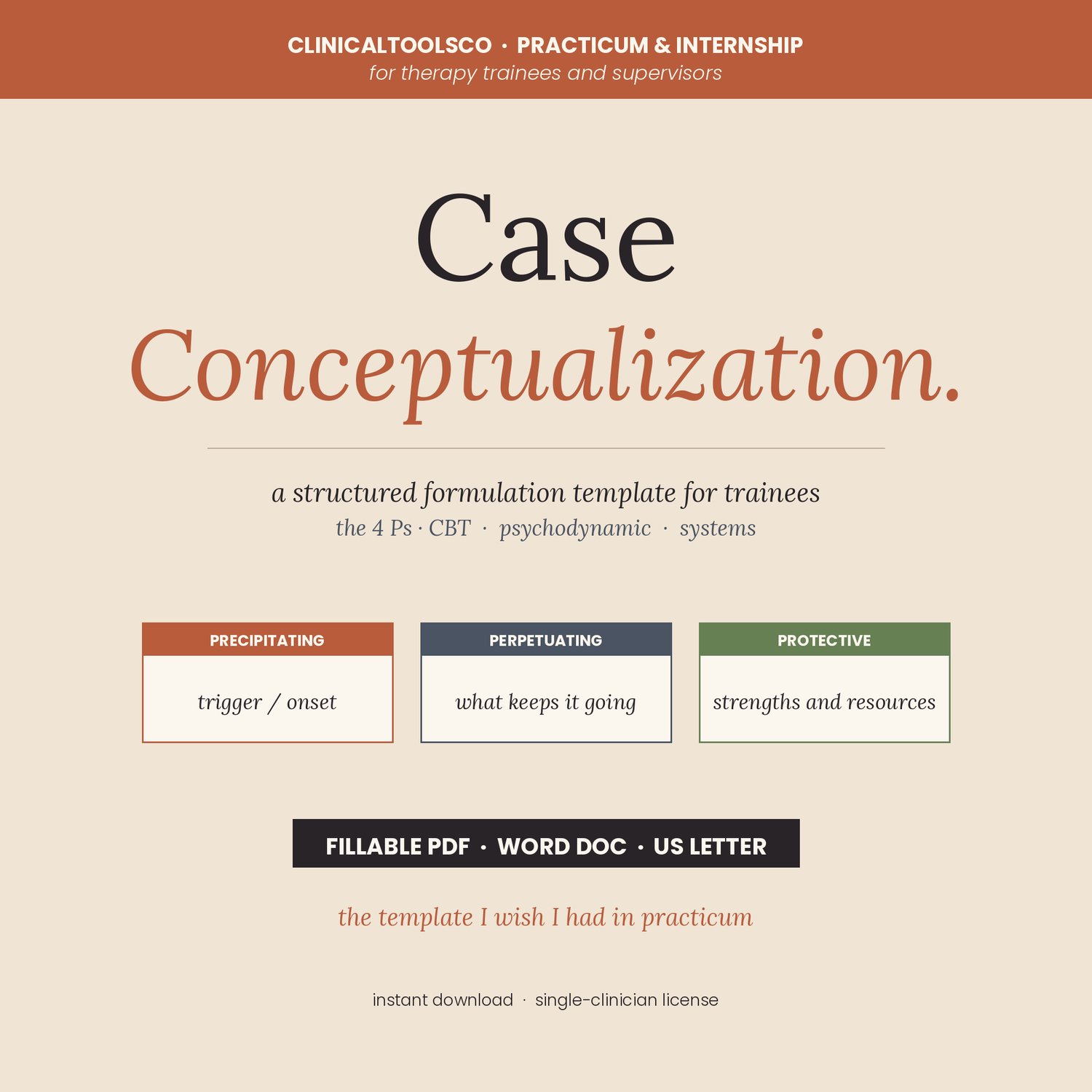
A ten-section case conceptualization template with 4 Ps, psychodynamic, CBT and family systems formulation prompts, built around the six most common trainee errors.
What is in the template
- The six most common trainee errors and how to avoid each
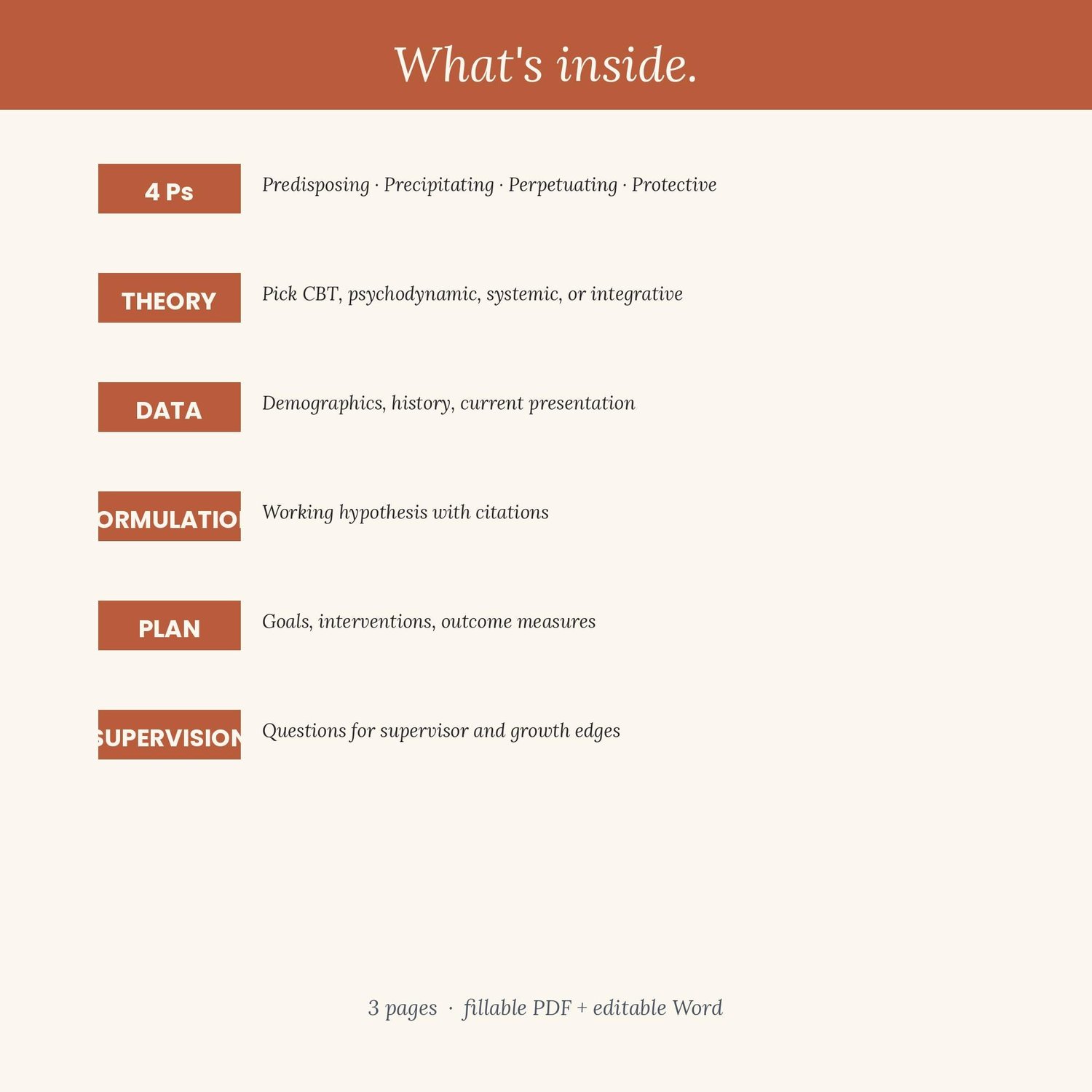
- Ten-section conceptualization framework covering identifying information, presenting problem, the 4 Ps, formulation, diagnosis, treatment plan and risk
- Presenting problem prompts that capture client phrasing verbatim
- The 4 Ps framework in depth: predisposing, precipitating, perpetuating and protective, with examples for each
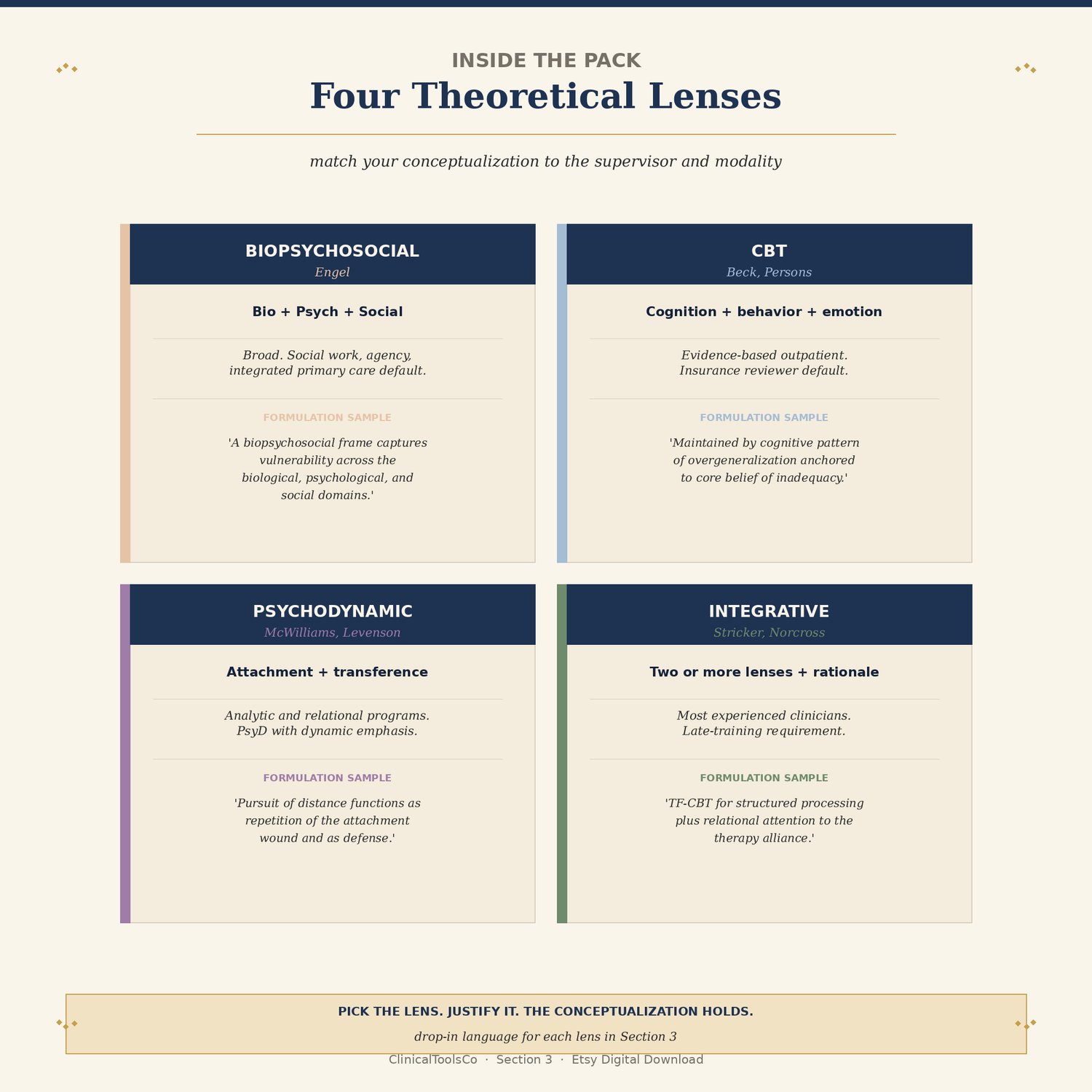
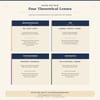
- Psychodynamic formulation prompts: conflict, defenses, object relations, transference, countertransference
- CBT formulation prompts: core beliefs, automatic thoughts, distortions, behavioral avoidance, skill deficits, conditional rules
- Family systems formulation prompts: hierarchy, boundaries, identified-patient role, multigenerational patterns
- Integrative formulation prompts: model per layer, shared mechanisms, evidence-based protocol matching
- IFS and parts work prompts: manager, firefighter, exile, polarization, Self-energy
- Intervention-to-formulation mapping table linking cognitive distortions to restructuring, avoidance to exposure, skill deficits to DBT, trauma intrusion to PE, CPT and EMDR, family dynamics to family work, and crisis to stabilization
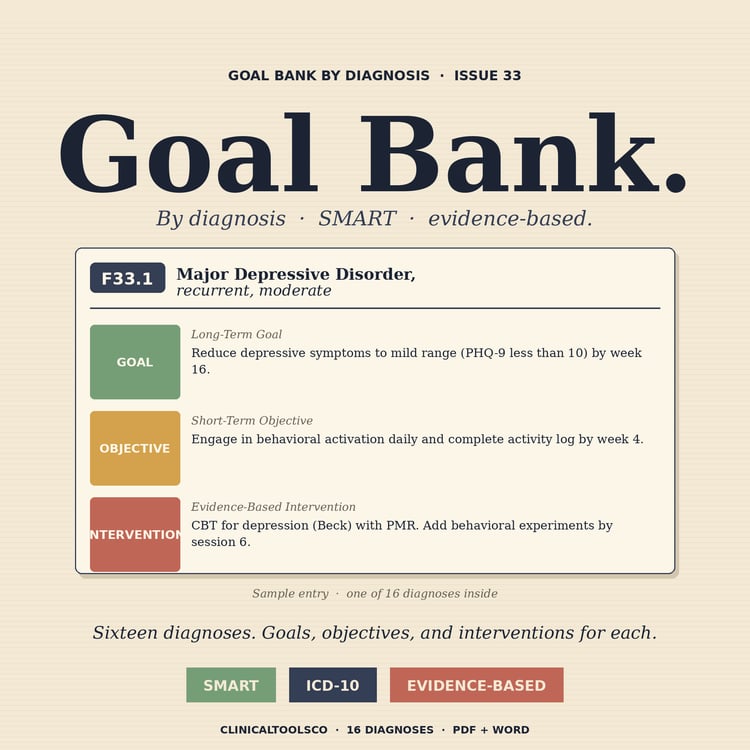
- SMART goal-writing format covering goal, objective and intervention
- Outcome measures by domain: PHQ-9, BDI-II, GAD-7, BAI, PCL-5, IES-R, AUDIT, DAST, BSL-23, WHODAS, OQ-45, WAI-SR and SRS
- Required risk and safety components
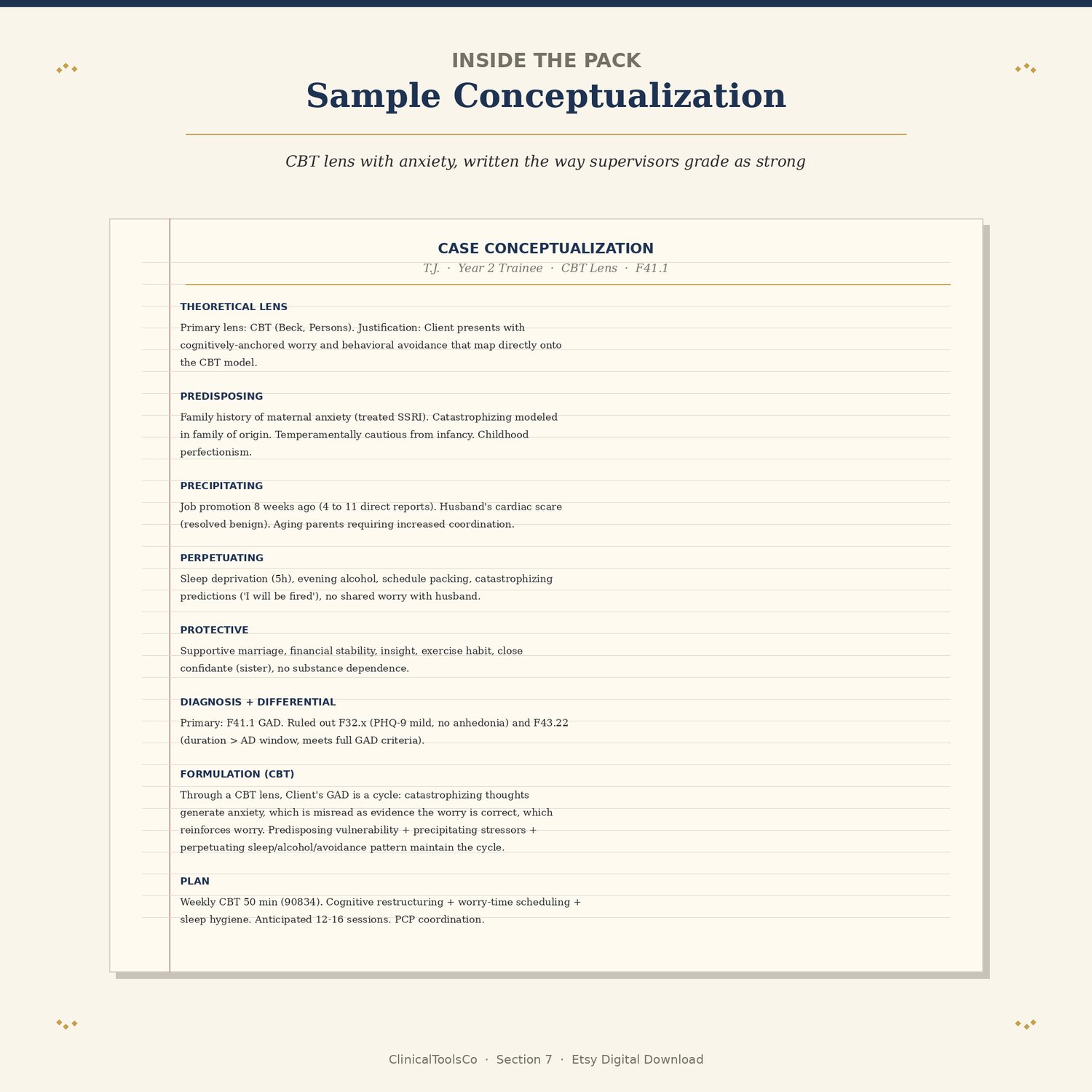
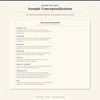
- A complete sample conceptualization end to end
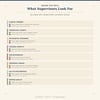
- Common supervision questions and how to prepare for them
Who it is for
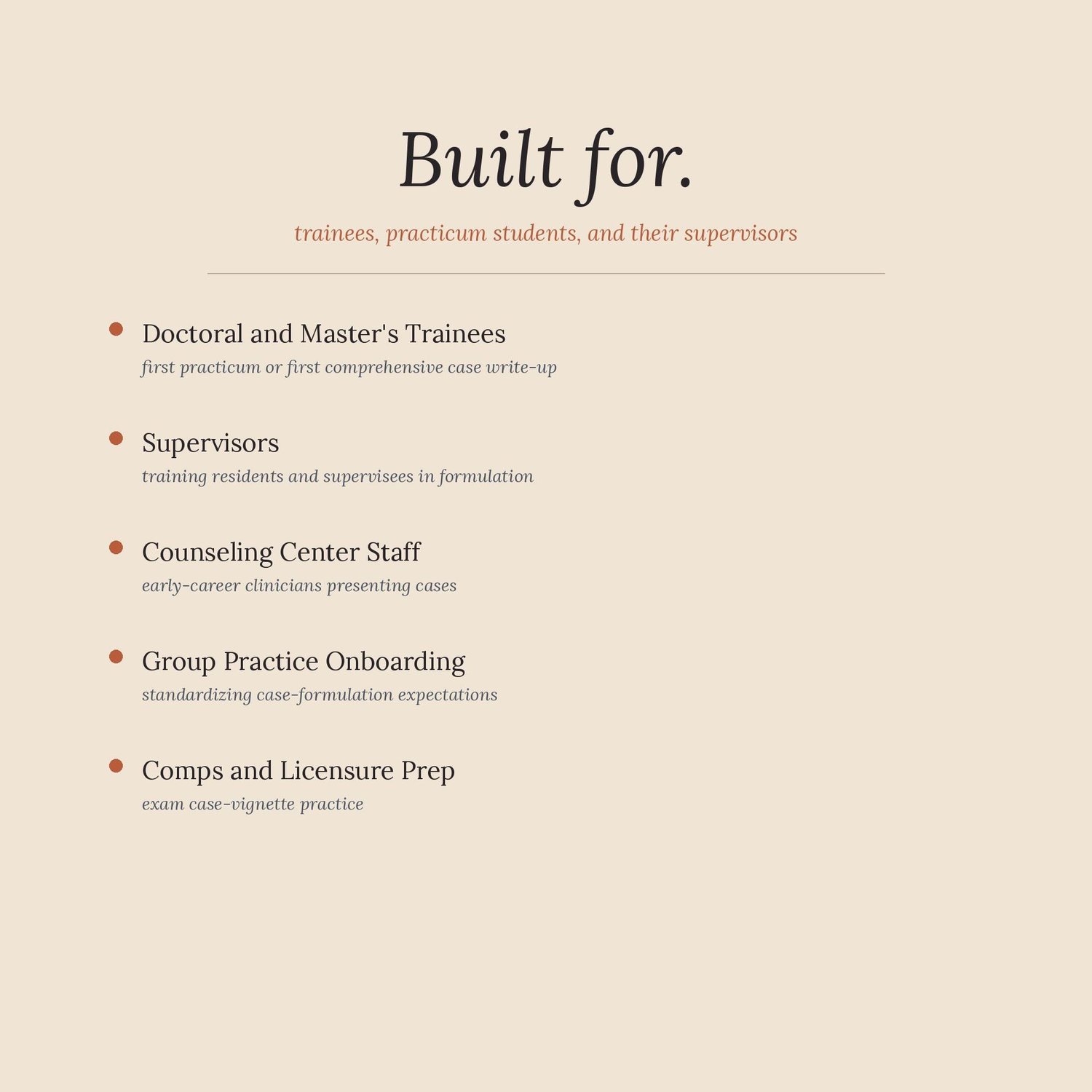
- Master's-level practicum students (MA, MS, MEd, MSW)
- Doctoral psychology candidates (PhD, PsyD) in practicum, internship and fellowship
- MSW interns in foundation and concentration year placements
- Counseling and MFT trainees writing first-time conceptualizations
- Pre-doctoral interns and post-doctoral fellows building formulation skill
- Early-career clinicians within the first two years of independent practice
- Supervisors training new trainees on what good conceptualization looks like
Why it exists
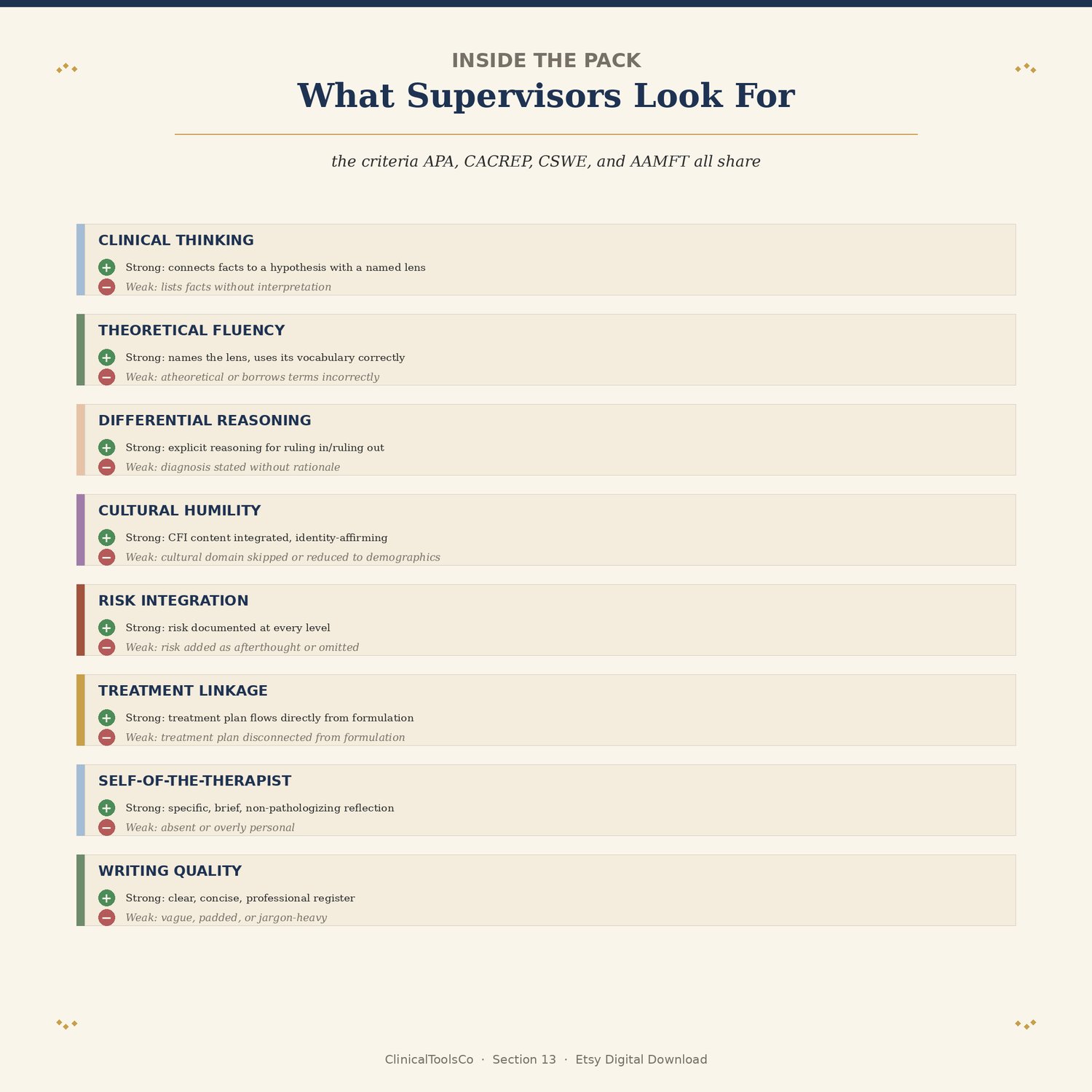
The case conceptualization is the document supervisors, professors and licensing boards use to decide whether a trainee can think clinically. Without structure, conceptualizations devolve into history retelling without integration: a list of facts, a label, and a treatment plan that does not flow from the case. The fix is a framework supervisors recognize before they finish the first page.
This is the case conceptualization template I built for the trainee version of myself who turned in conceptualizations that read as biographies. The 4-P framework. Theoretical formulation prompts across five orientations. Intervention planning tied to the formulation. The supervision questions the trainee will be asked, anticipated and prepared for.
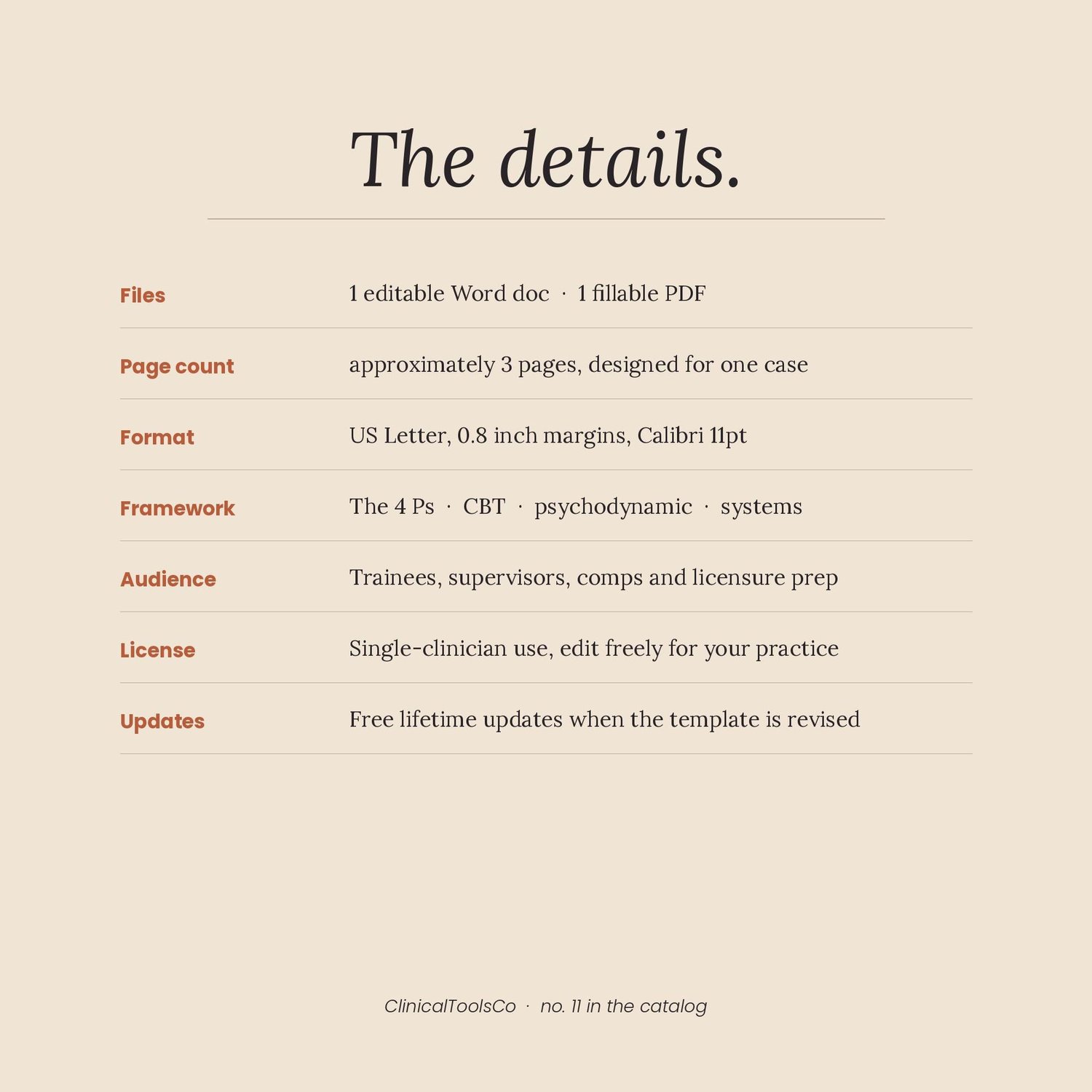
44 pages, plus a Five-Model Worked Examples companion that conceptualizes the same case in CBT, psychodynamic, systemic, humanistic and integrative 4 Ps models.
Why this is different
Most case conceptualization templates for trainees are simplified versions of clinical formulations meant for already-licensed clinicians. They skip the supervision-prep content trainees actually need: what supervisors look for, what they ask, where trainees consistently get it wrong, and how to integrate two orientations without sounding eclectic.
The 4-P framework matters because it is the structure supervisors expect. Listing predisposing, precipitating, perpetuating and protective factors signals that the trainee is thinking developmentally rather than symptomatically.
The five theoretical orientation prompt sets matter because trainees who only have one model produce conceptualizations that flatten the case. Each set includes the questions supervisors actually ask.
The intervention-to-formulation mapping table matters because the most common supervisor feedback on a trainee conceptualization is that the treatment plan does not flow from the formulation. The table forces the trainee to name what each intervention is addressing.
The supervision questions section matters because the trainee can anticipate what will be asked. Why this diagnosis and not the differential? What is the working alliance like? What countertransference are you noticing? The trainee who has prepared answers walks in ready instead of defensive.
The complete sample conceptualization matters because the template is hard to apply on the first complex case. The end-to-end example shows what a trainee-quality but supervisor-acceptable write-up looks like.
Format
- Editable, fillable PDF
- Editable Microsoft Word (.docx)
- Five-Model Worked Examples companion in PDF and Word
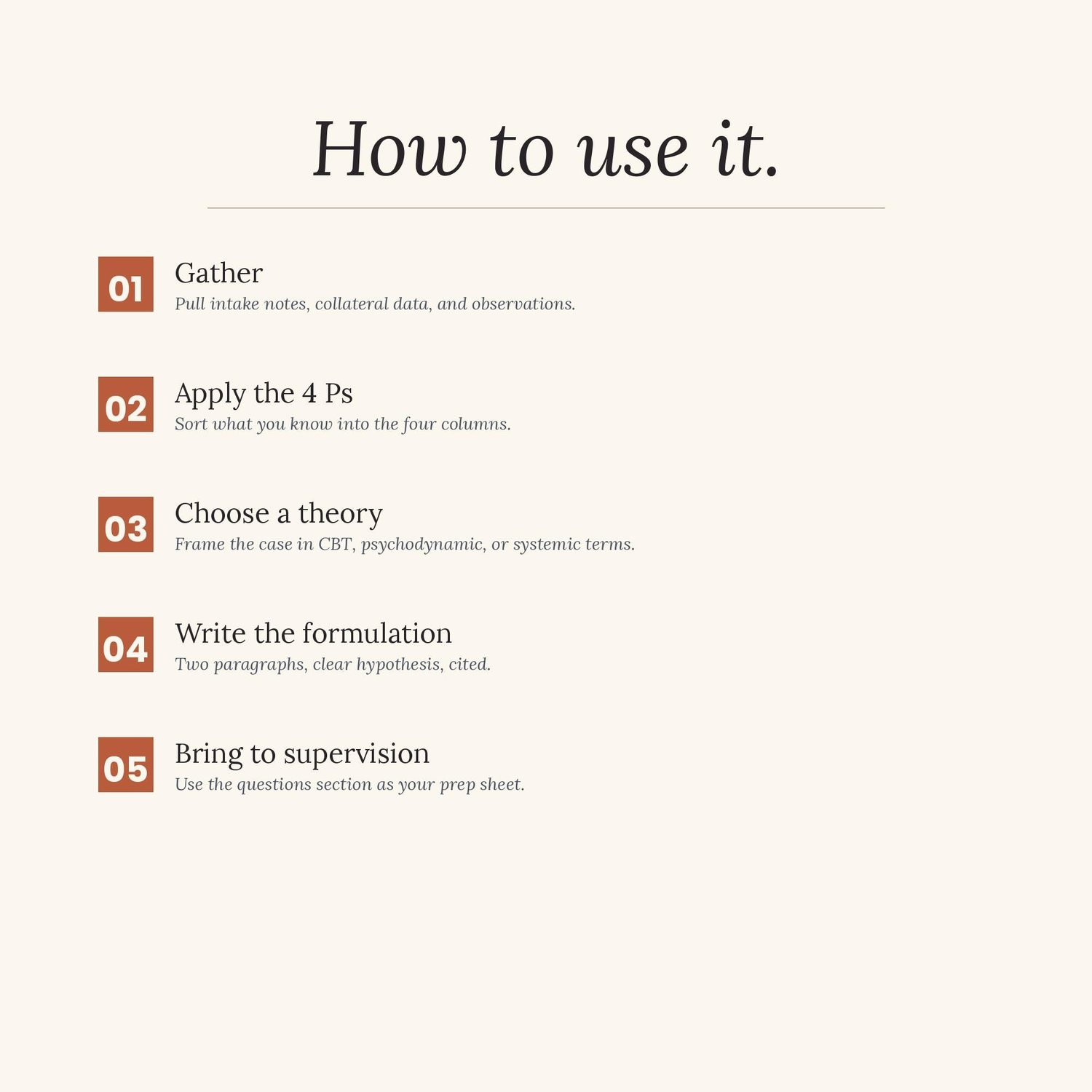
- Designed for completion after intake, then revisited as the case develops
- US Letter and A4 sizes both included
- Works on Mac, Windows, iPad, GoodNotes, Notability
- Lifetime access, unlimited prints
Updated 2026
The 4-P framework is current to the Sperry and Weld treatment-planning literature. Theoretical orientation prompts reflect current versions of CBT (Beck and Padesky), psychodynamic (PDM-2 informed), family systems (Bowen and structural traditions) and IFS (Schwartz). Outcome measures are current to the standard adult psychology assessment battery. Risk assessment language is current to commercial audit standard.
A note from the designer
I am a practicing clinician. I built this for the trainee version of me who once turned in a conceptualization that was three pages of history and a one-paragraph treatment plan that did not connect. The 4 Ps section is what changed my conceptualizations from biographies to formulations. The intervention-to-formulation mapping table is what changed my treatment plans from generic to specific.
A good conceptualization is the structure that holds the case in your head when it gets complicated. The template treats it that way.
Digital download. No physical product ships. Reach out by email if anything does not work or if you have questions.