

Trauma Treatment Templates, PE and CPT (2026)
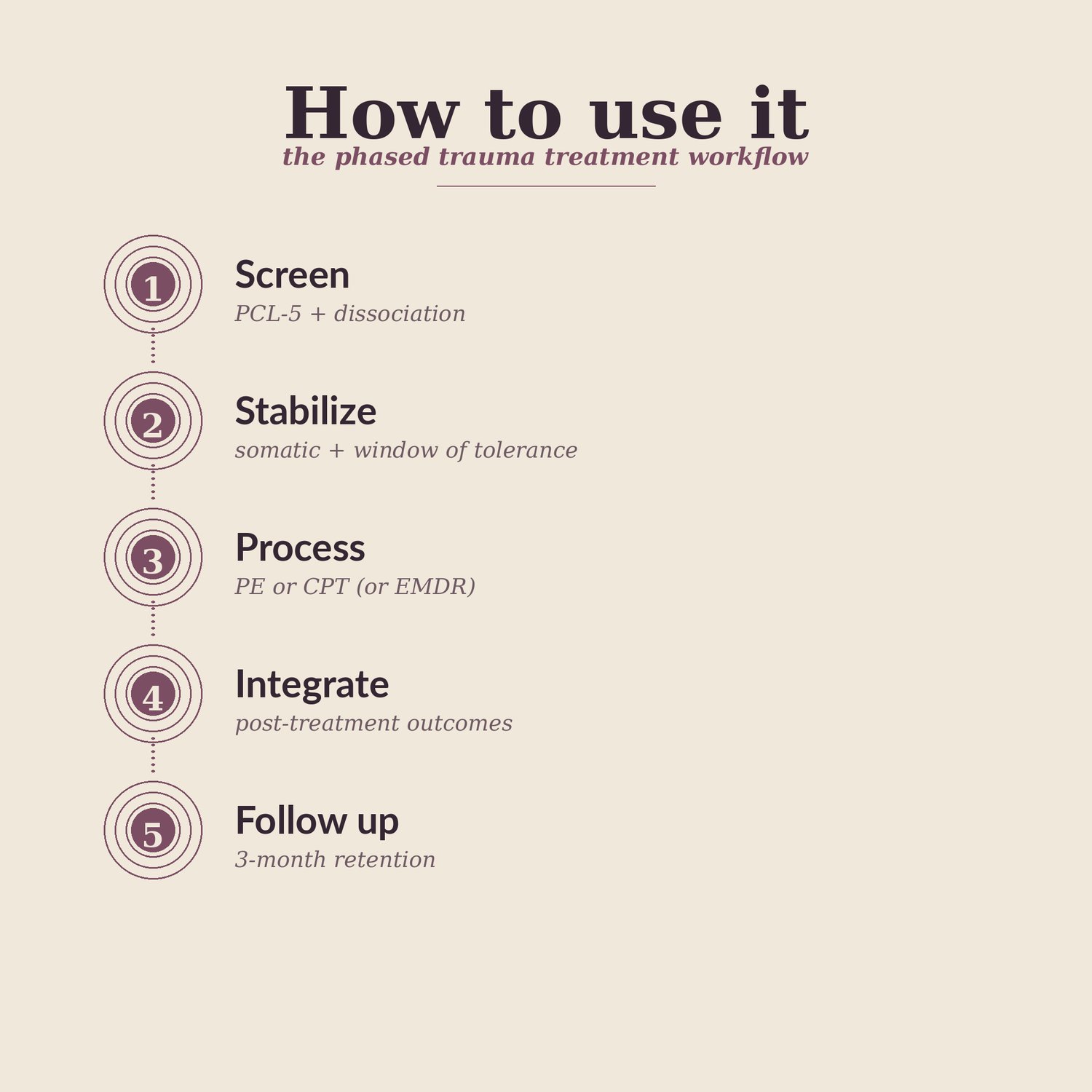
Trauma treatment templates for therapists: trauma intake, PCL-5 scoring, prolonged exposure and cognitive processing therapy session structures, a trauma treatment plan and stabilization tools.
What is in the bundle
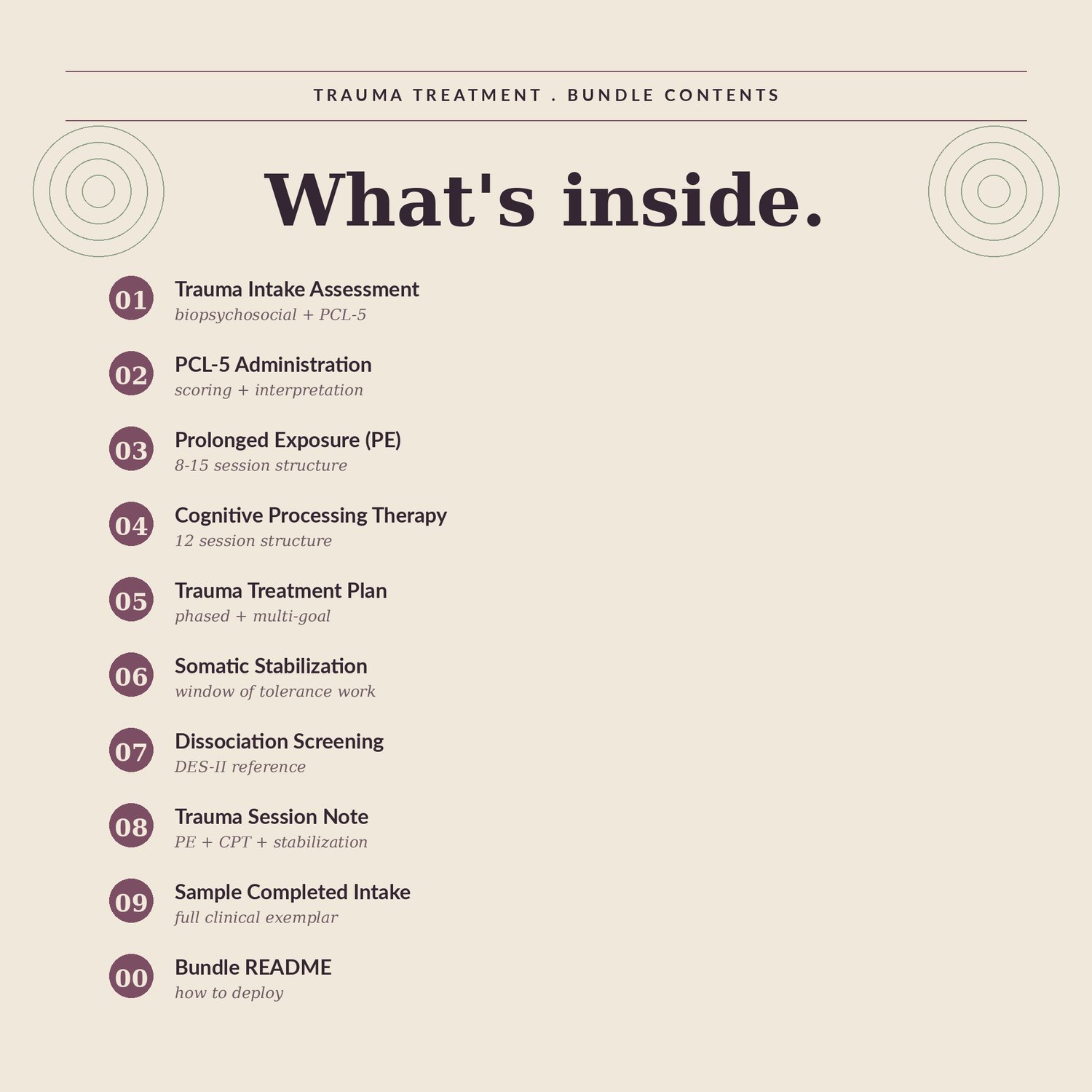
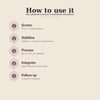
- Section 1: Bundle contents and instructions for use, covering why trauma documentation is different and the full reference list
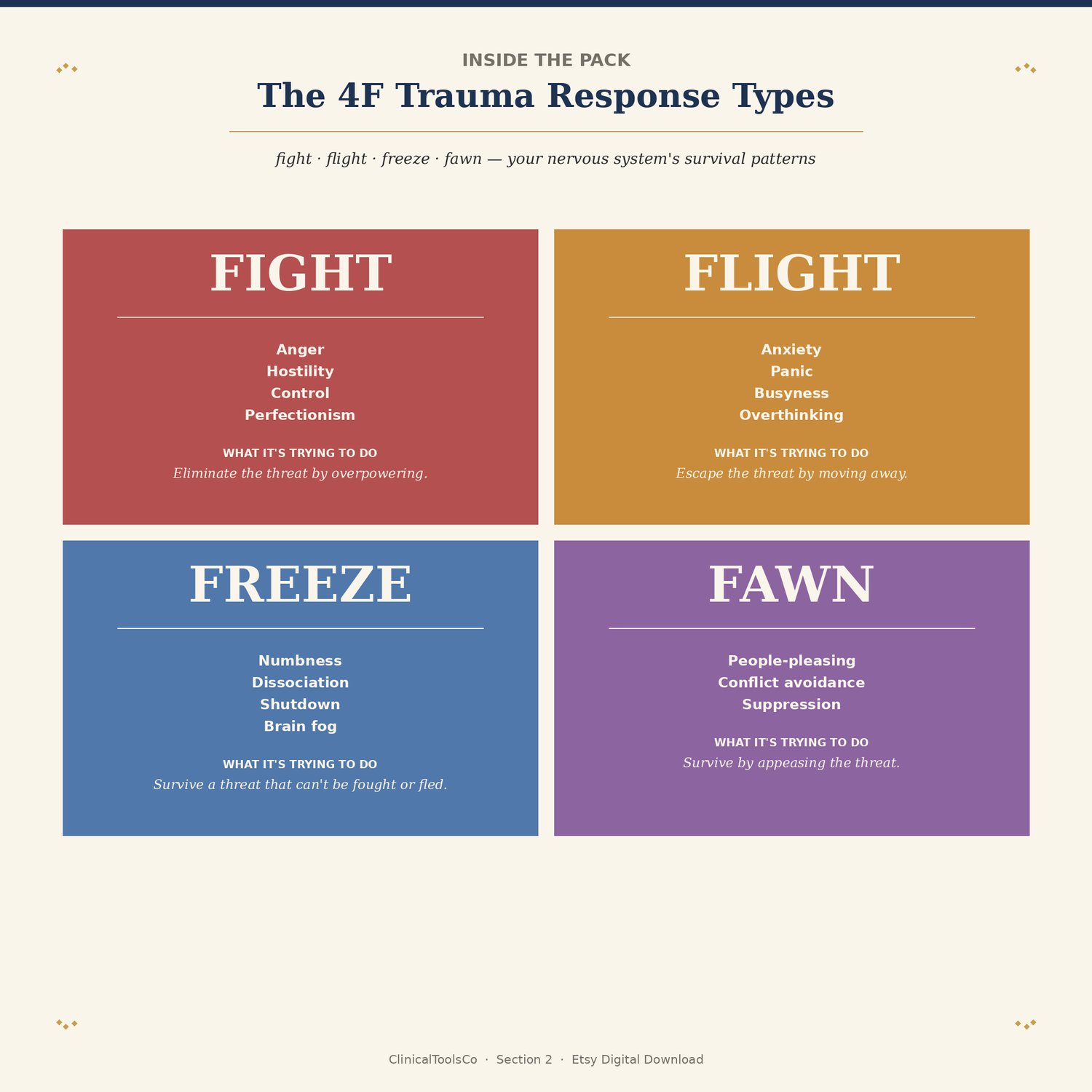
- Section 2: Trauma intake assessment. Patient identification, index trauma, lifetime trauma history across childhood, adolescence and adulthood, a ten-category trauma type checklist, current symptoms organized by DSM-5 PTSD clusters, a PCL-5 score field, a brief dissociation screen with the trigger threshold for full administration, co-occurring screens, functional impact, past treatment, a treatment readiness checklist with a phase-decision rule, diagnosis, and the recommended treatment approach
- Section 3: PCL-5 administration and scoring guide. Instrument overview, the three available versions, an administration script, item-by-item cluster mapping, total score interpretation with reliable and clinically significant change thresholds, provisional diagnosis via the cluster criterion approach, administration cadence, limitations, a full documentation block and a patient-facing explanation script
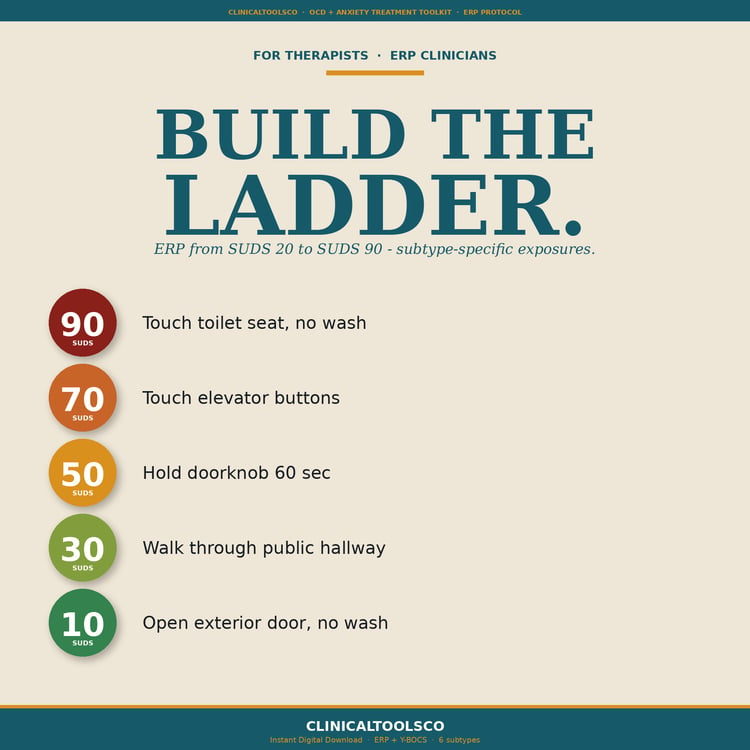
- Section 4: Prolonged exposure session structure guide. The full 8 to 15 session structure, session-by-session topics from breathing retraining and SUDS introduction through in vivo hierarchy, imaginal exposure and hot spots processing, with between-session homework expectations
- Section 5: Cognitive processing therapy session structure guide. Impact statements, stuck points identification, ABC worksheets, challenging questions, patterns of problematic thinking, and the modules on safety, trust, power and control, esteem and intimacy
- Section 6: Trauma treatment plan template with phase-appropriate goals at relational and individual levels
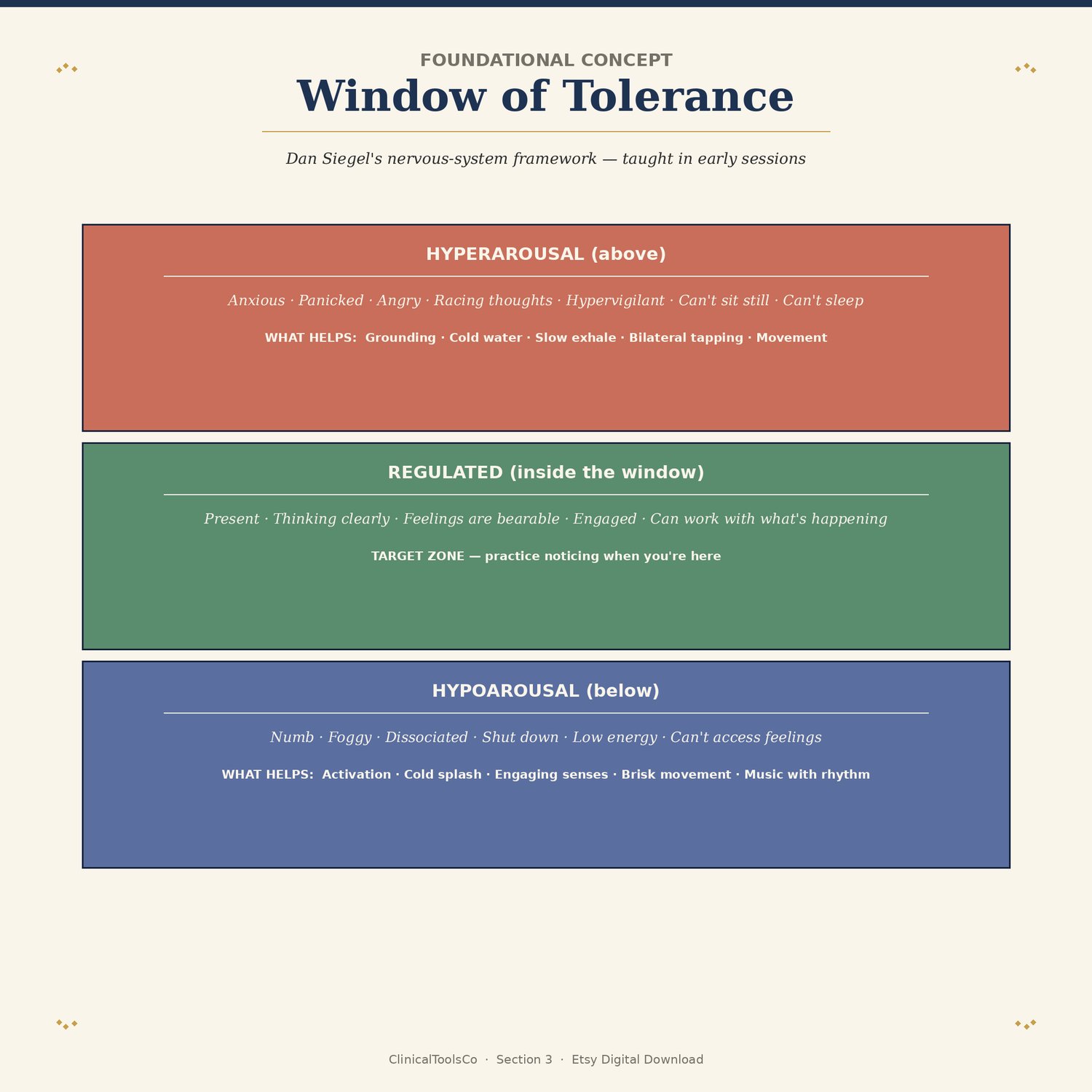
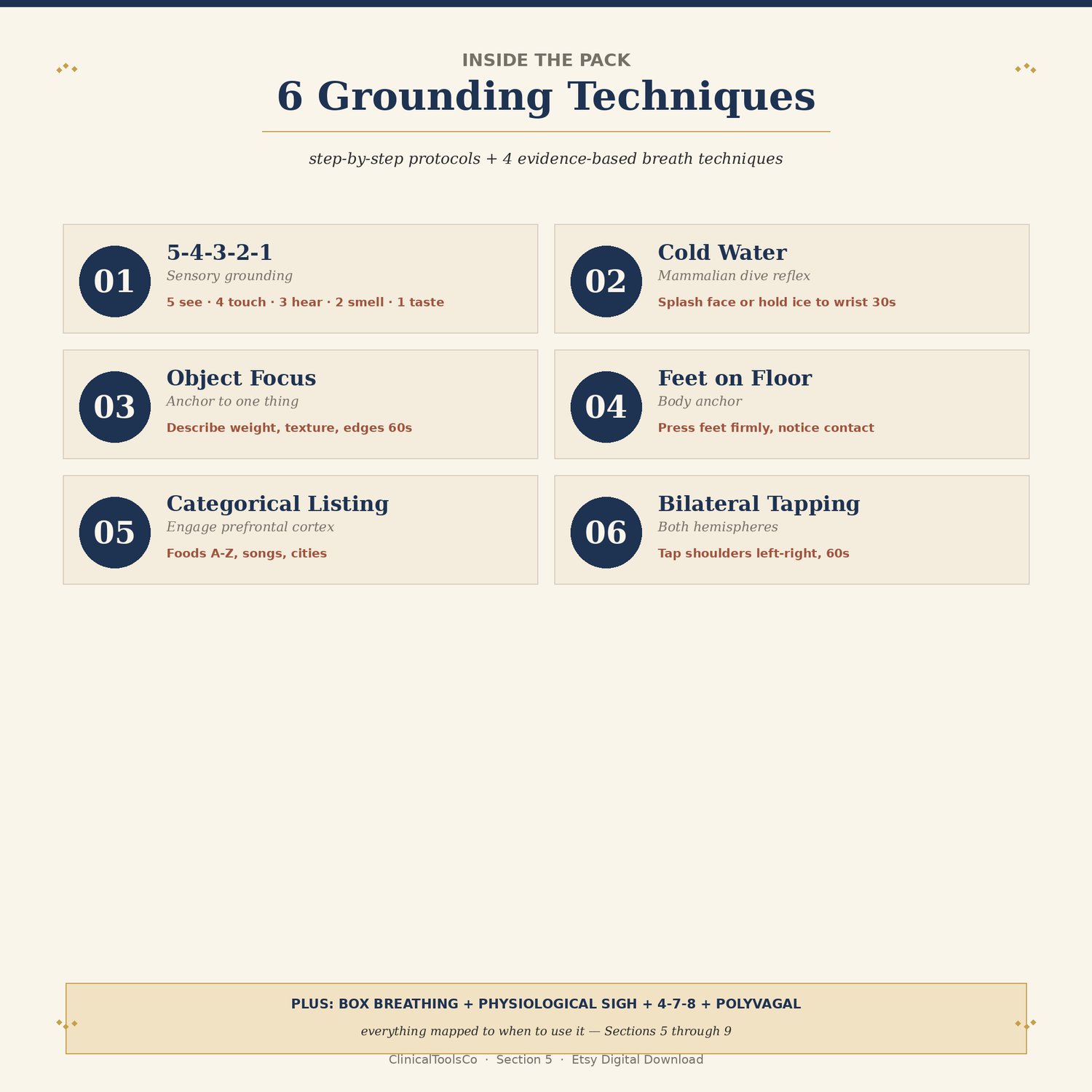
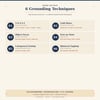
- Section 7: Somatic stabilization and resourcing worksheet covering grounding, container imagery, safe place, body resourcing, dual awareness and distress tolerance for trauma populations
- Section 8: Dissociation screening with a brief screening sequence, the threshold for full administration, and clinical implications for treatment selection
- Section 9: Trauma treatment session note in SOAP structure with trauma-specific fields covering modality, intervention specifics, SUDS ratings, homework completion, dissociation observed and safety check
- Section 10: A sample completed trauma intake showing the score, cluster-by-cluster symptom coverage, dissociation screen results, readiness assessment and treatment approach rationale
Who it is for
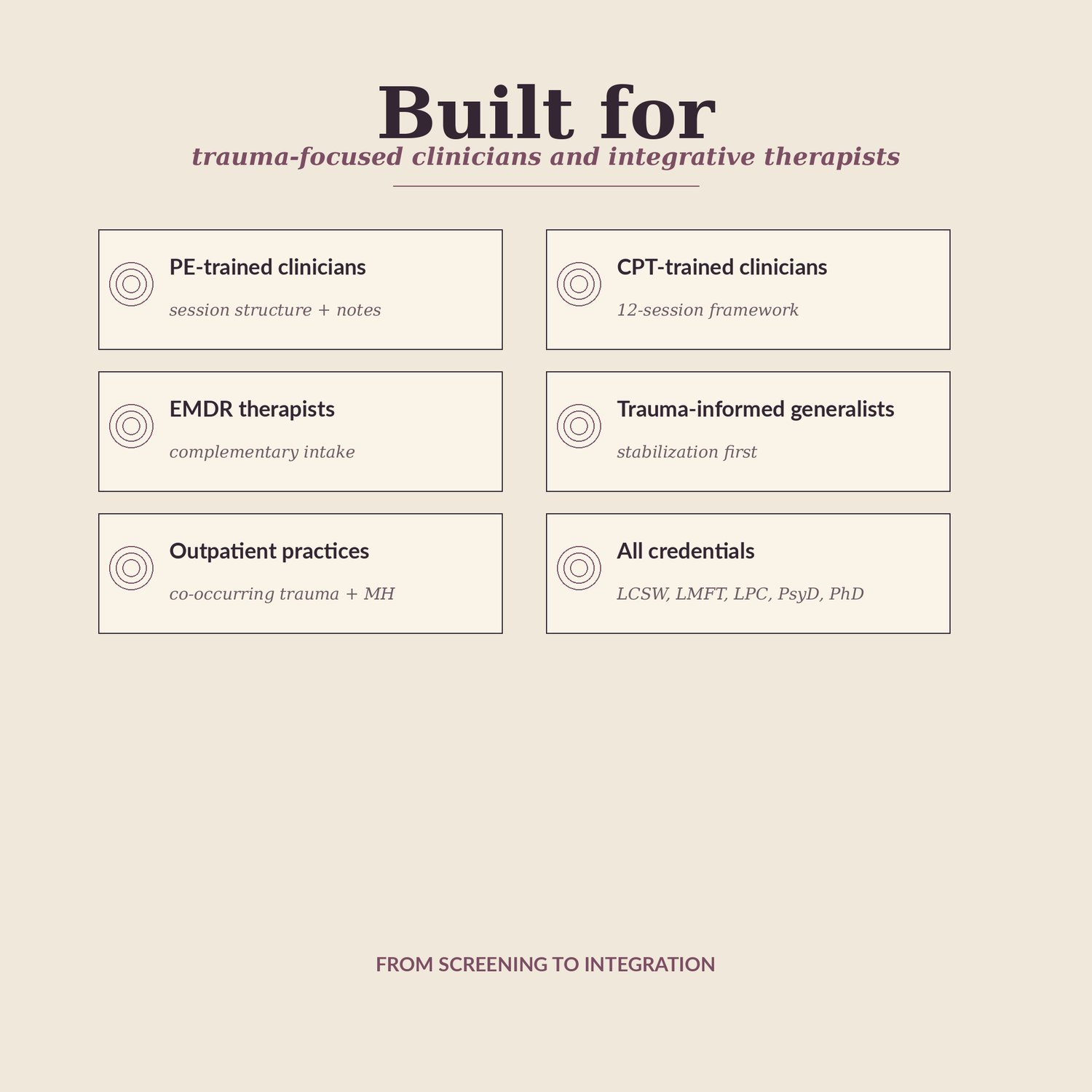
- Licensed clinicians trained in prolonged exposure or cognitive processing therapy
- Pre-licensed clinicians in training under supervision in either protocol
- Clinicians using stabilization-phase work before the trauma-focused phase
- Generalist clinicians who carry trauma cases and need a structured intake and screening tool
- Clinical supervisors teaching trauma documentation and treatment selection
- Group practice owners standardizing trauma intake and outcome monitoring across associates
- VA, Vet Center and military mental health clinicians using the standard outcome measure
Why it exists
The intake is over. The patient meets criteria for PTSD and you have to choose between prolonged exposure and cognitive processing therapy, screen for dissociation before initiating exposure work, and articulate a treatment plan that matches phase to readiness. Generic mental health templates handle none of this.
This is the trauma binder I built after my first three trauma cases, when I realized that treatment selection requires a structured intake the typical template does not capture, especially the dissociation screen and the treatment-readiness checklist that decide whether trauma-focused work can safely begin.
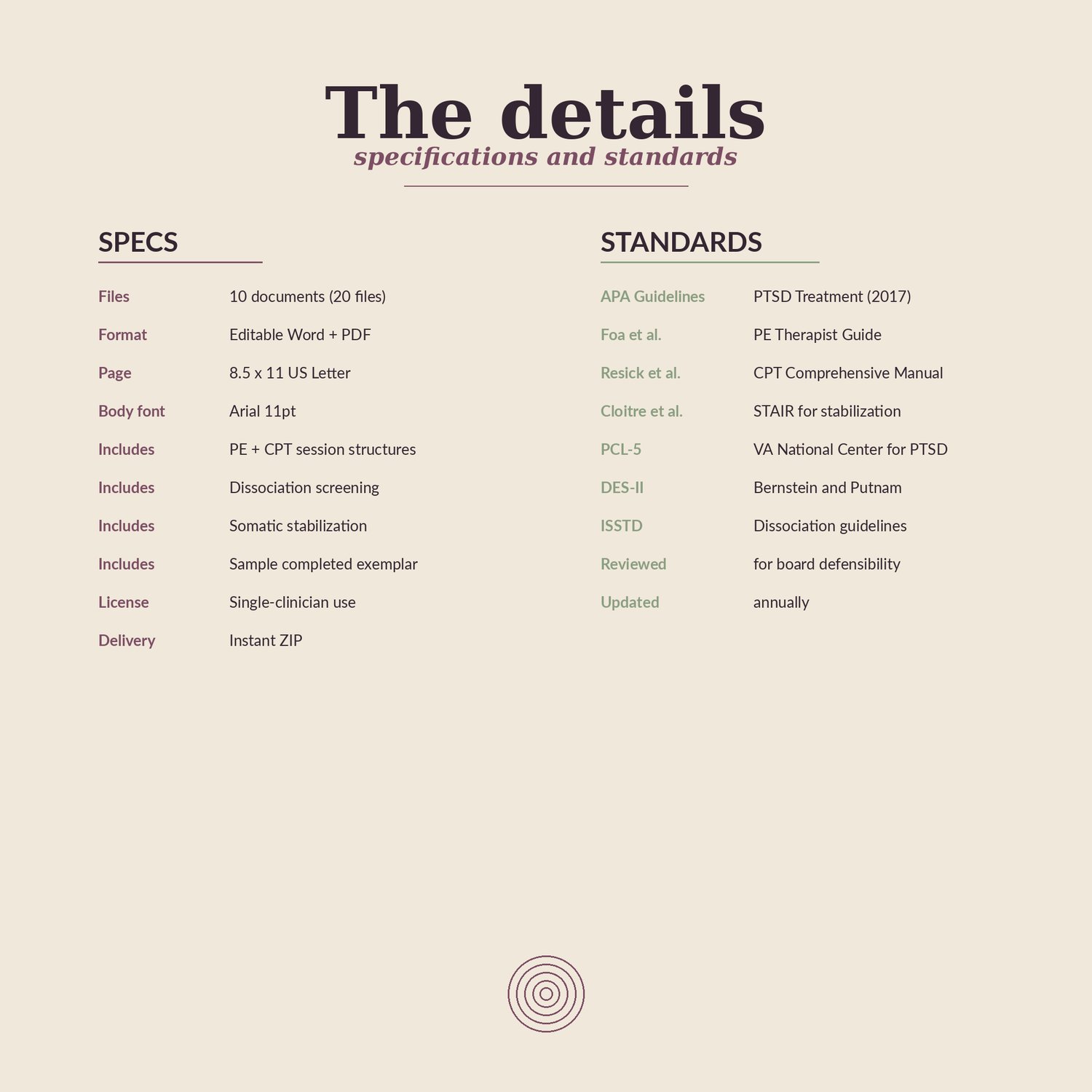
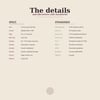
35 pages covering the full intake, screening, treatment planning, session structures and stabilization tools for outpatient trauma-focused therapy, organized around the major evidence-based protocols and grounded in the APA Clinical Practice Guideline for the Treatment of PTSD. Written by a practicing clinician for licensed clinicians and supervised pre-licensed staff.
Why this is different
Most trauma documentation is borrowed from depression and anxiety practice and misses what makes trauma work distinct: a structured intake that captures trauma type, symptom cluster, dissociation and readiness; treatment selection between the protocols versus stabilization first; manualized session structure adherence; and outcome monitoring via the standard measure.
The trauma intake matters because the protocols have specific exclusion considerations, including severe dissociation, ongoing victimization, severe substance use and active suicidality, that need to be ruled out before initiating exposure or processing work. This version is built to surface those flags at intake.
The session structure guides matter because manual adherence is one of the strongest predictors of outcome in trauma-focused therapy.
The dissociation screen matters because trauma patients with significant dissociation often respond poorly to standard exposure protocols and benefit from stabilization-phase work first. Missing it at intake is a treatment-selection error that can destabilize the patient.
The scoring guide matters because reliable change and clinically significant change are the outcome benchmarks insurance reviewers and supervisors look for.
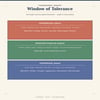
The stabilization worksheet matters because not every trauma patient is ready for trauma-focused exposure or processing, and stabilization-phase work is what makes future trauma-focused work possible.
Format
- Fillable PDF and editable Microsoft Word (.docx)
- Intake, screening, treatment plan and note templates ready to drop into your EHR
- US Letter page size
- Works on Mac, Windows, iPad, GoodNotes, Notability
- Lifetime access, unlimited prints
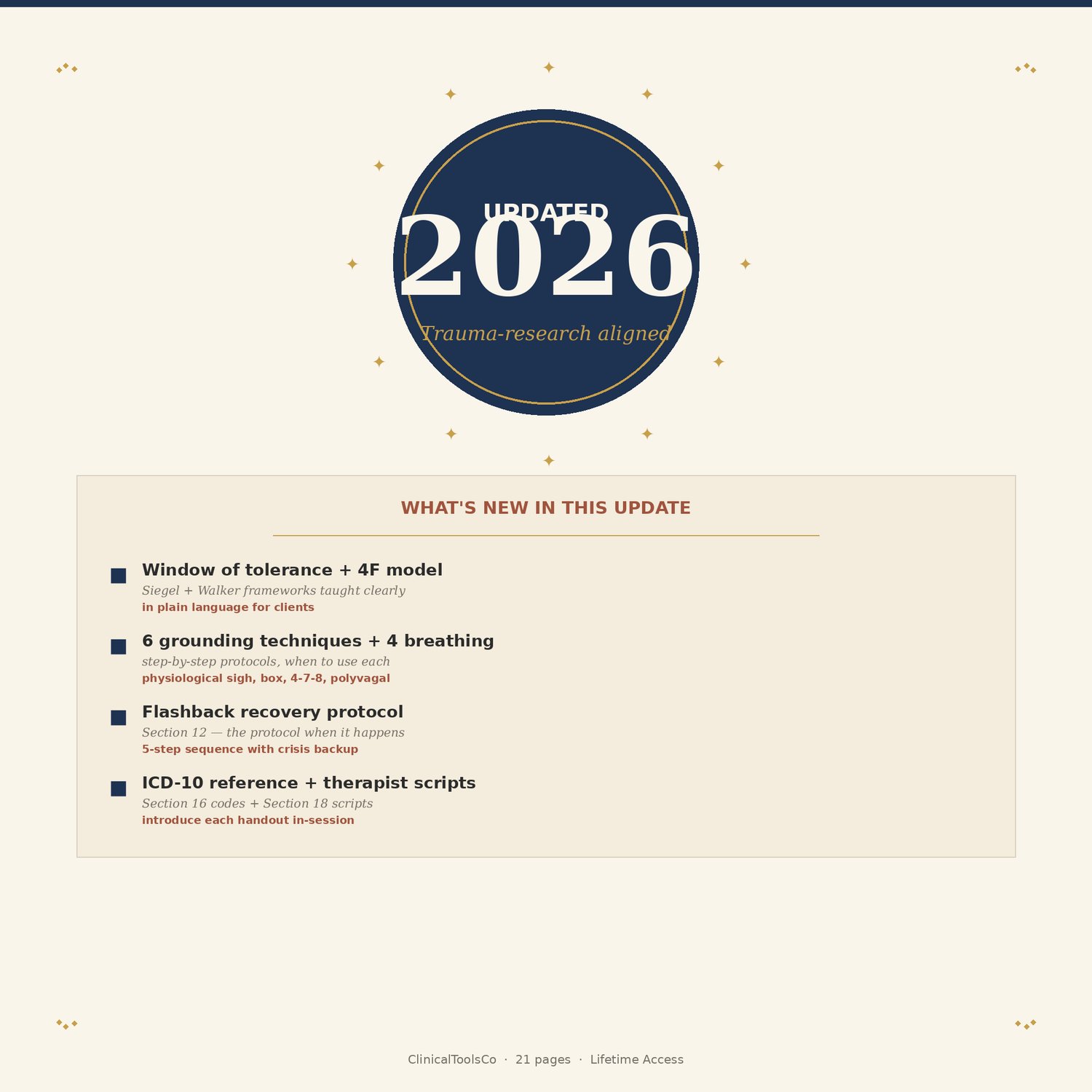
Updated 2026
References Foa, Hembree and Rothbaum (2007) and Resick, Monson and Chard (2017). Cites the APA Clinical Practice Guideline for the Treatment of Posttraumatic Stress Disorder (2017), the National Center for PTSD, Cloitre et al. (2002) on skills training in affective and interpersonal regulation, and van der Kolk (2014) for the somatic framework. Uses DSM-5-TR PTSD criteria with the four-cluster structure.
A note from the designer
I am a practicing clinician. I built this after my first three trauma cases. The section I send every supervisee is the somatic stabilization and resourcing worksheet, because stabilization-phase work is the precondition for exposure or processing work, and many patients are not ready for trauma-focused work at first contact.
Trauma treatment done right is some of the most powerful clinical work there is. Good documentation is what makes it defensible.
Digital download. No physical product ships. Reach out by email if anything does not work or if you have questions.